Collecting Marvel Universe Figurines for Infinite Adventure Recreation
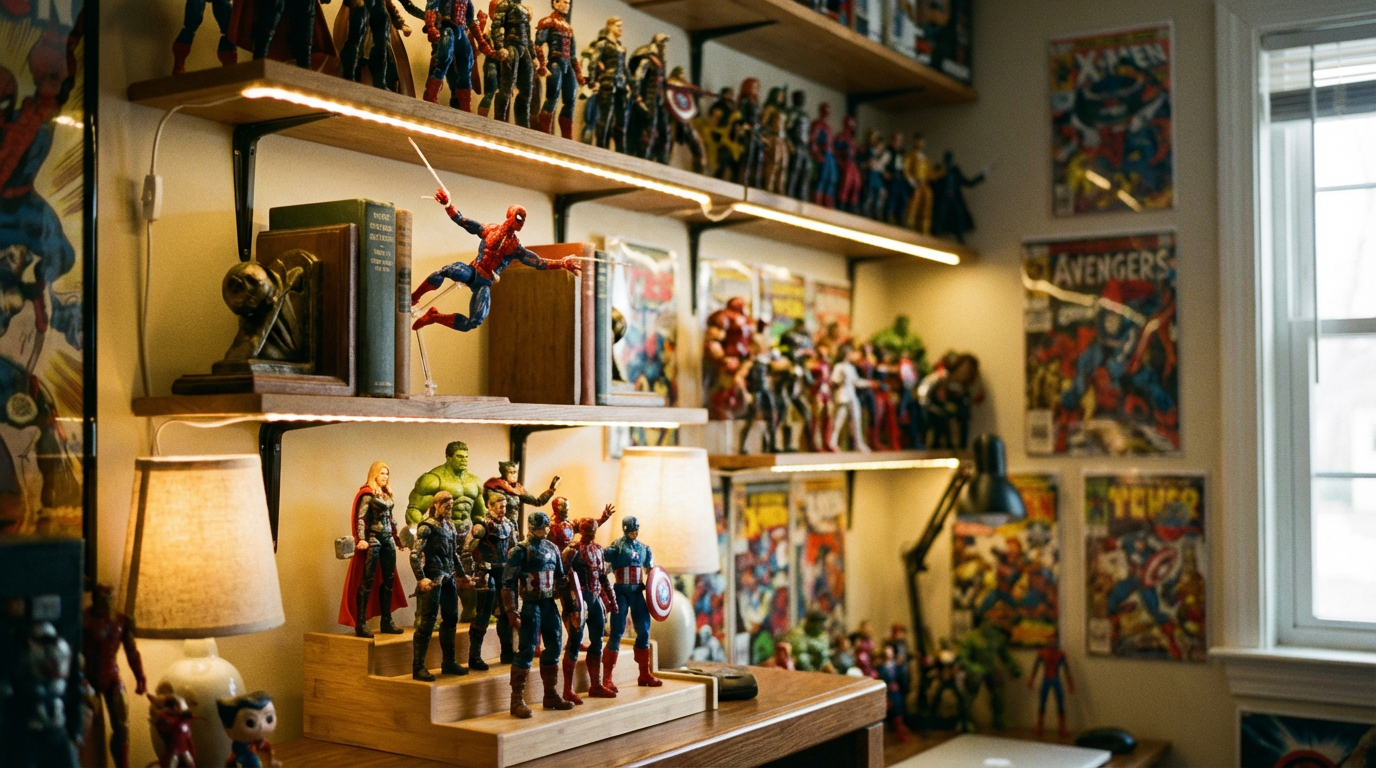
If you’ve ever posed a Marvel Legends Spider-Man mid-swing between two bookends and then found yourself tweaking that pose for the next twenty minutes, congratulations: you’re already using figurines for adventure recreation.
You’re not just “displaying toys.” You’re staging storyboards, directing crossovers, and turning shelves into little multiverses.
In this guide, I’m coming at Marvel collecting as an anime and figure-obsessed fan who lives for dynamic displays, but grounding everything in what serious Marvel and toy-collecting sources have documented: from buying guides by Smartbuy and Smart.DHgate to Marvel Legends overviews from Toynk Toys and investment and insurance advice from Collectibles Insurance Services and professional appraisers. The goal is simple: help you build a Marvel figurine collection that feels like infinite adventure, not infinite clutter.
Why Marvel Figurines Feel Like Infinite Adventures
Marvel collectibles are often described as emotional artifacts as much as investments. Fragstore frames them as physical tokens of heroism, nostalgia, and favorite story arcs, and Smartbuy’s Marvel guide notes that the Marvel Cinematic Universe has pulled more than $28 billion at the global box office since 2008. That scale of cultural impact is why shelves full of little plastic heroes feel strangely epic.
Academic work backs this up. Media scholars like Ben Saunders have curated museum exhibits around Marvel comics, showing how superheroes mirror politics, identity, and social change. On the fan side, Henry Jenkins describes action figure display as both art and play: the shelf becomes a canvas where you choreograph poses, relationships, and ongoing narratives instead of just parking characters in a line.
When you collect with that mindset, each figurine is less “object” and more “portal.” A six‑inch Wolverine is a doorway into Days of Future Past. A statue of Black Panther stands in for decades of storytelling about legacy and leadership. Put enough of those portals together in the right way, and your room becomes a tiny Marvel multiverse you can rearrange forever.
Mapping the Marvel Figurine Landscape
Before you dive in, it helps to understand the main types of Marvel figurines and what they are best at.
Marvel Legends: The 6‑Inch Adventure Engine
Multiple guides, including Smartbuy’s Marvel Legends collector guide and Toynk Toys’ 2025 “Marvel Legends List,” converge on this point: Marvel Legends is the core action-figure line for most Marvel collectors.
Marvel Legends is a six‑inch, highly articulated line launched in 2002 in a Toy Biz era and later continued by Hasbro. Key traits repeat across sources like Smartbuy, Smart.DHgate, and hhthrifty’s gift guides.
Marvel Legends figures usually offer roughly twenty or more points of articulation, alternate hands or heads, and effect pieces that let you actually stage motion: a repulsor blast, a leaping kick, a mystic shield. They are engineered as poseable PVC figures that sit in a sweet spot between realistic sculpt and play-friendly flexibility. Price-wise, recent guides put standard single figures around 30s depending on retailer and exclusivity, with larger or deluxe sets running higher.
A signature feature is Build‑A‑Figure waves. As Toynk and multiple buying guides explain, each figure in a wave comes with a piece of a larger character. Complete the wave and you assemble huge figures like Hulkbuster, Juggernaut, Rhino, or classic kaiju‑scale villains that would be tough to ship as single retail items. That design literally turns your collecting into a quest: every new pickup is both a character and a progress marker toward a bigger “boss battle” centerpiece.
For adventure recreation, Marvel Legends is hard to beat. You get enough articulation to capture motion, enough detail to look great in photos, and enough variety that you can build entire Avengers or X‑Men rosters that play nicely together in the same 1:12 scale.
Marvel Select and Other Big‑Presence Lines
Where Marvel Legends aims for a consistent six‑inch scale, Marvel Select is officially closer to seven inches. On paper, that sounds incompatible, but toy analysis from sites like OAFE points out that some Marvel Select releases still integrate visually with Legends, especially for larger or non‑human characters.
Collectors have tested this in the wild: towering characters like Hulk or certain armors and mystical beings can read as “in scale” even when they are technically from a larger line. The key is not the number on the box but how the figure looks when standing among your six‑inch heroes.
The payoff is display presence. Marvel Select and similar lines often have more mass, dramatic bases, and sculpted detail that makes them ideal centerpieces. The trade‑off is that articulation can be more limited, and the slightly off scale will stand out if you try to mix too many humans from multiple lines on one shelf.
Statues, Busts, Hot Toys, and MiniCo: When Story Becomes Sculpture
Fragstore’s Marvel collectibles guide makes a useful distinction between figures and statues. Statues are usually polystone or resin, designed as high-detail, mostly static sculptures. Figures are articulated PVC bodies you can pose.
High‑end Marvel statues and busts from studios like Iron Studios, Sideshow, and others are often priced from around $150 into the many hundreds of dollars per piece. Collectinsure’s Marvel collectibles overview notes that limited editions and exclusives in this category have real investment potential, particularly for iconic characters like Black Widow, Black Panther, Thor, Wolverine, Gambit, Storm, and various X‑Men. Appraisal resources echo that condition, rarity, and original packaging substantially affect value.
Hot Toys operates mostly at a one‑sixth scale. Guides like hhthrifty’s gift list and Smartbuy’s Marvel overview peg many Hot Toys figures roughly in the $250 to $600 range, catering more to display collectors than rough play. These pieces are engineered for realism and photography, not for floor‑level battles.
MiniCo‑style statues and smaller PVC display pieces land between figures and full statues. Fragstore highlights MiniCo as stylized, compact sculptures of characters like Spider‑Man, Thor, Doctor Strange, Hulk, and Thanos. They still read as “display art,” but the smaller size makes them easier to fit alongside articulated figures in mixed setups.
Funko Pops and Other Stylized Minis
If Marvel Legends are your main cast, Funko Pops are the supporting chibi universe.
Collectinsure and hhthrifty both point to Marvel Funko Pops as one of the most accessible collectible types. They typically run about $12 to $15 at retail, with exclusives sometimes spiking higher on the secondary market. They cover nearly every corner of Marvel fandom: Guardians of the Galaxy, X‑Men, Deadpool, Ant‑Man and the Wasp, Spider‑Verse variants, and more.
From a pure “adventure recreation” standpoint, Pops are not about articulation; they mostly stand and look adorable. But they shine in compact storytelling. A row of spider‑variants or a villain shelf full of Thanos, Green Goblin, and Carnage creates instant vibes, especially in small apartments or office desks where six‑inch dioramas are impractical.
Quick Comparison: Choosing the Right Tool for Your Adventures
Category | Typical Scale / Size | Typical Price Range (from guides) | Best For | Main Trade‑Offs |
|---|
Marvel Legends | About 6 in, 1:12 scale | About 30s per figure | Dynamic posing, dioramas, team building | Some paint flaws; can get expensive in waves |
Marvel Select | About 7 in | Varies, often above basic Legends pricing | Big characters that need extra bulk | Scale mismatch for standard humans |
Hot Toys 1:6 figures | About 12 in | Roughly $250 to $600 | Hyper‑detailed centerpiece figures, photography | High cost, space‑hungry |
Statues / busts | Often 1:10 to 1:4 | Roughly $200 to $1,000+ | Museum‑style displays, long‑term value | Fragile, heavy, minimal or no articulation |
Funko Pops | Around 3.75 to 4 in | Around $12 to $15 for standard releases | Compact theme shelves, desks, casual collecting | Minimal posing, highly stylized aesthetic |
Designing a Collection That Feels Like a Marvel Saga
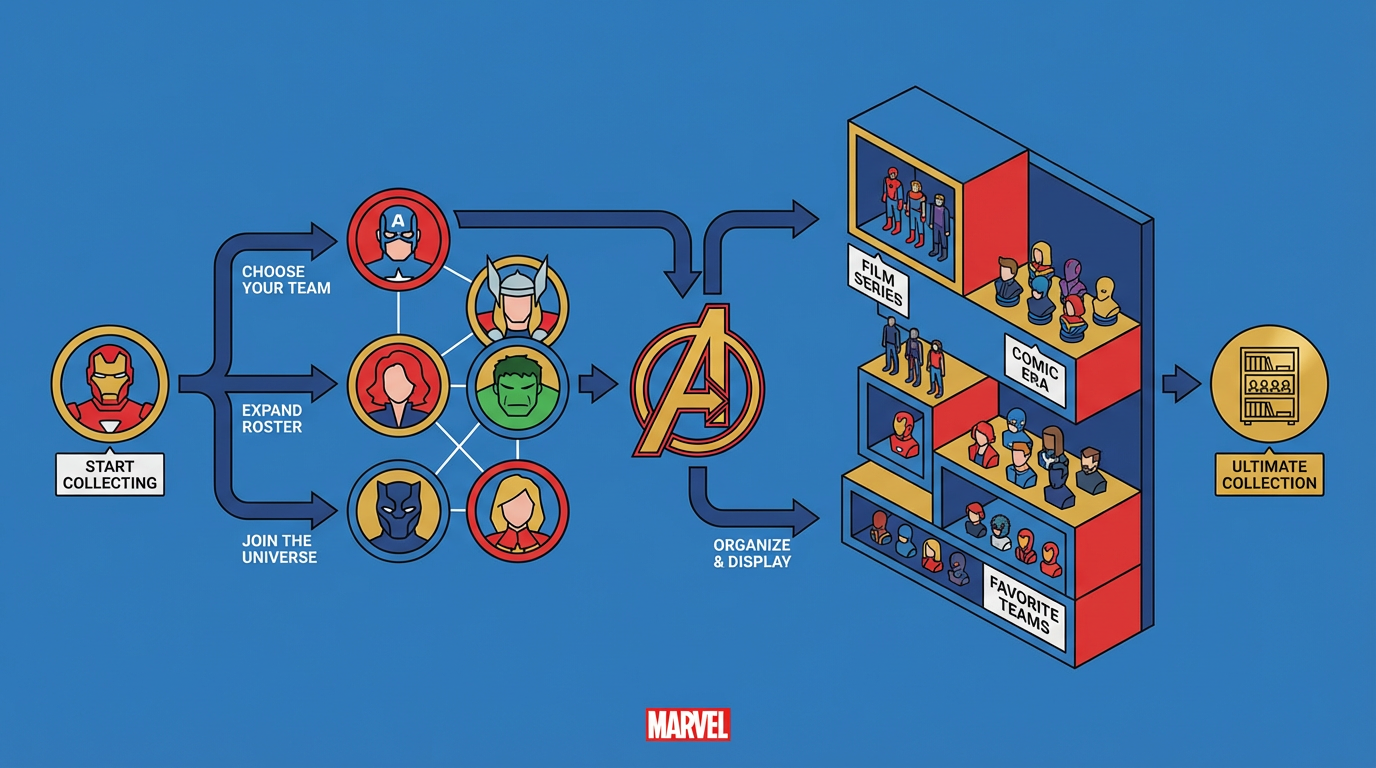
The fastest way to burn out in this hobby is to buy “a bit of everything” with no plan. HHThrifty’s Marvel gift guide and Smartbuy’s collecting guides both emphasize defining your collector type and focus before you start throwing money at preorders.
Pick Your “Storyline” First
Think of your collection like a long‑running Marvel run: it needs a premise.
Some collectors are display‑driven. They want one jaw‑dropping Hot Toys Iron Man surrounded by statues and prop replicas, lit like a museum. Others are completionists who derive satisfaction from finishing entire Marvel Legends waves or completing classic comic rosters. Casual fans prefer functional or decorative items with lower footprint, like Pops, apparel, or a single shelf of figures. Investment‑minded collectors chase limited editions, convention exclusives, and key vintage pieces they hope will appreciate.
Instead of trying to be all of those at once, choose a primary “storyline.” Maybe you are an Avengers‑centric Marvel Legends collector who supplements with a few statues, or a Spider‑Verse fanatic who only collects Spider‑variants across lines. Toynk’s Marvel Legends guide suggests a character‑first approach: start with a favorite hero, learn their various looks and waves, then branch out to supporting cast and villains. That makes research manageable and keeps shelves coherent.
Respect Scale and Compatibility
Multiple buying guides, including Smartbuy’s general Marvel collectibles article, stress the importance of matching scale in displays. Common collectible figure scales include about 1:12 (six‑inch figures), 1:10 to 1:7 (some statues), and 1:6 (twelve‑inch figures).
In practice, that means you generally want to keep Marvel Legends together, Hot Toys together, and so on. OAFE’s breakdown of integrating Marvel Select into six‑inch displays shows that you can bend this rule, especially for big characters like Hulk, Thanos, or armored suits that should tower over your heroes. But it is still helpful to ask how a new piece will look next to what you already own.
One trick veteran collectors use is to treat different scales as layers. Six‑inch figures become the core of your “adventure table,” twelve‑inch pieces are the hero statues on pedestals, and Pops or MiniCo sit on top of shelves or monitors as chibi cameos.
Display as Play: Turning Shelves into Storyboards
Henry Jenkins’s work on action figure display pushes back against the idea that toys must either be locked in boxes or left on the floor. He describes display as both artistic composition and play: you are arranging figures according to character relationships, color, and articulation, but you are also constantly handling them, changing poses, and experimenting.
Smart.DHgate’s Marvel Legends tips and the Avengers collecting guide echo that idea with very practical advice. Group figures by team or storyline, use dynamic poses that suggest action rather than straight‑armed standing, and add backdrops like cityscapes or printed comic panels. Use risers or flight stands to stagger heights so flyers genuinely float over ground‑bound characters.
Lighting matters more than most new collectors expect. QuirkShelv’s display case guide and Marvel display highlight posts from Sideshow’s Collector Community both stress that LED strip lights, spotlights, or even simple desk lamps can make figures pop. Warm, indirect lighting from above creates a cinematic feel, while colored LEDs can frame cosmic or mystical characters.
The point, as Sideshow’s community blog puts it, is that there is no single “right” way to display Marvel figures. Some collectors keep everything mint in box, others crack everything open; some go for dense toy‑store chaos, others for minimalist museum cubes. The only wrong choice is the one that makes you enjoy your collection less.
Protecting the Heroes: Cases and Conditions
QuirkShelv breaks display cases down into three main jobs: protect collectibles from dust and accidents, shield them from damaging light, and showcase them as visual centerpieces.
They also outline material trade‑offs. Glass offers premium clarity, resists scratches, and handles heat from lighting better, but it is heavy, more expensive, and dangerous if broken. Acrylic is lighter and often cheaper, with better impact resistance, but it scratches easily and can build static that pulls dust to the surfaces. Whatever you pick, sealed enclosures and UV‑resistant panels help prevent fading on printed boxes and painted figures.
The now‑classic Ikea Detolf glass cabinet has long been a budget favorite among collectors for its four shelves and nearly full‑height glass sides. QuirkShelv notes that it has become harder to source and points at alternatives like Ikea’s Blåliden, which trades a bit of size and weight capacity for built‑in cable management and a fresher design. For many Marvel Legends collectors, a couple of sturdy Detolf‑style cabinets and a set of acrylic risers are enough to turn an ordinary wall into a full Avengers headquarters.
If statues and big Hot Toys enter the picture, QuirkShelv and appraisal guides recommend checking shelf weight ratings, room humidity, and even lock options. Heavy polystone pieces chip if they fall and will not forgive wobbly flat‑pack furniture.
Authenticity, Bootlegs, and Keeping Your Multiverse Safe
Marvel has become so globally popular that counterfeit figures are a known problem. Multiple sources, including Solaris Japan’s bootleg figure guide, Vocaverse’s bootleg discussion, Smart.DHgate’s breakdown of fake Marvel Legends Mister Fantastic figures, and Culture Shock Collectables’ advice, converge on a few hard truths.
Bootlegs and counterfeits are unlicensed copies that mimic official releases without paying the original sculptors, manufacturers, or licensors. They often cut corners on materials and quality control. In some investigations reported by Solaris Japan, bootleg toys have even tested with elevated levels of hazardous chemicals, which is especially concerning for items that children might handle.
Ethically, Vocaverse notes that the bootleg supply chain can involve stolen molds, underpaid or child labor, and ties to organized crime. Legally, selling counterfeits as real products is fraud, and importing them can cause trouble in some countries.
On the practical level, there are clear red flags.
Official Marvel Legends guides from Smart.DHgate and Smartbuy emphasize that authentic figures have crisp box printing, proper Marvel and manufacturer logos, and clear Build‑A‑Figure branding when relevant. Counterfeit Mister Fantastic figures studied in Smart.DHgate’s guide show sloppy, faded paint on the face and logo, soft plastic that feels wrong in hand, loose or brittle joints, and fuzzy or misspelled logos.
Solaris Japan’s in‑depth bootleg guide for anime figures, which translates well to Marvel collecting, points to common giveaways on packaging: off‑color boxes, pixelated photos, thin or warped cardboard, and cloudy plastic windows. Authentic boxes have richer colors, sharper print, and sturdier blisters that hold the figure snugly without piles of tape.
They also advise checking faces and hair. Official figures usually have clean eyes, carefully painted gradients, and sharp sculpted hair tips. Bootlegs often show rounded hair, misprinted eyes or eyeliner, and flat blocky shading where there should be subtle shadows.
Finally, multiple sources warn about suspicious listing language. Phrases like “China version,” “international version,” or “no box” on unofficial marketplaces are frequent cover terms for bootlegs, unless the manufacturer itself uses that language for a specific release.
Practically, protecting your adventures means buying from authorized or well‑established retailers when possible, using secondary marketplaces with strong buyer protection, and comparing seller photos to official promo images or community databases before committing. A few minutes of research beats the disappointment of opening a “new” figure that smells like harsh chemicals and falls apart when you try to pose it.
Budget, Value, and Insurance: When Adventures Get Expensive
One of the most honest themes across Smartbuy, hhthrifty, and Smart.DHgate guides is that Marvel toys are primarily meant for enjoyment and display, not guaranteed investments. Yet limited editions and premium pieces absolutely can carry significant monetary value.
Understanding Price Tiers and Expectations
Smartbuy’s Marvel collectibles buying guide groups typical price tiers this way. Budget collectibles around $10 to $50 cover most standard Marvel Legends, basic PVC figures, and mass‑market items. Mid‑tier pieces around $50 to $200 include many detailed statues, deluxe sets, and higher‑end figures. Premium collectibles from about $200 up to well over $1,000 include large polystone statues, one‑sixth premium figures, and complex centerpieces.
HHThrifty’s budgeting advice lines up with that: under $25 works well for individual Marvel Legends or Pops, graphic novels, and smaller LEGO sets. The $25 to $100 zone is home to multiple Legends, stylized statues like MiniCo, mid‑range prop replicas, and exclusive Pops. The $100 to $300 and above range holds Iron Studios statues, Hot Toys figures, and important vintage comics.
For Marvel Legends specifically, Smartbuy notes that standard figures retail around the low‑ to mid‑$20s, with exclusives and box sets climbing toward $60 and beyond. Some convention exclusives can reach the hundreds on the secondary market, although most standard releases track closer to “stable collectible” than “rocket investment.”
Toynk’s Marvel Legends history and Smartbuy’s investment notes both emphasize that exclusivity, first-time character molds, and mint sealed packaging are what give Legends the best long‑term prospects.
When Insurance and Appraisals Make Sense
If your “infinite adventure” eventually includes several high‑end statues, Hot Toys, or rare graded pieces, it may outgrow basic homeowner coverage.
Collectibles Insurance Services and other specialty insurers point out that standard homeowner policies often cap coverage for collectibles or pay only actual cash value after depreciation. Their comic-collection guide gives concrete examples: contents coverage is often limited to a fraction of the home’s total insured value, and some categories of collectibles are explicitly limited or excluded. They recommend dedicated collectibles insurance for serious collections because those policies can be structured to cover market value, include breakage and theft, and protect items in transit or at shows.
Appraisal guides for toys and figures explain how condition, completeness, original packaging, and provenance affect value. Mint, unopened figures in intact packaging with accessories and paperwork almost always outrun loose or incomplete versions. Third‑party grading and encapsulation exist for some categories, especially vintage items, and can help document condition and support an insurance or resale valuation.
Not every Marvel shelf needs an appraiser and a rider. But if your “one Hot Toys Iron Man” slowly multiplies into a room of high‑end pieces and rare exclusives, it is worth running the numbers and making sure one accident or disaster would not wipe out years of collecting.
A Year‑One Roadmap: From First Figure to Living Multiverse
Putting the research together, a rough first‑year path for a new Marvel figurine collector might look like this.
Start with one or two heroes you absolutely love. Smart.DHgate’s step‑by‑step Avengers guide explicitly recommends resisting the urge to grab the whole team at once. Maybe that means a classic red‑and‑blue Marvel Legends Spider‑Man, or an X‑Men favorite like Storm or Cyclops, or a single Avengers anchor like Captain America or Iron Man. Spend some time with those figures. Learn what good articulation feels like, experiment with poses, and see how much space your shelf can comfortably handle.
Next, define your focus. Decide whether you are primarily a Marvel Legends adventurer, a statue display connoisseur, a Pop wall architect, or a mixed‑media curator. Use Toynk’s idea of team completion or character‑first collecting to set one or two medium‑term goals, like finishing a particular Avengers lineup or assembling a full Spider‑Verse display.
Then, build habits that protect your collection. Set a monthly budget based on the price tiers described in Smartbuy and hhthrifty’s guides. Do not preorder everything; read reviews and watch how the secondary market behaves. Store boxes and accessories in labeled bags, keep figures out of direct sunlight, and dust shelves regularly as Fragstore and Smart.DHgate recommend.
Along the way, join the community. Sideshow’s Collector Community blog shows how inspiring it can be to share photos of your display and see others’ setups from around the world. Online forums, social media groups, and local collector meetups help you track new waves, verify authenticity, trade or sell extra figures, and find inspiration. Smartbuy, Smart.DHgate, and Toynk all reference using fan forums and collector databases as part of a smart buying strategy.
Finally, continuously re‑pose and refresh. Take a page from Henry Jenkins’s “shelf as canvas” framing and treat your collection as an evolving storyboard rather than a static museum. Rotate teams when a new Disney+ series drops, stage a Secret Wars crossover one month and an all‑spider lineup the next. That ongoing play is where the “infinite adventure” really lives.
FAQ: Marvel Figurines and Adventure Play
Are Marvel Legends better than statues for “recreating adventures”? For hands‑on play and dynamic posing, yes. Marvel Legends are designed for high articulation and durability at a roughly $25 to $35 price point, which makes them ideal for frequent re‑posing and diorama work. Statues offer unmatched sculpted detail and presence but are usually static and fragile, better suited to display than repeated “battle” handling.
Can Marvel collectibles really gain value, or is that hype? Research from Fragstore, Smartbuy, Toynk, and Collectibles Insurance Services suggests that some categories do appreciate, especially limited-edition statues, high‑end replicas, and key vintage items. Most mass‑market figures, including many Marvel Legends, tend to hold value or rise modestly rather than turn into lottery tickets. Buying what you love and treating potential appreciation as a bonus is the healthiest mindset.
How do I know if a Marvel figure is worth insuring? If replacing a piece at today’s prices would significantly hurt your finances or your heart, it is worth at least documenting. Specialty insurers recommend considering dedicated coverage once the total replacement cost of your collection passes what your homeowner policy would comfortably cover, particularly if it includes expensive statues, large HasLab projects like Sentinel or Galactus, or rare vintage items.
In the end, collecting Marvel figurines for infinite adventure recreation is about building a personal, ever‑changing crossover event you can walk through every day. Source wisely, pose boldly, protect your heroes, and let your shelves tell the stories you wish Marvel would publish next.
References
- https://news.uoregon.edu/marvel
- http://henryjenkins.org/blog/2024/12/20/marvel-on-a-shelf-the-art-and-play-of-action-figure-display
- https://journal.transformativeworks.org/index.php/twc/article/view/1837/2195
- http://www.oafe.net/blog/2011/01/integrating-marvel-select/
- https://smartbuy.alibaba.com/buyingguides/marvel
- https://smart.dhgate.com/expert-tips-for-choosing-the-best-marvel-legends-action-figures-for-your-collection/
- https://www.lemon8-app.com/@dannyomanny1978/7446985377010680363?region=us
- https://www.sideshow.com/blog/marvel-figures-collection-display
- https://fragstore.com/blog/the-ultimate-guide-to-marvel-collectibles-top-figures-statues-and-more-for-every-fan/?srsltid=AfmBOooei5pXE50C1QUYtx7ViYMJbBfHg7PBjxZNDSly7EojyLb_UZqK
- https://hhthrifty.com/blogs/news/ultimate-marvel-gift-guide-figures-comics-collectibles?srsltid=AfmBOopY4qCJUWkz3jon8L9YHDaP3wggThxmjWHJ9n-wIw0xmdDal0jm