Creating Unique Fragrances Inspired by Character Design and Collectibles
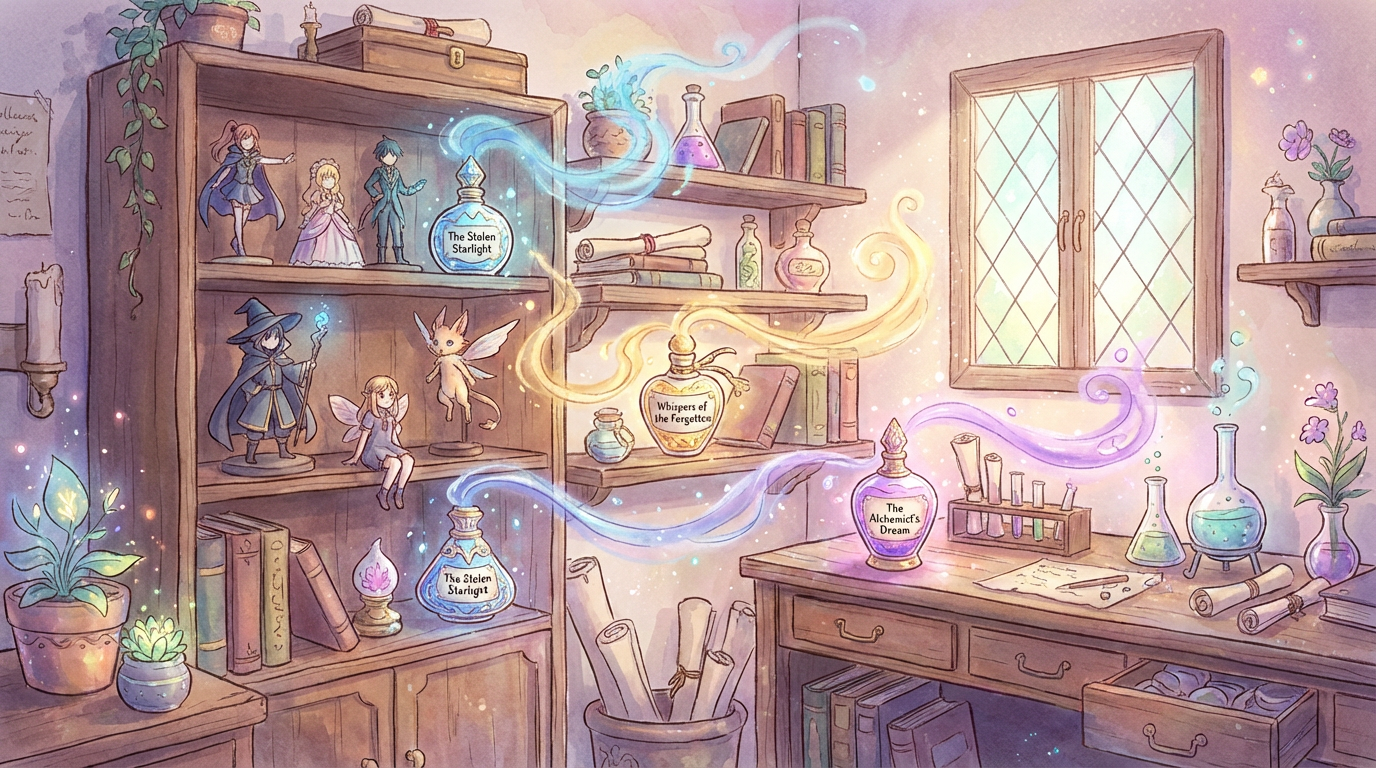
Anime figures, Nendoroids, resin statues, gacha keychains, mini perfume bottles that look like they came out of a magical girl’s dresser drawer… if you love collectibles, you already curate a tiny universe on your shelves. Adding scent is like switching that universe from mute to surround sound. Suddenly your stoic knight figure smells of smoke and leather, your pastel idol squad gives off sparkling citrus and candy, and your whole display feels more like a scene than a row of plastic.
Custom fragrance is not just for luxury brands anymore. Guides from indie houses like ADS Perfumes, Hiqili, and Lively Living show how fans can blend their own scents at home with essential oils, fragrance oils, alcohol, or carrier oils for a fraction of the usual 50–100 dollar price tag of many commercial perfumes. At the same time, niche makers and fandom-focused studios are offering fully bespoke “character scents” based on detailed briefs, from Silk Road Traders’ RPG oils to Shop Solexion’s custom blends.
In this article, I want to bridge those worlds specifically for us: people who obsess over character design, lore, and collectibles. You will get grounded perfume science, practical DIY methods, and fandom-tested ways to translate a character or collection into a fragrance you can actually wear or use to scent your display.
Why Scent Belongs Next To Your Figures And Cards
Perfumers and scent-marketing companies have been shouting about something fandom already knows intuitively: smell hardwires into memory. Research cited by scent-marketing firms like AirScent and Scent Swirl reports that a well-chosen ambient fragrance can increase the time people stay in a space by up to around forty percent and nudge sales upward by about ten percent in some retail environments. Another case study they discuss found that simply adding a targeted scent to a Nike test space boosted purchase intent by eighty percent, while a small gas station mini-mart saw sales spike threefold after piping the aroma of fresh coffee into the store.
If scent can make strangers linger longer around socks and sportswear, imagine what it can do for a shelf full of characters you already love. A carefully chosen smell:
makes a figure or OC feel more like a real person standing beside you rather than just another PVC pose
anchors specific arcs or scenes in your memory; the same way a theme song does, but more quietly
sets the vibe for your whole room or streaming corner, the way hotels use signature fragrances in their lobbies
TrendHunter highlighted this in a very fandom-adjacent way when it covered MGA’s Miniverse “Make It Mini Fragrances,” a line of miniature, real-wear perfume collectibles. There are fifteen styles and five themes—Fruity, Amber, Floral, Fresh, and Woodsy—packaged in blind mini displays that double as tiny shelves. Kids, teens, and “kidult” collectors can mix and match to make their own scents and then display them like toys. That product line exists because people want their collections to smell like something. We can take the same idea and push it deeper into character design and narrative.
Perfume Basics For Fandom Creators
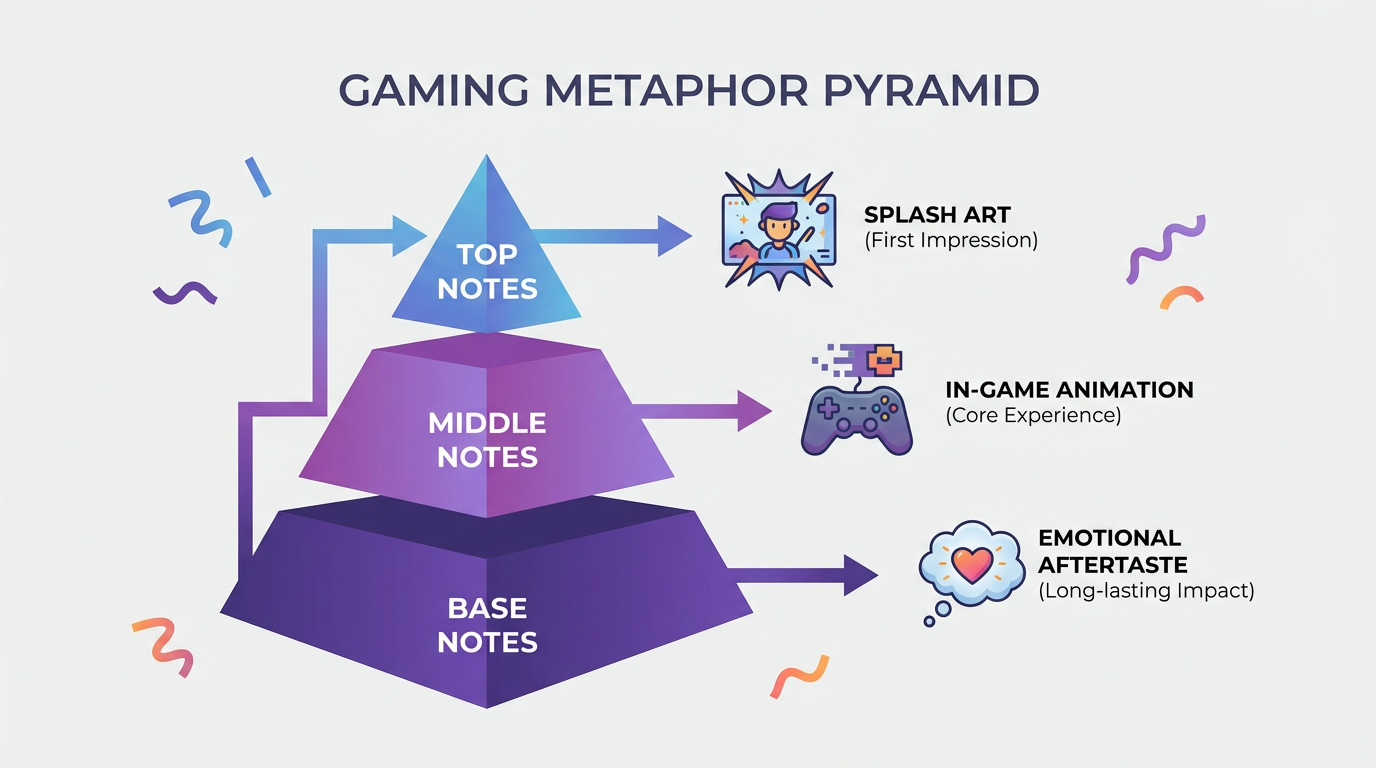
Before we start giving your favorite gunpla pilot the scent of scorched metal and green tea, it helps to know how fragrance is structured. Multiple guides, from ADS Perfumes to Hiqili, Viti Vinci, and Lively Living, all describe a similar “note pyramid”: top, middle (heart), and base.
Here is a practical summary based on their guidance.
Note layer | What you smell first vs last | Typical time on skin (from sources) | Examples that suit character design |
|---|
Top notes | First impression, light and bright; fade quickly | Roughly 5–30 minutes | Citrus like lemon or bergamot, light herbs like lavender or peppermint, airy greens, some teas |
Middle (heart) notes | Main character of the scent; appears as top fades | Roughly 20–60 minutes, sometimes 2–4 hours | Florals like rose or jasmine, spices like cinnamon and cardamom, fruits, herbal greens |
Base notes | Deep foundation; gives weight and longevity | Four hours to six hours or more; can linger on fabric for days | Woods like sandalwood, cedarwood, resins like benzoin and frankincense, vanilla, amber, musk, patchouli, vetiver |
Several beginner-friendly sources suggest starting with about thirty percent top notes, fifty percent middle notes, and twenty percent base notes in your concentrate. ADS Perfumes refers to this as a thirty–fifty–twenty rule, while Hiqili and Lively Living echo similar proportions. Viti Vinci widens the ranges a bit, suggesting around twenty to thirty percent top, thirty to fifty percent middle, and twenty to forty percent base, but the idea is the same: enough brightness to feel alive, a strong heart to carry the theme, and a solid base so the scent does not vanish instantly.
ADS Perfumes also notes that in a finished perfume, the combined fragrance materials usually make up roughly fifteen to thirty percent of the formula if you are making a richer parfum or Eau de Parfum, with the rest being carrier alcohol or oil. Below that, you enter Eau de Toilette or Eau de Cologne territory, which are lighter by design.
Think of top notes as the splash art, heart notes as the in-game animation or episode story, and base notes as the emotional aftertaste that sticks with you long after you close the tab.
From Character Sheet To Scent Brief
Professional perfumers almost never just grab random bottles and hope for the best. ADS Perfumes emphasizes starting with a written brief and a formula in percentages. Fandom perfumers who specialize in custom character scents, like the creator behind Scent of a Warden or the teams at Silk Road Traders and Shop Solexion, go even further: they ask for extremely detailed descriptions of your character, world, or brand before they start blending at all.
You can borrow that workflow for your own DIY character fragrances.
Capturing The Soul Of Your Character
Scent of a Warden was created specifically to glorify players’ original protagonists from series like Dragon Age and Mass Effect by turning them into perfume instead of just art commissions. Their guidelines are gold for anime and RPG fans trying to design scents at home. They encourage you to describe not only what your character looks like, but their biggest moral choices, weird habits, favorite comforts, and even baffling decisions. They explicitly say there is no such thing as “too much detail” if it genuinely helps illustrate who the character is.
The trick is to push every trait one step deeper. If your character always wears pristine white gloves, ask yourself why. Are they hiding the fact that their hands are permanently stained with ink? Are they a germaphobe? Did someone important give them those gloves? That “why” feeds straight into scent selection. Ink stains and libraries suggest paper, leather, and tea. Germaphobia might imply very clean, soapy, or citrus notes. Gloves from someone important might nudge you toward nostalgic gourmand notes like vanilla, brown sugar, or coffee if that person baked for them.
Silk Road Traders uses this same principle for their Create A Character Story Scents. Customers can send in character information, photos, and extra notes. The perfumer then turns that into a 1 fl oz rollerball fragrance and even includes a written narrative about how the scent reflects the character. Again, the process is story-first, formula-second.
When you write your own brief at home, do the same thing. Treat the character as a real person. Include their virtues and flaws, what they smell like after a long day in-universe, and what you as a fan want to feel when you catch that scent on your skin or around your shelf.
From Visual Cues To Fragrance Families
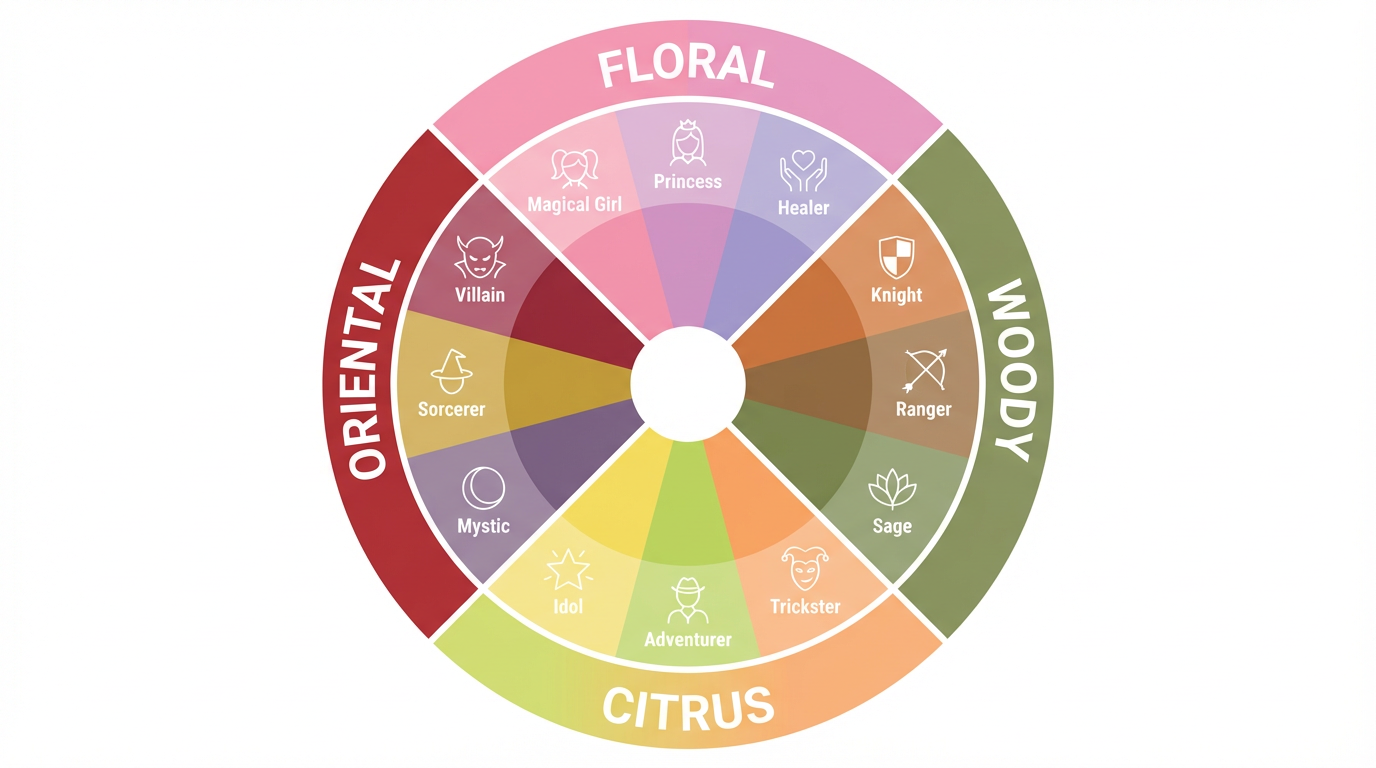
Several DIY guides (Hiqili, Lively Living, Viti Vinci, Enigma Perfumes) organize scents into families such as floral, woody, citrus or fresh, and oriental or sweet. It is surprisingly intuitive to map these onto character design tropes.
Floral families, especially rose, jasmine, neroli, and ylang-ylang, suit romantic leads, magical girls, and elegant nobles.
Woody notes like sandalwood, cedarwood, oak, teak, and vetiver are great for swordsmen, forest guardians, knights, or anyone whose story feels grounded, solemn, or ancient.
Citrus and other fresh notes such as lemon, bergamot, grapefruit, cucumber, bamboo, or lightweight musks work for energetic idols, sports anime protagonists, and characters who feel like walking morning sunlight.
Oriental or sweet profiles that mix vanilla, amber, cinnamon, tonka bean, and resins like myrrh and frankincense lean sensual, mystical, or indulgent, ideal for charismatic villains, decadent nobles, or hedonistic rogues.
The RPG scent guide from Roll for Fantasy pushes this even further by providing complete ingredient lists for fantasy environments like Airy or Fresh, Forests and Woods, Books and Libraries, Magic or Mystic, Dungeons or Swamps, Markets and Food, and more. If you have a ranger figure posed in a forest diorama, you can pull from their Forests and Woods palette, which includes pine, fir, cedar, oak, grass, amber, and frankincense. A court mage might belong in their Magic or Mystic category with amber, incense, sage, rosemary, and smoke. A scholar or librarian character benefits from their Books and Libraries palette built around bergamot, cedarwood, leather, paper, tea, and vanilla.
That guide is effectively a fragrance wheel for settings.
CandleScience’s fragrance blending article makes a similar point in a more abstract way using a scent wheel that shows complementary and kindred categories. Woody notes sit near aromatic and amber, meaning those are easy neighbors. Fruity sits across from green or aromatic, meaning those contrasts can feel vivid and complex. For character work, that means you can deliberately push tension. A bright citrus top over a dirt-and-amber base might fit a character who presents as bubbly but carries heavy secrets.
Character Class, Origin, And Emotional Arc
Scent of a Warden specifically asks requesters to include class and origin—rogue versus warrior, vanguard versus infiltrator—because that changes how a character feels. You can do that for anime and figure-based characters too.
A paladin or mech pilot who spends their life in armor may read as metal, oil, leather, smoke, and dark musks. Roll for Fantasy’s Clothes or Armor and Blacksmith theme leans heavily on notes like cade, leather, oakmoss, smoke, tobacco, and different musks, which line up well with that vibe.
A shrine maiden, healer, or priest might lean on lavender, chamomile, neroli, frankincense, and clean musks, pulling from calm spa profiles and spiritual resins.

A bard, idol, or music-focused character may want sparkling fruits and florals mixed with sweet notes like caramel or honey. Markets and Food and Spring or Summer profiles from Roll for Fantasy highlight berries, citrus, sugars, and tea that can translate directly into perfume choices.
It helps to ask yourself how you want to feel wearing the scent. Do you want to feel comforted, energized, flirtatious, dangerous, or nostalgic? Custom-perfume brands like Enigma Perfumes and Viti Vinci specifically guide clients to identify these emotional targets first, because they drive everything else in the formula.
Choosing Your Materials: Essential Oils, Fragrance Oils, And Carriers
Several of the DIY guides in the research notes agree on one core point: you do not need a corporate lab to start. Essential oils or fragrance oils, a carrier, a few glass bottles, and some droppers are enough for small experiments.
Hiqili frames DIY perfumery as an accessible art form where you can express individuality, understand how scent layers interact over time, and make personalized gifts. They and Lively Living both distinguish between essential oils, which are one hundred percent plant-derived and can be more organic and variable but may fade faster, and fragrance oils, which are synthetic or blend natural and synthetic and tend to be stronger, longer-lasting, and more cost-effective for beginners. ADS Perfumes points out that most modern professional perfumery actually uses a blend of naturals and synthetics to get both depth and performance while also protecting natural resources.
Carriers matter too. ADS Perfumes, Lively Living, and Viti Vinci note that high-proof ethanol (around 190 proof) is the classic base for spray perfumes with strong projection. Carrier oils like jojoba, fractionated coconut, almond, or grapeseed create oil perfumes that sit closer to the skin and can last longer. ADS Perfumes offers a simple DIY rule of thumb: around fifteen to thirty drops of essential oil per 1 fl oz of carrier oil for a skin-safe oil perfume.
If you prefer a perfume spray, Makesy’s DIY perfume kit uses a very straightforward recipe: about thirty percent fragrance oil to seventy percent perfumer’s alcohol. In one example, they measure roughly 3 grams of fragrance and 7 grams of alcohol for a bottle a little over 0.33 fl oz. They also note that twenty to thirty percent fragrance oil in an alcohol base generally gives a strong, lingering scent, which matches the parfum or Eau de Parfum concentration ranges ADS Perfumes discusses.
You can think of the options like this:
Material type | Based on sources, what it is best at | Tradeoffs mentioned in guides |
|---|
Essential oils | Natural, complex, evolving; feel “authentic,” emotionally nuanced | More expensive, batch-to-batch variability, sometimes fade faster; must be diluted and patch tested |
Fragrance oils / aroma compounds | Consistent, long-lasting, wide range including rare or “weird” notes; often more budget-friendly | Synthetic; some sources (like AirScent) caution people sensitive to certain synthetics to choose carefully |
Alcohol carriers | Strong projection, classic perfume feel, good for spray bottles and room mists | Can feel drying on some skin, more volatile so top notes fly quickly |
Oil carriers | Closer-to-skin scent, longer wear, gentle application; good for rollerballs and pulse points | Less projection, can feel heavier or oily if overapplied |
Custom character-blend makers use this palette too. Silk Road Traders dilutes synthetic fragrance oils in fractionated coconut oil and dipropylene glycol for skin-safe application, while Shop Solexion uses a very wide fragrance library that even includes “weird” notes like beer, whole wheat bread, smoke, tanned leather, blood, and ink to capture very specific character concepts.
A Simple DIY Workflow For Character Scents
Different sources offer slightly different workflows, but they harmonize well if you combine them. Here is how I usually do it at a fandom desk littered with art books and acrylic stands, heavily informed by Hiqili, Lively Living, ADS Perfumes, Makesy, and Twinkle Apothecary.
First, choose three to five oils that match your character brief and cover top, middle, and base notes. Hiqili suggests exactly this as a starting point and recommends small test blends of about ten to twenty total drops so you do not waste materials.
Second, sketch a rough ratio for those notes. Using the thirty–fifty–twenty guideline, you might aim for three parts top, five parts heart, two parts base within the fragrance portion. Twinkle Apothecary’s build-your-own scent service works that way behind the scenes: customers select one top, one middle, and one base from accords like Zest, Lavender, Tea, Rose, Cedar, Sandalwood, Amber, Earth, Nectar, and Cream, and the perfumer blends them into a balanced, multifaceted natural fragrance. There are already over ninety different three-note combinations in that small palette, so your own note box will explode in possibility even faster.
Third, add your carrier. Hiqili’s basic method suggests that the carrier should be about eighty percent of the total volume for a personal perfume, with the remaining twenty percent being your fragrance notes. Makesy’s thirty percent fragrance and seventy percent alcohol ratio is slightly stronger and sits comfortably in the Eau de Parfum range according to ADS Perfumes’ concentration breakdown. As long as you stay inside that rough fifteen to thirty percent fragrance window and patch test, you are working in a zone that many guides consider reasonable for personal use.
Fourth, mix and then wait. Hiqili advises gently swirling your blend and letting it rest for forty-eight to seventy-two hours before re-smelling, while ADS Perfumes and Lively Living emphasize longer maceration for more complex perfumes. ADS Perfumes writes that some concentrates are matured before dilution, then macerated again after dilution in alcohol, often for two to four weeks and sometimes one to three months, with chilling and filtration before bottling. That kind of timeline is optional for simple hobby blends, but it is worth knowing that perfume is a slow art; many professional compositions go through dozens or even hundreds of trials.
Fifth, document your experiments.
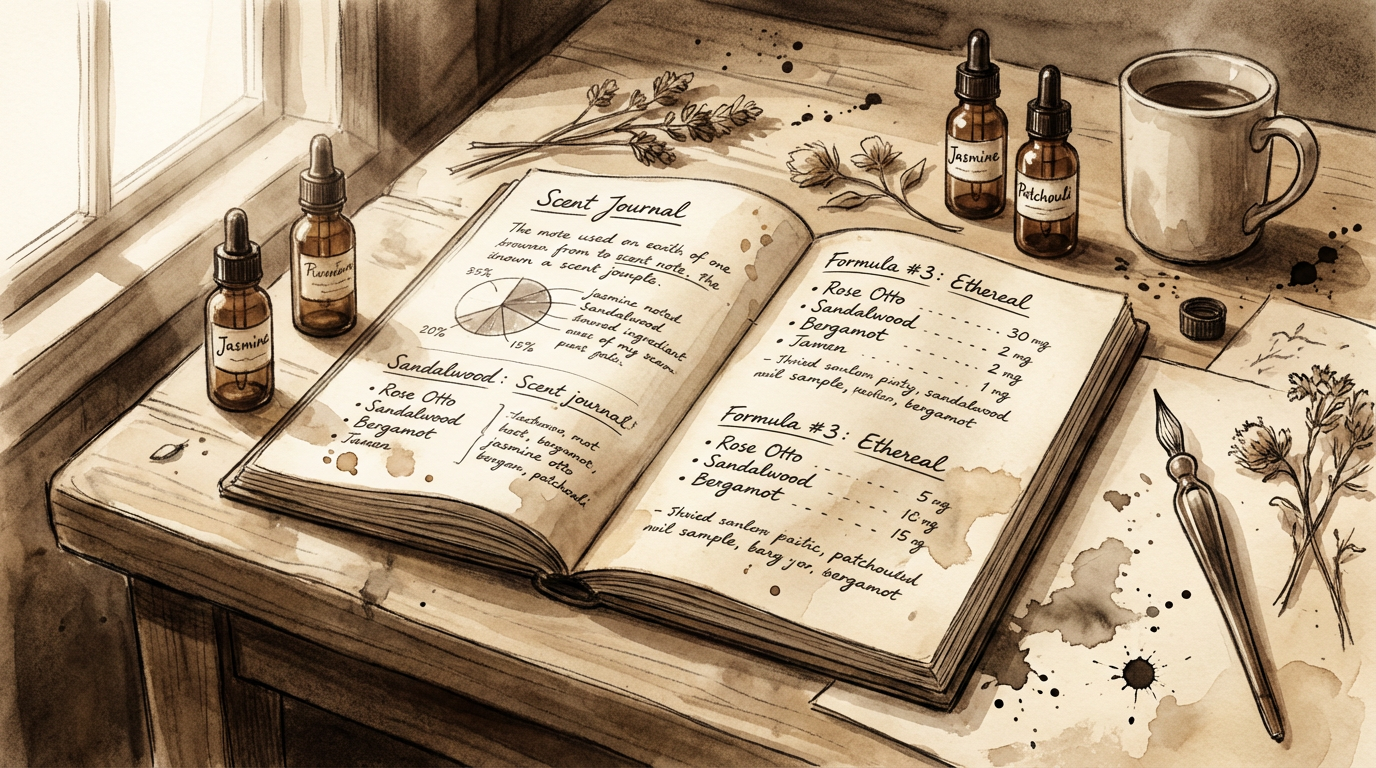
Hiqili recommends keeping a scent journal where you list which oils you used, how many drops, the date, how it smelled fresh, and how it smelled again after about a week. ADS Perfumes strongly emphasizes weighing ingredients on a digital scale accurate to at least 0.01 grams, with 0.001 grams preferred for tiny test batches, because that lets you reproduce a formula exactly. Even if you are just counting drops at first, writing everything down is what eventually turns “cool accident” into “signature aroma.”
Finally, test like a fan, not only like a perfumer. Put the scent on your wrist and then pick up the figure, tarot card, or standee that inspired it. Does the combination feel right? Does the drydown on your skin feel like the character’s last line in a season finale, or does it drift into a mood that belongs to someone else?
Safety And Comfort, Especially With Essential Oils
Lively Living and similar guides are very clear about safety, and fandom experiments are no exception. Essential oils should never be applied undiluted to the skin. Always dilute them in carrier oil or alcohol. Do a patch test on a small area and wait to make sure you do not itch or turn red.
Cold-pressed citrus oils like bergamot, lemon, lime, and grapefruit can make skin more sensitive to sunlight, so many DIY perfume guides advise caution and keeping those blends away from direct sun exposure after application. Working in a ventilated room, keeping oils away from children and pets, and clearly labeling everything with the name, ingredients, and creation date are all standard practice in the sources.
If you are scenting your entire room or display shelves rather than your skin, scent-marketing guides like Scent Swirl and AirScent suggest keeping fragrance subtle and diffused, not overwhelming. They recommend matching diffusion method to space, from small reed diffusers and candles to HVAC-linked cold-air systems that can cover tens of thousands of cubic feet. For a figure shelf, even something as simple as a very lightly scented candle at a safe distance or a tiny room spray is enough.
Turning Collectibles Into Mini Perfume Worlds
Miniverse Make It Mini Fragrances proves that fragrance and collectibles already belong together. The five official scent themes in that line—Fruity, Amber, Floral, Fresh, and Woodsy—are a perfectly good naming scheme for your own character shelf perfumes.
You could create a Fruity theme for brightly colored idols or summer beach episodes, an Amber or Woodsy theme for fantasy warriors and forest guardians, and a Fresh or Floral theme for school-life or slice-of-life displays. Because the Miniverse line’s blind packages double as display shelves, they implicitly tell you something important: packaging and presentation matter. When you decant your own blends into small dark glass bottles or rollerballs, treat those like tiny props on the shelf as well. They can sit beside or behind figures as in-universe objects.
Scent placement also matters. Scent Swirl’s best-practices article notes that placing diffusers or machines directly next to vents or open windows can waste fragrance and create uneven coverage. The same applies on a micro scale. If you keep a scented rollerball standing upright directly under a hot desk lamp, the heat can push evaporation and slowly alter the scent. Keeping bottles in cool, dark spots and using UV-protective glass, as ADS Perfumes recommends, will help your blends stay stable longer.
You can even build whole “zones” in your room. A Books and Libraries zone for your manga shelves using tea, leather, and paper notes; a Forests and Woods zone for your fantasy figures with cedar, pine, and moss-like accords; a Magic or Mystic zone where incense, amber, and spices carry your sorcerers, witches, and demons.
DIY Versus Commissioned Character Scents
Once you start thinking in character briefs and note pyramids, you quickly see two paths: blend it yourself at home, or commission a custom blend from an artisan. Both are valid, and the research notes make it clear that the professional route is intentionally accessible to fans now.
Maison 21G openly says its mission is to shake up mainstream perfumery by letting individuals create their own perfumes that reflect their “scent of the soul,” using haute couture ingredients and AI or expert guidance. Enigma Perfumes focuses on personalized scents built around an individual’s preferred notes, style, and skin chemistry, positioning custom perfumes as unique signatures and even as one-of-a-kind gifts. Viti Vinci emphasizes natural, eco-friendly ingredients and a guided process where perfumery is equal parts art and science.
On the fandom-specific side, Shop Solexion’s Custom Character Blends translate OCs, existing franchise characters, DnD subclasses, movies, aesthetics, or personal brands into candles or roll-on fragrances. They invite detailed descriptions, character art, color swatches, and specific scent references, and even advertise unusual notes like bread, smoke, blood, and ink. Their typical timeline for a brand-new custom scent is about two to four weeks, plus shipping, with reorders dropping to about one to two weeks since the formula already exists. They are honest about the tradeoff: if an idea is truly impossible with available materials, they will cancel and refund, but they cannot refund just because a buyer ends up disliking a scent that was crafted from their brief.
Silk Road Traders’ Story Scents are also explicitly non-refundable, emphasizing that each is an artistic creation of the master perfumer, not a mass-market product. Their Create A Character scent includes not only the oil but a certificate describing the notes and a narrative.
DIY, on the other hand, gives you total control over iteration. Hiqili and Lively Living both encourage ongoing refinement; ADS Perfumes describes professional perfumers doing dozens or hundreds of trials, and there is nothing stopping you from doing the same in smaller, cheaper batches. Twinkle Apothecary’s build-your-own scent offering sits in between: you choose up to three or four single-note accords, the perfumer mixes them into a natural fragrance, and all sales are final. That model gives you creative input without making you manage scales, pipettes, or maceration times.
If you love the hands-on craft and already own a small army of droppers and bottles, DIY is very satisfying. If what you really want is to tell your Warden or idol group’s story once and then receive a finished, polished perfume in the mail, commissioning a pro is worth considering.
Advanced Nerdy Stuff For When You Get Obsessed
The deeper you go, the more perfumery starts to feel like a gacha where each pull is a new facet of an existing character. ADS Perfumes talks about professional labs using gas chromatography–mass spectrometry to separate and identify components in a fragrance, understand how raw materials interact, and detect off-notes or contaminants. That is well beyond home experimentation, but it is fun to know that even the huge designer bottles in department stores are backed by that kind of analysis.
At the hobby level, upgrading to a digital scale that measures to at least 0.01 grams, and ideally 0.001 grams for very small batches, is a game changer. ADS Perfumes explains that this accuracy reduces waste of expensive ingredients, enables exact record-keeping, and lets you reproduce your favorite formula consistently. Combining that with a notebook or spreadsheet turns your fan-scent experiments into a real catalog.
Viti Vinci’s guide mentions using fixatives and base materials like resins (benzoin, myrrh), woods (sandalwood), and musks to extend longevity. ADS Perfumes echoes that, listing fixatives such as benzoin, labdanum, Ambroxan, Iso E Super, and Galaxolide at about three to five percent of a formula to slow evaporation and stabilize blends. That is how you get from a cute top-heavy citrus that vanishes in fifteen minutes to a grounded perfume that still whispers of your character six hours later.
CandleScience’s fragrance wheel can help you strategically explore new combinations. Once you know your character sits mostly in woody and amber territory, you can look across the wheel to complementary categories for contrast or slide sideways to kindred categories for more familiar, harmonic blends.
And when you are ready to scent not just your wrist but your whole streaming or gaming area, scent-marketing tech becomes relevant. AirScent describes cold-air diffusion systems that push essential oils as a dry mist through HVAC ducts, covering spaces as large as roughly fifty thousand cubic feet. That is more than most bedrooms and offices, but even small stand-alone diffusers or candles can borrow the same idea: a consistent but subtle scent presence that makes your room feel like your favorite series’ world.
Example: A Mecha Pilot And A Shrine Maiden
To make all this less abstract, here is how I would approach two common archetypes. These are composites, but every choice comes straight out of the note palettes described in the sources.
For a battle-worn mecha pilot figure, I start the brief with their environment: metal hangars, arc flashes, maintenance bays, and late-night strategy sessions with coffee and stale bread.
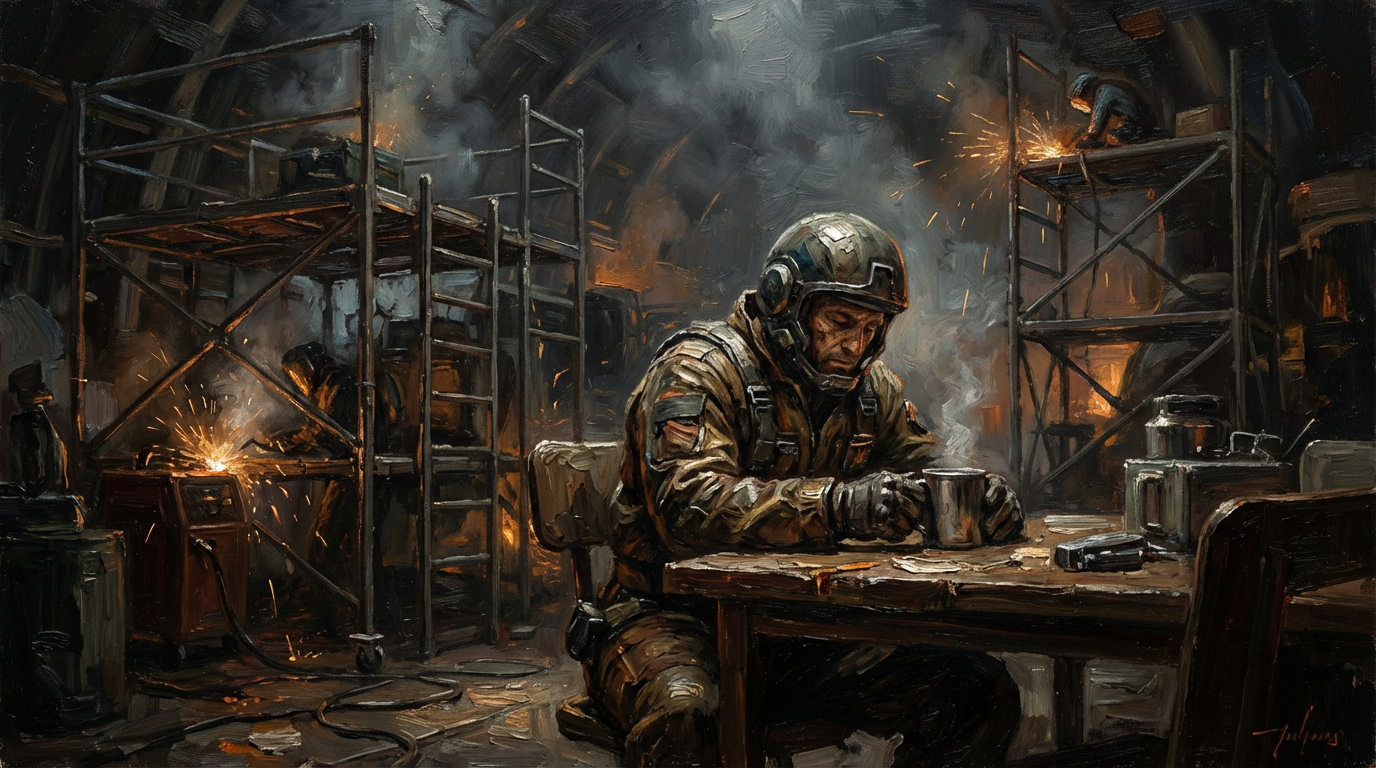
Roll for Fantasy’s Clothes, Armor, and Blacksmith theme suggests leather, smoke, musks, oakmoss, and even birch tar. Shop Solexion’s willingness to play with notes like smoke, whole wheat bread, and beer shows that “industrial” can be literal. In my own blend, I might keep things simple: a top of sharp citrus and maybe a hint of eucalyptus for that sterile, almost medicinal cockpit air; a heart of leather and cedarwood for the pilot’s jacket and the mech’s interior; and a base of vetiver, dark musk, and a touch of tobacco to evoke burned fuel and sleepless nights. The overall family would sit between woody and aromatic, maybe with a smoky edge pulled from those dungeon and desert scent lists in Roll for Fantasy’s guide.
For a shrine maiden or exorcist character, I pull heavily from spa and tranquil profiles plus Magic or Mystic themes. Lively Living describes top notes like lavender, peppermint, and light herbs; Roll for Fantasy’s Magic or Mystic list adds amber, frankincense, sage, rosemary, smoke, and citrus. My blend might open with soft lavender and a gentle citrus like bergamot, move into a heart of neroli and green tea, and rest on a base of sandalwood, frankincense, and a clean white musk. The emotional goal is calm focus with a streak of otherworldly light, something you could confidently use both as a personal scent and as a subtle room fragrance near your shrine-themed shelf.
The point is not to copy these materials exactly but to show how each note choice tells part of the story, the same way a pose or facial expression does in figure design.
Short FAQ For Fandom Perfumers
Question: Do I really need lab gear like beakers and milligram scales to start? Answer: No. Hiqili and Lively Living both stress that you can begin with simple droppers, small glass bottles, and good oils. A digital scale and lab glass become helpful once you want to recreate formulas precisely, which ADS Perfumes emphasizes for serious blending, but they are not mandatory on day one.
Question: Can I mix essential oils and fragrance oils in the same blend? Answer: Yes. Hiqili explicitly encourages combining the two, noting that natural and synthetic components together can yield richer, more complex profiles than either alone. Many professional perfumes, according to ADS Perfumes, already use a mix to balance authenticity, performance, and resource sustainability.
Question: How do I make a character scent last longer on my skin? Answer: Based on ADS Perfumes, Viti Vinci, and Lively Living, you can lean more heavily on base notes like woods, resins, vanilla, amber, and musks, include small amounts of fixatives such as benzoin or other resinous materials, choose an oil base or layer with matching scented lotions, and let your perfume rest for days or weeks so it fully melds before regular wear. Applying to pulse points and avoiding rubbing your wrists together will also help the scent evolve more smoothly.
When you start thinking of fragrance as fandom storytelling, your shelf becomes a lab, your OCs and figures become briefs, and every bottle is a side-story you can wear.
Whether you are weighing out meticulous fifty–twenty–thirty formulas or asking a custom perfumer to bottle your favorite RPG party, you are doing the same thing: giving your characters an invisible, unforgettable presence in the room with you.
References
- https://www.bpal.org/topic/85685-creating-characters-through-scent-suggestions-please/
- https://www.soapguild.org/tools-and-resources/resource-center/73/beginners-guide-to-fragrance-blending/
- https://thesilkroadtraders.net/create-a-character-scent/
- https://www.maison21g.com/?srsltid=AfmBOop9W8Vge8YtXUpMrmA8qQKkCtOUT6ANDGskV7eAkr3MWappHOxO
- https://scentofawarden.tumblr.com/customs
- https://ads-perfumes.com/how-to-master-fragrance-formulation/?srsltid=AfmBOoqleFSwQ6uLga8lRoxotIX8mszQA_bp-7dgpyKer_ca1kNY12tO
- https://www.airscent.com/how-to-create-a-signature-scent-or-custom-made-branded-fragrance/
- https://www.enigmaperfumes.com/post/personalize-your-scent-with-custom-perfumes
- https://www.lemon8-app.com/alyssagonzalez833/7320297608428732934?region=us
- https://rollforfantasy.com/diy/scent-guide.php