Effective Waterless Cleaning Techniques for Collectible Figurines
Waterless cleaning lets you keep anime figures, statues, and fragile collectibles dust-free, vibrant and valuable without dunking them in water or spraying mystery chemicals.
Imagine spotting a haze of dust over your favorite scale figure’s hair spikes, or a gritty line forming along your PVC hero’s jaw just before a convention guest visits your collection room. Many collectors find out the hard way that neglected pieces can lose serious resale value. Some market analyses suggest figures kept visually pristine can sell for up to 50% more than similar but grimy ones. With the right dry tools and habits, you can remove that layer of dust, protect paint and decals, and extend your collection’s life with simple, repeatable routines.
Why Waterless Cleaning Matters for Your Shelf
The first reason to go waterless is mechanical safety. Porcelain, polychrome resin, and cold-cast statues can have unfired touch-up paints, ultra-thin lace, or “spaghetti” textures that chip if you push a wet cloth into them. Some ceramic glazes also trap moisture and cleaners in tiny cracks that keep reacting long after you’re done. Gentle surface care for these materials is built around light dusting and controlled contact, not soaking or scrubbing, which echoes cautious home-care advice for porcelain and pottery collectibles from sources such as Martha Stewart.
The second reason is health and sustainability. Many conventional sprays and wipes load your room with synthetic fragrances and chemical residues while also burning through disposable paper products. Sustainable cleaning research highlights how reusable microfiber cloths can remove the majority of surface contamination, often with little more than water, while cutting back on single-use waste and harsh ingredients. That same logic scales well to a figure display: waterless cleaning with good tools keeps shelves and cases in shape without turning each session into a chemistry experiment.
The Core Waterless Toolkit for Figurine Collectors
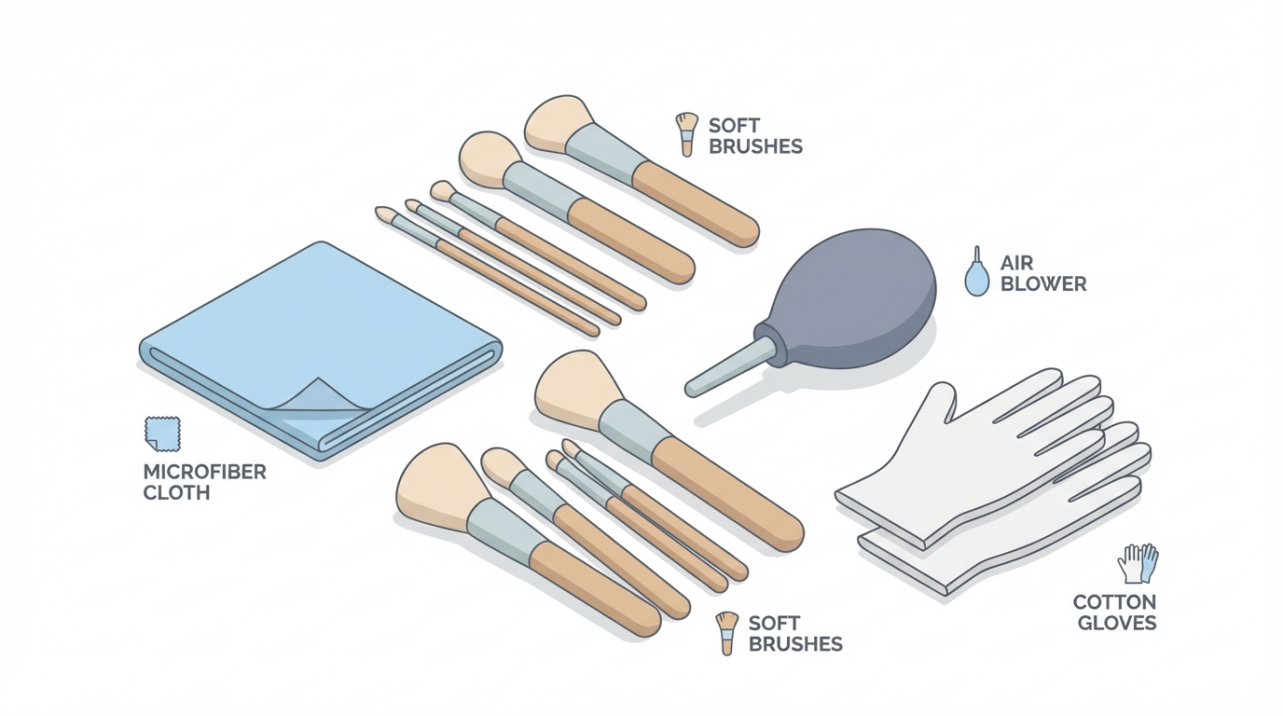
The backbone of a waterless routine is a small set of soft, reusable tools: microfiber cloths, makeup or artist’s brushes, and a couple of air-based helpers. Studies on sustainable home cleaning show that high-quality microfiber cloths can remove roughly 98% of bacteria from smooth surfaces with just water, thanks to their dense fibers and electrostatic properties. When used dry on smooth PVC and ABS figures, those same microfiber cloths grab fine dust instead of smearing it, making them a safer choice than paper towels that shed lint and can scratch.
For intricate areas and fragile surfaces, nothing beats a soft brush. Professional dusting tips for delicate ornaments and silk flowers sometimes recommend using a lightly misted small paintbrush or makeup brush to whisk dust from tight spots without stressing the object, but for figures you should keep the brush dry. That approach transfers well to anime collectibles: a fluffy, clean eye-shadow brush can slip between hair strands on a shonen protagonist or under the sculpted folds of a cape. For porcelain and pottery with carved or pierced details, home-care guides also recommend soft brushes to reach holes and crevices, underscoring how gentle bristles are the default tool for fragile surfaces.
Air tools need a little nuance. For robust PVC action figures, short bursts of canned air, held at a distance, can clear dust out of elbow joints or armor vents. Porcelain specialists warn that canned air can be too aggressive for fine flowers, lace, or old unfired paint, both from the force of the jet and from propellant residues it may leave behind. Collectors of high-end statues often favor a hand-squeezed rubber bulb blower—essentially a camera lens blower—which still moves dust without propellants or sudden pressure spikes, making it much safer for fragile polychrome elements.
A slightly more advanced concept is the use of gels and minimally wet, “press and peel” systems that behave as almost waterless from the figure’s perspective. Conservation research on wooden musical instruments has shown that biopolymer cleaning gels can be loaded with mild surfactants and then laid over soiled surfaces for a few minutes, after which the gel is peeled away along with embedded grime. These gels are designed to hold most of the liquid inside their structure, limiting how much moisture reaches the artwork’s surface and reducing mechanical stress compared with freer liquid methods. Over the last couple of decades, conservators have also pushed aqueous surface cleaning toward carefully tuned, gel-based systems that prioritize reversibility, minimal intervention, and worker safety over brute-force solvent use.
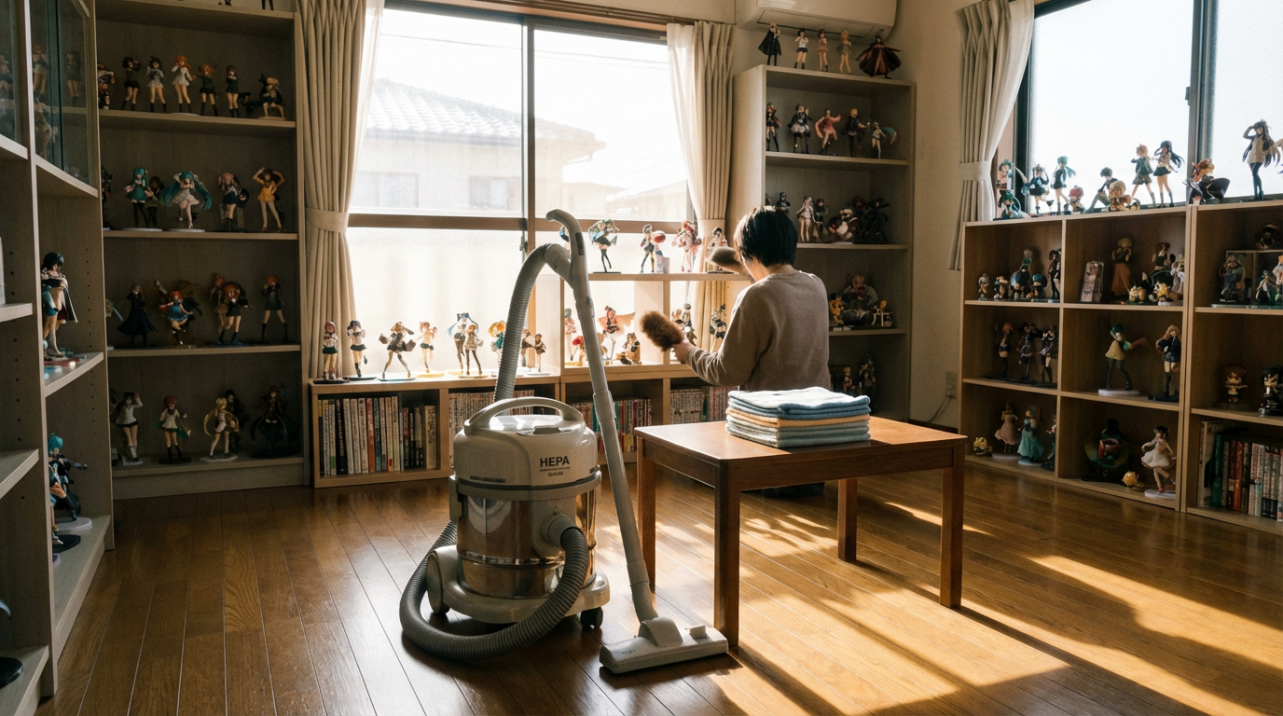
Finally, think about dust not just as an aesthetic issue but as a carrier for microplastics and other contaminants. A microplastics researcher at UCSF points out that indoor dust can be loaded with plastic fragments and chemicals like BPA and phthalates, and recommends simple, low-toxicity cleaning approaches and vacuums with HEPA filters to limit exposure. For figure rooms, combining waterless dusting on the figures themselves with HEPA vacuuming around shelves helps control both what you see and what you breathe.
Waterless Routines by Figure Type
PVC and ABS Action Figures, Nendoroids, and Scales
Mass-market PVC and ABS figures are relatively forgiving, but paint, tampo decals, and fine facial details still demand respect. A reliable, fully waterless routine starts with a large, soft makeup brush or anti-static brush. Work from head to base and flick dust away in short strokes instead of dragging grit across the surface. When shelves get fluffy with dust bunnies, you can pair this with a microfiber cloth on the base or stand to keep everything tidy without adding moisture.
For tight joints and crevices—like folds in cloaks, mech vents, or under skirts—short pulses of canned air work on PVC as long as you keep the nozzle at a respectful distance and avoid tilting the can until it spits liquid propellant. Some home dusting guides recommend combining vacuum nozzles with a barrier like pantyhose to catch small items; for figures, you can do the reverse by using a dust brush or air to dislodge particles, then following up with a microfiber cloth or a vacuum-guard setup on the shelf below to capture what falls without risking accessories being sucked away.
When a figure starts to feel slightly sticky from plasticizer migration or long exposure to heat, waterless methods can only do so much. In those cases, the safe approach is to start with your dry routine until all loose dust is gone, then test a barely damp microfiber corner on an inconspicuous spot. If the cloth lifts grime but no color, you can gradually extend the treatment—but the key is that every wet step comes after you’ve done everything possible dry, so you never grind abrasive particles into the paint.
High-End Resin, Cold-Cast, Porcelain, and Polychrome Statues
This is where waterless cleaning really shines, and where rushing with a spray bottle can turn a grail into a regret. Collectors of cold-cast porcelain have worried about how even a basic dusting might snap off delicate spikes or wings; posts on StatueForum capture that anxiety in short questions about how to clean fragile statues without breaking them. That concern is justified. These pieces often have fragile add-ons and complex paint layers that should be treated more like miniatures in a museum than plastic toys.
Start by stabilizing the statue. Work seated at a table, with a padded mat or folded towel under the base so that if your hand slips, the piece has a soft landing. For regular maintenance, use only soft, dry brushes: small artist’s rounds for eyes and tiny folds, slightly larger makeup brushes for cloaks and armor, and a rubber bulb blower for lace, fine hair tips, and any area where even light bristle contact feels risky. The goal is to tease dust loose and let gravity pull it away, not to buff the surface.
Understanding surface type matters. Glazed porcelain tends to be smoother and slightly more tolerant of light, controlled moisture, while bisque or matte finishes, especially those with colored or unfired retouching, can be far more vulnerable. Home-care guidance for porcelain collectibles emphasizes that before you even think about washing, you should assess glazed versus unglazed areas and look for any prior restorations or overpaints, because those can lift or smear if you get them wet or rub too hard. For pieces where you suspect unfired paint or where the matte texture feels almost velvety, sticking to waterless dusting and avoiding solvent-based cleaners is the safest long-term play.
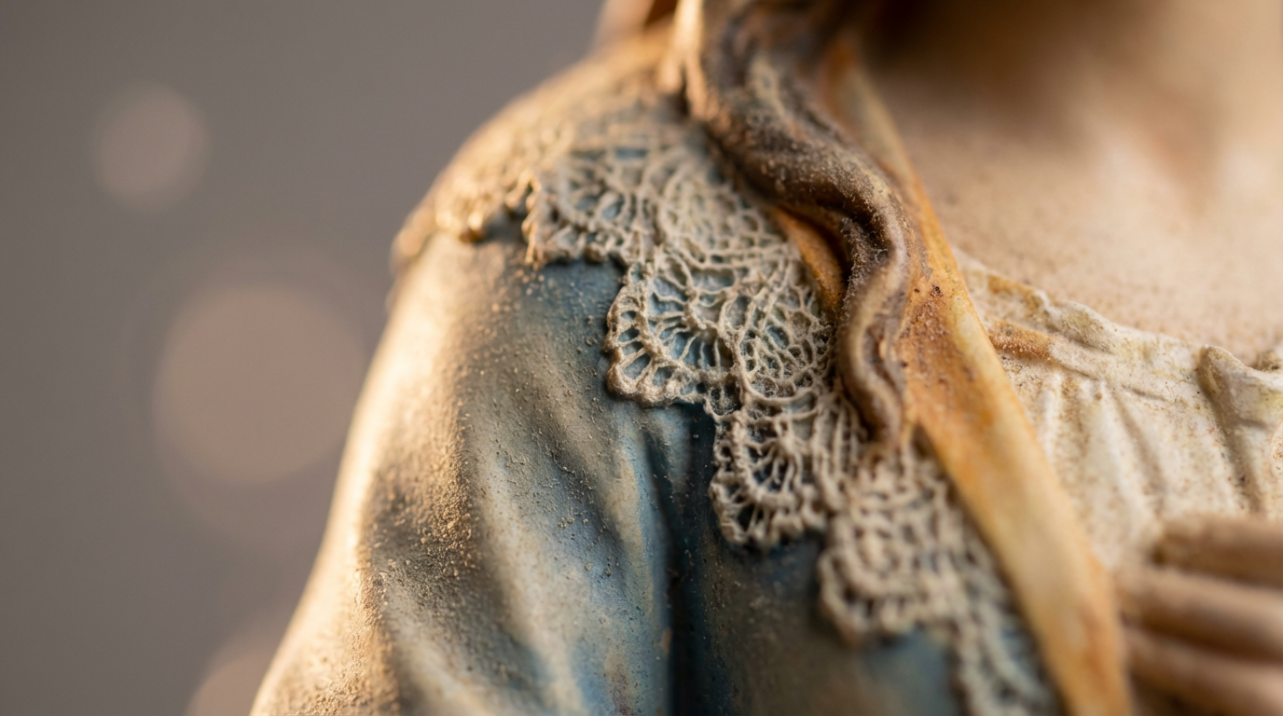
For statues with ornate “spaghetti” textures, pierced lace, or micro-flowers, even normal brushing can snag. Here, a combination of bulb-blower air and the absolute softest brushes you own is your friend, and you may decide to tolerate a hint of residual gray in exchange for structural safety. Advanced conservators sometimes resort to the gel-based systems mentioned earlier when they must remove embedded grime from such textures, precisely because gels can be laid on and peeled off with minimal lateral stress—but that level of intervention is best left to professionals with experience in conservation science, not a late-night cleaning session before a group watch of a new season.
Crystal and Glass Anime Props and Bases
Crystal bases, logo plaques, or glass display props turn any figure into a centerpiece, but they are magnets for fingerprints and fine dust. General guidance for crystal figurines recommends creating a safe setup with a cushioned surface, handling pieces by their thicker sections, and relying on lint-free cloths and soft brushes rather than abrasive pads to keep the surfaces pristine. On your display, that translates into a waterless routine of gloved handling—cotton or nitrile gloves to avoid skin oils—plus a dry microfiber cloth to buff away smudges and a soft brush for grooves or engraved text.
Because glass and crystal show streaks easily, it can be tempting to reach for glass cleaner sprays. From a waterless perspective, it is better to reserve those for separate, off-shelf cleaning sessions, and only after you’ve exhausted pure mechanical methods like dusting and buffing. For crystal pieces near resin or painted bases, skipping aerosol cleaners entirely around the display reduces the chance of overspray etching a finish or fogging a clear PVC effect part.
Sustainable and Safe Waterless Cleaning
One underrated advantage of a waterless-first approach is how naturally it aligns with sustainable cleaning habits. The University of Minnesota’s sustainability guidance points out that switching from disposable paper towels and wipes to reusable cloths and tools dramatically cuts household waste, and that microfiber plus plain water can do heavy lifting without resorting to strong chemicals. If your figure cleaning kit is a handful of reusable cloths, a couple of brushes, and a bulb blower, you already reduce trash and the number of products taking up space under your sink.
Chemical safety is another layer. Microplastics research from UCSF raises concerns about how plastics and associated chemicals like BPA, phthalates, and PFAS shed and accumulate in dust, and recommends low-toxicity cleaning strategies, including simple ingredients and a vacuum with a HEPA filter, to limit exposure indoors. Translated into a figure room, that means prioritizing mechanical dust removal—brushes, cloths, vacuuming around shelves—over fragranced sprays, and being very cautious about mixing or layering commercial cleaners. The UCSF guidance also makes a blunt point: never combine vinegar-based solutions with bleach, because that can release chlorine gas. Even if you are not planning to use vinegar on your figures, the rule of thumb is to avoid improvised chemical cocktails anywhere near your collection.
For edge-case scenarios—say, a shelf in a rented place that was heavily sprayed with pesticides before you moved in—technical advice from the National Pesticide Information Center warns that bleach and some detergents can react dangerously with pesticide residues, and that porous items sometimes cannot be safely decontaminated. In practical collector terms, if you suspect a display area has a history of heavy chemical use, it can be safer to relocate your shelves or replace porous backdrops rather than trying to “neutralize” the space with more aggressive cleaners.
Looking ahead, large-scale engineering projects are exploring entirely waterless dust removal using electric fields. A team at UNLV is developing nanoparticle coatings for solar panels that electrically charge dust particles and then sweep them off the surface using controlled electric fields, aiming to cut down on water use for cleaning solar farms in dusty climates. While that technology is still in the lab and designed for utility-scale hardware, the underlying idea—that dust can be moved and released with fields rather than liquid scrubbing—echoes what collectors already do in miniature with static-charged microfiber, careful air flows, and non-contact tools.
Common Waterless-Cleaning Mistakes to Avoid
One of the easiest mistakes to make is cleaning in the wrong posture and environment. Standing over a shelf, holding a statue one-handed while brushing with the other, leaves no margin for error. Porcelain-care advice stresses handling figurines with time and patience, often seated at a table with a soft towel underneath. The same discipline should apply to high-end anime statues and scale figures: sit down, stabilize the base, and move your hands slowly.
Another trap is over-brushing or using the wrong tool just because it is nearby. A stiff, old toothbrush reserved for scrubbing bathroom grout has no place near a matte-painted PVC jacket or a bisque dress. If you feel the urge to “really get in there” to chase a tiny dark speck, pause and ask whether you are about to abrade paint for the sake of something only you can see up close. Waterless cleaning should feel more like dust floating away than like scouring.
Finally, treating every cleaning session as an excuse to try new products can backfire. Conservation literature repeatedly emphasizes minimal, reversible intervention and warns that even mild cleaners can stay active if they sink into porous substrates or tiny cracks. Add in the chemical interaction risks highlighted by pesticide and microplastics researchers, and the safest rule becomes simple: pick a small, low-toxicity toolkit; test on inconspicuous spots; do not mix products; and lean hard on pure mechanical dusting before you reach for anything that smells like a laboratory.
FAQ
Is waterless cleaning enough for yellowing or sticky plastic?
Usually, no. Yellowing in PVC or ABS is often a chemical change in the plastic itself rather than surface dirt, and waterless methods like dusting and buffing cannot reverse that. Stickiness may be partly removable with a careful, minimal-moisture wipe after you have fully dusted, but if the underlying plasticizers are migrating, you are mostly managing symptoms rather than curing the cause. Waterless cleaning will keep things from getting worse by keeping abrasive dust off the surface, but it cannot turn back material aging.
How often should you dust your figurines?
For open shelves in a normal living space, a light waterless dusting every week or two keeps buildup from becoming stubborn. Collectors who move pieces frequently or live in dustier environments may favor shorter intervals. Display cabinets or curios dramatically slow dust accumulation, so a monthly or even quarterly dusting inside the case may be enough, especially if you also keep the room’s general dust levels in check with HEPA vacuuming and regular filter changes.
What is the safest way to test a new cleaning method?
Choose one expendable, low-sentiment piece made of the same material and with similar paint or decals as your more valuable figures. Perform your full waterless routine there first, and if you decide to introduce any moisture or new product, apply it sparingly to an inconspicuous area such as the underside of a base. Watch not only for immediate color transfer or surface change but also for any dulling or tackiness after the piece has sat for a day or two. If anything feels off, retire that method and go back to purely mechanical dusting.
A good collection care routine feels less like a chore and more like a quiet ritual with your favorite characters: you check in on their condition, brush away the week’s dust, and make sure everyone on the shelf is ready for the next binge-watch or photo session. Lean on soft brushes, microfiber, and controlled air, resist the urge to over-wet or over-spray, and your figures will keep telling their stories in crisp lines and bright colors for years to come.