Hatsune Miku has caught people's hearts all over the world, from her simple beginnings as the face of voice synthesis software to becoming a worldwide pop culture phenomenon. However, her amazing journey is clearer in how her figure designs have changed over time. Not only do these items tell the story of a character, but they also change the way we think about virtual entertainers.
The Birth of Hatsune Miku
When artist KEI brought Miku to life for the first time in 2007, they created her iconic look: twin turquoise pigtails, a future outfit, and the unique "01" mark. It was easy to understand the design brief: make a figure that embodied the voice of the future for the future. KEI's interpretation hit the mark perfectly, creating an aesthetic that would influence digital art for years to come.
Miku's design was so popular because it was the perfect mix of simple and unique. The gray, black, and teal color scheme made her stand out right away, and her long pigtails resisted gravity in a way that looked natural and impossible at the same time.
Hatsune Miku's Exciting Design Updates
The 2016 V4X redesign by iXima marked a significant shift in Miku's aesthetic journey. While maintaining her iconic elements, iXima took a bold approach by reducing her signature hair volume - a change that sparked intense discussions within the collecting community. S
The 2020 NT (New Type) version, also crafted by iXima, introduced what many consider a perfect balance between innovation and tradition. The dynamically flowing twintails created exciting new possibilities for figure manufacturers, while the addition of translucent arm covers and glossy outfit details showcased advancing production techniques.
If you want to build a complete collection, here are some projects by artists that you should know about:
- LAM's 2019 Cyberpunk Version: This design has beautiful metallics and detailed mechanical details that shine in the light, making it a stunning addition to any show.
- Tama's 2020 Interpretation: This version has airy, transparent parts and layered clothing, showing how far figure making has come.
- Mika Pikazo's 2022 Street-Style Look: This piece really jumps out in any display case thanks to its bright colors and pops of urban style.
Special Figure Edition of Hatsune Miku
The creation of limited editions Mikus has become a beloved ritual that lets artists try new things while staying true to the character. The different versions of Miku show how her form can be changed to fit different themes.
SNOW Hatsune MIKU Series
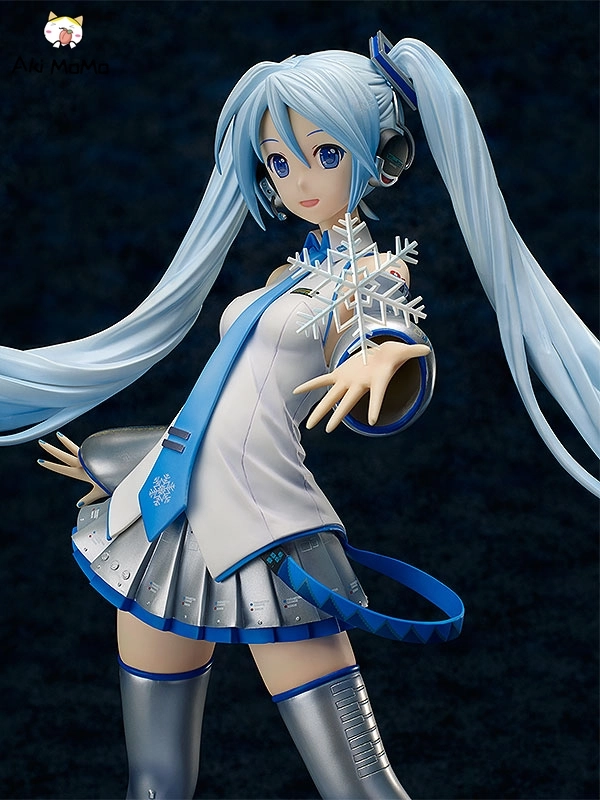
The SNOW MIKU series has been a big part of the Sapporo Snow Festival since 2010. The community holds a competition every year to choose the design— a truly collaborative effort between creators and fans. Some styles that stand out are:
| Year |
Them |
Notable Features |
| 2014 |
Magical Snow Ver. |
Introduction of Rabbit Yukine |
| 2018 |
Crane Priestess |
Traditional Japanese elements |
| 2023 |
Sapporo Tourism |
Local cultural motifs |
When Rabbit Yukine was added to the SNOW MIKU story in 2014, it added a new layer. It also made adorable companion pieces that fans look forward to every year.
Racing Hatsune MIKU Series
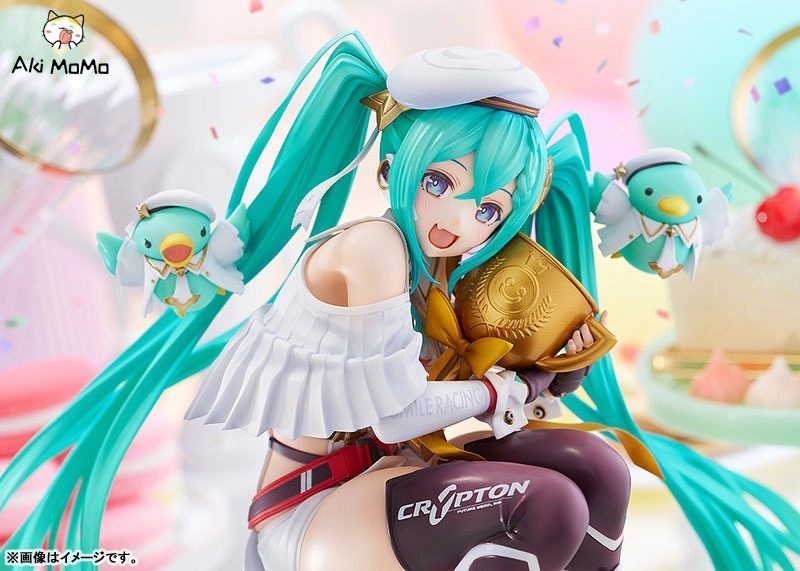
With the work of the Good Smile Racing team, the Racing Miku series has become a showcase to see new ways of interpreting designs. Different artists add their own style to Miku's race outfit every year, making collectibles that blend motorsport elements with anime aesthetics.
| Year |
Artist |
Notable Design Elements |
| 2010 |
Kentaro Yabuki |
Racing queen outfit with a sensual look, featuring translucent parts painted with two colors of pearl paintwork. |
| 2011 |
Yuichi Murakami |
Race queen outfit with leotard, half skirt, boots, and elbow-length gloves; color scheme includes black and grey with standard Miku colors. |
| 2015 |
Taiki |
Princess Knight outfit with long twintails, gauntlet-like gloves, and a frilly tutu. |
| 2019 |
Annindoufu |
Bolder costume with sun tan, flowers, ribbons, and a large parasol. |
| 2021 |
En Morikura |
Flowing white dress, twintails, goggles, and earrings. |
| 2023 |
Toridamono |
Dynamic racing pose celebrating the 15th anniversary of the Hatsune Miku GT Project, featuring Miku holding a trophy. |
| 2024 |
Mogumo |
Witch-themed outfit with a nitro-powered riding broom. |
Good Smile Company: Crafting Miku's Legacy in Figures
Good Smile Company has been at the heart of Miku figure production since the beginning, shaping how we experience this virtual idol in physical form. Founded by Aki Takanori in 2001, the company began its figure production journey in 2004 and has since become synonymous with quality Miku collectibles.
Their Miku figure lineup spans three distinct categories, each catering to different collector preferences:
- The much-loved Nendoroid series, which started in 2007, brings Miku to life in a super adorable chibi style. These palm-sized figures feature interchangeable parts that let collectors create countless poses and expressions. From classic outfits to special event versions, Nendoroids have become a cornerstone of any Miku collection.
- For people who want more detail, Good Smile's scale figurines (mostly 1/7 and 1/8) showcase their amazing craft. The Memorial Dress Ver. line stands out because it has high-quality materials and detailed hand-painted features, such as translucent parts for Miku's hair.
- The Hatsune Miku GT Project gave rise to the Racing Miku series in 2008, which is an intriguing combination of anime and motorsport design. Each year brings new designs from different artists, making these figures particularly sought after by collectors.
Good Smile continues to push the limits of figure manufacturing by collaborating closely with Max Factory for production and distribution, producing items that are not simply merchandise but real collectors' treasures.
Evolve Hatsune MIKU with Collaborative Design in the Digital Age
Miku's designs have influenced many facets of popular culture and artistic expression in the digital era, going well beyond figure collecting. Since 2013, the yearly Magical Mirai celebrations have evolved into an honoring of Miku's cultural influence. In addition to live performances and art exhibits, these events include new figure designs. Miku figure design appears to have endless potential. As manufacturing technology advances and the creative community continues to expand, we can anticipate seeing even more inventive takes on this well-loved mascot.