Reviving Osamu Tezuka’s Dororo in Black-and-White Figurines
Black-and-white Dororo figurines reimagine the classic manga as sculpted panels and show how to design, collect, and display them as monochrome art.
Black-and-white Dororo figurines turn a beloved classic into sculpted “manga panels,” using light and shadow instead of color to tell the story on your shelf. They do more than fill a gap in merchandise; they reframe a fandom icon as a piece of monochrome art you can live with every day.
If you have ever stared at your figure shelf and felt that your favorite Tezuka title, Dororo, does not get the same love in 3D as flashier, full-color series, that feeling is not just nostalgia. Most classic manga were born in stark black ink on white paper, and color figures often miss that atmosphere. Monochrome art, by contrast, has a long, respected history of using value and contrast to create emotional impact, and manga’s own black-and-white tradition was built around making the most of those limits. Leaning into that legacy, this guide explains why Dororo practically begs for black-and-white figurines, what makes them special, and how to design or display them so they hit like your favorite page turn.
Why Dororo Feels Right in Black and White
Manga began as Japanese comics where images dominate text, evolving from centuries of narrative scrolls into the print and tankobon culture fans know today, and it has grown into a global, multi-billion-dollar industry with titles for every age and taste, from sports to horror to romance (manga; introduction to manga). Within that explosion, Osamu Tezuka’s work helped codify the cinematic paneling and expressive character designs that became the language of modern manga, proving the medium could carry both kid-friendly adventures and deeply philosophical stories in drawn form, reflecting the broader impact of manga and anime.
That visual language is overwhelmingly black and white for both practical and artistic reasons. Postwar publishers relied on cheap monochrome printing to keep weekly and monthly series fast and affordable, and those constraints hardened into a convention: black ink on white paper became not just a cost-saving measure but part of manga’s identity. Artists learned to rely on screentones, inking, and panel layout to create depth, movement, and emotion without color, turning high contrast into a visual grammar that readers instantly recognize and that shows the power of black-and-white illustration.
Tezuka’s famous “big eyes” approach, often called the Tezuka effect, uses oversized, luminous eyes for youth and innocence and narrower, sharper eyes for harder or more cynical characters—a contrast that later series still echo across many manga art styles. That drama between soft, hopeful faces and the harsher world around them reads especially strongly in monochrome, where a single highlight in an eye or a deep shadow under the brow carries as much weight as an entire color palette. When you translate a title like Dororo into a black-and-white figurine, you are essentially sculpting those contrasts into three-dimensional form instead of painting them in ink.
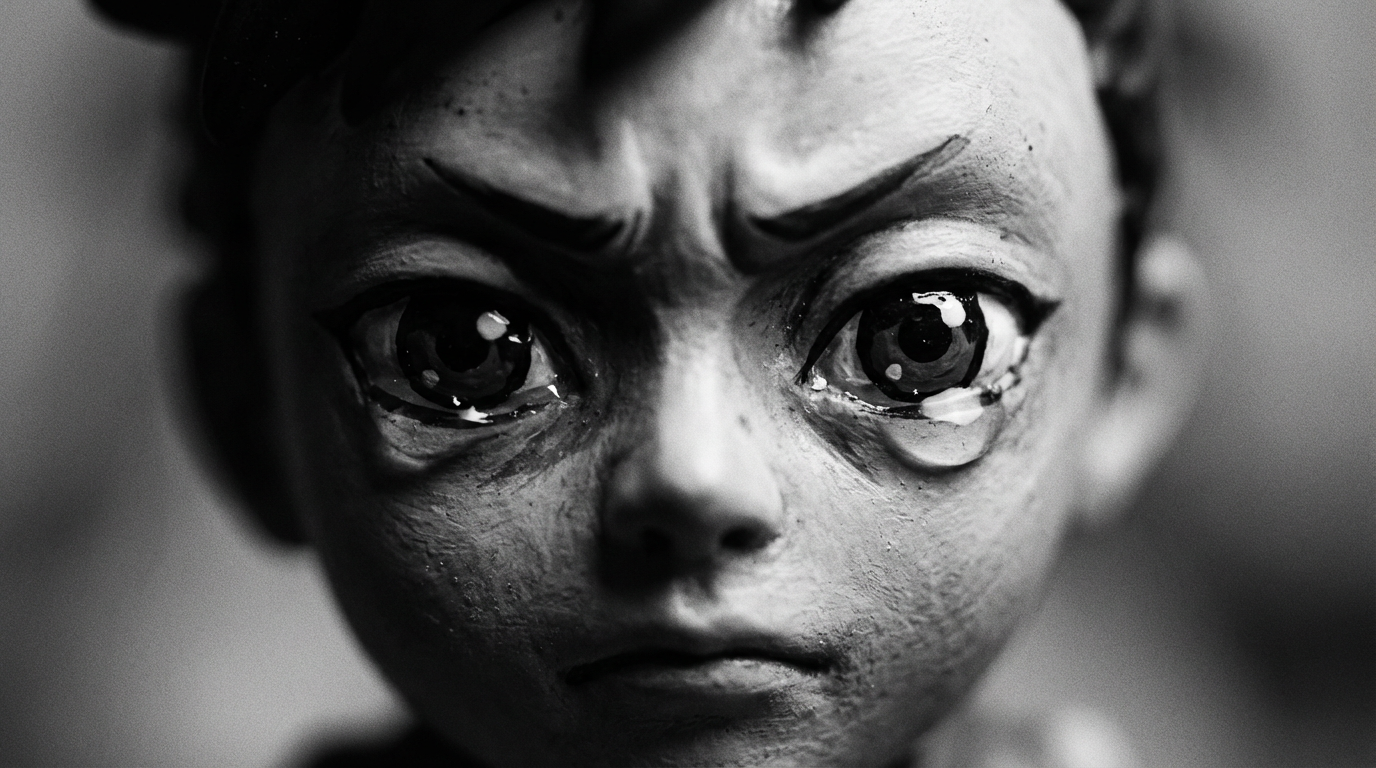
Monochrome art more broadly has long been used to foreground form, texture, and light, from ink wash traditions to modern photography and minimalism, with artists embracing a narrow tonal range to heighten emotional and conceptual impact. That same logic applies beautifully to manga characters: reducing Dororo’s world to blacks, whites, and grays focuses attention on anatomy, gesture, and expression—exactly what made you care about those characters in the first place and underscoring the power of black-and-white artwork.
What Black and White Figurines Can Do That Color Can’t
Black-and-white illustration uses line, value, and contrast instead of hue, and that shift in focus makes every edge and shadow do more emotional work. On a Dororo figurine, the curve of a blade, the fall of fabric, or the angle of a haunted stare can carry the mood without competition from bright colors on armor, effects, or bases.
Manga’s black-and-white production culture also wired fans to read nuance in grayscale, from quiet, contemplative panels with minimal shading to explosive action rendered in speed lines and harsh blacks. Translating that into a figurine lets you build the same emotional swing in 3D: a calm, almost flatly painted face can sit above hyper-textured clothing, echoing how some artists keep characters simple while backgrounds and environments get gritty.
There is another layer: comics and manga have already crossed the border into fine art, with pop artists appropriating panels and Ben-Day dots to question where high art ends and mass culture begins influence of comics on modern art. In the anime scene specifically, contemporary collectives have started treating dolls and character figures as raw material for sculpture and installation, melting otaku culture into gallery-ready work anime culture into art. A black-and-white Dororo figurine taps that same energy: it is both merchandise and miniature sculpture, a bridge between your bookshelf and a display plinth.
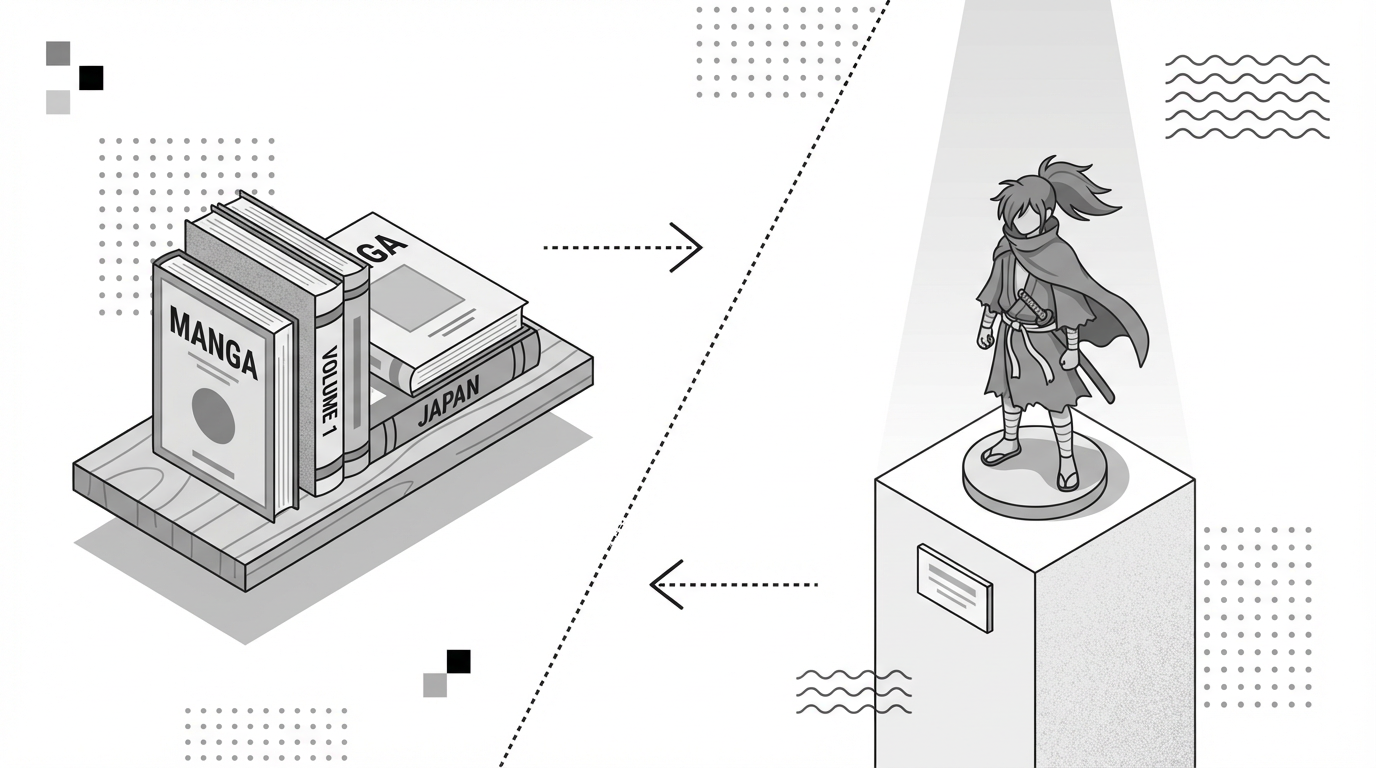
Monochrome art history also shows that limiting color can make a piece feel unexpectedly “premium.” Across painting, printmaking, and photography, single-hue works have been used to convey elegance, spiritual depth, or raw documentary emotion. When you see a stark black-and-white figure among glossy, full-color PVC statues, it often reads as more deliberate and curated, like a centerpiece rather than just another character.
Pros and Cons of Monochrome Dororo Figurines for Collectors
For Collectors | Potential Challenges |
|---|
Strong contrast and sculpted detail echo the way manga uses line and value to tell stories, so even small figures can feel dramatic and “panel-like” on a shelf. | Subtle shading differences are less forgiving than color; uneven sprays or brushstrokes show more clearly, demanding practice and patience. |
Black-and-white design aligns with long traditions of monochrome art and photography, making the figurine easier to integrate into minimalist or art-driven room decor. | Some viewers still equate monochrome with “unfinished” or “prototype,” so you may have to explain that the look is intentional, much like manga’s black-and-white pages. |
Grayscale schemes are less likely to clash with other collectibles, posters, or LED lighting, so you can move the figure between displays without rethinking color harmony. | Official merchandise is rare in this style, so you may need to customize existing figures or commission artists, which increases both cost and lead time. |
For many fans, those trade-offs are worth it because black-and-white figures feel closer to how they first encountered the story: as ink on paper rather than as saturated anime frames. The strongest displays lean into that connection, curating a small “manga corner” where Dororo stands alongside books, original pages, or prints from other monochrome artists.
Designing a Dororo-Inspired Black and White Figurine
Manga’s aesthetic pull comes from expressive line work, heightened emotion, and clean, crisp black-and-white shading that ranges from light dot patterns to solid blacks aesthetics of manga art. When you design or customize a Dororo-inspired figure, aim to translate those exact qualities into three dimensions rather than simply painting an anime screenshot without color.
Start with a sculpt that already reads well in silhouette. Monochrome art relies on recognizable shapes and clear composition to stay legible without color cues, so a figure that looks compelling in outline will usually thrive in black and white. For a Dororo character, that might mean a pose where the weapon angle, hair flow, and clothing folds create strong diagonals, almost like an action panel frozen mid-page. If a figure looks striking when backlit so you see only its outline, it is likely a strong candidate for a monochrome treatment.
Next, think in values rather than in colors. Manga artists use pure blacks, pure whites, and a limited set of grays to build depth, relying on hatch marks, dots, and flat fills instead of varied hues. On a figurine, you can mimic screentones with speckled dry-brushing, fine stippling, or semi-transparent gray layers over white primer. Matte blacks can anchor heavy elements like boots and weapons, while satin or gloss blacks can highlight hair and polished metal, separating materials without ever touching color.
Line is your stand-in for ink. In traditional black-and-white illustration, clean outlines and controlled line thickness define structure and mood, and a figure can echo that logic. Instead of relying on molded edges alone, you can reinforce key contours with a slightly darker gray along seams, armor plates, or facial features, echoing how Tezuka-inspired designs emphasize eyes, brows, and mouths within many manga art styles. Even a small dark stroke under the lower lip or around the eyelid can add intensity reminiscent of a close-up manga panel.
Finally, treat the base and background like a page layout. Comics and manga have influenced modern art by showing how frames, speech bubbles, and motion lines can become graphic design elements in their own right influence of comics on modern art. A black-and-white Dororo base might use simple shapes—a broken circle, a rectangle echoing a panel border, or stylized “speed lines” radiating from the character—to push that narrative feeling. Keeping the base monochrome keeps attention on the figure while still nodding to the print roots of the character.
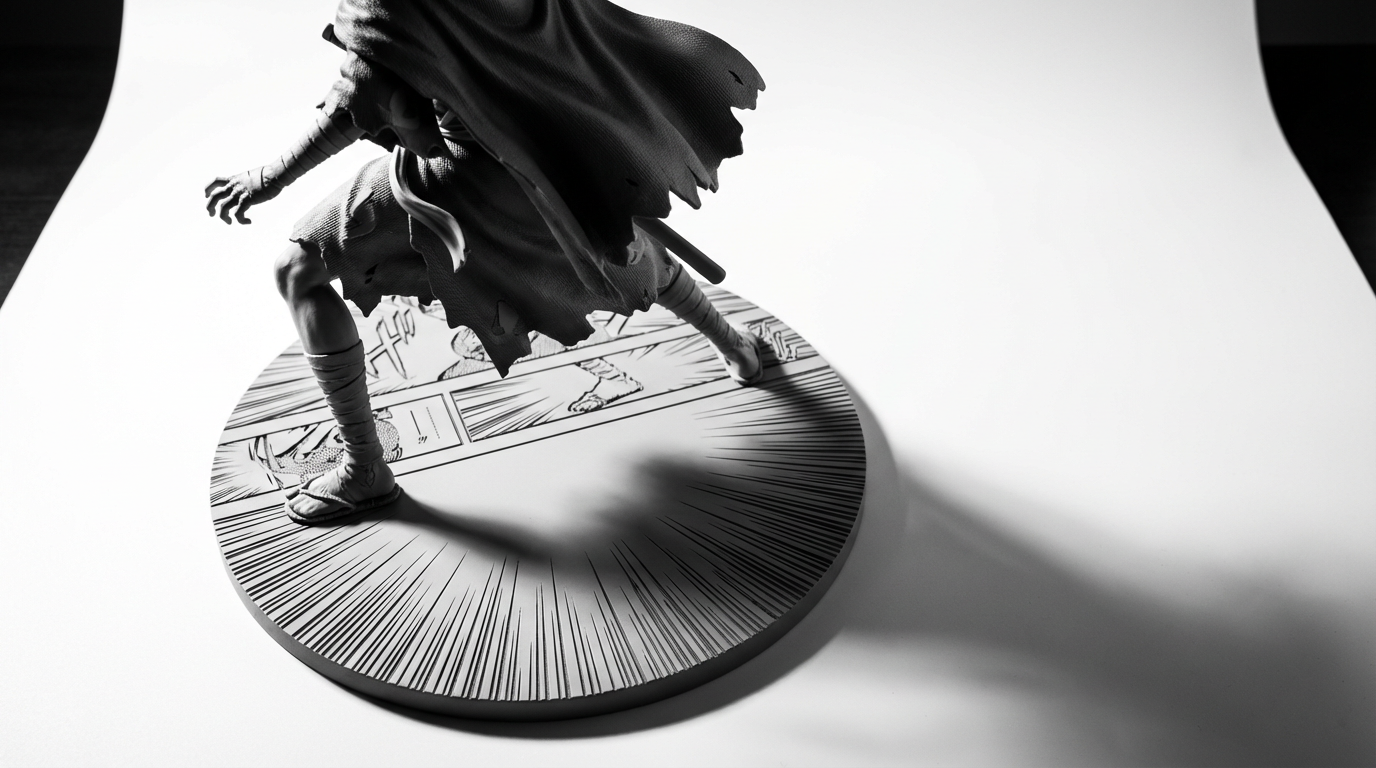
Turning Shelf Space into a Monochrome Micro-Gallery
Anime figurines are already crossing into contemporary art spaces, with collectives building sculptures and installations around dolls, character figures, and gaming statues to reframe pop culture as serious artistic material anime culture into art. When you bring a black-and-white Dororo figurine into your home, you tap the same current, turning a single character into the anchor of a small, curated micro-gallery.
One way to lean into this is to pair the figure with flat art that shares its values-first approach. Monochrome prints, black-and-white manga panels, or even high-contrast photography all share the same emphasis on light, shadow, and line that makes figurines in grayscale stand out. Positioning a Dororo piece in front of a framed panel or page, for example, creates a layered effect where the sculpt feels as if it has stepped directly out of the original manga space.
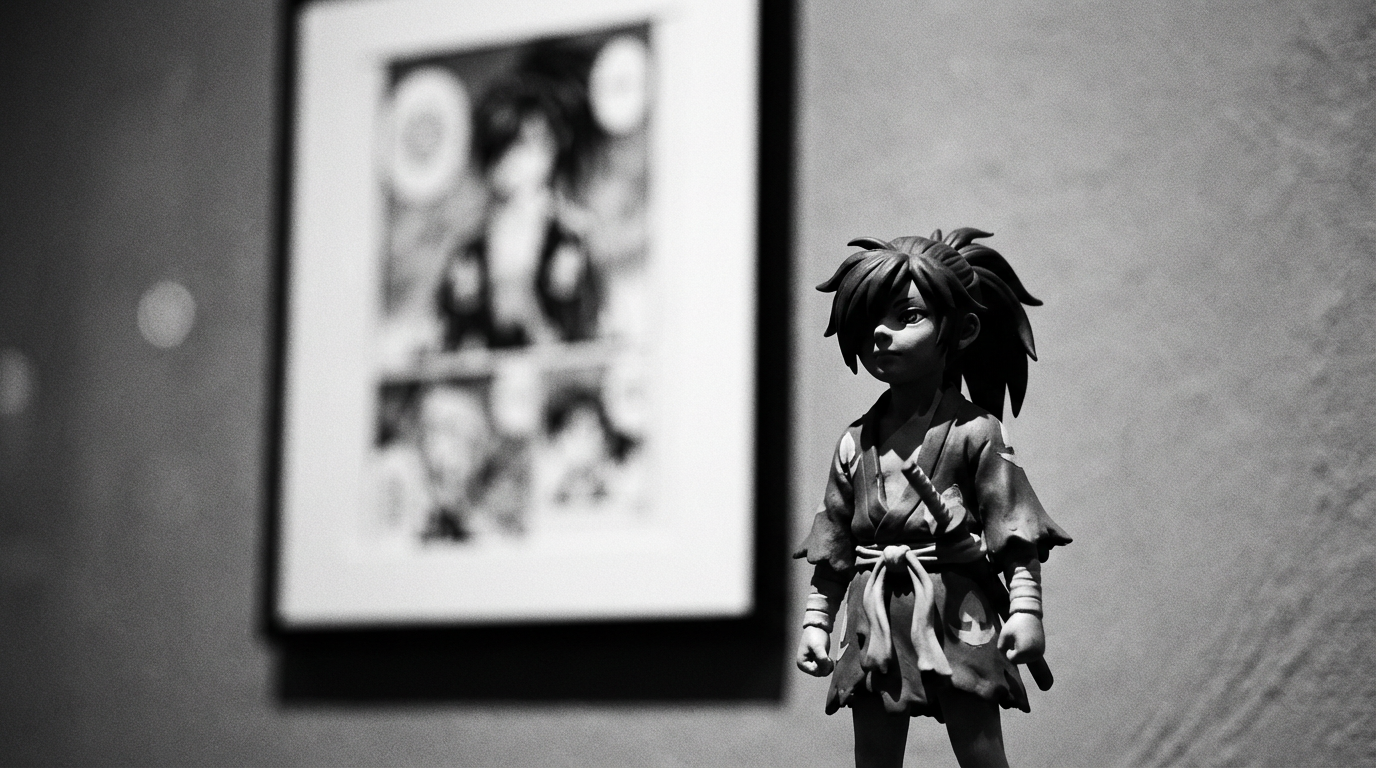
Because manga is now recognized as both everyday entertainment and a form of art with museum-level exhibitions, there is no need to separate “serious art” from “fandom stuff” in your room. A thoughtfully lit, black-and-white Dororo figure—especially one you have customized or commissioned—carries the same storytelling weight as a print or drawing, and the monochrome finish helps it blend with almost any decor style, from neon-lit gaming setups to restrained, gallery-white shelves.
FAQ
Do black and white figurines really feel different from color ones in a collection?
They tend to stand out in a good way because your eye is drawn to contrast and silhouette first, just as it is on a manga page where black ink on white paper structures every scene. In practice, many collectors find that a single monochrome piece—especially from a classic series like Dororo—acts as a focal point that makes the surrounding color figures feel more intentional rather than crowded.
If there are few official Dororo monochrome figures, is it worth commissioning or customizing one?
For fans who fell in love with the story through its printed pages, a black-and-white figure often feels closer to the “real” version of the character, echoing both manga aesthetics and broader monochrome art traditions that prioritize form, emotion, and concept over color aesthetics of manga art role of monochrome art. If that resonance matters more to you than perfect paint applications from a factory box, investing in a custom or doing the paintwork yourself can turn a regular collectible into a personal, one-of-a-kind centerpiece.
In the end, reviving Dororo in black-and-white figurines is about more than swapping colors for grayscale; it is about honoring the ink-and-paper roots of both the series and manga itself and letting that history reshape how your collection looks and feels. When light skims across a monochrome Dororo sculpt and every shadow hits like a panel turn, your shelf becomes less a row of products and more a small, living shrine to the stories that started it all.