Understanding Fogging on Transparent Figurine Cases
This guide explains why figurine display cases fog up and how to use room control, case tweaks, and glass treatments to keep your collection clear.
Fogging on clear figurine cases is almost always a temperature and humidity problem, not a “bad case” problem—and with a few tweaks to your room, case, and glass, you can keep your shrine crystal clear.
Imagine lining up a new haul, arranging every pose just right, then coming back after a shower or a humid summer night to find your display turned into a blurry mist box. That gross, cloudy film is the same enemy that hides cakes in bakery fridges and merch in supermarket coolers, and it can be tamed with the same physics. The goal here is simple: understand why your case fogs, figure out whether the problem is the room, the case, or the glass, and walk away with practical setups that keep your figures visible without cooking or drying them out.
What Fogging Really Is (and Why Your Case Suddenly Looks Like a Fridge Door)
Fogging is just condensation: warm, moist air hits a cooler surface, drops below its dew point, and the extra water in the air turns into tiny droplets on the glass. That is why supermarket fridge doors haze over the moment humid aisle air meets cold doors, and why a glass of ice water sweats in a warm room. You can see the same physics described for glass doors on supermarket fridges, where warm air cools to its dew point at the glass surface and water vapor condenses into visible mist on the door.

For more detail, supermarket display fridge doors.
At home, your figurine cases are not refrigerated, but the temperature difference can still be big enough to hit that dew point. A clear acrylic or glass cabinet against an exterior wall, near a window, in a basement, or in a room that swings between air conditioning and open windows will often run cooler than the air. Bathroom and shower glass behaves the same way: steam-heavy air hits cooler screens and instantly fogs them, then clears once the room dries out and warms more evenly, as described in guides on condensation on shower glass.
From Supermarket Fridges to Figure Shrines: Same Physics, Smaller Stage
Commercial food displays treat fogging as a sales-killer. Fog on refrigerated cake and deli cases blocks visibility, makes products look unappetizing, and pushes shoppers toward competitors with clearer glass. That is why high-end display cases use heating wire glass, low-emissivity coatings, and hot-air blow systems to keep glass a bit warmer than the surrounding moist air and stop condensation from forming droplets that obscure the view.
In bakery cases, operators track how much clean, fog-free glass improves buying behavior; when cases are visibly clean and well maintained, a large majority of customers are more likely to purchase, and poor condensation control repeatedly undercuts that effect. Translating that to fandom terms: if bakeries and supermarkets invest heavily in clear glass just to sell pastries and frozen pizza, it is absolutely worth spending a bit of attention to keep your grails and prize scales visible.

Is Fogging Just Ugly, or Bad for Your Figures?
For a collector, the first pain point is emotional and visual: you curated a mini museum, and fog trashes the sightlines. Commercial operators see the same thing in refrigerated display cases, where fogged doors, water pooling, and even ice buildup hurt presentation and customer experience, not just temperatures. For an overview, condensation in refrigerated display cases.
The second issue is moisture itself. To get visible condensation on glass, the air nearby is already pretty humid. In commercial environments, that excess moisture is linked to more microbial growth, more cleaning, and faster deterioration of products and equipment. Inside a figure case, chronic dampness can encourage mold on bases and cardboard backdrops, warp thin paper extras, and leave a persistent clammy feel on surfaces even if the figures themselves seem fine. The same combination of high humidity and cooler glass makes bathroom glass foggy and prone to mineral and soap buildup when it is not wiped and dried regularly.
A good rule of thumb borrowed from commercial cake and dessert showcases is to aim for moderate room conditions. Cake display cases are designed for ambient temperatures below about 90°F with room humidity roughly in the 40–60% range to balance food freshness with fog control. If your figurine room routinely feels tropical, you are in the same danger zone where even low-emissivity glass coatings struggle, and suppliers recommend heating glass or blowing warm air across panels because standard passive fixes are no longer enough.
First Line of Defense: Tuning the Room Around Your Shrine
The easiest way to fight fog on a figurine case is to change the air the case lives in. Fogging on freezer and chiller doors is strongly driven by two things: a big temperature gap between cold interiors and warmer room air, and high indoor humidity. Adjusting either one reduces the chance that the glass drops below the dew point and collects mist. Commercial guidance for freezer display cabinets explicitly recommends either nudging the cabinet a bit warmer, cooling and drying the room with air conditioning, or both, plus placing units in well-ventilated, relatively dry areas instead of cramped, steamy corners. freezer display cabinet fogging controls for examples of these recommendations.
For a figure room, think in three levers: temperature, humidity, and air movement. If your cases are in a small, closed room that heats up in the afternoon, consider running air conditioning or a fan to keep the room in a comfortable mid-70s°F range instead of letting it spike. A dehumidifier is your best friend if you see fog after rain, showers, or summer nights; desiccant dehumidifiers used in commercial spaces maintain low relative humidity even at cooler temperatures, and the same principle applies to a smaller home unit keeping your display room drier overall.
Good airflow matters too. In supermarket aisles with fogging doors, targeted fans that push drier air across glass not only clear the doors but also keep nearby floors dry, showing how smart air management can solve both visibility and moisture issues without tearing out equipment. In a figure room, a small fan that gently circulates air around cases, rather than blasting directly at them, helps even out temperature layers and prevents stagnant, humid air from hugging the panels.
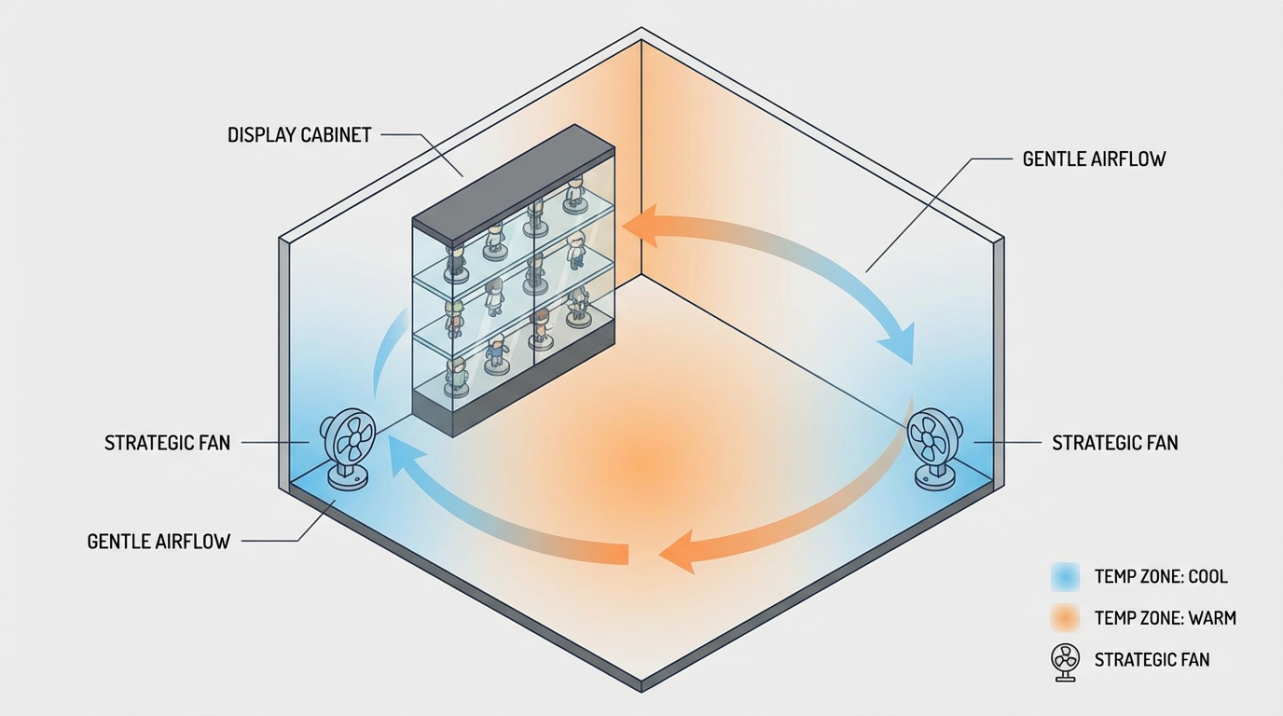
You can see similar airflow strategies described in airflow solutions for fogged glass doors.
What to Check in a Foggy Figure Room
When a case mists over, step back and audit the room, not just the cabinet. If the case sits against an exterior wall that feels cold to the touch, you have an automatic cooler surface behind the glass. If it is near a bathroom door, kitchen, or frequently opened window, humid air is repeatedly washing over it just like steam in a shower. In bathrooms, running an exhaust fan for 10–15 minutes after each shower and cracking a window or door is usually enough to clear fog and dry glass reliably, and the same logic applies in your home: vent steam out, not toward your figures, and avoid parking cases in the direct path of steamy air.
Take a cue from window specialists too. Exterior house windows often fog on the outside in the morning when calm, humid air meets cooler glass, especially around landscaping that traps moisture. If your display is near dense plants, a water feature, or a constantly damp wall, the local humidity right around your case can be higher than the room average. Creating a little breathing room between foliage, damp corners, and the cabinet can reduce those localized fog bursts.
Second Line: What You Can Change on the Case Itself
Once the room is reasonably under control, the next step is the case. The right move depends heavily on how sealed your display is.
In nearly airtight cases, desiccant packs are very effective. Hobbyists managing optics and collectibles in display cabinets often rely on silica gel to keep the small, enclosed volume dry; as long as the seals are decent and the case is not constantly flooded with new humid air, the desiccant can hold the interior below the dew point of the room air. You will need to recharge or replace those packs periodically, but you are using the same strategy commercial systems use at larger scale: reduce the moisture load so condensation never gets started.
In looser cases with tiny gaps or intentional vents, a slight temperature bump can beat fog. Commercial glass-door fridges sometimes combat condensation by very slightly raising the interior temperature or the glass surface temperature, just enough to narrow the difference between inside and outside without breaking food-safety ranges. Similar advice appears for freezer display cabinets, where a small thermostat increase and better room cooling together reduce fogging markedly.
For figures, that “warm the case, cool the room” approach can translate into a low-watt heater rod or seedling heat mat under the cabinet, controlled by a simple thermostat, so the case interior stays just a little warmer than the surrounding air without getting anywhere near temperatures that would worry you. Collectors who use these in humid climates often combine them with small ventilation holes at the top and bottom of the case so warm, drier air can drift upward while fresh air enters below, maintaining a gentle circulation loop rather than a sealed oven.
Lighting helps, as long as it is smart lighting. LED strips and spotlights placed inside display chillers are used commercially because they add a bit of localized warmth near the glass while remaining energy-efficient and low-heat compared with older bulbs. When used along the front edges or roof of a figurine case, low-heat LEDs can nudge the panel temperature just enough to discourage fog, while also making colors and sculpts pop in photos. LED lighting and ventilation in display chillers for examples from commercial setups.
Here is how those case tweaks compare in practice:
Case tweak | Works best when | Trade-offs |
|---|
Desiccant packs inside the case | Case is mostly airtight and not opened constantly | Need to monitor and regenerate or replace packs regularly |
Low-watt heater rod or heat mat | Room is very humid and you can add small vents | Small power use and you must keep temperatures comfortably low |
LED strips near glass panels | You also want better lighting and mild warmth at the edges | Requires careful placement to avoid glare and hot spots right next to figures |
Treating the Panels: Anti-Fog Coatings, Films, and DIY Tricks
If room and case tweaks still leave occasional mist, you can go after the glass itself.
On the professional side, anti-fog coatings and specialized glass are used in freezer doors and refrigerated cases to make condensation form a thin, transparent water film instead of random droplets that scatter light. Options include tempered heating-wire glass that warms itself to around the high-90s to low-100s°F, low-emissivity coated glass that improves thermal insulation and reduces heat transfer, and hot-air blow systems that direct a sheet of warm air across the front. Each approach has different cost and energy profiles, and even then, low-emissivity glass on its own has limits in very humid, very hot conditions, where heated glass or air become necessary.
There are also clear anti-fog films marketed for shop windows and refrigerator glass that adhere to existing panels, staying transparent while blocking visible water droplets. These films aim to deliver a long-term, low-maintenance solution without replacing the glass and are pitched as a more affordable, easier-to-install alternative to fully heated windows in retail environments. The same concept can be adapted to a custom figurine cabinet if you are building or refurbishing with glass doors.
On the DIY side, many community-favored tricks on goggles and glasses can carry over cautiously to figurine case panels. Simple home remedies like a very thin film of dish soap, diluted rubbing alcohol, or other mild surfactants change how water spreads on the surface and can reduce uniform fogging for a while, although these tend to be temporary and variable in performance. Anti-fog discussions on eyewear emphasize that while rubbing alcohol and soaps can make lenses smoother and less prone to fog, overuse or aggressive scrubbing may damage specialty coatings, and anything not designed for near-eye use should be applied carefully and kept out of eyes and off sensitive surfaces. You can find examples of these approaches in guides on anti‑fog home remedies for lenses.
For acrylic or coated glass cases, the safest approach is to test any DIY treatment on a small, inconspicuous patch first and read labels to confirm compatibility with plastics and coated glass.
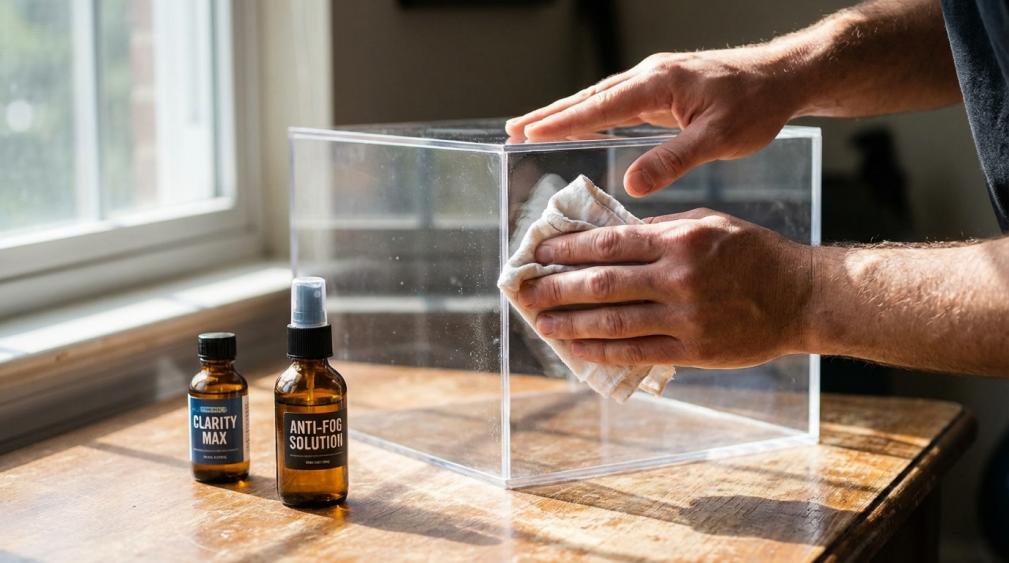
Automotive anti-fog sprays originally used on windshields and commercial anti-fog agents for fridge doors can be effective on plain glass, but the underlying warning from lens-care guides applies here too: if the product is optimized for a different surface or coating, you want to verify it will not haze, streak, or soften your panels before committing.
When an Upgrade or Custom Build Is Worth It
If you live somewhere that feels like a perpetual summer convention floor—humid, crowded air and constant temperature swings—and your room is fighting you year-round, it may be worth thinking about fog control at the hardware level as you upgrade or commission display furniture.
Borrowing directly from commercial bakery and cake displays, one strong option is specifying glass with an integrated heating layer for large, front-facing doors. This type of tempered glass uses an almost invisible conductive layer to keep the outer surface slightly warm, blocking both fog and frost reliably even in harsh, moist environments, though it usually costs more upfront and consumes energy while running. Low-emissivity glass, which uses a special coating to improve insulation and reduce heat transfer, is a bit more budget-friendly and can work well in milder climates, but manufacturers note that once room humidity climbs much above about 70% and temperatures become very hot, condensation can still occur.
For most collectors, though, the sweet spot is combining smart room control, a reasonably sealed case with desiccant or gentle heat, LED lighting placed with intent, and perhaps a light anti-fog treatment on the biggest problem panels. That mix mirrors what supermarkets, bakeries, and food-service operators do to keep visual merch clear: no single silver bullet, but a layered system of humidity control, temperature tuning, and glass treatments that keeps condensation below the level where it can mess with the experience. For more on how commercial operators balance these factors, bakery case maintenance and condensation as a common issue.
FAQ: Collector Questions About Foggy Cases
Why does my case only fog in the morning or after showers? Morning fog is classic dew-point behavior: overnight, walls and glass cool down, then when warmer, humid air moves in, those cooler surfaces sit below the dew point and attract condensation, just like energy-efficient house windows that fog on the outside after clear, cool nights. Post-shower fog is the same thing, except the humidity spike comes from bathroom steam instead of outdoor conditions.
Is silica gel alone enough? Silica gel or other desiccant packs can keep a small, well-sealed display case clear by pulling moisture out of the trapped air, mirroring how desiccant dehumidifiers in commercial settings maintain low humidity levels around refrigerated display cases. If your case has big gaps or is opened constantly, though, fresh humid air keeps flooding in faster than the desiccant can handle, and you will usually need some combination of room drying, better sealing, or gentle heat as backup.
Will fogging ruin my figures? Occasional fog that clears quickly is mostly a visibility annoyance. The real concern is persistent, heavy condensation that signals high humidity inside and around the case. In commercial cold cases, that situation is associated with more microbial growth, faster spoilage, and more frequent cleaning and maintenance. In a collection context, that same constant dampness raises the odds of mold on bases, backdrops, and packaging, so it is worth treating chronic fog as a warning sign to improve room humidity control rather than something to ignore.
Clear panels are part of the joy of collecting, turning shelves into little galleries where every pose and paint highlight reads instantly. With a bit of physics borrowed from bakery cases and supermarket fridges, you can tune your room, case, and glass so the only thing that takes your breath away is the sculpt, not the fog between you and it.