Understanding the Role of Curators in Action Figure Exhibitions
Action figures have quietly grown up. What started as “toys” on bedroom floors has become a serious collecting culture with graded boxes, museum-style displays, and even boutique exhibitions in galleries, shops, and convention halls. When you walk into a cabinet glowing with LEDs, see a perfectly staged battle diorama, or wander through a themed pop‑up of anime heroines and mecha, you’re not just looking at toys on shelves. You’re walking into a curated exhibition.
In the anime and figure world, we talk a lot about grails, preorders, and shelf space, but not nearly enough about curators. Yet every impressive display you’ve ever stopped to photograph has someone behind it making deliberate choices about which figures appear, how they are posed, what story they tell, and how they survive that spotlight without yellowing, warping, or falling over.
This article takes the museum word “curator” and drops it right into the heart of fandom. Drawing on display guides from figure specialists like Solaris Japan, Lackhat, and FabFigures, conservation advice from retailers such as Shumi Toys & Gifts and Better Display Cases, exhibition design insights from trade show veterans, and case studies like The Toy Coach’s story of the 9 to 5 Warriors line, we will break down what a curator actually does in an action figure context. We will look at the real pros and cons of having someone in that role, and how you can adopt a curator’s mindset for your own collection or fan event.
What Is an Action Figure Curator?
In a traditional museum, a curator is responsible for selecting objects, researching them, deciding how to present them, and caring for them long term. Swap “oil paintings” for “Bishoujo statues” and “historical artifacts” for “limited-run mecha,” and the job description translates surprisingly well.
Modern figure guides already nudge collectors toward a curatorial mindset. Lackhat describes figure display as both protection and design, something that turns a collection into a cohesive focal point in your space. Solaris Japan talks about displays as personal showcases that reflect themes and stories from your favorite series. A pop‑culture piece from Meetup Popup goes further and explicitly frames action figure displays as museum-worthy home exhibits, complete with labels and rotating “exhibitions.”
An action figure curator, then, is the person responsible for shaping that kind of experience. It might be a staff member at a local anime shop, a volunteer at a convention, or simply the most meticulous friend in your figure circle. Regardless of the setting, the curator’s core job is to decide what appears, how it’s presented, and why it matters.
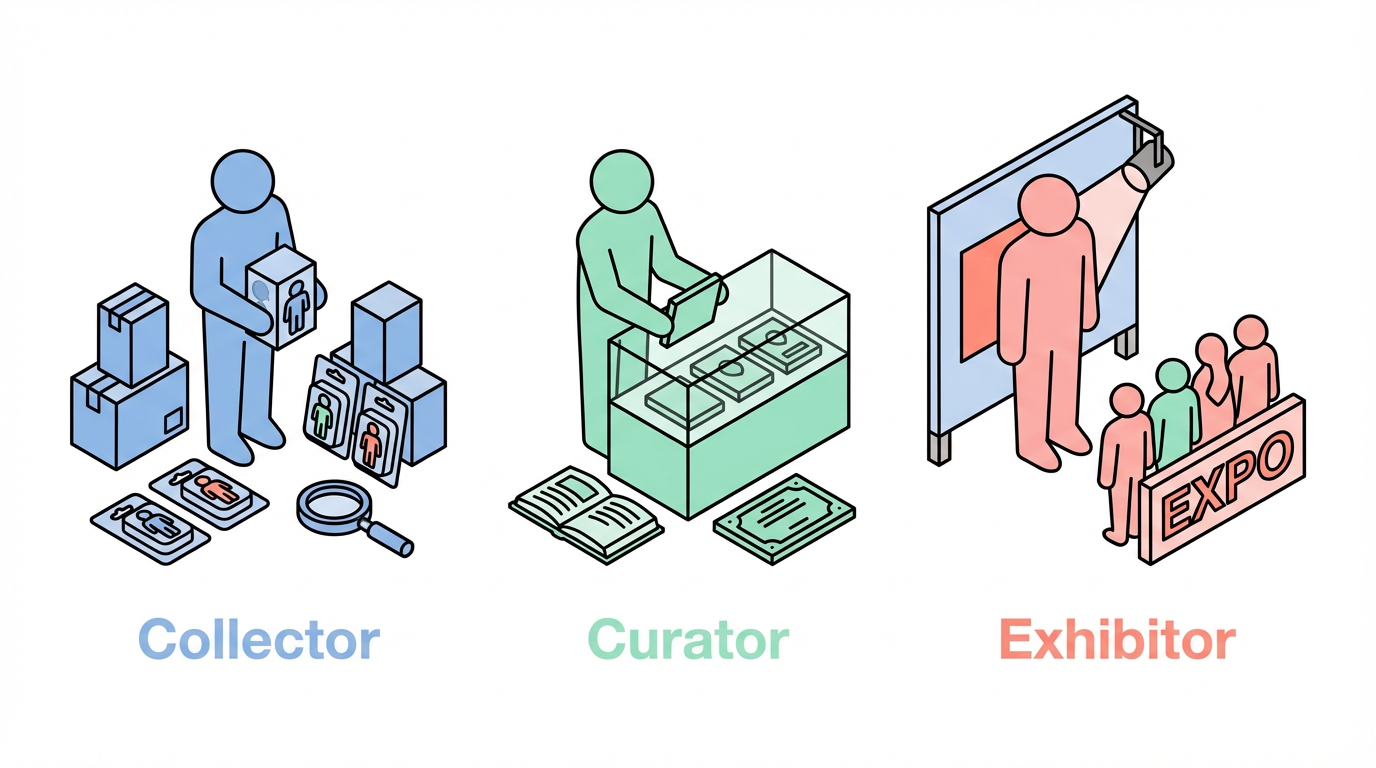
Here is a quick way to distinguish roles we often blur together.
Role | Primary focus | Typical context |
|---|
Collector | Acquiring and enjoying figures, sometimes reselling or trading | Home collection, online groups |
Curator | Shaping a coherent, meaningful, and safe display or exhibition | Stores, pop‑ups, conventions, themed home rooms |
Exhibitor | Using displays to achieve business or promotional goals | Brand booths, manufacturer showcases, trade shows |
In small fandom spaces, one person often wears all three hats. You might be the collector who also curates a “best of shonen” wall for your apartment, and then becomes the exhibitor when a local cafe asks you to install a pop‑up to draw anime fans for a month. Understanding the curatorial piece makes all of those roles stronger.
What Curators Actually Do Behind the Scenes
Defining the Vision and Theme
Before a single figure is unboxed, a good curator starts with questions. What is this exhibition about? Who is it for? What story should visitors walk away with?
Figure display guides consistently emphasize the power of clear themes. FabFigures recommends organizing collections by character, franchise, movie, or specific story arcs to create immersive viewing, rather than random assortments. MeetUp Popup talks about curating a “museum-worthy” display around superheroes, sci‑fi, or a single video game franchise, with quality and cohesion taking priority over sheer quantity.
That same logic drives professional exhibition design. An article from TradeshowLabs about trade show booths stresses choosing events and neighbors that align with your audience and message. The right “fit” is defined as a match between who is attending, which brands surround you, and the story you want to tell. In figure terms, putting a contemplative Studio Ghibli corner directly next to an over-the-top fan‑service shelf might confuse more than delight.
For curators, theme is the filter that keeps the exhibition from becoming just “all my figures at once.” It dictates which lines stay in storage, which characters get the spotlight, and how visitors mentally connect one case to the next. A tightly focused “Magical Girls Through the Decades” exhibit will feel very different from a broad “Mecha Across Media” showcase, even if both use roughly the same number of figures.
Selecting and Protecting the Figures
Once the vision is clear, a curator decides what actually goes on display and how aggressively to protect it. This is where collector language about “mint,” “loose,” and long-term condition becomes a curatorial tool.
Shumi Toys & Gifts lays out the key packaging terms. MISB, or mint in sealed box, refers to a toy that remains factory sealed. MIB figures are mint in box but have had the manufacturer’s tape cut to inspect contents. BIB, or back in box, means a figure has seen at least brief display or photography before being returned to its packaging. Loose figures are completely out of the box. Better Display Cases points out that condition is one of the primary drivers of value and recommends acrylic cases sized correctly so blister packs do not warp and edges do not rub.
For a curator, that translates into deliberate tradeoffs. A MISB grail in a perfect window box might stay sealed, with a clear acrylic shell around it that preserves both figure and packaging art. At the same time, a loose figure with stunning sculpt and articulation might be posed front and center in an action diorama, accepting some long-term joint wear for the sake of storytelling.
Environmental control is part of this protective mandate. Shumi’s guide recommends storing figures in rooms where you can keep temperatures around 65 to 70°F and humidity low, noting that excess moisture leads to mold, mildew, blistering, tape-lifting, and discoloration, especially for sealed items. Display summaries from Japan Figure echo this: avoid direct sunlight to prevent fading and yellowing; use dust-resistant cases or cabinets; consider silica gel packs inside enclosed cases to keep moisture down.
Koontz Hardware’s collector guide on cases adds structural safety to the mix. It urges collectors to anchor tall display cases to walls using proper hardware, such as strap-based anchors or bracket‑plus‑cable systems, so that even if a case tilts it will not topple. For high-value exhibitions in quake‑prone areas, that kind of detail is exactly what separates a responsible curator from someone who just bought a stylish cabinet.
Designing Layout and Display Infrastructure
Theme and selection answer the “what.” Layout answers the “how.”
Across guides from Solaris Japan, Lackhat, and FabFigures, the same layouts keep appearing. Enclosed glass or acrylic cabinets are described as the safest option for visibility and dust protection, especially when paired with anti‑tip hardware and properly stabilized shelves. Bookcases and floating shelves show up as flexible, budget-friendly alternatives, particularly for boxed items and smaller collections. Some collectors even repurpose PC cases as miniature display environments, combining RGB lighting with figures, though both Solaris Japan and Lackhat warn that this requires careful monitoring of heat and dust.
Within those cases, curators think in layers and sightlines. Solaris Japan champions grouping figures by theme, series, or base color, then using risers to vary heights so pieces at the back do not disappear. Lackhat encourages matching figures to surrounding wall art and tapestries to create an immersive zone rather than isolated shelves. FabFigures notes that leaving space between pieces helps each figure “breathe” and be appreciated individually.
On the fan side, you see this level of planning in community tips. A Facebook group dedicated to DC action figures documented a collector managing around two hundred figures who experimented with museum putty, double‑stick tape, magnets, and stands to keep tiered displays upright. Their most stable solution for tricky pedestals ended up being L‑shaped shelf brackets permanently attached to the pedestal, combined with rubber bands to hold figures in place. It is the kind of behind‑the‑scenes engineering that most visitors never notice but every curator appreciates.
Pose style is another deliberate choice. A discussion thread on TFW2005 contrasts “museum style,” where figures stand in neutral, orderly poses, with dynamic action poses that push joints and balance. The original poster worried about long‑term joint wear from intense action poses, which mirrors a curator’s balancing act. Museum-style lines look clean and reduce stress on joints; action-heavy scenes are more dramatic but risk loosening over time. A thoughtful curator might reserve extreme poses for shorter, rotating features and keep long‑term main lines in more neutral stances.
Professional exhibition designers make similar calculations about traffic and sightlines. Trade show guidance from design agencies emphasizes open layouts, clear paths, and zones that invite visitors to step inside rather than stopping at a table barrier. Curators of figure exhibitions, even in small shops, benefit from the same thinking: avoid blocking cases with checkout counters, make sure visitors can circle around key displays, and ensure that popular characters do not create bottlenecks at room entrances.
Lighting, Atmosphere, and Storytelling
Ask any serious figure collector what separates “random shelf” from “instant Instagram save,” and lighting will come up fast.
Koontz Hardware’s guide treats lighting as a core design element. It recommends cool, low‑UV LED strips because they stay cool and help prevent heat damage and discoloration. Placing strips at the bottom and above each shelf reduces harsh shadows and shows figures “in all their glory.” For boxed items, subtle backlighting is suggested to make packaging art pop without creating distracting reflections.
Lackhat and Solaris Japan both emphasize controlling natural light. Sunlight is free, but it can warp plastics and fade colors. Their advice is simple and strict: keep cases out of direct sunlight when possible and use curtains or blinds to regulate exposure. That is not just an aesthetic call; it is conservation.
Beyond safety, curators also use light to set mood and narrative. Lackhat discusses warm colors like red, orange, and yellow for energetic or action-oriented scenes, and cool tones such as blue, green, and purple for calm or mysterious setups. Solaris Japan mentions mirrors, rotating bases, and environmental props like faux sand or water to deepen a scene. A beach episode shelf suddenly feels like a tiny stage when waves and warm lighting are added; a mecha hangar looks more convincing under cooler, directional light highlighting metal textures.
Trade show design literature backs up the power of this theatrical approach. A stall design guide citing Exhibitor Online reports that 60 percent of exhibitors say creative booths generate more leads and better return on investment. Color psychology and strategic lighting are singled out as high-impact tools: bright light draws attention to key products; softer light in seating areas encourages visitors to linger. When curators borrow those tricks for figure exhibitions, they are doing more than making pretty shelves; they are engineering how long people stay, where they look first, and how they emotionally read the characters.
Labels and signage round out the atmosphere. MeetUp Popup suggests museum-style labels or plaques that list character names, origin, and fun facts. FabFigures recommends labeling figures with names and release years to turn a collection into a mini timeline of pop culture. Better Display Cases mentions custom engraved nameplates as a low-effort upgrade that makes displays feel museum-quality. These are not just aesthetic flourishes; they are how curators help visitors understand what they are seeing without needing a guide at their elbow.
Visitor Experience, Education, and Engagement
The best figure exhibitions feel like stories you walk through, not just glass boxes you walk past. That is where curators borrow heavily from trade show practice.
A trade show survey discussed by 4imprint and the International Association of Exhibitions and Events found that nearly 80 percent of exhibitors rely on one‑on‑one conversations as their primary education tool on the show floor. About 39 percent give promotional products specifically in exchange for those conversations, and 15 percent use them as prizes in contests. Those numbers make one thing clear: static displays alone rarely carry the full load; interaction matters.
For an action figure curator, “interaction” can mean many things. It might be scheduled gallery talks about the history of a particular franchise, guided tours of a themed exhibit, or Q&A sessions where visitors can ask about sculptors, manufacturers, and aftermarket value. It can also be low‑pressure engagement like trivia cards taped near displays, encouraging visitors to test their knowledge, or printed “figure passports” that kids can stamp as they spot specific characters in different cases.
Ideas from trade show engagement guides translate directly. Epromos highlights simple contests such as guess‑the‑number jars, treasure hunts, and trivia games as ways to turn visitors into active participants while collecting contact information. Pure Exhibits describes more elaborate experiences, such as escape room‑style puzzles and augmented reality treasure hunts that tie directly to the brand’s story. A curator could adapt that thinking by designing an AR filter that overlays mecha HUDs on visitors’ faces in front of a Gundam wall, or by creating a scavenger hunt where attendees find figures from different eras and win a small printed checklist of every piece in the exhibit.
SpeedPro’s booth ideas article emphasizes photo opportunities as crowd magnets. Branded backdrops and props, plus easy ways to receive and share photos via text or social media, turn a booth into free advertising when attendees post their pictures. For figure curators, that might mean a life‑size standee of a character with space for visitors to “step into the scene,” or a small diorama corner built at human scale where people can pose inside a re‑created anime set.
The curator’s role is to make sure these experiences still respect the figures. That means no handling of fragile pieces, clear barriers where needed, and interactive elements designed around the theme rather than bolted on as random gimmicks.
Marketing and Partnerships Around the Exhibition
Even the most beautifully curated figure show will flop if nobody hears about it. Here, curators and exhibitors overlap heavily, and trade show marketing research becomes invaluable.
Exhibit Elevate’s pre‑event strategy guide insists that success starts weeks or months before doors open. It recommends clear goals, checklists, social media previews, email campaigns, content marketing, partnerships with organizers, and special event‑only offers. In practice, that might look like a curator working with a convention to be featured in official newsletters, posting behind‑the‑scenes shots of cases being installed, and teasing a limited-time display that will not be repeated.
SpeedPro and Pens.com both highlight the power of high‑quality signage and useful branded giveaways. Large, legible banners help visitors locate your space in a crowded hall, while functional swag such as pens or tote bags keeps your name circulating after the event. The IAEE and 4imprint survey mentioned earlier shows that exhibitors use promotional items strategically, not just as freebies but as tools to start conversations and reward engagement. A figure curator might partner with a retailer to provide small character checklists or postcards featuring the exhibition art, given to visitors who complete a trivia card or attend a mini‑talk.
The Toy Coach’s case study of Brandon Braswell’s 9 to 5 Warriors line offers a different kind of curatorial lesson: distribution as curation. That brand grew from a childhood idea into an action figure line that landed in at least sixteen specialty comic and toy shops across the United States, plus partners in the United Kingdom and Australia and online retailers. That network is not random; it reflects a curated set of stores and platforms aligned with the line’s audience. For exhibition curators, the parallel is choosing which events and venues to target rather than trying to show everywhere.
Finally, budget and event fit still matter. TradeshowLabs stresses that even a perfect audience match is meaningless if total costs, including travel and staffing, blow past realistic budgets. Curators pitching figure exhibits to conventions or galleries need the same discipline: understand what it will cost to transport cases, insure items, staff the space, and produce printed material, and then choose only the opportunities that make sense for the collection and the community.
Pros and Cons of Having a Dedicated Curator
As fandom grows more professional, it is tempting to say every serious figure display “needs” a curator. The truth is more nuanced.
On the plus side, a curator brings coherence. Themed zones, consistent labeling, and thoughtful lighting all make exhibitions easier to understand and enjoy. Guides from Solaris Japan, Lackhat, and FabFigures show how much more impressive a collection looks when someone has taken the time to group by franchise, vary heights, and match figures to backdrops. A curator also protects both physical objects and visitors, drawing on conservation advice like Shumi’s temperature and humidity recommendations, Better Display Cases’ spacing guidelines, and Koontz’s anchoring techniques.
There are risks. A heavy-handed curator can over-organize, stripping away the chaotic charm that makes fandom displays feel alive. There is also the danger of gatekeeping: if only one person decides what “belongs” in an exhibit, lesser-known series or quirky garage kits might never see daylight. And in a community context, a curator role can become a time-consuming unpaid job, leading to burnout.
This tension is easier to see in a simple comparison.
Having a curator | Potential drawbacks |
|---|
Clear themes and stories that make the display memorable | Risk of over‑control and gatekeeping about “what counts” |
Better protection through cases, anchors, and environmental control | Higher cost in time, money, and materials |
More educational value via labels, talks, and guided experiences | Possibility of displays feeling too formal or “stuffy” |
Stronger marketing and partnerships with venues or brands | Expectations may outgrow what volunteers can realistically deliver |
The sweet spot for many fan spaces is a light-touch curator: someone who sets the overall framework and safety standards, then invites the community to help fill in details, bring figures, and suggest stories.
How to Curate Your Own Action Figure Exhibition
You do not need a museum or a trade show budget to start thinking like a curator. You can apply the same principles to a single Detolf cabinet, a wall of floating shelves, or a small corner of a local game store.
Start Small with Micro‑Exhibits
Instead of trying to curate your entire collection at once, treat one shelf or case as a “micro‑exhibit.” Use FabFigures’ advice and pick a narrow theme: one movie, one team, one era of a long-running series. Arrange figures with space between them, avoiding overcrowding that leads to visual noise and increased dust and breakage risk.
Borrow Shumi’s environmental recommendations even at this scale. Place the exhibit in a room where temperatures stay roughly in the mid‑60 to around 70°F and humidity is controlled, perhaps with a small dehumidifier. Keep the case away from direct sunlight, relying on LEDs instead. If a figure is MISB and you care about long‑term value, consider displaying it sealed in a correctly sized acrylic case; otherwise, choose a favorite loose piece as the focal point and enjoy seeing it every day.
Even at home, simple labels can elevate the experience. MeetUp Popup suggests museum-style tags; FabFigures mentions labeling figures with names and release years. Handwritten cards, a small printed plaque, or even neatly typed tags taped to the inside of a cabinet can transform “my Naruto shelf” into “Ninja Legends: Key Moments from the Chunin Exams.”
Apply Trade Show Tactics to Fandom Displays
When you host a figure meet-up, pop‑up in a cafe, or small community event, apply a few trade show tactics.
First, have a clear goal beyond “show cool stuff.” Trade show guides from Exhibit Elevate and SpeedPro push exhibitors to decide whether they are chasing awareness, leads, or direct sales. For a fandom exhibit, your goal might be sparking conversation about underappreciated series, promoting a local shop, or fundraising for charity.
Second, build at least one interactive element. Drawing on ideas from Epromos, you might set up a simple trivia card visitors can fill in as they walk through, with a small prize for completed cards. Inspired by Pure Exhibits, you could offer a low-tech “treasure hunt” where visitors find specific figures and stamp a card at each case. SpeedPro’s emphasis on photo opportunities suggests creating one or two spots that are clearly framed for pictures, perhaps with a branded backdrop or a life‑size cutout that matches the exhibit’s theme.
Third, plan basic pre‑event marketing. Exhibit Elevate recommends social media teasers, email campaigns, and collaborations with organizers. For a smaller event, that might mean posting a series of figure close-ups with hints about the theme, asking local shops to display a small flyer, or getting mentioned in the host venue’s newsletter. The goal is simple: when doors open, you want at least some visitors to have chosen your exhibit as a must‑see, not a happy accident.
Work with Retailers, Organizers, and Other Fans
You do not have to curate alone. Shumi’s guide recommends building a network of fellow collectors through blogs, social media groups, local shops, and conventions. That same network can be the backbone of your exhibition.
Retailers may lend display cases or sponsor small upgrades like acrylic risers or LED strips, especially if their name appears on signage. Organizers can help with marketing and logistics. Fellow fans can loan figures, help with setup, and contribute expertise, such as someone who knows how to safely mount shelves using techniques from Koontz’s anchoring guide.
The Toy Coach’s story about 9 to 5 Warriors shows how targeted partnerships can scale a niche idea. That line reached a mix of sixteen United States specialty shops, a couple of international retailers, and online platforms rather than trying to appear everywhere at once. For curators, that is a reminder to be selective: choose venues and partners that align with the stories you want to tell and the communities you care about, instead of chasing any available space.
Skills and Mindsets of a Great Action Figure Curator
Underneath all the hardware and hype, curating figures well comes down to a few mindsets.
First is a collector’s eye for detail. Guides from Koontz, Lackhat, and Solaris Japan all implicitly reward people who notice how light hits a sculpted fold in fabric, how a slightly different riser height unlocks a composition, or how a poorly anchored case threatens everything inside. That attention to detail is what keeps visitors staring at a single cabinet for five minutes instead of five seconds.
Second is a conservation instinct. Shumi’s environmental ranges, Better Display Cases’ spacing advice, Japan Figure’s warnings about UV and moisture, and Koontz’s focus on stabilization all reflect the same ethic: what you display, you are responsible for. A curator constantly weighs the thrill of dramatic posing against the long-term strain on joints, or the temptation of a sunny window against the risk of faded hair and yellowed PVC.
Third is a storytelling and community mindset. MeetUp Popup’s museum metaphor, FabFigures’ encouragement to turn collections into timelines, and Better Display Cases’ suggestion of engraved nameplates all assume you want visitors to learn and feel something, not just snap a photo and move on. Trade show surveys summarized by 4imprint and IAEE show that exhibitors rely heavily on conversation, contests, and thoughtful giveaways to build relationships; curators who borrow those tools are effectively saying, “This exhibition is a conversation, not a monologue.”
Finally, there is a data-informed willingness to experiment. When a stall design article cites that 60 percent of exhibitors see better leads from creative booths, it is evidence that bold layouts and interactive elements are worth testing. SpeedPro’s reminder to do test runs of booths before events applies perfectly to figure exhibitions: set up your cabinets at home or in a back room, walk them like a visitor, adjust lighting and labels, and only then commit. Over time, you can track which cases draw more people, which talks fill up, and which interactive elements actually get used, then refine your curatorial style accordingly.
FAQ
Do I need museum training to curate an action figure exhibition?
Formal museum training helps, but it is not required for most fandom contexts. The display, conservation, and storytelling principles you see in figure guides from Solaris Japan, Lackhat, FabFigures, Koontz, and others are accessible to any dedicated collector. Start with small, themed displays, read widely, and treat each exhibition as a chance to learn.
Will displaying my figures lower their value?
It can, but it does not have to. Better Display Cases emphasizes that condition is the main driver of value and recommends properly sized acrylic cases, individual spacing, and rotation of what is on display. Shumi warns about heat, humidity, and sunlight; following their guidelines, using LED lighting, and avoiding overcrowding will reduce risk. For high-value MISB items, displaying them sealed in protective cases is usually the safest compromise.
How many figures do I need to justify an exhibition?
There is no magic number. FabFigures and MeetUp Popup both show how a small, thoughtfully arranged group can feel like a mini exhibit if it has a clear theme and strong presentation. A single case devoted to one series, with labels and good lighting, can be more impactful than a room full of loosely organized shelves.
Curators, whether official or self-appointed, are the invisible support beams of our favorite figure displays. When you step back from your own shelves and start thinking in themes, sightlines, safety, and stories, you are not just arranging toys; you are building little pop‑culture worlds for people to inhabit, even if just for a moment.
References
- https://www.koontz.com/a-collector-s-guide-to-creating-action-figure-display-cases59fcabfb
- https://www.designlimelite.com/10-creative-exhibition-stall-design-ideas-to-attract-visitors-maximize-roi/
- https://exhibitelevate.com/pre-event-marketing-strategies-to-attract/
- https://fabfigures.com/how-to-display-your-action-figure-collection/
- https://www.lackhat.com/blog/the-ultimate-guide-to-display-action-figures-showcasing-your-collection-in-style
- https://meetuppopup.com/master-the-art-of-showcasing-action-figures-elevate-your-collection-to-museum-worthy-status-with-pop-culture-flair-and-precision/
- https://www.purexhibits.com/trade-show-booth-ideas-to-attract-visitors/
- https://t2display.com/10-effective-ways-attract-visitors-to-your-exhibition-stand/
- https://www.thetoycoach.com/blog/read-this-if-you-want-to-start-an-action-figure-line
- https://www.tradeshowlabs.com/blog/41-trade-show-booth-ideas-that-attract-visitors