Understanding Why Your Figurines Start to Soften Over Time
Figurines soften because PVC and soft vinyl rely on plasticizers that slowly migrate under heat and humidity, leaving limbs droopy and surfaces sticky. You can slow or partly reverse this aging by tightening climate control, adjusting displays, and cleaning gently.
One day a favorite scale figure’s sword is suddenly bent, a Nendoroid faceplate feels weirdly rubbery, or that limited sofubi kaiju has a tacky “sweaty” skin that makes you not want to touch it. Serious collectors and preservation pros treat PVC as heat-sensitive once temperatures creep above normal room ranges and humidity climbs, because that is where warping, stickiness, and mold start to stack up fast. The good news is that once you understand what is happening inside the plastic, you can stop most softening from getting worse and keep new additions in crisp, stable display shape.
When Figures "Go Soft": What You're Actually Feeling
Most anime and sofubi figures are molded PVC or soft vinyl, plastics that are meant to flex just enough to survive shipping dings and everyday handling. Over time, that pleasant give can turn into something else: legs that slump on hot days, hair spikes that bend and do not quite spring back, and thin bases that feel bendy instead of firm when you press the edge.
Softening is not just about the temperature in the moment; it is about slow material change. Collectors of vintage robots and monster toys describe a familiar arc: first the surface looks a little glossy or greasy, then the plastic feels slightly rubbery, and eventually it becomes outright sticky and “pretty gross,” even if the figure can still stand and pose. That progression is a sign that additives inside the PVC are migrating out to the surface and that the base plastic is quietly losing toughness and elasticity.
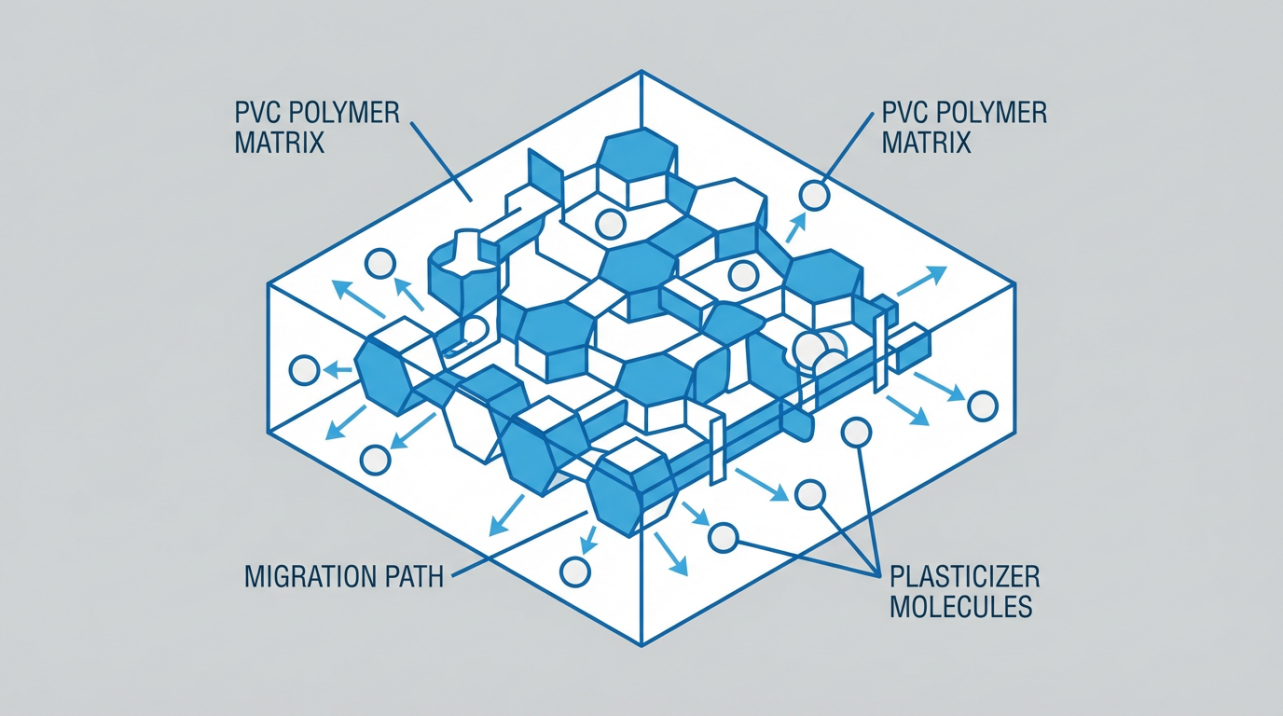
At the same time, there is a more mechanical softening you notice in joints and poses. Under constant load—like a heavy cape or a dynamic one-legged pose—PVC will very slowly creep, especially if it lives in a warm room, while harder structural plastics inside the same figure stay rigid. The result is a figure that leans, sags, or develops gaps at seams even though nothing is visibly broken.
Common Softening Symptoms at a Glance
What you notice | Likely cause | Typical trigger |
|---|
Limbs or weapons droop or lean | Heat-softened PVC slowly creeping | Hot display cases or summer rooms |
Surface feels greasy or sticky | Plasticizers migrating to the surface | Years in warm, enclosed storage |
Bubble or box window feels wavy or soft | Heat and humidity warping packaging | Attics, cars, or sun-facing walls |
Inside the Plastic: PVC, Soft Vinyl, ABS
Vinyl designer toys and many anime statues rely on PVC’s mix of softness and durability, which lets manufacturers mold fine details while still resisting everyday bumps. Hard PVC is usually used for sharper, more precise parts like faces, armor plates, and weapons. It feels cool and dense and has that crisp tap sound when you flick it, which collectors often associate with premium quality.
Soft vinyl is essentially PVC that has been formulated with more flexible plasticizers and cast into thin hollow shells, often through rotocasting or slush casting, to get large volumes and organic shapes at lower mold cost. Makers describe typical soft vinyl walls around 1/16 inch thick, which gives a light, slightly rubbery body that feels warm and matte in hand and tends to bounce rather than shatter when dropped. That softness is fantastic for chunky sofubi monsters, big chibi heads, and kid-friendly toys, but it also means the material is more sensitive to heat and long-term pressure.
Most modern figures mix materials to balance look and stability. ABS, a harder engineering plastic, is frequently used for internal skeletons, pegs, and weight-bearing joints because it holds shape under load better than PVC. That is why you can see a figure where an ABS inner frame is fine, but the outer PVC coat, hair, or accessories have begun to sag or feel rubbery around it after years in a warm room.
There is also a safety and compliance layer baked into all of this. Soft vinyl and PVC toys are typically formulated with phthalate-free plasticizers and lead-free stabilizers to meet standards like ASTM F963 and CPSIA, yet the underlying trick is still the same: extra small molecules are added to PVC to soften it, then locked into the plastic as much as possible without ruining processability or detail.
Why Heat and Humidity Make Figurines Softer
Toy makers soften PVC with plasticizers—small molecules that slip between the PVC chains—turning a hard resin into a flexible material that can be cast into cute heads, flowing skirts, and posable limbs. Health debates about phthalate plasticizers in soft vinyl teethers and rattles exist precisely because these molecules can migrate out of the toy under certain conditions, including warmth and prolonged mouthing by infants, which prompted regulators to measure how much DiNP could leach from toys into saliva and to push for stricter limits and alternatives in baby products vinyl toy safety. The same migration is what eventually shows up on your shelf as greasy shine and stickiness.
Heat accelerates almost every part of this process. PVC-based materials start to warp well below their literal melting point, and record-collecting research shows that vinyl begins to soften enough for pressure to cause permanent warps once you are above about 80°F, with visible warping kicking in around 140°F and outright melting at still higher temperatures vinyl heat thresholds. Collectible Star Wars PVC items show similar behavior: prolonged exposure in the ballpark of 150-160°F has caused irreversible damage in documented cases, while even modest temperatures just above typical room conditions combined with high humidity have led to warping, staining, and mold in figures and packaging, according to Star Wars temperature control guides.
Humidity is the other villain in the story. High moisture does not just feed mold in cardboard backings and blister bubbles; it also accelerates surface degradation and can make soft vinyl feel tackier and more unpleasant. Collectible care guides stress keeping relative humidity around the middle zone, roughly 40-50 percent, to keep plastics from becoming brittle in overly dry air or absorbing moisture and warping in damp conditions, according to plastic figure maintenance recommendations. When humidity runs high, cardboard backs can bow, plastic bubbles can deform, and any trapped vapors inside boxes have a harder time escaping.
Heat and humidity together make a kind of slow cooker for softening. Climate-control experts working with collectibles recommend cool, stable rooms around 50-60°F with relative humidity near 50 percent, and avoiding big day-night swings, because repeated expansion and contraction stresses plastics, adhesives, and paint at the same time as it speeds up plasticizer migration, as discussed in collectible storage conditions references. That is why a figure can stay crisp for years in one home and go sticky in just a couple of summers on a sun-blasted shelf in another.
How Your Display Choices Speed Up Softening
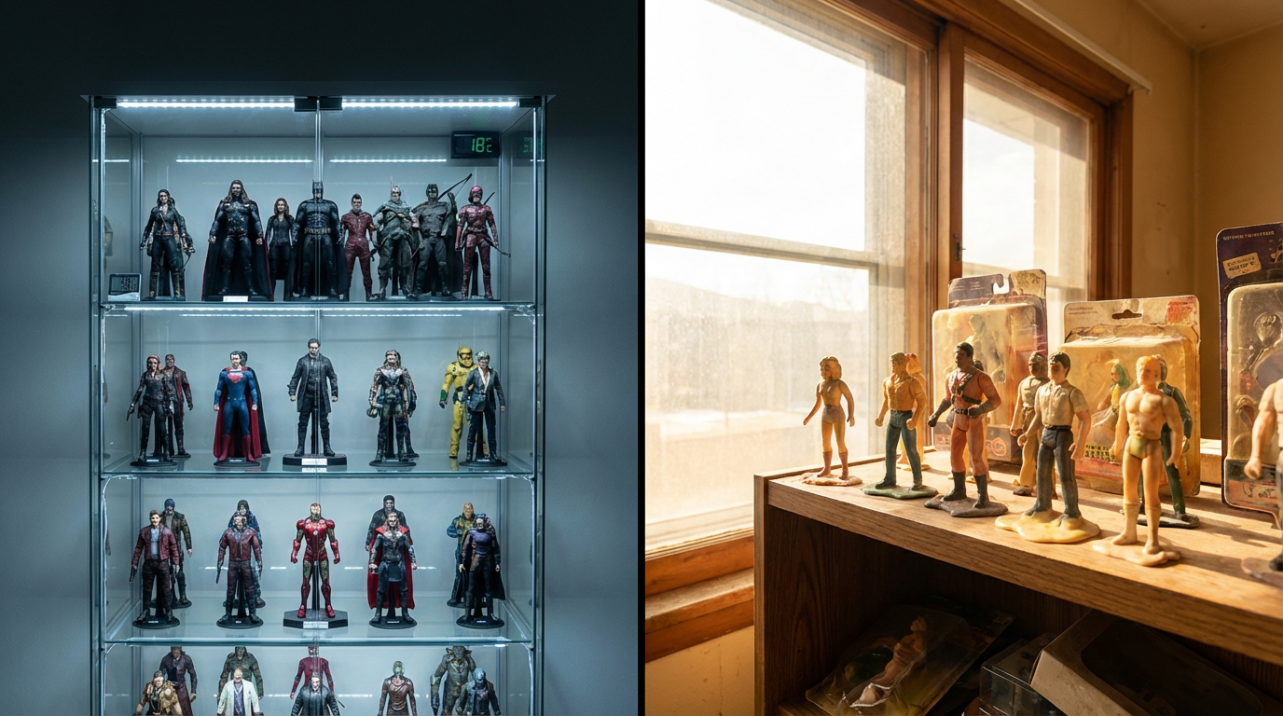
Not all display spots are created equal. High-risk zones like attics, garages, windowsills, and shelves near kitchens or heating vents swing from chilly nights to blistering daytime heat, and they routinely spike above the temperatures that make PVC warp, leach plasticizer, and grow mold inside packaging, as high-risk locations case studies show. The classic horror story is a car trunk full of figures on the drive home from a convention: interior temperatures can soar, and a few hours of baking can be enough to soften thin PVC and permanently bow boxes or bases.
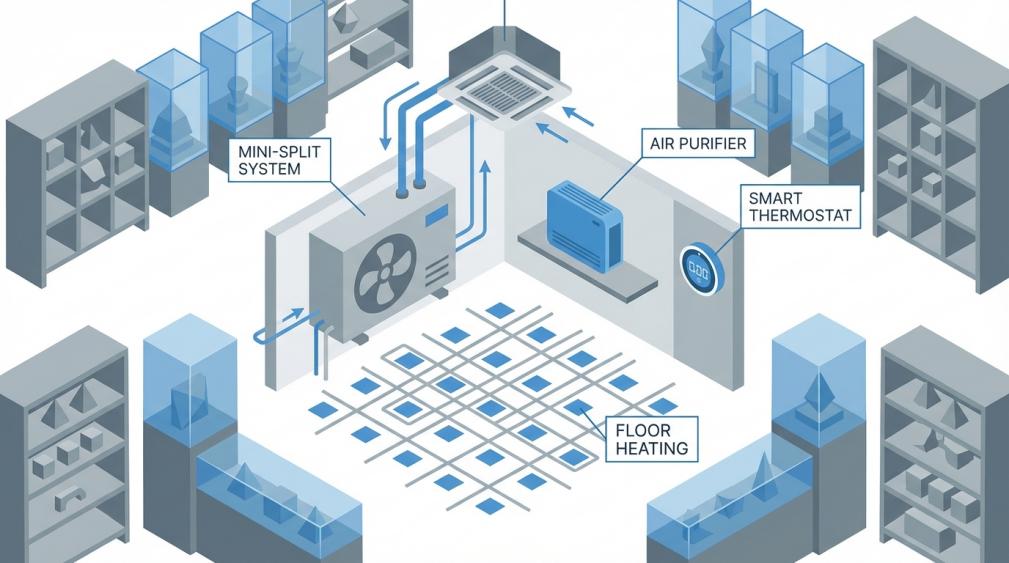
Basements look safer because they are dark and out of the way, but a raw basement can be one of the harshest environments for collectibles. Home comfort specialists point out that without proper climate control, basements are often too humid, too cold, and too dusty, which warps packaging, deforms plastic, encourages mold, and makes materials brittle over time basement climate upgrades. When a basement is finished with a ductless mini-split, gentle radiant heat in the floor, a smart thermostat, and an air purifier, it shifts from toy graveyard to an ideal vault for long-term storage.
There is also a tradeoff between leaving a figure “mint in box” and letting it breathe. Collectible storage guides emphasize that factory-sealed packaging is crucial for top-tier mint condition and resale value, especially for carded figures and blind boxes mint condition storage. At the same time, figure-focused blogs have documented how long-term sealed storage in warm environments lets plasticizer vapors build up inside boxes, which can leave PVC sticky when you finally open a grail years later. A practical middle path is to keep high-value pieces boxed in a truly cool, stable room and to periodically open and inspect them so vapors can dissipate and early softening or mold can be caught before it ruins the piece.
Rescuing a Soft or Sticky Figure
Once a figure has softened, the first step is to judge whether you are dealing with reversible surface gunk or deeper plastic breakdown. A thin greasy or sticky film that wipes onto your fingers usually comes from migrated plasticizers, and cleaning can dramatically improve how the figure feels. A figure that has turned uniformly rubbery, yellowed, or brittle, or that sags even in a cool room, has lost some of its internal structure; you can improve the surface, but the plastic itself has aged.
For light stickiness and general grime, figure care guides recommend treating PVC like delicate skin: regular dusting with a soft brush or microfiber cloth, followed by occasional gentle washes with diluted mild soap and warm water, ideally using distilled water to avoid mineral spots, as plastic figure maintenance articles note. Collectible toy blogs echo this, advising soft brushes, mild non-moisturizing dish soap, and careful air-drying rather than harsh cleaners or soaking hollow bodies that can trap water. The goal is to lift the oily film and dust without scrubbing paint or abrading the softened surface.
Heat-stressed figures deserve extra caution when handled wet. Professional advice for hot toy figures is to wash hands, support the main body with both hands rather than pulling on limbs or accessories, and work over a padded, stable surface so a softened piece does not topple or chip if it slips hot figure handling. Accessories should be removed and reattached slowly and in line with the original fit, because softened PVC pegs and sockets are easy to tear or permanently distort if twisted.
If a figure stays slightly tacky even after a gentle deep clean, you can choose between living with a satin feel or, for pieces you will not handle much, experimenting with a very light matte topcoat tested on a hidden area first. Some restoration guides mention using degreasing steps followed by matte sprays to make greasy PVC more presentable, but they also stress that by the time a figure is deeply sticky, its resale value is already heavily compromised and structural fragility is likely to follow. At that stage, it is often better to retire the piece to a low-stress, cool display and focus on preventing the same fate for the rest of the shelf.
Protecting New Arrivals From Softening
The single most powerful move you can make is to lock in a stable climate. Vinyl preservation research, which deals with the same PVC chemistry as records and many toys, recommends keeping collections around 65-70°F with relative humidity in the mid-range to avoid both warping and static-prone dryness, according to vinyl storage climate guidance. Climate-control guidelines for Star Wars collectibles go even further for long-term vault-style storage, suggesting cool rooms nearer 50-60°F with humidity near 50 percent and minimal daily swings, especially for mint-on-card and sealed boxes, as summarized in Star Wars temperature control materials. For most home displays, aiming for something like 60-75°F and mid-range humidity is a realistic target.
Placement matters almost as much as temperature. Toy and collectible care articles repeat the same mantra: avoid direct sunlight, avoid strong unfiltered lighting pointed straight at figures, and keep displays away from radiators, heaters, and sun-soaked windows where plastic and packaging can warp and fade hot figure handling. Glass or acrylic cases, especially if you add UV-filtering film, cut dust and light exposure dramatically, which in turn reduces how often you need to touch and clean your figures and lowers the risk of accidental drops or paint rubs.
As collections grow, it can be worth thinking like a small museum. Collectible retailers emphasize that keeping original packaging upright, avoiding tall stacks of heavy boxes, and using labeled, organized storage in a climate-controlled room all help keep items looking like release day for far longer mint condition storage. For very high-value collections, some collectors even rent dedicated climate-controlled storage units, accepting the ongoing monthly cost in exchange for tightly controlled temperature, humidity, and security, as mentioned in Star Wars temperature control discussions. It may feel like overkill, but for grail-level pieces or large inventories, the math can favor protection.
FAQ: Softening Questions From Collectors
Does cold storage stop softening?
Cold slows chemical reactions, but for PVC and soft vinyl it is a double-edged sword. Vinyl research shows that as temperatures drop toward and below freezing, PVC becomes more brittle and is more prone to cracking, especially if it is then moved quickly into a warm, humid room where condensation forms on surfaces vinyl heat thresholds. For figures, that means a cold garage or unheated storage unit might slow stickiness but raises the risk of fractures, broken pegs, and condensation-driven mold when conditions change. A cool, climate-controlled indoor room is far safer than any attempt to refrigerate your collection.
Are premium figures immune to softening?
Unfortunately, no. Vinyl’s popularity in premium designer toys rests on the same traits that make mainstream PVC figures nice to handle: it is tough, slightly flexible, and resists ordinary moisture and abrasion, as vinyl and designer toys guides explain. High-end sofubi and limited art vinyl are often made from soft vinyl formulations that are even more sensitive to heat and UV, and they are still softened with plasticizers regardless of how fancy the paint job is, as noted in PVC or soft vinyl references. The difference is that premium pieces usually get better paint and more careful production, not a fundamentally different material, so they benefit just as much—maybe more—from careful climate control and gentle handling.
Should I worry about health risks from softened PVC on my shelf?
The major health debates around PVC toys focused on babies and toddlers chewing soft vinyl teethers for hours a day and the resulting exposure to certain phthalate plasticizers like DiNP, which led European and North American regulators to reassess migration limits and, in some cases, restrict particular plasticizers in toys for very young children vinyl toy safety. For modern collector figures aimed at teens and adults, manufacturers generally use phthalate-free or tightly controlled plasticizers and design to comply with strict toy safety standards. For a typical collector who is only handling figures with clean hands and not mouthing them, the bigger practical concern is the material damage—warping, sticky film, fading—rather than personal exposure. If sticky or degraded pieces make you uneasy, cleaning or retiring them from heavy use is a reasonable peace-of-mind choice.
A last note: you are not the only one worrying. Even seasoned Funko fans who have spent years on the convention circuit still ask how temperature affects their Pops in dedicated communities, which shows that figuring out safe conditions is an ongoing, shared obsession in the hobby Funko temperature discussions.
Carefully chosen shelves, a calm climate, and a gentle cleaning routine turn softening from an inevitable tragedy into a slow, manageable aging curve. Treat your display like a tiny museum rather than a random corner of the room, and your waifus, mecha, kaiju, and chibi squads will stand tall and sharp for many more seasons of fandom.