Effective 4P Marketing Strategies for Collectible Anime Figurines
The Collectibles Boom And Why 4Ps Still Matter
If you have ever refreshed a preorder page at midnight for a limited-run figure or stood in a convention line praying the last box on the table is not another duplicate, you already know how emotional this hobby is. Collectible figurines are not just plastic; they are tiny totems of identity, nostalgia, and status that turn shelves into personal museums.
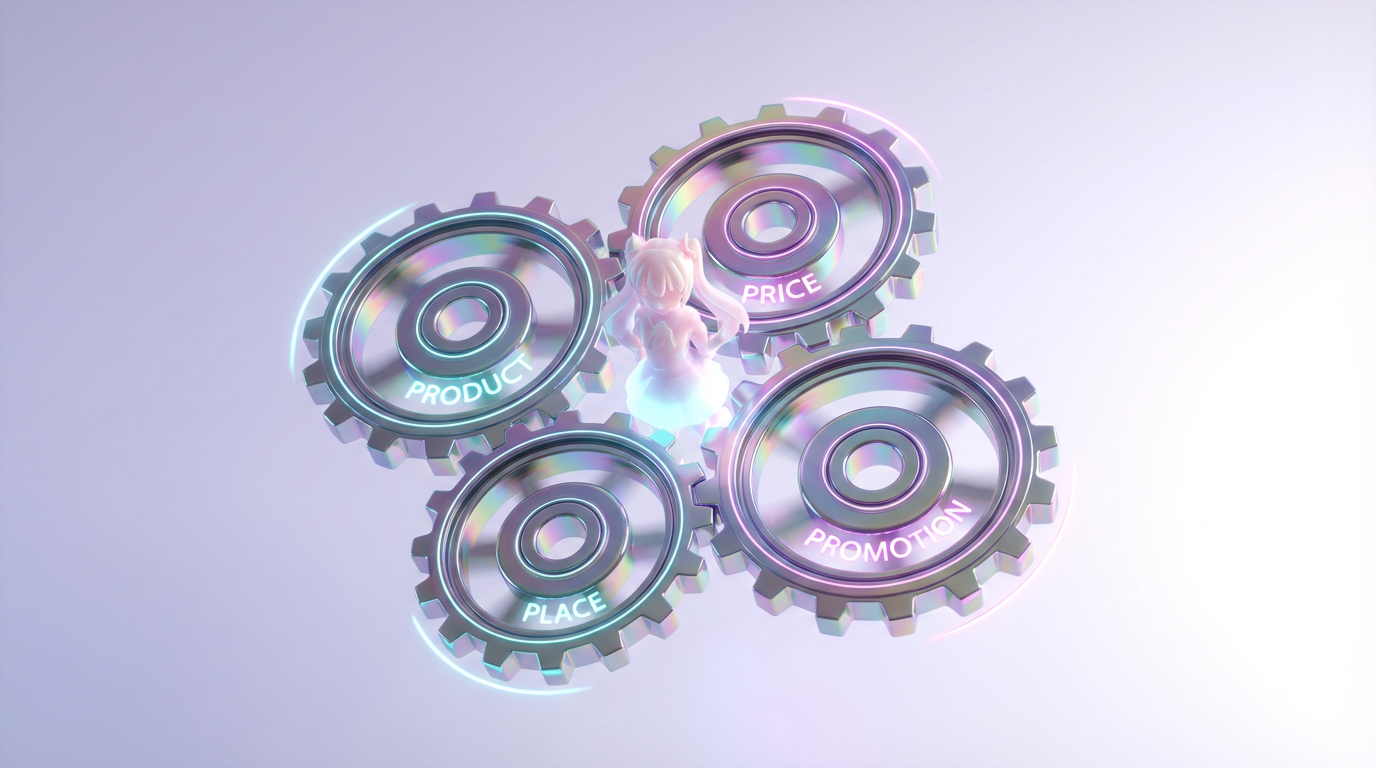
That same emotional intensity is exactly why the classic 4Ps of marketing—Product, Price, Place, and Promotion—are still your best toolkit if you want to sell figures, not just stock them. The 4Ps framework was shaped in the mid‑1900s and popularized by marketing scholars like E. Jerome McCarthy and Neil Borden, and modern guides from Investopedia, SurveyMonkey, and Product Marketing Alliance still treat it as foundational. In plain language, the 4Ps are what you sell, what you charge, where you sell, and how you convince fans to care.
The collectibles market has evolved from “nerdy side hobby” to serious business. A collectibles business plan summarized from Statista data put the global collectibles market at about $370 billion in 2021, and a more recent resale-focused report from Upright Labs cited a roughly $295 billion market in 2024, projecting growth to about $488 billion by 2030. That gap between estimates mainly reflects different definitions, but the direction is the same: figures, cards, and memorabilia are a massive, growing ecosystem.
Big players have already proven how potent the 4Ps can be. Nintendo turned character IP like Mario and Pokémon into multi-decade franchises by balancing hardware, game design, price tiers, and feel-good promotions. Mattel, Hasbro, and Lego built empires on toys, figurines, and play sets by tuning product portfolios, price ladders, global distribution, and media tie-ins. POP MART rode the blind box trend by focusing on younger collectors and emotional, surprise-driven product design, analyzed through STP and 4P theory in academic work.
For anime figurines, the same levers apply. The difference is that your battlefield is display shelves, Instagram feeds, and convention halls instead of supermarket toy aisles. Let’s walk through each P with a collector’s eye and a marketer’s brain.
Product: Sculpting Desire, Not Just Plastic
At first glance, Product sounds simple: it is the figure. But modern marketing guidance from sources like Conta, Investopedia, and art marketing research emphasizes that Product is the entire experience. That includes the sculpt and paint, the character choice, the lore, the packaging, the unboxing, and even the way a line completes on a shelf over time.
Know Your Collector Archetypes
Research on collectibles and trading cards highlights that collectors tend to stay in the hobby for years and can be far more valuable than casual shoppers. A business plan for a collectibles venture described a core target of collectors aged roughly 18 to 45 with annual incomes around $40,000 to $100,000, split between hardcore and casual buyers. POP MART’s marketing analysis zooms even tighter, describing a sweet spot among young women roughly 15 to 30 who are willing to pay for “spiritually satisfying” trendy toys and blind boxes.
If you sell anime figurines, those insights translate into recognizable archetypes. You have completion‑obsessed set builders, story-driven fans who only buy figures from certain shows or arcs, investors who treat certain statues like alt assets, and casual fans who just want one character for their desk. Guides to the 4Ps recommend starting every strategy with deep audience research, and the same applies here: grab reviews, Discord chat logs, subreddit threads, and your own order history to see which archetypes actually buy and which merely like your posts.
When you understand who you are designing for, decisions about pose, base, swappable parts, and even facial expression stop being aesthetic debates and become strategic moves.
Build Lines Around Stories, Sets, And Completion
A marketing article from Tribu on collectible psychology puts a name to something every figure collector feels: completion bias. Once people start a set of cards, toys, or miniatures, they feel a strong urge to finish it. POP MART’s success with blind boxes is built on the same lever. They create rich IP universes and character series, then package them as blind assortments that play directly into the thrill of surprise, scarcity, and completing a board or shelf.
Mainstream toy brands show parallel patterns. Mattel layers Barbie into endless sub-lines and special editions. Hasbro leans on franchises like Star Wars and board games that become the “cash cows” of its portfolio. Lego turns brick sets and minifigures into physical and digital universes, from Technic kits to full Legoland theme parks.
For anime figures, this means Product strategy is not just “make a nice statue.” It might mean designing an entire wave around a specific arc, costume variation, or crossover event. When you plan a line, think of how it will look as a group photo on a shelf, not only as single boxes on a product page. Tribu’s analysis of McDonald’s toy promotions shows how even low-cost collectibles drive repeat visits when kids want the whole themed set, not just one toy. Anime fans behave similarly when a line promises a full party of characters, not a lone protagonist.
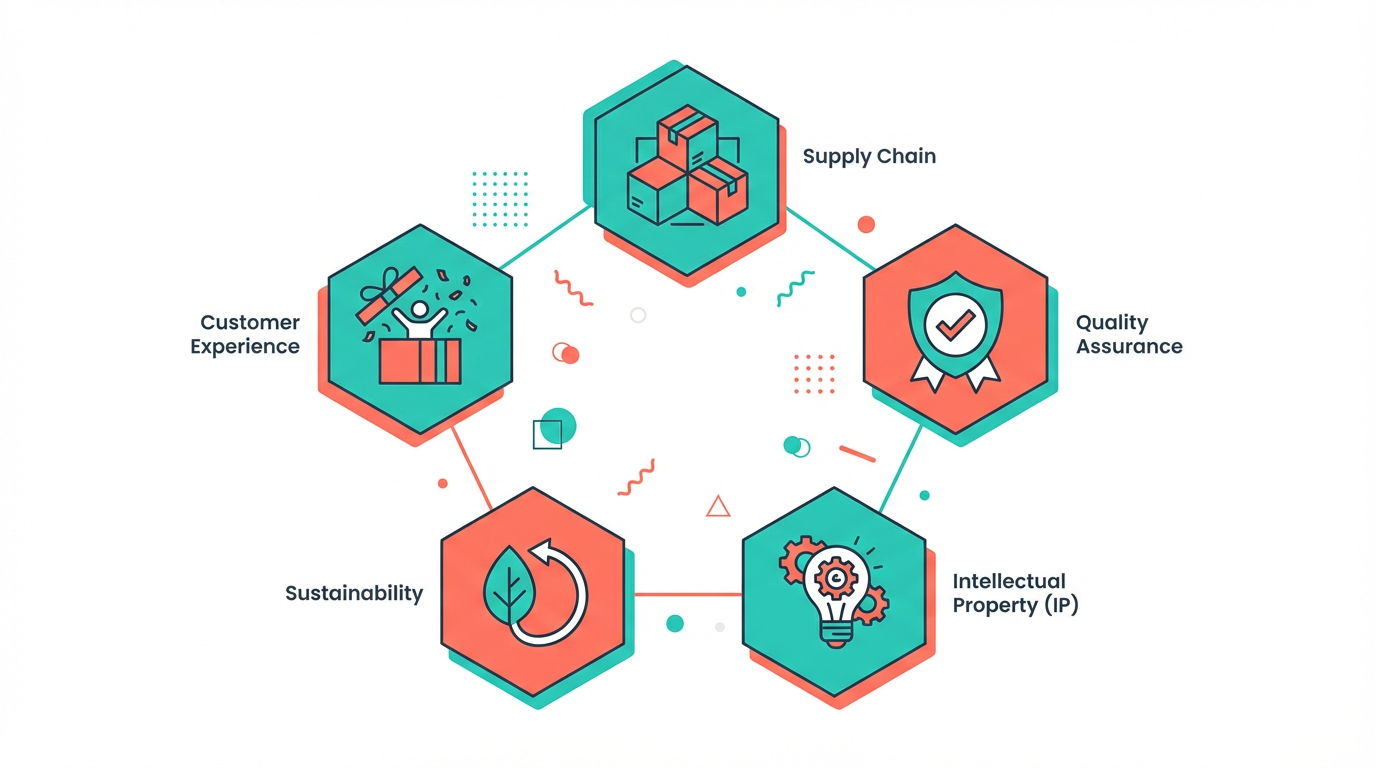
Quality, Safety, And Sustainability Still Matter
Collector-first brands sometimes forget that the product is still a physical object that has to be safe, durable, and ethically made. The big toy houses are very explicit about this. Hasbro’s marketing mix emphasizes quality and safety, alongside reducing environmental impact with reusable packaging materials. Lego’s strategy highlights precision manufacturing, strict quality tests, and a deliberate choice not to target children under about three years old because of choking hazards. POP MART’s academic analysis recommends improving product safety and environmental friendliness to ease consumer concerns and align with sustainable development trends.
For figurines, that translates into choosing sturdy joints and bases, avoiding fragile, top-heavy designs that lean or snap, and being transparent about materials. Even simple nods like labeling what is recyclable or explaining how paint choices reduce fading can become part of the Product story. Sustainability commitments, like the ones Mattel has made toward recycled plastics by 2030 in its “Barbie Loves the Ocean” line, are starting to matter more to younger collectors and parents.
Licensed IP Versus Original Characters
Art-market guidance on the 4Ps notes that Product, in art, is the work’s uniqueness and emotional impact. Picasso’s Cubist paintings or Damien Hirst’s installations achieved massive commercial value because they were distinctive and culturally important. For figurines, licensed IP can feel like the safe option, but you are still fundamentally in the art business.
Licensed characters bring built-in demand and search volume. That is how Mattel, Hasbro, Nintendo, and Lego have powered crossovers with movie franchises and game IPs for decades. However, licenses come with fees, approvals, and creative constraints. Original characters flip that equation. They demand heavier Promotion to teach fans why they should care, but if you nail the design and story, you own the IP fully and can expand into spin-offs, digital experiences, and collaborations without extra paperwork.
The research on POP MART’s marketing suggests one hybrid approach: invest deeply in your own IP while layering in collaborations and co-branded releases to tap into existing fan bases. For an anime-style figurine brand, that might mean building your own “mascot line” with recurring original characters, then occasionally partnering with known artists or shows to spike awareness.
Product Decisions At A Glance
Here is a quick way to think about Product choices for figurines, grounded in the 4Ps research and collectibles case studies:
Product Lever | What It Means For Figurines | Example From Research-Informed Practice |
|---|
Line structure | How figures relate as sets, waves, or standalone pieces | POP MART blind-box series built around IP worlds and completion |
Quality and safety | Sculpt, paint, stability, and safe materials | Hasbro and Lego prioritizing quality checks and age-appropriate use |
IP strategy | Licensed characters versus original universes | Art marketing guidance on distinctive bodies of work |
Sustainability | Packaging, materials, and disposal | Mattel’s recycled-plastic initiatives for eco-conscious buyers |
Experience and extras | Unboxing, accessories, digital codes, display stands | Nintendo and Lego extending toys into games, parks, and media |
The more intentional you are with each of these, the more your Product can carry its weight so Price, Place, and Promotion do not have to work as hard to convince fans.
Price: From Blind Box Impulse Buys To Grail Statues
Marketing fundamentals from Conta, Decktopus, Investopedia, and Product Marketing Alliance all hammer home the same point. Price is not just what you charge; it is a signal that tells buyers where to place you in their mental map of brands. It also directly controls your margins and survival.
Build A Tiered Lineup That Matches Your Audience
Nintendo offers a clear example of tiered pricing. Analysis of its marketing strategy shows premium prices for new flagship consoles and hardcore titles, more accessible prices for casual games and mobile experiences, and progressive discounting of older products. Mattel, Hasbro, and Lego all run similar ladders. Hasbro targets kids with products that typically fall between about $10 and $100, balancing entertainment value for children and acceptable costs for parents. Lego generally prices sets from roughly $10 for simpler packs up to about $150 for complex kits, maintaining a slightly premium but still accessible position.
For collectible figurines, a tiered approach lets you take care of both entry-level fans and whales without confusing anyone. One layer might be small, affordable pieces that ride trends and fuel impulse buys, similar in spirit to POP MART’s mid-range blind boxes. The next could be standard-scale display figures with more elaborate sculpts. The top might be limited high-end statues aimed at serious collectors or investors, mirroring how art-piece pricing often reflects reputation, rarity, and media buzz. In the fine art example, Damien Hirst’s works sold at extreme prices because of perceived importance and controversy, not material cost alone.
Tiered pricing gives fans a clear upgrade path.
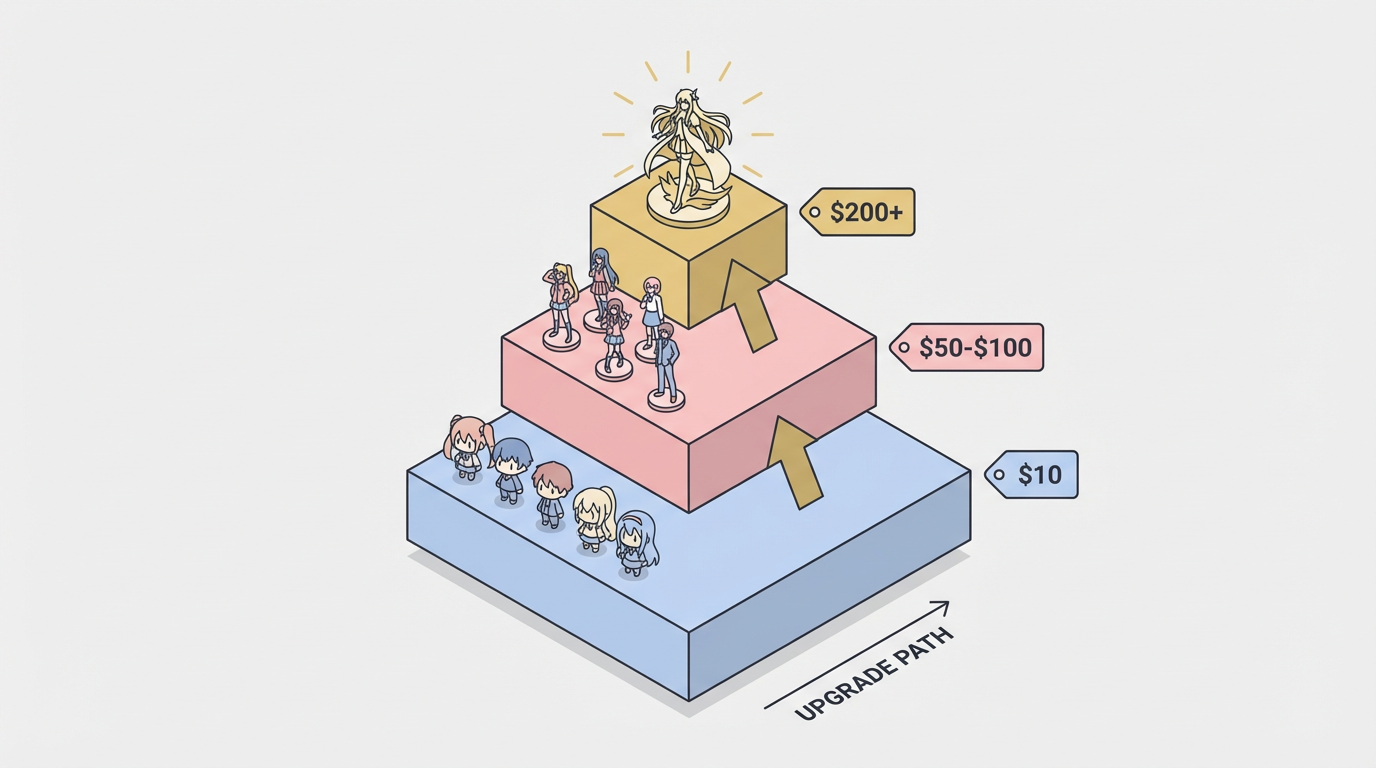
Casual buyers can start small, while your biggest supporters have meaningful ways to spend more without feeling like you are gouging them.
Use Psychological And Blind Box Pricing Carefully
POP MART’s marketing analysis, using a 3C pricing framework, notes that the company sets the last digit of all product prices to nine. This classic psychological pricing tactic makes items feel more affordable and on the right side of a mental threshold. When paired with blind boxes that trigger completion bias, this encourages frequent repeat purchases.
Psychological pricing absolutely works for figurines, particularly for smaller items and accessories. Ending at nine, setting “under” thresholds, or bundling multiple small items at what feels like a deal can all help. However, research on collectibles cautions that trust and authenticity are crucial for high-value items. A Zigpoll-led strategy paper for expensive collectibles emphasizes that buyers have long, multi-touch journeys and are sensitive to perceived manipulation. If you lean too hard on tricks or heavy discounts, you risk signaling that your brand is cheap or that the original prices were inflated.
Blind box pricing also cuts both ways. POP MART thrives on it, but their research-backed advice is to also push non-blind products and diversify categories. For anime figurines, blind boxes are best reserved for lines where surprises make sense and where the cost of a duplicate does not sting too badly. High-priced statues or intricate scale figures generally should not be blind; serious collectors want certainty once ticket sizes climb.
Protect Your Margins And Your Brand
Guides from Decktopus, Investopedia, and New Breed all recommend setting Price based on perceived value and market positioning rather than just cost-plus formulas. In fashion, Zapier’s marketing overview notes that luxury items may carry markups ten or twenty times manufacturing cost, with Chanel’s iconic bag used as an example of price hikes reinforcing exclusivity. That is extreme, but it illustrates how price tells a story.
For figurines, markdowns and constant sales may feel like easy levers to move stock, yet there are clear risks. Research on the 4Ps warns that over-optimizing one lever—like aggressive discounting—without adjusting the others can erode brand and margins. Zigpoll’s strategy overview for high-value collectibles also stresses cautious promotion of scarcity, accurate inventory communication, and a focus on qualified leads rather than raw clicks.
A healthier approach is to define your pricing objectives up front. Decide whether certain lines are meant as penetration plays to grow your base, premium signals that anchor your brand at the high end, or long-tail products that will get gradual discounting over time. Pair that with KPIs such as average order value, margin, and customer lifetime value, as recommended by Product Marketing Alliance and Upright Labs.
Price Strategies Compared
Here is a compact comparison of pricing choices you might make for figurines, viewed through the lens of the research.
Pricing Approach | Where It Fits In Figurines | Upside | Risk Or Tradeoff |
|---|
Tiered price ladder | Entry minis, mid-scale figures, premium statues | Reaches multiple segments, clear upgrade paths | Complexity in line planning and inventory |
Psychological “9” pricing | Blind boxes, small accessories, mid-priced figures | Feels affordable, supports repeat purchases | Can look gimmicky if used on very high-end pieces |
Limited discounting | Core character lines and evergreen statues | Protects brand, signals lasting value | Slower clearance of misfires |
Heavy promotional discount | Seasonal drops, overstocks, mystery bundles | Moves inventory quickly, spikes short-term revenue | Trains collectors to wait for sales, harms perceived value |
Premium “grail” pricing | Numbered editions, signed collabs, elaborate diorama statues | Captures high willingness to pay, strengthens brand aura | Smaller buyer pool, stronger need for authenticity and proof |
Price choices do not live in a vacuum. They have to harmonize with Product quality, Place channels, and Promotion tactics, or collectors will feel a disconnect.
Place: Where Your Figures Actually Live
Place, in classic 4Ps language, is where and how your product is made available. Guides from Decktopus, Investopedia, and New Breed all note that Place now spans far beyond store shelves. It is websites, marketplaces, events, and all the logistics in between.
The collectibles business plan for “SumoSum Collectibles” proposes a blend: a robust online platform and a physical store that doubles as a community hub with events and meetups. That same “online plus in‑person” pattern appears in many success stories. Nintendo mixes hypermarkets and retailers with its own digital store. Mattel and Hasbro sell through supermarkets, specialty toy shops, and big marketplaces. Lego has branded stores, theme parks, cinema tie-ins, and global distribution centers.
For anime figurines, Place is any arena where fans can see the sculpt, feel the size, and imagine it on their shelves.
Choose Channels That Match How Fans Actually Buy
New Breed’s modern 4Ps guide argues that Place has shifted from being mainly physical to primarily digital, with websites and online channels often taking the lead. Even restaurant choices are heavily driven by search and online information, and a sizeable share of luxury purchases are influenced by online experiences. Zapier’s 4P overview emphasizes that you should not try to be everywhere; instead, focus on the channels where your target audience already shops and hangs out. They use antiques and collectibles as an example where a specialized marketplace outperforms general platforms, precisely because the audience is focused and in the right mindset.
For figurines, practical Place options include a direct-to-consumer site where you control the experience, general online marketplaces with built-in traffic, niche collector platforms, physical hobby shops, and convention booths or pop-up events. Upright Labs’ report on sourcing and selling collectibles calls out multi-channel listing tools as a way to centralize operations while still going where buyers are. They also stress that secondhand marketplaces have turned basement stash into globally traded assets, which means your primary-market Place strategy needs to assume an active resale ecosystem.
Specialty guidance for garden centers that add collectibles underscores the importance of strategic fit. If the collectible line is treated as random fringe product, it dilutes the assortment and fails. When retailers commit to a dedicated, visually distinct section that matches the emotional appeal and price point of the products, traffic patterns change and collectors begin to see the location as a go-to source.
Design A Collector Journey, Not Just Channels
Investopedia and Product Marketing Alliance highlight that Place is not just a point of sale but the full journey of discovery, evaluation, and purchase. Many 4P playbooks recommend mapping the customer journey across every touchpoint. For figurines, that journey might start with a reveal post on social media, continue through a countdown on your site, include early-bird email access, and finish with pickups at conventions or home delivery, followed by resale trading later.
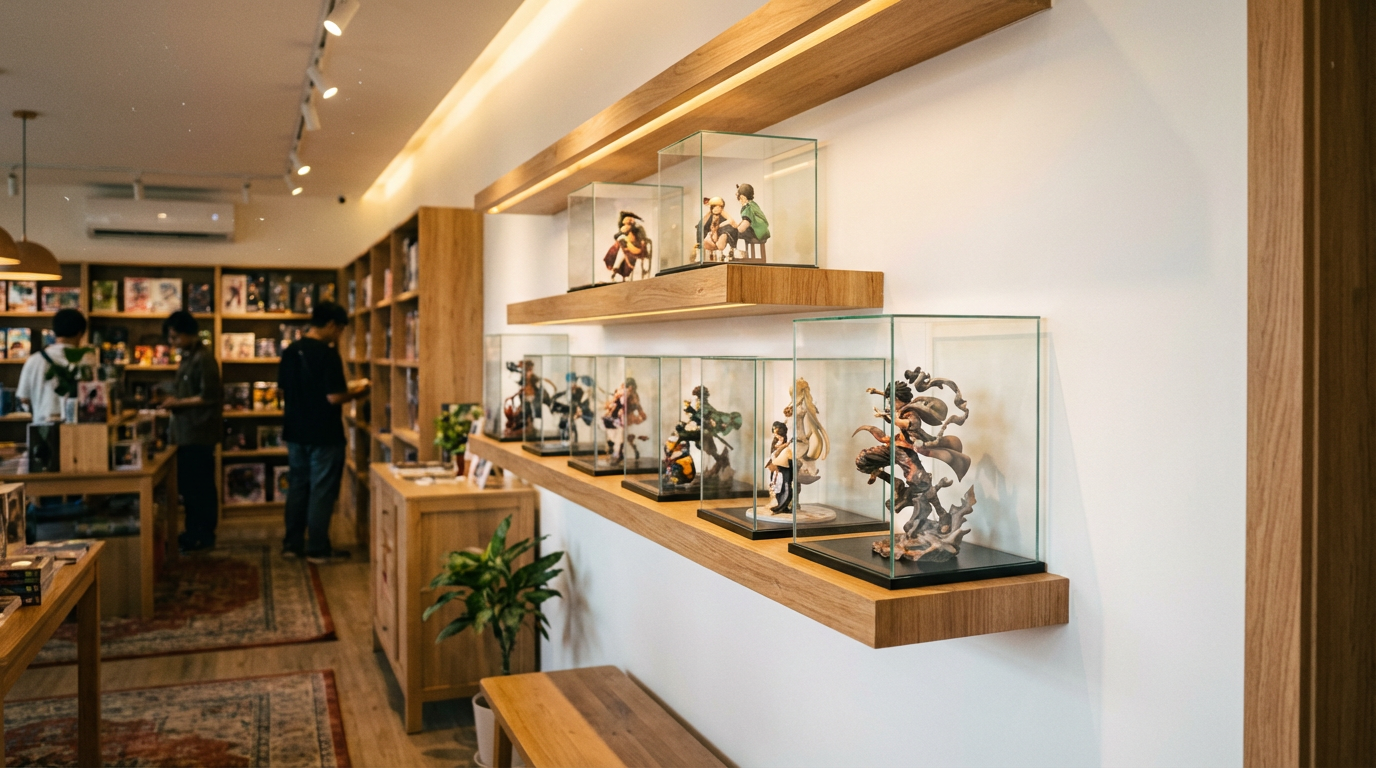
POP MART’s recommendations include strengthening offline experiential marketing through exhibitions and hands-on events where collectors can interact directly with products. GrowerTalks’ piece on collectibles in garden centers suggests similar tactics: a distinctive corner, strong visual merchandising, and at least one staff member whose knowledge rivals that of serious collectors.
For anime figurines, pairing an online-first Place strategy with “IRL anchor points” can be powerful. Think small pop-up displays at local events, shared booths with other brands at conventions, or collabs with existing hobby shops. Even a modest, well-curated corner that feels like an art gallery can deliver on the sense of specialness that collectors crave.
Align Logistics With Collector Expectations
Under the hood, Place also means logistics, inventory, and fulfillment. Guides to the 4Ps from VCMO-style playbooks recommend assigning KPIs to each P and treating logistics as part of the marketing promise. Hasbro’s “milk-run” style logistics, where trucks are loaded based on data from multiple points to minimize travel cost, and Lego’s use of a Czech distribution center to cut logistics costs in Europe and Asia, are behind-the-scenes examples of Place decisions that affect time-to-shelf.
For figurines, collectors may forgive waiting on a made-to-order statue, but they will not tolerate confusing shipping timelines or poor packaging. That is why Upright Labs and Zigpoll both push for real-time inventory integration, accurate messaging about availability, and close alignment between promotion and actual stock. When Place and Promotion are in sync, you avoid over-promising “limited drops” you cannot fulfill, which can destroy trust in collector communities overnight.
Promotion: Storytelling That Turns Scrolls Into Preorders
Promotion is how you tell the world your figures exist and why they matter. Classic and modern marketing guides—from Investopedia and Decktopus to New Breed and LiveWebinar—describe Promotion as the full communications strategy: advertising, PR, events, email, content, social, influencer collaborations, and more.
In the collectibles space, Tribu’s work on collectible psychology, POP MART’s marketing recommendations, Nintendo’s campaign history, and toy company case studies all converge on a simple reality. The most effective Promotion sells a feeling, not just a product.
Use Promise, Picture, Proof, And Push In Your Copy
While many 4P discussions focus on Product, Price, Place, and Promotion as the marketing mix, a copywriting guide from PageBlock introduces a different but complementary 4Ps model: Promise, Picture, Proof, and Push. It is meant to structure messages that convert.
First, you craft a Promise, a concise, authentic statement of the core benefit, grounded in customer insight. For a figure, that might be the feeling of having a favorite hero “finally represented the way they deserve” on your shelf. The guide suggests anchoring this in data or real feedback, not guesswork.
Second, you build the Picture, a vivid description of the transformation or scenario. For figurines, that could be describing how a diorama changes the vibe of a workstation or how a full set makes a display case feel like a mini gallery.
Third, you present Proof. Collectible marketing research emphasizes testimonials, social proof, and statistics. In the collectibles resale space, Upright Labs highlights that buyers are sensitive to details like grading, authenticity, and item condition, and even notes that a majority of online shoppers see poor grammar as a dealbreaker. For figurines, proof might include close-up photos, edition numbers, artist commentary, and customer photos.
Finally, you prepare the Push: a clear call to action with either urgency or reassurance. PageBlock’s guide recommends using deadlines, bonuses, or guarantees as levers. In figure drops, that could be a timed preorder window, a small bonus accessory for early buyers, or a transparent policy regarding defects and replacements.
Choose Promotion Channels That Match Fandom Behavior
Nintendo’s storied campaigns are a masterclass in Promotion. Historical analysis shows they used slogans like “Now you’re playing with power!” and “Escape to a World of Color,” plus freebies, retail partnerships, and conference presence to communicate fun and nostalgia rather than just technical specs. Toy marketing mixes for Mattel, Hasbro, and Lego describe intensive campaigns built on TV, digital, social media, tie-in shows, and movies. POP MART’s research-backed strategies suggest a mix of visually rich video content, social media campaigns, and offline events to promote trendy toys.
Modern 4P guides from New Breed report that around sixty-four percent of businesses use email marketing, reflecting a massive shift toward digital-first demand generation. Promotion today is about finding a balance between organic content, email, search, social, and paid campaigns, all tuned to your particular fandom.
For anime figurines, natural Promotion channels include short-form video unboxings, behind-the-scenes sculpting clips, convention panels, fan-art collaborations, and targeted email drops to your warmest collectors. Zapier’s advice about promotions stresses designing campaigns that spotlight the pain points your product solves and using social proof and referrals to extend reach. In our world, the “pain point” might be shelves that feel empty of a favorite character or frustration with low-quality knockoffs.
The key is not to chase every platform. Instead, you follow the same logic used for Place. Ask where your specific collectors already spend time and where they want to hear from you. For some lines, that might be video-first channels and influencer partnerships. For others, it may be email, forums, and conventions.
Tap Into Scarcity, Sets, And Nostalgia Without Burning Trust
The psychology of collectibles article from Tribu explains how scarcity and completion bias combine to turn small items into powerful sales drivers. Rare items and the hunt for them raise perceived value. Pokémon cards are the classic example cited, where decades of booster packs and rare pulls transformed inexpensive cards into a multi-billion-dollar ecosystem.
In practical terms, scarcity can take several forms: limited editions, numbered runs, seasonal drops, or collaborative releases that will not be repeated. Tribu recommends using scarcity but keeping the collectible cheap enough to feel like a bonus for fast buyers, not a punishment for everyone else. POP MART’s analysis similarly suggests co-branded collaborations to increase market reach and creating new product lines that can live beyond blind boxes alone.
At the same time, Zigpoll’s strategy paper on high-value collectibles emphasizes risk mitigation. Over-promoting scarcity can backfire if your inventory data is not accurate or if you push urgency so hard that buyers feel manipulated. They recommend real-time inventory synchronization in ads and landing pages, careful A/B testing of messaging, and transparent communication about authenticity and condition to protect trust.
Nostalgia is another reliable lever. Nintendo used it effectively during the pandemic with Animal Crossing and Switch, turning cozy, social gameplay into a way to reconnect during lockdowns. In figurines, nostalgia might mean reissues of classic poses, anniversary editions, or lines inspired by older seasons that fans grew up with. The key is to pair nostalgic themes with modern quality and customer experience so it feels like a tribute, not a cash grab.
Measure Promotion Like A Pro
Investopedia and Product Marketing Alliance both recommend attaching metrics to each P rather than flying blind. For Promotion, that typically includes awareness, reach, click-through rate, conversion, and return on ad spend. Zigpoll’s advanced strategy for collectibles adds engagement depth (session duration, page views, repeat visits), qualified lead rates, and customer lifetime value. Upright Labs encourages tracking sell-through rate, price per item, and sales volume to understand how well your promotions actually move inventory.
For a figurine launch, that might look like monitoring how many preorder page visitors convert, which emails generate the highest click rates, how often buyers return for new waves, and what kinds of promotions lead to the best long-term customers instead of one-time bargain hunters.
Bringing The 4Ps Together: A Mini Launch Blueprint
To see how this all fits, imagine you are launching a small anime-inspired figurine line. You start with Product by defining a clear target segment, maybe young adult collectors who love cozy, slice-of-life characters and frequently share desk set-ups online. Inspired by POP MART’s IP strategy and the art marketing perspective on distinctive bodies of work, you build an original character cast tied together by a strong theme rather than a licensed show. You plan a first wave of four figures designed to look cohesive side by side, leaning into Tribu’s completion bias so that buying one makes people want the full set.
On Price, you borrow from Nintendo’s and Lego’s tiered strategies. Basic figures are set at an accessible mid-range, with psychological pricing just under a key threshold, while a special diorama version of the main character is positioned as a premium piece. You define the objective clearly: the base line exists to grow your collector base and feed sets, while the diorama anchors your brand as capable of high-end work. You avoid constant couponing, following the warning from 4Ps frameworks about eroding margins and brand value, and instead plan limited, well-communicated promotions.
For Place, you choose a direct-to-consumer site as your home base, supported by listings on a niche collectible marketplace, following Zapier’s guidance that specialized platforms can beat generic ones when the audience is right. Taking a page from SumoSum’s playbook, you also book a small table at a local convention and arrange a pop-up collaboration with a friendly hobby shop. Inspired by GrowerTalks’ suggestions, you design a visually distinct mini “gallery wall” for that shop, so your line is not just jammed into a random shelf. Logistics-wise, you adopt Upright Labs’ mindset of planning exit paths for unsold inventory and knowing when you will bundle or clearance older variants instead of letting them gather dust.
Promotion weaves everything together. Using the Promise, Picture, Proof, Push structure, you craft product pages that open with the emotional benefit of bringing a calm, cozy vibe to a chaotic workspace. You paint the Picture with lifestyle photos and collector stories, gather Proof through early reviews and behind-the-scenes sculpting shots, and finish with a Push that clearly states preorder windows and reassures buyers about replacement policies for defects.
Channel-wise, you combine social reveals and sculpting videos, email drops to your interest list, and a modest paid test targeting known collector interest groups, following New Breed’s and Zigpoll’s emphasis on multi-touch attribution and feedback loops. During the launch, you track foundational metrics—traffic, conversion, ROAS—and softer signals like social engagement and collector comments, ready to tweak future waves according to what actually resonated.
That is the 4Ps in action for figurines: four levers, one coherent story.
FAQ
Do small figurine makers really need the full 4Ps framework?
Yes, but you can keep it lean. Research from sites like Product Marketing Alliance and SurveyMonkey shows that the 4Ps are most useful as a checklist to avoid blind spots. Even a solo creator can benefit from writing a one-page plan that describes who the Product is for, how the Price supports both value and margins, which Places you will focus on, and how you will Promote the line over a few weeks. The point is not to turn into a big corporation; it is to stop making random, disconnected decisions.
Are blind boxes a good idea for anime figurines?
They can be, but only when they fit your audience and price point. Academic analysis of POP MART shows that blind boxes work best with younger consumers who enjoy surprise, collectibility, and mid-range prices. The strategy leans heavily on completion bias and scarcity. For higher-priced statues or figures where buyers care deeply about exact poses and outfits, blind packaging usually creates more frustration than fun. If you experiment, start with a small, clearly priced line that you can sell both as singles and as full sets so completionist collectors have a guaranteed option.
How should I think about resale and flippers in my marketing?
Research from Upright Labs and Zigpoll makes it clear that the resale market is now baked into collectibles. Instead of fighting it, design your 4Ps with that reality in mind. High-quality Product, transparent edition sizes, and strong authenticity signals help serious collectors justify paying more, both now and later. Consistent Price positioning avoids wild swings that scare people away. Known Places where your items regularly appear, including reliable marketplaces and auction-style channels, give buyers confidence about liquidity. Promotion that highlights long-term desirability and storytelling, rather than pure hype, tends to attract collectors who stay, not just flippers chasing the next spike.
Closing
Anime figurines live at the crossroads of fandom and business. When you treat Product, Price, Place, and Promotion as four parts of the same story instead of four separate checkboxes, you stop guessing and start engineering that moment when someone looks at your figure and thinks, “That belongs on my shelf.” Build for that moment, and the sell-outs, waitlists, and gallery-worthy collections will follow.
References
- https://www.researchgate.net/publication/387718553_Analysis_of_Marketing_Strategies_of_POP_MART
- https://buildd.co/marketing/nintendo-marketing-strategy
- https://www.crystalfunds.com/insights/the-collectibles-market-from-hobby-to-investible-asset-class
- https://www.decktopus.com/blog/4-ps-of-marketing
- https://www.growertalks.com/Article/?articleid=16814
- https://www.linkedin.com/pulse/marketing-4-ps-world-art-guide-selling-pieces-mohammad-ali-jalili-dlwpf
- https://www.marketing91.com/marketing-mix-of-mattel/
- https://www.newbreedrevenue.com/blog/guide-to-implementing-four-ps-of-marketing
- https://www.peakframeworks.com/post/4ps-of-marketing
- https://www.productmarketingalliance.com/the-4-ps-of-marketing-and-the-marketing-mix/