From Resin Garage Kits to Global Handicrafts: Understanding Supply and Demand Curves
Why Anime Figurine Fans Should Care About Economics
Picture this. It is 9:45 AM and you are outside a convention center, coffee in one hand, ticket in the other, mentally rehearsing your sprint route to Artist Alley. There is one particular booth you are aiming for: the sculptor who teased a hand-painted resin figure of your favorite character, limited to just fifty pieces. When the doors finally open, you hurry in, only to discover the dreaded little placard: “Sold out.”
That tiny sign is not just heartbreak; it is a live-action demo of supply and demand.
On one side, the artist’s capacity to hand-sculpt, mold, cast, sand, and paint a small batch of figures is brutally finite. On the other side, hundreds or thousands of fans would happily throw money at that character in that style. The moment those two forces collide, you get a price, a run size, a resale market, and a lot of feelings.
Exactly the same forces shape the global handicraft economy. When we talk about handmade crafts, we are not just talking about one resin kit table at a con. Analysts at firms such as Customcy, Research and Markets, Market Data Forecast, and others describe a global handicrafts and handmade market already measured in the hundreds of billions of dollars, with multiple reports projecting it to climb toward or beyond the trillion‑dollar mark between the late 2020s and early 2030s.
This article uses the fandom lens—anime figures, fan art, handmade merch—to walk through supply and demand curves in handicrafts. Along the way, we will anchor those curves in real numbers from craft and art market research, and then turn that into practical strategies for both creators and collectors who want more than just vibes when they price, buy, or invest in handmade work.
Handicrafts 101: A Colossal Market Hiding In Plain Sight
When researchers talk about “handicrafts,” they mean a wide range of goods made with significant human skill and manual work: textiles, jewelry, pottery, wood and metal art, decorative items, incense and fragrance, and much more. Reports from Research and Markets, Bonafide Research, and similar firms emphasize that these products are usually rooted in regional culture and tradition, even when the final design looks very modern.
Despite feeling “niche” when you are just scrolling Etsy or wandering a con, the handicraft economy is not small at all. A roundup from Customcy reports that the global handmade and crafts market is worth more than $906 billion and could reach about $1.94 trillion by 2033, with growth around 8.83 percent a year from 2025 through 2033. The same roundup cites the broader global handicraft market at over $1 trillion today, with the possibility of approaching $2 trillion by 2030. A separate estimate from Customcy pegs the wider artisan economy at roughly $985 billion in 2023, supporting around 300 million jobs worldwide.
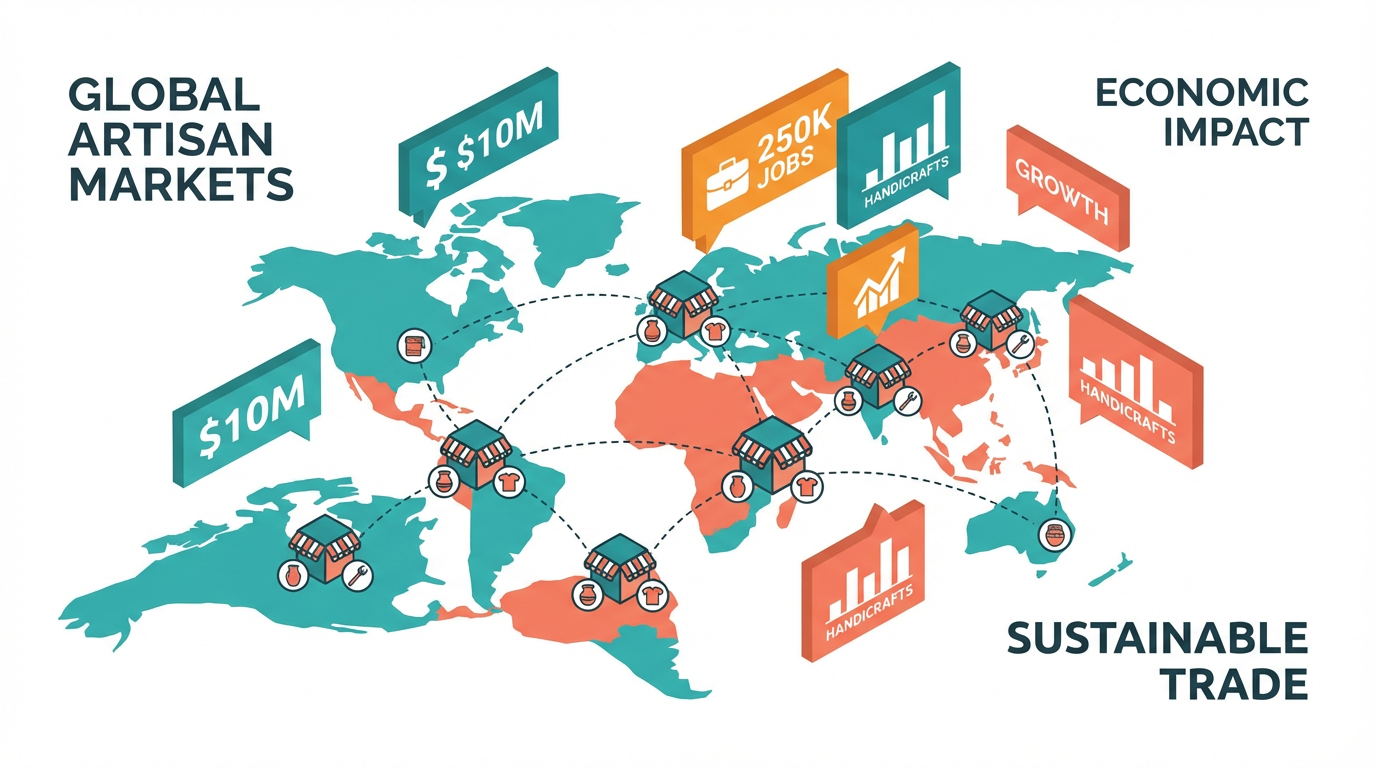
Other research firms land in the same ballpark. Research and Markets describes global handicrafts reaching about $769.42 billion in 2023 and projects more than $1.22 trillion by 2029, an annual growth rate near 8.18 percent. Market Data Forecast estimates around $726.59 billion in 2024, growing to approximately $1,103.25 billion by 2033, with an 8.3 percent annual growth rate after 2025. Another study summarized by Reanin values the market at about $906.92 billion in 2024 and expects it to reach roughly $1.84 trillion by 2031 at 10.6 percent annual growth. A press release summarized by Credence Research puts 2022 revenue at about $1,005.49 billion and expects close to $2,317.18 billion by 2030, implying 11 percent annual growth.
Different studies use different definitions, segments, and forecasting methods, so they do not agree on a single exact number. What they all agree on is the direction of travel: handicrafts are large, global, and growing quickly—often at rates near or above 8 percent a year.
To ground all this, it helps to see a few of those estimates side by side.
Source or study | Time frame | Market size and projection (approx.) | Indicative growth |
|---|
Customcy handmade and crafts roundup | 2025–2033 | Over $906 billion, rising to about $1.94 trillion by 2033 | Around 8.83% CAGR |
Customcy global handicraft estimate | Through 2030 | More than $1 trillion today, expected to reach around $2 trillion | Noted as strong |
Research and Markets overview | 2023–2029 | About $769.42 billion in 2023 to more than $1.22 trillion by 2029 | Around 8.18% CAGR |
Market Data Forecast global | 2024–2033 | Around $726.59 billion in 2024 to roughly $1,103.25 billion by 2033 | About 8.3% CAGR |
Reanin global forecast | 2024–2031 | About $906.92 billion in 2024 to around $1.84 trillion by 2031 | About 10.6% CAGR |
Credence Research (PR Newswire summary) | 2022–2030 | About $1,005.49 billion in 2022 to around $2,317.18 billion by 2030 | About 11.0% CAGR |
At a regional level, the numbers get even more concrete for those of us in fandom-heavy markets. Customcy notes that the United States is the biggest consumer of handicrafts and handmade goods. The U.S. handmade market alone is estimated at more than $268 billion and is expected to grow by about 9.8 percent annually over the next several years. Market Data Forecast estimates that the North American handicrafts market is around $237.39 billion in 2024 and could reach about $477.05 billion by 2033, which works out to an 8.06 percent annual growth rate from 2025 onward.
Behind those revenue figures are people and livelihoods. Customcy’s compilation suggests the artisan economy supports roughly 300 million jobs worldwide. In the United States and Canada, they cite about 85 million active creatives generating around $35 billion in sales. In the United Kingdom, crafts contribute about $4.2 billion to the economy, with around 2.3 million creative‑industry jobs, more than 11,000 craft businesses, and about $6.3 billion in exports.
If you have ever grabbed a hand-dyed enamel pin or a custom plush of your comfort character from a creator’s small shop, you are participating in that economy. The only difference is scale: what feels like a table in Artist Alley is actually part of a multibillion‑dollar global market.
Supply: How Many Handmade Pieces Can The World Actually Produce?
In the simplest microeconomics language, “supply” is how many units producers are willing and able to bring to market at different prices. ArtZolo’s analysis of the art economy emphasizes that this applies just as much to paintings and sculptures as it does to any other market. The moment we step into handicrafts and fandom merch, supply stops being abstract and starts looking like the number of hours in an artist’s week.
For handicrafts, one big constraint is hands-on time. An artisan who hand-carves wood, weaves baskets, blows glass, or hand-paints figurines cannot double production overnight just because a TikTok went viral. Reports highlighted by Research and Markets and Market Data Forecast describe handicrafts as dominated by small-scale producers, often working in micro-workshops or from home. Even when they adopt better tools, each item still usually passes through a series of labor-intensive steps that cannot be infinitely compressed without sacrificing quality.
Supply also includes the secondary market. ArtZolo points out that artworks resold at galleries, auctions, or through private collectors add to the effective supply available in a given year, even if the original artist is not producing new work at that moment. In fandom terms, this is the resale market where fans flip limited figures, enamel pins, or traditional crafts they picked up years ago.
Every resale listing adds another unit of supply to the current market, even though the factory or artisan might not be producing that item anymore.
Technology does change the shape of the supply curve, but not in the “infinite copies, no effort” way fans sometimes imagine. A technical paper summarized on ResearchGate describes how craft producers are experimenting with 3D printing, smart sensors, and Internet of Things control for interactive craft objects. In Vietnam, Far Eastern Handicraft, profiled by FEHandicraft, combines eco‑friendly materials, in‑house R&D, and AI‑assisted design to deliver large volumes of handmade home décor to buyers across the United States, Europe, Australia, and the Middle East. These examples show that digital tools and better production systems can shift the supply curve outward—producers can create more pieces at each price point—but the work still involves quality control, skilled labor, and limited raw materials.
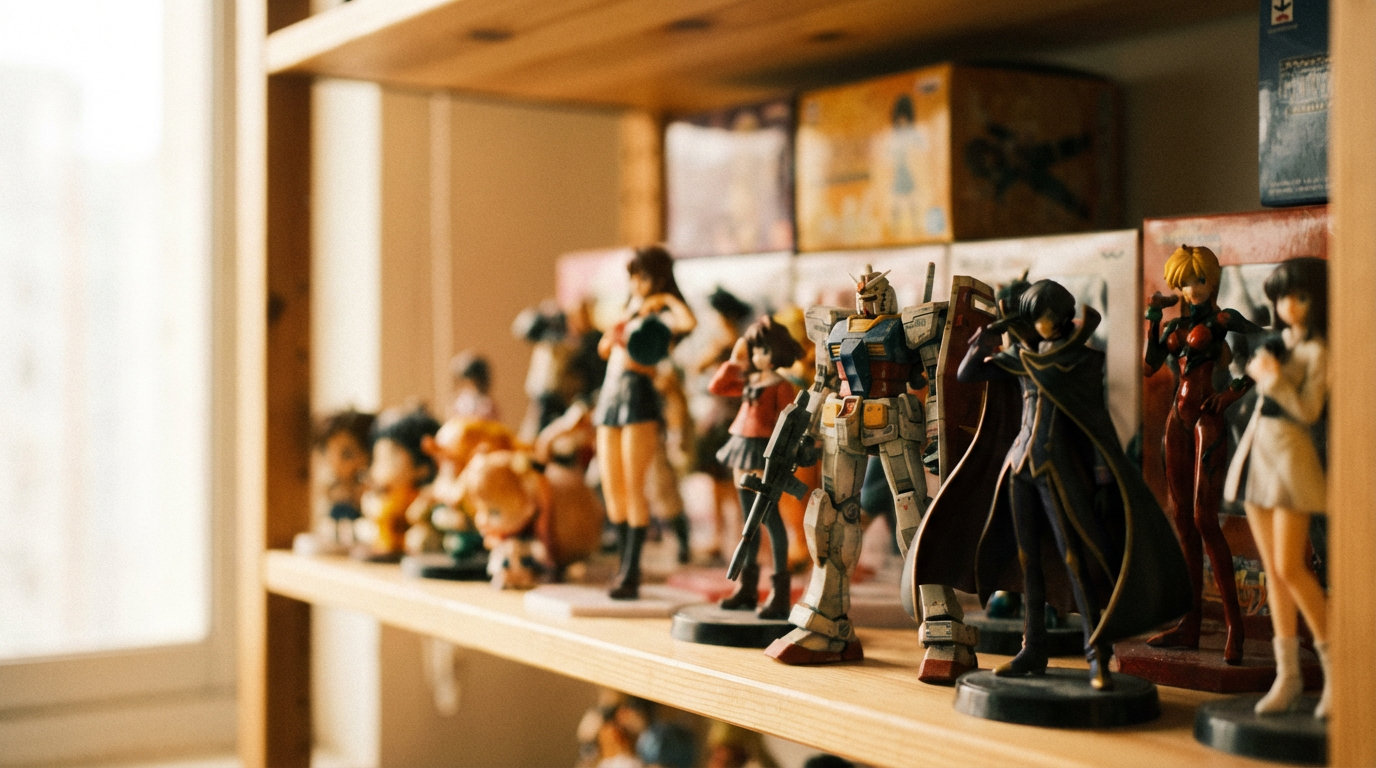
In the anime figurine world, this mix of constraints explains why a hand-painted resin garage‑style figure is fundamentally different from a mass‑manufactured PVC figure. The sculptor who individually paints shading on each figure only has so many hours before the next convention or pre‑order deadline. They are the artisan at the heart of the handicraft market. A large factory can scale a mass‑produced figure far more easily, but then we are leaving the true handicraft zone and entering industrial collectibles. Supply curves look very different in those two worlds.
Demand: Why Fans And Shoppers Chase Certain Crafts
Demand, in economic terms, is the willingness and ability of buyers to purchase units at different prices. ArtZolo emphasizes that in the art world, demand is driven by the tastes of collectors, galleries, institutions, and investors. In handicrafts and fandom merch, you can swap in fans, tourists, homeowners, and online shoppers, but the logic is the same.
Tastes and identity drive a lot of demand. If you are in a season of your life where a particular anime or game is your emotional anchor, a sculpt or print from that world has a huge utility boost for you. On top of that, the craft market is now being pulled by a global turn toward sustainability and ethical consumption. According to FEHandicraft, citing Nielsen research, about 73 percent of global consumers say they are willing to change their consumption habits to reduce environmental impact. IndieHaat, summarizing a handicraft market study, notes that the global market was around $739.95 billion in 2024 and is projected to reach about $983.12 billion by 2030, with sustainability cited as a major driver.
Several reports converge on the idea that a meaningful share of buyers actively prioritize environmental and social impact. Market Growth Reports notes that in 2024 more than 22 percent of consumers worldwide were prioritizing the environmental impact of their purchases, which directly supports demand for crafts made from organic, natural, and recycled materials. In North America, Market Data Forecast estimates that over 70 percent of consumers actively seek environmentally friendly and fair‑trade products, and that handmade, locally sourced items in Canada saw a 25 percent sales jump in 2022, with artisans using recycled materials seeing about a 30 percent bump in customer engagement.
Perception of quality also matters. Customcy’s compilation cites research suggesting that around 23 percent of U.S. adults strongly believe handmade or handcrafted products are high quality. In England, they note that about 13.3 percent of adults buy at least one handmade craft in a year, while around 70 percent of children aged 5–10 and 28 percent of people aged 65–70 participate in arts and crafts activities. All of this supports a culture where handmaking is not just a quaint hobby; it is seen as a legitimate, desirable way to produce and consume things.
Then there is the fandom and uniqueness factor. FEHandicraft points out that personalization and uniqueness have become mainstream expectations, with customized handicraft products representing more than 40 percent of sales on platforms like Etsy, according to Statista data they cite. A monogrammed jute bag, a custom‑sized handmade rug, or a personalized figurine base with your username on it is not just an object; it is a tiny flex about your identity.
Finally, there is investment demand. ArtZolo notes that some buyers view art as an asset class and are motivated by potential capital appreciation and portfolio diversification. MoMAA’s analysis of the art market shows that over more than a century, repeat‑sale data suggests art has delivered average annual returns of about 6.5 percent, although with higher volatility than stocks or bonds and clear boom‑bust cycles. In handicrafts, especially higher‑end or culturally important pieces, some buyers are thinking beyond use value or aesthetics to long‑term value.
Add all of these together—identity, sustainability, uniqueness, and perceived investment value—and you get a demand curve that keeps shifting outward for certain kinds of handmade goods. That is why analysts see multi‑hundred‑billion‑dollar markets growing at 8 to 11 percent a year.
The Basic Supply–Demand Curve, Without The Math Headache
If you strip the jargon away, a supply–demand curve is basically a fandom registration chart for how the world reacts to prices.
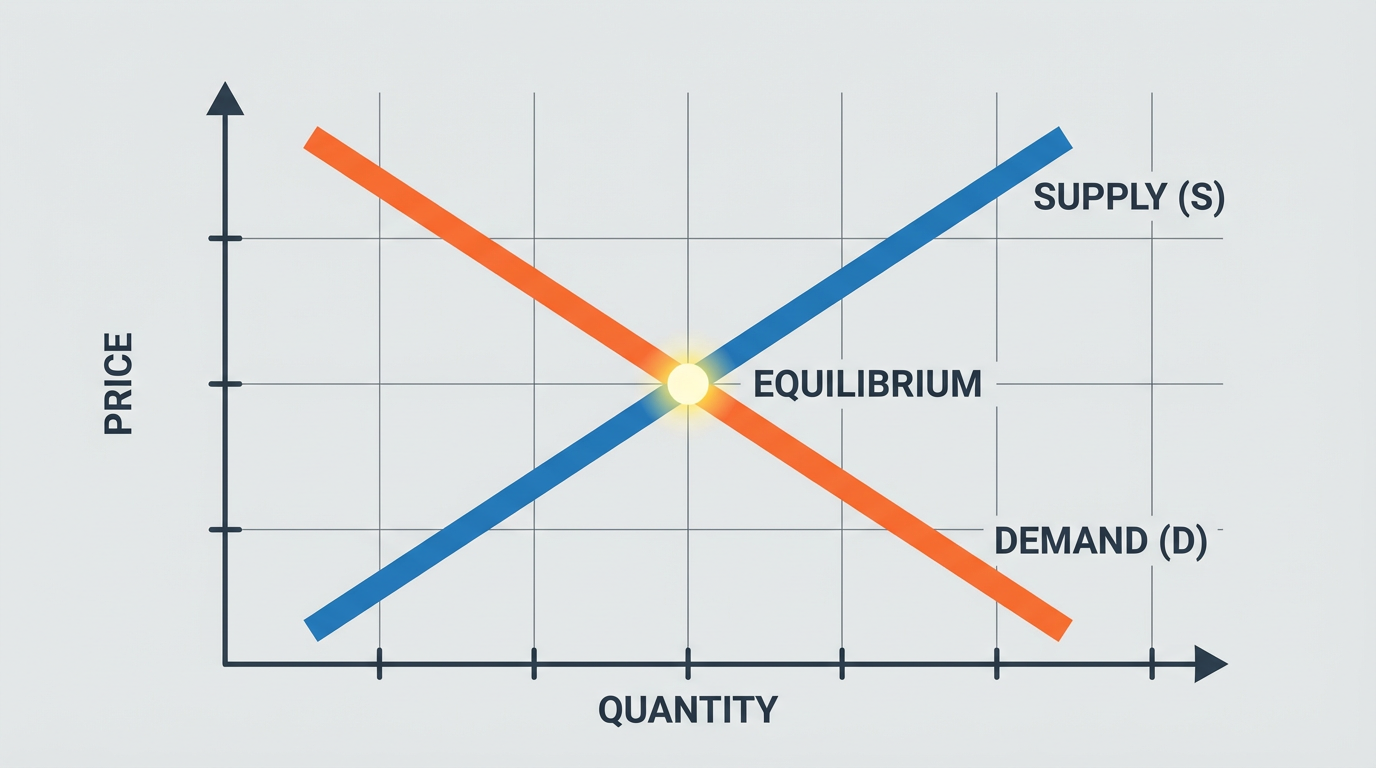
Economists draw price on the vertical axis and quantity on the horizontal system. The demand curve slopes downward because, all else equal, the higher the price, the fewer buyers are willing or able to pay it. The supply curve slopes upward because the higher the price, the more worthwhile it becomes for makers to bring additional units to market. Where those curves intersect, you get a price and quantity where the market can clear—buyers who value the item at least that much can get one, and makers are willing to produce that many.
Imagine an Etsy artist who hand‑embroiders anime‑inspired patches. At a very low price, say just barely above their material costs, demand from fans could be huge, but they would burn out trying to keep up. At a much higher price, demand shrinks to only the hardest‑core fans or collectors, but the artist can afford to slow down and spend more time per piece. Somewhere in between those extremes is a price where a sustainable production schedule and a willing audience intersect.
Real markets are messier, but the curves are still useful. When eco‑consciousness rises, as FEHandicraft and IndieHaat describe, demand for products made from recycled or organic materials shifts outward, meaning more buyers are willing to purchase those items at each price. When artisans gain access to better tools, AI‑assisted design, or trustworthy production partners—Customcy notes that about 20 percent of all Etsy sellers and 31 percent of top sellers work with production partners—the supply curve shifts outward, meaning more units can be produced at each price without as much strain.
It can be helpful to map some everyday changes in the craft world directly onto the curves.
Real‑world change | Curve effect | Example in crafts or fandom |
|---|
A hit anime or game makes a character suddenly trend everywhere | Demand curve shifts outward | Fan art prints and handmade figures of that character sell out faster |
An artisan starts using a production partner for some steps | Supply curve shifts outward | More plushies or resin kits per month at similar quality |
Raw material prices spike for wood, metals, or fabrics | Supply curve shifts upward and inward | Makers raise prices or cut designs; fewer units at any given price |
Sustainability and Fair Trade awareness grows among buyers | Demand shifts toward ethically produced handicraft | More sales for certified or clearly ethical shops |
Online platforms like Etsy and Amazon Handmade expand visibility | Both supply and demand expand and globalize | Artisans in one country sell directly to fans in another |
When you look at the tables this way, the entire handicraft ecosystem starts to resemble a huge, interconnected Artist Alley where supply and demand curves are constantly shifting in response to real‑world shocks and trends.
Case Study: Limited-Run Figurines And Etsy Sellers On The Same Curve
Now drop back into that limited‑run resin figure at a convention. Suppose the sculptor announces that there will only ever be fifty pieces of a certain pose and colorway. That is a supply cap. It makes the supply curve almost vertical at that quantity: no matter how high the price goes in the secondary market, there will never be more than fifty.
Demand, however, can move. If the character is from a niche show, maybe only a small group of dedicated fans care, and the primary market price stays accessible. If the character explodes in popularity due to a new season or a meme, demand can surge after the run is long gone. Resellers become the effective suppliers in that second phase, exactly the way ArtZolo describes secondary markets for paintings. Prices climb because many more buyers now want a piece of the same fixed supply.
The same logic plays out on Etsy every day, just with larger numbers. According to Customcy’s summary of Etsy statistics, the platform generated about $2.8 billion in revenue in 2024 and hosts around 96 million active buyers and 8.1 million sellers. They note that roughly 81 percent of Etsy sellers are women. Average annual revenue per seller is around $35,583, which is roughly $2,965 a month, and a typical seller completes about 1,268 sales a year, or roughly 106 per month. Most sellers clear at least about $417 in monthly sales, while some top shops reportedly exceed $50,000 per month. Successful shops typically maintain around 158 active product listings, with top sellers often listing more than 1,420 items.
From a supply–demand perspective, those numbers describe a staggeringly granular market. Each listing has its own mini supply curve (how many units that maker can or will produce at each price) and its own demand curve (how many buyers want that specific product at different prices). The choices some sellers make—such as using production partners for parts of the process, which Customcy says about one‑fifth of sellers do, and almost one‑third among top sellers—are explicit attempts to shift their supply curves outward so they can serve more of the demand they see without completely burning out.
A fandom resin sculptor who goes from hand‑finishing every piece themselves to working with a trusted casting shop is doing the same thing. The key is that even when supply becomes more flexible, it is not infinite, and demand can still swing wildly based on character trends, social media exposure, and wider economic conditions.
Market Data: How Big Is The Handicraft Economy, Really?
Beyond Etsy, handicrafts sit inside a layered set of markets with their own rhythms.
Customcy’s figures show that in 2024, online sales of hobby and craft supplies in the United States alone exceeded about $22.2 billion, and that the U.S. retail arts and crafts segment hit a ten‑year high around $1.17 billion back in 2020. The same source estimates that in the United States and Canada there are approximately 85 million active creatives generating about $35 billion in sales. In the United Kingdom, Customcy’s compilation points to roughly 19.5 million crafters, a craft sector contribution of about $4.2 billion to the national economy, around 2.3 million creative‑industry jobs, and those 11,220 craft businesses with about $6.3 billion in exports.
Regionally, multiple studies agree that Asia‑Pacific leads in production and often in exports. Independent handicraft market overviews summarized by Research and Markets and Market Data Forecast suggest that Asia‑Pacific accounts for somewhere between about 36 and 41 percent of global handicraft sales in the mid‑2020s, with countries such as India, China, Thailand, Vietnam, and others acting as both major producers and increasingly important consumer bases. One specialized report cited by Reanin estimates that Asia‑Pacific accounts for nearly 45 percent of overall activity in its model.
North America and Europe emerge as high‑value consumer markets, fueled by sustainability trends and higher disposable incomes. Market Data Forecast estimates that North America’s handicrafts market could nearly double from roughly $237.39 billion in 2024 to about $477.05 billion by 2033, with the United States accounting for around 80 percent of regional production and consumption. They note that online sales in North America grew by about 40 percent in 2022 and now make up nearly 30 percent of total market revenue. Research and Markets and other providers describe Europe as holding around 22 percent of the global market in some models, with strong demand linked to tourism and deep craft traditions in countries such as Italy, France, Spain, and others.
Online channels are the big connective tissue. Market Growth Reports estimates that nearly 18 percent of global handicraft sales were expected to come from online platforms in 2024, with e‑commerce already accounting for more than 30 percent of sales for some artisan communities. A global forecast summarized by Market Data Forecast suggests that online channels for handicrafts are growing at about 11.8 percent annually, and that more than 20 percent of artisans in developing countries now use digital platforms, up from less than 8 percent a decade earlier. Reanin’s report notes a 31 percent rise in online handicraft purchases and highlights that many brands now treat digital channels as core, not optional.
From an economic point of view, all these data points tell the same story: handicrafts are not a quirky side quest for the global economy; they are a major, growing market where supply and demand curves are being redrawn by culture, technology, and policy.
Using Supply And Demand As A Skill Tree For Creators
If you are a craftsperson, illustrator, sculptor, or small merch shop owner, supply and demand curves are not abstract; they are a skill tree you can deliberately level up.
One branch of that tree is pricing. Because handicrafts require time and skill, the supply curve is often steep in the short run: you cannot easily increase quantity when demand spikes. The studies summarized by Market Data Forecast and Credence Research show that handmade production is significantly more expensive than mass production; Market Data Forecast’s North America report notes that producing handmade goods is about 40 percent more expensive than mass‑produced alternatives, and that more than 60 percent of artisans struggle to balance affordability with profitability. That reality means that if you chronically underprice your work, you are operating at a point on the supply curve where you are exhausting yourself while barely covering costs. Small, careful price experiments can help you find a more sustainable equilibrium where your supply and your audience’s demand intersect in a healthier place.
Another branch is production strategy. Several reports, including those summarized by Customcy, FEHandicraft, and the ResearchGate article on technological support for crafts, describe how makers are integrating tools like 3D modeling, AI‑assisted design, and selective outsourcing or production partnerships. When done thoughtfully, this shifts the supply curve outward. You might still personally design and finish each piece but rely on a partner for casting or basic assembly. Customcy’s Etsy analysis shows that top sellers are more likely to use such production partners than the average seller, suggesting that scaling supply without losing the handmade essence is possible.
There is also the storytelling and positioning branch. Reports from Bonafide Research, Market Data Forecast, IndieHaat, and others repeatedly stress that buyers are drawn to authenticity, cultural narrative, and sustainability. That means you can shift your own demand curve outward by making the invisible visible: clearly explaining your materials, your process, your cultural references, and your ethical choices. IndieHaat, for example, describes how they address barriers like higher prices and online trust issues by offering transparent sourcing stories, detailed product descriptions, and rich content showing the actual weaving, dyeing, and painting. Those are practical supply‑and‑demand moves, not just aesthetics; a stronger perceived value at any given price increases demand.
Finally, there is the channel choice branch. Several reports point out that only a minority of artisans in developing regions currently have access to global online platforms; Market Growth Reports estimates only about 15 percent have such access, even as online demand grows. If you can invest in your own digital literacy, e‑commerce infrastructure, or partnerships with platforms and organizations that provide that access, you are literally moving yourself from a local supply–demand equilibrium into a global one where the demand curve is much larger.
Strategy For Collectors And Fans
For collectors and fans, supply and demand curves are a way to decode hype and protect both your wallet and your joy.
Whenever you see “limited edition,” the right mental question is not just “How many pieces?” but “What is the real demand curve?” An edition of 500 pieces of an obscure side character is a very different equilibrium from 50 pieces of an iconic lead. MoMAA’s analysis of the art market warns that even in prestigious segments, prices can fall sharply; they note that during the 2008 financial crisis, some contemporary art categories saw price declines of about 35 to 50 percent before later recovering. If blue‑chip paintings can drop that much, fandom collectibles certainly can as well.
So when you are tempted to treat every handmade figurine, print, or textile as an “investment,” it helps to remember that average long‑term art returns in the Mei Moses index sit around 6.5 percent, with high volatility and big differences between categories. Most handicrafts—especially individualized fandom pieces—earn their keep in your life mainly through aesthetic and emotional value, not guaranteed resale value.
Economically literate fandom also means thinking about inclusion and ethics. ArtZolo’s discussion of the art economy highlights how high demand for certain artworks can lead to exclusivity and barriers for emerging or underrepresented artists, and how opaque markets are vulnerable to manipulation, forgery, and insider behavior. The handicraft reports echo similar themes: cheap mass‑produced items that mimic handmade aesthetics can undercut artisan livelihoods; inconsistent quality and lack of standards can erode trust; and limited access to capital and digital tools can trap talented makers at the margins of the market.
As a fan, you can push the demand curve in a better direction by choosing to support genuinely handmade work, prioritizing makers who are transparent about their materials and processes, and treating higher prices as compensation for labor rather than just “markups.” IndieHaat explicitly recommends that consumers seeking sustainable choices buy fewer but higher‑quality handcrafted items made from natural materials, viewing those purchases as investments in both environmental sustainability and artisan livelihoods. That logic applies beautifully to fandom, where cutting back on impulse buys of mass‑produced goods can create room in your budget for one or two truly special handmade pieces each year.
When Markets Overheat: Bubbles, Cycles, And Fandom Hype
Economists who study art markets see clear cycles rather than smooth lines. MoMAA’s review of long‑term data suggests that art markets go through major cycles every seven to ten years, with smaller fluctuations every two to three years, and that these cycles often lag broader economic trends by roughly 12 to 18 months. They point out that from 1995 to 2007, contemporary art prices rose extremely fast, powered by technology wealth, globalization, and institutional enthusiasm, only to suffer sharp corrections around 2008–2010. Post‑war and blue‑chip works recovered more quickly; speculative contemporary pieces often did not.
ArtZolo’s breakdown of supply and demand in art warns specifically about speculative bubbles: periods when investor exuberance, hype, and the expectation of future price increases push prices far beyond what fundamentals justify. In handicrafts and fandom merch, you can see the early signs when pieces are bought primarily to flip, when resale prices spike far beyond the original price without any change in the underlying cultural importance, and when online conversation centers more on “what this will be worth” than on craft, story, or joy.
Macro conditions feed into this as well. MoMAA notes that art market booms often follow bull markets in stocks by six to twelve months, as newly wealthy collectors look for alternative assets, and that low interest rate environments can encourage art buying by reducing the opportunity cost of tying up capital. The reverse is also true: when economic uncertainty rises, discretionary spending and speculative buying can dry up quickly, leaving late entrants holding pieces they never really loved, bought at prices that no longer clear the market.
The practical takeaway for fans is simple. Love first, economics second. Use supply and demand logic to understand why prices are moving and to avoid overpaying in moments of hype, but do not let the investment mindset become the primary reason you collect. That is how you avoid turning your display shelf into a portfolio that keeps you up at night.
FAQ For Creators And Collectors
Do Handmade Goods Always Go Up In Value?
No, and the fine art data is a useful warning. MoMAA’s analysis shows that while long‑term average returns for art sit around 6.5 percent a year, individual categories and periods can see steep drops, including declines around 35 to 50 percent in some contemporary segments during the 2008 crisis. Many artworks and handicrafts never recover from those drops. In fandom and handicrafts, most pieces deliver value through personal meaning, not guaranteed resale prices, so it is healthier to treat any appreciation as a bonus rather than a plan.
Is It “Cheating” When Artisans Use Production Partners Or Technology?
Reports summarized by Customcy and FEHandicraft make it clear that many professional handicraft exporters and top Etsy sellers use production partners, AI‑assisted design, and modern equipment while still centering artisanal skill and eco‑friendly materials. Customcy notes that around 20 percent of all Etsy sellers, and about 31 percent of top sellers, work with production partners.
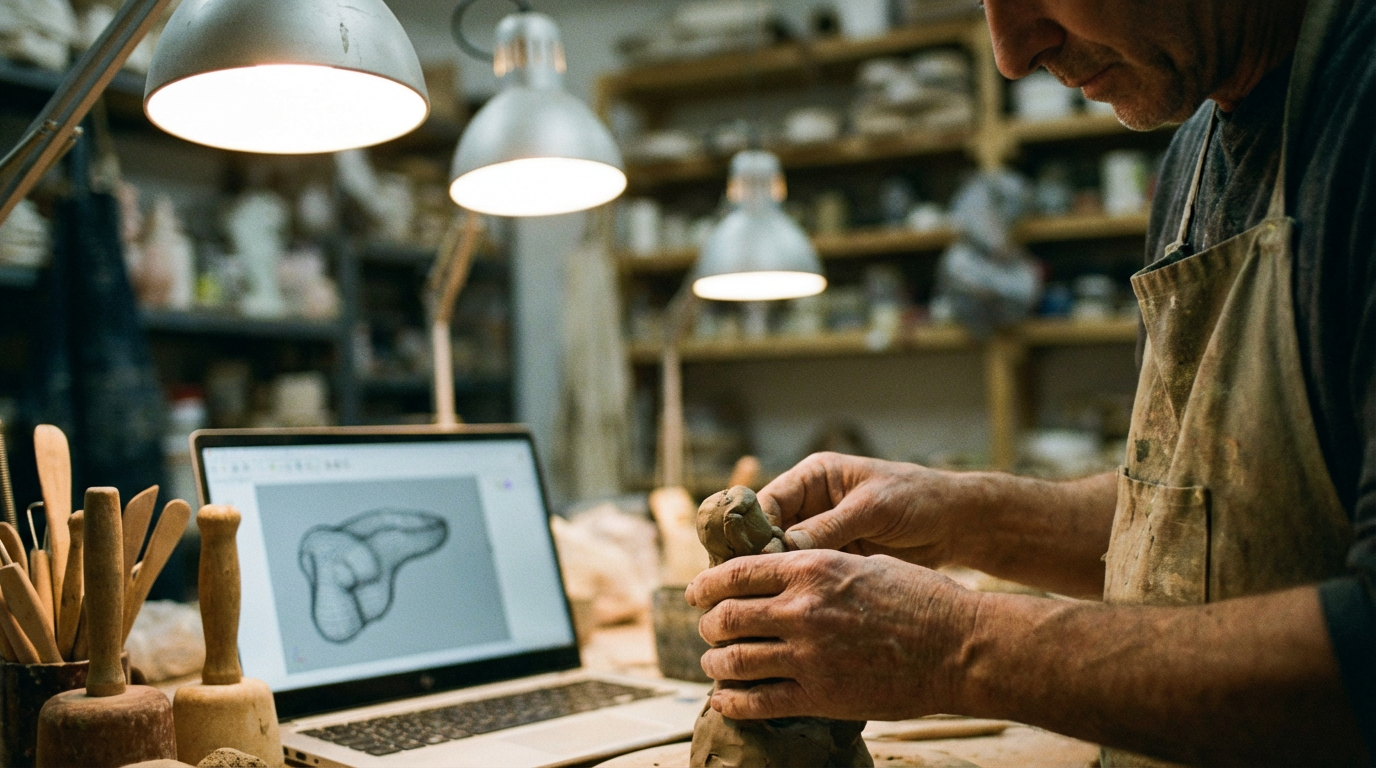
A technical summary on ResearchGate explains how 3D printing, smart sensors, and digital design can enhance traditional crafts rather than replace them. The economic question is whether the core value—design vision, finishing, cultural authenticity—is still grounded in real craft. If it is, these tools are just ways to shift the supply curve outward so more fans can enjoy the work.
How Can A Tiny Shop Estimate Its Own Supply And Demand Curves?
You do not need formal models. Start by watching your own data. If items sell out in minutes at a given price and you consistently turn away buyers, that is a clue that demand is well above supply there; small price increases or larger runs may still clear the market. If pieces sit unsold for months even when you are telling their story clearly and they match current tastes, the demand curve at that price is probably lower than you hoped. Reports from Market Data Forecast and others suggest that online sales are growing quickly, but also that many artisans lack access to global platforms, so even simple experiments—trying a new marketplace, offering customization, testing different photo styles—can be powerful tools for discovering where your personal supply and demand curves intersect most sustainably.
Closing From The Artist Alley
Handicraft economics is not some distant academic puzzle; it is woven into every limited resin drop, every hand‑loomed scarf, every custom charm on your ita bag. Once you start seeing supply and demand curves behind those objects, you gain a new kind of fandom power: the ability to support artisans more wisely, price your own work more sustainably, and navigate hype without losing the simple joy of loving cool, beautifully made things.
References
- https://www.basebangladesh.org/handicraft-industry/?srsltid=AfmBOoqXPjnZSNmvhGbhfpEAdlbTA5dTmKhjlQU17qN8V5dC3orKty-Y
- https://momaa.org/art-market-analysis/?srsltid=AfmBOopcMB-nvoS6xqI2qMxpNwB4QuHufsdzviWPdNrJabm13jhYVxyH
- https://www.researchgate.net/publication/394414644_HANDICRAFTS_OF_LASTING_BEAUTY_AND_VALUE
- https://www.lucintel.com/handicraft-market.aspx
- https://fehandicraft.com/key-trends-shaping-the-global-handicraft-industry-in-2025-opportunities-for-growth/
- https://www.futuremarketinsights.com/reports/handicraft-market
- https://www.globalgrowthinsights.com/market-reports/handicrafts-market-121495
- https://www.grandviewresearch.com/industry-analysis/handicrafts-market-report
- https://www.linkedin.com/pulse/exploring-dynamics-arts-crafts-market-key-insights-eheec
- https://www.marketdataforecast.com/market-reports/handicrafts-market