The Future of Smart Figurines with Built-in AI Interaction
When you have spent years lining up PVC sentries across your shelves, you start to notice the quiet. Rows of tiny heroes and villains frozen mid-attack, Nendoroids locked in eternal chibi smiles, a mecha squadron that will never actually launch. As an anime figurine addict, I love that stillness. It is part shrine, part museum. But after watching what is happening with smart toys and AI plush companions, it is hard not to picture a near future where at least a few figures on that shelf talk back.
Smart, AI-enhanced figurines are not science fiction anymore; they are the logical next crossover between otaku culture and a toy industry that is already deep into artificial intelligence, voice interaction, and personalization. The research coming out of education, child development, and smart toy design gives us a surprisingly clear preview of how that future might look—and where the risks are if we rush in without thinking.
In this piece, I want to walk through that future from the perspective of someone who cares about sculpt quality and character lore as much as about AI model architectures. We will ground the hype in actual data from studies, industry reports, and design research on AI toys, and translate that into what it could mean when your favorite character on the shelf gets a processor, a microphone, and a personality.
From Silent Collectibles to Smart Companions
Talking toys are not new. More than a century ago, Edison’s Phonograph Doll tried to deliver a voice in a porcelain body and failed partly because it sounded uncanny and cost as much as a couple hundred dollars in today’s money, according to reporting in Speech Technology Magazine. Later, pull-string characters like Chatty Cathy and, much more recently, app-connected dolls like My Friend Cayla pushed the idea forward with pre-recorded lines and internet-enabled features.
What has changed in the last decade is not just that toys can speak, but that they can listen, adapt, and feel conversational. Voice-tech specialists focused on children’s speech have spent years tuning recognition to handle the way a three-year-old actually talks. A foreword cited by Mojo Nation argued that child-focused speech recognition finally hit a turning point around 2021, making voice-powered learning tools for kids feel ready for “prime time.” A speech-tech case study describes robots like Meccanoid that recognize voice commands and respond with thousands of phrases, and kid-focused smart speakers that serve as always-on helpers.
At the same time, a whole category of AI-powered educational toys has emerged. Articles in education and toy industry outlets describe talking robots, AR-enhanced learning games, and smart plush toys that adapt to a child’s performance. One education piece notes that AI toys now use speech recognition, natural language processing, and computer vision to track how children respond, adjust difficulty, and act like tiny personalized tutors rather than one-size-fits-all gadgets.
All of that technology is being battle-tested in children’s products first, because parents and educators are hungry for anything that can make reading, math, or emotional skills more engaging. But once the modules exist—speech recognition tuned for noisy living rooms, ultra-low-power processors for always-listening toys, cloud platforms built around kid-safe interactions—embedding them in an anime figurine is more of a design question than a technical one.
What Exactly Are “Smart Figurines”?
Toy researchers and child development experts already have vocabulary for what we are talking about. A PubMed Central article on technology-enhanced toys uses “digital play” to describe playful engagement with digital devices and “technology-enhanced toys” for objects that bridge the physical and virtual worlds using chips, speakers, microphones, and other hardware, even when they do not connect to the internet. Another education journal talks about “smart toys,” “interactive toys,” and the “Internet of Toys” to describe products that learn from users, adapt their responses, and sustain children’s attention.
Child advocacy groups like Fairplay for Kids use “connected toys and devices” for things like smart speakers, interactive dolls, and social robots that are internet-enabled and constantly collecting data through microphones, cameras, and sensors. These products often process information in the cloud and can blur lines between toy, device, and surveillance tool.
Smart anime figurines sit at the intersection of these ideas. A working definition that fits both the research and fandom reality might be this: a smart figurine is a physical character collectible that layers in sensors, processing, and AI so it can respond to you, remember things about you, and sometimes connect to other devices or services. It might be completely screen-free and mostly run on on-board chips, similar to how some “digital non-screen toys” are categorized in research. Or it might occasionally lean on cloud services the way connected toys do today.
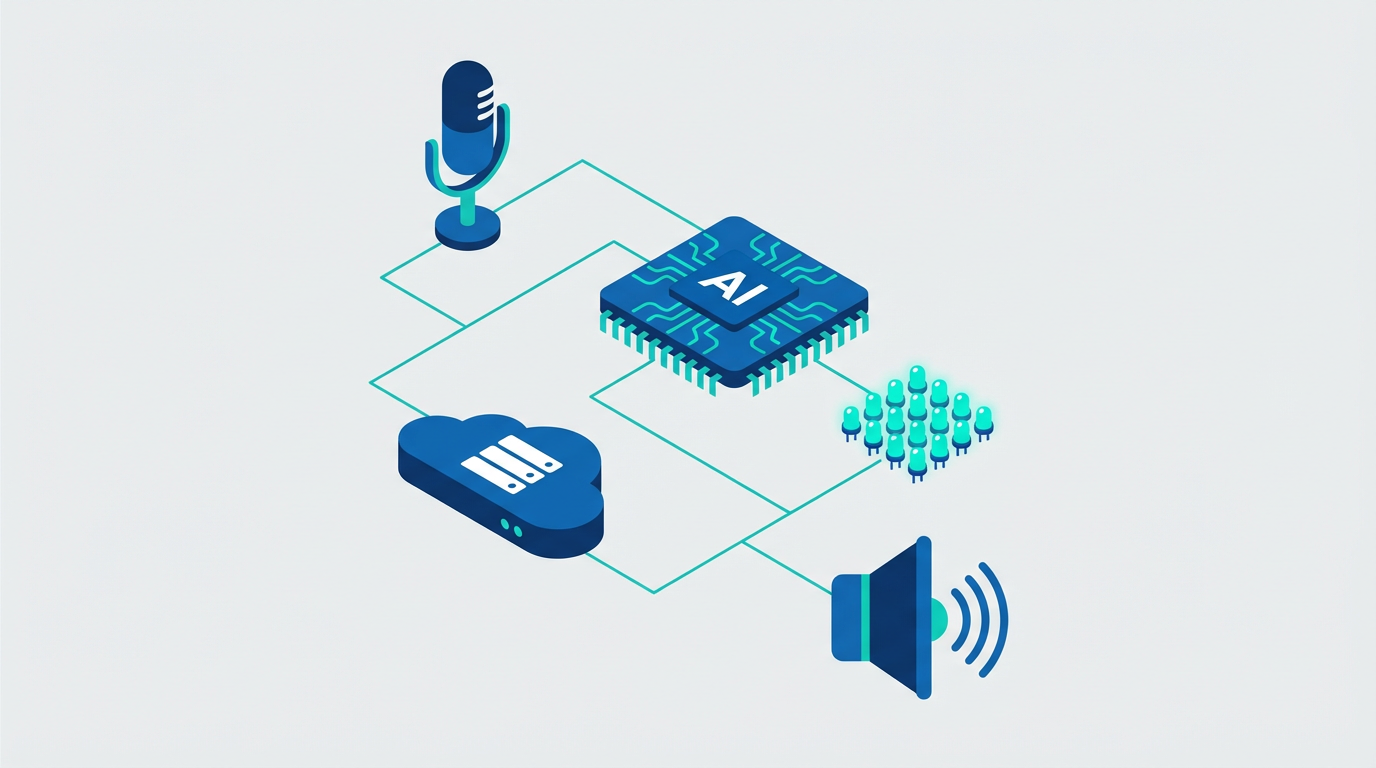
In other words, the jump from a talking dragon plush to a talking dragon slayer figure is not that large. The core stack is the same: a microphone, a speaker, edge AI to handle wake words and basic understanding, and perhaps cloud AI for more complex, character-specific dialogue. One semiconductor company profile describes ultra-low-power edge AI chips used in toys, earbuds, and smart home devices that can do wake-word detection and environment sound recognition while barely draining the battery and keeping most data local. That is exactly the kind of hardware you would want inside a figure that is supposed to sit on a shelf and occasionally crack a line without living on a charger.
Why The Timing Is Right
You do not add AI to a scale figure just because you can; you do it because the ecosystem around it is finally mature enough that people will actually use and trust it.
Market data shows that smart toys are already a big business in their own right. An industry article on AI educational play reports that the global smart toy market was roughly $12.37 billion in 2023 and is projected to reach about $25.54 billion by 2030, which implies double-digit compound annual growth. Earlier forecasts cited by voice-industry sources projected smart toy sales jumping from around $2.8 billion in 2015 to more than $11 billion by 2020. That is a lot of R&D being funded in chips, cloud platforms, and content pipelines.
On the demand side, parents are clearly voting with their wallets. One preschool industry survey summarized in a design research paper found that in a large toy market, more than three-quarters of parents of children aged 0 to 6 were buying interactive toys for early learning, with strong preferences for highly participatory talent-development toys, musical products, and experiential games. Another study of 306 parents with toddlers around three and a half years old, published in an academic journal, reported that parents still perceive traditional toys as more stimulating for sensory and socio-emotional development, but digital toys have become a normal part of the home environment. Digital toys and screen-based play are not exotic; they are in the same toy box as the plushies and blocks.
Beyond toys, everyday devices have trained all of us, kids and adults, to speak to objects and expect answers. Developmental research summarized in a science article notes that 98 percent of families with children under eight in the United States have a mobile device, and young children’s daily mobile use increased from a few minutes in 2011 to almost an hour by 2017. About one in five Americans owns a voice-activated smart speaker. Roughly three-quarters of people use such devices to answer general questions, and kids who cannot read yet are already asking smart speakers simple knowledge questions.
So the idea of asking a device, “When is my favorite character’s birthday?” or “What episode was that scene from?” is not remotely weird anymore. Extending that behavior from the plastic cylinder in the kitchen to the character statue on your desk is a small cultural step.
On the supply side, cloud and on-device AI stacks have become accessible enough that even boutique toy brands can build on them. Articles from AI chip companies and cloud providers describe how toy makers already integrate automatic speech recognition services and IoT platforms to offload heavy computation, support multiple languages, and manage firmware updates securely over time. The World Economic Forum even launched Smart Toy Awards, with a Generation AI initiative, to highlight products that use AI responsibly for play and learning.
All of this means that the raw ingredients for smart figurines—cheap microphones and LEDs, tiny AI chips, cloud platforms optimized for children, and a market that expects toys to talk—are on the table. The question is what anime fandom actually wants to cook with them.
What AI-Enhanced Figurines Could Actually Do
The easiest way to imagine the future is to look at what AI toys are already doing and translate it into fandom language.
In-Character Conversations and Banter
A tech reviewer who is also a parent described testing a plush AI toy designed as a character that can answer a child’s math question, then pivot into storytelling about huge numbers. Under the hood, the toy uses automatic speech recognition to convert a child’s speech into text, natural language processing to infer intent rather than just keywords, and a language model to craft responses that stay in-character. Caregivers can even tune the toy’s persona and interests in a setup app, which narrows context and improves recognition.
Transplant that idea into an anime figurine and you get something like a smart PVC version of your favorite swordsman that responds to a wake word, banters using catchphrases, and improvises dialogue while staying on-brand. Conversation designers who specialize in kids’ toys recommend short turns, simple phrasing, and gentle error recovery, especially for younger users. For adult fans, you could push the complexity up, but the same principle stands: the toy should feel like chatting with a character, not debugging an app.
It is important to be honest about what this means. The tech reviewer stresses that AI plush toys do not actually understand children in a human sense. They do not feel anything; they pattern-match. Figurines would be the same. They would approximate understanding with advanced language models and curated scripts. For a fan, that might be enough. We already suspend disbelief with voiced lines in games and anime; a little more illusion in plastic form will not break us.
Personalized Story Arcs and Lore Missions
The strongest educational value of AI toys, according to several articles, comes from personalization. AI learning robots track strengths and weaknesses and dynamically adjust difficulty, whether they are teaching math problems or coding basics. Smart plush storytellers can pull from hundreds of stories and, in some products, tailor choices to the child’s preferences and responses. One smart plush lineup includes a dragon that tells stories by theme and a bunny that uses AI to adapt narratives and educational content to a child’s interests and level.
Replace fairy tales with anime arcs and the same engine could power a figurine that remembers which season you are rewatching, quizzes you on trivia, or unlocks new monologues as you clear fictional “quests” in your real life. Maybe that mecha on your shelf congratulates you for finishing a model kit or reading a volume of the manga, then offers a deeper lore snippet. This mirrors what AI toys do with adaptive reading and math content; the difference is that the subject is your fandom, not multiplication tables.
Ambient Display Behavior and Multisensory Play
Researchers working on interactive “vocal enlightenment” toys used Arduino boards to map features of children’s voices—like pitch and volume—to dynamic visual patterns on a screen, aiming for a multisensory audiovisual association. The idea was to give real-time visual feedback that turns sound into color and motion, making learning music and language more engaging.
For figurines, similar designs could turn a static display into a mini stage. Edge AI could detect when you come home, respond to your voice with subtle lighting around a character, or visually react when you play an anime opening nearby. One chip company notes that ultra-low-power edge AI is good at always-on wake-word detection and environmental sound recognition without heavy battery drain. Combined with LEDs and maybe a small motor for pose adjustment or head tilt, a figure could shift from “object you dust once a month” to “presence that reflects the room’s mood.”
Cross-Device Connections and AR Extensions
Smart toy trends in articles about the future of toy technology point toward augmented reality overlays, child-focused wearables, and hybrid “digital playrooms” where physical toys sync with apps and platforms. Smart trains use programmable tiles and apps to teach coding. Board games like CoderMindz introduce AI concepts through tabletop play. AR music kits allow kids to create videos where their creations come alive on-screen.
It is easy to imagine a future figure base with an embedded marker or chip that unlocks AR scenes on your cell phone. You might point your camera at your shelf and see your smart figures come alive in a virtual battlefield or café, with the on-board AI handling voice while your phone renders visuals. For collectors already building dioramas and photo sets, AI figurines could add a responsive layer on top of the physical artistry.

Potential Benefits for Fans and Families
Looking at the research, AI figurines would not just be gimmicks; they could plug into some very real psychological and educational dynamics that smart toy designers are already exploiting.
Several articles on interactive and AI-powered toys highlight cognitive benefits such as improved problem-solving, decision-making, logical reasoning, memory, and early math skills. These often emerge through short “micro-learning” moments where a toy responds instantly to a correct choice or a creative attempt. Language-focused toys narrate, introduce new vocabulary, and model sentence structures, which supports pronunciation and comprehension.
One smart toy manufacturer’s article summarizes research suggesting that interactive, adaptive smart toys can be associated with denser neural connectivity compared with non-adaptive toys, faster vocabulary and language development, improved spatial reasoning scores, and earlier grasp of basic math concepts. The exact figures are specific to the studies they cite, but the pattern is clear: interactivity and personalization can accelerate learning when they are well designed.
Even for older fans, similar mechanisms apply. Having a favorite character “talk back” while you practice a language, or quiz you on plot points, could be more motivating than a generic textbook. Another article on AI toys frames them as tools to help children build skills for an AI-rich world, not just entertainment, and suggests parents treat them as part of preparing kids for the future rather than as frivolous gadgets.
Social and emotional dimensions matter too. Smart toys that simulate conversation, storytelling, and cooperative play can help children recognize emotions, build empathy, learn turn-taking, and grow in confidence. Interactive plush companions are explicitly marketed as comfort objects that also encourage expression through play and movement. For some fans, a smart figurine that greets them, remembers small preferences, or responds with gentle humor might offer similar low-stakes emotional support.

Accessibility is another potential upside. Companies specializing in adaptive toys create switch-activated products so children with limited mobility can trigger sound and light with accessible switches instead of tiny buttons. The World Economic Forum’s Smart Toy Awards use accessibility as a core criterion, pushing for toys that children with disabilities and from diverse linguistic backgrounds can actually use. If AI figurines borrow those principles—big, remappable activations, clear audio cues, customizable voices—they would open parts of anime merch culture to fans who have been left out by display-only designs.
The Drawbacks and Risks We Have to Face
All that potential comes with serious caveats, especially once you put microphones and cloud connections into something that lives in a bedroom or on a child’s desk.
Child-advocacy research from Fairplay for Kids documents concrete privacy failures in connected toys: voice messages stored in online teddy bears that were leaked and even ransomed, complaints under child-privacy laws about kids’ smart speakers, and ongoing debates over whether dolls that route conversations to the cloud can possibly keep children’s speech confidential. These incidents are not hypothetical; they demonstrate that poorly designed connected toys can turn into what one report called “creepy surveillance tools.”
The same report emphasizes that children are increasingly “datafied” as their behaviors and voices are recorded, analyzed, and monetized. Without strong protections and clear limits on data collection, an AI figurine could silently feed detailed interaction logs into marketing or profiling systems that fans never intended to participate in.
Studies of digital play also show that digital toys can alter social dynamics in ways that may not be healthy. The survey of parents of preschoolers mentioned earlier found that during analogue play with traditional toys, there was significantly more parent–child interaction and richer language input from both sides. During play with digital toys, the quality of language and the amount of conversational turn-taking often dropped. Other research cited in that article has found that electronic media exposure can correlate with lower cognitive, language, and gross motor activity and even developmental issues when overused.
Voice interfaces still struggle with younger children’s speech. Studies summarized in media research show that current AI systems often fail to understand kids’ voices reliably, leading to frustration and weird repair strategies by children trying to get the device to listen. While smart-speaker style assistants are getting better, especially when tuned to children as some specialized vendors do, they are not magic.
Cost and equity are another concern. Educational articles point out that AI toys can be expensive, potentially widening the digital divide. If smart figurines follow the same pattern, we could see a split where wealthier collectors enjoy fully interactive pieces while others are priced out or steered into lower-quality, more exploitative products.
Finally, there is the emotional boundary issue. Research on children and smart devices shows that kids often treat smart speakers and conversational agents as social partners or friends, attributing feelings and personalities to them even though they lack genuine emotional intelligence. Designers of AI toys for children already try to handle sensitive phrases, such as a child saying they feel depressed, with gentle reassurance and redirection rather than clinical responses. For fans—especially younger ones—an AI figurine that is “always there” risks blurring lines between fiction and emotional support in ways that may not be healthy if not addressed with transparency.
What Research on Smart Toys Already Tells Us
If you strip away the specific age groups and curricula, the literature on AI and interactive toys offers several lessons that apply directly to future smart figurines.
First, interactivity works best when feedback is immediate, meaningful, and tied to clear goals. Early childhood articles about interactive toys emphasize real-time feedback loops—blocks that light up when assembled correctly, toys that react to touch or voice—because they deepen focus and engagement. A research prototype described in PubMed Central used sound–image mapping to generate synesthetic experiences and found that this multi-sensory design enhanced children’s sense of participation and enjoyment. For figurines, this means that if a character reacts, it should be in a way that feels relevant to what you did, not a random light show.
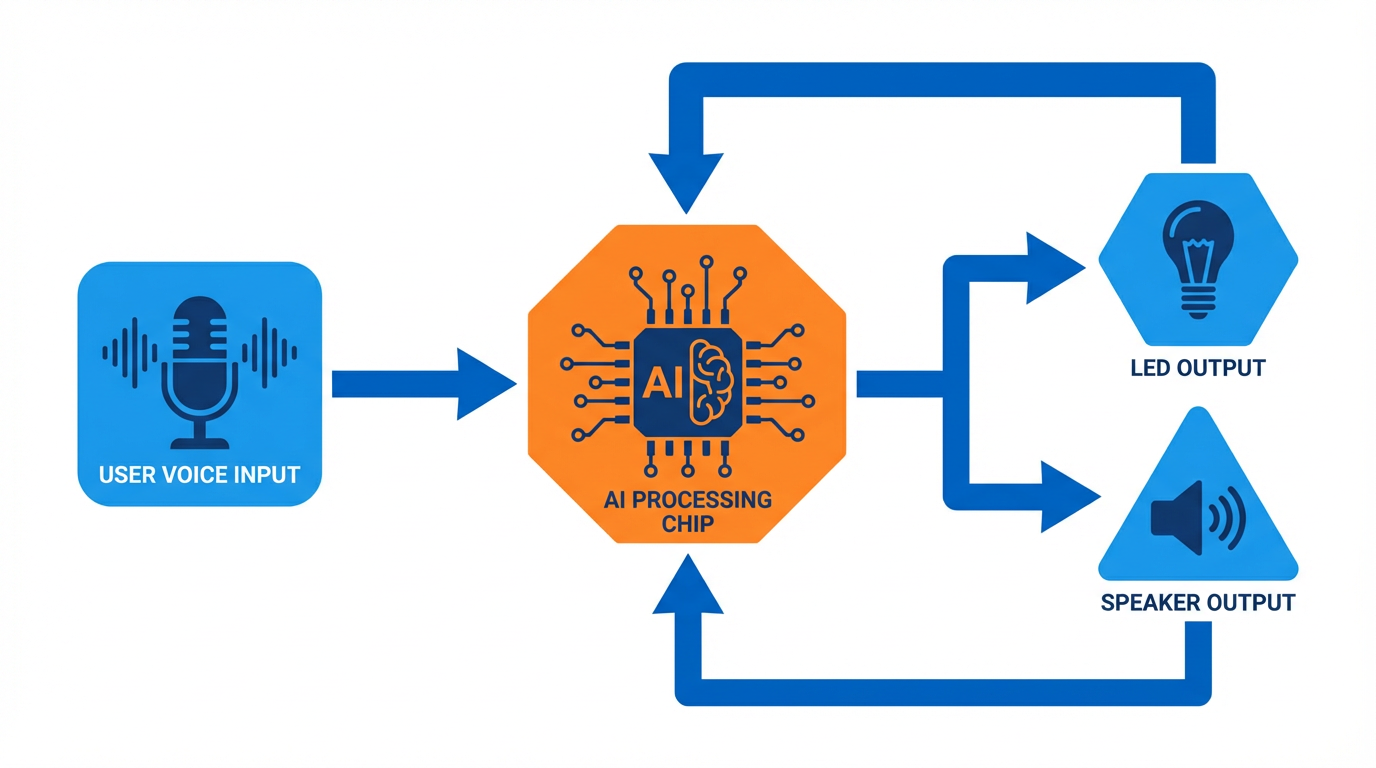
Second, personalization is powerful but must be grounded. AI educational toys that track performance and adjust difficulty tend to hold attention and support deeper learning. Reports compiled by toy-industry blogs indicate that adaptive, gamified modules can significantly improve problem-solving, coding skills, and even self-confidence compared with static puzzles. However, education researchers also warn that AI lacks genuine emotional understanding and should be used as a complement, not a replacement, for human teaching and relationships.
Third, analog play still has irreplaceable value. The survey of parents about digital and analogue play found that traditional toys were perceived as more beneficial for sensory, cognitive, and socio-emotional development, and that parent–child language and interaction were richer during analog play. Advocacy organizations and pediatric research, including guidance from the American Academy of Pediatrics cited by one article, stress limited, high-quality screen time, caregiver co-use, and plenty of offline, imaginative play as best for young children’s development.
Fourth, voice design and character clarity matter. A design essay on AI voicebot toys stresses the importance of a well-defined character persona, simple and forgiving conversational flows, clear cues about when the toy is listening, and easy ways for children or caregivers to control or mute interactions. A separate industry article on talking toys notes that brands now favor natural, relatable voices over exaggerated cartoon tones and often hire voice actors specifically to match the toy’s look, origin, and purpose. For anime figurines, where fans are deeply attached to how a character sounds, consistency and honesty about what the figure can and cannot do will be crucial.
Fifth, inclusion and ethics have to be baked in from the start. Adaptive toy companies show how simple design changes—switch inputs, sensory tuning—can make play accessible to children with disabilities. The World Economic Forum’s Smart Toy Awards put data privacy, cybersecurity, accessibility, responsible AI use, and age-appropriate, healthy play at the center of their evaluation criteria. Award winners include robots and kits designed for children with autism, coding trains, and AI language-learning robots, all vetted by both kids and experts across fields like robotics, education, and youth work.
These patterns together suggest that if we rush to put AI in figurines purely as a gimmick, we will repeat old mistakes. If we instead treat smart figurines as part collectible, part interactive media, part educational or emotional tool—and apply what is already known about design, development, and ethics—we can avoid reinventing the worst wheels.
How to Judge the First Wave of Smart Figurines
When smart figurines start popping up on pre-order pages, it will be tempting to focus only on sculpt fidelity and the number of phrases recorded. The research suggests a different set of questions to ask, both as collectors and as caregivers.
Privacy and data handling come first. Advocacy groups recommend that parents vet connected toys by asking who collects data, how long it is stored, whether third parties have access, and whether microphones, cameras, Bluetooth, or cloud connections can be turned off. The World Economic Forum frames data privacy and cybersecurity as non-negotiable: without robust safeguards, smart toys risk turning into surveillance devices. For a figurine, look for clear, plain-language explanations of what is recorded, where it is processed (on-device vs cloud), and how you can disable features.
Play value and balance are next. Research on digital play shows that technology can both help and hurt development depending on how it is used. An AI figurine should add to your experience of the character, not replace reading, drawing, building, or cosplaying. For younger fans, it makes sense to adopt the kind of “balance rules” some experts recommend for smart toys, where each minute of tech-enhanced play is balanced with several minutes of tactile or outdoor play.
Accessibility deserves attention even in collector circles. Lessons from adaptive toy design suggest checking whether the figurine has large, easy-to-press controls where needed, adjustable volume and brightness, and modes that do not require fine motor skills or perfect hearing. Inclusive design is not just an ethical extra; it broadens who can enjoy the character.

Longevity and control are practical but important. Cloud-dependent toys can become bricks if servers shut down. Semi-offline designs using edge AI, which some chip makers already promote, keep basic functions working even if the internet is unavailable. Look for figurines that can do something meaningful without an app, that offer local firmware updates when needed, and that can be reset or muted without jumping through hoops.
You can think of it as comparing traditional and future smart figurines along a few dimensions.
Aspect | Traditional Figurine | Future Smart AI Figurine (vision) |
|---|
Core value | Visual sculpt, paint, and pose | Visual presence plus interaction, voice, and adaptive behavior |
Interactivity | Static or simple light bases | Responds to voice, movement, or touch with tailored reactions |
Data use | No data collected | Potentially records audio and usage; must be transparent and tightly controlled |
Accessibility | Mainly visual display | Can include audio prompts, switch inputs, and adjustable sensory levels |
Longevity | Lasts as long as the plastic does | Depends on hardware, software updates, and cloud services |
Looking at this kind of comparison before buying keeps you in control rather than just chasing the newest gimmick.
Will Smart Figurines Replace Static Ones?
Anime fandom is already good at holding contradictions. We stream digital shows and then buy physical Blu-rays we may never unwrap; we follow virtual idols and still line up for in-person concerts. Research on parents’ preferences suggests a similar pattern with toys: even in homes full of digital devices, parents often say they prefer traditional toys for their children’s core development. Interactive toys are seen as supplements, not replacements.
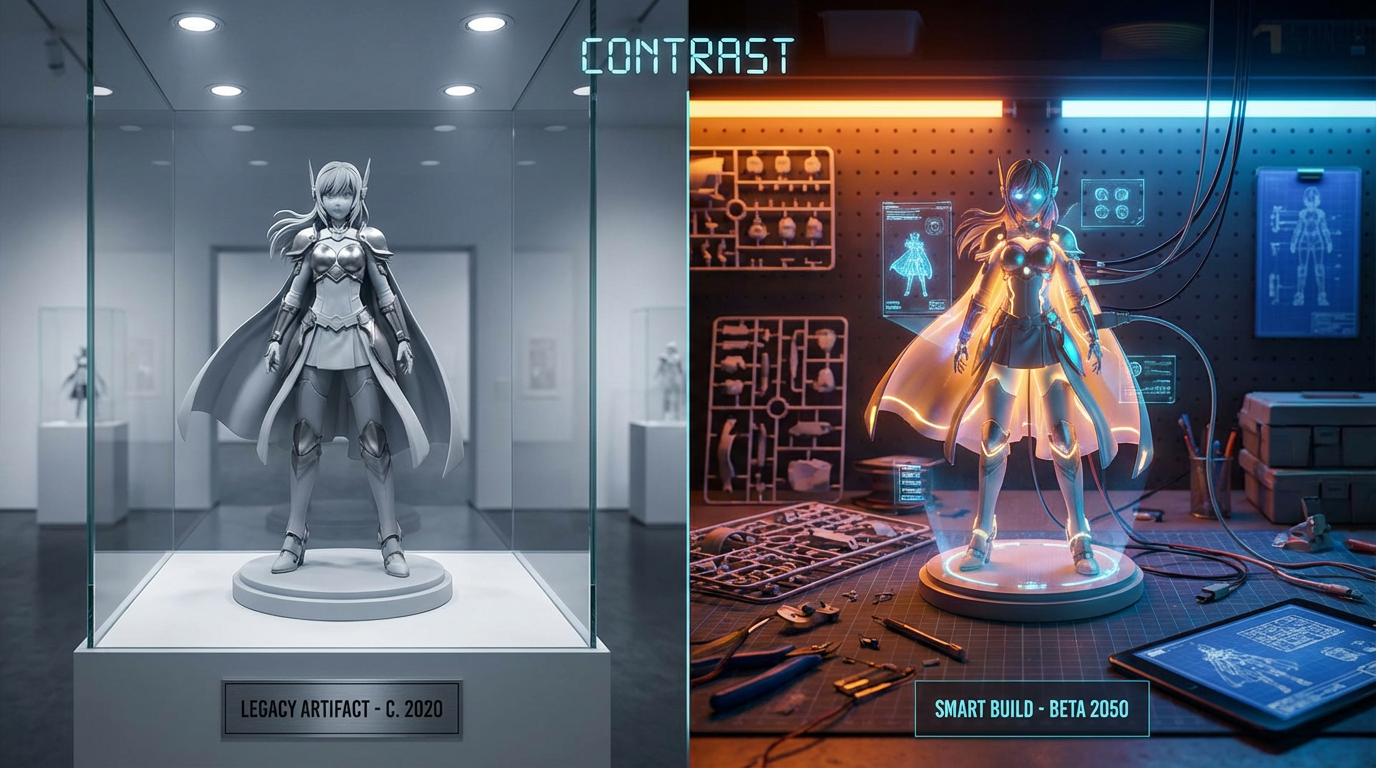
Static figurines scratch an itch that AI may never touch. They are art objects, snapshots of a character, sometimes investments, sometimes emotional anchors. Everything the research says about the importance of analogue play and non-digital experiences suggests that smart figurines should join them on the shelf, not push them off.
A better mental model might be this: the static figure is your shrine piece; the smart figurine is your familiar. One is there to be admired; the other is there to interact with you, teach you something, or keep you company when you grind through another late-night build.
FAQ
Do AI-based toys and figurines really understand people?
Reports from reviewers and designers of AI plush toys make it clear that these devices do not understand in a human way. They use automatic speech recognition to turn your words into text and language models to generate plausible responses that match a persona. One parent-reviewer noted that an AI plush was good at turning a child’s math question into a playful story, but also emphasized that the toy remains a programmed system, not a friend with real feelings. Smart figurines would use the same approach: impressive pattern matching, not consciousness.
Are AI toys safe for kids and teens?
They can be, but only if privacy, security, and healthy play patterns are built in from the start. Child advocates document cases where connected toys leaked stored voice messages or raised serious privacy concerns. The World Economic Forum’s Smart Toy Awards respond by evaluating toys on data protection, accessibility, responsible AI use, and age-appropriate play. Research on digital and analogue play also warns that digital toys can reduce parent–child interaction and language quality if used passively. For kids and teens, that means AI toys and figurines should be chosen carefully, used in moderation, and ideally played with alongside a caregiver who stays engaged.
Will AI figurines actually help with learning, or are they just gadgets?
Evidence from AI educational toys suggests that, in the right conditions, interactivity and personalization can support learning. Articles describe smart toys that adapt content, improve engagement, and help children practice language, STEM skills, and emotional regulation. Some reports even cite faster vocabulary gains and better spatial reasoning linked to structured smart-toy use. That said, researchers repeatedly stress that these tools should complement, not replace, human teaching and offline play. For AI figurines, any learning benefit will depend on how thoughtfully they are designed and how intentionally fans use them.
Closing Thoughts
As someone who has spent way too many evenings debating which version of a character’s sculpt best captures their spirit, I do not want every figure on my shelf to start talking. But I am excited for the first wave of smart figurines that learn from the best of AI toys instead of repeating their worst mistakes. If designers borrow the research-backed principles around interactivity, privacy, accessibility, and balance, the result could be a new kind of companion: a figure that still looks perfect in a glass case, but also knows enough about you—and about its own story—to make sharing a room with it feel just a little more alive.
References
- https://pmc.ncbi.nlm.nih.gov/articles/PMC9017493/
- https://fairplayforkids.org/pf/safe-secure-smart-toys/
- https://ineducationonline.org/2025/05/24/smart-play-ai-powered-toys-transforming-education/
- https://www.weforum.org/stories/2021/05/how-7-smart-toys-are-protecting-kids-data-and-safety/
- https://aondevices.com/toys-use-cases/
- https://cheertone.com/blog-detail/how-c-for-children-can-stimulate-childrens-learning-interest-and-motivation
- https://www.mojo-nation.com/now-ready-prime-time-voice-enabled-experiences-entertain-educate-kids/
- https://plastictoyfactory.com/the-future-of-educational-play-ai-toys-that-combine-fun-and-learning/
- https://www.shengyip.com/blog/why-are-smart-early-learning-toys-a-great-choice-for-kids-cognitive-development
- https://www.tencentcloud.com/techpedia/120335