The Importance of Ventilation Design in Storage Cabinets
Thoughtful ventilation design turns a closed cabinet from a hot, humid trap into a safe micro‑habitat that protects both the cabinet itself and everything you store in it.
Ever opened a glass display and felt a wave of warm, plasticky air hit your face, like your whole figure squad has been breathing the same stale space all summer? That trapped heat and moisture is exactly how paint turns tacky, plastics start to lean, and wood cabinets quietly warp in the background. Tuning cabinet airflow the same way pros cool electronics and protect kitchen cabinetry dramatically cuts heat, dampness, and grime that slowly ruin collectibles. This guide gives you a clear, practical roadmap for designing ventilation so your storage feels calm and your favorite pieces stay convention‑ready for years.
Why Ventilation Design Matters in Storage Cabinets
Effective cabinet ventilation that actually moves air in and out keeps moisture, heat, and pollutants from building up around what you store and in the surrounding room, which is critical in hard‑working kitchens and storage areas where steam and smoke are constant. Thermotech’s discussion of kitchen cabinet ventilation highlights how stagnant air lets moisture, odors, and airborne grime settle on walls, cabinets, and stored items, while steady airflow keeps things dry and reduces rust and mold risk. When you treat a storage cabinet as a tiny room instead of just a box with a door, the need for real air movement starts to make sense.
Kitchen designers point out that ventilation is as fundamental as cabinets and countertops because removing heat, steam, smoke, and grease protects both the room’s air and its surfaces. Guidance on protecting cabinets and countertops with proper kitchen ventilation shows how uncontrolled moisture causes wood warping and mold, while excess heat and greasy vapors discolor finishes and leave sticky residue that is miserable to clean. Combine that with the fact that a family that cooks regularly can generate up to about a gallon of airborne grease a year, as explained in benefits of proper kitchen ventilation, and it becomes clear why closed cabinets near stoves take a beating without thoughtful vent design.
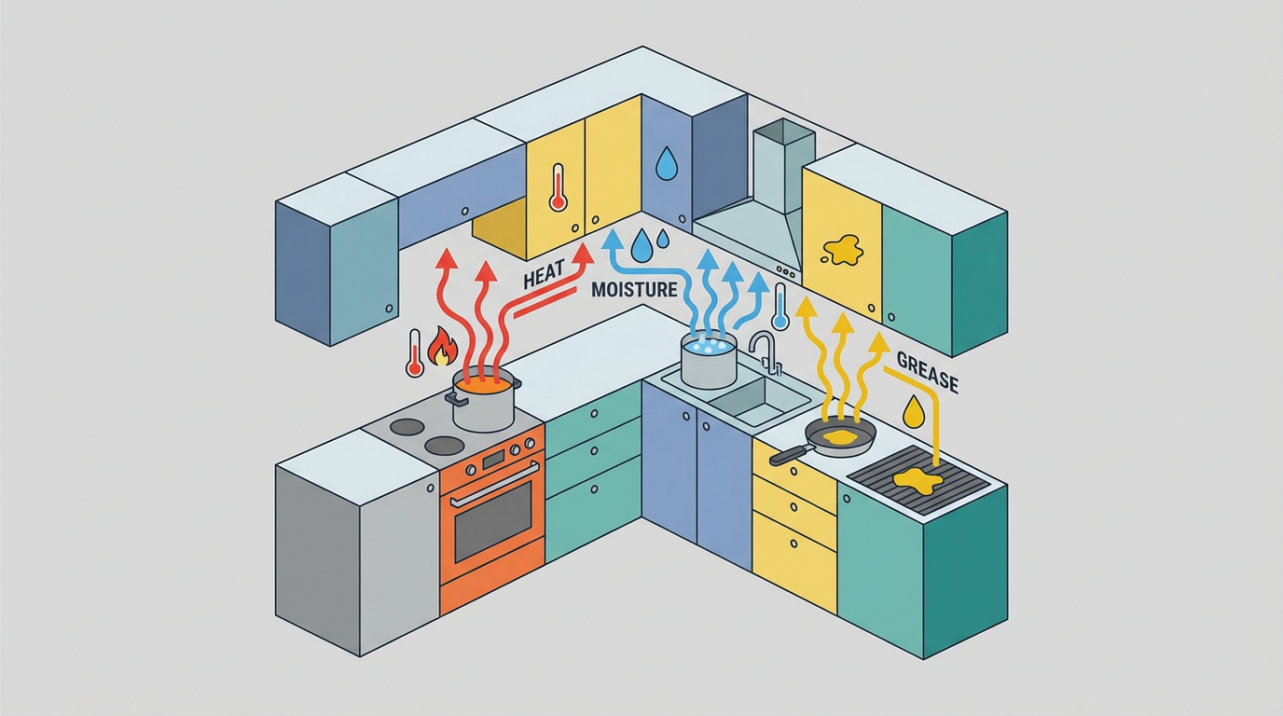
Swap in “glass display full of PVC heroes and resin grails” for “upper kitchen cabinets,” and the physics is the same. Warm LEDs or nearby electronics raise the temperature, moisture sneaks in every time you open the doors, and dust plus cooking residue drift through the room. With no planned airflow path, all of that builds up right where your figures live.
How Air Moves Inside a Cabinet
Intake, Exhaust, and the Top–Bottom Strategy
Specialists in electronics cooling emphasize that every cabinet ventilation setup needs both an intake and an exhaust path, not just a fan slapped onto one panel. Guidance on cabinet cooling and ventilation explains that the ideal layout uses an exhaust fan near the top of the cabinet to remove hot air and an intake opening or fan near the bottom to pull in cooler room air. That design works with natural convection: electronics and lighting warm the air, the lighter hot air rises, and the top exhaust helps it escape while the lower intake refills the space with cooler air.
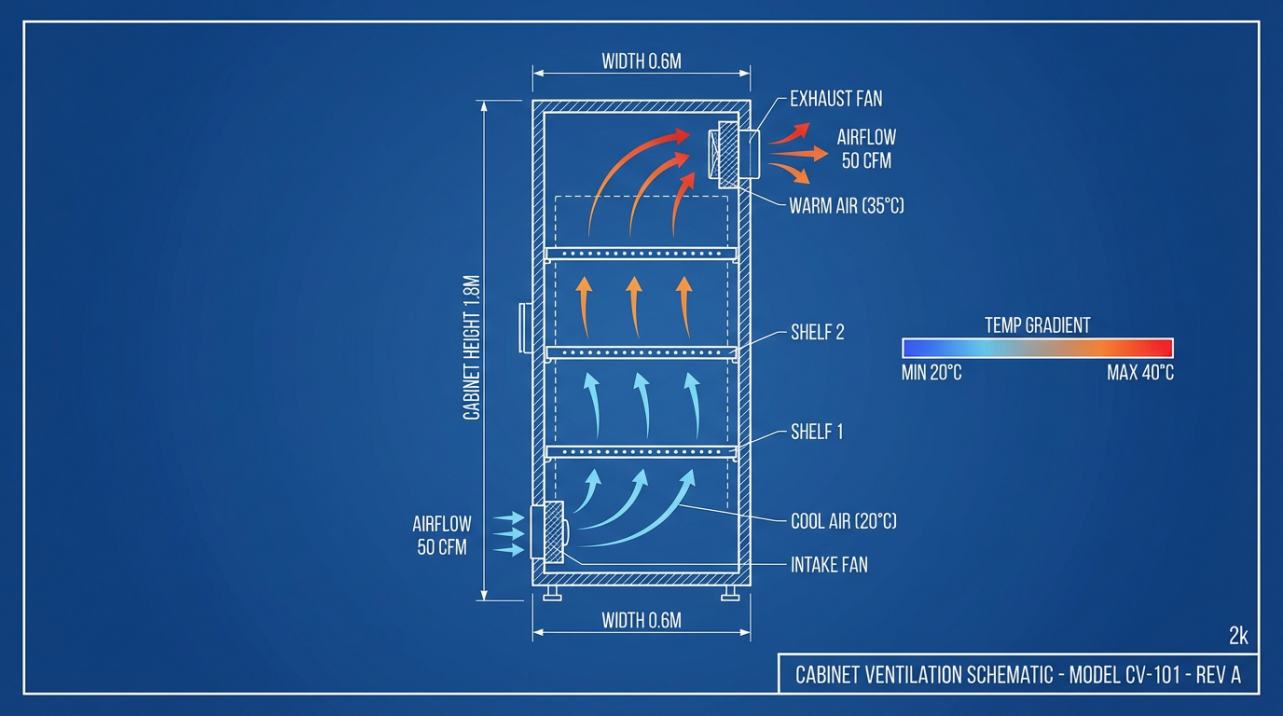
Engineers who build control panels use the same logic. A common rule of thumb for vented electrical cabinets is an intake fan mounted low in the panel and an exhaust vent mounted high, ideally on opposite sides, so cool air sweeps past components before exiting. Practical discussions of cabinet venting for control panels stress placing intake low, exhaust high, and adjusting locations for dust, mist, or dirty environments where filtration may be needed. For a figure case, imagine cool air sneaking in at the base, flowing up past stands and risers, catching the heat from LEDs or consoles, and exiting above the tallest mecha.
If you can only fit a single fan, cabinet‑cooling guidance recommends mounting it near the top as an exhaust and letting passive vents near the bottom act as intakes. The fan creates slightly lower air pressure inside the cabinet, so room air is pulled through the lower openings to balance things out, instead of leaks randomly deciding where air moves.
How Much Airflow Do You Actually Need?
When people design cooling for electronics cabinets, they size fans using CFM, or cubic feet per minute, which measures how much air a fan moves in a minute. Recommendations in cabinet‑cooling guidance suggest a simple, collector‑friendly method: calculate your cabinet’s internal volume in cubic feet, then multiply that number by three to get a target fan CFM that usually provides enough ventilation for electronics and similar heat loads.
Here is what that looks like in practice. Say your glass display is about 72 inches tall, 36 inches wide, and 18 inches deep on the inside. Multiply those dimensions and you get 46,656 cubic inches. Divide by 1,728 to convert to cubic feet and you end up at roughly 27 cubic feet. Multiply by three and you get a target of about 81 CFM. In everyday terms, a fan (or fan kit) rated near 80 CFM under real‑world conditions should be able to exchange the cabinet air about three times a minute, which is usually enough to sweep out heat from LEDs, consoles, or small AV gear alongside your figures.
It is also important to remember that factory CFM ratings are measured under ideal lab conditions with no obstructions. The same cabinet‑cooling guidance notes that shelves, cable cutouts, grills, and dust filters all reduce actual airflow. That is why it is usually safer to choose a fan slightly above your calculated minimum and then run it on a lower, quieter setting than to pick something marginal that needs to roar at full speed just to keep up.
What Ventilation Protects: Cabinets, Collectibles, and Health
Wood Cabinets and Finishes
Humidity control is one of the biggest reasons to take cabinet ventilation seriously. Advice on protecting cabinets from humidity recommends keeping indoor relative humidity around 30–50 percent to prevent wood cabinets from expanding, warping, peeling, or growing mold in dark corners. The same source notes that kitchens are especially risky because steam from cooking, dishwashers, and nearby appliances constantly adds moisture that can soak into cabinet panels and edges.
Kitchen‑ventilation specialists underline that when moisture and steam are not exhausted properly, they condense on cabinets and countertops, leading to swelling, mold, and damage to stone surfaces as well. Discussions of how proper kitchen ventilation protects cabinets and counters describe how heat can weaken adhesives in laminates, while acidic condensation from cooking slowly etches finishes. If your figure shelves share the same room as your stove or sit over a dishwasher, that steam does not respect fandom boundaries; it spreads, condenses, and finds its way into any closed storage that is not breathing.
Figures, Electronics, and Display Lights
Electronics and small devices like AC fans and routers tucked inside a cabinet with figures may seem harmless, but they are mini space heaters in disguise. The guidance on cabinet cooling and ventilation explains that receivers and computers warm the air around them, and that air rises and accumulates unless it is actively exhausted. In a glass figure cabinet, the heat from those components plus LED strips can push temperatures well above the room’s, especially near the top shelf where your tallest statues stand guard.
Meanwhile, cooking vapor and grease aerosols travel surprisingly far; descriptions of the benefits of proper kitchen ventilation note that airborne grease otherwise settles onto cabinets, walls, fabrics, and other surfaces and can add up to about a gallon a year for a typical cooking family. If your display shares an open‑plan living space with the kitchen, that haze can slowly coat shelves and figure bases, making dust stick like it is holding onto its own power‑up. Ventilation that pulls air through and around cabinets makes it harder for that grime to settle in the first place.
The Room Around the Cabinet
Ventilation is not just about protecting objects; it also shapes the air you breathe while hanging out in your collection space. Federal guidance on improving ventilation at home explains that bringing in fresh air and filtering indoor air helps reduce particle buildup from everyday activities. Paired with kitchen‑ventilation advice that underscores how exhaust hoods remove smoke, moisture, and grease from the cooking zone before pollutants spread through the house, as in healthy kitchen ventilation tips, you can see how cabinet and room ventilation work together. If the room stays fresh and dry, your storage starts from a healthier baseline instead of constantly battling a stuffy environment.
Designing Ventilation for Different Storage Setups
Glass Anime Display Cases
For a figure cabinet, treat airflow like stage blocking for your favorite ensemble cast. Start by planning an intake path near the bottom and an exhaust near the top, as recommended in cabinet cooling and ventilation. That might mean a slim vent or grille along the base, plus a quiet exhaust fan at the top rear that vents into the room rather than into another closed cavity. Keep large backdrops or risers slightly away from the rear wall so air can snake behind them instead of dead‑ending behind a diorama base.
Because wood and finishes do not love big humidity swings, especially around 70–80 percent, the humidity‑control guidance in protecting cabinets from humidity is a good benchmark for display rooms as well. Use a small hygrometer to keep an eye on the space around the cabinet, then lean on a dehumidifier or your home’s AC to keep the room in that 30–50 percent sweet spot during muggy seasons. When the room is stable and the cabinet has a gentle intake‑exhaust flow, your figures are far less likely to go shiny, sticky, or wobbly over time.
Kitchen and Pantry Cabinets
In kitchens, cabinet ventilation is locked in a constant boss fight with steam, heat, and grease. Articles on the importance of proper kitchen ventilation and on pro‑level kitchen ventilation tips both highlight range hoods as the main weapon, stressing that they should be sized correctly in CFM, mounted at the right height, and preferably ducted outdoors. That hood pulls the heaviest load, but cabinets around the cooking zone still benefit from airflow gaps at toe‑kicks, mesh or louvered doors in especially warm spots, and not pushing contents so tight that no air can move.
Commercial‑leaning guidance on ventilation for kitchen cabinets also points out that vents at cabinet level help keep utensils dry and reduce rust. Translating that into a home kitchen might mean adding discreet grille inserts to the sides of a tall pantry near the fridge or above a built‑in oven column so warm, moist air does not get trapped. For anyone storing snack stashes or themed mugs in those spaces, that little bit of breathing room keeps packaging crisp and finishes happier.
Utility, Network, or Control Cabinets
For network racks, smart‑home hubs, or control panels stashed in closets and utility cabinets, the cooling logic from industrial practice is invaluable. Discussions of cabinet venting for control panels recommend an intake fan low in the enclosure and an exhaust high, matching the same top‑bottom airflow pattern used in electronics cabinets. When that is not enough and heat is critical, experts suggest stepping up to dedicated enclosure air conditioners tied to thermostats and interlocked with door switches so they shut off if someone leaves the door open.
Paired with the sizing and layout guidance from cabinet cooling and ventilation, you can design these utility cabinets so cool air sweeps past every heat‑generating device rather than short‑circuiting through the nearest opening. That keeps your routers, NAS boxes, and other gear stable while preventing the closet from turning into a sauna that radiates back into nearby rooms and cabinets.
Choosing Your Ventilation Strategy
When you zoom out, there are a few main ways to help your cabinets breathe. Advice on cabinet cooling and ventilation, kitchen ventilation benefits, and humidity protection for cabinets together sketches out a menu of options that you can mix and match depending on your space.
Strategy | Example use | Key strengths | Tradeoffs |
|---|
Passive vents and gaps | Toe‑kick slots, louvered doors, mesh panels | Silent, no power, help cabinets dry out | Limited cooling, rely on room conditions |
Active cabinet fans | Glass figure cases, AV cabinets, utility panels | Targeted heat removal, controllable airflow | Noise, power use, need dust filtration |
Room‑level exhaust/hoods | Kitchen near display wall, hobby room by stove | Capture steam, grease, and odors at the source | Ducting cost, may require make‑up air |
Humidity control devices | Damp basements, coastal homes, small hobby rooms | Keep relative humidity near 30–50 percent around cabinets | Energy use, risk of over‑drying if overused |
The smart move is to choose the lightest combination that keeps your specific cabinet cool and dry under real use. A small glass case in a dry, air‑conditioned bedroom might only need a quiet exhaust fan and a few discreet intake slits, while a display wall in an open‑plan kitchen could lean more on a strong, well‑placed range hood and whole‑room humidity control.
Balancing Ventilation Levels
More airflow is not always better, especially once you move from “cute fan kit in a Detolf” to “serious range hood over serious cooking.” Home ventilation experts warn that high‑capacity kitchen hoods can create negative pressure in tight houses if there is no planned make‑up air, which can pull combustion gases or smoky air back through chimneys or leaks instead of out of the building. Guidance on kitchen ventilation challenges and make‑up air explains that hoods at or above about 400 CFM often trigger code requirements for make‑up air systems that bring in tempered outdoor air when the hood runs.
Similarly, descriptions of kitchen ventilation benefits point out that ducting, blower choices, and duct length all affect how much air actually moves, so oversizing without planning can mean extra noise and energy use without a matching payoff. On the humidity side, cabinet humidity protection advice cautions that while dehumidifiers and strong AC help, you need to monitor levels so you do not drop relative humidity so low that wood dries out excessively. For storage cabinets, aim for “steady and controlled” rather than “blasted at full power,” especially if you share space with gas appliances or fireplaces.
FAQ
Do All Figure Cabinets Need Fans?
Not every display case needs an active fan, but any sealed cabinet with heat sources or sitting in a humid room benefits from a planned airflow path. The guidance on cabinet cooling and ventilation shows that even basic electronics can raise cabinet temperatures enough to warrant at least a top exhaust and bottom intake. If your figures live in a cool, dry room with no lights or electronics in the cabinet, passive vents or small gaps may be enough; once you add LEDs, game consoles, or receivers, a quiet fan becomes more like a standard accessory than an indulgence.
Is Drilling Vents Into Kitchen Cabinets Always a Good Idea?
Cutting vents into kitchen cabinets without thinking about the whole system can backfire. Articles on proper kitchen ventilation to protect cabinets and on kitchen ventilation challenges stress that the centerpiece should be a correctly sized, ducted hood that actually removes steam and grease from the room. Cabinet‑level vents work best as support players: toe‑kick slots, louvered panels near hot appliances, or mesh inserts in particularly warm niches. If you are dealing with serious moisture or heat issues, it is usually better to improve the hood, ducting, or make‑up air than to swiss‑cheese every cabinet door.
What Humidity Should You Aim For Around Cabinets and Figures?
Humidity targets for protecting wood cabinetry make a great benchmark for display spaces. Advice on shielding cabinets from humidity recommends keeping indoor relative humidity around 30–50 percent so wood does not swell, warp, or grow mold. If your figures are in wood or MDF cabinets, or you store art books and boxes alongside them, that range keeps both the cabinets and the paper comfortable. A simple hygrometer plus occasional use of a dehumidifier or your home’s AC is usually enough to stay inside that window in most climates.
In the end, good ventilation design is less about flashy hardware and more about respecting that every cabinet is its own little world. When you give that world a clear way for fresh air to enter, warm air to escape, and humidity to stay in a healthy range, your shelves feel calmer, your cabinets stay solid, and your favorite characters can stand tall without slowly sagging off their bases. Think of it as world‑building for your collection: set the environment up right, and the story of your display will age beautifully.