Understanding Why Anime Figurines Fade (and How to Keep Them Bright)
Anime figurines fade because light, heat, and oxygen slowly break down their plastics, paints, and packaging; with better lighting, climate control, and storage choices, you can dramatically slow that aging and keep your collection vibrant for years.
You set up a perfect shelf. A year later, your once snow‑white heroine looks like she has been chain‑smoking in a 90s arcade while the box art looks strangely washed out. Collectors who moved slightly yellowing figures off sunny shelves and into UV‑filtered glass cases in cool, stable rooms have watched them hold near‑mint color for close to a decade, showing how much environment matters. This guide explains what is actually happening to your plastics and paints and gives you concrete, fandom‑tested ways to slow fading without turning your room into a dark museum.
What Fading Really Is: Your Figures vs. Light, Heat, and Oxygen
When a figure “fades,” you are watching photodegradation and photooxidation. Light energy triggers chemical reactions that break the long polymer chains inside PVC, ABS, and resins and damage the pigments sitting on or inside them. Over time, that shows up as yellowing, chalkiness, and cracks in the plastic or dull, washed‑out paint colors. Polymer research on materials like polystyrene confirms that ultraviolet light drives chain scission, forms radicals, and causes yellowing and embrittlement in plastics over time, especially when oxygen is present, with visible symptoms like loss of gloss and cracking as the material ages in real‑world conditions. Photodegradation of polymers explains that this is not just surface dirt but actual structural change in the material.
Conservators who care for museum collections treat light as one of the major “agents of deterioration” because it causes cumulative, irreversible damage to organic and colored materials, including inks, paints, and plastics. In museum settings, both ultraviolet and visible light are kept as low as visitors can tolerate precisely because fading, yellowing, and embrittlement cannot be undone once they occur. Expert guidance on light damage to collections treats light dose over a lifetime as the key variable, not just whether something sits in the sun for a day or two.
Light dose is essentially intensity multiplied by time. Typical recommendations for sensitive objects aim for low light levels around 50–150 lux for only a few months of display per year, while direct sunlight can reach roughly 30,000 lux, meaning a single bright hour near a window can rival hundreds of hours under dim, controlled lighting. This is why a figure that “only gets morning sun” can look noticeably different from one on a shaded shelf, and why reducing either brightness or hours of exposure pays off quickly. Museum conservators manage annual “lux hours” to limit total exposure for fragile objects, a mindset that translates well to high‑end figures and statues you want to keep bright across decades, not just a few convention seasons.
Heat and oxygen pile on. The same research that tracks UV damage in plastics shows that higher temperatures accelerate the chemical reactions involved in photooxidation, further shortening a plastic’s useful life under real‑world conditions. Photostabilization strategies in industry combine UV absorbers, stabilizers, and smart storage to slow these reactions, but even with additives, damage accumulates over years of exposure. Studies of polymer aging and stabilization emphasize that weathering is a mix of light, heat, oxygen, and pollutants, which is exactly the cocktail a figure sees on a sunny shelf above a warm electronics setup.
There is also the uncomfortable idea of “inherent vice”: some materials want to self‑destruct even under decent conditions. Archival storage experts point out that many plastics are inherently unstable and will deteriorate and off‑gas under ordinary light, temperature, and humidity, so they recommend storing plastics separately from metals and organic materials to prevent cross‑contamination. Guidance on collectible and artifact storage and reports of toy lines where identical parts yellow at different rates, even in the dark, show that the recipe of a particular batch of plastic or paint can set its fate from day one.
Why Some Figures Fade Faster: Colors, Plastics, and Packaging
Not every figure ages at the same speed, even on the same shelf. Many anime figures rely heavily on PVC and ABS, and storage guidance for anime figures notes that these plastics gradually degrade because ultraviolet light breaks down pigments and causes color fading, while oxidation and heat push white and light‑colored areas toward yellow. Best‑practice advice for storing anime figures specifically calls out white figures and pale skin tones as high‑risk areas under UV and heat.
Color matters. Bright, ink‑heavy 80s and 90s lines with saturated card art and blister graphics often show fading faster than more muted modern releases because the dyes and pigments in printed materials are especially sensitive to cumulative light exposure. Preservation leaflets on protecting materials from light make it clear that the inks and dyes in paper and cardboard are among the first to fade, which is why a box front can wash out long before the figure inside looks obviously different. At the same time, toy‑collector documentation of photodegradation has shown that plastic parts themselves, especially whites and light grays, can yellow or shift color even when packaging art still looks acceptable, with some blue plastics drifting toward green and decals protecting tiny “shadows” of original colors under their footprint. That kind of color shift reflects chemical change in the plastic rather than surface grime.
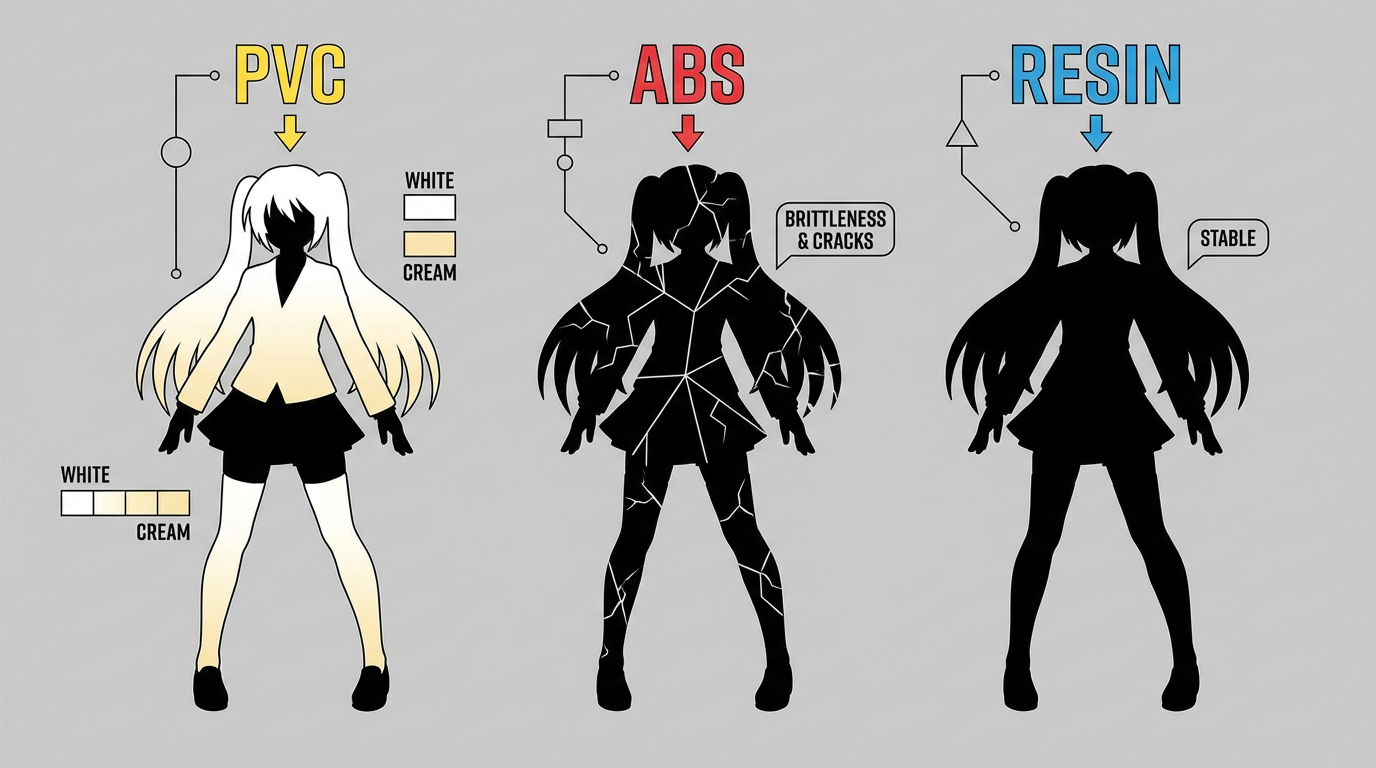
Discussion of photodegradation in toy plastics reinforces that these shifts are a material problem, not just “smoker’s dust.”
Under the hood, different plastics really do behave differently under UV. Breakdown of UV‑resistant versus vulnerable plastics shows that no plastic is completely UV‑proof, but materials like acrylic can be far more resistant than common toy plastics when properly stabilized. Flexible vinyls, standard PVC, and some ABS blends are more prone to chalking, yellowing, and loss of strength outdoors or under intense lighting. On the figure‑design side, material guides for collector statues explain that PVC dominates small and mid‑sized figures because it is inexpensive and easy to mold and paint, while ABS provides rigid, load‑bearing parts such as legs and bases. Resin and polystone are used for heavier statues with a more premium feel but are brittle, and cold‑cast resin blends resin with metal powder for a metal‑like finish at higher cost. Overviews of figurine plastics and resins and materials for durable custom action figures both stress mixing materials in one figure to balance strength, flexibility, and detail, a choice that also leads to different fading and yellowing behavior between parts.
Here is how that plays out on your shelves.
Material or part | Where you see it | Fading or yellowing behavior | Collector notes |
|---|
Standard PVC | Most anime scales, prize figures, heads, hair, soft details | Prone to pigment fading under UV and to bending or leaning in heat, with white or light areas yellowing over time | Keep out of direct light and away from heat sources; use gentle cleaning only. |
ABS | Internal frames, joints, bases, weapons, LEGO‑like parts | Rigid and strong but can embrittle and fade in strong light; tends to crack rather than bend if stressed | Good for load‑bearing parts; protect from prolonged sun and temperature swings. |
Resin and polystone | Premium statues, detailed bases, cold‑cast pieces | Less sensitive to minor temperature swings but still vulnerable to color fading and surface damage under UV | Treat like art; avoid drops and direct sun, and clean with very gentle, barely damp cloths. |
Acrylic and UV acrylic | Display windows, cases, some clear parts | Some grades are highly UV‑resistant, degrading only slightly over long outdoor exposure when properly stabilized | Excellent for UV‑filtering case panels; still keep cases out of direct sun when possible. |
Mixed plastics and joints | Complex articulated figures using PVC, ABS, and POM | Different parts can age at different speeds, so knees, hips, or accessories may yellow or fade before torsos or heads | Expect uneven aging; rotating display and moderating environment help keep a balanced look. |
Packaging cards and blisters | Box fronts, clamshells, MOC cardbacks | Inks and cardboard fade and yellow quickly under light; clear blisters can yellow or haze and become brittle | If card art matters, treat it like a print: low light, minimal UV, and consider UV‑filtered glazing. |
This is why one grail might stay perfect for years while another from the same era turns cream‑colored in six months: the pigment choices, plastic blend, stabilizers, and how you display them all interact.
Practical Ways to Slow Fading in Your Collection
Control the Light Your Figures See
The single biggest thing you can do is manage light. Museum conservation guidelines emphasize that both visible and ultraviolet light cause cumulative damage, and that even low‑level light adds up when it shines day after day. Recommendations on light, ultraviolet, and infrared, and on light damage limits, encourage avoiding direct sunlight entirely, using only as much light as needed to see, and limiting display duration for sensitive pieces.
Indirect light is not harmless. UV can bounce off walls and leak around curtains, and collectors have reported fading even in rooms that only get filtered or reflected daylight, with the assumption that gradual damage is still happening. That fits what conservation science says: UV is just the most energetic part of the light spectrum, and even when it is partly filtered, the remaining light still contributes to total dose. Think of a figure in a bright office‑lit room at roughly 400 lux for many hours a day versus one in a dimmer living‑room‑level 50 lux that is only lit in the evenings; over a year, the total light exposure can differ by an order of magnitude.
Practical moves you can make right now include shifting shelves away from windows, closing blinds or blackout curtains during the brightest parts of the day, and using soft, low‑UV LED lighting instead of fluorescent tubes or halogen spotlights. Evidence from collection care work shows that modern LEDs emit essentially no UV and significantly less infrared heat at the object compared with older lamps, making them a better choice for long‑term displays as long as brightness stays modest. Recommendations on protection from light damage even highlight LEDs as currently among the least damaging light sources for sensitive materials.
For shelves and detolf‑style cases, UV‑filtering window film and UV‑blocking acrylic doors can further cut exposure. Conservation advice explicitly endorses UV‑filtering films on windows and UV‑blocking acrylic panels as glazing solutions to shield collections, with service lifetimes measured in many years before filters need replacement. The same approach works for a figure room: UV‑filtering film on the room’s windows, and UV‑blocking acrylic in front of your most valuable pieces, will significantly reduce the harshest wavelengths before they ever hit your paint.
Another simple but powerful strategy is rotation. Museums routinely rotate very light‑sensitive works off display, and some toy collectors follow the same playbook, keeping only part of a collection under light while the rest rests in darkness. If your shelves are bright, consider letting a figure take the spotlight for a few months and then putting it into darker storage while another takes its place. Advice for anime figures suggests rotating displayed pieces every three to six months and relying on UV‑filtered cases and films to keep total light dose manageable across a decade, a rhythm that still lets you enjoy everything over time.
Give Your Figures a Stable Climate
Temperature and humidity do not change color by themselves, but they change how quickly the chemistry runs. Storage guidance for anime figures recommends keeping them near room temperatures roughly in the mid‑60s to low 70s°F, with relative humidity around 40–50 percent, and specifically warns against hot attics, damp basements, and garages where heat and humidity swing wildly. Recommendations on figure storage conditions and artifact storage guidance that target moderate conditions and stable humidity show strong agreement that cool, dry, and stable beats any particular magic number on a thermostat.
Beyond fading, heat can warp PVC into permanent leans and soften adhesives, while extreme cold can make some plastics brittle and more prone to cracking if bumped. Plastics‑industry overviews of UV‑resistant plastics explain that elevated temperatures accelerate photodegradation and mechanical property loss, even for relatively robust materials, and that protective additives still work best when temperatures stay within a moderate range. Summaries of UV‑resistant plastics stress that design for outdoor parts always considers both UV and temperature, and figurines benefit from the same thinking.
For a home collection, that translates to keeping figures in interior rooms instead of against exterior walls that bake in the sun, avoiding locations right above radiators or directly under heating vents, and giving electronics that throw heat, like gaming PCs and big TVs, a bit of distance from shelves. Digital hygrometers are inexpensive and let you see whether your room sits in that comfortable humidity band or if you should add or remove moisture with a dehumidifier or desiccant packs. Storage guidance for archives and collectibles notes that maintaining relative humidity near 50 percent and avoiding large fluctuations matters more than minor daily wiggles, and recommends steering clear of attics and basements entirely for anything vulnerable. Advice on collectible storage environments emphasizes that stable, moderate conditions dramatically slow aging for mixed‑material collections.
Choose Where Each Figure Lives: Shelf, Case, or Deep Storage
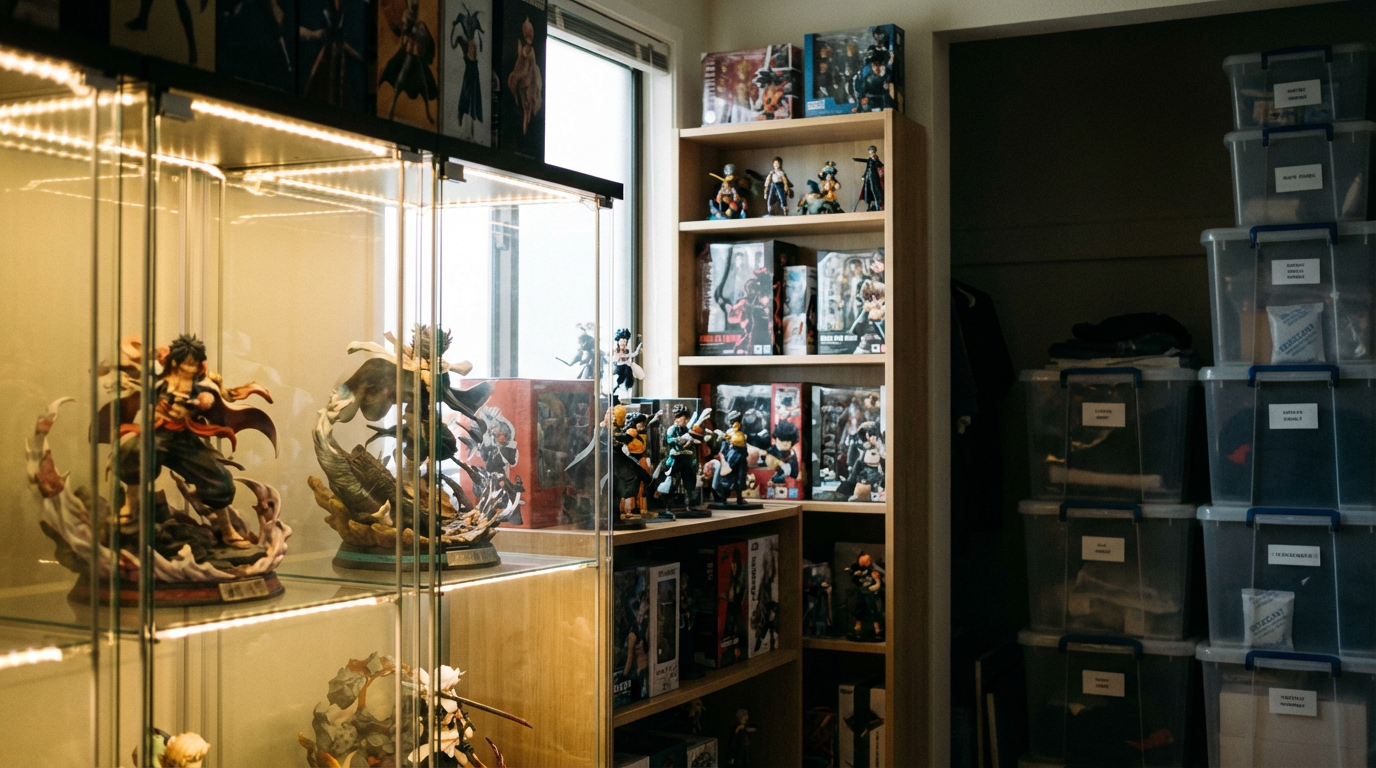
Display choices are really preservation settings in disguise. Open shelving feels great for visibility and quick photos but exposes figures to dust, UV, accidents, and temperature swings, while closed glass or acrylic cases create a micro‑environment that can be tuned and cleaned more easily. Guidance for anime figures specifically recommends enclosed glass or acrylic display cases, ideally with UV‑filtering film, as the best compromise between enjoyment and long‑term preservation, and treats open shelves as a “display sometimes, not forever” option. Recommendations for storing anime figures to avoid fading and yellowing also mention that even with a case, keeping it away from direct sun and heat sources is important.
For long‑term storage or when you rotate displays, opaque, airtight plastic bins with gasket lids and desiccant packs are the closest thing to a “stasis pod” most of us can get. Archival storage advice encourages using opaque boxes in dark areas, maintaining cool, moderate conditions, and keeping plastics in separate, inert containers away from woods and metals to avoid both light and chemical damage. Recommendations on tips for collectible storage go so far as to warn that inherently unstable plastics can off‑gas and harm nearby materials if packed together too tightly in a mixed box.
A practical rotation for a serious collection might work like this: top grails live in UV‑filtered cases in your main room, mid‑tier favorites take turns on open shelves, and the deep bench stays boxed in cool, dark storage with desiccant and padding. That way the figures you care about most are under the best conditions, and everything else still gets occasional display time without sitting in harsh light and fluctuating humidity for years on end.
Clean and Handle Without Wearing Your Paint Down
Cleaning is a preservation strategy, not just a vanity thing. Dust and airborne grime can slowly bind to surfaces, especially in tiny sculpted crevices, and eventually become almost impossible to remove without aggressive scrubbing that risks the paint. Storage guidance for anime figures recommends gentle dusting with soft brushes or microfiber cloths and spot cleaning with distilled water on cotton swabs, followed by air‑drying fully in the shade before figures go back into cases or boxes. The same anime figure care advice explicitly warns against hot spotlights or lamps placed close to figures, which can both heat and fade the paint.
Material guides for statues add that PVC and ABS can tolerate brief soaks in mild, soapy water but should never be scrubbed with harsh cleaners or alcohol, while resin, polystone, and cold‑cast statues should not be immersed at all and prefer a barely damp microfiber cloth wiped gently across the surface. Overviews of best plastics and care for collector statues emphasize that leaving moisture on a figure is risky, especially around joints and seams, because water can creep into gaps and cause hidden corrosion or swelling.
Handling habits matter as much as cleaning tools. Archival storage experts urge washing and drying hands before touching collectibles, handling edges rather than decorated surfaces, and limiting handling overall so oils and microscopic abrasion do not compound over thousands of touches. Guidance on artifact storage and handling also recommends nitrile gloves, not cotton, when dealing with unstable plastics, because cotton can snag and reduce dexterity. For figures, that translates to re‑posing only when needed, avoiding constant face and hair touches when moving them, and thinking twice before handing your rarest grails to every visiting friend.
What You Can Fix vs. What You Have to Accept
Harsh truth first: true light damage is permanent. Conservation leaflets make it very clear that fading, yellowing, and embrittlement from cumulative light exposure cannot be reversed and that the best anyone can do is slow future damage by cutting exposure. Guidance on protection from light damage explicitly warns against keeping organic and colored materials on permanent display for this reason.
In the toy world, collectors distinguish between surface grime and genuine photodegradation. Dirt, nicotine film, and some environmental stains can often be removed with careful cleaning, revealing surprisingly bright plastic underneath. By contrast, when the plastic itself has chemically changed, as in the notorious yellowing seen on certain toy lines, no amount of scrubbing will return the original color. Documentation of photodegradation and yellowing in toy plastics stresses that this yellowing is the plastic decomposing and that even sanding away a surface layer only hides the problem temporarily while risking structural damage.
There are experimental “fixes,” most notably hydrogen peroxide baths sometimes used by collectors to “retrobright” yellowed parts. Reports from those experiments show that peroxide treatments can cosmetically restore color for a time but do not change the underlying chemistry driving degradation, and that re‑yellowing eventually occurs even for pieces stored in darkness afterward. The same documentation warns that strong hydrogen peroxide solutions are hazardous, requiring thick gloves, eye protection, and good ventilation to avoid chemical burns or other injuries, and frames the method as an at‑your‑own‑risk approach rather than a standard solution. For high‑value anime figures and statues, especially painted pieces, focusing effort on prevention usually beats gambling on harsh chemistry that may not be compatible with every paint system and adhesive.
Finally, inherent vice means some aging is inevitable. Storage specialists emphasize that certain plastics have built‑in instability and can deteriorate under what feel like reasonable conditions, sometimes even off‑gassing harmful byproducts that affect nearby artifacts. Guidance on plastics in mixed collections recommends isolating unstable plastics and accepting that they may have a shorter lifespan than more durable materials. For collectors, this is a reminder to prioritize prevention where you can, be realistic about what a particular material can survive, and, when possible, choose more stable versions of characters or statues if you plan to keep them for decades.
FAQ: Common Collector Questions About Fading
Does LED lighting fade anime figures?
Soft LED lighting is currently among the best options for displaying light‑sensitive objects because it emits essentially no ultraviolet radiation and much less infrared heat at the object compared with many older lamp types. Conservation discussions of light and lighting choices still stress that any light contributes to cumulative damage, so LED strips and spots should be kept at modest brightness and turned off when you are not in the room. If you treat your LED‑lit detolf like a mini gallery, using only as much light as you need and limiting how long it is on each day, you can get the aesthetic glow without feeding your grails a high light dose.
Is it better to keep figures sealed in their boxes?
Sealed does not equal safe if the box sits in harsh light or bad climate. The cardboard and inks on packaging are among the first materials to fade and yellow under light, and blister plastics can haze, crack, or yellow even while the figure inside looks decent. Best‑practice advice for storing anime figures to avoid fading and yellowing recommends keeping original packaging for structural protection and potential resale value but still storing boxed figures in cool, dark conditions rather than on sun‑blasted shelves. For pure preservation, a sealed figure inside an opaque, cool, dry storage bin will outlast one sealed on an open shelf near a window.
How often should you rotate which figures are on display?
A practical rhythm is every few months. Anime figure storage guidance suggests rotating displayed figures every three to six months as part of a broader strategy that includes UV‑filtered cases and films, while collectible‑care checklists recommend cycling sensitive items off display every month or two in brighter environments. Combining those ideas, a good baseline is to give a figure a season in the spotlight and then let it rest in dark, climate‑controlled storage for at least as long before its next run. Over a decade, that kind of schedule drastically cuts total light exposure while still giving you plenty of time to enjoy everything.
When you understand fading as a slow crossover event between your favorite characters and the physics and chemistry of their materials, it becomes much easier to make smart, low‑effort choices that keep the colors you fell in love with alive. Think of your room as a tiny museum for your heroes and villains: control the light, keep the climate comfy, and be intentional about where each piece lives, and your future self will be unboxing bright, crisp figures instead of faded ghosts of your fandom.