Understanding the Complexity of Link in The Legend of Zelda Narrative
The Green-Tunic Illusion: Why Link Seems Simple But Isn’t
If you only know Link from a figurine on your shelf or a Smash Bros. match, he looks straightforward: a green-clad swordsman, eternally young, perpetually heroic, always ready to save Princess Zelda. In the earliest games, that is basically the pitch. As one historian of the series writing for Ancient Worlds points out, the original Legend of Zelda offers you a short instruction to rescue the princess and then simply drops you into a fantasy world of dungeons and monsters. Link barely speaks. The story barely explains itself.
Yet the deeper you go into the franchise, the more that simple figure fractures into something stranger and richer. Across decades of games, essays, and fan debates, Link has become three things at once: a mythic archetype, a player avatar, and a fully interpreted character whose spiritual journey spans multiple timelines. Critics, theologians, game-studies scholars, and fans all keep returning to him because he refuses to stay in just one of those roles.
Understanding how all three layers coexist is the key to understanding why Link still feels fresh after so many games, why some entries hit harder than others, and why a silent hero can anchor some of the most emotionally intense moments in gaming.
Link as Legend: Cycles, Reincarnation, and the Hero of Time
One of the most striking claims from the Ancient Worlds essay on Zelda is that the series treats history as cyclical rather than linear. The games do not simply succeed one another in a neat forward march from medieval to modern. Instead, they feel like retellings of one persistent legend about courage, power, and wisdom clashing over a wish-granting artifact.
From a structural standpoint, that legend looks like this: a villain (usually Ganon or Ganondorf) seeks the Triforce, a relic left by the gods that grants overwhelming wishes when united. Zelda, associated with Wisdom, and Link, associated with Courage, oppose him. The story repeats with different variations, settings, and tones. A story analyst writing about Skyward Sword puts it bluntly: each game is another telling of an archetypal hero-versus-evil monomyth, with Link, Zelda, and Ganon reincarnating as needed.
This idea is not just fan headcanon. Multiple sources in the research describe recent games outright saying that it is not the same Link every time, but a recurring “spirit of the hero” manifesting in new generations. An article from Nintendotimes describes Link less as a single person and more as a symbolic Hero of Time whose recurring incarnations embody courage, selflessness, and hope. A separate analysis on Neogaf notes that as the lore has grown, Zelda and Ganon have been elevated into cosmological forces with divine or primordial origins, while Link remains a mortal Hylian swordsman who keeps stepping into that same heroic role.
The Ancient Worlds article makes an intriguing comparison to real-world concepts of cyclical time in Taoism, Hinduism, and some Greek philosophical schools. In those views, ages and events echo one another. Zelda’s constantly reincarnated Links and recycled motifs fit that framework more than the straightforward technological progress of many Western fantasy series.
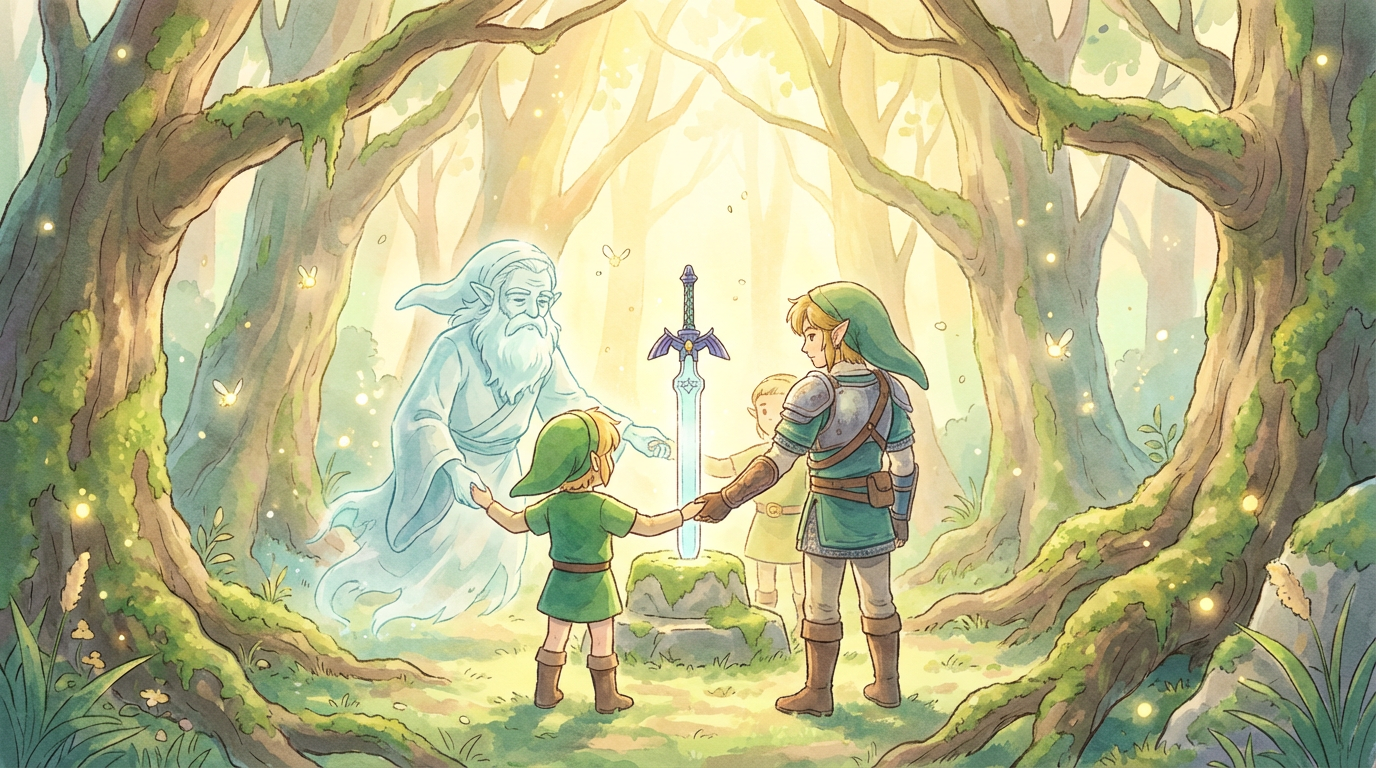
In this light, Link’s apparent simplicity becomes a feature. The green tunic and Master Sword are no longer just costume pieces; they are ritual markers. When you see them, you know you are encountering the archetype again, the way you recognize Hercules or King Arthur across wildly different retellings.
The Triforce and the Courage Archetype
The Triforce itself sharpens this mythic framing. A structural breakdown of Skyward Sword describes the artifact as split into three aspects: Courage, Wisdom, and Power. Link’s piece is Courage, Zelda’s is Wisdom, and Ganon’s is Power. When reunited, these three restore the Triforce’s overwhelming might.
That mapping of characters to virtues is not merely symbolic dressing. Essays about Link’s character repeatedly emphasize that his defining trait is doing what is necessary regardless of recognition, odds, or reward. The Lorehaven analysis, which reads main-console Links from Ocarina of Time onward through a Christian lens, argues that each incarnation embodies a slightly different “Christlike” facet of courage and self-giving.
In Ocarina of Time and Majora’s Mask, Link is an outcast who sacrifices his childhood and performs deeds that virtually no one remembers, echoing a suffering servant who saves a world that quickly forgets him. The Wind Waker’s Link is not a prophesied hero at first, just a big brother whose primary motive is rescuing his kidnapped sister. Twilight Princess shows a goat-herding villager whose quiet goodness changes other characters more than his own status. Skyward Sword’s Link stands calmly before the overwhelming evil Demise, while Breath of the Wild’s Link wakes up at a massive disadvantage, with amnesia in a ruined kingdom, and takes up a mission for someone he cannot remember and a land that seems beyond saving.
Different as these stories feel, the throughline is a courage that looks less like bravado and more like disciplined obedience and resilience. Lorehaven even links this to C. S. Lewis’s reading of the war god Mars as a symbol of sanctified martial virtues such as discipline and strength. In that reading, Link expresses those noble warlike qualities in a purer form and ultimately points beyond himself to a greater archetypal hero.
Link’s courage, then, is not simply “he has a lot of hearts and can roll through fire.” It is a narrative constant that anchors wildly different retellings of the legend.
Link as Avatar: Your “Link” Into Hyrule
The second layer of Link’s complexity is his role as our connection into Hyrule. The Ancient Worlds essay emphasizes that Link is deliberately a silent protagonist, a cipher for the player. Even as modern blockbuster games pour money into cinematic cutscenes and voice acting, Link mostly stays quiet. Dialogue happens around him, and you project your own responses into the gaps.
A philosophical analysis of the Hero of Time across Ocarina of Time and Majora’s Mask points out that this silent design allows players to inhabit Link’s spiritual journey, not just observe it. In Ocarina of Time, Link starts as an insecure outsider in Kokiri Forest, the only child without a fairy. The Great Deku Tree’s call positions his “outsider” status as a sign of destiny. As he travels from the forest to the expansive fields and cities of Hyrule, his quest to help other races and stop Ganondorf doubles as your own discovery of the game’s wider world.
The same analysis notes that when Zelda sends Link back to childhood at the end of Ocarina of Time, his heroic deeds vanish from that timeline. He keeps the maturity; the world does not keep the memory. That pattern repeats in Majora’s Mask’s looping apocalypse and again in the lore leap that leaves him an undead Hero’s Shade in Twilight Princess. History forgets Link. Players do not. That asymmetry only works because you have been walking in his boots the whole time.
Game-studies research backs up how important this avatar role is. A scoping review of character-driven storytelling in digital games surveyed 69 studies between 2003 and 2024 and found that well-developed protagonists and avatars are central to player immersion and emotional attachment. Character identity, the review argues, emerges from both narrative elements (backstory, role, context) and ludic elements (movement, abilities, controls). Link is a classic demonstration of that. His quiet personality is defined less by what he says and more by how he moves, what he can do, and what he chooses to endure.
Blank Slate vs Character-Driven Design
Of course, keeping your protagonist mostly blank is not the only way to tell a powerful story. An industry trend report based on social-media analysis notes that the number of video game characters being discussed by players increased by about 51 percent in early 2024 compared to the previous year. That reflects a broader push toward richer, more individualized character development in series like The Witcher and Cyberpunk.
The SAGE review and multiple practitioner essays argue that modern narrative design often aims for complex, voiced protagonists with detailed backstories and moral arcs. These characters act less like empty shells and more like co-authors of the narrative, evolving in response to player choices and events.
Link sits in an odd middle ground.
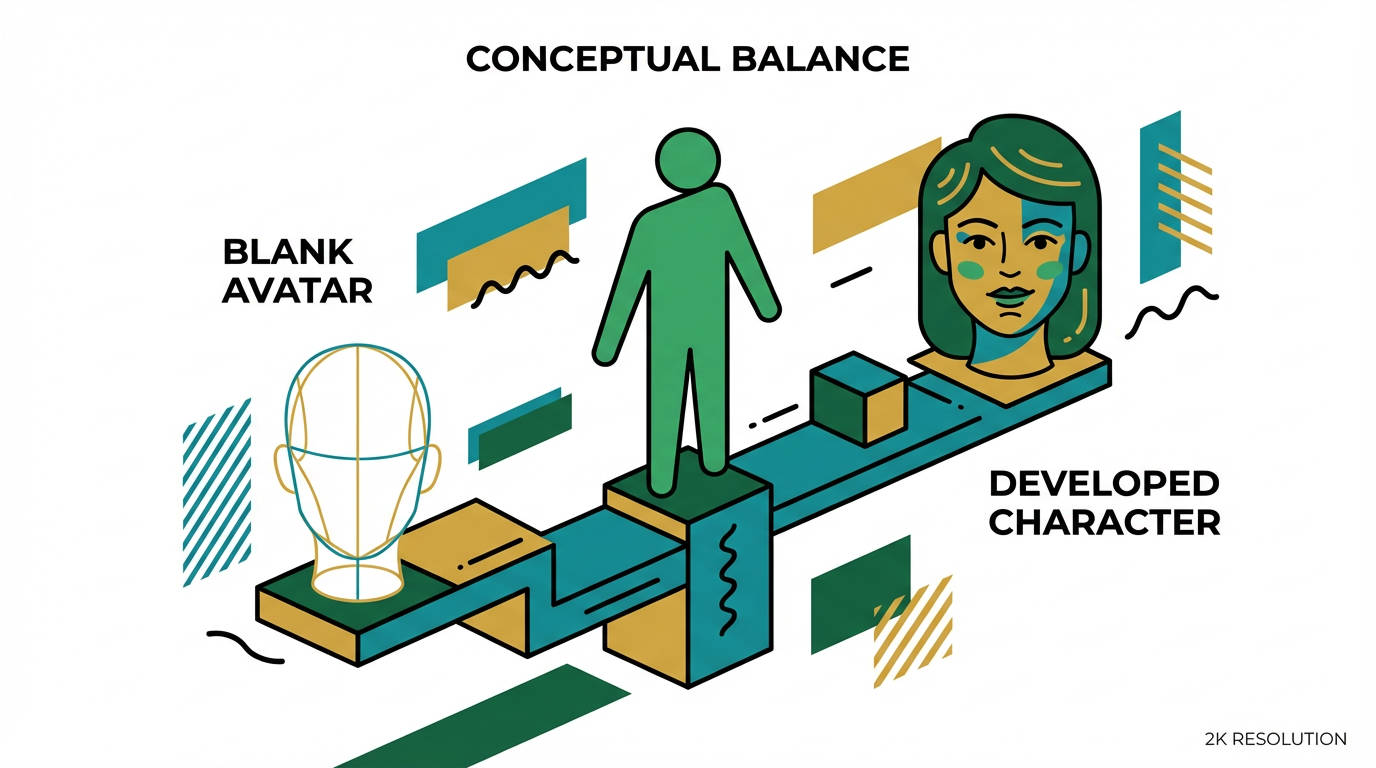
Compared to characters like Geralt of Rivia or Ellie from The Last of Us, he is almost aggressively minimalistic. Yet the research on Skyward Sword and the Hero of Time shows that Nintendo has gradually layered more emotional nuance onto him without abandoning the core “blank slate” strategy.
There are real trade-offs here. On the positive side, a near-silent Link lets you pour your own values and reactions into the journey. That is part of why so many players say that Ocarina of Time or Breath of the Wild shaped how they look at nature, adventure, and even courage itself. One fan writing about Link’s cultural impact notes that even at age eight, they felt deeply changed by stepping into his shoes.
On the downside, a thinly characterized protagonist can make some entries feel emotionally distant. A long-form critique of Breath of the Wild on Black Nerd Problems describes a 142-hour-and-41-minute playthrough where the author loved exploring Hyrule but felt little desire to replay the game because its narrative beats were sparse and its characters underdeveloped in the present timeline. Link’s silence is not the only culprit there, but it is part of a broader design philosophy that deprioritizes sustained character arcs in favor of open-world discovery.
Link as Character: Growth, Grief, and Virtue
If Link were only a symbol and an avatar, he would not attract so much serious narrative analysis. The third layer that makes him complex is that, over time, games and commentators have treated him like a character with a long arc of growth, trauma, and maturation.
The Spiritual Journey from Ocarina to Twilight Princess
The Hero of Time trilogy—Ocarina of Time, Majora’s Mask, and Twilight Princess—has been read as a single spiritual journey. A writer on With a Terrible Fate defines a spiritual journey as the inner evolution of a character’s identity and worldview in response to events. In this reading, Ocarina of Time is Link’s awakening from outsider to savior; Majora’s Mask is his confrontation with grief, death, and the absurd; Twilight Princess is his legacy as a hardened mentor.
In Ocarina of Time, Link’s early experiences in Kokiri Forest are not just tutorial levels. They establish his loneliness and show how finally being chosen by the Great Deku Tree reframes that loneliness as calling. His subsequent adventures among the Gorons, Zoras, and Hylians let players and character discover the world together, deepening the sense that he is both child and guardian of that world.
Majora’s Mask pushes further. Here Link travels to a parallel land doomed to be crushed by a falling moon, reliving the same three days again and again in a Groundhog Day loop. He dons transformation masks imbued with the spirits of dead heroes and helps grieving characters resolve unfinished business. The spiritual-journey reading emphasizes how this forces Link to repeatedly confront mortality, regret, and the limits of what heroism can fix.
Because both games hinge on time travel and timeline resets, Link’s heroism is systematically erased from in-world history. When Twilight Princess eventually reintroduces him over a century later as the skeletal Hero’s Shade, he has become a grim mentor training a new Link in combat techniques. The same essay notes that the Shade embodies all three Triforce virtues at once: courage in his spirit, wisdom in his instruction, and power in his combat prowess. He is at once a decaying relic of an old story and proof that the Hero of Time kept fighting long after the credits rolled.
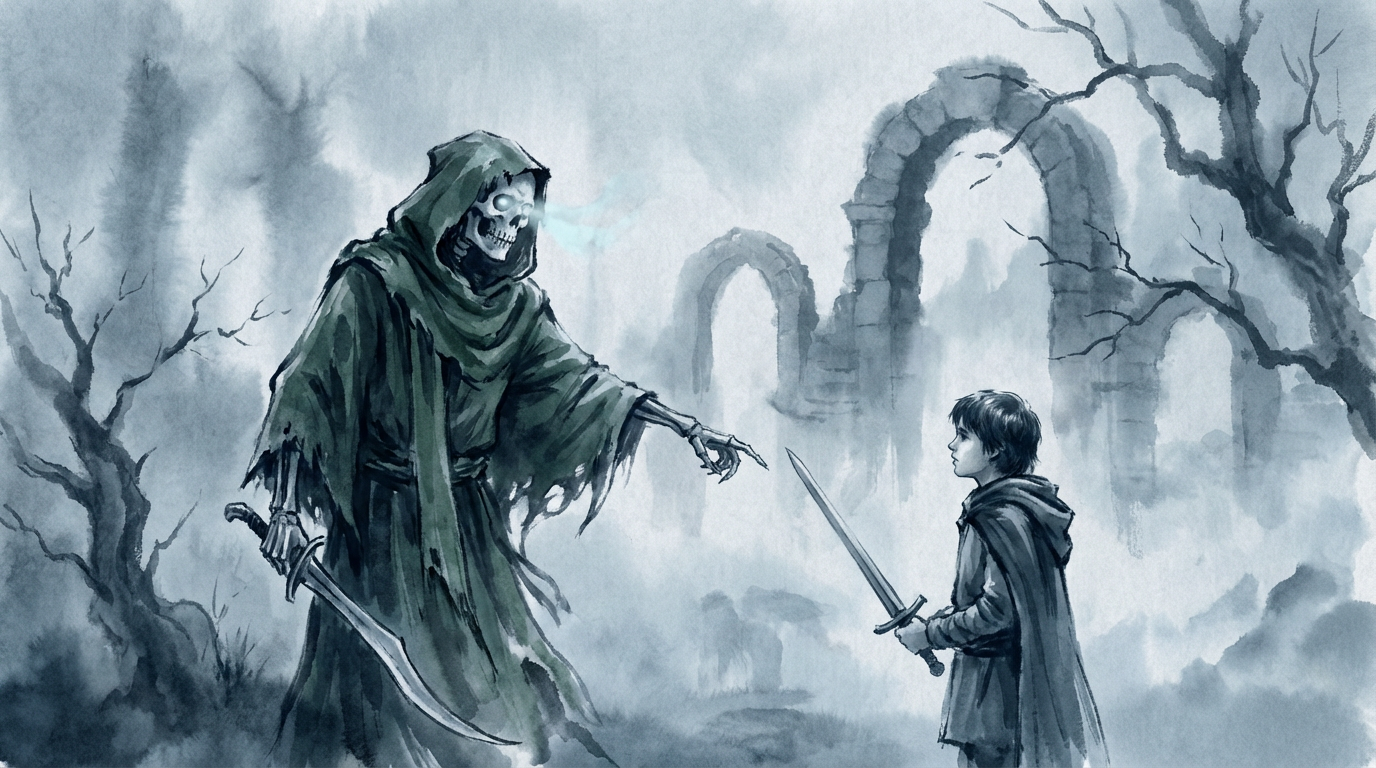
That long arc—from outcast child to forgotten savior to spectral teacher—gives Link a level of depth that belies his minimalist dialogue. It also underpins arguments that the Zelda series should “mature with its players,” exploring older, more complex versions of its hero rather than resetting him endlessly to childhood.
Family, Friendship, and Found Homes
Character is also defined by relationships, and family has slowly moved from the margins of Zelda’s storytelling into its core. A narrative study on Zelda Universe points out that the earliest games barely engaged with family. In A Link to the Past, for example, Link’s uncle dies early on, but the loss functions as a basic plot device rather than a deep emotional anchor.
Ocarina of Time marks a shift. The Great Deku Tree is framed as a father figure to Link and the Kokiri. His guidance, sacrifice, and last request turn the early game into a quiet story about a parent sending a child into a dangerous world with a heavy burden. Majora’s Mask then centers grief by following Link’s obsessive search for Navi, who has become a kind of sister-figure. In Termina, he encounters families and relationships under strain, mirroring his own sense of loss.
Later games make family the explicit inciting crisis. In The Wind Waker, Link’s world shatters when his sister Aryll is kidnapped, and the game is praised for how quickly and clearly it establishes their bond. Within a short amount of play, players understand Aryll’s personality and her affectionate relationship with her brother, so her abduction lands as a powerful emotional blow. Twilight Princess attempts something similar by kidnapping multiple village children and a close friend, Ilia, but critics note that it spends too much time on side activities and does not flesh out those relationships enough, dulling the impact.
Skyward Sword refines the approach. It takes its time establishing a warm, slightly romantic rapport between Link and Zelda on Skyloft. Their scenes together make her later fall beneath the clouds feel like the potential loss of a future family rather than just a royal duty. Breath of the Wild shifts the frame again, from immediate loss to intergenerational expectation. Many key characters, including Zelda and the successors of the fallen Champions, struggle with the pressure of living up to revered ancestors. Family here is both comfort and burden.
Across these games, Link’s heroism becomes less abstract and more anchored. He is not only “the chosen one”; he is someone’s quasi-brother, someone’s lost friend, someone’s descendant or ancestor. That network of relationships makes his courage feel more human and less like a generic power fantasy.
Christlike Virtue and Everyday Heroism
The Lorehaven article offers a particularly vivid way to view Link’s evolving character: as a sequence of Christlike archetypes that parents can use to talk about virtue with their children. While its theological framing is specific, its observations line up with more secular analyses of Link’s consistency.
In Ocarina of Time and Majora’s Mask, Link is the suffering servant who saves people who mostly will never know what he did. In The Wind Waker, he becomes the ordinary big brother who crosses stormy seas to bring his sister home safely. Twilight Princess’s goat-herder shows how humble, unglamorous goodness can transform others, especially Midna, who moves from selfishness to sacrificial ally. Skyward Sword pits Link’s steady courage against a villain, Demise, who insists no mortal can truly stand against him. Breath of the Wild drops Link into an almost hopeless situation, yet he chooses obedience to a mission for a land and princess he does not even remember.
Across all of them, Link keeps doing necessary, often thankless things for others.
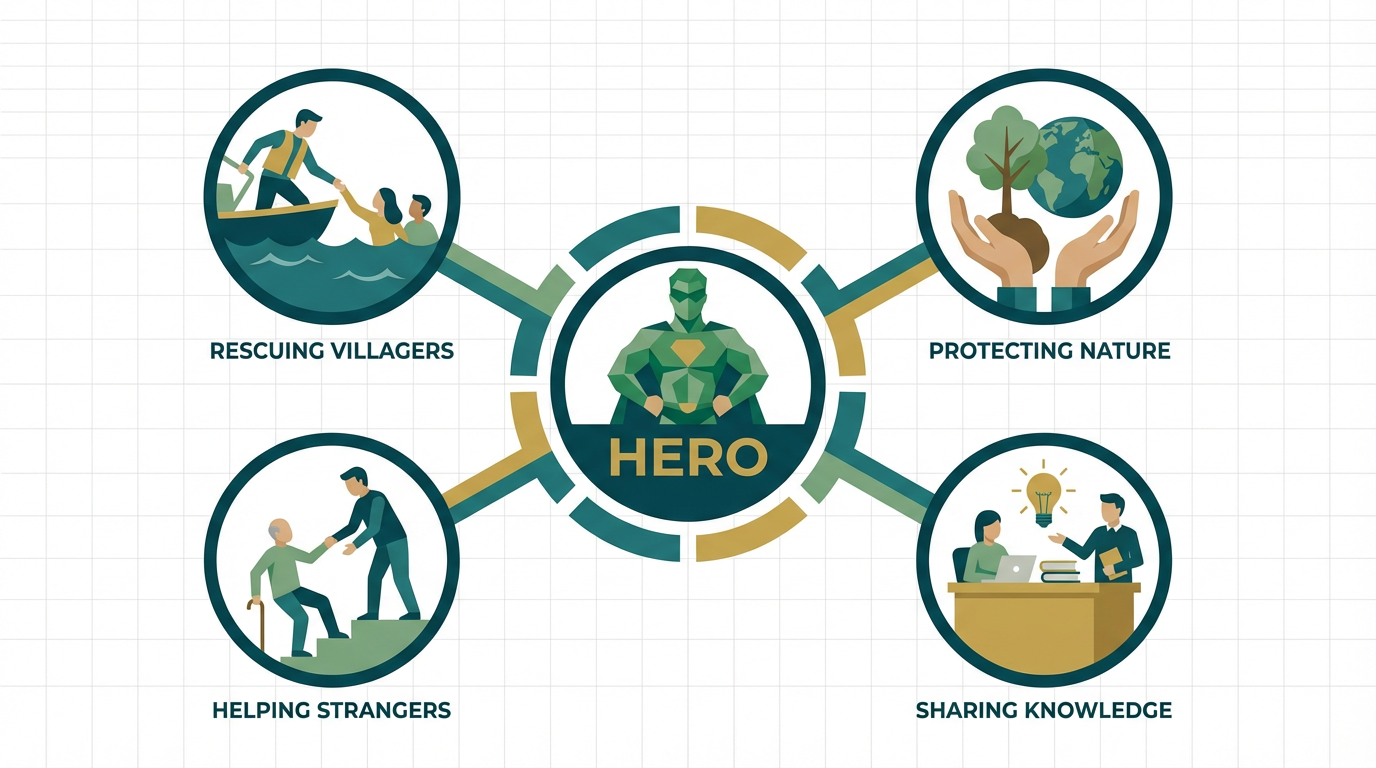
Lorehaven encourages what it calls “incarnational parenting,” where parents intentionally enter their kids’ story-worlds by playing games like Zelda together, then use Link’s actions as launch points for talking about courage, self-sacrifice, and faithfulness.
Whether or not you share that spiritual framework, the pattern it identifies is useful for understanding Link’s narrative function. He is not an antihero, not morally ambiguous, not prone to dramatic heel-turns. He is a quietly relentless doer of good in a world that rarely keeps proper records.
Many Links, Many Stories: Comparing Key Iterations
It helps to see these different incarnations side by side. Here is a snapshot of how various essays and analyses describe Link across some major titles.
Game / Era | Core Role for Link | Distinctive Narrative Theme | Example Source |
|---|
Ocarina of Time / Majora’s Mask | Outcast child turned Hero of Time and then wanderer | Spiritual journey, grief, and forgotten sacrifice | With a Terrible Fate, Lorehaven |
The Wind Waker | Ordinary big brother turned seafaring hero | Family-driven quest, chosen-ness emerging from love | Lorehaven, Zelda Universe |
Twilight Princess | Goat-herding villager and later combat mentor (Shade) | Humble goodness, transformation of others, legacy | Lorehaven, With a Terrible Fate |
Skyward Sword | Knight trainee in a sky civilization | Monomyth origin story, character development, destiny | Sharper Stories, Zelda Universe, Zelda Universe on Skyward Sword |
Breath of the Wild | Amnesiac knight in a ruined kingdom | Ruin and restoration, intergenerational pressure, resilience | Black Nerd Problems, Lorehaven, Zelda Universe |
Even in a simple table, you can see how much variation hides behind the same pointy hat and Master Sword. Analyses of Skyward Sword argue that it stands out for unusually visible character development across almost everyone, including Link, his companion Fi, and his rival Groose. Fi evolves from robotic guide to a being capable of genuine affection; Groose transforms from a self-absorbed bully into a useful ally who finds purpose outside the hero role.
Twilight Princess, especially if you count the Hero’s Shade, stretches Link across life and death, youth and adulthood, student and mentor. The character-development emphasis in Skyward Sword shows that Nintendo can dial up this aspect of Link when it wants to, without breaking the overall legend.
Breath of the Wild, by contrast, intentionally dials it down in favor of exploration. As the Black Nerd Problems piece observes, you can finish its main story in under an hour or linger for over 50 hours just wandering. There are fewer cutscenes than in many modern story-driven games, and key characters like Zelda and the Champions mostly appear as memories. Link’s present-tense personality is subdued. For some players, that reinforces the sense of a ruined world whose history you piece together through ruins and environmental storytelling. For others, it makes the emotional stakes feel more diffuse.
The important point is that the franchise can move Link along a spectrum from nearly pure avatar to richly developed character, and different entries choose different positions. That flexibility is part of his enduring power.
Link in Modern Game Storytelling Debates
All of this complexity plays out against broader discussions in game design about story, character, and player choice. Articles from developers and studios emphasize that strong stories and characters increasingly drive both awards and sales. Recent Game of the Year winners like The Witcher 3, The Last of Us Part II, God of War, and yes, Breath of the Wild are held up as examples of how narrative and character depth can keep players engaged for dozens of hours.
At the same time, critics and fans note that many blockbuster games still silo their most important story moments into cutscenes rather than weaving them seamlessly into gameplay. The Black Nerd Problems essay distinguishes between having a story and having a narrative, defining narrative as the in-game telling of events and character development that actually pushes play forward. Breath of the Wild has a story about Calamity Ganon and a fallen kingdom; its narrative presence moment to moment is deliberately thin.
There is also ongoing debate about how much player choice should reshape the story. A pair of GameFAQs discussions about Zelda and branching narratives argue that deep choice-driven storytelling is resource-intensive and can lead to players missing large parts of the narrative in a single run. Some contributors worry that heavy branching would undermine Zelda’s identity as a fixed “legend.” Others counter that the official Zelda timeline was retrofitted after the fact anyway, so there is room for more consequential choices at least in side quests.
Academic and industry perspectives suggest that there is no one-size-fits-all answer. Magic Media’s overview of storytelling in games describes three broad narrative structures: linear, branching, and open-ended. It also emphasizes environmental storytelling and player agency as powerful tools when used thoughtfully. The SAGE review and related design essays recommend balancing agency so that choices feel meaningful without breaking coherence.
Zelda’s current approach to Link mostly keeps the main story linear while allowing significant non-linear exploration in space and time. You can tackle dungeons in different orders, revisit earlier days in Majora’s Mask, or sprint straight to Ganon in Breath of the Wild. However, you do not usually rewrite the core legend of hero, princess, and villain. That choice keeps Link’s mythic identity intact even as individual games experiment with tone and emphasis.
Practical Takeaways for Fans, Collectors, and Storytellers
All this theory is fun, but how does it help you as a fan, a collector of Link figures, or a storyteller designing your own heroes?
Choosing Which Link to Spend Time With
If you are new to Zelda and want to experience Link as a fully realized character, the research suggests starting with games that foreground his growth. Ocarina of Time and Majora’s Mask together provide a powerful two-part spiritual journey from outsider to savior to grief-haunted wanderer. Skyward Sword, as multiple analyses note, excels at visible character development for Link and his supporting cast, showing him grow from an expressive but unproven knight trainee into a serious, capable hero.
If you are drawn to family themes, The Wind Waker is a standout. The Zelda Universe study highlights how quickly it establishes Link’s bond with his sister Aryll and uses that bond to drive the story emotionally. For those fascinated by ruin, legacy, and environmental storytelling, Breath of the Wild offers a vast, decayed Hyrule where Link’s resilience and the weight of intergenerational expectation are the main emotional threads.
Keeping these differences in mind can help you pick the Link that matches the mood you are in, the way you might choose between different figures on the shelf depending on which version of a character speaks to you that day.
Learning Narrative Craft from Link
If you are designing stories or games, Link’s long career offers several practical lessons that align with current research on character-driven storytelling.
First, you can reuse an archetypal structure over and over without going stale, as long as you vary the execution. The monomyth analysis of Skyward Sword shows that Zelda keeps returning to the same basic pattern—hero leaves home, faces trials, confronts evil—but refreshes it with new settings, relationships, and emotional stakes. You do not have to reinvent the blueprint every time.
Second, character identity should emerge from both story and mechanics. The SAGE review stresses that characters feel real when their abilities, animations, and gameplay roles reinforce their narrative traits. Link’s courage is not just stated in lore; it is acted out every time you choose to stand your ground in a boss fight with half a heart left or dive into an unknown cavern.
Third, environmental storytelling can do tremendous heavy lifting, especially when your protagonist is quiet. Ancient ruins in Breath of the Wild or the crumbling temple around the Master Sword communicate centuries of history without exposition. Industry case studies on games like Dark Souls show how powerful this technique can be when paired with a minimalist protagonist.
Finally, Link is a reminder that you can aim for both avatar and character. You do not have to choose between a completely blank player-insert and a hyper-specific, heavily voiced lead. Across different games, Zelda shifts the slider and shows that there is a broad spectrum in between.
Sharing Link With the Next Generation
For parents and mentors, Link can be a surprisingly versatile tool for talking about virtue, grief, and perseverance. The Lorehaven article’s concept of “incarnational parenting” suggests playing alongside kids and using specific moments to spark conversation. When a child sees Link help someone who will never remember him, you can ask what it means to do the right thing without reward. When Link keeps going after failure or loss, you can connect that to real-life resilience.
Because Link is generally kind, selfless, and courageous without being preachy or chatty, he functions as a sort of moral mirror. Children and teens can project themselves into his actions and then reflect on what those actions might look like in their own lives. That kind of shared reflection turns a single-player legend into a family story.
FAQ
Is Link always the same person?
Across the franchise, multiple essays and official signals indicate that Link is not always the same individual. Instead, he is better understood as a recurring “spirit of the hero” who is reborn whenever Hyrule needs him. Stories about the Triforce of Courage, the Hero of Time, and the reincarnation of key figures like Zelda and Ganon support this cyclical reading. Each game features a different young Hylian (or sometimes islander) stepping into the same mythic role.
Why doesn’t Link talk?
Analysts writing about Zelda’s storytelling repeatedly note that Link’s silence is deliberate. He is designed as a cipher or avatar so that players can project themselves into his decisions and feelings. This design choice goes back to the earliest games and persists even as other characters around him have acquired more dialogue and, in recent entries, full voice acting. The trade-off is that Link’s personality is conveyed primarily through action, expression, and the situations he endures rather than through spoken lines.
Closing Thoughts
Every Link figure on a collector’s shelf is a snapshot of the same legend at a different angle: outcast child, big brother, goat-herder, sky knight, amnesiac survivor. The magic of The Legend of Zelda is that all of them are “the real Link” at once. When we pay attention to how those incarnations overlap and diverge, we are not just doing fandom archaeology; we are learning how a quiet, enduring archetype can carry decades of evolving stories without losing the courage at his core.
References
- https://do-server1.sfs.uwm.edu/data/34E609T974/short/94E958T/character-development__and_storytelling-for_games__game-development-series.pdf
- https://www.zeldadungeon.net/daily-debate-what-makes-a-hero-in-the-legend-of-zelda-franchise/
- https://zeldauniverse.net/features/how-family-as-a-story-element-has-profoundly-impacted-the-legend-of-zelda/
- https://www.geniuscrate.com/emotional-storytelling-in-games-how-developers-make-players-cry
- https://blacknerdproblems.com/on-video-game-narratives-and-the-legend-of-zelda-breath-of-the-wild/
- https://www.juegostudio.com/blog/mastering-game-storytelling-crafting-compelling-narratives
- https://lorehaven.com/link-from-the-legend-of-zelda-games-reflects-christlike-virtue/
- https://nintendotimes.com/link-the-legend-of-zelda/
- https://obsidiantavern.com/character-development-in-video-games/
- https://pinglestudio.com/blog/the-importance-of-story-and-character-development-in-games