Understanding Why Some Figurines Deteriorate Over Time
This guide explains why figurines deteriorate over time and how to slow that process through smarter choices about materials, environment, handling, and repairs.
Figurines deteriorate because of a three-way tag team: what they are made of, the environment they live in, and how they are handled and posed. The better you control those factors, the slower your collection ages. The goal is not immortality, but giving your favorites as many good-looking years as possible.
You know that awful moment when you grab a favorite figure and feel the plastic turning a little gummy, notice a faint crack in a porcelain dress, or see a once-clear bubble has gone yellow overnight. Collectors have watched four-figure grails lose serious value this way, from high-end anime statues to vintage carded troopers, and the pattern is painfully consistent once you know what to look for. By the end of this guide you will be able to recognize the main types of deterioration, understand what causes each, and set up simple habits and environments so your display stays in good shape for the long haul.
What “Deterioration” Really Means For Figurines
Deterioration is slow, creeping damage: plastics turning sticky or brittle, paint fading, clear parts yellowing, card bubbles cracking, wood warping, metal tarnishing, and hairline fractures spreading in ceramic or porcelain. Condition directly affects both emotional and market value. Even when the character is beloved, a chipped or discolored piece usually drops sharply compared with a crisp one of the same sculpt. Collectible valuation articles consistently put condition, including subtle scratches and fading, at the top of the value checklist and note that a pristine common figurine can beat a rare but damaged one in actual sale price when buyers compare options side by side in the wild figurine value factors.
For carded or boxed pieces, the package is part of the object’s overall condition. Collectors have seen once-expensive mint-on-card figures gradually devolve into a loose figure, a warped cardback, and fragments of yellowed plastic bubble as adhesives age and plastic weakens. That is why some vintage fans deliberately collect just the cardbacks: they are already an “end state” and avoid the heartbreak of paying premium prices for a sealed card that eventually splits while sitting on a shelf.
Material Matters: Why Different Figurines Age Differently
Conservation pros often divide collectibles into organic materials such as wood, leather, paper, and many early plastics, and inorganic materials such as ceramics, glass, and metal. The first group is extremely sensitive to light, temperature, and humidity, while the second tends to suffer from chipping, cracking, and corrosion rather than fading or warping collection preservation advice. Most figure collections mix both: a porcelain or resin body, maybe a wooden base, possibly wired fabric, plus packaging board and plastics.
Some modern plastics come with what archivists call an “inherent vice”: they were never chemically stable to begin with. Storage specialists point out that many plastics deteriorate quickly under light, temperature swings, and humidity, and can even off-gas acidic vapors that damage nearby objects. That is why they recommend storing plastic-heavy items separately in inert, acid-free containers away from wood and other organics collectible artifact storage tips. That is the chemistry behind sticky rubber skin on some high-end figures and the “melting” accessory horror stories you see across fandom.
Rubberized and soft-plastic parts add another twist. In Hot Toys–style figures, collectors have documented torn elbows and cracked suits, particularly on specific releases with weaker rubber blends and when joints were left bent beyond their intended range for long periods in community discussions of damaged rubber figures. At the same time, fans with the exact same releases but more conservative posing report no issues after years, which suggests that material choice and user posing combine to decide who ends up with intact limbs and who ends up with splits.
Porcelain and ceramic figurines do not yellow like plastic, but they chip, crack, and lose surface decoration if handled roughly or scrubbed with the wrong cleaners. Care articles for porcelain figures recommend starting with dust removal using a soft brush, then, if needed, wiping with lukewarm water plus a few drops of mild dish soap on a soft cloth, avoiding harsh rubbing that can take off paint or gilding, as older figurine care guides warn. One manufacturer of popular porcelain figurines gives nearly identical advice in its porcelain figurine FAQs and emphasizes very mild detergent and gentle wiping to preserve original colors.
Wooden figurines are technically organic sculpture, not just “decor.” They expand and contract with humidity, absorb moisture, and dry out under harsh light. Collectible-care writers specifically warn that water and liquid cleaners can warp or discolor wooden pieces and recommend dry dusting with soft brushes or microfiber, plus storing them in dry spaces with stable humidity rather than in damp basements or near bathrooms. If you have a carved wooden base under a resin character, protecting that wood is part of protecting the whole piece.
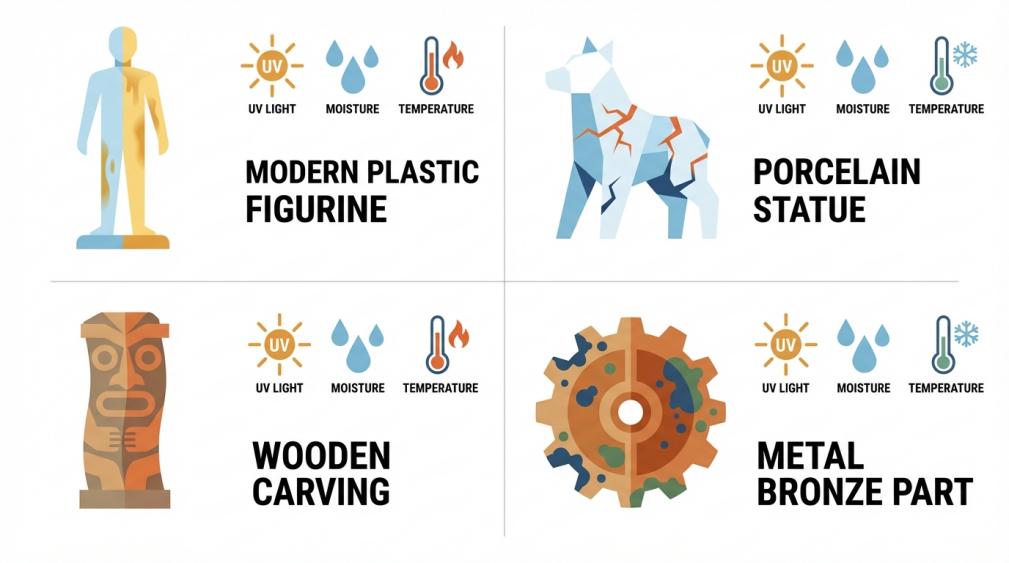
Here is a quick material snapshot to keep in mind:
Material type | Typical long-term issues | Big accelerators | Ideal care focus |
|---|
Modern plastics | Yellowing, stickiness, cracking | UV light, heat swings, high humidity | Stable climate, low light, separation from other items |
Porcelain/ceramic | Chips, cracks, lost surface detail | Impacts, harsh cleaning, thermal shock | Gentle handling and cleaning, padded display |
Wood | Warping, cracking, mold, fading | Moisture, high humidity, direct sunlight | Stable humidity, dry dusting, shaded display |
Metal/bronze parts | Tarnish, corrosion, paint loss | Moisture, skin oils, pollutants | Dry environment, careful handling, pro cleaning when needed |
Environment: The Key Long-Term Factor
Figurine-care and toy-storage articles emphasize the same three risks over and over: direct sunlight, temperature swings, and humidity changes how to store and display action figures, preserving collectibles. UV light fades paint and plastics, heat softens and warps them, and damp air encourages mold, rusty hardware, and wavy boxes. Even if nothing “snaps,” years of slow fading can turn a vibrant shelf into a lineup of dull, washed-out sculpts.
Conservation-focused storage advice recommends keeping display and storage spaces around 65–70°F with roughly 40–50% relative humidity and, crucially, avoiding spots with big daily swings such as attics and damp basements. Toy-collecting guides echo this, encouraging climate-controlled rooms or storage units so packaging adhesives do not dry out and figures do not crack or discolor from sustained extremes. A small digital thermometer and hygrometer in the display area is one of the best low-cost upgrades you can buy for your collection.
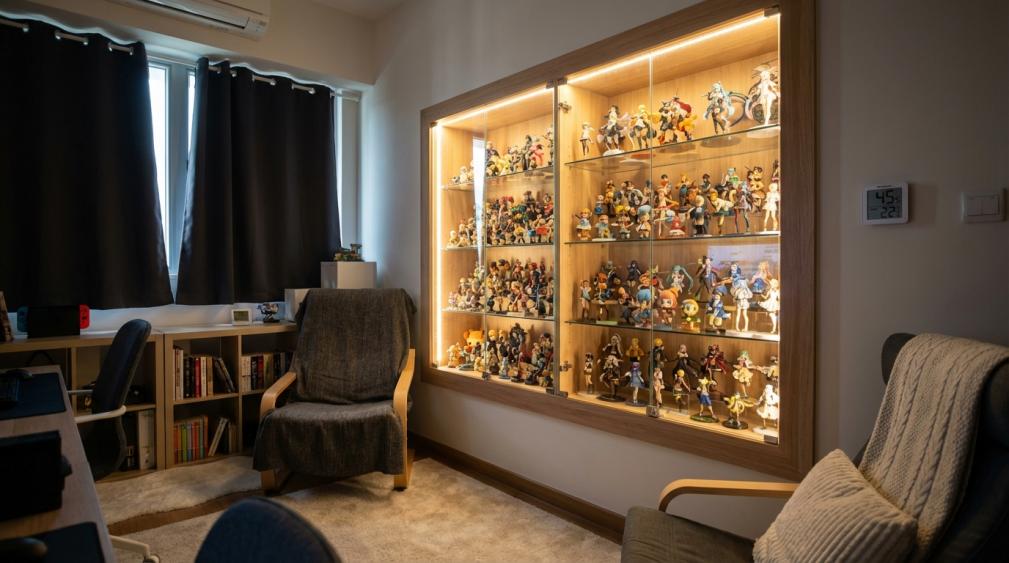
Light damage is basically permanent. Archivists stress that once color fades or plastic yellows from light, you cannot reverse it; the best you can do is keep it from getting worse by reducing exposure and moving pieces into opaque or UV-filtered housing. That is why UV-filter window film, blackout curtains, and glass or acrylic cases with UV protection are so popular among serious collectors: they let you enjoy the sight lines without bathing your figures in the same sun that damages comics and posters.
If your collection has outgrown your apartment, climate-controlled self-storage can be a valid move. Storage providers promote units that maintain stable temperature and humidity specifically for sensitive collectibles and note that climate control, adequate size for growth, and solid security are three key criteria for choosing a unit. Paired with labeled archival boxes and desiccant packs, this kind of setup can be the difference between a secondary collection that comes back from storage looking exactly as it went in and one that returns with warped packaging and mystery stains.
Packaging, “Mint,” And The Limits Of Protection
Original boxes feel like armor. Storage articles emphasize that intact packaging protects against dust, physical wear, and accidental damage, and they underline the market reality that sealed figures in crisp boxes usually sell for more than the same characters displayed loose. For action figures, keeping them in original packaging also simplifies transport and long-term storage because the box was literally engineered around that object.
The catch is that “mint in box” does not mean immune. Vintage collectors openly worry that bubbles will yellow, frost, or grow brittle over time, eventually cracking or detaching completely, especially on older toys where plastics and glues were not formulated for half a century of shelf life. Some fans even choose to buy already-opened figures with the bubble still attached because they know that if the bubble eventually fails, they will at least be left with a great cardback instead of watching a premium sealed piece self-destruct.
Totally airtight plastic bags and clamshells can backfire as well. Preservation specialists warn against sealing collectibles in non-breathable plastic because trapped moisture can trigger mold and because the plastics themselves can release corrosive gases that damage both the object and its neighbors. For carded figures, that can mean yellowed bubbles and odd halos where plastic off-gassing has etched the inside of a shell.
A more balanced approach is to treat packaging as another fragile surface. That means storing boxes upright, not under heavy stacks; giving high-value boxes acrylic protectors or outer sleeves to shield them from dings; and keeping sealed items in the same stable temperature and humidity range as loose displays. It also means accepting that, sometimes, buying a clean loose figure plus a nice cardback or box is a smarter long-term move than sinking big money into a sealed bubble that might someday split.
Handling, Posing, And “Invisible” Damage
A huge amount of deterioration is technically “user inflicted,” even when it shows up years later. Collectors’ preservation guides point out that oils and acids from skin slowly damage metal and painted surfaces, and that overhandling adds scratches, loose joints, and broken accessories you may not notice until the tenth time you dust a shelf. Clean, dry hands, short nails, and a clear, food-free “safe zone” around your figures go a long way.
Posing is its own risk factor. In the Hot Toys community, many of the dramatic rubber tears show up at elbows and knees that have been pushed beyond the natural range of motion or left in aggressive, maxed-out bends for months, as seen in reports of damaged rubber figures. The most durable collections tend to share the same habits: follow the posing diagrams, take your photos in dynamic stances, and then ease the figure back to a neutral pose for long-term display so the rubber and inner joints are not under constant stress.
Storage choices can turn tiny flaws into big ones. Toy-storage experts recommend disassembling figures before long-term storage—removing weapons, capes, and detachable limbs, then wrapping fragile parts in acid-free tissue—and, crucially, removing all batteries so they cannot leak and corrode electronics or plastic shells. They also suggest cleaning figures gently with microfiber cloths or cotton swabs before boxing them up and letting any water-safe pieces dry completely so you do not trap moisture inside a tote.
Collectors also have to make peace with imperfections. On fan forums, a common mental model is that if a figure is still on shelves, it is worth exchanging for a cleaner copy, but if it is long out of print and the flaw is small, it is often better to live with it or go for a careful repair rather than endlessly chasing an impossible “perfect” version. That mindset helps keep you focused on enjoying the sculpt on your shelf rather than obsessing over microscopic paint specks that only you will ever notice.
Repairs, Restoration, And Knowing When To Stop
Before grabbing glue, it helps to distinguish between everyday display pieces and items where historical or market value really matters. Valuation guides make it clear that condition encompasses both original maker quality and any repair work; poorly done fixes, chips, cracks, and visible color mismatches can drag a figurine’s value down far more than similar items kept structurally intact. At the same time, a professionally restored high-end porcelain or glass piece can maintain or even improve its market appeal compared with leaving it visibly damaged breathing new life into figurines.
For common porcelain figurines that you mainly want to enjoy at home, manufacturers and adhesive makers outline safe DIY repair approaches. One porcelain brand suggests cleaning dusty pieces with lukewarm water and a very mild dish detergent on a soft cloth, then, for small breaks, using cyanoacrylate products such as gel super glues sold at hobby stores for discreet repairs. Adhesive makers likewise recommend assembling all the broken pieces, cleaning them, pre-fitting the break, and applying porcelain-safe glue sparingly to the mating surfaces, holding them steady until the bond sets. You do have to accept that many manufacturers treat any DIY repair as voiding warranties and that, once glued, a kitchen-adjacent object may not be safe for food use again.
For PVC and articulated anime figures, generic repair methods focus on whether the break is in a low-stress decorative area or a high-stress joint. One hobby blog describes using thin cyanoacrylate on clean breaks in low-stress spots such as hair pieces or static accessories, with successful repairs lasting months under normal handling action figure repair methods. For high-stress points like ankles or neck pegs, the same source recommends drilling small matching holes in both broken ends, inserting a short metal pin cut from thin wire, and gluing everything together so the pin acts as an internal skeleton; when done carefully, the joint can remain poseable, with the pin absorbing most of the strain.
When the piece is old, rare, or sentimental, a conservative approach is safer. Figurine-care articles frame older porcelain, ceramic, bronze, and wood figures as “small historical artifacts” and recommend handing significant cracks, missing parts, or complex damage to trained conservators rather than risking irreversible amateur mistakes. Restoration specialists describe multi-step workflows that start with detailed inspection and cleaning, then move through structural repairs, reconstruction, color matching, and final finishes to restore both appearance and structural integrity. General collecting advice adds one more principle: if you are unsure, it is often better to do nothing immediately and research market norms for your specific category than to polish, sand, or repaint in ways that future buyers consider damage rather than care.

After any restoration, the environment matters even more. Restorers stress that repaired porcelain, glass, and ceramic pieces should live in stable, moisture-controlled, low-UV environments so that expansion, contraction, or light does not reopen cracks or reveal color differences along repair lines. Gentle dusting with a soft cloth and keeping restored pieces away from high-traffic areas is the collecting equivalent of placing a favorite piece in a glass case instead of keeping it on a crowded, high-traffic shelf.
Building A Display That Fights Deterioration
Once you understand the main threats, you can design your shelves like a preservation system instead of a slow-motion hazard zone. Toy-storage writers recommend combining sturdy shelving, dust-resistant glass or acrylic cases, and cool LED lighting to keep figures visible but safe from falls, dust, heat, and sunlight. Conservation sources suggest supplementing this with archival-quality boxes and sleeves for packed-away items, plus silica gel or other moisture control in enclosed spaces.
Here is a simple symptom cheat sheet you can use when doing a “health check” on your display:
Symptom on shelf or in storage | Likely main cause | First things to change |
|---|
Yellowing clear bubble or plastic | UV light plus heat | Move away from windows, add a UV-filter case, cool the room |
Sticky or cracking soft plastic | Unstable plastic, heat, humidity, extreme posing | Lower humidity, keep room near 65–70°F, relax poses between photo sessions |
Wavy or musty-smelling boxes | High humidity, trapped moisture | Rehouse in a drier space, add desiccant, avoid airtight bags |
Fine cracks in porcelain or resin base | Impacts or temperature swings | Pad shelves, avoid hot or cold zones, consider professional assessment |
Dust-caked, dull paint | Open shelving, infrequent cleaning | Add glass or acrylic doors, dust gently every few weeks |
Even a small change, like shifting a glass cabinet away from a sunny window and adding a dehumidifier in the room, can buy your collection years of extra “fresh from the box” energy. If you pair that with careful handling, moderate posing, and a thoughtful repair strategy, deterioration becomes something you actively manage instead of something that ambushes you.
Quick FAQ
Are all plastic figures doomed to melt or crumble eventually? Some plastics are inherently unstable, especially older soft vinyls and certain rubber blends, and collectors have documented extreme cases of figures turning sticky or deformed after years in bad environments. But advice from both conservation labs and toy-storage experts shows that keeping plastics out of direct sun, in cool, stable temperatures with moderate humidity, and away from reactive materials can dramatically slow that process. Think of plastic deterioration as a long process that you can slow significantly with the right habits.
Is climate-controlled self-storage worth it for figurines? If your collection is valuable and your home options are limited to a hot attic or damp basement, a small climate-controlled unit can absolutely be worth the cost. Storage guides describe these units as designed to hold steady temperatures and humidity specifically to protect delicate items like art, comics, and collectibles, and toy-focused advice suggests climate-controlled spaces for long-term boxed storage and large collections. Just treat the unit like a remote display room: label everything, use archival boxes, and schedule check-ins to catch any issues early.
Closing it out: deterioration is not a curse; it is a set of predictable reactions between materials, environment, and handling. Once you tweak your room, poses, and repair habits with that in mind, your favorite characters are far more likely to look like themselves when you check on them years from now, and your future self, scrolling old shelf photos, will be very glad you played the long game.