This guide explains how to choose safe, clear, and durable glass thickness and types for anime figure display cabinets.
Most anime figure display cabinets are safest and most satisfying with tempered glass around 1/4–3/8 inch thick for shelves and about 3/16–1/4 inch for doors and sides. When spans get wide, loads get heavy, or kids and high traffic are in the mix, stepping up to thicker or laminated glass is often worth it.
Picture this: you nudge a shelf to slide a new scale figure into place, and the glass bows just enough that every Nendoroid wobbles like it is in a mild earthquake. That tiny flex is the difference between "wow, museum vibes" and "one day this entire shelf is going to explode." With well-chosen glass thickness and type, you can keep shelves flat under weight, avoid catastrophic shattering, and still show off true colors and paint gradients. The sections below offer a practical way to choose thickness that matches your figures, your room, and your budget.
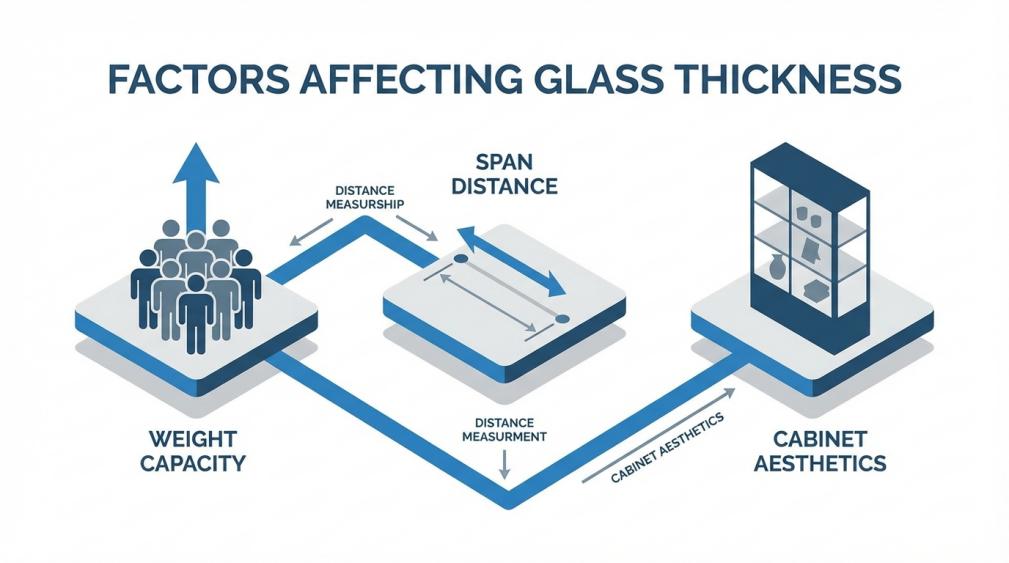
Why Glass Thickness Matters for Anime Displays
Guides on glass shelves for interiors emphasize that thickness controls three things at once: how much weight a shelf can safely carry, how far it can span without sagging, and how substantial the cabinet looks. For anime collectors, that translates directly into whether a shelf can handle several scale figures plus artbooks, whether the glass stays level for acrylic risers, and whether the cabinet feels like a premium gallery case or a wobbly prize figure stand.
Commercial fabricators note that thicker glass is stronger and more rigid but quickly gets heavier and more expensive, while thin glass is cheaper and easier to work with yet much more prone to flex and breakage over larger spans, especially under point loads like figure bases and metal stands. This tradeoff shows up in everything from tabletops to museum vitrines, as thick glass vs thin glass explains. For a collector cabinet, that means there is such a thing as "too thick" (overkill weight and cost) and "too thin" (bowing shelves, cracked corners, scary creaking when you rearrange).
Architectural sources point out that thin single panes around 1/8 inch are fine for picture frames and small panels, but sturdier furniture and display elements typically jump to 1/4 inch or thicker so the glass can work as a self-supporting surface rather than a fragile insert, as typical glass thickness guides recommend. When you stack multiple figures, books, or resin kits on a shelf, you are firmly in that self-supporting territory, so it makes sense to treat your glass more like a tabletop than like a photo frame.
Safe Thickness Ranges for Shelves, Doors, and Sides
Shelves Carrying Figures and Artbooks
Specialists in glass shelf design generally align on a pattern: about 1/4-inch glass for light decorative items on short spans, 5/16–3/8-inch glass for heavier items or 24–36-inch spans, and 1/2-inch glass or more for very heavy collections or shelves wider than 36 inches. Anime figures, resin statues, and stacked Blu-ray or artbook rows all land in that medium-to-heavy decorative load zone.
For a quick at-a-glance reference, think of your cabinet like this:
Inside shelf span | Typical load scenario | Recommended tempered thickness |
|---|
Up to 24 in | Figures and small props only | About 1/4 in |
24–36 in | Figures plus books or a few resin kits | About 3/8 in |
Over 36 in | Very heavy or densely packed mixed collection | About 1/2 in or add supports |
Manufacturers of tempered glass shelves report that a 1/4-inch tempered shelf with good support often handles around 10–15 lb per square foot, while a 3/8-inch tempered shelf can reach roughly 30–40 lb per square foot under proper installation.
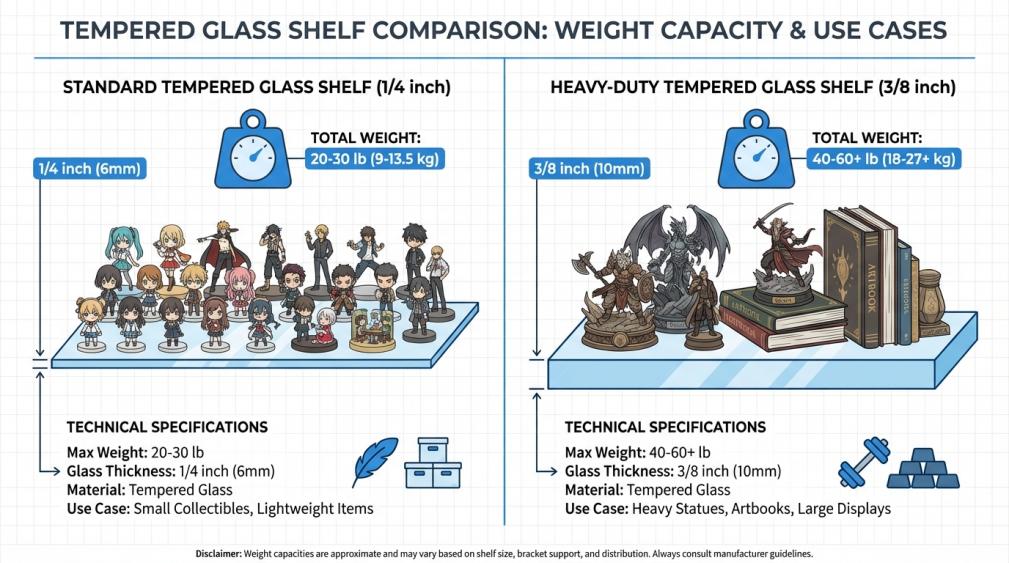
If your shelf is around 24 by 12 inches (about 2 square feet), that means a 1/4-inch tempered shelf can typically carry in the range of 20–30 lb. In practical figure terms, that covers several PVC scale figures plus a cluster of smaller figures or props, as long as the weight is spread out instead of all piled in the center.
For wide cabinets that approach 30–36 inches inside, collectors who stack heavy artbooks or multiple resin bases on one level are safer treating the shelf like a small glass table and stepping up to around 3/8-inch tempered glass, which glass fabricators often specify for heavier furniture and frameless fixtures, as thick glass vs thin glass notes. If the span is very wide, or you know you are a "pack every inch with merch" type, either move to 1/2-inch tempered shelves or add a center support rail so the glass is not doing all the work alone.
Glass Doors and Side Panels
For cabinet doors, the glass does not carry figures; it mostly deals with occasional impacts from opening, closing, and the random elbow bump. Custom cabinet suppliers recommend about 3/16–1/4-inch-thick glass for most cabinet doors, noting that this range balances stability and weight for everyday use DIY cabinet glass replacement. Thinner panels can rattle and feel flimsy, while much thicker ones turn doors into heavy slabs that stress hinges and make everyday access a chore.
General glass thickness references describe 1/4-inch glass as a workhorse for cabinet doors, small windows, tabletops, and similar panels that benefit from extra stiffness without going into extreme weight. For most anime display cabinets with framed doors and modest sizes, 3/16-inch tempered glass is comfortable. For tall doors, frameless designs, or high-traffic rooms, moving up to 1/4-inch tempered panels makes the doors feel solid and reduces the chance of accidental breakage if someone swings them open too hard. Side panels often match the doors for visual consistency and are commonly 1/4 inch when you want that crisp, premium edge.
Tempered, Laminated, or Acrylic: How Type Changes Thickness Decisions
Guides focused on glass for display cases highlight tempered glass as the default glazing for most public cases because it is heat-treated to be roughly four to five times stronger than regular glass and, when it fails, it shatters into small, blunt fragments instead of long knives. That same behavior makes tempered glass an excellent baseline for figure cabinets, especially for shelves and big doors positioned near floor level where pets and people are passing by. If you are debating whether to pay extra for tempering on 1/4-inch shelves, you get both more strength and far safer breakage behavior for a modest premium.
Laminated glass combines two or more glass layers with a plastic interlayer so that, if the glass cracks, the fragments remain bonded rather than falling into shards, while also blocking a significant amount of UV and reducing sound transmission glass types for showcases. In display cabinets that sit near kids’ play areas, busy hallways, or expensive figures with delicate paint, using laminated safety glass for large front panels or the top of a freestanding case is a smart upgrade, especially if sunlight hits the cabinet for part of the day. It still pays to choose a thickness like 3/8 inch for wide shelves or tall doors, but the lamination adds a meaningful extra safety net.
Some collectors lean toward full acrylic cases, especially for traveling displays, lighter weight, or when they want to DIY complex shapes. Acrylic is praised for its impact resistance and low weight compared with glass in display-case discussions, but it scratches more easily and can yellow over time if the material or environment is poor, as glass for display cases guides point out. Because acrylic flexes more than glass, using similar or slightly greater thickness than you would for tempered glass is wise, and it is often best used for lids, risers, and portable cases while keeping the main long-span shelves in tempered glass for rigidity.
Clarity, Color, and the "Gallery" Look
Standard clear glass carries a natural green or bluish tint that becomes more noticeable as the glass gets thicker, and this can subtly distort the true colors of figures, especially pale skin tones, whites, and cool pastel hair colors. For thin 1/4-inch shelves, the effect is usually minor, but once you move into 3/8–1/2-inch glass, edges can look noticeably green, and the entire display may feel a touch colder than in person, which is frustrating when you carefully matched LED temperatures to your figures.
Low-iron glass reduces those iron impurities to create a more neutral, "water-clear" look, preserving color fidelity and making backgrounds feel less muddy. For collectors who invest in higher-end 3/8-inch or thicker shelves, or who place cabinets where daylight mixes with LED strips, upgrading the front panels and main viewing sides to low-iron tempered glass is one of the most visually impactful choices you can make.
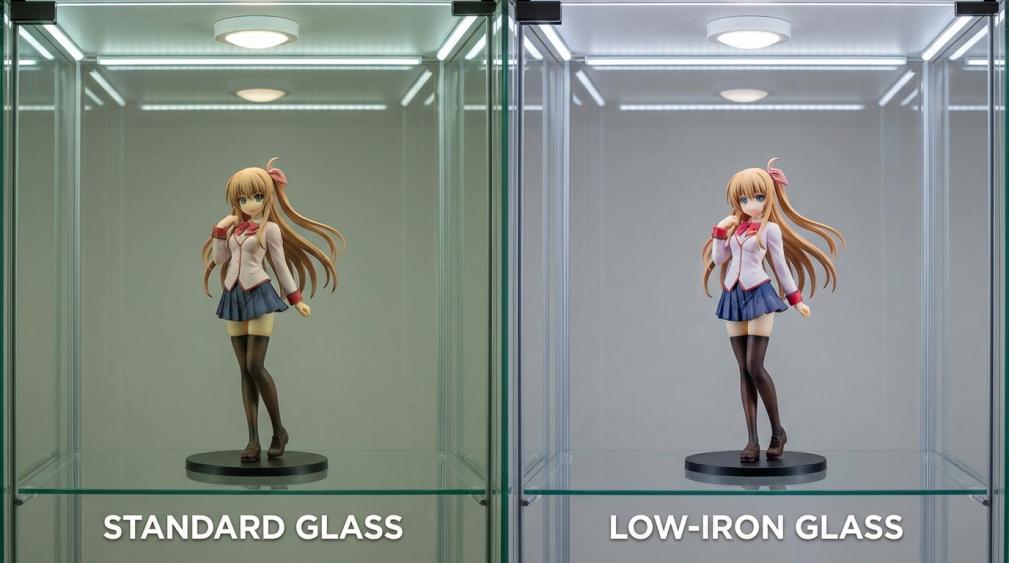
The inside still feels like the same room, but the plastic sheen drops away and paint detailing reads closer to how it looks in your hand.
It is often not necessary to specify low-iron glass for every component. A practical strategy is to use low-iron tempered glass for the main front and perhaps the sides, then rely on standard tempered glass for back panels or shelves that are less visually dominant. That way you get most of the clarity benefit where eyes spend their time without multiplying the cost on every surface.
Putting It Together: Common Cabinet Scenarios
Narrow Desktop or Small Wall Cabinet
A compact cabinet with shelves up to about 24 inches wide, holding mostly scale figures, prize figures, and a few small props, is exactly the sort of setup where 1/4-inch tempered glass shelving shines, given its balance of strength and cost. In that footprint, stainless or nickel pins or brackets every 20–24 inches keep deflection minimal, and a single shelf can comfortably carry several figures without visible bowing if weight is not piled directly in the center.
Doors and side panels on a small case typically feel great in 3/16-inch tempered glass, with 1/4-inch tempered used if the doors are tall or frameless, as DIY cabinet glass replacement guides suggest. This is also the scale of cabinet where standard clear tempered glass is usually fine visually, since the panels are thinner and lighting is close, unless you are extremely sensitive to color shifts.
Wide Bookcase or Detolf-Style Cabinet Retrofit
Once shelves stretch into the 28–36-inch range, especially if they carry both figures and heavy artbooks or Blu-rays, it is safer to treat them more like furniture tops than like light shelves. Fabricators who specialize in thicker architectural glass note that 3/8-inch and 1/2-inch tempered glass are common in structural partitions and high-stress interior fixtures specifically because they better resist bending over wider spans, a pattern echoed in thick glass vs thin glass discussions. For a typical wide anime display, 3/8-inch tempered glass is usually the sweet spot for main shelves, giving a noticeably more solid feel when you press down near the center compared with 1/4 inch.
If you upgrade a bookcase or Detolf-style cabinet with glass shelves, pairing 3/8-inch tempered shelving with 1/4-inch tempered doors and sides creates a nice visual hierarchy: the load-bearing planes look substantial, and the surrounding glass stays slim but sturdy, matching the recommendations in a typical glass thickness guide. In this tier, using low-iron tempered glass for the front panel makes a clear difference in how whites, metallics, and translucent effects read, which many collectors find worthwhile once LED strips and figure risers are already in the budget for glass display cases.
Tall Cabinet in a High-Traffic or Kid-Friendly Room
For tall freestanding cabinets near doorways, game areas, or kids’ spaces, you are balancing two priorities: keeping the shelves from sagging and making sure that if something fails, it fails safely. Display-cabinet articles on commercial use recommend laminated safety glass where children or high-value items are nearby, precisely because broken pieces stay stuck to the interlayer instead of scattering onto the floor glass display cabinets. Adapting that logic, a very tall anime cabinet with a large front door is a prime candidate for laminated tempered glass on the main viewing panel, even if the shelves themselves remain standard tempered.
In this scenario, 3/8-inch tempered shelves are a comfortable default, with 1/2-inch tempered glass or extra supports added if the spans are very wide or heavily loaded, in line with span and thickness patterns for stronger shelving described in typical glass shelf thickness references. Locks, soft-close hinges, and seriously anchored cabinet bodies matter just as much as thickness: a thick, laminated front panel is only as safe as the hardware that holds it upright when a visiting kid tugs on the handle to get a closer look at your grail.
FAQ
Is 1/4-inch glass thick enough for anime figure shelves?
For narrow shelves up to about 24 inches wide, carrying a reasonable number of PVC figures and small décor, 1/4-inch tempered glass is generally considered adequate, especially when supports or brackets are spaced around every 24 inches, as typical glass shelf thickness guidance suggests. Once shelves get wider, heavier, or packed with books and resin, moving to 3/8-inch tempered glass or adding additional supports is a safer and more comfortable choice.
Do you really need tempered glass, or is regular glass fine?
While ordinary annealed glass is cheaper, multiple woodworking and display references point out that tempered glass is about four to five times stronger and, crucially, breaks into small, blunt pieces instead of long, razor-like shards, as glass types for showcases resources explain. With the combined weight of figures and the risk of someone leaning on a shelf, tempered glass is the sensible default for both shelves and large doors in a modern figure cabinet, with laminated tempered glass reserved for particularly exposed or high-traffic installations where glass for display cases guidelines emphasize safety.
When is 1/2-inch glass worth it in a display cabinet?
Half-inch tempered glass is very heavy but significantly stronger and stiffer than thinner options, which is why glass companies list it for robust applications like high-end shelves and cabinets that support heavy decor or statuary, as a typical glass thickness guide would suggest. In anime collecting, 1/2-inch tempered shelves become worth the cost and weight when spans exceed roughly 36 inches, loads are consistently heavy, or you want minimal visible deflection under stacked books and large resin pieces. For most mid-sized cabinets, 3/8-inch tempered glass offers a better balance of performance and handling, mirroring the tradeoffs described in thick glass vs thin glass discussions.
A well-built glass cabinet should feel like a calm little universe where your characters can pose, duel, and brood in perfect safety, not like a boss fight with physics every time you add a new pre-order. Choose tempered glass by matching thickness to span and load, reserve low-iron and laminated options for the panels that matter most, and your shelves will quietly carry your fandom for years while the spotlight stays exactly where it belongs: on the figures themselves.