Understanding the Causes of Spontaneous Combustion in Collectible Figurines
Spontaneous combustion scares in anime figure rooms almost always start in nearby self-heating materials, not the PVC itself, and you can prevent most of them with a few deliberate storage and cleaning habits. This article explains what actually self-heats, where the risks hide in a collection room, and how to set up a safer display.
Imagine waking up at 3:00 AM to the smell of burnt plastic and seeing your Detolf glowing orange, grail scales warping in the heat before the smoke alarm even finishes shrieking. Stories that sound like cursed merch or haunted shelves often trace back to very ordinary things such as piles of oil-soaked rags or hot towels that quietly ignited and took whole collections with them. Investigators count thousands of these self-starting fires every year. The upside is that once you know what actually self-heats, how it behaves, and where it tends to hide in a collector's room, you can keep your figures safe while still cleaning, painting, and posing them the way you love.
What Spontaneous Combustion Really Is
Spontaneous combustion is a real phenomenon in which certain materials slowly heat themselves through internal reactions until they reach their ignition temperature and catch fire without a spark or open flame, as explained in discussions of spontaneous combustion. In plain language, the material acts as its own match: chemical or biological reactions release heat, that heat cannot escape, the temperature climbs, and at some point the fuel ignites in the presence of oxygen.
National fire data estimate about 14,070 fires each year are caused by spontaneous combustion, and safety agencies repeatedly point to the same repeat offenders: oily rags and towels, hot laundry stacked in piles, compost and mulch heaps, manure and hay in barns, and industrial materials such as coal and nitrate film. The common pattern is not magic or mystery but the trio of fuel, oxygen, and trapped heat working together inside a material that insulates itself.
Most plastic and resin anime figures are not on those classic self-heating lists. They will absolutely burn and melt if a fire starts nearby, but the thing that usually ignites first is something softer and more porous around them, such as cotton, paper, cardboard, or fabric that has soaked up oils, finishes, or food fats. So the real question for a collector is not "Will my PVC spontaneously ignite?" but "What in or around my display could quietly cook itself to ignition?"
Where Anime Collections Pick Up Spontaneous Combustion Risk
The Sneaky Culprit: Oily Rags, Paints, and Custom Work
One of the clearest real-world cases comes from an enthusiast who lost over $500,000 in classic cars when a plastic hamper of chemically and oil-soaked rags in his garage self-heated and burst into flames, a disaster traced back to a container of rags rather than the cars themselves. The same mechanism that wiped out his collection can threaten a shelf of rare garage kits if hobby rags are treated the same way.
Drying oils such as linseed oil are notorious for this behavior: as they cure, the oxidation reaction releases heat, and rags or paper towels saturated with these oils act like tiny insulation blankets that hold that heat inside. Woodworkers and finishers have long warned that piles of oil-soaked rags can ignite even at room temperature, a concern echoed in community discussions about spontaneous combustion. Many safety authorities note that certain vegetable and animal oils have this self-heating habit, while mineral oils and common solvents usually do not, which is why the risk is so closely associated with finishes, stains, and cooking or massage oils rather than motor oil.
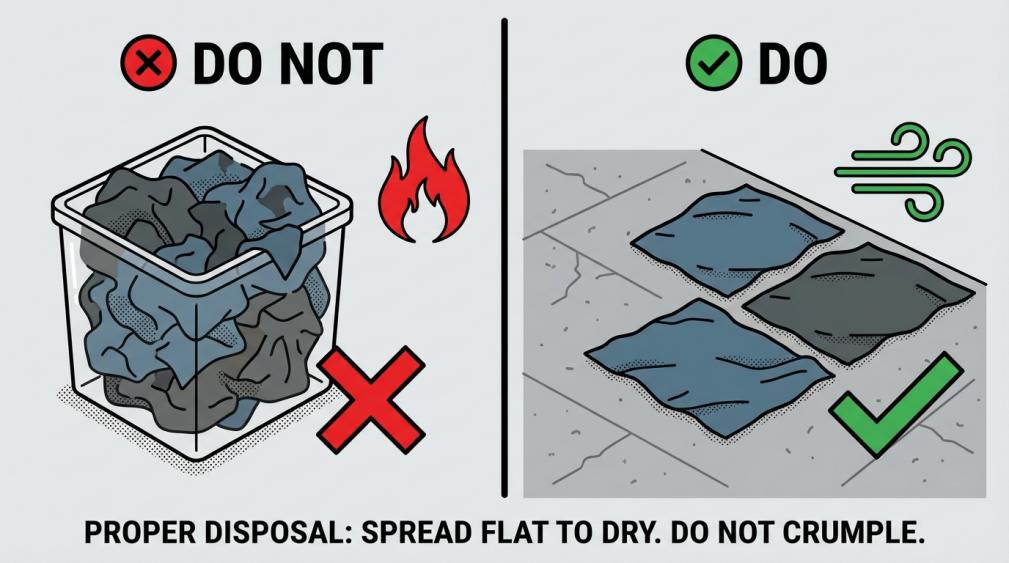
In a figure hobby context, this shows up when someone oils a wooden base, stains a display shelf, or custom-paints resin parts using oil-based products, then tosses used T-shirts, cotton swabs, masking tape, and paper towels into a bin under the desk. If those materials are saturated with drying oils or food oils, bunched together, and left where air can reach them but heat cannot easily escape, they can warm from the inside until the whole wad ignites. Fire-prevention guidance for both parks and homeowners recommends spreading used oily rags out flat on a noncombustible surface such as concrete until they are stiff and fully cured, or storing them in metal containers designed for this purpose rather than in plastic hampers or cardboard boxes, a practice highlighted in fire-prevention advice on spontaneous combustion.
Hot Laundry, Cosplay Fabric, and Fabric Backdrops
Another underappreciated source of spontaneous combustion is laundry. Studies of commercial laundries and business properties show that a large share of fires in laundry areas begin in piles of hot, freshly dried textiles that were contaminated with oils or chemicals and then stacked or stuffed into bins while still warm. Cotton or linen that held cooking oils, massage oils, or other flammable residues can survive a casual wash, then self-heat during or after drying and ignite when piled, especially when the core of the pile climbs well above typical room temperature.
Collectors often keep cosplay outfits, printed tapestries, plushies, and themed towels in the same room as their figures. After a convention or a photo shoot, it is easy to toss a body pillow cover that touched skin oils, a towel used with cosmetics, or a cosplay piece treated with styling products into a corner or closed hamper near the shelves. Fire-safety agencies warn that hot, bunched textiles contaminated with oils are exactly the kind of material that shows up in spontaneous ignition case files, and that adding a cooling cycle, spreading items out to cool completely, and laundering heavily soiled fabrics with plenty of detergent and hot water dramatically lowers the risk.
For a figure room, that translates into a simple habit: do not store piles of hot or oil-contaminated laundry near the display, and do not assume "just washed" means "cannot burn by itself." Give those fabrics space and time to cool and dry completely before they go into any closed container in the same room as your collection.
Dust, Paper, and Packaging Around Your Shelves
Spontaneous combustion still needs something to burn once ignition happens, and anime rooms are often filled with excellent fuel. Figure boxes, art books, cardboard shipping cartons, tissue paper, foam inserts, and poster tubes stack up quickly, especially for collectors who keep original packaging for resale value. While paper and cardboard are not classic self-heating materials on their own, they are perfect tinder once an oily rag, hot textile, or smoldering pile somewhere nearby kicks off a flame.
Guides on protecting collectibles from fire emphasize simple placement choices, such as keeping vulnerable items away from exterior walls and windows and lifting them several inches off the floor so they are less exposed to water and debris during firefighting, a strategy that translates directly to figures and is highlighted in advice on how to fire-protect collectibles. For figure boxes, it helps to store bulk cardboard and packing material in another room or at least in closed cabinets so that a small incipient fire in a work area does not instantly have a vertical wall of fuel climbing straight into your display.

How To Set Up a Fire-Safe Display for Anime Figures
Spontaneous combustion always comes back to the fire triangle: fuel, oxygen, and heat all living in the same place long enough for internal temperature to pass the ignition point. Fire-prevention resources on spontaneous combustion in everyday settings stress that you do not need special equipment to break that triangle, only good storage and disposal habits. For a collector, that means handling the materials that self-heat wisely while still enjoying the look and feel of the room.
Here is how some common choices stack up for a figure-heavy space.
Practice or choice | Pros for figure collectors | Fire risks and trade-offs |
|---|
Spreading oily rags flat on concrete until fully dry | Costs nothing, fits easily into painting and shelf-maintenance sessions, and prevents steep heat buildup inside balled-up fabric while the oil cures. | Requires discipline every time; if rags are only partially dry when discarded or moved into a pile, they can still self-heat later, so they must be left until stiff and cool. |
Storing used finishing or cleaning rags in a metal container | Keeps all risky materials in one clearly labeled spot and prevents them from sitting in plastic hampers or cardboard boxes that can melt or burn, echoing metal-storage recommendations in collector-focused fire advice. | A metal can with a loose or open lid still allows oxygen to feed oxidation; the container must be used as a temporary step before proper drying or disposal, not as permanent storage. |
Keeping figure boxes and bulk cardboard in a separate closet | Cuts down the amount of instant fuel in the display room, makes shelves feel cleaner, and still preserves resale value for mint-in-box collectors. | Boxes in a tightly packed closet can still be lost if a fire starts elsewhere in the home, and the closet itself should not become a storage spot for oily rags, hot laundry, or chemicals. |
Using a fire-resistant safe for documents and select small items | Protects certificates of authenticity, sketches, and rare paper inserts, and if the safe's fire rating keeps internal temperatures below about 450°F, sensitive paper items can survive a house fire, mirroring guidance in discussions of fire-resistant safes. | Safes are fire-resistant, not truly fireproof; extended exposure to extreme heat can still raise internal temperatures high enough to damage contents, and large PVC statues usually will not fit. |
Displaying figures in enclosed cabinets instead of open shelves | Adds physical protection from bumps and dust, helps keep figures away from casually placed fabrics and papers, and can slow direct flame spread for a short time. | Glass and acrylic do not stop heat; if a room flashes over, the contents will still melt or burn, and a cabinet placed directly above a risky workbench or hamper can be exposed early. |
The goal is not to turn your collection into a bunker, but to design it so that the materials most likely to self-heat live far from the things you care about most. A workbench in one corner with its own metal rag can and a bare concrete area for drying rags, a display area in another corner, and storage for spare boxes and shipping cartons in a separate room give spontaneous combustion fewer chances to touch what you love.
Daily Habits That Make a Big Difference
Routine figure care already tells you to avoid direct sunlight, high heat, and high humidity if you want to prevent warping and fading, advice echoed in guides on caring for an action figure collection. That same cool, dry, stable mindset is exactly what you want for fire safety.
When cleaning or rearranging shelves, it helps to think in two passes. The first pass is about obvious combustibles: move candles, lighters, incense, and any open flame sources away from figures entirely, and keep space heaters pointed away from shelves and soft items. The second pass is about hidden self-heaters: identify any spot where oil-contaminated fabrics, fresh-finished wood, or hot laundry might be stuffed, such as under-desk bins, corners behind Detolfs, or closets that share walls with displays, and treat those as high-alert zones where only fully cooled, clean materials are allowed.
Emergency planning matters too. Collecting experts who focus on fire preparedness for valuables recommend keeping an up-to-date photo or video inventory of your pieces, backing it up digitally, and deciding in advance which few items you would grab if you had minutes to evacuate, a strategy emphasized in guidance on how to fire-protect collectibles. That might be the limited-run 1/4 scale, the irreplaceable garage kit, or a set of signed shikishi; having that mental shortlist reduces panic and lets you focus on people and pets first if something ever does go wrong.
FAQ: Quick Answers for Nervous Collectors
Can a PVC anime figure spontaneously combust by itself?
Based on how safety agencies define it, the materials that truly self-heat into fire are things like oil-soaked rags, hot laundry, compost heaps, hay, coal, and certain reactive chemicals, not inert plastics such as PVC or ABS, as reflected in overviews of spontaneous combustion. Your figures are definitely combustible fuel once a fire starts, but they are usually victims, not the first spark. The real focus should be on textiles, oils, and piles of organic material in or near the display room.
Is it worth putting parts of a collection in a safe?
A fire-resistant safe can be a smart home for the paperwork and flat collectibles that give figures their provenance, because safe designs and ratings aim to keep internal temperatures below the point where paper ignites or chars, as explained in discussions of whether contents burn inside a safe. It will not magically protect an entire wall of shelves, but pairing a good safe for documents with smart storage and rag-handling habits around your workspace gives you a layered defense: fewer chances for a self-heating fire to start, and better odds of key pieces surviving if one ever does.
Closing Thoughts
Anime collections tell personal stories in plastic, paint, and cardboard, and nothing kills that story faster than a preventable fire that started in a forgotten rag pile or laundry bin. Once you treat those quiet self-heating materials with the same respect you reserve for a limited-run statue, you turn "mysterious room fire" from a scary legend into a mostly avoidable footnote and give your favorite characters a much better chance of watching over your room for years to come.