Effective Strategies to Protect Collectibles from Earthquake Damage
Protect your anime figures, statues, and grail collectibles from earthquakes by treating your room like a small museum: anchor large furniture, stabilize each piece, and plan for shaking, water, and paperwork before it happens.
You know that cold jolt in your stomach when you picture your Detolf or wall of prize scales rattling, glass doors swinging open, and a favorite figure face-planting off the top shelf. Studies after major quakes show that more than half of injuries come from falling furniture and objects, yet collectors who combine anchored cases with museum putty often ride out strong shaking with only a few scuffs instead of shattered grails. This guide walks through how to turn a display room into a quake-ready sanctuary so you protect both your collection and the people who share your space.
Why Quakes Wreck Collections (And Why Damage Is Mostly Preventable)
When the ground shakes, your collection does not just bounce up and down; it surges sideways. Safety groups such as the Earthquake Country Alliance describe how earthquakes fling contents around so violently that even big appliances and tall cabinets can slide, topple, and become projectiles. After the 1994 Northridge earthquake, a UCLA study cited by Oklahoma State University extension found that about 55% of injuries came from falling furniture or objects, while only about 1% came from actual building damage. For collectors, the real threat is usually not the walls collapsing; it is the bookcase with your prize figures coming down or a heavy statue launching off the top shelf.
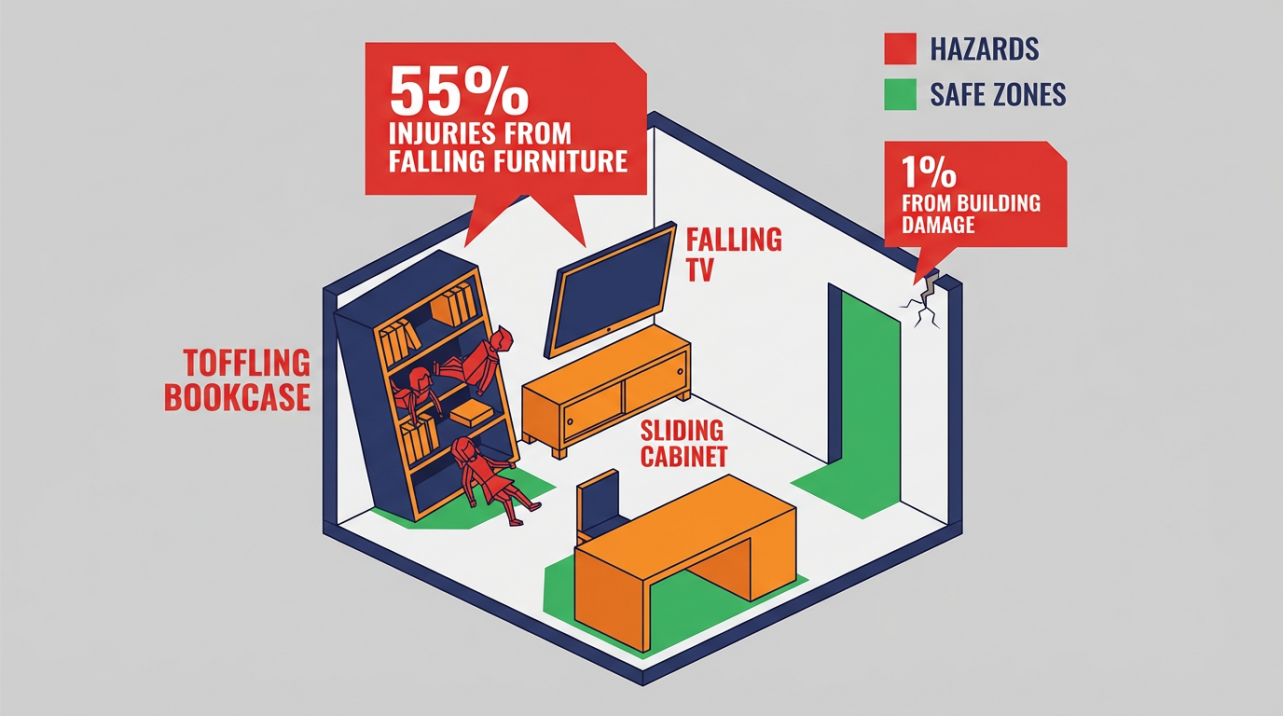
Art-world case studies show how heartbreaking this can be. Fine Art Conservation Laboratories describes a Santa Barbara quake where a painting’s screw pulled out, the frame crashed, and the falling artwork shattered the heads of valuable Chinese statues, with losses around $50,000. The structure stood, but unsecured pieces still took a huge hit. Mineral collectors on the Mindat forum report the flip side: during a magnitude 6 quake near Athens that collapsed more than 100 buildings, one collector lost only a few large cabinet specimens while hundreds of smaller pieces stayed put, largely because they were secured with simple white tack and stored in boxes.
The pattern is consistent across safety guidance from the Earthquake Country Alliance, CUSEC’s Secure Your Space program, and emergency-planning resources from universities and insurers: secure contents and you dramatically reduce injuries and loss. For anime collectors, that translates to anchoring shelves and display cases, stabilizing individual figures, and keeping hazards like water heaters and gas lines from turning a shaking event into a flood or fire that finishes off your collection.
Step One: Make Your Collectibles Room Quake-Safe
Hunt for Hazards Like a Dungeon Raid
Before touching a single figure, do what emergency planners call an earthquake hazard hunt. Earthquake safety programs in California and Oklahoma both recommend walking through each room and imagining it being shoved hard from the side. Whatever can fall, fly, or block a doorway becomes an enemy to defeat in this “raid.”
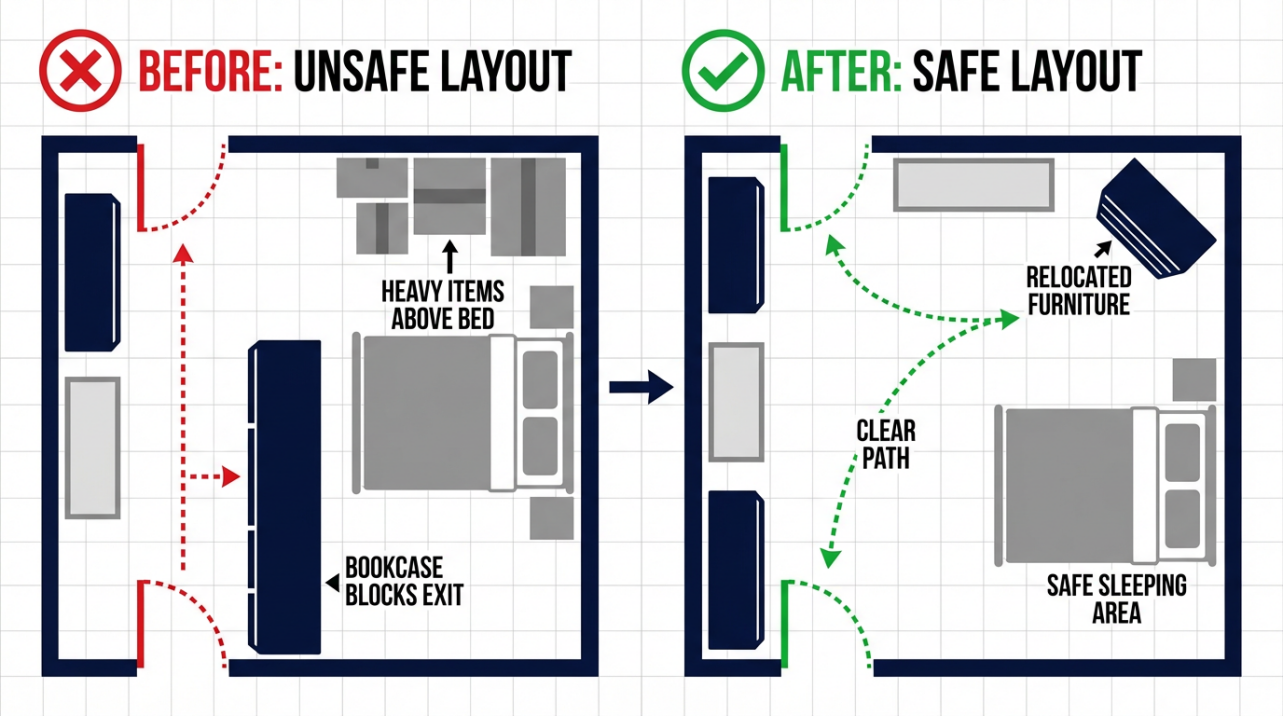
Start with where people sleep, game, and hang out. Interior designers who specialize in quake-prone regions warn that shelves or heavy decor above beds, cribs, and main seating are some of the most dangerous choices, even if they are firmly mounted. Keep the wall above your bed and main couch for soft, lightweight art prints or fabric wall hangings; save heavy framed posters, resin wall plaques, and glass-fronted displays for other walls.
Next, study your tall, narrow furniture: bookcases full of manga, skinny display towers, stacked storage cubes, and big floor mirrors. The Earthquake Country Alliance and safety groups like FLASH highlight that these top-heavy pieces are prime topple risks. Your goal is to move them away from beds and primary seating, avoid placing them right next to exits, and reshuffle so the heaviest loads sit on lower shelves. Even before you buy hardware, just relocating a fully loaded 6 ft bookcase so it cannot fall across your only bedroom door is a major win.
Anchor Shelves, Cases, and Big Gear
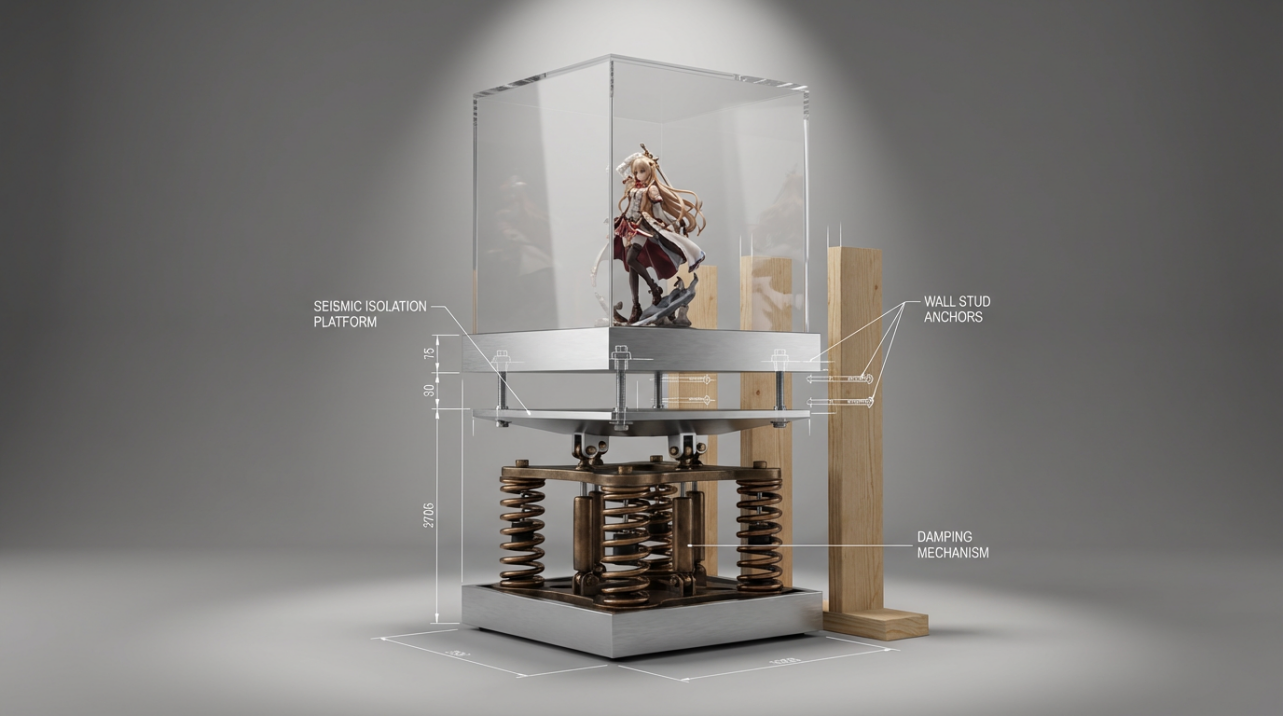
Once the layout is safer, it is time to bolt your boss-level furniture so it cannot go down. Multiple guides, including CUSEC, FLASH, and the Earthquake Country Alliance, recommend anchoring tall furniture and major appliances to wall studs, not just drywall. For collectors, that means using anti-tip kits or metal brackets to strap bookcases, Detolf-style glass cabinets, wide display cases, and entertainment centers into the framing behind the wall. Mineral collectors on Mindat stress the same point: even if every specimen is tacked down, an unanchored case can still topple and destroy everything.
Good practice includes connecting cabinets that sit side by side, then anchoring the combined unit to the wall so it behaves like one solid block. Heavy electronics such as big TVs and gaming PCs should sit on lower, anchored furniture and be restrained with flexible straps so they cannot slide. FLASH specifically calls out that large furniture should be kept away from exits so, if it somehow does overturn, it does not trap you.
For higher-value collectibles, you can borrow ideas from galleries. Pedestal and display specialists recommend enclosed acrylic cases on sturdy pedestals to protect art from dust, grabbing hands, and falling debris. Some pedestals are built with a hidden compartment for a sandbag to make the base heavier, and others have lockable sub-bases that can be screwed into the floor. Even if you do not modify your floors, adding weight low in the base and anchoring the pedestal to the wall makes it much less likely to topple, which is exactly what you want under a grail resin statue.
Think Like a Museum: Isolation Bases for True Grails
Museums in high-risk regions go further by using seismic isolation tables under display cases. THK describes low-profile isolation platforms, installed beneath rectangular cases, that allow the case to move gently while the ground jerks beneath it. Real-world deployments in Japanese museums such as the National Crafts Museum include reports that during the 2024 Noto earthquake, not a single piece inside seismically isolated cases was damaged, even while the surrounding area shook violently.
For a home collector, you may not buy the exact same hardware, but the principle is powerful: separate your most important case from raw floor motion. That could mean putting a small display cabinet containing your single most valuable figure on a commercial seismic isolation platform or on a wide, heavy pedestal designed for stability, then still anchoring that system to the wall. When you combine isolation with anchoring, you are approaching museum-level protection for that figure you stood in line for at a convention or imported on release day.
Lock Down Individual Figures and Small Collectibles
Museum Putty, Wax, and Tack: Tiny Materials, Huge Difference
After the big pieces are secured, zoom in to each figure. Across art conservation, mineral collecting, and emergency-preparedness communities, one tool keeps popping up: museum or earthquake putty and wax. Mineral collectors refer to products sold as museum putty, Quake Hold, mineral tack, and similar materials, which are soft, removable adhesives used between an object and its shelf or base. Pedestal and art-safety guides describe museum putty as a blended rubber material that professionals use to secure statues, pottery, antiques, and other fragile items to pedestals without harming finishes.
The method is simple. Roll the putty into several small beads, press them onto the underside of a figure’s base or a clear acrylic riser, place it in position, and apply gentle downward pressure. During shaking, that tackiness resists sliding and tipping, so the figure tends to wobble instead of walking off the edge. Mindat contributors report that during that magnitude 6 Athens quake, most thumbnails and small cabinet specimens stayed in place thanks to bits of tack, even when the building itself swayed and more than 100 structures in the city collapsed.
For heavier pieces, some collectors prefer museum wax, which sets a bit more firmly. The tradeoff is that wax and tack both need careful removal to avoid residue on delicate surfaces. Experienced collectors recommend peeling off most of the material by hand and, for stubborn bits, using gentle mechanical tools or dabbing with fresh tack so it sticks to itself rather than the object. Always test a tiny amount on an inconspicuous area of a base first, especially with unknown paints or finishes.
These materials are so effective that multiple earthquake safety guides from Marsh McLennan, Oklahoma State University, and the Earthquake Country Alliance explicitly recommend museum-strength putty or wax for breakable collectibles and decor. For an anime display, stabilizing even a dozen of your rarest or most top-heavy figures can easily be the difference between “everything survived” and “I just lost three preorders that will never be reprinted.”
Smarter Shelving Layout for Figures
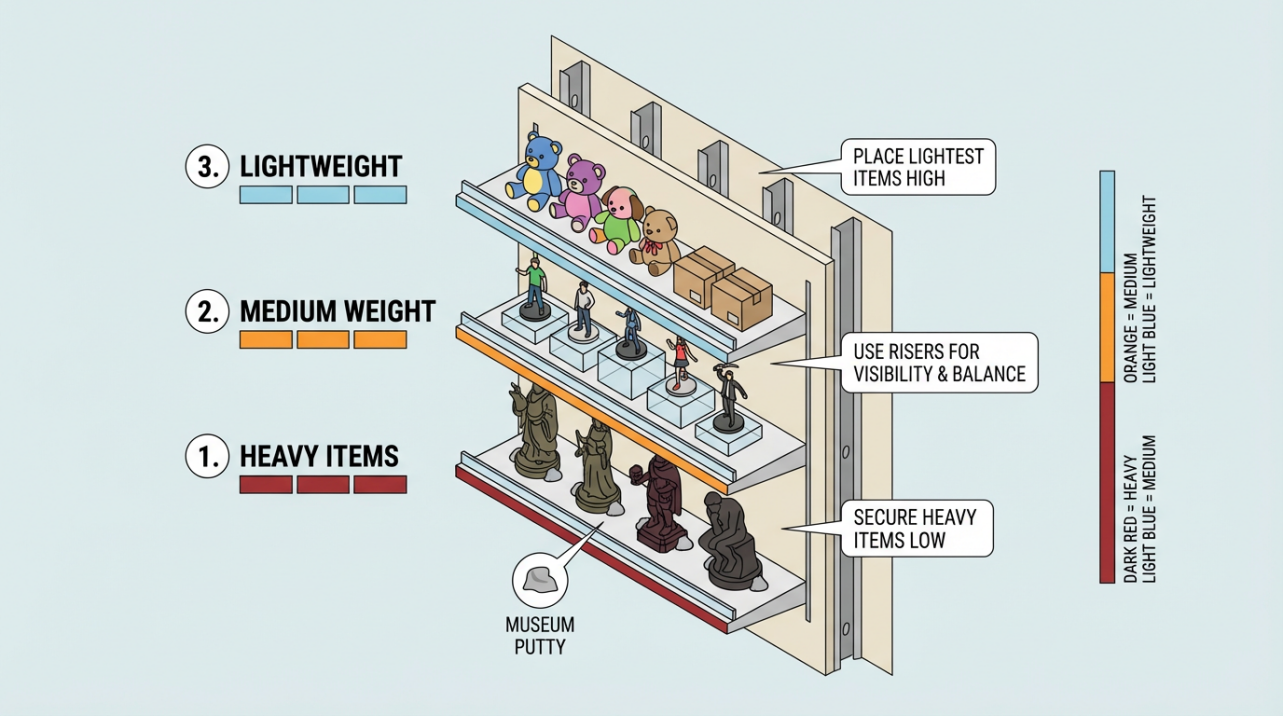
Shelf design matters almost as much as the material under each base. Mindat collectors endorse deep, sturdy shelves with subtle lips or low strips along the front edge to keep pieces from walking off during back-and-forth motion. Display cases where the glass doors come close to the front of the shelf add another barrier, preventing figures from sliding straight out. They also caution against glass shelves under heavy objects because glass can fail catastrophically when shaken.
Earthquake-focused home-design advice echoes this: heavy decor is risky when placed high, especially on top of cabinets. Upper shelves and the very top of cases are better reserved for lightweight plushes, small props, or empty display boxes. Designers recommend keeping heavy objects off the wall area right above beds and frequently used seating, and using that zone only for soft or light pieces.
One practical way to apply this in a figure room is to re-rank each shelf the way you might rank a party in a game. The heaviest and most fragile statues belong low, ideally on the bottom shelf or directly on an anchored cabinet. Your most valuable but not extremely heavy scales do best at mid-height, on deeper shelves with a lip and museum putty under their bases. The very top shelf is where you put lighter prize figures or prop displays you could emotionally survive losing. Combine that with anchored cases and you are much closer to the way museums, mineral collectors, and art conservators lay out their shelves in quake country.
Prepare for Water, Fire, and Paperwork Disasters Too
Keep Collectibles Away from Water, Gas, and Flying Glass
Earthquakes rarely travel alone; broken pipes, spilled chemicals, and gas leaks often show up afterward. Emergency guides collected by Save Your Stuff and university extension programs stress that even a couple of inches of water from damaged plumbing can destroy artworks, photos, and keepsakes. That is why they recommend keeping valuable memorabilia away from water heaters, supply lines, and areas prone to leaks or flooding.
In practical terms, do not build your main figure wall right next to a water heater closet or beneath a bathroom. If your collection currently lives in a spot like that, consider relocating at least the highest-value pieces to a safer wall. At the same time, safety organizations like FLASH and Marsh McLennan advise strapping water heaters to wall studs, using flexible gas connectors on appliances, and learning how to shut off gas at the main valve. These steps are primarily about life safety and fire prevention, but they also directly affect whether a post-quake leak or fire wipes out everything you own.
Hazardous liquids such as paints, solvents, and some cleaning products should live in sturdy cabinets in a garage or shed, not on a shelf next to your collection. Oklahoma State University’s preparedness guidance highlights that keeping flammables secured reduces both fire and poisoning risks after a quake. For a figure painter or kit builder, that means treating your thinner and paint supply like a mini lab: stable, closed storage away from your main display and away from anything that could shatter onto it.
Document, Insure, and Plan for Grab-and-Go
Physical protection is only half the story. If the worst happens, your ability to recover financially and emotionally depends on your records. Collecting specialists at QuirkShelv recommend detailed inventories that capture item names, conditions, acquisition dates, and photos, ideally inside an app or spreadsheet backed up to the cloud or an external drive. Emergency planners and art-care resources such as Save Your Stuff urge owners to photograph precious possessions and store copies of those images and key documents offsite, even in another state, to support insurance claims after a disaster.
For a serious anime collection, that might mean dedicating a weekend to taking clear photos of each shelf, close-ups of rare pieces, and snapshots of receipts or order histories. Store the files in at least two places, such as a home computer and a cloud backup. Update this log when you add a major grail or sell an old piece, the same way a museum updates its catalog.
Insurance adds another layer. Collectible-care resources and insurers like Chubb point out that earthquake coverage and contents coverage vary by state and by policy, and summary documents are not a substitute for working with a qualified insurance advisor. What you can do right now is read your current policy, confirm whether contents are covered in an earthquake, and ask an agent whether you need a separate earthquake endorsement or a dedicated collector policy. Thorough documentation and obvious loss-prevention steps, such as anchoring cases and using museum putty, may make it easier to get appropriate coverage and, in some cases, can even make you a more attractive risk to insurers.
Finally, tie all of this into a simple earthquake plan. The Earthquake Country Alliance’s preparedness framework and resources from Marsh McLennan recommend deciding in advance where you will shelter during shaking, where emergency supplies live, and who your out-of-state contact is. Art-protection guides suggest you also pre-decide which two or three items you would move if you had a brief, safe window after the main shock. That might be a single limited-run figure, a signed cel, or a binder of irreplaceable sketches. But safety experts and museum professionals agree on one rule: no collectible is worth your life. Protect people first, then pieces.
When to Bring in the Pros
If your collection has crossed into small-gallery territory, it may be time to borrow more from the museum playbook. The Getty Museum’s conservation teams, highlighted by the American Alliance of Museums, have spent decades developing seismic mountmaking techniques for artworks in a very active quake zone, and their Seismic Mountmaking Project has become a reference point for safe display methods. Seismic-engineering articles from organizations like IEEE and the University of Tokyo also emphasize that nonstructural contents need dedicated restraint systems, whether that is base isolation, damping, or upgraded anchorage.
For a high-end display room or a shop full of figures and statues, consulting a professional conservator, structural engineer, or risk advisor can be a smart move. Art conservators such as those at Fine Art Conservation Laboratories routinely advise on how to secure paintings and antiques, and the same thinking applies to framed anime art and high-value sculptures. A seismic engineer or qualified contractor can look at your building, flag vulnerabilities, and help you decide whether retrofits, isolation platforms, or other technology are worth the cost for the collection you have.
Even if you never call in outside help, remembering that museums, engineers, and serious collectors all converge on the same toolkit—anchored furniture, restrained objects, smart layout, and clear emergency plans—can keep you focused on what matters.
In the end, quake-proofing a figure room is not about wrapping everything in bubble wrap or living in fear; it is about building a space where you can enjoy your collection without that nagging “what if” every time the floor trembles. A few brackets in the studs, some beads of museum putty, a safer layout, and a good plan turn your anime sanctuary into something closer to a professional gallery, ready to ride out the next boss battle the earth throws your way.
References
- https://extension.okstate.edu/programs/emergency-and-disaster-preparedness/earthquakes/secure-items-in-your-home-to-ensure-earthquake-safety.html
- https://www.linfield.edu/assets/files/lps/brochures/Earthquakes.pdf
- https://www.mindat.org/mesg-367235.html
- https://community.aam-us.org/question/safe-display-of-art-collection-in-earthquake-zone
- https://www.earthquakecountry.org/library/ECA_Step_1_SecureYourSpace_Document-EN.pdf
- https://flash.org/how-to-secure-your-belongings-before-an-earthquake/
- https://publicsafety.ieee.org/topics/earthquake-resistant-building-technology/
- https://cusec.org/earthquake-safety-preparedness/before-an-earthquake/1-secure-your-space/
- https://hiddenhillscity.org/city-departments/emergency-preparedness/earthquake-preparedness/
- https://www.jjonesdesignco.com/blogs/earthquake-proof-your-home-a-designers-guide-to-safer-smarter-interiors