Beyond the Glass Case: The Future of AR Technology in Collectible Figurine Displays
If you have ever stared at a crowded Detolf cabinet or a wall of boxed anime figures and thought, “I wish I could see this entire collection breathe,” augmented reality is about to feel like cheating. As someone who has spent more nights than I want to admit rearranging shonen heroes, mecha, and waifu statues to get the “perfect” shelf, I can tell you: AR is the first technology that actually changes what a display can be, not just how bright it is.
Over the last few years, collectibles have exploded from a niche hobby into a global, mainstream market. High-profile auctions for pop culture pieces and the rise of digital collectibles show that fandom has become a serious cultural and financial force. At the same time, AR has quietly gone from quirky phone filter to everyday tool. Research cited by BrandXR suggests that roughly a third of US internet users are now regular AR users, and more than 90 percent of shoppers already use or are open to AR when they buy.
When you combine that with the fact that, according to a Toy Association survey, over half of adults freely admit they buy toys and games for themselves, the collision course is obvious. The future of figurine displays is not just glass cases and acrylic risers. It is AR-powered, persistent, sharable, and deeply interactive.
AR 101 For Figurine Fans
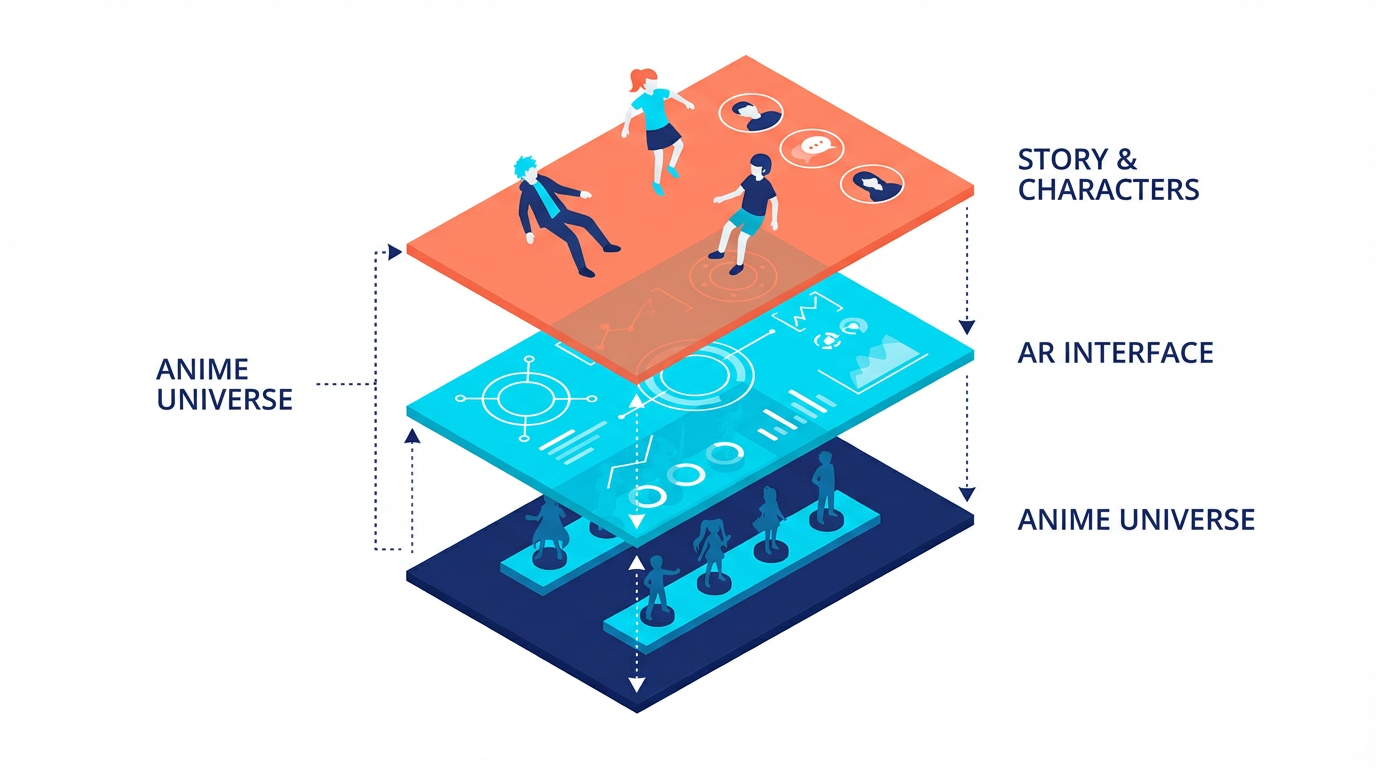
Before we talk about where displays are going, it helps to get precise about what AR actually is. Augmented reality overlays digital content onto the real world, using a camera and sensors to track your environment. As explained in historical overviews of AR from VeVe’s blog, the concept was first demonstrated in the late 1960s, but it only went mainstream once smartphones gained decent cameras, motion tracking, and dedicated AR frameworks like ARKit and ARCore.
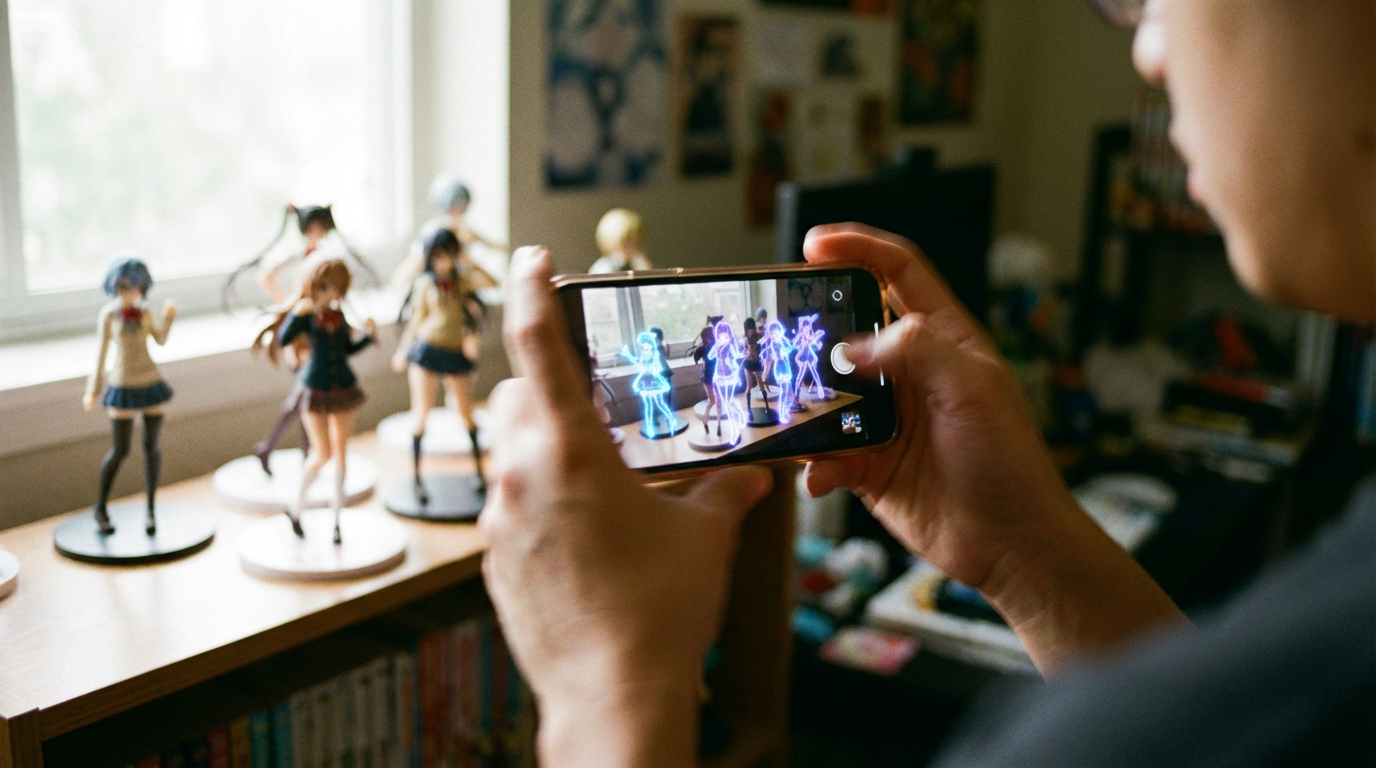
AR is different from virtual reality. VR replaces your surroundings entirely with a digital world. AR keeps your room, your shelves, your figures, and then pins 3D models, animations, or information on top in real time. That makes AR especially suited to collectors, because your physical collection still matters. AR just adds another layer of story on top of it.
Toy and tech analysts define AR toys as products where a physical object, like a figure or card, is paired with a phone or tablet app that overlays virtual characters, effects, or environments on the real item. Reports from companies such as 4Experience and SourcingGuides give examples like Lego Hidden Side sets that spawn ghost-hunting adventures when scanned, or the Merge Cube, which lets kids hold entire galaxies or anatomy lessons “in their hand.”
For collectibles, Invisible Toys describes AR collectibles as physical items, packaging, or promos that trigger animations, 3D characters, and mini-games when scanned. ANIM8TED goes further and treats AR as an integral layer of fandom: you scan a card, poster, or figurine, and unlock animations, behind-the-scenes clips, or even a unique “one-of-one” AR experience for that specific piece.
Once you see AR as a persistent digital skin that rides on top of your collection, it becomes clear why it is such a natural fit for figurine displays.
Why AR And Figurines Are Colliding Now
The momentum is coming from both sides of the equation: collectibles and AR.
On the collectible side, the market is booming. Strategic Market Research estimates the global action figures market at about $11.8 billion in 2024, on track to reach around $17.4 billion by 2030, with premium collectibles making up nearly half of that value and growing fastest. Those premium lines are exactly where anime statues, high-detail figures, and limited runs live.
At the same time, a VeVe analysis of the collectibles boom in 2025 points to massive mainstream demand driven by nostalgia and pop culture IP such as Star Wars and Marvel. When a rare Kobe–Jordan card sells for over $12 million and a screen-used Darth Vader lightsaber fetches a multimillion-dollar price, it sends a signal: pop culture artifacts compete with fine art now. Collectors are not just hunting toys; they are curating alternative assets, narrative objects, and status symbols.

Digital collectibles are riding the same wave. VeVe defines them as officially licensed, tradeable digital assets, often full 3D and AR-capable, that can be displayed and transacted in real time. Importantly, VeVe argues that AR turns digital items from “just selling JPEGs” into experiences: placing a rare comic virtually on your coffee table or a superhero at real-world scale next to your shelf.
On the AR side, the adoption story is equally strong. BrandXR’s retail research report suggests that by 2025, around 35 to 40 percent of US internet users are regular AR users, and over 90 percent of shoppers either use or are open to AR for purchases. Shopify has reported that products with 3D and AR media can see conversion rates almost double, and brands using AR visualization have seen return rates drop significantly. In furniture pilots, Macy’s found AR and VR tools could boost average basket size while also cutting returns.
For toy-specific AR, SourcingGuides cites TechAnnouncer data indicating that roughly 70 percent of children show higher engagement when using AR toys compared with traditional ones. On the business side, Market.us forecasts the broader smart toy category, which includes AR and AI-enabled products, could quintuple in value over a decade.
Put together, the story is simple. Collectibles are becoming mainstream, more expensive, and more “serious.” AR is becoming normal, expected, and clearly effective at driving engagement and sales. Fans, brands, and retailers are all incentivized to fuse these trends, and figurine displays are one of the most obvious places where that fusion shows up.
How AR Figurine Displays Look Today
If you have only experienced AR through goofy face filters, it might be surprising how many collectible-adjacent AR experiences already exist. They just have not all been aimed specifically at anime or statue collectors yet.
VeVe’s platform is a good example of the current digital-first approach. Collectors buy licensed 3D comics, figures, and artwork, then use an AR mode on their phone to place them in real space. You can drop a giant character in your living room, scale a rare comic to sit on your desk, or build virtual showrooms that friends can explore. It is collecting without physical boxes, yet it still leans heavily on the fantasy of display.
ANIM8TED, focused on sports, music, comics, and anime, links physical items like cards or posters to mobile-based AR experiences using QR codes. Scan the item and you might see a 3D animation, a highlight reel, or a personalized video message. Their “one-of-one” concept pairs a single physical object with a truly unique AR experience, essentially turning the AR layer itself into a scarce collectible. Crucially, ANIM8TED’s AR content can update over time as new events or achievements happen, giving each display piece an evolving story.
Traditional toy brands have experimented too. Invisible Toys documents how Hot Toys rolled out a 3D AR app that brings their sixth-scale figures to life on screen. Lucasfilm and Disney went big with the “Find the Force” AR scavenger hunt for Star Wars: The Last Jedi, where scanning special graphics in stores or online unlocked different characters each day. A campaign by Dutch Lady Vietnam even tied AR animations on milk packaging to physical Flying Farm toys, delivering more than forty thousand app downloads and a reported 19 percent lift in sales during launch.
For a more literal “display box of the future,” TrendHunter highlights Gatebox’s Digital Figure Box. It looks like a conventional figure box with a window, but the window is actually a screen. Inside, virtual figures are showcased as if they were physical toys. Some box designs are tied to specific characters, while others are generic so you can swap digital figures in and out. It is an early example of how virtual collectibles can be given a tangible presence on your shelf without any physical sculpt at all.
On the creative side, there are mobile tools like Figurine: Action Figure Maker, an iOS app that lets fans design detailed 3D figures, pose them, tweak outfits and colors, and then place them via AR in real-world environments. In essence, you can conjure custom, collectible-quality character models without ever touching resin, then “display” them on your desk through your phone.
Even retail experiments point toward the same future. Modelry’s coverage of 3D in toy retail explains how Walmart’s Online Toy Lab used fully interactive 3D and AR experiences to let kids virtually unbox toys, spin them around, and drop them straight into wish lists. Print toy catalogs by major retailers have added QR codes that launch AR content, so that flipping a paper page can jump into a digital demo on your cell phone.
All of these use cases share one common thread: they treat physical and digital presentation as a continuum, not a binary. Your figure might be resin, pixels, or both at once.
Current AR Display Models At A Glance
AR display model | What you see as a fan | Real-world examples today |
|---|
Digital-only AR figurines | Virtual figures placed on your shelves, floor, or desk through your phone | AR-enabled digital comics and figures on platforms such as VeVe |
AR-enhanced physical collectibles | Scan a figure, box, or card to unlock 3D animations, voices, or scenes | ANIM8TED QR collectibles, Hot Toys AR app, Star Wars “Find the Force,” AR toy campaigns documented by Invisible Toys |
Hybrid physical box with virtual figure | A real box or frame containing only a screen that shows animated “figures” | Gatebox Digital Figure Box |
AR product visualization for toys | Retail or catalog AR that lets you preview toys at home before buying | Walmart’s Online Toy Lab, AR-enabled toy catalogs reported by Modelry |
These patterns are the building blocks. The real excitement, especially for anime and statue collectors, is what happens as they become more integrated, more personalized, and more social.
The Next Wave: What AR Will Add To Figurine Displays
If the present is “scan this, see an animation,” the future is “my display is alive, persistent, and connected to my fandom everywhere.” Based on the trends in toys, collectibles, and retail, several directions feel especially likely.
First, AR displays will become narrative-driven. Instead of static character bios, scanning a figure could unlock evolving story arcs. ANIM8TED already updates AR content when new music videos or events happen, and VeVe’s team argues that AR is a perfect stage for moving from static items to animated, reactive experiences. Imagine your limited-edition anime statue unlocking an episodic side story that unfolds over months, visible only when you point your phone at that specific piece.
Second, game mechanics will creep onto the shelf. MyArtBroker’s piece on gamifying collecting for Gen Z lays out how challenges, rewards, points, and rankings turn collecting into a game. AR is an ideal delivery system for this. Your figures could have hidden achievements you unlock by scanning them in certain orders, combining characters from the same arc, or visiting specific convention events. Scanning every member of a team might unlock a special AR diorama pose or title for your profile in the companion app.
Third, AR will increasingly blend physical and digital collections rather than replacing one with the other. VeVe’s analysis of the 2025 collectibles boom emphasizes that physical and digital markets are converging, not competing. Collectors show off vintage Kenner figures alongside digital “first appearance” versions of the same characters. AR showrooms that can place both your physical collection and your digital figurines in a shared space, perhaps anchored by marker images on your real shelves, will feel natural in that context.
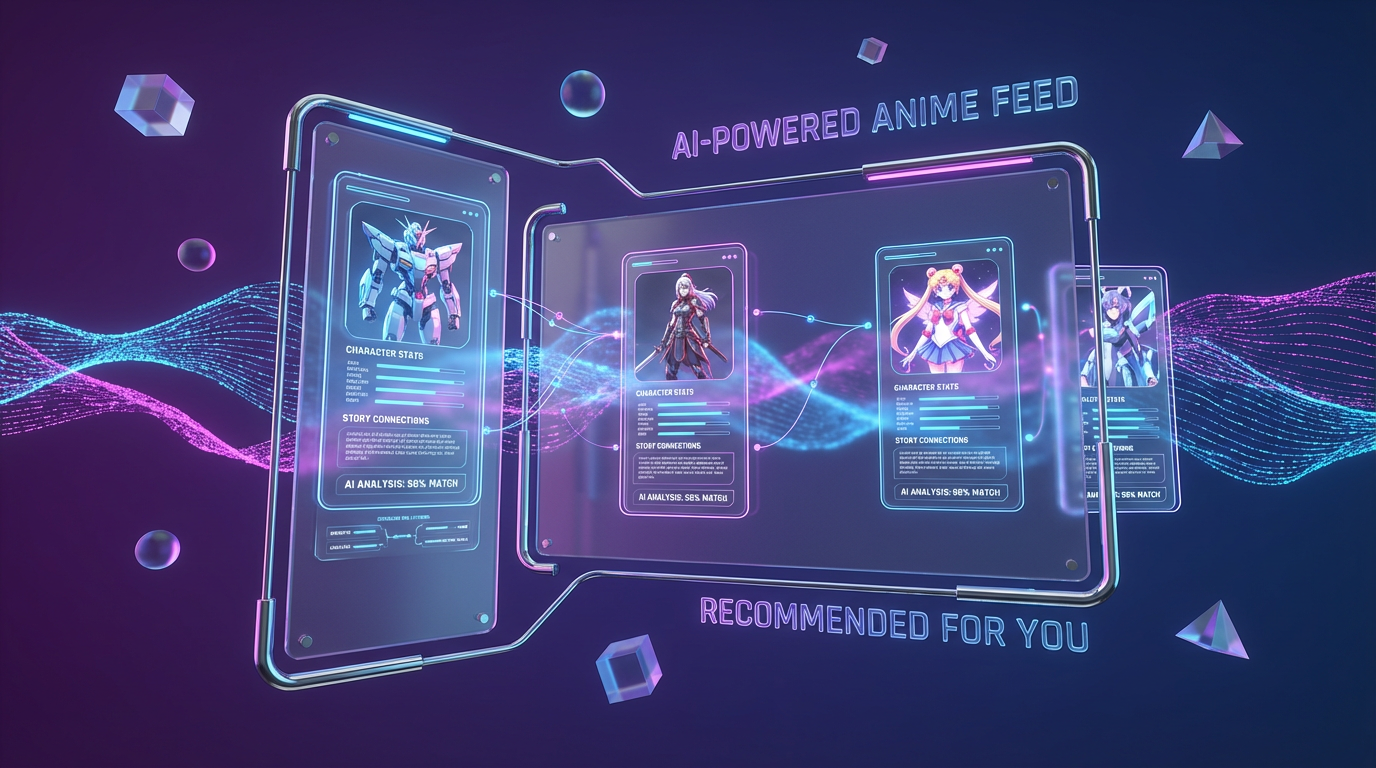
Fourth, AI plus AR will personalize those displays. SourcingGuides describes how AI toys learn from user behavior in real time, adjusting difficulty and content. The same logic applies to collectible displays. If an AR app notices you constantly zoom in on a certain character, it might surface more story content or recommended figures for that IP. B2B analyses already talk about AI analytics mining social and sales data to forecast toy trends and optimize inventory. For fans, that will show up as recommendation feeds inside AR showrooms and smarter, personalized display suggestions.
Finally, AR displays will be treated as serious “exhibition space,” not just fun extras. The Digital Renaissance of collectibles literature talks about AR and VR being used for immersive digital exhibitions. Instead of renting a gallery, an artist could drop an AR-only figure launch where the “gallery” is an experience tied to your living room or local park. Fractional ownership platforms and high-end collectors might stage AR-only previews of rare pieces for a global audience, with live pricing and bidding visible right in the scene.
For anime figure fans, that might mean international group tours of a creator’s AR-augmented home gallery, or time-limited AR installations where an entire wall of classic shonen heroes appears to erupt out of your apartment floor. The tools already exist in AR art, where projects documented by Iflexion show murals and sculptures that only reveal their “true” form when viewed through an app. The same artistic mindset applied to collectible figures could turn your shelves into a curated AR art show.

Pros And Cons For Collectors
As hypey as all of this sounds, AR displays are not pure upside. Like any new layer of tech, they come with tradeoffs that serious collectors should think about early.
On the plus side, AR solves a problem every figure fan eventually hits: space. Digital collectibles and AR galleries can extend your display beyond the limits of your walls. The VeVe team repeatedly notes how AR lets you scale pieces up or down and place them anywhere, turning even a small apartment into a sprawling virtual museum. For collectors who already feel the pain of shipping, storage, and insurance on large resin statues, the idea of “infinite virtual shelf space” is deeply appealing.
AR also turbocharges shareability. VeVe describes how AR showrooms and AR placements become content you can share globally, and ANIM8TED’s data-focused model gives brands detailed insight into what fans scan, rewatch, and engage with. In practice, that means your carefully composed shelf plus AR effects can become a mini performance: a short video, a social clip, or a live walkthrough for your community.
There is also an educational angle. Analyses of AR toys by 4Experience and SourcingGuides emphasize that AR significantly boosts engagement and can support learning, problem-solving, and even early STEM skills. While anime figures are not exactly textbooks, there is real potential in AR overlays that teach sculpting techniques, show behind-the-scenes footage of how a statue was made, or visualize story timelines and power charts in a way that rewards deeper fandom.
On the downside, AR adds platform risk. A physical figure from a boutique brand like House of Gog will sit on your shelf as long as you like. An AR experience lives on someone’s servers. If a platform shuts down, an app disappears, or licensing rights change, that AR layer can vanish overnight. That risk is already part of digital collectibles and NFTs, and it will inevitably cross over into AR figurine displays.
There are privacy and ethics concerns too. SourcingGuides warns that AI toys collecting data from children raise serious regulatory questions, and regulators in the US and EU are already debating new rules for AI-powered products. AR collectible apps may not be as intimate as a talking robot, but they still track what you scan, when you use them, and sometimes your location. As AR features become more personalized and “always on,” fans will need to pay attention to what data they are trading for those experiences.
Finally, there is the simple reality of friction. The best part of a physical display is that you can just walk up and enjoy it with your own eyes. Any AR layer that demands a specific app, a stable connection, and multiple taps can feel like work if it is not well designed. That is why the rise of browser-based WebAR, highlighted in BrandXR’s retail report, matters: launching AR from a quick scan without installing anything greatly reduces that friction. Fans will gravitate toward experiences that add magic, not chores.
Practical Tips: Getting Your Collection Ready For AR
You do not have to wait for some future metaverse drop to start blending AR into your figurine displays. There are practical steps you can take right now that will pay off as AR tools mature.
The first is surprisingly simple: treat your physical display like a film set. Guides from Flacrylic and HomeBaa on displaying action figures emphasize basics that happen to be perfect for AR too. Choose a room you actually use, away from direct sunlight that can fade paint, and control humidity to avoid warping plastics. Use LED lighting, which runs cooler and reduces heat-related damage while giving you flexible color temperatures. Group figures by series, theme, or timeline so each shelf tells a clear story. All of that makes your collection look better to the naked eye and makes it more legible when a camera is trying to understand the scene.
Posing and composition matter even more when you add AR. Those same sources suggest posing articulated figures dynamically with stands or supports, and using diorama elements like city backdrops or themed bases. In AR, that scene becomes a stage.
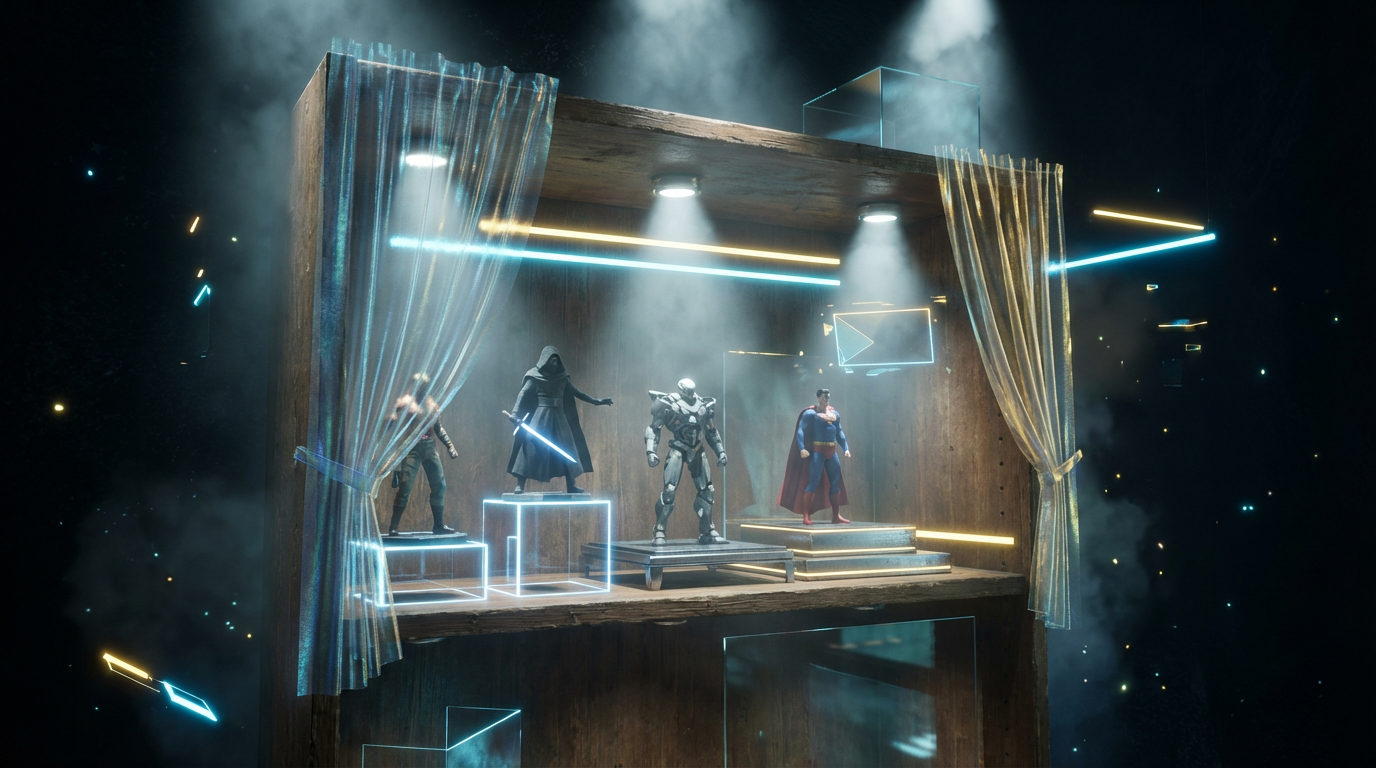
A hero mid-leap can be paired with AR debris effects; a quiet, contemplative character can get a subtle animated breeze or floating petals. Keeping shelves uncluttered and spacing figures so each has breathing room not only protects them from falls but also gives AR overlays somewhere to live.
If you want to go deeper, you can start capturing 3D models of your existing figures. An Instructables tutorial on animating action figures in AR walks through how to use Meshroom, an open-source photogrammetry tool, to turn a batch of photos into a textured 3D model. The process involves taking many photos from different angles, letting Meshroom generate a point cloud and then a detailed mesh, and exporting a standard OBJ file with textures. Once you have that, you can experiment with AR viewers that place your own figure model in space, separate from the physical piece.
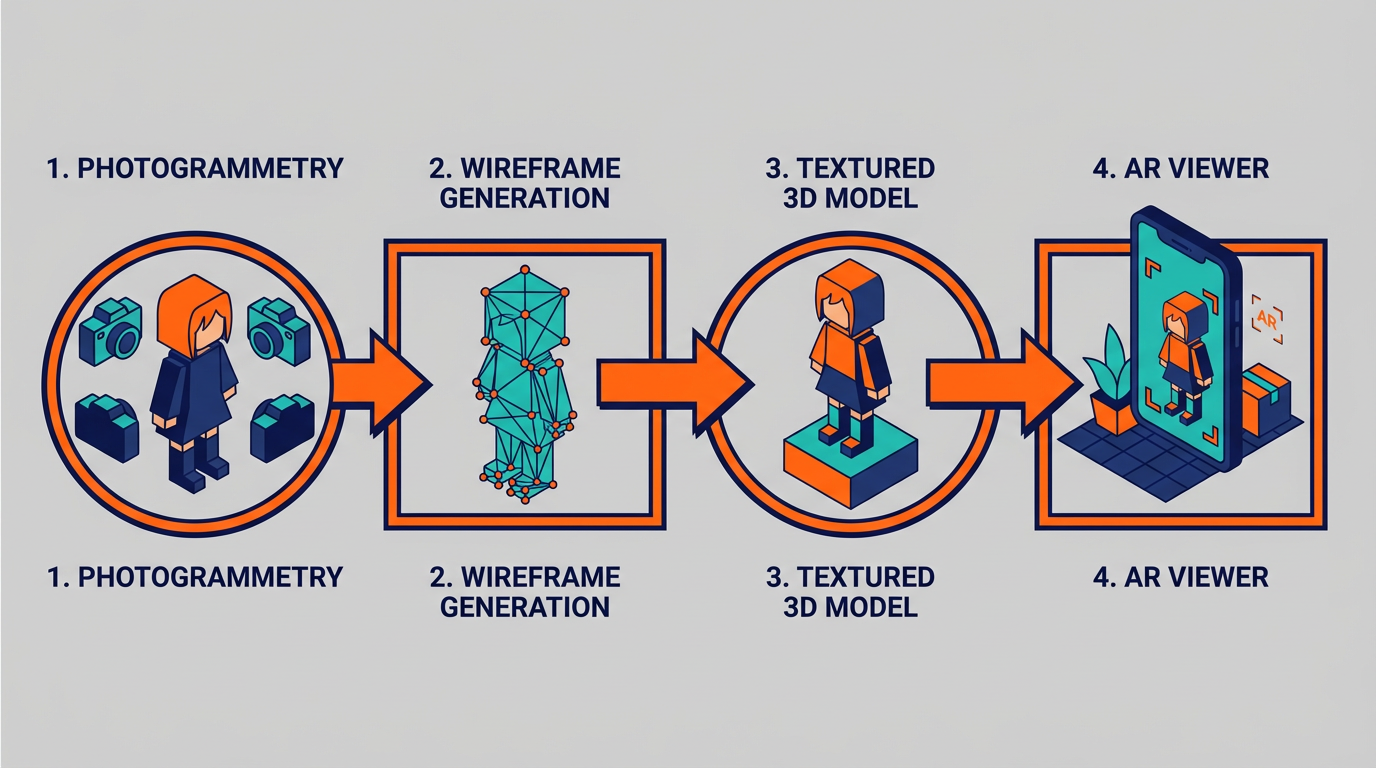
For rare or fragile statues, this can be a way to “take them on adventures” in AR without ever risking the original.
On the digital-first side, apps like Figurine: Action Figure Maker let you design original 3D characters, tweak poses and outfits, and drop them into your environment via AR. Think of these as concept pieces for your future shelves. You can audition how a new mecha or mage would look in a certain corner before you ever pre-order a physical statue, or design companion characters that only exist in AR alongside your grail pieces.
It is also worth doing a quick audit of the AR features your favorite brands already offer. Some statue makers and toy companies are quietly experimenting with AR manuals, AR-enhanced packaging that shows 3D models when scanned, or small digital bonuses. Insights from 4Experience and Invisible Toys suggest there is plenty of low-hanging fruit here: simple AR instructions, previews of future releases, and story snippets tied to existing lines. As a fan, using these features and giving feedback is one of the best ways to signal that AR layers are worth investing in.
How Brands And Artists Can Build The Next Generation Of Displays
From the business side, AR has already proven it is more than a gimmick. BrandXR’s research notes that retailers see measurable lifts in engagement, conversion rates, and reduced returns when they add 3D and AR content. Dutch Lady Vietnam’s campaign, documented by Invisible Toys, saw tens of thousands of AR app downloads and a near 20 percent sales bump. Toy retail analyses from Modelry show how immersive 3D and AR “toy labs” can turn online browsing into play, driving wish lists and purchases.
For brands living in the action figure and anime statue space, there are several obvious moves that are already supported by data.
The first is to treat AR as part of the product, not just the marketing. ANIM8TED’s model of collectibles that unlock updateable AR content is a strong template. Each figure, card, or box should be an anchor for a living digital experience: rotating 3D views, animations, voice lines, or story chapters that evolve over time. Because AR content can be updated, it can reflect new seasons, game patches, or artist commentary long after the physical product ships.
The second is to lean into personalization and customization. House of Gog’s perspective on boutique and indie brands highlights how collectors seek unique, artist-driven pieces in small runs. AR can extend that uniqueness. A limited-edition run might share the same sculpt but ship with individually customized AR scenes or messages. TrendHunter’s coverage of the Gatebox Digital Figure Box shows how even the “frame” for digital figures can be customized with different box designs. Combine that with the rise of 3D printing and digital sculpting, as described by House of Gog, and you have a pipeline where fans co-design elements of both the physical figure and its AR aura.
The third is to integrate AR into the full lifecycle: pre-launch, purchase, and post-display. Reports on AR in retail and toy development recommend using AR to preview products at scale, reduce the need for physical samples at trade shows, and replace static catalogs with AR-enhanced print. For figurines, that could mean AR previews at convention booths, WebAR demos on product pages, and AR “test fit” tools that show how a statue will look on your exact shelf. After the sale, AR storytelling keeps the piece relevant instead of letting the hype die once the box is opened.
Finally, brands should not ignore the data and ethics layer. ANIM8TED notes that every scan generates data about fan preferences and engagement patterns, which can be used to refine future releases. SourcingGuides emphasizes that regulators are watching AI- and data-heavy toys closely, calling for safeguards and transparency. Figurine-focused AR apps sit in the same ecosystem. Being clear about what is collected, offering opt-outs, and designing AR that adds joy without being manipulative will build trust with collectors who increasingly see themselves not just as customers but as stakeholders in a fandom economy.
Strategic AR Moves For Figurine Brands
Strategy pillar | AR move that makes sense for figures | Supporting signals from research |
|---|
Product value | Bundle figures with evolving AR scenes, animations, or story chapters | ANIM8TED’s updateable content model, VeVe’s argument that AR turns digital items into immersive experiences |
Discovery and pre-order | Use WebAR and 3D previews so fans can “place” statues on their shelves before buying | BrandXR and Shopify results showing higher conversion and lower returns with AR visualization |
Community and gamification | Add AR challenges, badges, and set-completion quests tied to scanning figures | MyArtBroker’s findings on gamified collecting for Gen Z, VeVe’s observations about the AR-powered “flex economy” |
Customization | Offer AR skins, unique AR messages, or co-created digital companions for limited physical runs | House of Gog’s emphasis on boutique, art-driven collectibles; TrendHunter’s coverage of customizable digital display boxes |
Data and ethics | Use AR analytics to improve lines while being transparent about data and respecting regulations | SourcingGuides’ discussion of AI toy regulations and data sensitivity |
FAQ: AR And Figurine Displays
Will AR displays replace physical figures?
All the evidence from VeVe and other collectible platforms points in the opposite direction. Physical and digital markets are converging, not competing. Collectors are just as excited about vintage toys and statues as they are about digital first-appearance versions of the same characters. AR is best seen as an extra narrative and social layer on top of physical collections, not a substitute.
Do I need expensive gear to start using AR with my collection?
Most of the experiences discussed in reports from BrandXR, Invisible Toys, and Modelry run on regular smartphones and tablets. That includes WebAR experiences launched from QR codes, toy lab style previews in a browser, and app-based AR like VeVe or ANIM8TED. You can go deeper later with photogrammetry or standalone AR headsets, but the entry point is already in your pocket.
How do I avoid privacy and data issues with AR collectible apps?
Analyses of AI and AR toys by SourcingGuides and others stress the importance of transparency and guardrails. As a collector, it is worth checking what data an AR app collects, whether it is aimed at children or adults, and how clearly it explains its practices. Choose apps from brands that treat AR as a long-term relationship with their community, not just a short-term data grab.
Closing Thoughts
As an anime figurine aficionado, I love the weight of a resin base and the way a well-painted face catches real light. AR will never replace that feeling, and it should not try. What it can do is let our shelves break their physical limits, turn static poses into living scenes, and extend our collections into a shared, endlessly remixable fandom space. The future of displays is not just what sits behind the glass case, but everything your phone can reveal around it.
References
- https://autogpt.net/the-digital-renaissance-of-collectibles/
- https://www.brandxr.io/2025-augmented-reality-in-retail-e-commerce-research-report
- https://4experience.co/an-introduction-to-augmented-reality-toys/
- https://flacrylic.com/how-to-display-action-figures/
- https://www.iflexion.com/blog/augmented-reality-art
- https://www.instructables.com/Animating-Action-Figures-in-Augmented-Reality/
- https://invisible.toys/augmented-reality-collectibles-business/
- https://www.modelry.ai/blog/how-to-sell-toys-with-3d-and-ar
- https://www.strategicmarketresearch.com/market-report/action-figures-market
- https://www.trendhunter.com/trends/digital-figure-box