How to Safely Remove Dust from Figurines Without Damage
Learn a collector-tested routine to remove dust from PVC, resin, and mixed-material figurines without scratching paint, warping parts, or hurting long-term value.
Your favorite shelf of anime heroes looks amazing from across the room, but up close you see a fuzzy layer of dust in every hair spike and cape fold, and suddenly they look tired instead of epic. One study on toy collectibles found that figures with clean, well-preserved surfaces can sell for significantly more than similar pieces that were left grimy, which matches what many collectors see when a “just dusty” figure gets lowballed. The good news is that with a simple, low-risk routine you can lift that dust, protect paint and plastic, and keep your figures ready for both daily admiration and future resale if you ever decide to part with them.
Why Dust Is a Bigger Deal Than It Looks
Dust feels harmless, but collectible-care guides treat it as enemy number one. Museum and antique specialists point out that dust is mildly abrasive because every time you drag it across a surface, it can put microscopic scratches into finishes and paints. Over time, this dulls gloss, softens sharp paint edges, and can turn bright whites into a tired gray. On figures, that shows up fastest on faces, armor plates, and glossy hair.
There is also the “dust plus time” problem. Cleaning guides for antiques and delicate items note that dust attracts moisture and airborne pollutants, which slowly turn into sticky grime or even mold when humidity is high. For PVC and ABS figures, that can mean tacky surfaces and discolored patches; for fabric capes or bases with flocking, it can mean stains that never fully come out. That is exactly the kind of visible neglect that collectible market guides warn will downgrade a figure’s condition rating.
Value-wise, the numbers are sobering. A toy-collectible guide cited by Gifting Online describes a study where well-preserved figures achieved up to roughly 50% higher resale value than comparable but visibly neglected pieces. That difference is the price of “I’ll clean it later” dust. If you picture selling just 10 mid-range figures someday, that gap can add up to the cost of a high-end statue or grail-level exclusive.
Set Up a Safe, Low-Risk Cleaning Routine
Before you touch a figure, treat your shelf like a tiny conservation lab. Multiple collectible and museum sources agree on the same basics: work with clean, dry hands or cotton gloves, remove rings and watches that could nick paint, and never grab pieces by fragile elements like hair strands, capes, or weapon tips. Instead, support the solid core of the figure, such as the torso or a sturdy base.
It helps to set up a simple cleaning zone. A clean towel on a table gives you a soft landing if something slips. Good light lets you see dust in folds and between joints so you do not over-scrub the same area out of frustration. If you plan to work on more than one piece, keep another towel handy to set finished figures away from loose dust you knock off others.
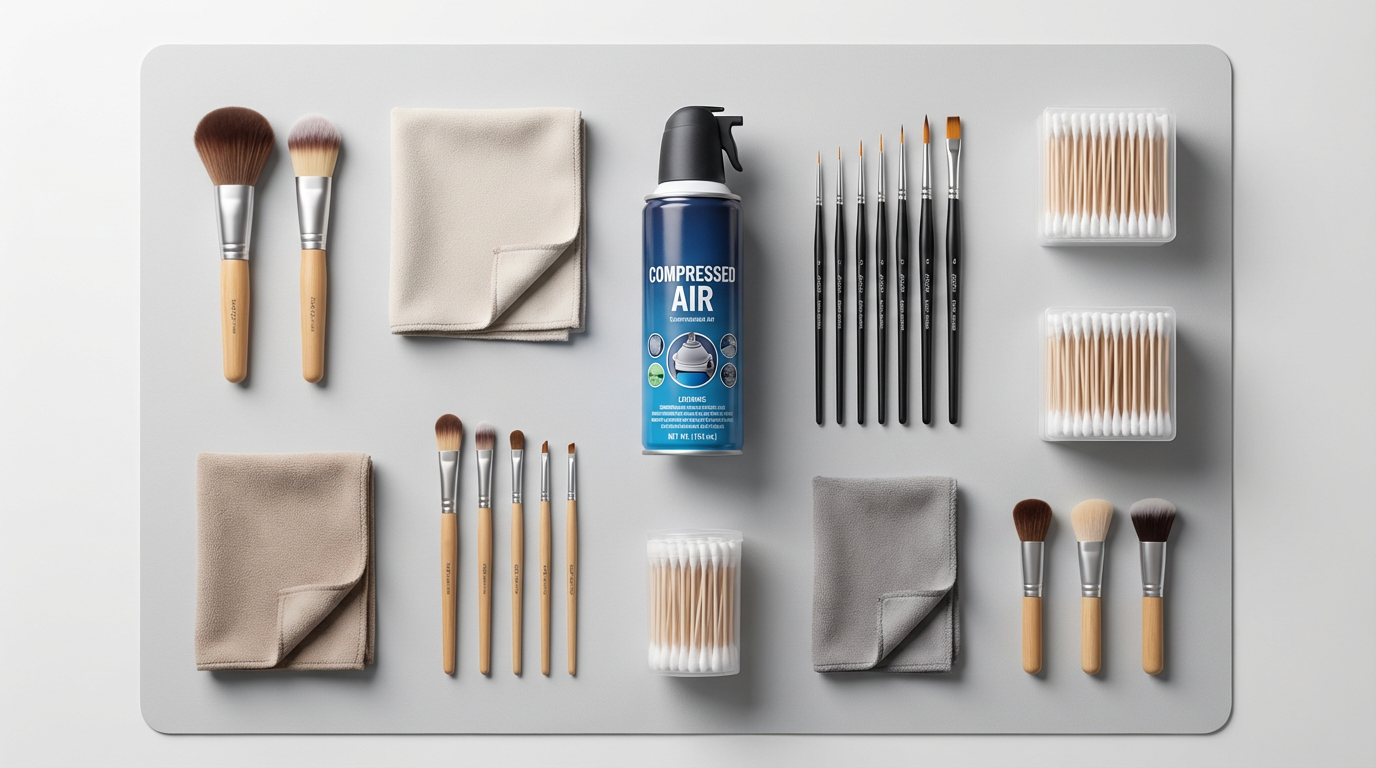
Choosing the right tools is the easiest way to make your routine safe. Action figure care guides consistently recommend soft-bristle makeup brushes, clean artist brushes, and microfiber cloths. Museum and antique-care articles say the same thing for wood, metals, and textiles: soft fibers only, never kitchen scrubbers or paper towels. Canned air shows up in toy-cleaning guides as a great helper for tight areas, as long as you use short bursts and keep the nozzle a bit away from the figure so you do not blast decals or small parts.
Here is a quick comparison you can use to build a kit from things you probably already have.
Tool | Best for | Why it works for figures |
|---|
Soft makeup brush | Hair spikes, folds, armor details | Fine, flexible bristles lift dust without scratching paint. |
Small artist brush | Tiny crevices, facial features | Lets you “paint” dust out of tight sculpt lines. |
Microfiber cloth | Smooth armor, bases, acrylic windows | Grabs dust instead of pushing it around and leaves minimal lint. |
Canned air (short) | Deep joints, between accessories | Blows loose dust out before you brush or wipe. |
Soft toothbrush | Sturdy joints and textured areas only | Adds a bit of scrubbing power when used gently with moisture. |
If you have 20 figures and you plan on about 30 seconds of careful dusting per figure, you are looking at roughly 10 minutes for a full round. That is far safer than rushing once a year with aggressive scrubbing because the dust got out of control.
Dry Dusting: The Everyday, Low-Risk Method
Most of the time, dust should leave your figures without ever seeing water. Both antique-furniture conservators and toy-cleaning guides recommend starting with dry tools because they are the least risky way to get abrasives off the surface.
For everyday PVC and ABS figures, work from top to bottom so you are not brushing dust back onto places you just cleaned. Use a soft makeup brush and barely touch the surface; let the bristles flick dust away instead of pressing them into the paint. Short, gentle strokes across hair, folds of clothing, and armor segments keep you in control. On smoother areas like thighs or torsos, a microfiber cloth held slightly taut can wipe dust away in a few passes.
When figures have complex sculpts or lots of swap-out parts, the “small tools only” rule matters even more. Collectible guides aimed at miniatures and articulated figures stress focusing on joints and crevices while avoiding brute force. It is tempting to dig in with a harder brush when dust clings to a tiny area, but the safer move is to loosen it first with canned air, then come back with a soft brush from a different angle.
As a real-world example, imagine a 1/8-scale figure of a character in a frilly dress with twin tails and a translucent base. If you try to clean everything with one big cloth, you will miss dust tucked behind the hair and grind dust along the clear base. Instead, using canned air and a small brush for the hair and dress, then a microfiber cloth for the base, lets you clear dust efficiently while keeping risk low.
When Water Is (and Is Not) Safe on Figurines
Eventually, you hit dust that has mixed with skin oils or humidity and turned into a faint film. That is when many collectors instinctively head straight for the sink, but the safest guides all say the same thing: use moisture sparingly, and never soak anything delicate.
Cleaning advice for action figures and delicate items lines up on a simple recipe. Use lukewarm water, add just a drop or two of mild dish soap, and mix it gently. Dip a soft cloth or cotton pad, then wring it out so it is damp, not dripping. On a figure, spot-clean small areas, working in gentle circles and avoiding heavy pressure on painted faces, decals, or metallic finishes. After a few passes, follow up with another cloth dampened in plain water to remove soap residue, then pat the area dry with a soft towel.
Toy-care guides aimed at sturdier modern figures describe a more intensive option: removing accessories or limbs that are designed to detach and giving those separate pieces a short soak in a half-and-half mix of white vinegar and water to break down grime before rinsing. Even there, they stress testing on a hidden area first and sticking to modern plastics, not vintage or fragile pieces.
The line between safe enough and too risky usually depends on age and construction. Articles on antique care and cleaning vintage toys repeatedly warn against soaking older or delicately constructed pieces, especially anything with glued seams, stickers, or fabric. For those, the safer move is to treat moisture like a precision tool: a barely damp cotton swab or cloth for one tiny dirty spot at a time, with immediate drying afterward.
To make this concrete, picture two figures side by side: a modern, mass-produced PVC hero with sturdy joints, and a vintage statue with glued-on gems and a fabric cape. The modern piece can handle a quick, controlled wipe with a soapy cloth on its limbs, followed by pat-drying and air-drying away from sunlight. The vintage statue is better served by dry dusting, then a single damp cotton swab rolled gently over a stubborn speck on the base, nothing more.
Deep Cleaning Joints and Textured Surfaces Without Damage
Joints, belts, and textured armor are where dust likes to dig in, and they are also where over-enthusiastic scrubbing does the most damage. Collectible guides recommend soft toothbrushes and gentle circular motions for those zones, especially on articulated action figures. The key is to use the brush more like a tickling tool than a scrubber and to introduce just enough moisture to lift grime, not so much that it seeps into joints.
For tougher buildup in joints, action figure cleaning articles suggest disassembling only parts that are clearly designed to be removed, like hands, swappable heads, or pegged accessories. Each piece should be pre-dusted with a soft brush before any damp cleaning. That order matters; otherwise, you grind dry grit into the surface while it is wet and more vulnerable.
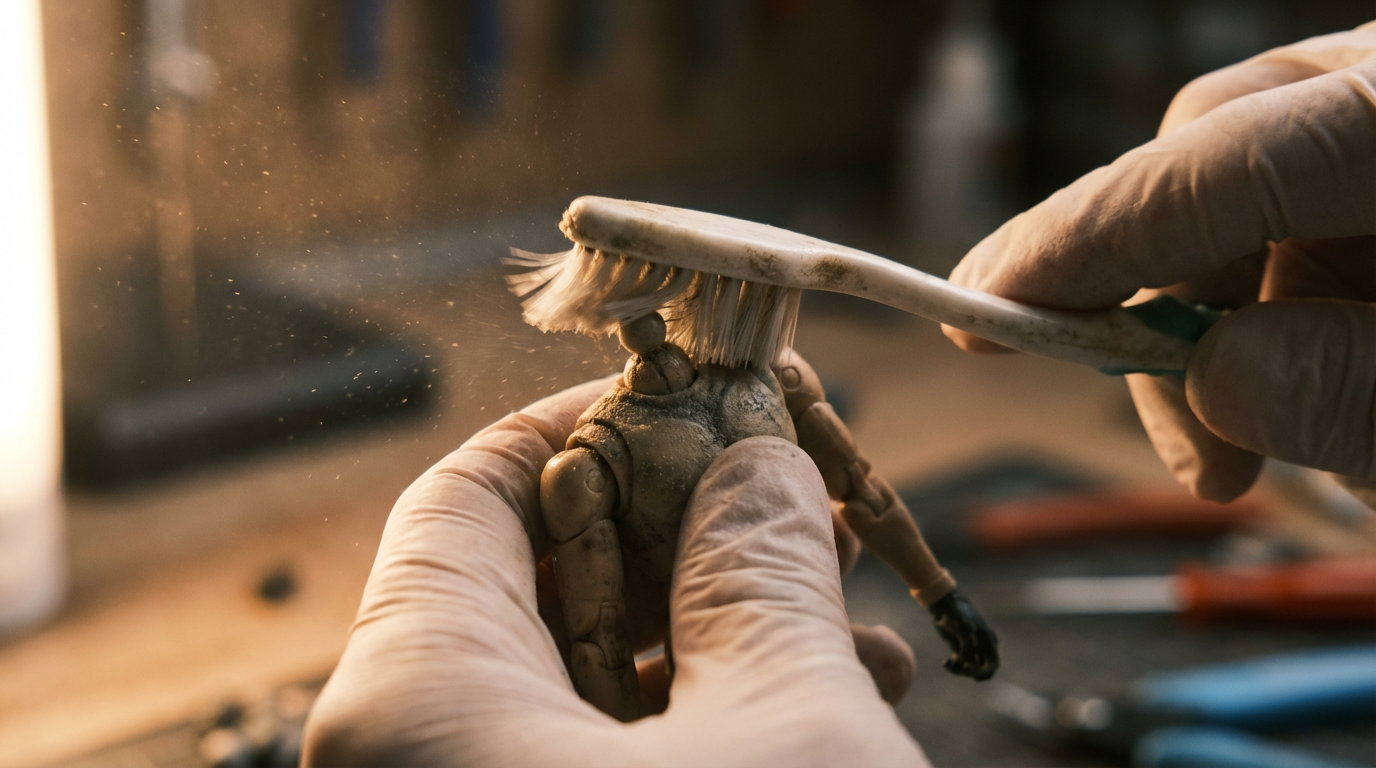
You can think of it like cleaning a keyboard: if you blow crumbs out and brush before wiping, the cloth glides; if you wipe first, you smear crumbs everywhere and risk scratching. On a figure with 30 points of articulation, spending even 10 extra seconds brushing each joint before touching water could mean the difference between clean creases and a halo of micro-scratches around every hinge a few years from now.
Special Cases: Vintage, Mixed Materials, and High-Value Pieces
Not all figurines should be cleaned the same way. Articles on antiques and vintage collectibles hammer home one big idea: patina and gentle aging can be part of an item’s value, and over-cleaning can easily do more harm than dust itself. That is why coin collectors often hesitate to touch tarnish at all, and why antique metal guides caution that stripping patina from bronze or copper can slash desirability, sometimes by more than half.
Apply that thinking to mixed-material figures. Metal bases, chains, or ornaments on a statue might be made from brass or bronze with a deliberate aged finish. Historical brass-preservation guides stress avoiding aggressive polishes and harsh chemical dips because they remove not just dirt but original surface layers. For figure displays, it is usually safest to stick to dry dusting with a soft cloth on metal parts and leave deeper polishing to a specialist if the piece is truly valuable.
Fabric capes, skirts, and ribbons fall under the textile rules that delicate-item cleaning guides talk about. They recommend gentle hand care, minimal moisture, and spot cleaning only. For a fabric cape on a figure, that translates into light dusting with a very soft brush, always moving in one direction, and perhaps a tiny dab of diluted mild detergent on a cloth for a specific stain, with immediate blotting and drying. No soaking the entire cape and definitely no wringing, which can warp or pull stitches.
Paper parts, like scrolls, nameplates, or attached tags, are even more sensitive. Guides for cleaning paper collectibles and vintage comics focus on completely dry methods: soft natural-bristle brushes, gentle wiping with dry cotton pads, and specialty erasers for small white areas. On a figure, that means you dust paper accessories delicately and steer all liquids away from them. If a paper tag is badly soiled on a rare piece, the safest course is often to leave it as-is or talk to a paper conservator rather than experimenting.
For high-end resin statues with complex finishes, it can help to think like an antique dealer. Articles on antique furniture and metalwork suggest that when something is both valuable and delicate, the rule of thumb is “less is more” and professional help is worth considering. If you are nervous about a piece, do the bare minimum: dry dusting only, a controlled environment, and no attempts at stain removal without expert advice.

Keep Them Dust-Free Longer: Display, Drying, and Storage
The safest way to handle dust is to keep as much of it off your figures as possible. Collectible and antique-care guides are surprisingly unified on this point: enclosed storage and stable environments do most of the heavy lifting.
Closed display cases or shelves with doors reduce dust drastically compared with open bookcases. Articles on preserving furniture and antiques also warn against direct sunlight, strong artificial light, and wild humidity swings, all of which can fade surfaces and weaken finishes. For figurines, that means keeping cases away from sunny windows and heat vents and aiming for a stable, comfortable room environment rather than a damp basement or hot attic.
After any cleaning that involves moisture, drying is the next big risk point. Guides for action figures, textiles, and delicate items all emphasize air-drying on a clean towel in a well-ventilated space, out of direct sun and away from heaters. The reason is simple: concentrated heat can warp plastics and resins, and direct sun can fade paints and fabrics. If you ever felt a warped sword or slightly bent hair strand on a figure left in a sunny window, you already know how little heat it takes.
Storage matters just as much as display. Toy-collector articles advise cleaning figures thoroughly before putting them into containers because dust trapped with a bit of moisture in a sealed bin is a recipe for sticky films and mold. Antique-care guides recommend breathable, acid-free materials over plastic bags for delicate items, but for sturdy modern figures, plastic storage bins can be acceptable if everything is fully dry and you avoid damp environments. Adding a simple schedule, like one light dusting session every time you reorganize a shelf or change a seasonal display, keeps dust from ever becoming a hardened layer.
If you have 100 figures and dust only when every shelf looks like a gray cloud, you will face epic cleaning marathons and be tempted to cut corners with riskier methods. If instead you dust one shelf at a time whenever you can see dust, following the museum-style advice to clean only when necessary, you can stay ahead of buildup in a calm, controlled way.
FAQ: Common Collector Questions About Dust and Figurine Safety
How often should you dust figurines?
Preservation guides for furniture and collectibles suggest dusting only when dust is actually visible to avoid needless handling and abrasion. For most figure displays in a typical apartment, that often works out to every few weeks for open shelves and less often for closed cases. The moment you see a faint haze on hair or bases, a quick dry dusting session with safe tools is better than waiting until dust has settled into a real crust.
Is canned air safe for anime figures?
Toy-cleaning guides do recommend canned air for tight crevices, but with a few caveats. Use short bursts rather than holding the trigger down, keep the nozzle a bit away from the figure so you do not blast off small parts, and angle the air so dust blows out of joints, not deeper into them. Never use it as your only tool; follow up with a soft brush or microfiber cloth so the loosened dust actually leaves the surface.
When should you consider professional help instead of DIY?
Antique and conservation sources all agree that the higher the value and the more complex the materials, the more you should lean toward professional advice. That includes rare vintage figures, statues with fragile mixed materials like metals and fabrics, and any piece with visible damage such as cracks, mold, or flaking paint. In those cases, it is safer to limit yourself to the gentlest dry dusting and consult a restorer than to risk a quick fix that permanently lowers value.
A good dusting routine does not just keep your display looking sharp; it quietly protects paint, plastic, and long-term value one gentle brush stroke at a time. Treat your figurines with the same respect museums give their treasures, and your favorite characters will keep looking convention-fresh every time you walk past the shelf.
References
- https://historicsites.nc.gov/resources/collections/artifact-care/caring-your-furniture
- https://publications.mgcafe.uky.edu/sites/publications.ca.uky.edu/files/fcs4112.pdf
- https://www.apartmenttherapy.com/how-to-make-dust-repellant-spray-37064307
- https://www.preciousmoments.com/faq
- https://www.southernliving.com/how-to-clean-antiques-8753515?srsltid=AfmBOopMZcGMZnAbxm_tP2b2_ky-8RLyRoLB5mx9f_e53llOQh5W-mht
- https://abbyclean.com/the-art-of-cleaning-collectibles-preserving-and-caring-for-cherished-items/
- https://www.fleamarketinsiders.com/how-to-clean-antiques/
- https://mumfordrestoration.com/blog/cleaning-antique-wood-furniture
- https://myamericanmaid.com/how-clean-delicate-items/
- https://sheholdsdearly.com/12-tips-for-cleaning-vintage-finds/