The Intricacies of Mecha Figures: A Study of Artistry and Passion
Mecha figures sit at the intersection of engineering, storytelling, and fandom, and this guide explains how to choose, build, and protect pieces that feel worthy of the stories you love.
Ever stared at a wall of Gundams, Evangelions, and armored girls and felt torn between glossy statues, poseable action figures, and intimidating model kits? Collectors who match character, brand, and material to their budget and display space, lean on trusted manufacturers, and avoid bootlegs consistently end up with pieces that keep their shape, color, and emotional impact far longer. The goal here is to give you a clear, low-drama path to reading the differences in mecha figures so you can pick, build, and care for pieces that genuinely upgrade your shelf, not just fill it.
From Shelf Candy To Storytelling Machines
Collecting anime-game figures turns favorite shows and games into a physical storyboard you can arrange and rearrange on your shelf, which is why guides on choosing figures frame collecting as a way to express passion rather than just buy merch, as noted in anime-game figure collection advice. When those figures are mecha, every joint and armor panel is a tiny storytelling device: a raised shield hints at a last stand, a relaxed stance suggests post-battle calm, and a mid-air jump pose captures the exact frame in your head from a fight you have replayed a hundred times.
The most satisfying mecha collections feel intentional rather than random. Collectors often start with favorite series and characters so the collection tells a coherent story instead of becoming a blur of plastic faces from shows they barely remember. For mecha fans, that might mean building a timeline of one franchise across different suits and upgrades, pairing pilots with their machines, or dedicating a shelf to one studio’s design language.
A simple example is a shelf that starts with a beginner-friendly High Grade Gundam you built yourself, then adds a more detailed Master Grade version of the same suit, and finally a pre-painted statue capturing its most iconic pose. Standing side by side, those three pieces show your growth in skill, your attachment to the design, and the way a single mecha can be reinterpreted across formats.
Choosing The Right Kind Of Mecha Figure
Pre-painted Statues, Action Figures, And Prize Lines
Collecting pre-painted anime figures is often the easiest way to bring favorite mecha into your space, and guides for figure collectors stress checking sculpt accuracy, facial expression, and clean paint lines before you buy. For mecha, that means looking at panel lines, weapon details, and how well the proportions match official art; sloppy edges or muddy colors are big red flags.
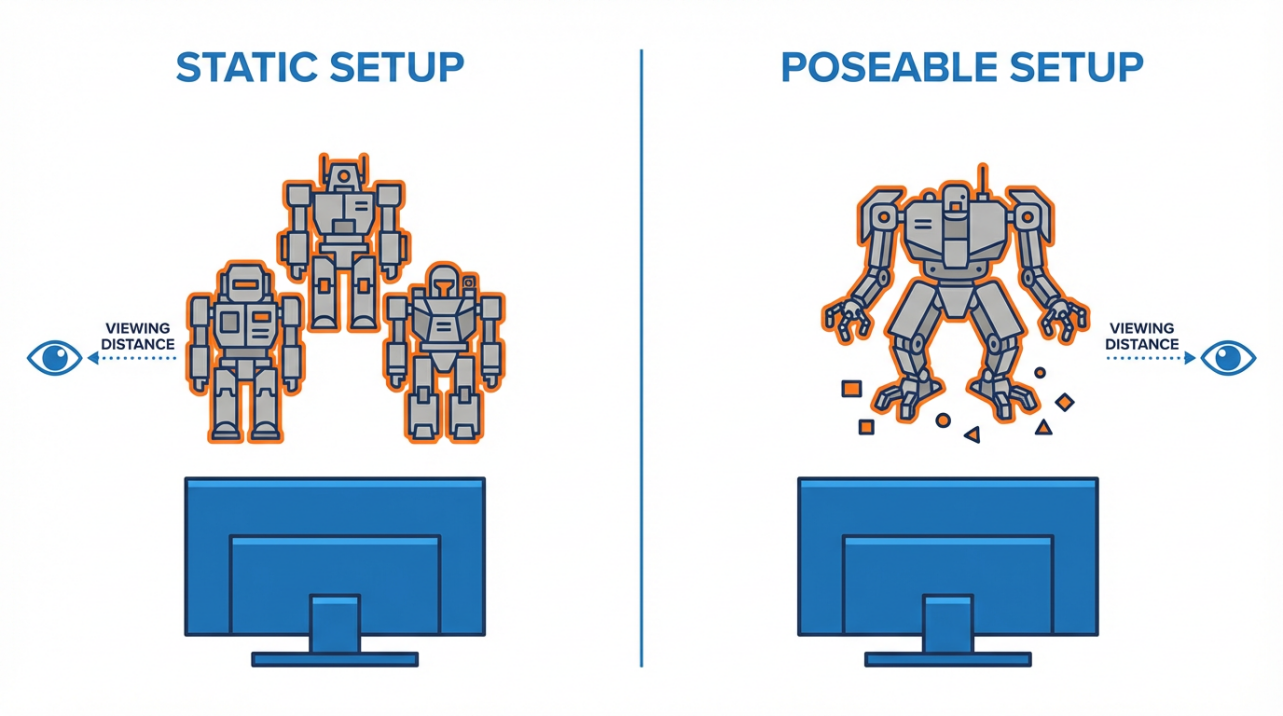
Brand identity matters. Some lines, like chibi-style figures with multiple articulation points and interchangeable parts, focus on cute aesthetics and playful posing. Others specialize in highly poseable action figures that emphasize articulation and dynamic reposing. There are also simpler static lines that trade complex paint and articulation for more affordable prices and broad character coverage, a pattern described in brand comparisons of anime figure manufacturers. In practice, you might choose a poseable action line for a favorite lead mech you want to re-pose constantly, but go with static or “prize” style figures for side suits you mainly want as background squadmates.
If your display is a small TV stand, two or three mid-priced static mecha statues with strong silhouettes may read better from a distance than one ultra-posable figure whose subtler joints and accessories get lost when viewed across the room.
Model Kits And Grades: When You Want To Build Your Mech
Modern beginner-friendly mecha kits are designed so you can snap parts together without glue and rely on molded-in colors, letting you focus on assembly with a simple hobby nipper and some patience, as described in step-by-step starter guides to plastic model kits. In the Gundam world, Entry Grade and High Grade kits at 1/144 scale are positioned as accessible options, with High Grade often recommended as the main starting point because it balances variety, articulation, and difficulty.
More advanced grades like Master Grade at 1/100 scale introduce detailed inner frames and more complex engineering. Real Grade compresses that level of detail into smaller 1/144 kits with many tiny parts, and Perfect Grade at 1/60 scale sits at the top with massive, intricate builds that can take more than 30 hours to complete for dedicated fans, according to mecha model brand comparisons that discuss MG and PG kits as heirloom-level projects. Good Smile’s MODEROID line adds another route into mecha modeling with snap-fit kits that aim to stay beginner-friendly while still offering articulation and recognizable licensed designs.
Here is a high-level comparison that captures how these options feel in practice:
Type | What it is | Pros | Cons | Best for |
|---|
Pre-painted mecha statue | Finished figure, usually PVC or resin | Instant display, strong sculpt and paint when from good brands | No build experience, pose is fixed, quality varies by manufacturer | Fans who want shelf impact with no building |
Poseable mecha action figure | Articulated, often with swappable parts | Recreate many poses, fun to handle | Visible joints, sometimes less detailed paint | Fans who like “playing” with poses |
Prize-scale pre-painted figure | Simpler, budget-friendly static figure | Affordable way to cover lots of suits and variants | Less detail, more paint flaws, variable QC | Filling out squads or secondary designs |
Entry/High Grade snap-fit kit | Beginner-friendly plastic model you assemble | Hands-on build, good articulation, no glue required | Visible seams, stickers instead of full color separation in some areas | First-time builders and casual modelers |
Master/Real/Perfect Grade kit | Larger or ultra-detailed model kit | Deep engineering, inner frames, strong display presence | Expensive, time-consuming, more fragile tiny parts | Experienced builders and “centerpiece” mecha |
Customization-heavy mecha kits | Modular frames and armor focused on kitbashing | Huge customization, shared peg systems, unique original designs | May need more tools and skill, sometimes harder to find and pricier | Creative builders who enjoy modding |
A practical way to use this table is to pick one “hero” mecha you truly care about, choose one kit or figure from the advanced rows for that suit, and stay with more budget-friendly options for everything else. Your signature mech gets the complex build or premium statue treatment, while grunts and variants become a supporting cast instead of a financial black hole.
Materials And Engineering: Why Some Mecha Feel “Premium”
Resin choice is central to action-figure quality and strongly influences detail, durability, and long-term stability, a point emphasized in technical guidance on resins for action figures. For mecha figures, that same logic applies to every plastic and resin in the mix: whether a piece leans, cracks, shatters, or holds crisp panel lines over time comes down to the material recipe under the paint.
Different plastics behave in distinct ways. Polyvinyl Chloride, often used in mass-market statues and smaller figures, is inexpensive, easy to mold, and very paint-friendly, but it can deform under heat or long-term stress, leading to the infamous leaning pose on thin legs. Acrylonitrile Butadiene Styrene is tougher and more rigid, commonly used in structural parts like legs or internal frames, but its smooth surface needs priming to hold paint well and it can become brittle if baked in sunlight for too long. Resin systems, including polyurethane, epoxy, and polystone blends that mix resin with stone powder, capture extremely fine surface detail and have a heavier, more substantial feel, but they are more brittle and prone to catastrophic breaks if dropped.
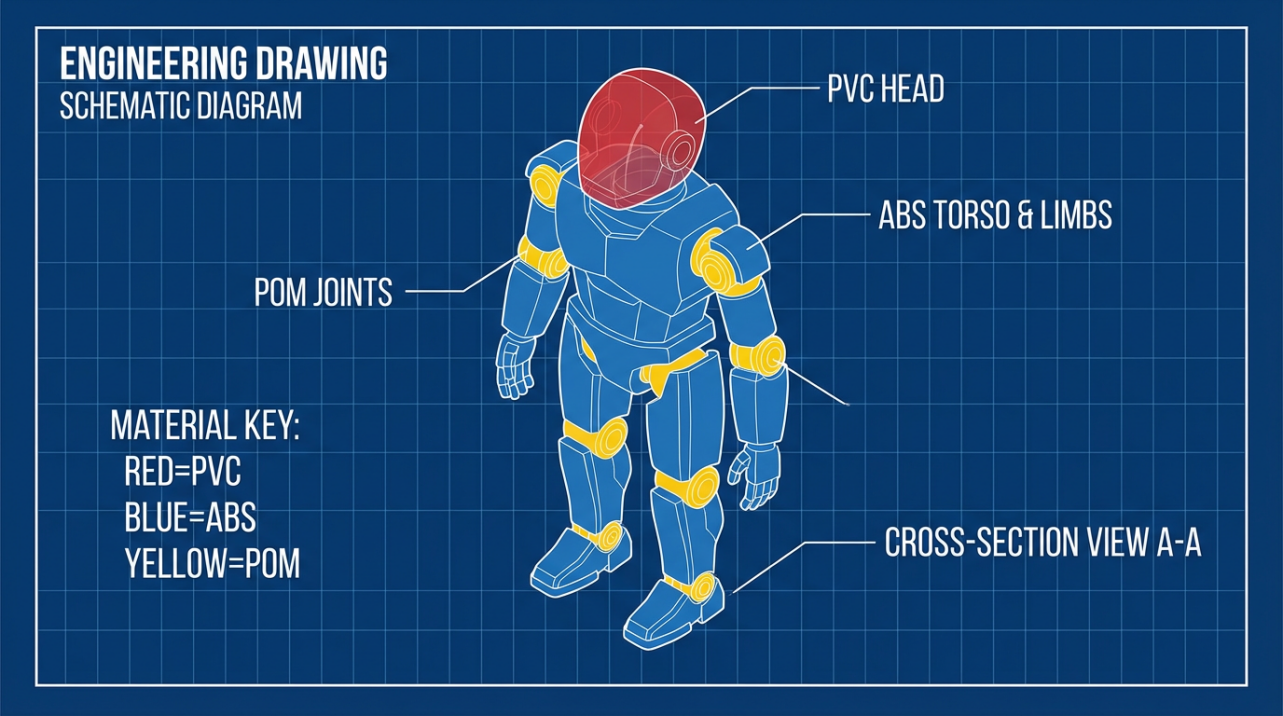
Manufacturers of durable custom action figures often stress that no single plastic does everything, so they combine materials to balance strength, flexibility, and detail. A common high-performance recipe is PVC for heads and accessories, ABS for torsos and limbs, and specialized plastics such as POM for joints, allowing joints to flex smoothly while armor plates stay rigid and details stay crisp. That multi-material approach is a major reason some mecha feel solid, pose securely, and survive reposing, while cheaper single-material figures might have either rubbery, sagging parts or brittle, chip-prone components.
This difference becomes very obvious when you compare two similarly sized mecha: a hollow PVC statue can feel light and a bit toy-like, while a resin or polystone-based piece feels weighty and serious in hand. The tradeoff is that the heavier, more brittle piece demands more careful display and better packaging; dropping a resin mecha can shear off thin fins or spikes completely, where a PVC one might only bend.
A simple budgeting reality check follows from this: ultra-detailed resin or polystone mecha statues and high-end die-cast-heavy kits, including some limited luxury lines that can exceed about $500.00 per kit, only make sense once you are ready to invest in safe display and careful handling. Until then, well-engineered PVC and ABS-based figures or plastic kits give you a safer way to learn what you actually like living with.
Guarding Your Hangar: Avoiding Bootlegs And Damage
How To Spot Fake Mecha Figures
Bootleggers disproportionately copy figures from major manufacturers like Good Smile, Banpresto, and Kotobukiya and focus on blockbuster franchises, which puts mecha fans squarely in their sights, as explained in this breakdown of bootleg risks for anime figures. When you are hunting for a specific mech, a deal that looks too good to be true on a big-name suit or brand usually is.
Knockoff figures are unlicensed copies that divert money away from creators and almost always cut corners on quality. Common signs include off-model faces and proportions, sloppy or bleeding paint, rough seams, warped or mismatched parts, and plastic that feels oddly light or brittle compared with authentic releases. Packaging is another giveaway; missing or blurry logos, wrong or misspelled series names, low-resolution art, and the absence of authenticity seals or holographic stickers used by many manufacturers and distributors are all red flags.
Buying from reputable, official retailers and authorized distributors is one of the simplest ways to reduce bootleg risk, and many figure-buying guides urge shopping with trusted sellers. Before committing to a listing, you can cross-check the figure on the manufacturer’s own catalog or trusted databases and compare sculpt details, colors, base design, accessories, and box layout against the photos. On marketplace platforms, checking seller feedback, avoiding sellers who will not provide real photos of the actual item, and being cautious of large quantities of new high-demand figures at suspiciously low prices all stack the odds back in your favor.
If you see two listings for the same mecha, one at roughly the going rate from an official or well-reviewed shop with clear, close-up photos of the figure and box, and another at half the price with only stock images and vague seller info, treat the cheap one as a bootleg until proven otherwise. The money saved up front rarely compensates for a figure that looks wrong next to your official pieces and may even use low-grade materials with durability or safety concerns.
Display And Care That Keep Mecha Battle-Ready
Protecting figures from dust and sunlight is one of the easiest ways to preserve their condition and value. Even the best paint and plastic can fade or yellow if you park a mecha directly in a sunbeam for months, and dust buildup in joints and panel lines slowly dulls all that sculpted detail.
Material-focused guidance recommends a few simple habits that make a huge difference. Keeping mecha in enclosed shelves or display cases, ideally with UV-filtering panels in very sunny rooms, cuts both dust and light exposure. For routine cleaning, compressed air helps blow dust out of tight crevices without scraping paint, and handling figures with clean hands prevents oils from building up on frequently touched parts like shoulders and weapons. PVC and ABS figures can be gently soaked in water with mild detergent and then air- or cotton-dried, while resin, polystone, and other premium materials should only be wiped with a slightly humid microfiber cloth rather than immersed.
Safety guidelines from mecha model kit comparisons also emphasize building and display environments: a well-lit, well-ventilated area reduces fumes when using paints or strong resins and keeps small parts easier to spot, and keeping tiny components away from children is important because many advanced kits are recommended for ages 15 and up due to the precision and patience required. That same mindset applies after building; displaying ultra-fragile pieces higher up and away from high-traffic areas reduces the chance of accidental bumps or falls.
A concrete way to put all this together is to dedicate one bookshelf to your hangar, add simple glass doors, place the tallest and most fragile resin or polystone mecha in the center of each shelf, and line the bottom with tougher PVC and ABS-based action figures that can survive the occasional reposing. Pair that with a soft brush or compressed air session once a month, and you dramatically slow down the wear that usually creeps up on collections over a few years.
Closing Thoughts
Mecha figures are more than plastic robots; they are snapshots of the moments and machines that shaped how you feel about anime and games. When you understand how type, brand, materials, and authenticity all play together, every new piece you add becomes a deliberate upgrade to that story instead of just another box. May your backlog stay exciting, your builds clean and sturdy, and your favorite mechs always ready for one more pose on the front row of the shelf.