The Rise of Punk Rock Figurines in Adult Collecting Markets
Punk rock figurines are shifting from novelty merch to serious centerpieces in adult collections, merging rebellious music history with the display culture usually associated with anime and pop-culture figures.
Ever sat in front of your shelves, staring at a wall of anime heroines and mecha, and suddenly thought, "This needs safety pins and a sneer"? That itch lines up with a wider boom in punk memorabilia, where original flyers and zines that once cost pocket change now command hundreds of dollars or more in specialist auctions and dealer catalogs, turning "throwaway" punk artifacts into coveted cultural objects. This same wave is lifting punk rock figures, making them worth a closer look in terms of money, shelf space, and how to pick, protect, and enjoy them without losing the spirit that made punk feel dangerous in the first place.
Punk's Rebel DNA Meets the Display Case
Punk has always been more than just loud guitars. From the 1970s onward, it combined fast, stripped-down music with a visual language of ripped shirts, leather, chains, and raw DIY graphics that attacked polished, corporate culture, a stance echoed in discussions of broader punk ideologies. That mix of sound, politics, and style is exactly what makes punk such a natural fit for figurines: you can literally sculpt the sneer, the posture, the safety pins.
DIY punk media like fanzines and small-run records grew alongside that culture, documented today by resources such as the Razorcake fanzine, which specifically centers DIY punk culture. If you already collect anime or game figures, this probably feels familiar: limited runs, niche creators, and communities that care about obscure details outsiders barely notice. Punk figurines tap into that same collector instinct, but with the added thrill that you are not just celebrating a character; you are displaying an entire subculture's refusal to play nice.
A BrooklynVegan roundup of punk rock action figures credits companies like Super7, Funko, and Aggronautix with making punk icons available in 3D, but frames them as shelf collectibles for adult fans rather than toys for kids, emphasizing that these pieces are meant to live on desks and walls, not in toy bins in the living room, as a BrooklynVegan list of punk rock action figures notes. That adult-first framing matches what many anime and statue collectors already do: pose, photograph, and curate rather than "play."
From Flyers to Figurines: Why Punk Objects Became Serious Collectibles
To understand why punk figurines are rising now, follow the money and the museums. Punk's original artifacts - posters, flyers, fanzines, badges - were intentionally cheap, often run off on photocopiers or quick-and-dirty print shops, which made them feel disposable in the 1970s but incredibly scarce and desirable today Record Collector's look at punk memorabilia. When early gig posters that once changed hands for about $50.00 start pushing toward $300.00, and iconic Sex Pistols pieces climb past $5,000.00, collectors start paying attention to anything tied to that history.
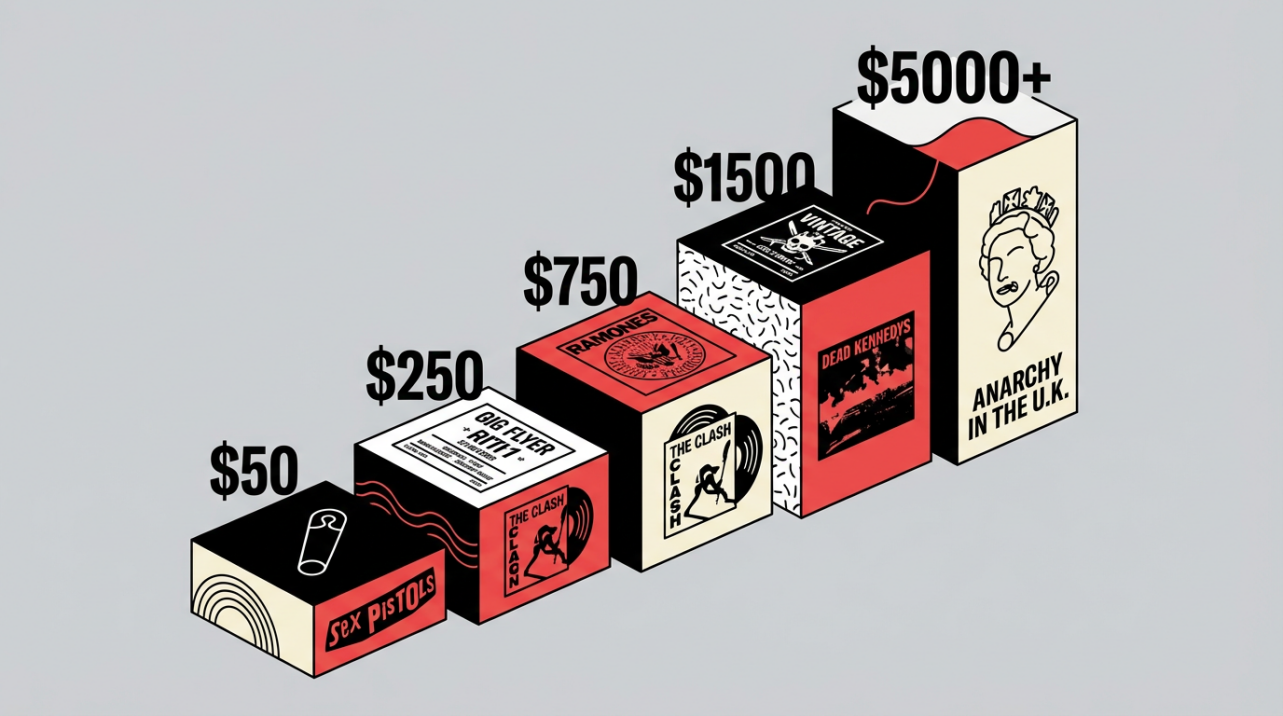
A survey of punk collectables notes that vinyl, fanzines, and posters now routinely reach four and five figures when the mix of rarity, band importance, and condition is right, including a Sex Pistols "God Save the Queen" single that sold for over $15,000.00 and a projected $40,000.00 value for a complete run of a classic fanzine series Punk rock collectables that might make you rich. At the very top end, personal items like Sid Vicious's padlock chain have fetched around $20,000.00, while dealer-collectors documented in mainstream magazines describe homes that function like private museums, with punk flyers and clothing hanging at the same level as recognized fine art.
Within that context, punk rock figurines are still a younger subcategory. Yet guides to iconic punk memorabilia already list vintage Sid Vicious items - including action figures - alongside posters and original merch as must-have categories, underlining that three-dimensional representations have already crossed the line into "serious" collecting in some circles, according to one punk memorabilia collector's guide. When something appears in the same breath as first-press vinyl and signed tour flyers, adult collectors start treating it less like merch and more like a potential grail.
What Counts as a Punk Rock Figurine?
In practice, "punk rock figurine" usually means a small, three-dimensional representation of a punk musician or a stylized punk archetype: the spiky-haired singer with a mic stand, the leather-jacketed bassist mid-jump, or a cartooned punk mascot that riffs on real bands. Some are articulated action figures with swappable accessories, others are static resin or vinyl statues closer to anime scales, and a few blur the line with art toys and designer vinyl.
It helps to think of them as sitting at a crossroads. On one axis, you have officially licensed figures of specific bands versus more generic "punk" characters; on another, mass-market releases versus boutique runs; and on a third, kid-oriented toys versus fragile, display-only statues. BrooklynVegan's list leans heavily toward officially licensed, music-branded figures presented as adult collectibles, signaling that this is not just random "edgy" design slapped on generic bodies, as the BrooklynVegan list of punk rock action figures suggests.
For many collectors, the real question is how these figures compare to the rest of their collection.
Collectible type | What it captures | Pros for adult collectors | Trade-offs |
|---|
Punk rock figurines | The look, persona, and stage energy of punk icons in 3D form | Highly displayable, bridges music and toy shelves, often limited | Market is younger, long-term values less established |
Classic punk memorabilia (vinyl, flyers, zines) | Direct artifacts from original scenes and shows | Strong historical weight and proven auction interest | Fragile, pricier, harder to source in good condition |
Mainstream anime / pop-culture figures | Fictional characters and designs from shows and games | Huge variety, established market, refined manufacturing | Less direct link to real-world music history or politics |
Seeing where punk figures sit in this mix helps clarify what you are actually buying.
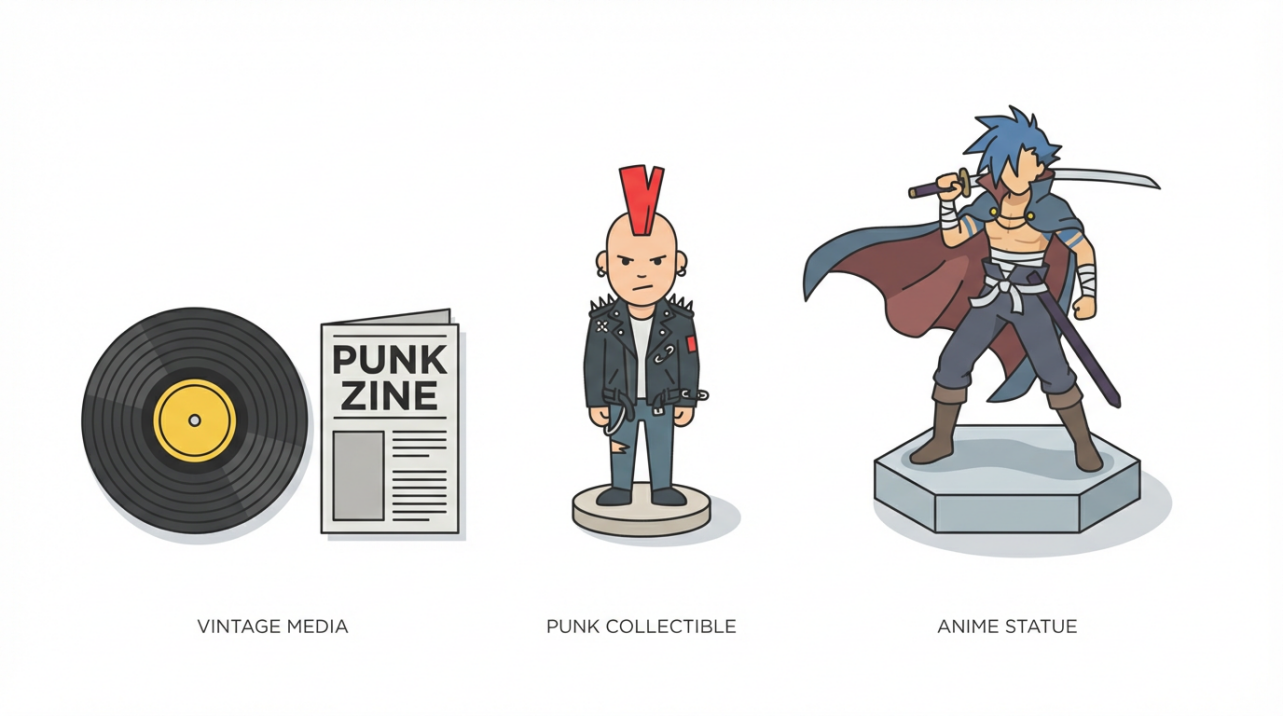
You are not just picking up another articulated body; you are buying into a bridge between the "serious" world of music memorabilia and the playful, poseable world of toys.
Why Grown-Ups Are Clearing Shelf Space for Punk Figures
Nostalgia With Spikes
A big reason adults gravitate to punk figurines is the same reason anime collectors hunt down first-run scales: they want to freeze the feeling a specific era or scene gave them. Articles on punk collectables emphasize that the main motivations are passion for the music and the thrill of preserving ephemeral history, not just chasing profit, as the feature "Punk rock collectables that might make you rich" notes. Putting, say, a snarling figure of a legendary front-person between a beloved robot and a magical girl turns your shelf into a tiny cross-section of your life: the bands that got you through high school, the shows you snuck into, the playlists that still power you through long nights.
Punk has always curated a very specific visual identity: Doc Martens, ripped denim, plaid, leather, and safety pins that turned everyday fabrics into protest statements, as overviews of punk fashion point out. A good punk figure captures that look down to the tartan skirt or studded belt, which means your eyes read it instantly even from a few feet away. For collectors used to admiring the folds of a cape or the rigging on a mecha, that same painter's eye now gets to linger over chipped boots and painted band logos on tiny T-shirts.
A Gateway Between "Fun" Toys and "Serious" Punk History
For people who love punk but have mostly stuck to records, figures can feel like a low-risk, high-joy point of entry into the broader memorabilia world. Guides from places like The Punk Rock Museum's beginner resources emphasize that you can start with affordable items - pins, zines, reissue vinyl - and slowly work up to rarer pieces, with the focus always on what personally resonates rather than what looks impressive on paper. That mindset translates well to figurines: begin with one or two characters tied to bands or scenes you care about, then expand only if they keep making you smile when you walk past the shelf.
Dedicated punk collectors describe building focused collections around a single band or era, often insuring archives that include posters, stage clothing, and master tapes for six-figure sums over time, as the same survey of punk collectables explains. In the same way, a figure-focused collector might decide that all their punk pieces will center on 1970s UK bands, or on 1990s pop-punk crossovers that sold tens of millions of albums and pushed punk into the mainstream overview of best‑selling punk albums. The result is a display that does more than look cool; it tells a coherent story about where your fandom comes from.
The Investment Question
If you are used to anime figure prices creeping up slowly, the punk memorabilia market can look wild. Record-collector magazines document how genuine fanzines and posters that once went for around $50.00 now fetch several hundred dollars, with certain early Sex Pistols posters rising into the low thousands and landmark pieces valued even higher (Record Collector’s look at punk memorabilia). Another survey of punk collectables points to auction sales where specific records, lyrics, and ephemera reached anywhere from a few thousand dollars to over $25,000.00, especially when backed by clear provenance (Punk rock collectables that might make you rich).
Those numbers do not automatically mean every punk figurine is a future gold mine. What they do show is that the market recognizes punk as culturally important enough to justify serious money. Vintage action figures of punk icons already appear in "must-have" lists alongside posters and early merch, as one punk memorabilia collector's guide notes. If the same pattern that elevated flyers and fanzines repeats, then limited-run figures tied to historically significant bands, released in small quantities and kept in good condition, could see similar appreciation over the long term. The safest mental model, though, is still "buy for love, be pleasantly surprised if value follows," not the other way around.
How to Build a Punk Figurine Focus That Actually Feels Punk
Choose a Focus That Tells a Story
Collectors in other scenes, such as large-scale Hard Rock pin communities, often recommend narrowing your scope to a specific category or series because it keeps you motivated and can increase the perceived value of a near-complete run over time. Punk memorabilia guides echo that advice by suggesting you collect by band, era, or item type while leaving room for personal resonance to override rigid rules, as the feature on punk rock collectables points out.
For punk figures, a simple way to start is to pick one axis of focus. You might choose a single band and aim to own every official figure of its members. You might chase only figures tied to scenes you care about, like New York's early CBGB era or '90s California skate-punk, mirroring how record stores such as Joe's Albums curate entire sections around classic and underground punk acts punk vinyl records catalog. Or you might intentionally blend punk with anime: a shelf where a mohawked bassist stands between a gothic magical girl and a streetwear-styled game character, united by a common "anti-normal" energy.
What matters is that the story makes sense to you. Punk philosophy pieces that talk about "rules of punk" boil those rules down to things like being yourself, reframing how you see others, and living your truth loudly Rules of punk and neuroqueering. If your shelf reflects that spirit, rather than chasing whatever is hyped in a given month, you are much more likely to enjoy it for years.
Hunt Smart in a Wild Market
The punk memorabilia world is notorious for fakes and "too good to be true" deals, especially with posters and paper items where modern reprints can be artificially aged and passed off as originals (Record Collector’s look at punk memorabilia). A collector's guide focused on punk items advises asking for detailed photos, understanding paper stock and size, and demanding a documented history and certificates of authenticity for high-end pieces, according to that punk memorabilia collector's guide.
The same mindset applies when you move into figurines. When buying older or limited-run punk figures online, especially from marketplaces that also host a wide range of punk memorabilia categories, focus on sellers who are already embedded in collector communities rather than anonymous accounts in a random punk memorabilia category. Ask for close-ups of paint, logos, and any stamps or markings. For expensive figures tied to famous bands, look for some kind of provenance: old bills, convention photos, or even just a clear story that fits with how and when the figure was released.
Budgeting also matters. Punk collecting guides stress that you do not need to be wealthy; you can start with small items and save slowly for pricier pieces, keeping passion rather than speculation at the center, as one discussion of collectables that might make you rich explains. Translate that into a monthly "punk pot" for your collection. Maybe you set aside the cost of one mid-tier figure every few months, and in between you enjoy the hunt, research, and community interaction without feeling pressured to impulse-buy every new release.
Display Like a Mini Museum
Punk archivists who treat their homes like small museums talk about their responsibility to keep artifacts alive for another forty years, not just flip them for profit. They frame posters, store fragile items carefully, and loan selected pieces to institutions like dedicated punk museums to keep the story going for others. Beginner guides emphasize basic preservation: avoiding sunlight and humidity, using acid-free sleeves, and framing important posters with UV-protective glass so they do not fade or crumble.
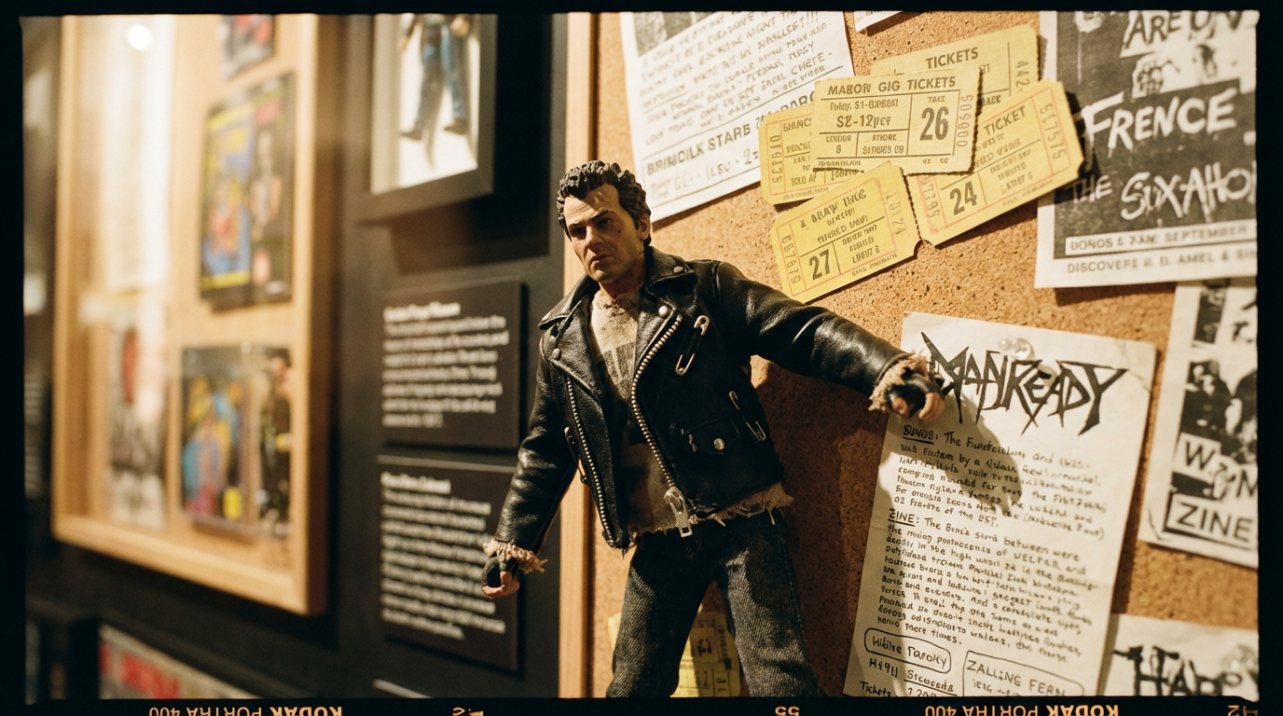
For figures, the equivalents are simple but powerful. Keep them out of direct sun to avoid yellowing and paint fade. Dust regularly or use enclosed display cases, which also help prevent accidental falls when someone bumps a shelf during a late-night listening session. Pose figures in ways that highlight their punk attitude - mic stands thrust toward the viewer, boots up on an amp, fists raised - so that even a small lineup reads like a frozen gig. If you want to go full fandom storyteller, tuck a gig ticket, a zine, or even a tiny print of a famous flyer behind a related figure; you end up with layered vignettes that combine 2D history and 3D sculpts in a single scene.
Keeping Punk's Values Alive on a Plastic Shelf
One critique that often follows punk merchandising is that turning anti-establishment culture into consumer products kills the message. Writers covering punk's paradox point to how protest music can be absorbed into mass culture, with albums selling in the tens of millions and even becoming Broadway shows while still claiming to speak for the marginalized (overview of best‑selling punk albums). That tension is real, and it matters when you are buying figurines.
At the same time, punk has a deep history of using culture - zines, benefit shows, shirts, and badges - as tools for anti-racist and anti-fascist organizing, a lineage that contemporary programs on antiracism in punk continue to highlight antiracism in punk program description. Disability-justice-oriented punk thinkers argue that bringing what is meant to be hidden out into the open is itself an act of resistance (Rules of punk and neuroqueering).
The way you curate and talk about your punk figures can honor that legacy instead of erasing it. Pairing a figure of a fiercely political band with books, zines, or records that inspired you, telling the story of a gig that changed how you see the world, or supporting independent artists who sculpt and customize figures of underrepresented punk heroes are all ways to keep the spirit alive. Your shelf becomes not just a line of cool plastic but a conversation starter about why this music and culture still matter.
FAQ: Quick Answers for Curious Collectors
Are punk rock figurines a good investment or just fun merch? The safest assumption is that they are primarily for enjoyment. The broader punk memorabilia market clearly supports serious prices for records, posters, and original artifacts, with multiple sources documenting four- and five-figure sales for rare items backed by strong provenance (Record Collector’s look at punk memorabilia). Some vintage punk action figures already show up in "must-have" lists beside those items, according to a punk memorabilia collector's guide, but long-term values for newer releases are still forming. Buy what you would be happy to own even if it never appreciates.
Where do people actually find punk rock figures? Adult-aimed punk figures show up through official band merch channels, specialty music shops that already carry punk vinyl and memorabilia, and curated commerce roundups for music fans, as the BrooklynVegan list of punk rock action figures illustrates. Broader punk memorabilia marketplaces and auction platforms also occasionally feature figures among posters, records, and clothing, according to one overview of punk collectables. For rarer pieces, networking in collector communities - both punk-focused and figure-focused - is often what surfaces hidden gems.
Can you mix punk figures with anime and still have a coherent display? Absolutely. The key is to build around emotion and story instead of genre purity. Punk's core values of individuality, defiance, and DIY experimentation resonate strongly with many anime protagonists and anti-heroes, and cultural analyses of punk stress that it resists narrow definitions and celebrates those who refuse to fit prescribed norms (punk ideologies). If your shelf arrangement tells a story about the characters and musicians who helped you feel seen, the mix will feel intentional rather than random.
Overall, think of punk rock figurines as tiny, loud bridges between fandoms. They let a display full of anime, comics, and games tap into the grit and history of real bands and real scenes, while giving punk memorabilia a fresh, three-dimensional form that is easy to live with every day. If you build that bridge thoughtfully - focused, authentic, and a little bit reckless - you will end up with a collection that looks like a wall of sound frozen in plastic.