Understanding the Health Risks for Figurine Painters
If you have ever looked up from a late-night session, hands speckled with paint, compressor still humming, and thought, “Wow, I’d do anything for this hobby,” this article is for you. As someone who has spent years hunched over garage kits, resin statues, trading-figure customs, and tiny gacha heads, I know exactly how easy it is to sacrifice your lungs, back, and sleep to get that perfect anime eye highlight.
The twist is that figurine painting quietly borrows the same hazards that occupational health experts worry about for professional painters. Agencies like OSHA, NIOSH, EPA, and IARC talk about solvents, volatile organic compounds, heavy metals, and repetitive strain like they are boss-level enemies. For workers in the paint industry, researchers have documented more respiratory symptoms, reduced lung function, and higher cancer risk, especially when exposures go on for years. We stand in the same fog, just scaled down to hobby-room size.
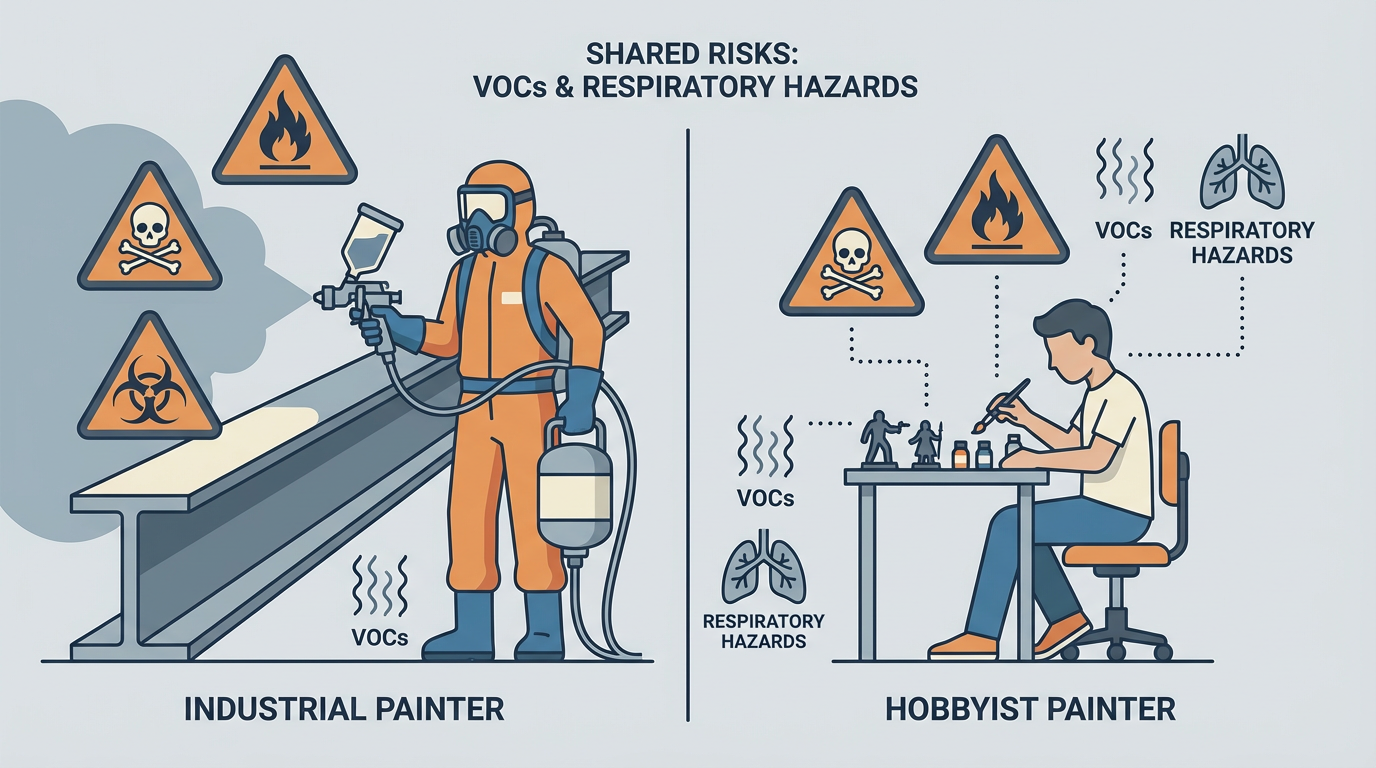
The goal here is not to scare you away from your backlog. It is to give you the same level of respect for your body that you already give to seam lines and gradients. We will walk through what the research says about paint chemistry, fumes, long-term health, and ergonomics, and translate it into anime-figure reality: the airbrush booth in a bedroom, the rattle-can primer on a balcony, the eight-hour build before a convention, and the kid cousin who wants to “help” with your paints.
This is fandom-first, but data-informed. Think of it as unlocking the “health and safety skill tree” for your figurine-painting career.
Why Figurine Painting Has Real Health Risks
When occupational health specialists talk about painters, they are usually thinking about construction sites, car body shops, or industrial coating plants. Studies summarized in occupational reviews and meta-analyses have looked at workers exposed to paint fumes and volatile organic compounds day after day. Those workers show more cough, wheeze, and reduced lung-function test results compared with unexposed groups, even though most of the research is cross-sectional and often limited to men. Agencies like IARC now classify painting as a carcinogenic occupation, with higher observed rates of lung cancer and, in some studies, bladder cancer and mesothelioma.
For figurine painters, the scale is smaller, but the ingredients are often the same. Acrylics, lacquers, primers, varnishes, thinners, and model glues live in our spaces just as surely as they live on job sites. OSHA fact sheets on painting materials describe paints, varnishes, lacquers, and strippers as cocktails of solvents, metals, isocyanates, and additives that can irritate eyes and airways, cause headaches and dizziness, damage organs with long-term exposure, and in some cases increase cancer risk. A commercial safety brief on occupational hazards for painters frames cumulative inhalation of volatile organic compounds as a major driver of asthma, bronchitis, and neurological problems over time.
The difference is that pro painters usually have at least some formal controls: ventilation systems, respirator programs, fit testing, and regulatory oversight. Many of us are just in a bedroom or garage with a box fan, assuming “hobby scale” equals “harmless.” A Facebook discussion among acrylic-pouring beginners captures the reality: one person with asthma noticed their symptoms flaring and started to wonder if the paints their roommate used for fun were part of the problem. That is a figurine-painter scenario too, especially if you live with kids, roommates, or pets.
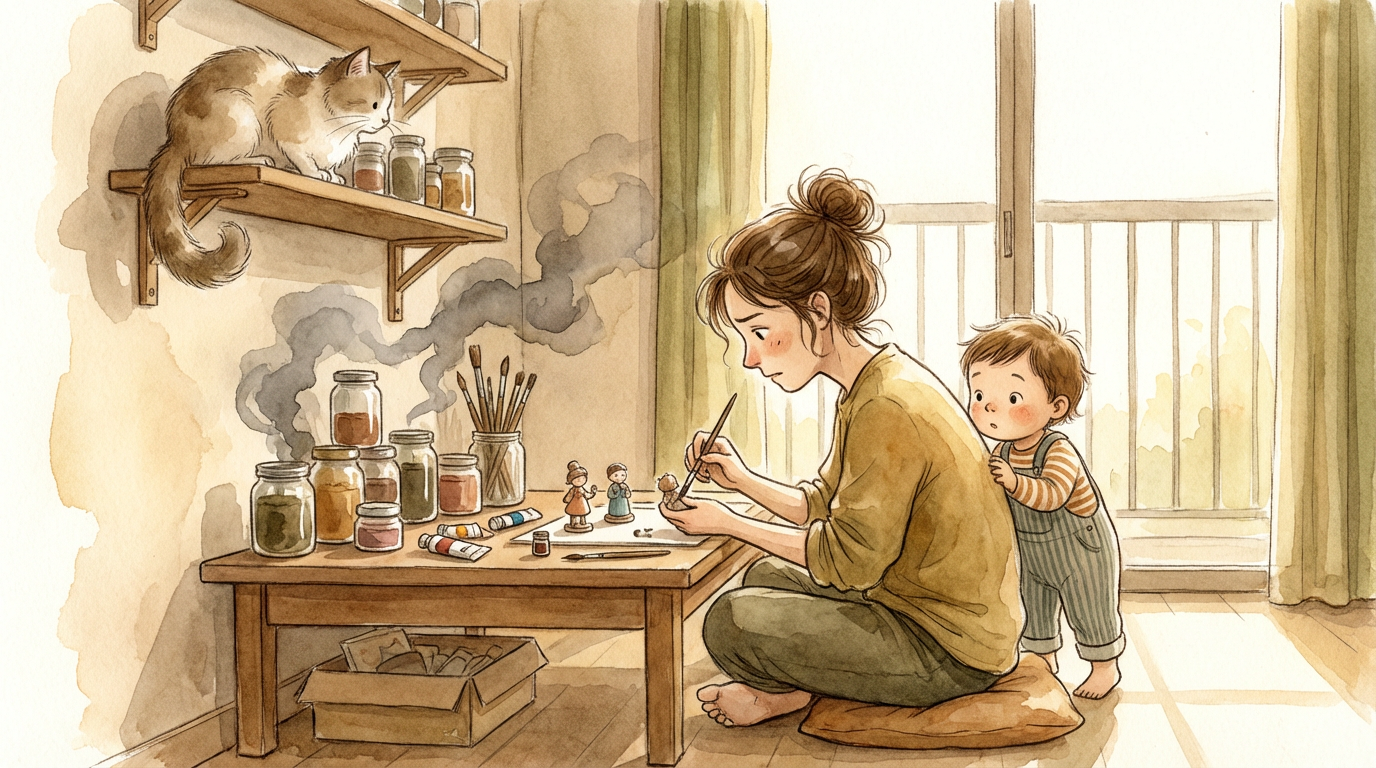
Add to that the physical strain. Ergonomics researchers and art educators point out that artists are prime candidates for repetitive strain injuries: long static postures, tiny precise motions, hunching over work, and improvised furniture. Miniature painting ergonomics guides show that painters who sit crooked for hours end up with neck, back, and wrist pain that can become chronic. On artist forums, people describe eight to ten hours of detail work leaving their entire body stiff and sore, mahlstick or not.
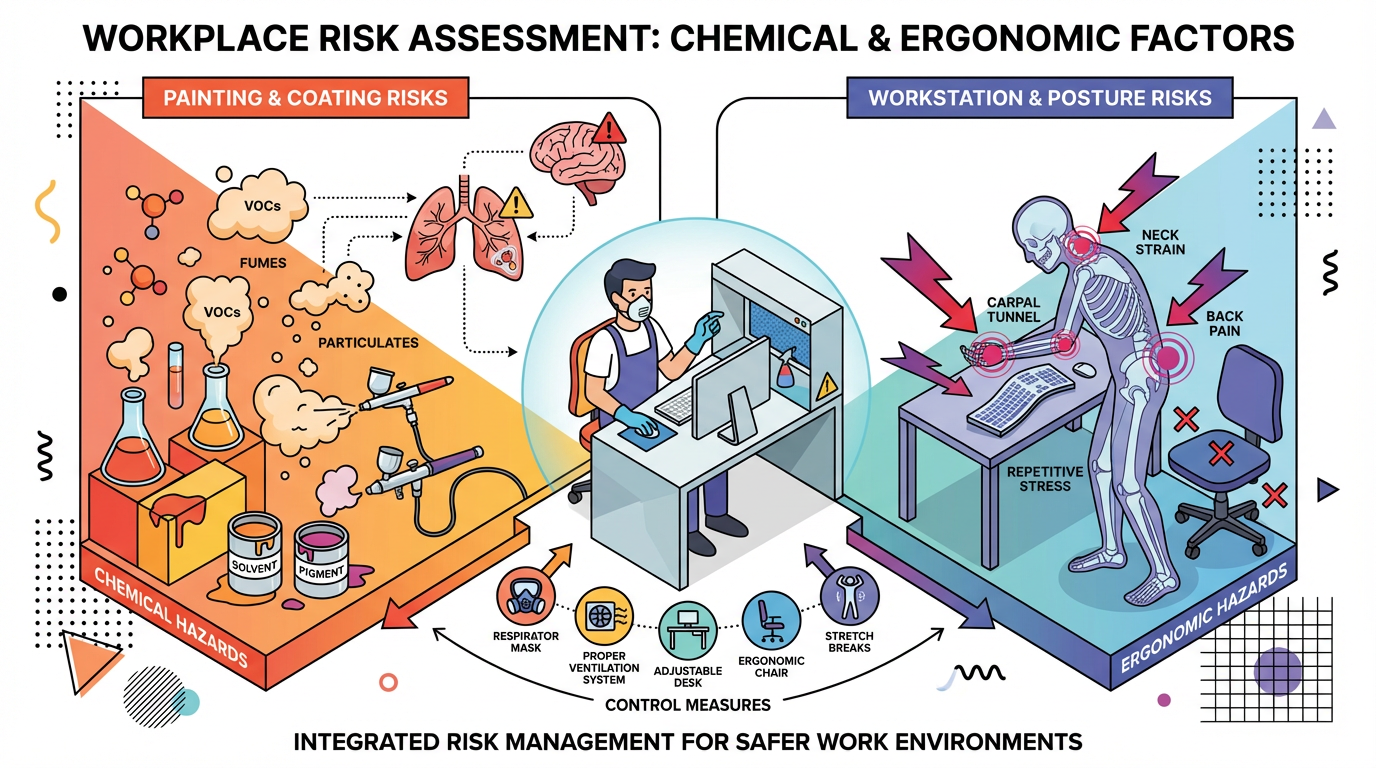
So even if you never step on a ladder, figurine painting comes with two big risk families. The first is chemical and respiratory exposure from paints, solvents, glues, and dust. The second is physical strain from how we sit, stand, and move. Both are manageable once you understand what is actually going on.
What Is In Our Paints And Supplies?
VOCs, Solvents, And Fumes
Most of the “invisible danger” in painting comes from volatile organic compounds, often shortened to VOCs. OSHA describes VOCs such as toluene, xylene, and various ketones as solvents in paints, thinners, and cleaners. They evaporate into the air while you are spraying, brushing, or cleaning equipment and keep off-gassing afterward. Short-term, they can cause headaches, dizziness, nausea, and eye or throat irritation. Long-term, repeated exposure is linked in occupational reviews to liver and kidney damage, nervous system effects, and elevated cancer risk.
For figurine painters, the highest VOC loads show up when we spray: rattle-can primers, aerosol varnishes, and high-solvent airbrush paints. An art materials safety article flags spray paints as particularly concerning because you get both VOCs and a fine aerosol mist. It recommends using them outdoors or in very well-ventilated areas, wearing a mask or respirator, plus gloves and goggles, and following local hazardous-waste disposal rules for leftover paint and cans.
Even brush-on products are not automatically benign. Water-based acrylics have a far safer profile than traditional solvent-heavy paints, and an art safety review notes that most are generally non-toxic under normal use. However, it also explains that certain colors can contain heavy-metal pigments such as cadmium, chromium, cobalt, manganese, or lead, and that brands have had to develop cadmium-free lines to mimic those hues more safely. And “odorless” solvents for oil paints still release vapors that need good ventilation, even if your nose does not complain.
A systematic review of paint workers exposed specifically to VOCs found more respiratory symptoms and lower lung-function test results compared with unexposed controls, although the studies were very heterogeneous and mostly cross-sectional.
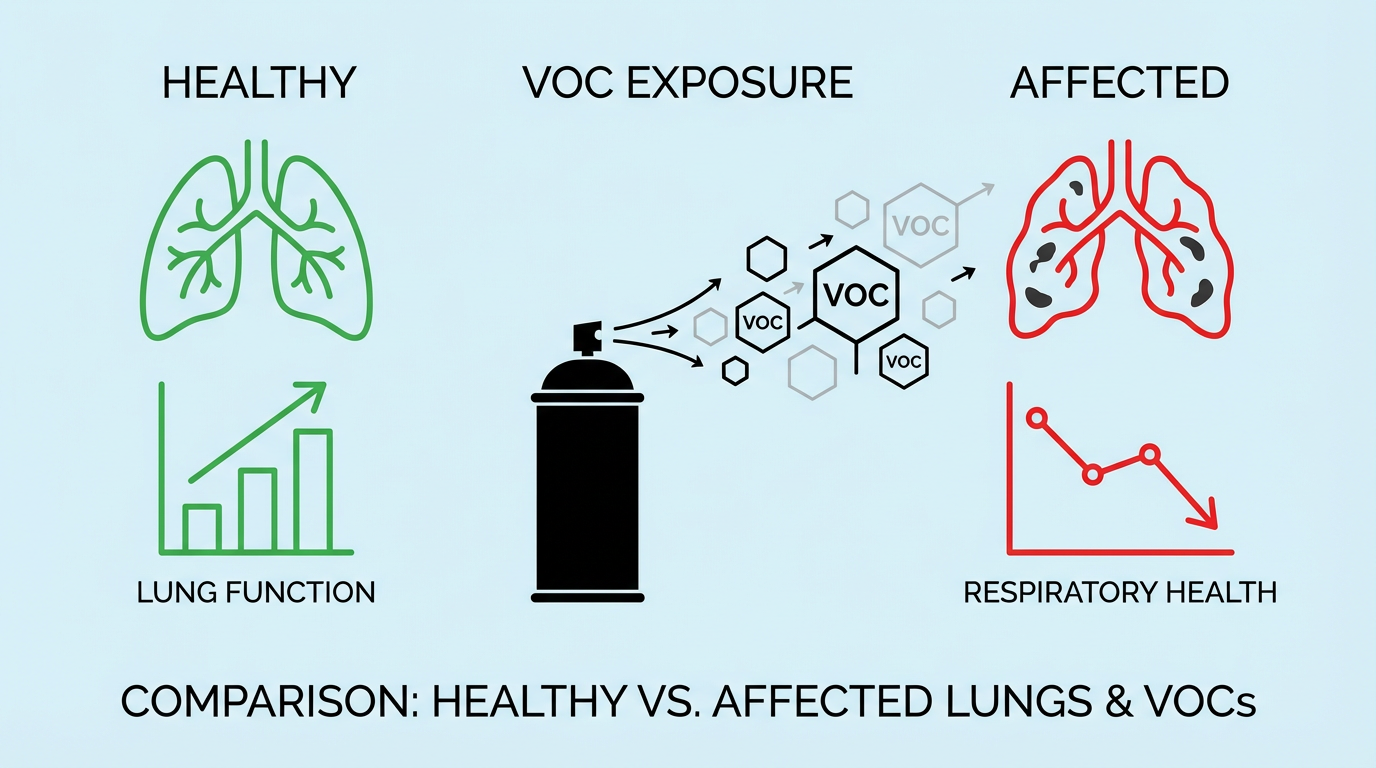
That is not a one-to-one mapping onto hobby practice, but it is a clear sign that spending years breathing solvent-rich air, even at lower levels, is not something to shrug off.
Heavy-Metal Pigments And Other Toxicants
Many of the most saturated, dramatic colors that make anime figures pop historically relied on heavy metals. Occupational and art-safety sources repeatedly mention lead, cadmium, and chromium pigments as key hazards. In industrial paint settings, hexavalent chromium compounds such as certain chromates are described as carcinogenic, linked to nasal ulcers, nasal septum perforations, chronic bronchitis, asthma, and lung cancer. Professional painting health-risk reviews also note increased bladder cancer and mesothelioma among long-term workers.
In the art world, a toxicity overview from an artist-focused site explains that some acrylics, oils, watercolors, and glazes still use heavy-metal pigments. Oil paints may combine those pigments with strong solvents; some watercolor and acrylic lines still offer cadmium or cobalt colors next to cadmium-free alternatives. For figurine painters, that matters when we reach for high-chroma reds, oranges, yellows, or greens that mimic classic pigment lines.
Children are particularly vulnerable. An analysis of kids’ paints and face paints reported that U.S. poison control centers logged over 35,000 calls in a single year about art-product exposures, more than 26,000 of them for children under six years old. Testing of “non-toxic” children’s face paints by a safe-cosmetics campaign found lead in every product sampled, along with other metals and preservatives. That study also flagged synthetic dyes and phthalates with potential links to developmental and organ damage.
Even when products earn safety labels, nuance matters. In the U.S., art supplies must state that they conform to ASTM D 4236, which means toxicologists have reviewed them under the Labeling Hazardous Art Materials Act. A nonprofit group, the Art and Creative Materials Institute, offers additional seals. AP (Approved Product) certified items are considered nontoxic to adults and children under normal use. CL (Caution Label) items contain potentially hazardous ingredients and are not suitable for children. However, art-safety advocates point out that AP does not mean “zero problematic ingredients.” For instance, polymer clays based on PVC with phthalate plasticizers have earned AP labels while still raising concerns about cumulative phthalate exposure and toxic byproducts if those plastics are burned.
For figurine sculptors who use polymer clay or for anyone letting kids “help” in the hobby, it is worth treating children’s proximity to paints, clays, and glues as seriously as you would treat them around cleaning chemicals or gasoline.
Preservatives, Plastics, And “Non-Toxic” Labels
A recurring theme across art-safety and green-living sources is that “non-toxic” on the front of a tube is not a comprehensive health guarantee. U.S. regulations let manufacturers label products this way without fully disclosing ingredients to consumers, and formulas often remain proprietary except when disclosed to poison-control centers during emergencies.
Certain preservatives and additives show up often. Formaldehyde is described in kid-paint analyses as a common preservative in children’s paints and as a volatile organic compound that can irritate skin and airways and is classified as a human carcinogen. Phthalates, used to make plastics more flexible, are referenced in connection with polymer clays and some paints, with evidence for endocrine-disrupting effects and reproductive harm, especially when exposure adds up from multiple sources.
A green-living guide to art supplies and a natural-paint manufacturer both hammer the same point: assume “non-toxic” is a starting point, not the end of the story. They recommend reading art-supply and face-paint ingredient lists as closely as food labels and seeking products that are transparent about their composition, especially when kids, pregnant people, or folks with sensitivities are involved. They also highlight earth-pigment and plant-based binders as alternatives for those who want to minimize synthetic additives altogether.
Spray Coatings, Polyurethanes, And Isocyanates
Many figurine painters love the durability of polyurethane clear coats or automotive-style finishes. Industrial articles on painting emphasize that polyurethane systems commonly use isocyanate-containing hardeners. Isocyanates are described as highly reactive sensitizers that can trigger occupational asthma and other hypersensitivity reactions, sometimes after relatively low exposure. Once a person is sensitized, even small future exposures can provoke strong reactions.
For professional workers, the recommended response is heavy-duty: closed mixing systems, local exhaust ventilation, personal respirators, and regular lung-function surveillance. While you probably are not doing lung tests before a garage-kit session, the message translates clearly: if you use two-part auto clears, industrial polyurethanes, or similar products for your figures, it is wise to treat them with the same respect as professional paint crews do.
OSHA and related safety sheets also describe flammable propellants and the risk of explosions or fires if spray painting happens near ignition sources. That matters in hobby spaces where compressors, space heaters, and improvised spray booths can share outlets and extension cords.
How These Hazards Show Up In Figurine Painting
On paper, a figurine hobby looks small. In practice, sessions stack. A priming pass here, an airbrush gradient there, a Sunday of detail brushwork, a night of resin sanding before a build. Over months and years, that becomes a lot of time in contact with paints, thinners, dust, and vapor.
A typical figurine workflow might include spraying primer and varnish, airbrushing color layers, hand-painting eyes and trim with acrylics, using model glues or rubber cement on bases or dioramas, and sanding resin or plastic parts. Safety guides for art supplies describe model glues and rubber cement as some of the most toxic adhesives available because they can contain solvents like hexane or heptane, which are potent neurotoxins. Meanwhile, OSHA’s chemical-in-painting sheets point out that inhalation of vapors, mists, and dust during spraying or sanding is a primary exposure route, with skin contact and accidental ingestion (via contaminated hands or food) as secondary routes.
The Facebook post from an acrylic-pouring group about an asthma flare-up is a good reminder that even water-based paints can become a problem depending on the person and the space. Pouring and airbrushing both create more airborne droplets than quietly brush-painting a single base color. For anyone with a history of asthma or allergies, or who paints around others with those conditions, controlling fumes and dust matters as much for your family’s health as for your own.
Another underappreciated risk is what happens after you finish. Commercial painting articles warn that VOC off-gassing can continue from freshly painted surfaces for days or weeks, irritating eyes, provoking headaches, and triggering asthma in occupants. That is obviously a bigger concern for entire rooms than for a single figure, but in a small studio or bedroom full of newly painted kits, you have a lot of small surfaces all releasing chemicals into a small volume of air. Poor cleanup can leave fine dust and residues on desks and shelves where people also eat, work, or sleep.
Finally, there is skin and eye contact. Art-safety organizations list rashes, allergic contact dermatitis, and eye irritation as common outcomes of skin contact with paints, solvents, glazes, and clays. Occupational medicine reviews add that some solvents can be absorbed through the skin and contribute to systemic toxicity. If your wash water, thinners, or paint cups live permanently next to your keyboard, snack bowl, or phone, your odds of accidental contact go up.
None of this means you need to bubble-wrap yourself. It does mean that “just a hobby” is not a magic shield and that you can steal a lot of industrial best practices and scale them down to fit your desk.
Ergonomics: The Slow Damage From Comfort Creep
Health risks for figurine painters are not just chemical. They are also physical, and almost everyone feels these sooner.
Ergonomics for artists is the science of arranging posture, tools, and workspace so you can work for years without wrecking your body. Art educators who specialize in ergonomics emphasize preserving the natural curves of the spine, keeping ears over shoulders and shoulders over hips, and avoiding the classic “turtle neck” where your head cranes toward the figure. They suggest maintaining roughly a beach-ball distance between your torso and your work and adjusting easels or stands so your main working area sits around eye level.
Miniature-painting ergonomics guides echo this on a smaller scale. One pro studio painter recommends sitting up straight in a supportive chair, resting your elbows on the table, and bringing your hands together so the heels of your palms touch. You hold the miniature in one hand and your brush in the other, but your hands move as a single stable unit. This reduces tremor for tiny details and, just as importantly, cuts down on muscle fatigue from holding your arms in midair.
A hobby ergonomics article aimed at miniature painters also suggests using painting handles instead of pinching the figure itself. Mounting a mini or a small figure onto a cork, dowel, or purpose-built handle lets your fingers relax into a larger, more comfortable grip instead of a cramped pinch. Combined with bright, diffuse lighting that reduces eye strain, this setup makes multi-hour sessions much easier on your body.
General ergonomics research for artists lays out the bigger picture. Artists often work in static postures, repeat the same fine motions hundreds of times, and improvise with kitchen tables or folding chairs that do not support the lower back. This is a recipe for repetitive strain injuries, muscle fatigue, and chronic back, neck, shoulder, and wrist pain. One back-care guide for artists points out that traditional office ergonomic advice does not automatically reach home studios, even though the risks are similar.
Researchers like Alan Hedge at Cornell recommend a 20-8-2 rhythm for sedentary work: in each half hour, roughly twenty minutes sitting, eight minutes standing, and two minutes moving or stretching. Translating that to figurine painting could mean switching between seated detail work and standing for priming or base coating, taking short walks to rinse brushes or photograph progress, and doing quick stretches between stages.
Wrist and hand health matter too. Ergonomic advice for artists stresses keeping wrists neutral rather than bent sharply, avoiding an overly tight grip on brushes, and occasionally doing simple strengthening drills such as finger resistance with a rubber band. A miniature-painting comfort guide adds that properly weighted, ergonomic airbrushes can reduce hand fatigue the same way a balanced paintbrush does.
On forums, you can find posts from painters who, after retiring and finally giving themselves permission to paint eight or ten hours a day, discovered that their bodies could not handle the contortion. They describe stiffness and pain not just in the painting arm but across the back, neck, legs, and feet. The common realization is that the human body is a system, and you cannot fix everything with a single gadget like a mahlstick. You need posture, breaks, tool choice, and workspace design to work together.
Building A Safer Figurine Painting Setup
The good news is that most of the protections occupational experts recommend for paint workers scale down nicely to figurine painting. You do not need a factory, just a bit of planning.
Ventilation And Respiratory Protection
Painting safety guides and OSHA fact sheets agree on one thing immediately: ventilation is non-negotiable. For interior painting jobs, they recommend opening windows, using fans to move fresh air through, and deploying local exhaust or air purifiers with suitable filters. In enclosed or poorly ventilated spaces like basements and small rooms, professional advice is to use paint-rated respirators and, where possible, move work outdoors.
At the hobby level, that translates to situating your painting station near a window you can open, using a fan to blow air out rather than just around, and considering a tabletop spray booth that vents outside when you airbrush or use spray cans. Even for water-based acrylics, strong airflow keeps any residual VOCs from building up in your breathing zone. For spray paints, two-part coatings, or long airbrush sessions, multiple sources recommend wearing a properly fitted respirator or mask suitable for paint fumes, along with goggles or glasses to protect the eyes. Safety literature emphasizes that respirators must be selected and used in line with standards, and that they complement, not replace, good ventilation.
OSHA and art-safety guides also remind workers never to eat, drink, or smoke in painting areas and to wash hands thoroughly after sessions. That is simple but powerful; it cuts down on accidental ingestion and skin exposure from whatever settled on your fingers.
Choosing Safer Products Without Losing Color
You do not need to throw away every bottle in your rack, but it is worth being strategic. Art-safety experts advise picking water-based, low-VOC, and clearly labeled non-toxic products whenever feasible, especially for base paints and varnishes you use often or in large quantities. For fancy high-chroma or metallic effects, scan labels and safety data sheets for mentions of cadmium, lead, chromium, cobalt, and similar heavy metals, and consider whether you can switch to cadmium-free or AP-certified alternatives.
Organizations like the Art and Creative Materials Institute provide AP and CL seals that can help you distinguish between products that are considered safe for general use and those that require more caution. Green-living and art-safety writers, however, stress that even AP-labeled products are not entirely free of concerning substances, only that their levels are not expected to be harmful under normal use. That is all the more reason to maintain good ventilation and hygiene.
For sculpting, if you use polymer clays based on PVC, be aware that some brands rely on phthalate plasticizers. Art-safety investigations note that these clays can earn AP labels despite ongoing concerns about reproductive and organ toxicity associated with phthalates and about dioxins formed when PVC is manufactured or burned. Some companies now promote earth-pigment and plant-based clay systems that avoid PVC and synthetic preservatives, often by selling pigments as dry powders that the artist mixes with natural binders. They tend to be more niche, but if you sculpt a lot or share materials with kids, they are worth exploring.
Speaking of kids, both green-living advocates and environmental groups emphasize that children should only use the safest, clearly non-toxic supplies. They point out that U.S. law restricts schools from giving kindergarten through sixth-grade students art materials that carry chronic hazard warnings. If a younger sibling wants to paint along while you work on a figure, give them AP-certified children’s paints and keep your solvent-based materials out of reach.
Handling, Storage, And Cleanup
OSHA fact sheets and art-safety guides have an unglamorous but critical message: most serious exposures happen because of small, repeated sloppy habits. Keeping containers closed when not in use reduces fugitive emissions. Storing paints, thinners, and glues in labeled, intact containers away from heat or sunlight lowers both fire and health risk. Cleaning up with wet methods rather than dry sweeping or compressed air avoids re-suspending fine dust from sanding resin or stripping old paint.
For solvent disposal and leftover paints, safety experts consistently say not to pour them down household drains. Instead, they advise following local hazardous-waste rules or taking advantage of community collection programs. That protects not just your household but also municipal workers and downstream ecosystems.
A green-art-supplies guide recommends choosing AP-certified thinners and brush cleaners for oil paints instead of hardware-store solvents when possible, and keeping all solvent containers tightly capped between uses. For adhesives, it suggests using white school glue, wood glue, or library paste for non-structural tasks instead of strongly solvented model glues or rubber cement, reserving the more toxic products for situations where no alternative exists and ventilation is excellent.
Ergonomic Setup For Long Sessions
Combining insights from ergonomics for artists, miniature-painting comfort guides, and back-care resources yields a practical template for figurine painters.
Start with the chair and table. Aim for a chair with adjustable height and real lumbar support rather than a folding chair. Back-care specialists recommend adjusting the seat so your feet rest flat on the floor and your knees and hips are comfortable, with the lower back supported by the backrest or a rolled towel. A typical comfortable desk height is around 29 to 30 inches from the floor for many adults. You want your work surface just below elbow height when seated, with relaxed shoulders. For very fine work, bringing the figure closer to eye level using a stand or adjustable arm is better than bending your neck forward.
For posture, imagine a string lifting the top of your head, keeping your ears over your shoulders. Keep a “beach ball” distance between your chest and your piece so you are not collapsed over the desk. Rest your elbows or forearms on the table edge or on padded supports to offload your shoulders and neck. Use painting handles to avoid gripping tiny parts directly, and hold your brush with a relaxed grip, switching between choked-up control for micro-details and farther-back holds for broad strokes.
Lighting and optics also matter. Comfort-focused miniature-painting articles recommend bright, high-quality task lamps with good color rendering to reduce eye strain and help you see subtle color shifts correctly. They also highlight headband magnifiers with glass lenses as more comfortable for long detail sessions than cheap plastic options. When your eyes are not struggling, your neck and shoulders are less tempted to crane forward.
Finally, movement breaks are non-negotiable. Take brief micro-breaks every twenty to thirty minutes to roll your shoulders, extend your fingers, and gently stretch your neck and wrists. The 20-8-2 guideline is a useful target: in each half hour, spend most time sitting, some standing, and at least a couple of minutes walking or stretching. Rotate tasks within your session: do some fine eye work, then switch to basecoats on a larger area, then clean and reorganize your desk. This alternates muscle groups and lets tired areas recover.
If you already have pain, experts recommend talking with a health provider before adding new stretches or exercises. Occupational medicine reviews emphasize that primary care doctors can screen for musculoskeletal issues, provide targeted advice, and refer to physical therapy when needed.
When To Get Medical Help
Most figurine painters never end up in an emergency room because of their hobby, but it is smart to know when to pull in professionals.
Occupational medicine reviews on the paint industry highlight the role of family and internal medicine doctors in spotting early signs of chemical exposure and overuse injuries. They suggest detailed occupational histories that include hobbies, not just jobs, plus routine screening such as skin checks, spirometry for lung function, hearing tests when noise is an issue, and blood tests for heavy metals in higher-risk settings.
For hobbyists, that might look like mentioning to your doctor that you airbrush in a small room several nights a week or spend long hours in a static posture painting miniatures. If you notice persistent cough, wheeze, chest tightness, chronic headaches tied to painting sessions, rashes on hands or forearms, unusual fatigue, or numbness or tingling in hands and wrists, it is worth raising that explicitly and asking whether your painting routines should be considered in your care.
Psychosocial factors can compound things. Occupational reviews note that job insecurity, language barriers, crowded housing near industrial sites, and limited access to healthcare exacerbate chemical risks for paint workers. In the hobby context, people may push through discomfort before conventions or commissions, or lack resources for safer equipment. Being honest about finances, stress, and time pressure with a clinician can help them give more realistic, tailored advice.
If you have kids in the home, someone who is pregnant, or a roommate with asthma or severe allergies, consider their health as part of your “exposure budget.” When in doubt, choose the lower-VOC product, move spray work outdoors or to a better-ventilated area, and schedule heavy painting sessions when sensitive people are not sharing the space.
FAQ For Figurine Painters
Are water-based acrylics safe enough that I do not need to worry?
Water-based acrylics are much safer than high-solvent or oil-based systems, and art-safety articles generally describe them as non-toxic under normal use. However, some colors can contain heavy-metal pigments, and all acrylics use various additives and preservatives. Safety writers recommend still using good ventilation, avoiding eating or drinking while painting, washing hands afterward, and checking labels or safety data sheets, especially if you paint often, share space with kids, or have asthma or chemical sensitivities.
Is it okay to airbrush or spray-prime in my bedroom if the window is open?
Spray paints and airbrush work create more airborne droplets and release more VOCs than slow brush painting. Multiple art and occupational safety sources recommend doing spray work outdoors or in very well-ventilated areas, ideally with local exhaust and a suitable mask or respirator, plus eye protection. An open window is better than a closed one, but in a small bedroom it may not be enough. If you cannot move outdoors, consider a vented spray booth, stronger mechanical ventilation, and limiting spray sessions in that room.
I have been painting figures for years without protection. Should I panic?
Panic does not help, but ignoring things does not help either. Occupational studies show that health risks from painting rise with cumulative exposure over time, especially in poorly controlled environments. If you have no significant symptoms, this is a great moment to upgrade your setup: improve ventilation, switch toward lower-VOC products, add basic PPE, and clean up your ergonomic situation. If you do notice ongoing respiratory issues, headaches, rashes, or musculoskeletal pain, bring your painting history to your next medical appointment. Family and internal medicine doctors are used to evaluating paint-related exposures and can help you assess whether further testing or changes are needed.
Closing Thoughts
Anime figures, garage kits, and minis are long-game hobbies. The best painters I know are not just masters of blending; they are masters of staying healthy enough to keep painting year after year. The same research that warns professional painters about VOCs, heavy metals, and strain injuries is a gift to us, if we choose to use it. Take care of your lungs, your skin, and your posture with the same intensity you bring to your next centerpiece figure, and your favorite characters will still be waiting on the bench when you are ready for them.
References
- https://pmc.ncbi.nlm.nih.gov/articles/PMC11671006/
- https://edg.berkeley.edu/wp-content/uploads/2023/11/AHD-2023-group4.pdf
- https://www.cdc.gov/niosh/hhe/reports/pdfs/2023-0069-3420.pdf
- https://www.osha.gov/sites/default/files/2019-04/Chemicals_in_Painting_Materials.pdf
- https://greenamerica.org/green-living/toxic-art-supplies
- https://ieomsociety.org/proceedings/2022india/454.pdf
- https://www.researchgate.net/figure/Lung-function-during-exposure-to-paints_tbl2_14139789
- https://accentpainting.com/painting-safety-essential-precautions-for-diy-and-professionals/
- https://artmakespeople.com/a-look-at-the-toxicity-of-5-different-art-paints/
- https://www.smithpropainting.com/blog/what-to-know-about-health-hazards-in-commercial-painting