Understanding the Signs of Moisture Damage in Collectible Figures
This guide explains how to spot moisture damage in collectible figures, distinguish it from water damage, and keep your collection stable, clean, and display-ready for the long term.
Moisture damage quietly warps plastic, stains packaging, and breeds mold that can wreck a figure’s look and value if you do not catch it early. You go to re-pose a favorite PVC statue and notice the base has a strange wave to it, the clamshell feels a little rippled, and there is that faint old-basement smell when you open the cabinet. Many collectors only realize something is wrong when cards are already curling, bubbles are loosening, or mold spots show up on boxes. Collectors who monitor humidity and inspect their shelves a few times a year keep paint crisp, cards flat, and bubbles clear for much longer. This guide walks through how to recognize early moisture damage on your figures, packaging, and room, plus practical steps to stop it and prevent a repeat.
Moisture Damage vs. Water Damage: Why the Difference Matters
For collectibles, moisture is the slow, sneaky enemy, while water damage is the boss fight. Auction pros grading comics draw the same line: light humidity damage shows as wavy or uneven areas without staining, while true water damage leaves obvious stains, stuck pages, and paper loss that hits value much harder, even if only a corner was soaked, as explained by Back to the Past Collectibles. The same distinction maps well to figure cards and boxes.
Humidity damage happens when the air in your display room carries too much moisture for too long. A museum professional writing about Star Wars toys on Rebelscum notes that high humidity warps cardboard backers, causes layers to delaminate, and encourages blister bubbles to lift because cardboard and plastic expand and contract at different rates. The Canadian Conservation Institute describes damp air above about 75% relative humidity as a danger zone where mold, corrosion, and mechanical warping all accelerate.
Water damage, by contrast, comes from a leak, spill, or minor flood.
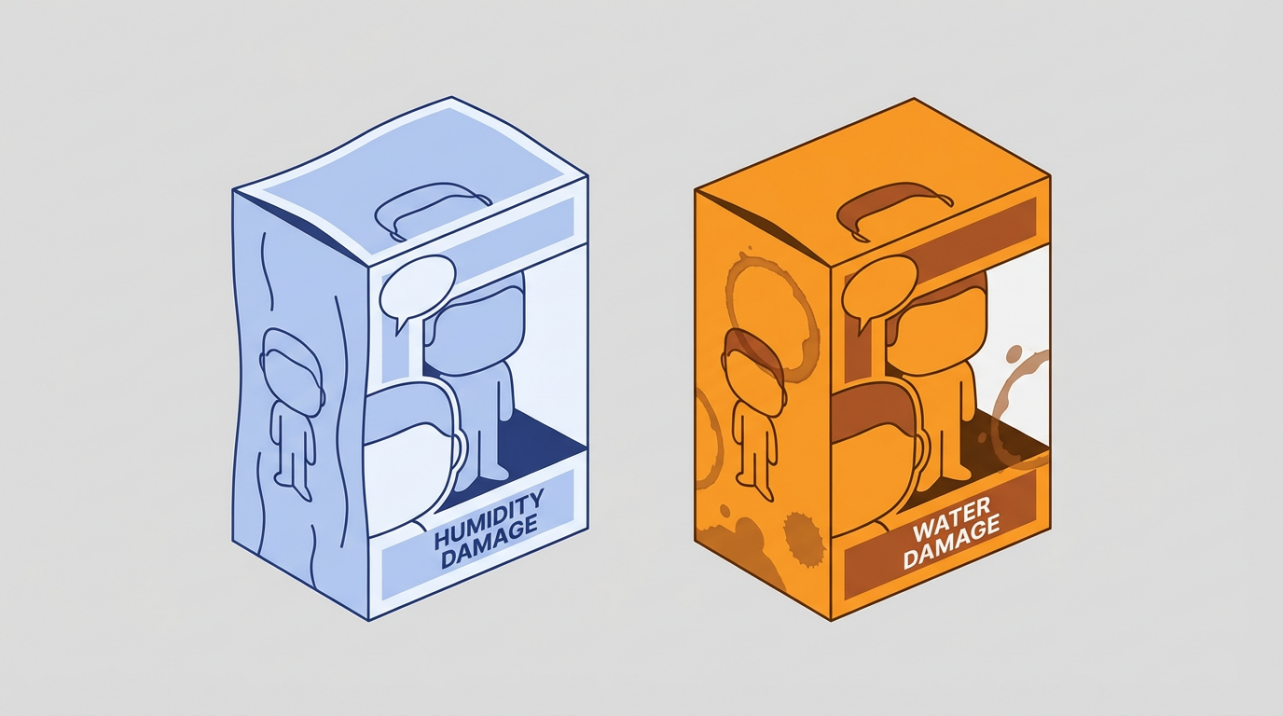
Restoration specialists describe classic signs in buildings: brown water rings, peeling or bubbling paint, sagging drywall, soft spots, and musty odors. Translate that to your collection and you see stained box bottoms, tide marks creeping up the sides of shipper cartons, warped shelves, and patches of mold on or around your figure boxes.
A helpful way to think about it is that humidity damage is usually reversible only in appearance, not in structure: a wavy card might flatten a bit if you get the room under control, but the micro-damage to fibers has already happened. Water damage tends to leave permanent scars: stains, lifted inks, fuzzy mold, and warped plastic that never really goes back.
Here is a quick comparison you can keep in mind when inspecting your shelves:
Type of Moisture Issue | Typical Cause | Common Signs on Figures | Common Signs on Packaging | Usual Impact on Value |
|---|
Humidity damage | Weeks or months of damp air, no direct spill | Slightly tacky PVC, soft or leaning poses, light surface haze, very early mold specks in crevices | Wavy or "pillowed" cards, mild bowing, no obvious stains, blisters just starting to loosen | Often mild to moderate; like light humidity damage on comics, pieces can still be desirable if caught early |
Water damage | Leaks, spills, minor floods, dripping from above | Obvious spotting or staining on bases, rust on screws, severe warping, mold growth on figure or base | Brown or yellow tide lines, stuck inner trays, moldy patches, crushed or warped corners, softened box board | Usually severe; more like "water-damaged" comics where grade and value take a major hit |
Early Warning Signs on the Figures Themselves
Warping, Leaning, and Softening Plastic
One of the first things moisture attacks is shape. Guides for action-figure and diecast collectors from Dattoystore and Hearns Hobbies both call out heat and humidity as a combination that warps plastics and softens adhesives. On figures, that can show up as legs that slowly bow inward, bases that dome instead of sitting flat, or capes that start to curl in ways they never did out of the box.
If humidity in your room lives above about 60% for long stretches, resin and PVC can feel slightly rubbery or too soft when you adjust a pose. Collectible statue care guides suggest trying to keep the environment roughly 59-77°F with about 40-50% relative humidity, with silica gel in cabinets to keep moisture from building up. If joints feel gummy or the figure leans more every few months, that is not just age; it is often moisture and heat quietly reshaping it.
A simple example: imagine a shelf that sits near a window and above a radiator.
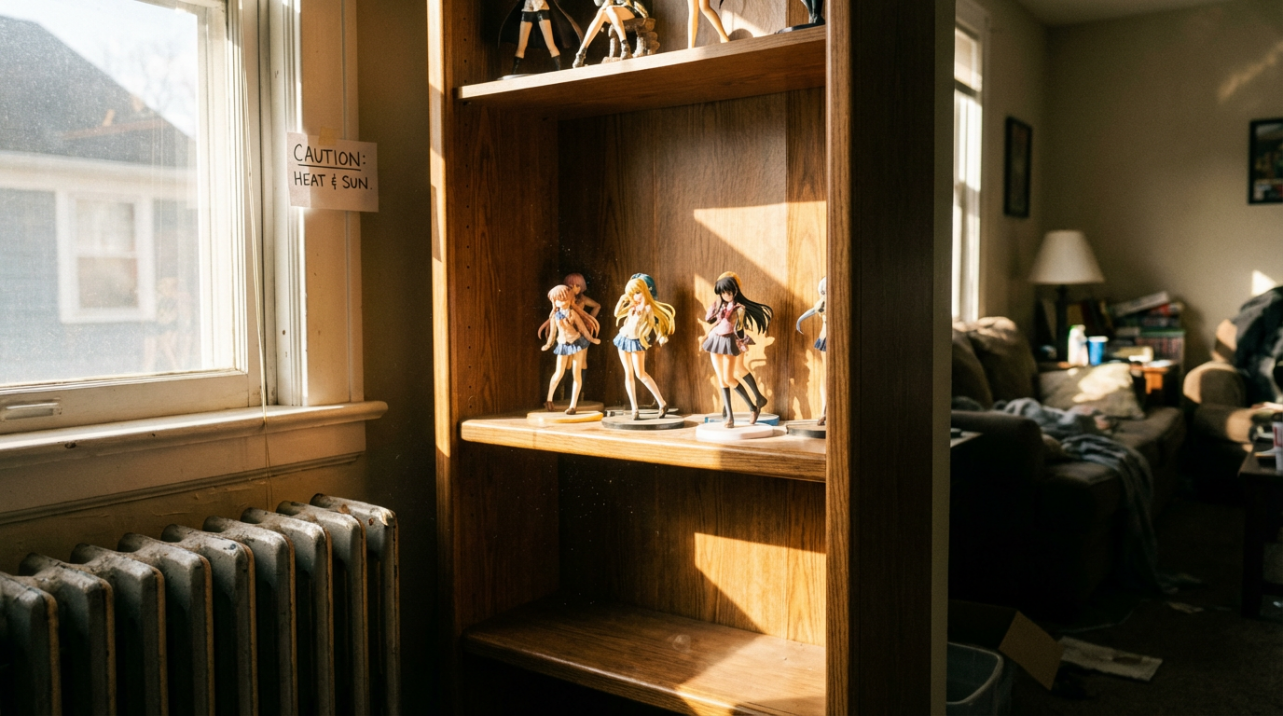
In summer, sunlight warms the cabinet, and the room’s humidity spikes during a week of storms. The plastic slowly relaxes; a sword droops, a long PVC hair strand bends forward, and a once-stable pose becomes wobbly. You might not see a problem day to day, but comparing photos six months apart will show the drift.
Color Shifts, Yellowing, and Early Mold Specks
Color changes are a major red flag. Star Wars collectors on Rebelscum reported a loose white Luke Stormtrooper torso yellowing rapidly after a move to a hot, humid climate, with humidity apparently amplifying the effect of light exposure. Doll preservation experts on The Spruce Crafts also warn that vinyl and fabrics shift colors faster under a mix of UV and ambient moisture.
Mold is even more telling. Rainbow Restoration describes mold from water damage as fuzzy or slimy colonies in black, brown, green, white, or pink; the Canadian Conservation Institute notes that visible mold can appear in around ten days at about 80% relative humidity on organic materials. Triple Mountain’s work with Breyer model horses shows the same pattern: damp basements and non–climate-controlled attics promote mold and mildew that stain the models and even infiltrate plastic totes.
On anime figures and statues, mold often appears first as tiny dots in textured areas: the undersides of bases, dust-catching folds of a cloak, or the cardboard inside an art box.
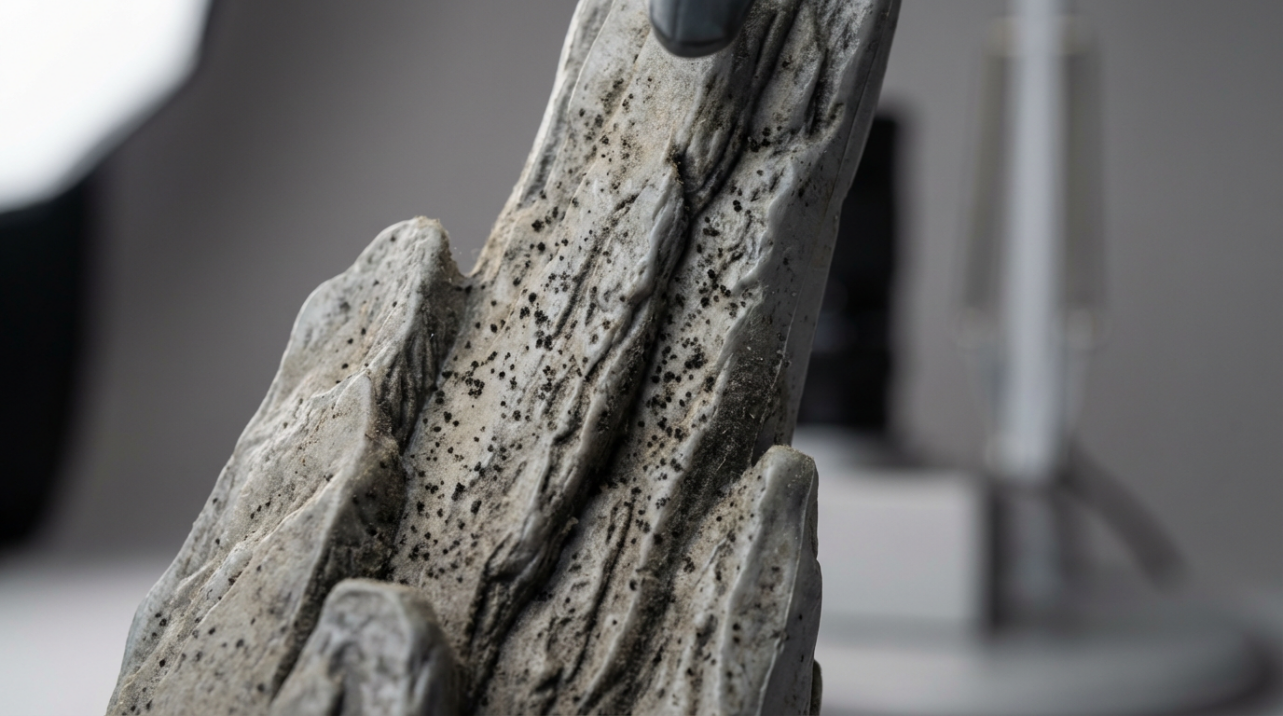
A faint musty smell when you open a cabinet, even if you do not yet see spots, is your early warning. If you ignore that smell and let the room stay damp, it can progress to visible fuzz on foam inserts, stickers lifting at the edges, and eventually surface growth on the figure itself.
Metal, Rubber, and Adhesive Clues
Moisture is not just a plastic problem. Diecast guides point out that high humidity drives oxidation on metal and speeds up rubber deterioration. On figures that mix materials, you may notice tiny rust dots on screws or pins, clouding or cracking on chrome parts, or sticky, breaking rubber on cords and capes.
Collectors who store models or figures in sealed totes with no moisture control sometimes report a sharp vinegar-like smell when opening them months later, which Triple Mountain identifies as a sign of cellulose acetate breakdown in plastic, made worse by damp, stagnant air. Even if your figures are modern PVC or resin, that same stagnant humidity can attack glues, causing clear stands to separate, nameplates to fall off, or layered bases to split at the seams.
Packaging and Display: When Your Shelves Are Telling on You
Wavy Cards, Lifting Bubbles, and Foxing
Packaging is often more honest about moisture than the figures inside. The museum professional writing about toy preservation on Rebelscum emphasizes that humidity, more than handling, causes card warpage and delamination. Gaylord’s guidance on collectible storage echoes this: they recommend climate-controlled, moderate-humidity spaces precisely to avoid cockling, lifted layers, and mold spots on paper and board.
On carded figures, humidity damage usually starts as a gentle, overall wave in the card when viewed from the side. Over time, edges curl more, the surface may ripple, and in bad cases the printed layer can lift or show foxing spots, those brownish, freckle-like dots often seen on old books. Once you see bubbles beginning to separate or corners peeling away from the blister, you are deep into humidity trouble, even if there has never been a direct spill.
Water damage is more dramatic. Similar to the brown rings and sagging walls water-mitigation companies describe in homes, boxes and cards exposed to liquid water often show clear tide lines, darker patches with hard edges, and board that feels stiff yet brittle when dry. A single corner that sat in a small puddle can show this halo effect and significantly hurt value, much as a single water-damaged corner on a comic will drag its grade, according to Back to the Past’s grading notes.
Musty Smells, Shelf Clues, and Room Surfaces
Your nose might notice trouble before your eyes do. Rainbow Restoration and Servpro both highlight a persistent musty odor as one of the most reliable signs of hidden water damage in a room. If you open a Detolf or acrylic case and get a whiff of basement, something in that micro-environment is staying damp too long.
Check around the collection as well. Buckling laminate near display cases, soft spots or discoloration on the wall behind your shelves, or a ceiling stain above your figure room are all building-level clues that moisture is intruding. Even if the figures look fine now, the environment is already in the danger zone those professional restorers warn about. Sparefoot’s action-figure storage guide, along with toy retailers like Tactics 2 Toys and Dattoystore, caution against basements, attics, and spots near windows, because these areas swing wildly in humidity and temperature and are more prone to leaks and condensation.
Is It Just Humidity, or Do You Have a Leak?
A Quick Room Check for Collectors
When something looks off, start by asking whether the problem is chronic damp air or a specific water incident. Humidity-only issues usually spread slowly and evenly: multiple boxes across a shelf get a gentle wave, or every card in a particular room looks a bit pillowy. Water damage tends to be localized, lining up under a pipe, beneath a window, or directly beneath an upstairs bathroom.
Use the approach that water-damage inspectors recommend. Walk the room and look up for any ceiling stains or bulges. Press gently on suspect walls; soft or spongy spots echo the softened drywall Servpro describes as a key water-damage indicator. Look at baseboards and floor seams near your figure cases; buckling, crowning, or unexplained discoloration on the floor are classic signs of moisture having been there.
Then check your environment numbers. A simple hygrometer can tell you if your room is living in a safe band or not. The Canadian Conservation Institute urges keeping collections away from prolonged periods above roughly 75% relative humidity because mold and mechanical damage climb sharply there, while diecast and art-figure guides recommend aiming somewhere around 40-50% as a practical, collector-friendly target. Rainbow Restoration notes that indoor humidity in the 30-50% range is generally healthier for buildings and people than constantly damp air.
If your room spikes to 80% for a week during a wet season and you never dry it out, conservation research suggests mold can start on susceptible surfaces in about ten days.
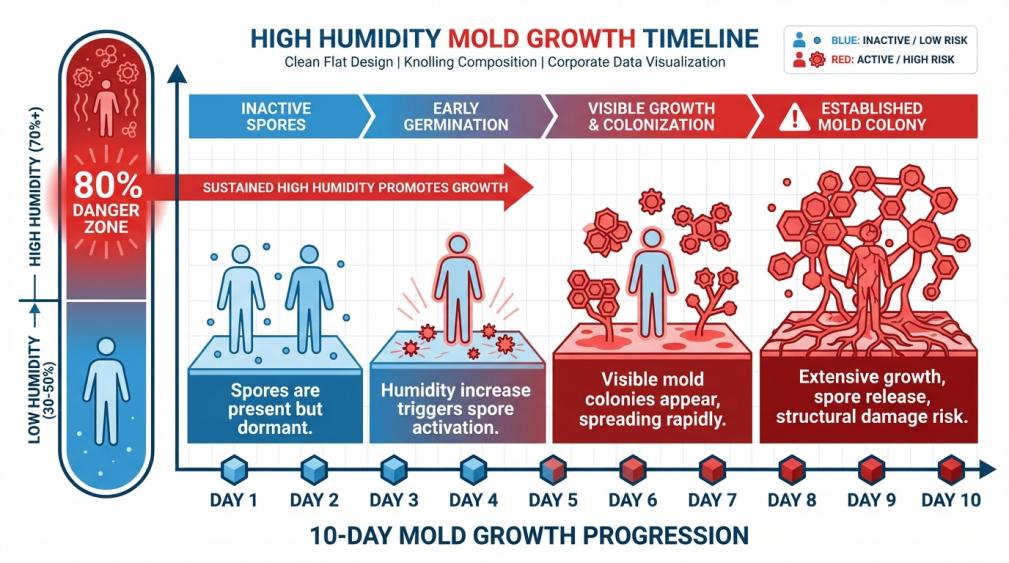
That means a single stormy stretch with closed windows and no dehumidifier can be enough to seed issues inside cabinets, tote boxes, and the corners of art boxes.
Using Your Collection as an Early-Warning System
Patterns in your collection can also point to the culprit. If figures closest to a window or skylight are yellowing or fading faster, while those buried in the middle of a case stay crisp, light plus heat is your main suspect, with humidity making it worse. If only the bottom row of boxes near the floor shows wavy bottoms or tide marks, you may be dealing with minor flooding or condensation pooling.
Collectors who store models or figures in sealed plastic tubs sometimes find the foam inserts and tissue paper showing mold spots or staying cool and clammy to the touch when opened, even if the outer cardboard looks fine. Triple Mountain has documented that spores and moisture can infiltrate plastic totes, and advises both climate control and desiccants; they note that roughly a 1 lb silica gel pack is appropriate for a sealed tote of about 20 gallons, paired with monthly inspections. If your tubs feel heavy with damp air when you open them, your figures have been living in a micro-climate that favors mold.
What to Do When You Spot Moisture Damage
Triage: Stop the Moisture, Then Rescue the Figures
Every professional water-damage guide starts with the same rule: fix the source before anything else. If you see signs of a leak above your display, call building maintenance or a contractor to stop it, just as restoration companies insist leaks must be stopped before cleanup. For humidity issues, the source is more about environment: close blinds, move displays away from windows, and run a dehumidifier or air conditioner until your hygrometer shows the room back near 40-50% relative humidity.
Once the environment is under control, gently separate items. Do not peel damp cardboard off plastic or pry stuck inserts apart; that is how you get ripped lithos and torn tabs. Gaylord and similar conservation sources advise minimizing handling while things are vulnerable. Let boxes and inserts dry in a cool, well-ventilated space out of direct sun. For mild dampness, small fans and time are safer than blasting heat.
For the figures themselves, lean on the cleaning methods recommended by toy and diecast care guides: use soft brushes or microfiber cloths to lift dust, and avoid household cleaners, alcohol, or anything abrasive that can strip paint, as emphasized by Dattoystore, Sparefoot, and Hearns Hobbies. If you need to remove residue after a moisture incident, use only barely damp microfiber with a drop of mild dish soap on water-safe surfaces, then dry immediately, just as diecast experts suggest for deep cleaning.
If you see active mold on a figure or packaging, remember that the spores are a health concern as well as a cosmetic one. Model-horse experts at Triple Mountain note that mold and mildew can persist even after superficial cleaning and may warrant discarding contaminated packing materials. For high-value pieces, it can be worth consulting a conservator experienced with plastics or a professional restoration artist rather than experimenting with strong chemicals or aggressive scrubbing.
When to Bring In Professionals
There are two levels of professional help to consider. For the room itself, water-damage restoration firms like Rainbow Restoration and Servpro recommend calling for help when you notice sagging ceilings, structural warping, extensive mold, or long-standing damp that you cannot locate. They have the tools to trace leaks, dry cavities, and handle mold remediation safely, which protects both your figures and you.
For especially rare or expensive statues and art pieces, art-conservation labs recommend professional assessment the moment you suspect water damage. Fine Art Conservation Laboratories, with decades of experience on paintings, emphasize that each water-damage case is unique and benefits from tailored treatment, especially when mold, flaking paint, or warped supports are involved. While an anime statue is not an oil painting, the same principles apply: once structural or surface damage appears, expert intervention has a better chance of stabilizing it than any home-brew fixes.
Preventing Future Moisture Damage Without Killing the Vibe
The goal is not to turn your figure room into a museum vault; it is to nudge the environment into that sweet spot where plastic, paper, paint, and adhesives age slowly. Across museum guidance, diecast care articles, and resin and PVC statue tips, you see the same basic recipe: stable, human-comfortable temperatures around 64-72°F, relative humidity roughly in the 40-50% band, low UV light, and clean, dust-managed displays.
Practical steps include using enclosed acrylic or glass cases away from direct sun, as recommended by both toy and statue guides, and pairing them with silica gel or other desiccants inside to buffer humidity. Sparefoot’s storage advice and The Spruce’s doll-preservation tips both caution against attics, garages, and persistently damp basements; if you must use those spaces, only do so with strong climate control and regular inspections.
Think in terms of a simple maintenance rhythm. Dattoystore suggests mid-year checklists that include dusting, inspecting for UV and heat damage, and auditing storage setups, while Hearns Hobbies and Triple Mountain layer on annual condition checks and monthly opening of sealed totes to catch early mold. Even taking one weekend every few months to walk your shelves, sniff your cabinets, and peek behind boxes can catch a musty corner or wavy card before it becomes a collection-wide crisis.
Finally, avoid overcorrecting. A collector on TFW2005 raised concerns about plastics becoming brittle around a dehumidifier, and the Canadian Conservation Institute notes that very low humidity and big swings can cause mechanical fatigue in layered materials. Do not chase zero humidity; aim for that middle ground that feels comfortable to you and safe for mixed materials.
FAQ
Is a slightly wavy card already ruined?
Not necessarily. Comic-grading guidance from Back to the Past treats light humidity waves without stains as a real but relatively minor defect; books can still earn high grades. For figures, a gently wavy card with clean colors, no foxing, and a firmly attached blister will still be attractive to many collectors, especially if you stabilize the environment so it does not get worse. The real hit to value starts when stains, mold, or serious delamination show up.
Are sealed plastic bins safe for long-term figure storage?
They can be, but only with climate control and moisture management. Sparefoot’s action-figure storage guide recommends clear, labeled bins with proper cushioning, while Triple Mountain warns that damp air and spores can still infiltrate totes and that sealed, humid conditions promote mold and, for some plastics, chemical breakdown. The safest approach is climate-controlled shelving, but if bins are necessary, add adequate silica gel, keep them in a cool, dry room, and open them every month or two to inspect and refresh.
Do I really need museum-level humidity control?
No. The Canadian Conservation Institute and the museum professional on Rebelscum both point out that strict museum targets, like a rock-solid 50% relative humidity with tiny daily fluctuations, are conservative. For a home collection, what matters most is avoiding prolonged periods above roughly 75% and big, frequent swings. A modest dehumidifier, a hygrometer, and thoughtful placement of cabinets usually get you most of the protection without industrial systems.
Moisture damage is one of those villains that shows up quietly in the background of your collection’s story, then suddenly steals the spotlight when a favorite grail is warped or spotted. Catching the early signs on figures, boxes, and in the room itself lets you stabilize the environment, rescue your display, and keep your favorite characters looking like they just stepped off the key visual for years to come.
References
- https://www.cpsc.gov/Business--Manufacturing/Business-Education/Toy-Safety
- https://www.thesprucecrafts.com/preserve-protect-doll-tips-775182
- https://dattoystore.com/protect-display-action-figures-guide/
- https://info.gaylord.com/resources/tips-for-collectible-artifact-storage#:~:text=Prevent%20Physical%20Damage,on%20the%20outside%20of%20containers.
- https://geek-network.com/frequent-damage-that-occurs-to-action-figures-in-production/
- https://www.gobacktothepast.com/blog/133-grading-101-humidity-damage-vs-water-damage
- https://rainbowrestores.com/blog/what-does-water-damage-look-like
- https://www.sparefoot.com/blog/how-to-store-and-display-action-figures
- https://tactics2toys.com/preserving-collectibles-best-practices-for-mint-condition-storage/?srsltid=AfmBOop1cmgZmo8WLvfwobER3R-BMrZfXQwRSmDSbg8WyP09OoeFJrHo
- https://tryknowhow.com/template/initial-water-damage-inspection-to-determine-the-scope