Understanding Why Winter Makes Anime Figurines More Brittle
Winter cold stiffens PVC, resin, and paint, so anime figurines become less flexible and more likely to crack unless you adjust how you store, ship, and handle them.
Ever tried to rotate a character's tiny ankle joint in January, heard that ominous creak, and frozen in place because you could almost see your grail's foot shearing off? Collectors, conservation labs, and even outdoor statue caretakers see the same pattern: the colder and more yo-yo-like the temperature, the easier it is to chip, crack, or shatter what once felt solid. This article explains what winter actually does to figure materials, how cold is too cold, and the habits that keep pegs, bases, and paint intact until spring.
What "Brittle" Really Means for Figurines
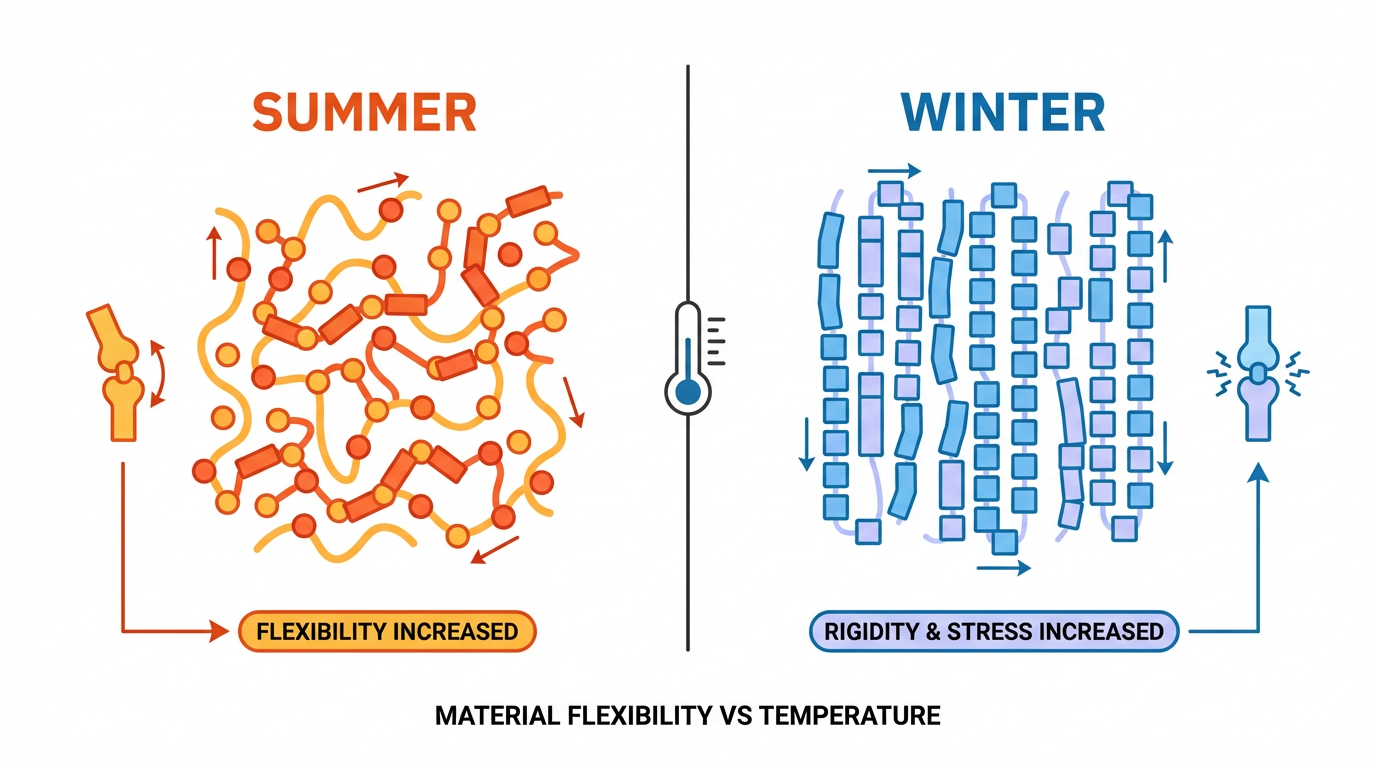
For anime figures, "brittle" is not just a dramatic way of saying "fragile." Most modern pieces are built from PVC, polystone, or resin. At comfortable room temperatures these materials have some give: a PVC hair tip will flex a little if you bump it, a base peg will accept a gentle twist, and a resin accessory will shrug off minor vibrations. When a figure becomes brittle, that margin for error shrinks. Instead of flexing and bouncing back, the material resists movement, concentrates stress, and releases it suddenly as a white stress line or a clean break.
Conservation guidelines for artworks describe the same behavior in different objects. They note that lower temperatures make prints and sculptures more prone to tearing and cracking, especially when temperature changes are abrupt rather than gradual. That combination of stiffer material plus mechanical stress is exactly what you feel when a joint that was easy to pose in August starts fighting you in January.
How Cold Temperatures Change Figure Materials
PVC in the Cold
PVC is the backbone of most anime figurines and many other collectibles. At normal indoor temperatures, it is soft enough that accessories, hair strands, and flowing outfits can flex a bit without damage. As the temperature drops, the polymer chains move less freely and the material stiffens.
Cold-weather tests on outdoor PVC decorations show this clearly: below about 32°F, PVC shells become noticeably stiffer, and around 14°F manufacturers start warning about a sharp rise in cracking and seam failure. That research is about inflatables, but the plastic chemistry is similar. A thin cape or weapon on a scale figure that sat all day in a delivery truck or mailbox in similar temperatures will also be much less forgiving if you bend it the second you open the box.
Collectors' storage guides for anime figurines mirror museum advice for plastics and sculptures by recommending a stable range of roughly 65-75°F and warning against sudden cold snaps. The risk is not just "being cold"; it is the combination of cold plus mechanical force. A chilled PVC joint can survive just sitting on a shelf, but the same joint may crack if you twist or pull it immediately after it has been in freezing air.
Resin, Polystone, and Bases
Resin and polystone feel solid and heavy, but that does not make them immune to winter. Outdoor statue caretakers routinely see resin and concrete pieces suffer from temperature swings: the material expands and contracts as conditions change, and over time that cycling encourages fine cracks and surface chipping. Guides for resin garden statues specifically recommend moving them to a dry, sheltered indoor spot during harsh winter weather because extreme temperatures and high humidity together stress the material.
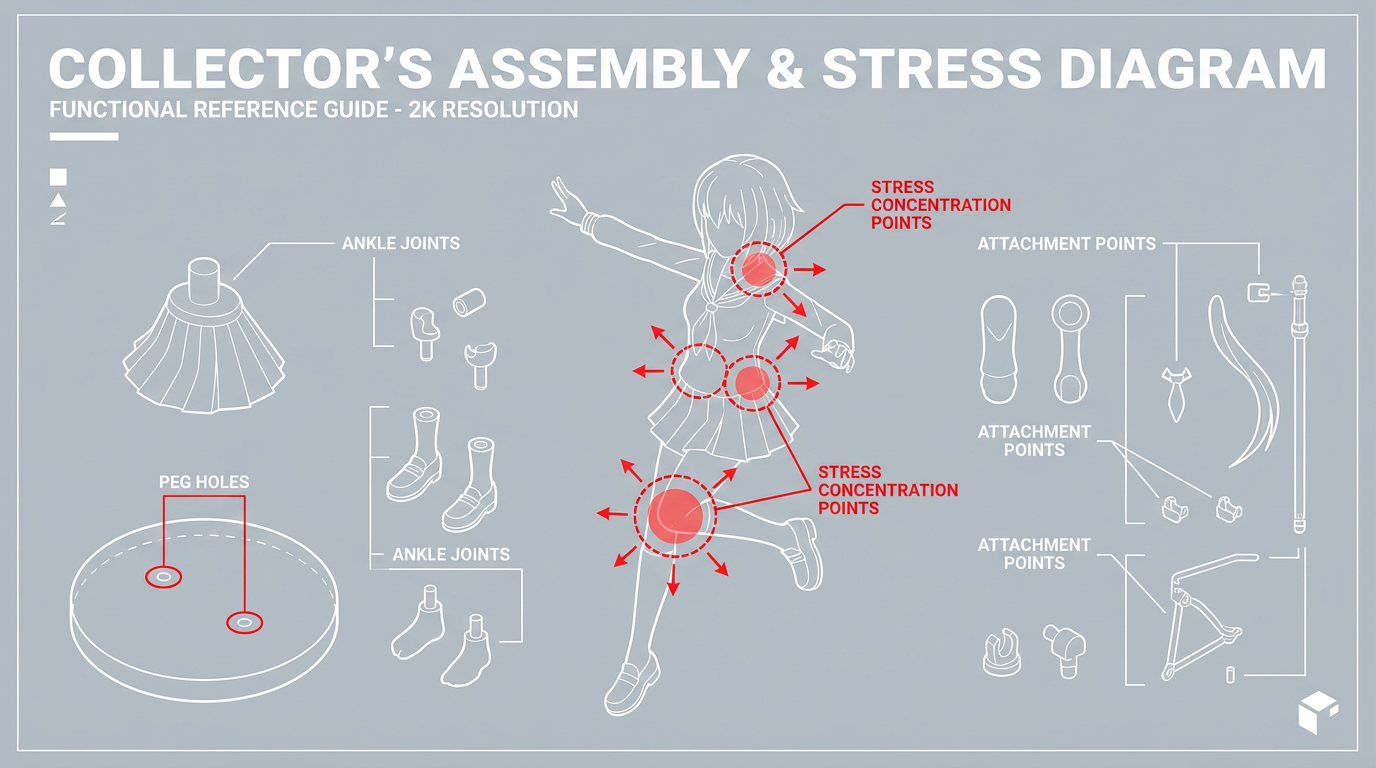
Scale figure bases and polystone parts behave in the same general way. They do not flex much even at room temperature, so when winter air dries out and cools the material, any impact or tight fit tends to concentrate force at a small point. That is why brittle breaks so often appear at ankles, peg holes, or where a heavy resin cloak attaches to a slender connection. The colder and drier the room, the more those stress hot spots matter.
Paint Layers and Small Details
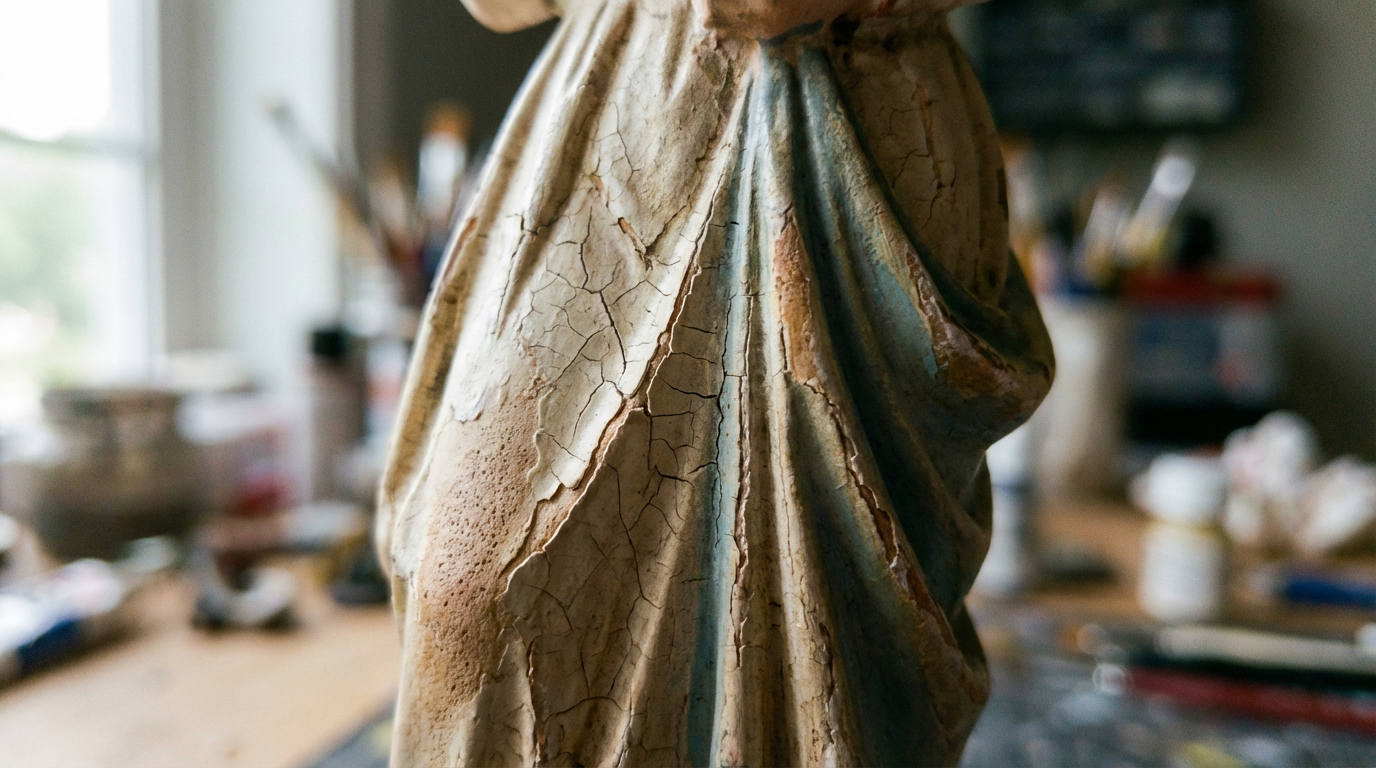
Figures are layered objects: primer, paint, clear coats, and sometimes decals sit on top of plastic. Conservation work on painted art and historic objects shows that when temperature drops very low, these layers can become more fragile and more likely to crack or flake if stressed. Low temperatures reduce flexibility in both the paint and the underlying material, and they may not contract at exactly the same rate.
Collectors who worry about paint in winter are not imagining things. Even though high-quality acrylic and similar paints are durable, temperature and humidity changes can help tiny cracks propagate along panel lines or on sharp folds in clothing. Combine that with cold-stiff PVC or resin underneath, and sudden bending or impact in winter is more likely to leave a visible craze line in the finish.
How Cold Is Too Cold? A Practical Temperature Guide
Museums caring for art and historic objects often aim for a fairly narrow temperature band, both to reduce mechanical stress and to slow long-term chemical degradation. Figurine-specific storage guidance echoes that ideal, with an added warning about sudden cold for PVC and resin.
A useful way to think about your collection is in broad temperature zones:
Situation | Approximate temperature | What it means for figurines |
|---|
Comfortable display sweet spot | About 65-75°F | Matches guidance from both art conservation and figure storage; plastics stay flexible enough and chemical aging is manageable. |
Acceptable fluctuation band | About 59-77°F | Still within ranges used for art and artifacts; short-term shifts here are usually fine if they are gradual. |
Near or below freezing (for example, a porch or delivery truck in winter) | Around 32°F and under | PVC becomes stiff; bending small parts or forcing pegs right after this exposure is much more likely to cause whitening or cracks. |
Deep winter cold in some regions | Around 14°F and under | Outdoor PVC products see dramatic rises in cracking and seam failure; figures in similar cold are at high risk if handled before they fully warm up. |
This does not mean your figures shatter the moment they dip below 32°F. It means that the safety buffer you are used to in summer shrinks. The colder you go, especially into the 20s and teens, the more careful you need to be about force and sudden movement.
Winter Survival Playbook for Your Collection
Stabilize Your Display Environment
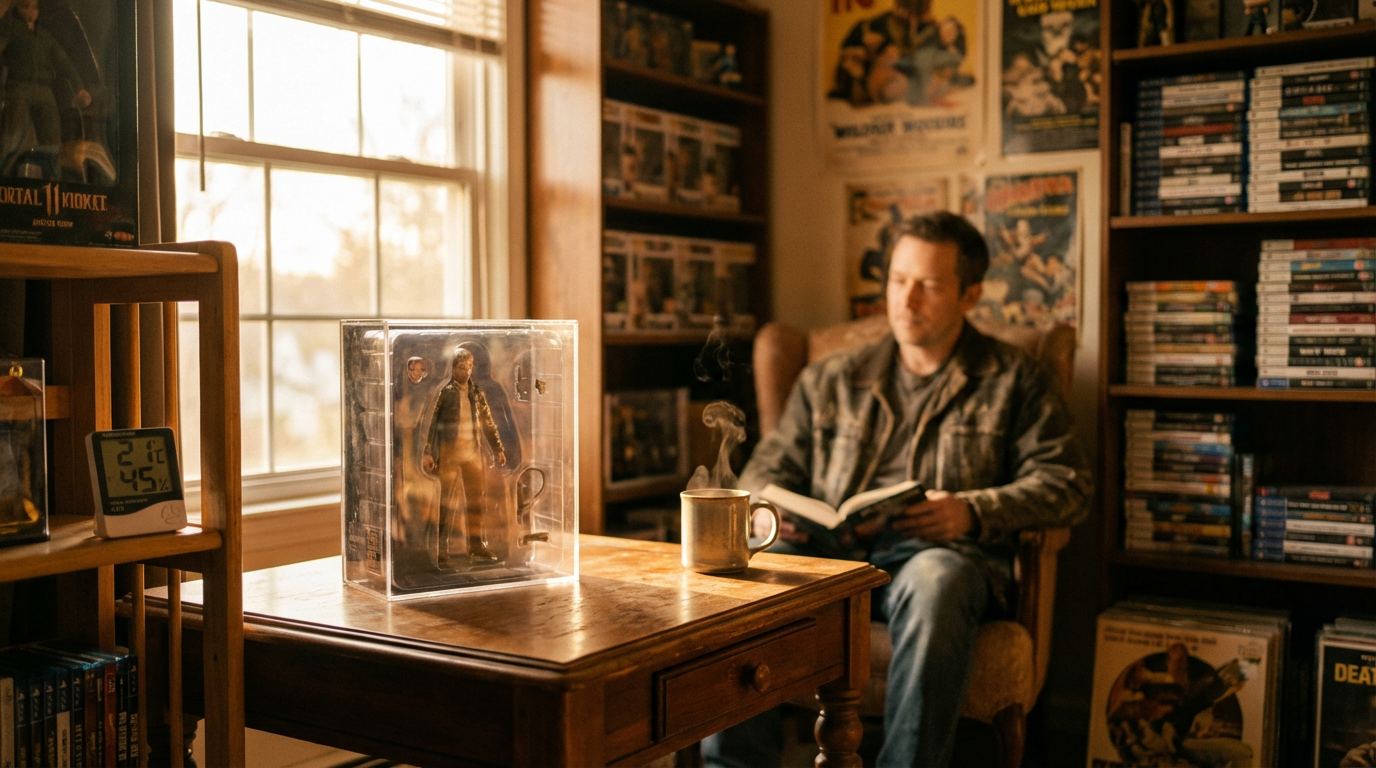
The single biggest win is keeping your display space as stable as your living space. Figurine storage guidance recommends treating your collection like a small museum: aim for roughly 65-75°F with relative humidity around 40-55% when you can, and avoid rooms with wild swings such as attics, basements, and unheated garages. Art conservation notes that rapid temperature and humidity changes mechanically stress materials, while stable conditions help prevent both cracking and warping.
In practice, that means choosing a room that stays reasonably steady through day and night, keeping shelves away from drafty windows or exterior doors, and redirecting vents that blow directly on a display case. A small digital hygrometer and thermometer on the shelf can give early warning if winter heating dries the air too much or a cold front pushes room temperatures down more than expected.
Handle and Pose with a Warm-Up Buffer
Most winter heartbreak stories start with impatience. The figure arrived after a snowstorm, the room just warmed up, or a pose needed fixing before a photo shoot. Guidance for both anime figurine collectors and outdoor resin statues emphasizes that sudden cold is especially risky when combined with movement.
A simple habit helps: if a figure or its box feels noticeably cold to the touch, treat it as in cooldown. Let the sealed package or the figure in its case sit until everything feels close to room temperature before you flex joints, insert pegs, or attach thin accessories. This mirrors how conservators let chilled objects acclimate in a controlled environment before handling. The goal is to let PVC and resin move back toward their normal flexibility so small adjustments do not push them past their reduced winter limits.
Shipping and Unboxing in Winter
Long-distance shipping in winter is the perfect storm of risks: prolonged cold, unknown handling, and eager unboxing. Collectors' storage guidance flags sudden cold as a specific hazard for PVC and resin and advises against storing figures in unheated spaces. The same logic applies to transit.
Whenever possible, have packages delivered to a place that is heated or where you can bring them in quickly, rather than leaving them on a freezing porch all day. If the box does end up sitting outside or in a cold lobby, bring it inside and let it rest unopened until it no longer feels icy. The original packaging, foam, and blister plastic act as a buffer, so giving them time to equalize temperature means the figure inside warms gradually instead of suffering a shock when you immediately remove it and start posing.
If you pick up figures in person during very cold weather, keep them in a heated vehicle rather than a trunk and avoid running errands that leave the box in the cold for hours. This pattern of gentle transitions mirrors best practices used for sensitive plastics in conservation labs and dramatically lowers the odds of winter cracks.
Storage During Moves or Off-Season
Winter moves and renovations are another trap. It is tempting to stash boxes of figures in a friend's garage or a cheap storage unit, but guidance on both anime figures and resin statues is clear: unheated, damp spaces in winter are risky. Extreme temperature swings and high humidity can cause expansion, contraction, and long-term material degradation.
Choose climate-controlled storage when you can, or at least a consistently heated interior space like a closet or interior room. Pack figures in their original boxes or in well-padded containers, add desiccant packs to keep humidity in the moderate range, and avoid placing boxes directly on cold concrete floors where moisture can creep in. These steps borrow directly from how museums store vulnerable plastics and outdoor objects during off-season periods.
Is Colder Always Better for Preservation?
It is natural to think, "If heat is bad, colder must be better forever." Conservation research on unstable plastics tells a more nuanced story. A detailed study on celluloid objects, one of the most fragile historic plastics, found that storing pieces at around 5°F drastically slowed chemical degradation compared with room temperature or mildly cool conditions. That is why some museums use cool or even frozen storage for especially volatile materials.
However, the same study noted that more work is needed to understand how such low temperatures affect physical brittleness over longer periods, and it focused on carefully controlled, professionally monitored environments. At home, trying to mimic frozen storage for anime figures would introduce all the mechanical risks discussed earlier without the fine-grained climate control a lab can provide.
For most collections, the practical sweet spot is clear. Slightly cool but stable indoor conditions already help slow chemical aging while keeping figures within a range where PVC, resin, and paint remain flexible enough for safe handling. Chasing a few extra degrees of cool by exposing figures to freezing hallways, storage units, or vehicles is not worth the heightened risk of brittle breaks.
FAQ: Winter and Brittle Figurines
Is it safe to keep figures in an unheated attic or garage during winter?
Guidance for anime figurine storage and resin garden statues warns against unheated spaces in cold seasons. Unheated attics and garages can swing from near room temperature to well below freezing, sometimes within a single day. Those swings encourage expansion and contraction in plastics and finishes, and deep cold makes PVC and resin far less forgiving if something shifts or bumps against them. Whenever possible, keep figures in a heated, relatively stable part of the home rather than in outbuildings or uninsulated spaces.
A package with a figure was delivered on a freezing day and sat outside. Is it ruined?
Simply being cold does not automatically ruin a figure, especially when it is still in its packaging, which provides some insulation. The real danger comes from stressing cold, stiff plastic. Bring the box indoors, let it sit unopened until it feels close to room temperature, then unbox and inspect before posing or inserting tight pegs. This gradual warm-up follows the same principle conservation labs use for chilled objects and greatly reduces the chance of winter-induced cracks.
Why do some figures feel fine in winter while others get stress marks quickly?
Different materials, thicknesses, and designs respond differently to cold. Thin PVC strands of hair, narrow weapon blades, or small ankle pegs concentrate stress far more than a thick torso or solid base. Conservation work on sculptures and outdoor statuary shows that projecting, delicate parts are always the first to suffer from environmental stress, and that holds true for anime figures. Two pieces on the same shelf in the same room can behave very differently depending on how their weight is distributed and how their details are engineered.
Winter does not have to be a boss fight you dread every time a preorder ships. With a steady display climate, patient warm-up before handling, and smart choices about where and how you store your collection, those brittle, creaky winter moments turn back into quiet evenings admiring your lineup while the snow falls outside.
References
- https://www.academia.edu/5032386/Assessing_the_performance_of_protective_winter_covers_for_outdoor_marble_statuary_pilot_investigation
- https://news.oregonstate.edu/news/how-winterize-your-concrete-garden-art
- https://discovery.ucl.ac.uk/6760/1/6760.pdf
- https://pmc.ncbi.nlm.nih.gov/articles/PMC10609767/
- https://myfigurecollection.net/blogpost/24325
- https://www.researchgate.net/publication/316236527_Assessing_the_performance_of_protective_winter_covers_for_outdoor_marble_statuary_pilot_investigation
- https://www.alibaba.com/product-insights/are-inflatable-snow-globes-durable-in-freezing-temperatures.html
- https://artfundi.tech/blog/a-quick-guide-to-ideal-conditions-for-art-artefact-conservation
- https://www.dutchgrowers.info/resources/statue-fountain-garden-decor-winter-care
- https://www.jedidefender.com/yabbse/index.php?topic=15342.0