Understanding Why Your Clear Plastic Figurines Turn Yellow Over Time
Clear plastic figurines yellow because their polymers slowly degrade under light, heat, and air, but you can slow that process dramatically with smarter display, storage, and cleaning habits.
You know that gut-punch moment: you tilt a display light over a favorite clear stand or energy effect part and realize it has gone from crystal aura to nicotine-tinted amber, even though you babied that figure. Collectors, toy restorers, and even polymer manufacturers have chased this exact problem for years and have learned which conditions speed yellowing, which slow it, and where the hard limits are. By the end, you’ll understand what is happening inside your figures, what habits are quietly aging them, and which fixes and prevention strategies are worth your effort.
Why Yellowing Hurts So Much For Collectors
Yellowing hits harder than a tiny paint rub because it attacks what clear plastic is supposed to represent: energy blasts, magic effects, glassy visors, pristine acrylic bases. Collectors on long-running toy forums describe looking at childhood favorites and feeling like the magic has leaked out once those pieces turn dingy and strange instead of bright and escapist. Some eventually make peace with it as the patina of age, but many admit that every new yellow streak still stings and can make a display feel “off.”
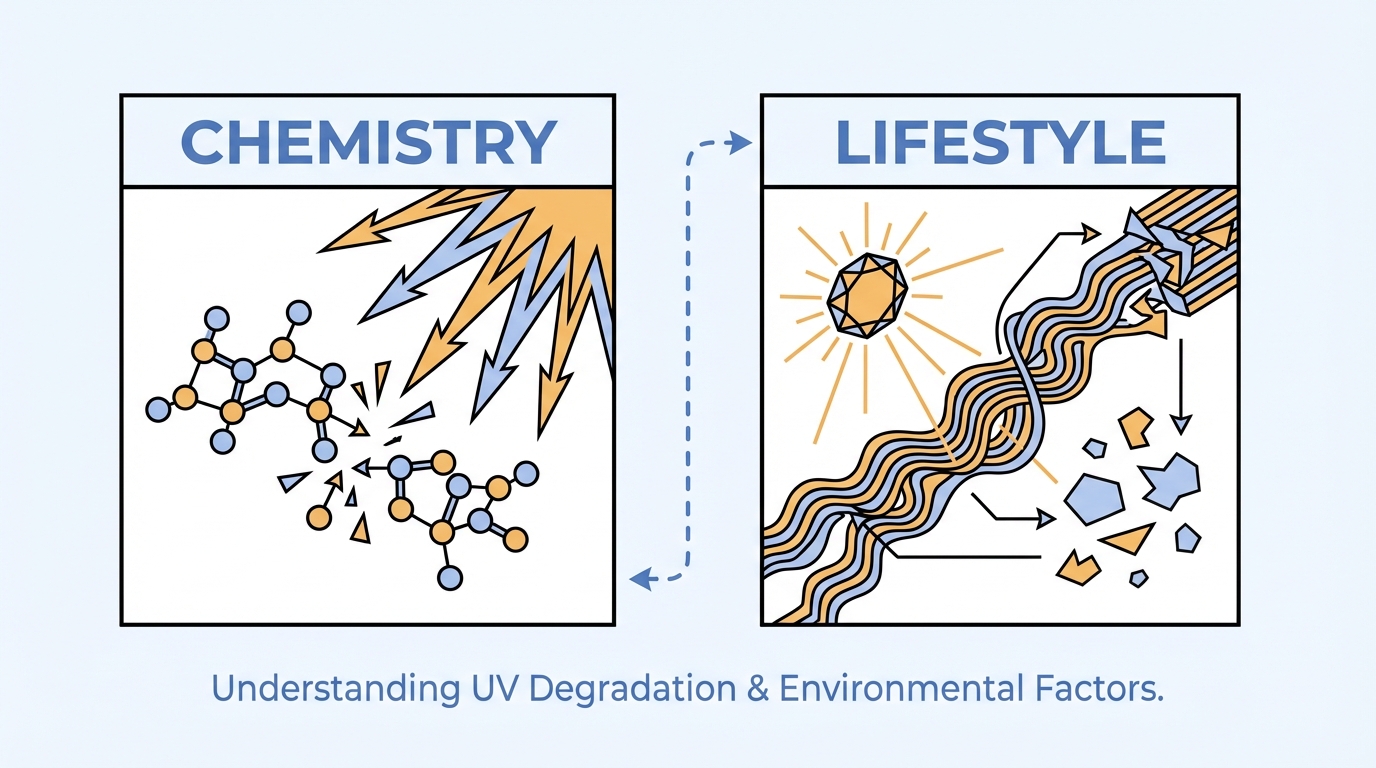
That emotional hit is also why people keep hunting for permanent fixes. Communities that restore vintage computers, consoles, and action figures have spent years experimenting with whitening gels and cases. At the same time, conservation professionals and archival suppliers have been quietly publishing guidance on how plastics age and how to store them safely. When you combine both worlds, you get a clearer picture: yellowing is partly a chemistry problem and partly a lifestyle problem for your collection.
What’s Actually Happening Inside Clear Plastic
Light, oxygen, and the hidden chain reaction
Most clear parts on figures are made from plastics like polycarbonate, PET-type polyesters, and PVC. At the molecular level, all of them are long chains of repeating units. When they sit under light and air for years, those chains slowly change.
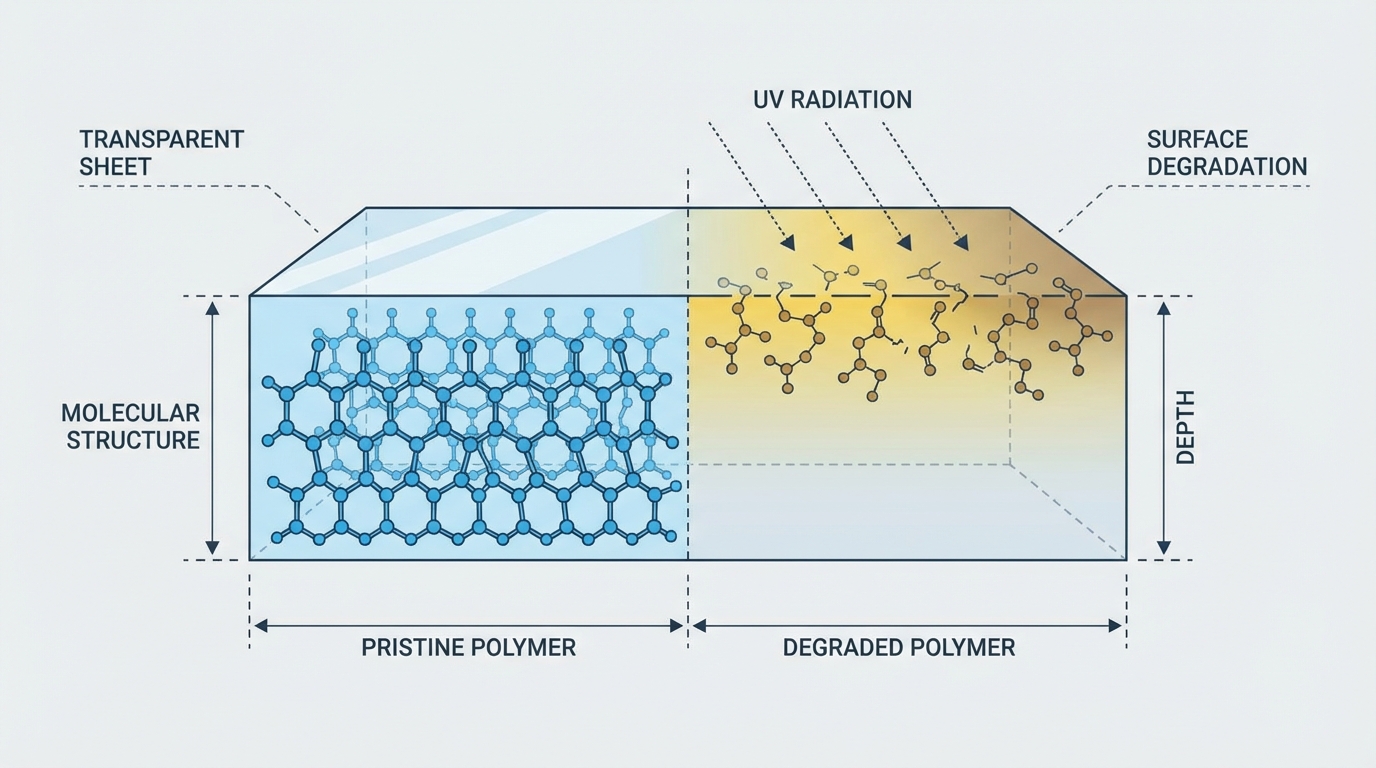
Polymer chemists describe a light-and-oxygen process called photo-oxidation. Ultraviolet light, especially at shorter wavelengths, kicks the plastic into a reactive state; oxygen then joins in, creating free radicals that attack the chains. Over time, this hidden chemical chain produces new groups in the plastic that absorb visible light in the yellow-brown range, so pieces that started crystal clear gradually look tea-stained.
A detailed lab study on commercial Lexan-brand polycarbonate sheets measured this explicitly. Unexposed material had a very low “yellowness index.” After just a few hours under intense short-wave UV around 280 nanometers, that index jumped by roughly a factor of seven compared with the starting value, while longer wavelengths closer to 340 nanometers caused a much smaller change. The same work found that deeper inside the sheet, where less UV penetrated, the plastic remained closer to its original color. For figurine collectors, that means most of the damage happens right near the surface that light hits.
Why PVC, PET, and resin all age differently
Not all figurine plastics are built the same way. Commodity plastics like polyethylene and polypropylene are inherently unstable if they are not properly stabilized, while polycarbonates and polyesters are engineered to resist yellowing longer but still eventually degrade under enough UV and oxygen. Manufacturers add stabilizers and UV absorbers, but those only slow the process rather than erase it, so even so-called UV-resistant plastics will yellow after long-term use.
PVC, used in many figures and accessories, adds another twist. To make it soft and flexible enough for toys, factories mix in plasticizers. Over time, especially in warm conditions, those plasticizers start migrating out. Collectors first see this as a greasy sheen on the surface, which can turn into a sticky film if ignored. The same research that explains this greasiness also points out that the PVC underneath is quietly losing toughness and becoming more fragile, even if the toy still looks acceptable after a cleanup. Yellowing in PVC is tied into this aging process, particularly when heat and light work together; as hydrogen chloride and free radicals form in the material, the color drifts yellower and the plastic becomes more brittle.
All of this leads to an uncomfortable truth. A collector can do everything “right” and still see yellowing eventually because some plastics have what museum conservators call inherent vice: they are chemically unstable by nature.
What Speeds Up Yellowing In Figurines
UV and everyday light: how bad is your room, really?
The biggest driver of yellowing is cumulative light, particularly UV. Polymer suppliers and chemical companies underline this again and again: UV exposure initiates and accelerates the reactions that turn clear plastics yellow, while visible light and heat add stress on top.
Collectors who actually measured their display lighting help put this into perspective. Using a UV meter, one fan found that slightly overcast daylight outdoors gave readings around 500 microwatts per square centimeter. Behind a glass shelf, that dropped to about 380, and with UV-filter film on the window, it plummeted to around 25. Typical indoor LED lights near a shelf showed UV readings in the 8–23 range depending on the lamp, while an incandescent bulb of similar brightness measured in the upper 30s. In rough terms, that means a figure in filtered indoor light might be seeing around twenty times less UV than one sitting in a sunlit window.
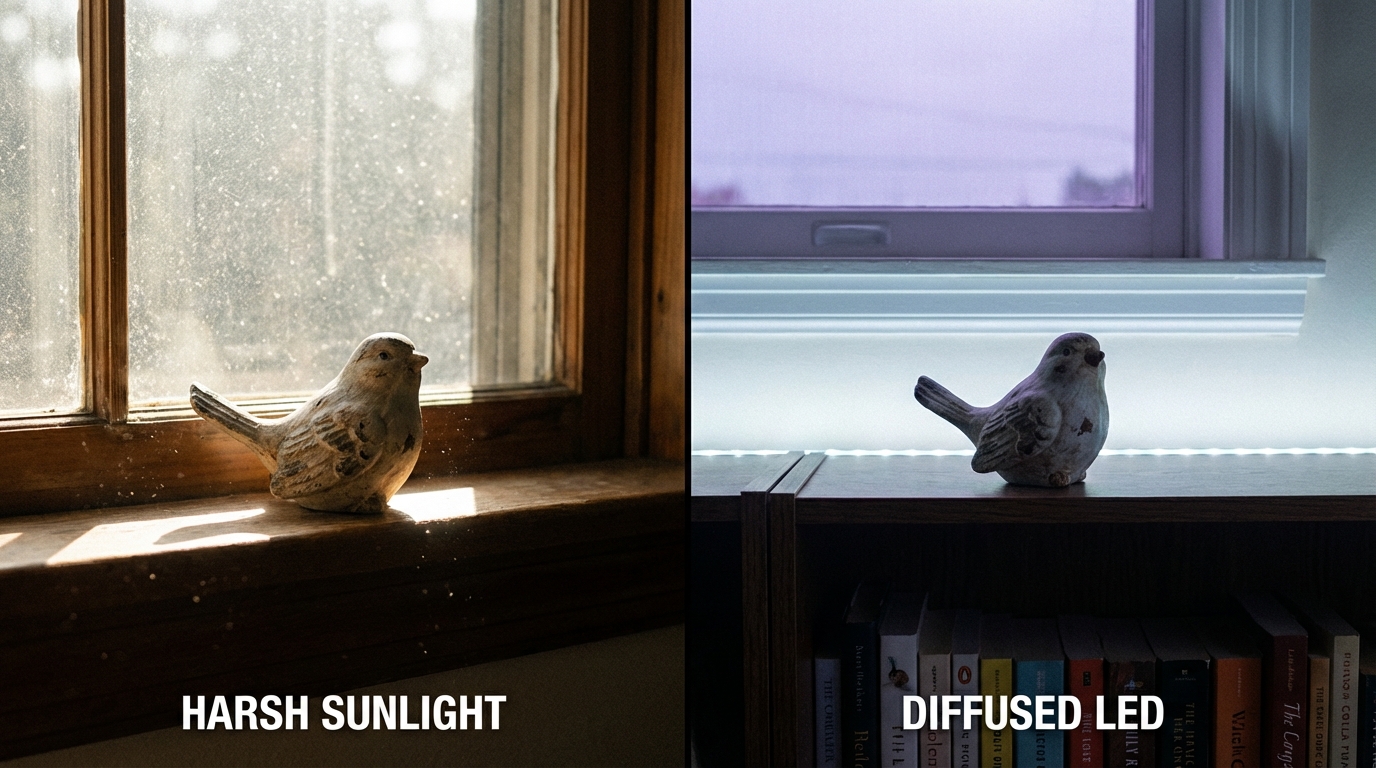
That difference is huge over years. It also shows why indirect daylight across a room can still be a slow problem, even if your figures never sit in a direct sunbeam. Short-wave UV is where the worst yellowing efficiency lives, and every little bit of that adds up.
Heat, humidity, smoke, and air pollution
Heat works hand in hand with light. Several technical overviews of plastic yellowing flag high temperatures, poorly controlled processing heat, and extreme environmental swings as key contributors. For PVC toys specifically, elevated temperatures accelerate the release of hydrogen chloride and the migration of plasticizers, pushing both yellowing and surface stickiness forward. Humidity swings make things worse by stressing plastic mechanically and, in PVC, contributing to chipping and surface damage over time.
Air quality matters more than most collectors expect. Atmospheric pollutants like nitrogen oxides, the same types of chemicals found in urban air and combustion byproducts, can react with antioxidants and stabilizers in plastics. Researchers studying textiles and plastics call this “gas fading,” where items slowly yellow in storage even without strong light. On the collector side, long-time toy fans have documented figures yellowing in rooms where nobody thought to worry about air: a basement collection discolored over years simply because someone smoked on another floor of the house, and clear parts near fireplaces or woodstoves picked up damage from very low but constant smoke levels.
Packaging, blisters, and cases: safer, or a trap?
It feels intuitive that keeping a figure carded or locked in a case should keep it pristine. Reality is more complicated.
First, the original plastic formulation inside the blister or case still matters. Some blisters remain startlingly clear after decades, while others yellow heavily in similar environments. Researchers who work on vintage toy packaging point out that once a plastic’s degradation has been triggered, there is likely a point of no return: you can cosmetically improve the color, but the underlying chemistry will keep marching.
Second, sealed environments can backfire. Conservation discussions comparing open-top and fully sealed Mylar sleeves for paper show that trapping aging materials in airtight enclosures allows volatile compounds to linger, sometimes concentrating damage along edges or on neighboring items. The same concern appears with toy cases. If a protective shell made from unstable plastic starts to yellow, that is a sign its own chemistry is breaking down; the recommendation from conservation-minded collectors is to replace such cases quickly because their breakdown products can threaten the figure’s blister instead of protecting it. Vent holes or breather designs may offer limited help, but once the case plastic itself is failing, vents cannot fully fix the issue.
The takeaway is that cases and packaging are tools, not magic spells. High-quality, inert materials help, but they cannot erase a poor figure plastic or an aggressive environment.
How To Actually Slow Yellowing Of Clear Figurines
Create a calm, moderate environment
Multiple preservation guides converge on the same environmental sweet spot: cool to room temperature and moderate relative humidity with minimal swings. For collection rooms, keeping temperatures around the mid-60s to low-70s °F and humidity roughly in the 40–55% range offers a stable, low-stress climate for plastics, paints, and fabrics alike. Attics, garages, and damp basements are consistently singled out as danger zones because temperatures and moisture can spike and crash, driving warping, cracking, and discoloration.
Climate-controlled spaces, like main-floor rooms or finished areas, are far kinder to clear plastic bases and effects. Small digital thermometers and humidity monitors placed inside display cases or on shelves give collectors early warning when conditions drift. A figure that sits on a bookcase in a stable living room with gentle air conditioning day after day is simply under less stress than the same piece baking near a window or shivering in an unheated storage unit.
Manage light in ways you’ll actually stick with
It is easy to say “keep everything in the dark,” but nobody builds a wall of anime grails to never see them. The trick is to cut UV and harsh light without turning your room into a cave.
Position shelves so that direct daylight never lands on them. If a room gets strong sun, UV-filtering film on windows and heavy curtains during peak hours can slash UV intensity dramatically, as those UV meter readings showed when values dropped from hundreds outdoors to a couple dozen inside. Glass or acrylic display doors add another layer of reduction between room light and plastic surfaces, especially for figures with lots of clear effects or transparent stands.
For artificial light, modern LEDs are your friend. Preservation guides for dolls, models, and museum artifacts all point toward LED strips and spotlights because they put out far less heat and significantly lower UV than incandescent or compact fluorescent lamps of similar brightness. The goal is soft, indirect illumination: point lights at walls or ceilings and let the bounce light your figures, rather than blasting them with a bare bulb aimed straight at their faces.
Use storage materials that don’t attack your figures
The plastic touching your figures can quietly nudge them toward or away from yellowing. Museum and library preservation teams strongly recommend avoiding soft PVC for storage, such as unknown flexible plastic bags or sleeves, because the plasticizers in those materials off-gas and migrate. When those chemicals land on another plastic, they can soften it, make it sticky, or trigger further instability.
Instead, they point to a small family of plastics that behave much better over decades: archival polyester (often sold under names like Mylar or Melinex), polyethylene, and polypropylene. These materials are used for safe document sleeves and storage bags and are also available in box and sheet form. For a figure collector, that translates into using clear polypropylene or polyethylene bags for accessories, choosing display cases made from stable acrylic, and storing loose parts in inert, acid-free boxes rather than regular cardboard or unknown soft plastic.
The same sources warn that plastics can harm other materials as they age. A clear PVC base stored pressed directly against printed paper art or natural fabric can transfer acids, plasticizers, and pollutants, leaving stains or soft spots. Giving each piece its own space, with acid-free tissue or foam supports inside boxes, keeps those cross-reactions to a minimum.
Handle and clean with long-term aging in mind
Daily habits do as much for yellowing as big environmental decisions. Skin oils, dust, and cleaning products all become part of the chemical soup around your figures.
Toy care specialists recommend treating all collectible toys gently: dust with a soft makeup brush or microfiber cloth, use compressed air for intricate sculpted details, and avoid harsh chemicals entirely. For plastic figures specifically, disassembling what you can, rinsing with lukewarm water and a mild, non-moisturizing dish soap, then drying completely before reassembly is a safe baseline method. Full submersion should be avoided for hollow parts or where water can get trapped, since trapped moisture pairs badly with PVC aging and can fuel mold.
For PVC pieces that have developed a greasy surface from plasticizer migration, manufacturers note that careful cleaning with an appropriate degreaser, followed by a new matte coating, can improve feel and appearance. However, once a toy has reached the sticky stage, its underlying elasticity and toughness are already compromised. Cleaning is still worth doing to slow further damage, but expectations should be realistic: the material will be more fragile from that point forward.
Limiting direct handling, especially of clear parts, also pays off.
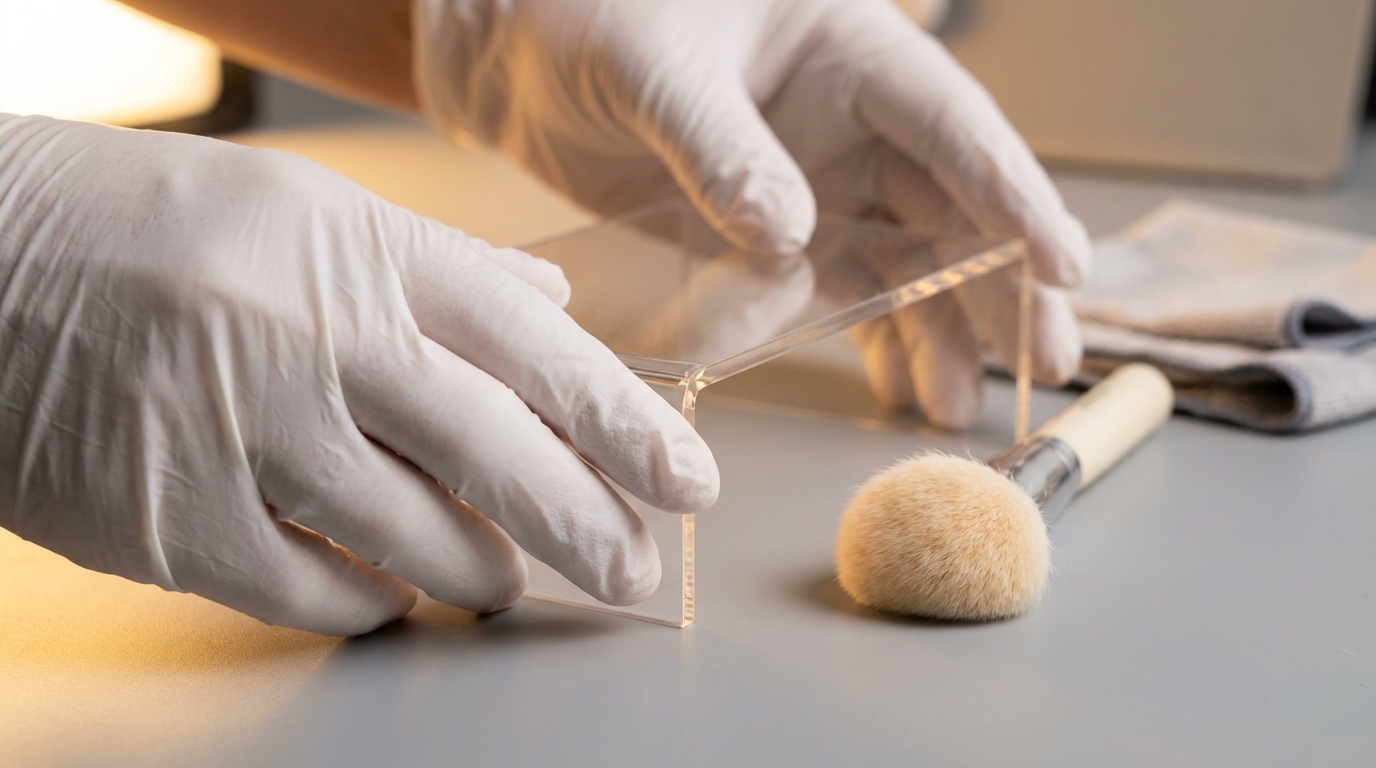
Many collection-care guides suggest using clean, dry hands or nitrile gloves when adjusting displays and always supporting figures by their bases or strongest structures rather than delicate, transparent effects or hair strands.
Whitening Treatments, Retr0bright, And Their Tradeoffs
How peroxide and light can “undo” yellowing
If you have ever seen dramatic before-and-after shots of vintage consoles or stormtroopers, you have seen Retr0bright-style methods in action. Collectors in that community developed gel and bath formulas based on hydrogen peroxide activated by light to reverse yellowing. A practical example from action-figure restoration uses a simple setup: a glass jar filled with a mild 3% hydrogen peroxide solution, figures fully submerged, and a lid with a small vent hole to let vapors escape. The jar then sits in direct sunlight for roughly a day, where UV kicks off reactions that pull color-changing species back toward a lighter state.
Anecdotally, results can be striking. Collectors report heavily yellowed white figures and even blue plastics regaining much of their original brightness within 24 hours, with bubbling appearing in the solution after the first couple of hours as a sign the reaction is running. Some extend soaks to several days for stubborn pieces, and many note that paint and decals usually survive, though minor fading or damage can occur.
From a chemistry perspective, this is essentially controlled, accelerated oxidation and bleaching near the surface of the plastic, not a true rewind of time. The lab research on yellowing suggests that once the polymer network has been altered deeply enough, there is a point where color and physical properties are decoupled: you can make the surface look closer to new, but the material may remain more brittle or prone to future discoloration.
Why whitening is not a permanent cure
Both scientific work and collector experience agree on one frustrating point. Once degradation has started, you can very seldom lock a plastic in its pre-yellow state again. Restored toys can and do yellow again if they return to the same UV-heavy, hot, or smoky environments that caused the problem originally. Some community reports even suggest that certain aggressive treatments can leave already thin or low-quality plastics more prone to cracking later.
That does not mean whitening is a bad idea. It means it should be treated like a cosmetic procedure with an aftercare plan. Whitening a yellowed clear stand for a prized figure and then moving that figure into a cooler, UV-filtered, well-controlled display can buy you many more enjoyable years with it looking the way you remember. Dumping it back under harsh lights or near a window just replays the same chemical story faster.
For grail-level pieces or uniquely fragile items, there is also a serious argument for embracing gentle patina instead of chasing pure white at all costs. Keeping their environment pristine, storing them in archival materials, and documenting their condition can preserve value and narrative, even if their plastic is not quite as clear as day one.
FAQ: Common Collector Questions About Yellowing
Is yellowing inevitable even in storage?
Unfortunately, yes, in the long run, but you can slow it dramatically. Plastics have inherent vice: their own chemistry pushes them toward change over decades. Research on textiles notes that even items stored away from light can yellow from reactions with air pollutants and residual chemicals. Toy collectors have seen figures yellow in sealed bags or boxes while others in the same container stayed fine, underscoring how much the original formulation matters. However, keeping figures in a cool, stable, dark, clean environment with inert storage materials can push noticeable yellowing far into the future, on the order of many years or even a couple of extra decades in favorable cases.
Does indirect light from a bright window really matter?
It does, but not as brutally as direct sun. UV measurements show that outdoor daylight can be twenty or more times stronger in damaging UV than indoor light filtered through glass, film, and distance. That means a figure across the room from a window in a climate-controlled space is aging much more slowly than one on a sunny sill. Still, slowly is not never, and clear plastics are particularly sensitive to cumulative exposure. If your room is bright all day, combining window film, curtains during peak hours, and positioning shelves out of the strongest light path is a practical compromise between enjoying the display and protecting it.
Should I crack a sealed clear blister to save the figure inside?
There is no one-size-fits-all answer, but conservation work gives you factors to weigh. Sealed packaging made from unstable plastic can trap off-gassed chemicals and accelerate damage to nearby materials. Studies on Mylar and toy cases highlight that once a case itself starts yellowing, it is actively breaking down and should be replaced to protect what it holds. On the other hand, original packaging can have its own value, both sentimental and monetary. For mass-market figures where the loose piece is what you care about, freeing a clear plastic figure from a visibly yellowing or sticky blister and rehousing it in an inert, climate-controlled setup can be kinder in the long run. For rare sealed items, some collectors opt to keep them intact but store them in better outer cases and environments, accepting gradual change as part of the object’s history.
Clear plastic aging is one of those battles you never fully win, but you can absolutely choose how fast you lose. With a bit of science, a bit of museum-style storage savvy, and a lot of love for your shelves, your spirits, effect parts, energy blades, and crystal bases can stay closer to “fresh from the box” for many more seasons of binge-watching and re-posing.
References
- https://www.academia.edu/6005457/Spectral_sensitivity_of_polycarbonate_to_light_induced_yellowing
- https://en.wikipedia.org/wiki/Conservation_and_restoration_of_plastic_objects
- https://neha.org/sites/default/files/publications/jeh/JEH-JanFeb2015-Vintage-Toys.pdf
- https://www.chitec.com/research-detail30.htm
- https://advancedchemtech.com/why-do-some-plastics-turn-yellow-over-time/
- https://atticplus.com/safely-storing-valuable-collectibles-a-guide/
- https://info.gaylord.com/resources/tips-for-collectible-artifact-storage
- https://www.instructables.com/Renew-Old-Childrens-Toys/
- https://www.yanglinplastic.com/blog/how-to-preserve-your-collectible-toys
- https://www.amibay.com/threads/avoidance-of-yellowed-plastic-syndrome-best-storage-conditions.83081/