Understanding Why Your Figurines Develop Peeling Issues
This article explains why figurines start peeling and how to prevent or repair the damage so your collection lasts longer.
Figurines usually start peeling because fragile paints, soft plastics, and sealers are stressed by heat, light, humidity, and handling far beyond what they were designed to withstand. Once you know which culprit is attacking your collection, you can slow the damage dramatically and sometimes repair it.
That sinking feeling when you pick up a favorite scale figure and a tiny curl of paint comes off on your finger is all too familiar in this hobby. After watching pleather jackets crumble on 1/6 figures, resin bases spider‑crack after a few hot summers, and “perfect” prize figures develop sticky spots in closed cabinets, clear patterns start to show up across collections. This guide walks through what those patterns really mean, why your figurines are peeling in the first place, and the practical steps you can take to protect the characters you love.
What Peeling Actually Looks Like on Figures
On most anime and resin figures, peeling starts small: microcracks along the edge of a base logo, a matte thigh that turns shiny and rough, or a tiny flap of topcoat lifting around a high‑touch area like a chest emblem or hair tip. With soft goods or rubber “skin,” peeling can show up as flaking, powdery bits, or sheets of faux leather shedding off boots and jackets.
Underneath that drama there are usually only two things happening. Either the coating system is failing, meaning primer, paint, or sealer has lost its grip on PVC or resin, or the material itself is breaking down, as with rubberized bodies and pleather outfits that simply rot over time. Preservation guides for mixed‑material collectibles warn that plastics and coatings often age at different speeds, so the most fragile layer gives way first, especially at joints and stressed details where movement or flexing is concentrated.
Environmental Enemies: Heat, Light, and Humidity
Care guides for anime figures all hammer the same point: direct sunlight and UV gradually fade paint and weaken surfaces, which is why shaded cabinets away from windows are always recommended for display areas. Optimal figure‑care advice emphasizes keeping pieces in cool, dry, stable spots, because UV not only drains color but also dries out plastics and coatings.
Vintage action‑figure caretakers go a step further and call out how heat and humidity can peel paint and loosen joints or decals, even when toys are just sitting on a shelf. Long‑running care guides note that direct sun, hot rooms, and damp air work together to warp plastics, soften glues, and cause paint to lift in scaly patches on older figures, which mirrors what many anime collectors start seeing around faceplates, hair tufts, and base logos once a room gets too bright or muggy. That is why collectors recommend comfortable room temperatures, no direct sun, and avoiding hot spaces like attics or garages for long‑term display or storage.

Miniature‑painting resources echo this from the painting side: when you spray varnish outside recommended conditions, the clear coat can go cloudy or fragile instead of forming a tough armor over the paint. They stress that clear coats behave best in a moderate room‑temperature range with low humidity and that spraying outside that window makes failures like frosting and poor adhesion far more likely. Another protection guide for painted miniatures points out that excess moisture and high humidity can damage unsealed acrylic paint and that even mild soapy water is powerful enough to cause paint films to peel when models are soaked rather than just cleaned quickly and dried.
Collectors’ stories make this painfully real. In one well‑known discussion, owners in hot, humid regions reported rubberized “leather” on 12‑inch figures fusing to armor, then peeling and flaking after only a couple of years in basic glass cabinets with limited climate control. Their experience backs up what preservation experts already know: stable temperature and humidity are not nice‑to‑haves; they are the line between “like new” and “mysteriously peeling.”
If you want a simple mental rule, think of your figures the way you would think of a comfortable room for yourself: no direct sun blasting them, no sweaty air, and no wild swings from freezing to hot. That is the environment where paints and plastics stay closest to how they looked out of the box.
When Materials Age Badly: Rubber, Pleather, and Plastics
Not all peeling is just paint failure; sometimes the “skin” itself is disintegrating. Collectors of high‑end 1/6 figures have documented rubber suits and pleather costumes that started out buttery smooth and, after a couple of years, turned sticky, then cracked and peeled even when left untouched in their boxes or cabinets. One famous case describes a 12‑inch Vader whose faux‑leather knees fused to the hard armor where they touched and then peeled away when the owner finally moved the figure.
Conservation advice for plastics explains why this happens. Many plastics have what archivists call an “inherent vice”: the chemistry that makes them flexible or glossy also makes them chemically unstable, so they deteriorate quickly when exposed to light, heat, humidity, and pollutants and can even emit gases that damage nearby materials. Recommendations for storing plastics stress keeping them in cool, moderate environments and, crucially, isolating them in inert, acid‑free containers so those off‑gassed compounds do not attack surrounding pieces.
The situation is even trickier with early or experimental plastics and synthetic leathers used in some figures. Preservation guides for mixed‑material objects advise identifying which component is most fragile—the rubber skin, the pleather jacket, or the painted armor—and prioritizing its needs in storage and display decisions. That can mean keeping rubberized parts from resting directly on hard plastic, padding sharp armor edges, and arranging poses so there is minimal constant pressure on soft material. Given forum reports that “melting” often happens exactly where two different plastics touch, especially at necks and joints, this simple spacing trick can buy years.
The practical takeaway is that some peeling you see on rubber or pleather was baked in from day one by the material choice. You cannot completely stop those materials from aging, but you can slow the damage by keeping them in a well‑controlled room, spacing soft areas away from hard armor or packaging, and not leaving them pressed in extreme poses that overstress the surface.
Paint, Primer, and Sealer: Why Layers Fail
For custom‑painted kits and repaints, peeling is often a paint‑system problem rather than a climate one. Protection guides for miniatures stress starting with a dedicated hobby primer, such as surface primers formulated for plastic, because they create a micro‑smooth, less porous surface that helps paint cling instead of flaking. They explicitly warn against generic DIY spray paints on plastic or metal because those can bite too hard into the material or stay too brittle, leading to cracks and chips later, and recommend one to three very thin coats of primer rather than one heavy blast.
Once the color work is done, experienced painters almost universally recommend sealing. One well‑regarded miniature‑sealing guide describes varnish as “armor” over your paint job: hands and impacts touch the clear coat first, which dramatically cuts down on wear, scratches, and fading over years of handling. The tradeoff is that every sealer adds some shine, even the flattest matte, which is why competition painters sometimes skip it on showcase pieces, while display‑first collectors generally accept a slight sheen on figures that will be handled or moved. That same guide highlights that cloudy or frosted varnish coats are usually caused by poor conditions—especially high humidity or cold temperatures—and that spraying around the mid‑60s to mid‑80s °F with low humidity and good technique is key if you want the sealer to bond properly instead of becoming a weak, chalky layer that might later peel.
Another protection overview for painted miniatures adds an important warning: moisture and high humidity can damage unsealed acrylic paint, and soaking models in water or surfactant solutions is exactly how hobbyists intentionally strip paint, causing it to peel and flake off. That is great when you want to redo a botched custom, but terrible if you routinely submerge figures to clean them or leave them in damp spaces where condensation forms on surfaces.
In practice, many factory‑painted figures have extremely thin topcoats, sometimes gloss in certain areas and matte in others. If your room runs hot or humid, or if the figure lives near a window, you may find the clear coat starts to separate or micro‑crack first, and once that protective film is compromised, the color layer beneath can start lifting at corners, edges, or raised details.
For customs, rushing the process—painting thick coats on unprimed plastic and then sealing before everything is fully cured—sets up a time bomb where layers never really bond and eventually let go.
Handling, Cleaning, and Display Habits That Trigger Peeling
Even in a perfect climate, everyday habits can slowly sandblast your figures. Anime‑figure care guides repeatedly remind collectors to handle pieces with clean hands, avoid grabbing fragile limbs or accessories, and minimize unnecessary touching because skin oils and tiny bits of dirt can grind into paint over time. They also recommend using the included bases and stands to reduce falls, which not only snap joints but also cause sudden paint chips and flakes around impact points.
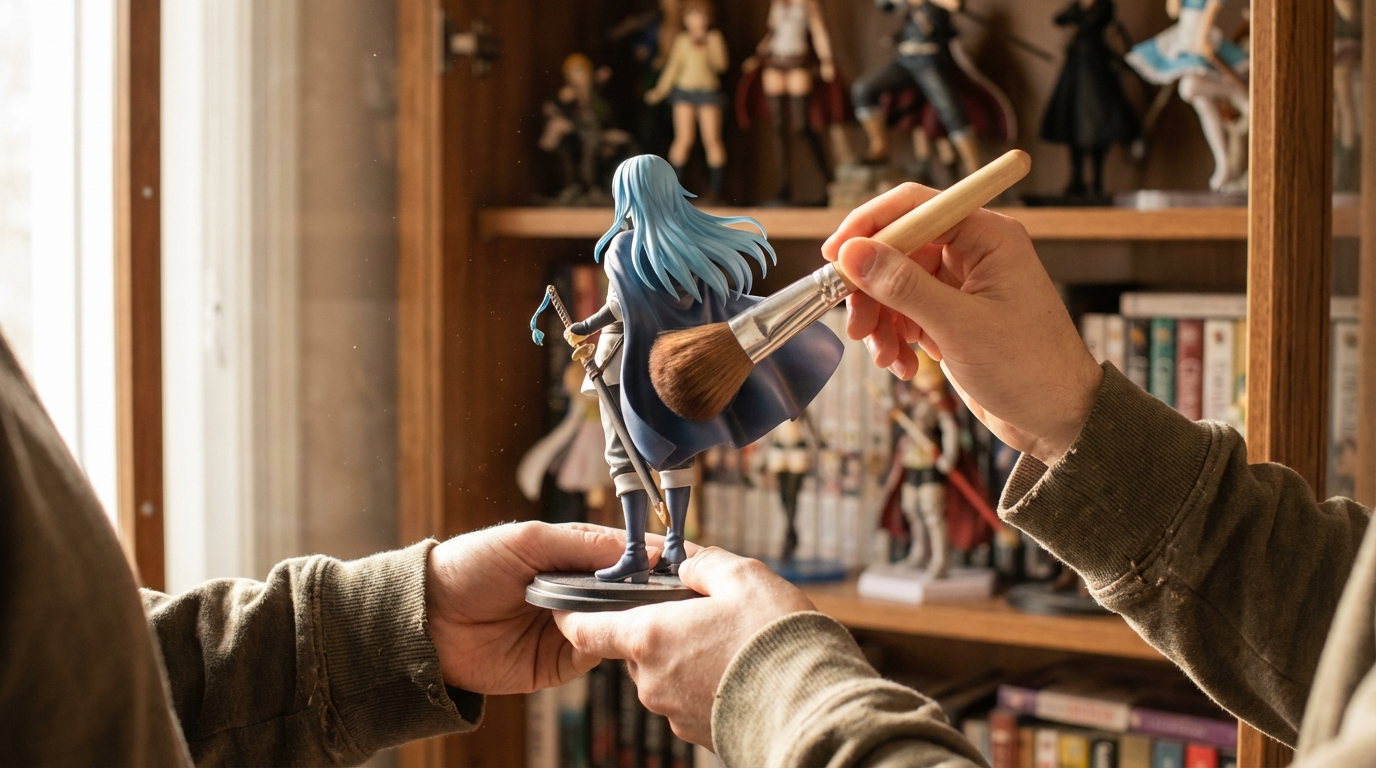
For resin figurines, several care resources emphasize gentle cleaning above all else. They recommend soft, dry microfiber cloths and soft‑bristled or makeup brushes for dusting, with only occasional use of mild, diluted soap and water on sturdy areas, followed by thorough drying before a figure goes back on display. Harsh chemicals, abrasive pads, and stiff brushes are singled out as things that can dull or scratch the surface and even strip or peel paint from fine details. Sculpture‑care guides for resin and fiberglass echo this, recommending warm water with mild soap and warning that strong cleaners and abrasive materials can damage painted or glossy finishes.
Display choices also matter more than most collectors expect. Resources on protecting resin figurines suggest stable, low‑traffic locations, ideally in glass or acrylic cases, to shield pieces from dust, moisture, and curious hands while still showing them off. Care advice for anime figures similarly recommends closed cabinets or shelves away from heaters and direct airflow, along with regular gentle dusting and periodic inspections for chips or cracks so you can intervene early.
To connect these habits to peeling, it helps to think in terms of cause and effect:
Habit or condition | How it leads to peeling | Better habit |
|---|
Frequent bare‑hand handling, especially on faces and glossy areas | Oils and tiny particles slowly break down clear coats, causing shine changes and micro‑cracks that turn into flakes | Handle by sturdy bases or stands with clean, dry hands; limit touching painted surfaces |
Aggressive scrubbing or harsh cleaners | Abrasion and chemicals thin the paint and topcoat until the underlying layer shows and edges start lifting | Use soft brushes or cloths and mild soap only when needed, then dry completely |
Open shelving near windows or vents | UV, heat, and dust constantly stress paint and plastics, accelerating fading and flaking | Use enclosed cases away from direct sun and strong airflow; dust gently but regularly |
Stacking or crowding figures so they touch | Constant rubbing and pressure at contact points wear through paint or damage soft plastics, which then peel or crack | Give figures a bit of breathing room and avoid plastic‑on‑plastic pressure, especially on soft goods |
Small changes here—like moving a shelf out of direct sun, wiping dust with a soft brush instead of a rough rag, and grabbing figures by their bases—have huge long‑term impact on whether your characters stay pristine or start shedding paint.
What to Do When Peeling Has Already Started
Once you notice peeling, the first priority is to stop things from getting worse. Move the figure out of any direct sunlight, away from heat sources or cold drafts, and into a stable, cool, dry spot. Collectible‑storage advice for artifacts and action figures alike recommends roughly comfortable room temperatures, moderate humidity, and either display cases or archival‑style boxes that limit dust and light, rather than hot attics, damp basements, or unregulated storage units.
For light flaking on resin or PVC—say, the edge of a base logo or a tiny chip on a hair strand—you can often do a controlled cosmetic repair. Gently brush away any fully loose chips with a clean, soft brush, then touch up the area with a matching hobby acrylic paint that is formulated for miniatures and figures. Once that is fully dry, apply a thin matte varnish over the repaired spot and slightly beyond, using the spray or brush‑on practices miniature painters rely on: thin, even coats in the right temperature range, rather than one heavy pass. Guides on showcasing and caring for resin figures emphasize sticking to mild, non‑abrasive products and avoiding harsh chemicals, which is just as important for touch‑ups as it is for cleaning.
Rubberized skin and pleather costumes are tougher. Collector reports from hot, humid climates show that once these materials start peeling, flaking, or fusing to armor or packaging, the deterioration usually continues even if you move the figure to a better room. Some owners experiment with automotive or vinyl conditioners, but even they warn that these products can discolor pieces and must be tested in hidden spots first. Given the risk, the safest play for a cherished piece is usually to stabilize the environment, avoid further bending or flexing of the damaged area, and accept some wear rather than trying aggressive chemical rescues that might make things worse.
For high‑value resin statues with structural issues—deep cracks, large areas of paint lifting, or damage from outdoor display—sculpture‑care experts strongly recommend consulting professional conservators. Guidance on fiberglass and resin sculptures notes that minor chips and scratches can be treated with resin repair kits and carefully matched touch‑up paint, but anything more serious benefits from expert assessment, especially when you are dealing with UV damage, moisture intrusion, or complex painted finishes that you do not want to overwrite.
FAQ: Common Peeling Questions
Does keeping a figure “mint in box” prevent peeling?
Keeping a figure in its box helps with dust and handling, but it is not a magic shield against peeling. Action‑figure care guides point out that packaging materials are usually cheap and were never designed for decades of preservation; cardboard can warp and delaminate, clear bubbles can turn brittle or crack, and inks and glues can be damaged by the same sunlight and heat that hurt the figure inside. Preservation resources for collectibles also note that plastics themselves can off‑gas and deteriorate in enclosed spaces, which means a sealed box in a hot closet can still produce sticky surfaces and failing paint. Boxes are helpful, but they need the same cool, dark, stable environment as loose figures.
Is peeling always caused by humidity?
Humidity is a big villain, but not the only one. Vintage‑figure caretakers specifically mention humidity as a cause of peeling paint and loose joints and decals, and miniature‑protection advice explains that moisture damages unsealed acrylics enough that soaking is a standard paint‑stripping method. At the same time, UV exposure, high heat, unstable plastics, poor or missing primer, rushed sealing, harsh cleaners, and long‑term pressure or rubbing between surfaces can all lead to peeling even in relatively dry rooms. If you are troubleshooting a problem figure, you want to consider climate, material choice, paint system, and your handling and cleaning habits together rather than assuming humidity alone is to blame.
Should you always seal a custom‑painted figure?
For customs and garage kits that will be handled or moved, most miniature and model painters lean heavily toward sealing because a good clear coat really does act like armor over your paint job. Guides on sealing miniatures frame varnish as a last protective layer that absorbs the worst of fingerprints, small bumps, and light exposure, which is valuable when you have dozens of hours in a paint job. The tradeoffs are cosmetic and risk‑based: you will add at least a little shine, and you must respect the right temperature and humidity range to avoid cloudy or fragile coats. If a piece is purely a cabinet queen with minimal handling and you are extremely picky about finish, you might choose to skip sealer, but for most everyday display pieces the extra protection against future peeling is worth a bit of sheen.
Peeling figures hurt, but they are also signals. They are your collection’s way of telling you that a room is too harsh, a material is aging badly, or a paint job needed more help than it got. Listen to those signals, nudge your environment and habits in favor of your characters, and future you will be admiring crisp paint lines and smooth outfits instead of sweeping up tiny flakes of your favorite heroes and heroines.