Choosing the Right Wall Material for Your Anime Figure Collection Room
The right wall materials turn your anime figure room into a durable, photo-ready backdrop. This guide walks through base materials, textures, colors, and layouts that keep your walls tough while your collection takes the spotlight.
Picture this: you slide a glass case to make room for a new grail, and the stand scrapes the wall, leaving a gouge right where you film unboxings. Or you finally hang that giant wall scroll and realize the busy texture behind it makes every photo look noisy. With a bit of planning based on how designers build high-traffic rooms and choose long-lasting finishes, you can turn plain walls into a tough, camera-friendly stage for your collection while keeping the room flexible for the next pre-order wave.
What Your Collection Room Walls Actually Need to Do
Interior finishes are the final visual and functional layer of a space, so the material you put on your walls has to do more than look "anime-core." It has to support shelves or display cases, hold hooks and rails for scrolls and framed key art, handle dusting and camera gear bumping into it, and still look clean in close-up photos and videos.
Designers recommend choosing finishes based on how you live in a room rather than only how you want it to look. In a collection room, that often means prioritizing surfaces that resist dents, scuffs, and moisture, then layering style on top, the way you would layer outfits on a cosplay base. Guidance for custom homes stresses that harder-to-change elements like walls and floors deserve the most thought, while easier updates like small decor can move around with each new season of your favorite show, a principle echoed in advice on choosing interior finishes.
Think of your wall material as the "S-rank support character" for the room: it quietly controls durability, maintenance, and how dramatic your display lighting feels, even if visitors only notice the figures.
Base Wall Materials: Drywall vs Panels in a Collection Room
Most collection rooms start with gypsum board drywall as the base because it is practical, fire-resistant, and less expensive than specialty boards. Drywall is easy to finish with paint or wallpaper and works throughout the home, but it dents and chips when hit by shelf brackets or metal stands, so the finish you put on top matters.
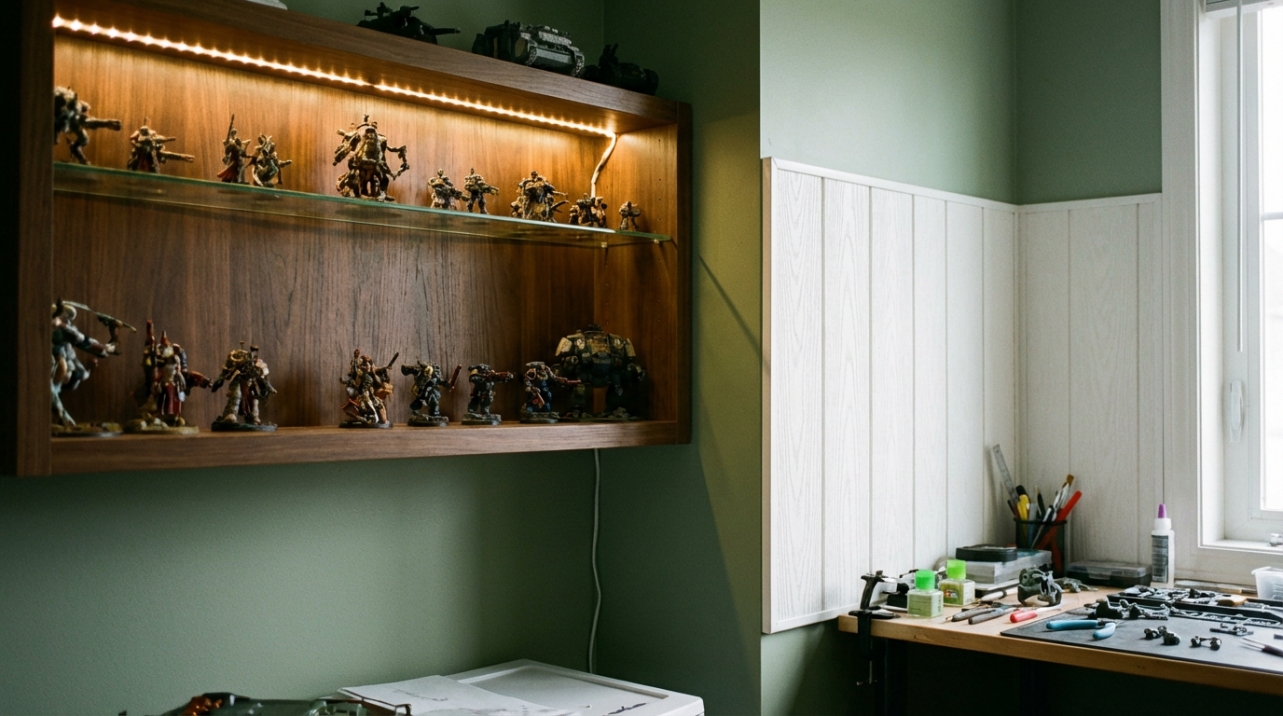
Adding decorative wall boards over that base can dramatically change both look and durability. Wood wall boards are framed as a timeless, premium option that brings warmth and a crafted feel to interiors, functioning as both wall covering and design feature in wood wall paneling. In a figure room, a single wood-paneled accent wall behind your main shelves can make the setup feel like a collector's library, and minor scratches from rearranging displays often read as patina rather than damage.
If your collection room doubles as a hobby space with airbrushing, wet cleaning, or frequent reconfiguring, PVC wall boards become very attractive. PVC panels are described as lightweight, moisture-resistant, budget-friendly, and easy to clean, making them ideal for high-maintenance areas in guides to wall finishes. More advanced PVC systems with internal truss structures are engineered to outlast the building, resist dents from direct impacts, and shrug off moisture and chemicals, as highlighted for impact-resistant PVC wall and ceiling panels. For a collection room, that means you can drag a ladder or move cases without constantly patching divots.
Engineered boards like MDF and laminate sit between wood and PVC. Research on wall boards notes that MDF gives you perfectly smooth, paintable surfaces at a lower price than solid wood, while laminate boards wrap an MDF or plywood core in a decorative layer that mimics wood or stone. They are great when you want sleek painted wainscoting or faux wood backdrops with good scratch resistance, though they are more vulnerable than PVC if a room is very humid or you often drive heavy screws in and out.
This quick comparison shows how those choices stack for a typical collection room.
Base material | Best uses in a collection room | Key pros | Key cons |
|---|
Painted drywall | Standard walls behind shelves and posters | Inexpensive, flexible, easy to repaint | Dents and chips easily, frequent patching if you move displays a lot |
Wood wall panels | Feature wall behind main display or desk | Warm, premium look, pairs well with fantasy or rustic themes | Higher cost, some panels need upkeep, can darken a small room |
PVC wall panels | Hobby corner, behind workbench, low wall near traffic | Waterproof, highly durable, easy to wipe down and pressure wash | Less "natural" look, needs careful styling to avoid feeling too industrial |
Laminate/MDF boards | Clean, modern accent wall or wainscoting | Smooth, consistent, budget-friendly, many design options | Not as moisture-proof as PVC, can swell if water seeps into joints |
For many collectors, the sweet spot is simple: drywall for most walls, then one or two accent zones in wood, PVC, or laminate where your displays and day-to-day wear are heaviest.
Texture: Smooth Gallery vs Textured Story Wall
Once you pick the base material, the next decision is texture. Wall texture is essentially a layer of compound applied over drywall to hide joints and imperfections, and it significantly shapes the look of a home in professional guides to wall finishes. In some regions, builders skip heavy texture for historic, smooth walls, while in others a textured spray is standard.
Heavier textures such as knockdown or rough stucco-style finishes add character and pair well with rustic or Mission-style architecture, but they create a visually busy surface that competes with detailed figure sculpts. Design guidance on regional texture trends explains that these heavy textures are great when you want a more rugged atmosphere, while smoother options or lighter "orange peel" sprays keep things more neutral and easier on the eyes. For a collection room with a lot of small details, that neutrality is a big advantage.
If you care about photographing or filming your collection, a very smooth finish is your ally. Level 5 "gallery" smooth walls, which are perfectly skimmed, are recommended for contemporary homes but called out as a premium, higher-labor option in the same wall finish guide. A practical compromise is a fine, subtle texture that hides minor drywall flaws but still reads almost flat on camera. The smoother the wall, the less your lights will cast strange shadows or highlight tiny bumps behind translucent figure bases.
Texture does not have to come only from mud. Ideas for textured walls point to options like wood slats, brick or stone features, fabric panels, and 3D panels that act almost like built-in art, adding depth and visual interest across styles ranging from modern to rustic in guides to wall texture ideas. A vertical wood-slat panel behind a row of mecha, or a subtle 3D panel behind a centerpiece statue, can suggest the world of the series without overwhelming your shelves.

Color and Sheen: Let the Figures Take the Spotlight
Color and sheen decide whether your walls feel like a neutral stage or a co-star. Timeless paint advice leans toward neutrals as the most reliable choice because they are versatile, classic, and easy to layer with art, furniture, and seasonal decor in an interior paint guide for timeless homes. Soft whites, warm grays, and taupes make PVC stands, acrylic risers, and colorful boxes pop instead of fighting them.
If you want more drama, deep jewel tones such as navy, emerald, or charcoal around a single feature wall can create that "anime museum" vibe. These richer colors work especially well when they are balanced with metallic accents in lighting or frame details, a pairing that guides to jewel-tone interiors highlight as especially sophisticated. In a collection room, that might translate to a dark teal wall behind a shelf of ocean-themed characters with brushed brass picture lights above.
Sheen is just as important as color. Research on paint finishes emphasizes that higher sheens like satin and semi-gloss are more durable and easier to clean but highlight surface imperfections, while matte and flat sheens hide flaws but do not wipe down as easily. Interior paint guidance notes that darker shades often look richer in lower-sheen finishes, and lighter shades benefit from a small amount of sheen so they do not appear dull, a balance stressed in advice on interior paint finishes. For a collection room, a practical approach is matte or eggshell on the main walls for a soft, glare-free backdrop, and satin or semi-gloss on trim and low wainscoting where scuffs from chairs, carts, or cases are common.
Imagine one wall painted in a soft gray eggshell finish: figures stand out cleanly, you can brush against the wall without obvious shiny patches forming, and photos capture the colors of your collection instead of reflections off glossy paint.

Designing Feature Walls and Displays with the 3-5-7 Rule
Material and color decisions set the stage; layout rules help you avoid clutter. The 3-5-7 rule is an interior styling guideline that groups items in odd numbers to create dynamic, visually engaging arrangements, dividing a room into three large anchors, five medium supporting pieces, and seven smaller details in a guide to the 3–5–7 rule in decorating. For walls, it often shows up as clusters of three or five pieces of art or decor with varied sizes.
Applied to a collection room, three anchors might be your main shelving runs or display cabinets on the primary wall. Five medium elements could be a pair of framed key visuals, a slim console or low drawer unit under the shelves, a tall plant to soften one corner, and a floor lamp or wall sconce that doubles as lighting for photos. The seven "story details" become small framed prints, wall-mounted acrylic stands for badges, or a few favorite boxed figures displayed in their original art-rich packaging, echoing how smaller accessories personalize a space in the 3-5-7 rule.
This rule also helps prevent wall clutter. By forcing you to choose a limited number of hero pieces for each wall, it keeps PVC panels, wood accents, and paint from disappearing behind too many hooks and mini shelves. Odd-number groupings create movement for the eye and encourage better proportion and scale in your displays, which matters when you are mixing prize figures with quarter-scale statues and framed art on the same surface.
Durability, Safety, and Budget: Think Long-Term
Beyond aesthetics, a collection room is full of electronics, boxes, and people moving around, so durability and safety matter. When evaluating finishes, design guidance recommends looking at aesthetics, durability, cost, fire safety, sustainability, maintenance, longevity, acoustics, and installation together rather than in isolation, a holistic approach outlined in advice on choosing interior finish materials. Materials with better fire ratings and protective coatings may cost more upfront but resist chipping and cracking, and some metal finishes even carry specific flame-spread and smoke ratings that contribute to overall safety.
Budgeting advice for custom homes stresses the value of looking at the total cost of ownership: combining upfront cost, installation, maintenance, and lifespan over time in guides to interior finishes for custom homes. A basic painted drywall room might be cheap to set up, but repeated patching, repainting, and fixing dings from figure stands, tripods, and light stands can quickly add up. Spending more once on a PVC panel zone where you work on kits, or on durable wood paneling where cases move, can reduce repaint cycles and keep the room looking "new figure day" fresh for years.
Sustainability and maintenance also play a role. Premium wood paneling made from responsibly sourced materials positions itself as an eco-conscious, crafted choice that brings both function and design value to interiors, as described for wood wall paneling. Long-lasting metal or PVC finishes with resistant coatings reduce waste because you replace them less often, and VOC-free coatings or powder finishes keep indoor air cleaner, a benefit highlighted when discussing sustainable and low-maintenance finishes in finish-material recommendations.
From a collector's perspective, every hour not spent patching walls is an hour you can spend dusting, wiring LEDs, or finally reorganizing that villain shelf.
FAQ
Do I need PVC panels on every wall of my collection room?
No. PVC shines where moisture, spills, or physical impacts are most common, which is why it is recommended for high-traffic or high-maintenance zones in guides to wall panels and finishes and impact-resistant PVC systems. Many collectors will be fine using PVC or other very durable panels just in a hobby corner or on the lower portion of walls, with painted drywall elsewhere.
Is heavy wall texture bad for figure displays?
Heavy texture is not "bad," but it can compete visually with detailed sculpts and cast distracting shadows, especially under strong LED lighting. Professional guidance notes that these textures suit rustic or Mission-style spaces, while smoother or finer textures and gallery-level smooth finishes are preferred when you want a cleaner, more flexible backdrop in wall finish choices.
How many accent walls should a collection room have?
For most rooms, one strong accent wall behind your main display is enough to create impact without fragmenting the space. Applying the 3-5-7 rule to your layout nudges you toward a small number of major anchors and supporting pieces, which keeps your walls from feeling like a convention artist alley crammed into a single bedroom, as explained in discussions of the 3-5-7 decor rule.
When the walls are chosen well, your collection room stops feeling like storage and starts feeling like a living, evolving story universe. Pick a tough base where the action happens, keep most surfaces smooth and neutral so the figures shine, and use one or two carefully planned accent walls and odd-numbered groupings to give your fandom its own cinematic backdrop.