From Page to Figurine: Creating 3D Figures of Classic Literary Characters in Art
Why Book Nerds Secretly Want a Figurine Shelf
If you love anime figures, you already know the feeling: that little rush when a sculptor nails a character’s expression, when a pose captures an entire backstory in a single silhouette. Now imagine giving that same treatment to classic literary characters. A tiny, resin-printed Lizzy Bennet ready to verbally spar; a haunted, stooping Raskolnikov; an enormous, sea-sprayed captain locked in his endless hunt.
This is where classic literature and figure culture collide. Sculptors have always told stories in three dimensions, from ancient Greek marbles to towering Renaissance bronzes. An article from EMP Art describes sculpture as an art form that uses material, space, and perspective to tell human stories, not just decorate pedestals. When you add digital sculpting and 3D printing to that tradition, you get something that feels surprisingly close to the way anime and game figures work: vivid characters, frozen at their most emotionally charged moment.
In this article, I will walk through how to turn classic literary characters into 3D figures using digital sculpting, 3D printing, and even a bit of AI. I will mix practical workflow advice from sources like Prusa Research, Ikarus3D, Vsquad, Sketchat, Phrozen, and Meshy with a figure collector’s eye for storytelling and personality.
The goal is not just to make “a statue of a book character,” but to make a collectible that feels like it stepped out of your favorite scene and onto your shelf.
From “Three-Dimensional Character” On The Page To 3D Form
Long before we give a character a pose, base, and paint job, we need to know who they are. Writing coach Laura Sherman talks about “three-dimensional characters” in fiction as people whose flaws, quirks, and growth feel real. She argues that readers hate flat, perfect heroes and prefer characters with gray areas, contradictions, and very specific mannerisms and speech patterns.
When you adapt classic literature into animation, studios face a similar problem. Educational Voice, in a piece on turning timeless novels into animated films, emphasizes that you can simplify plots or modernize references, but you must protect the emotional core: themes, motivations, tone. That same rule applies to figurines.
So when you sculpt, do character homework like a novelist. Your figure is not just “Sherlock Holmes with a pipe.” He might be the moment he realizes who the murderer is, or the moment his certainty cracks. Dostoevsky’s work has very few illustrations, and that gap motivated artist Andy Tran (also known as kirinkarwai) to visualize scenes from “The Brothers Karamazov” in 3D, as described in a Meshy AI case study. His focus was not just on likenesses but on the emotional tension in each scene: guilt, faith, doubt, cruelty. That is exactly the mindset that makes a literary figurine compelling rather than generic.
Before you open any 3D software, write yourself a one-paragraph brief: which scene, what emotional beat, what inner conflict are you freezing in resin.
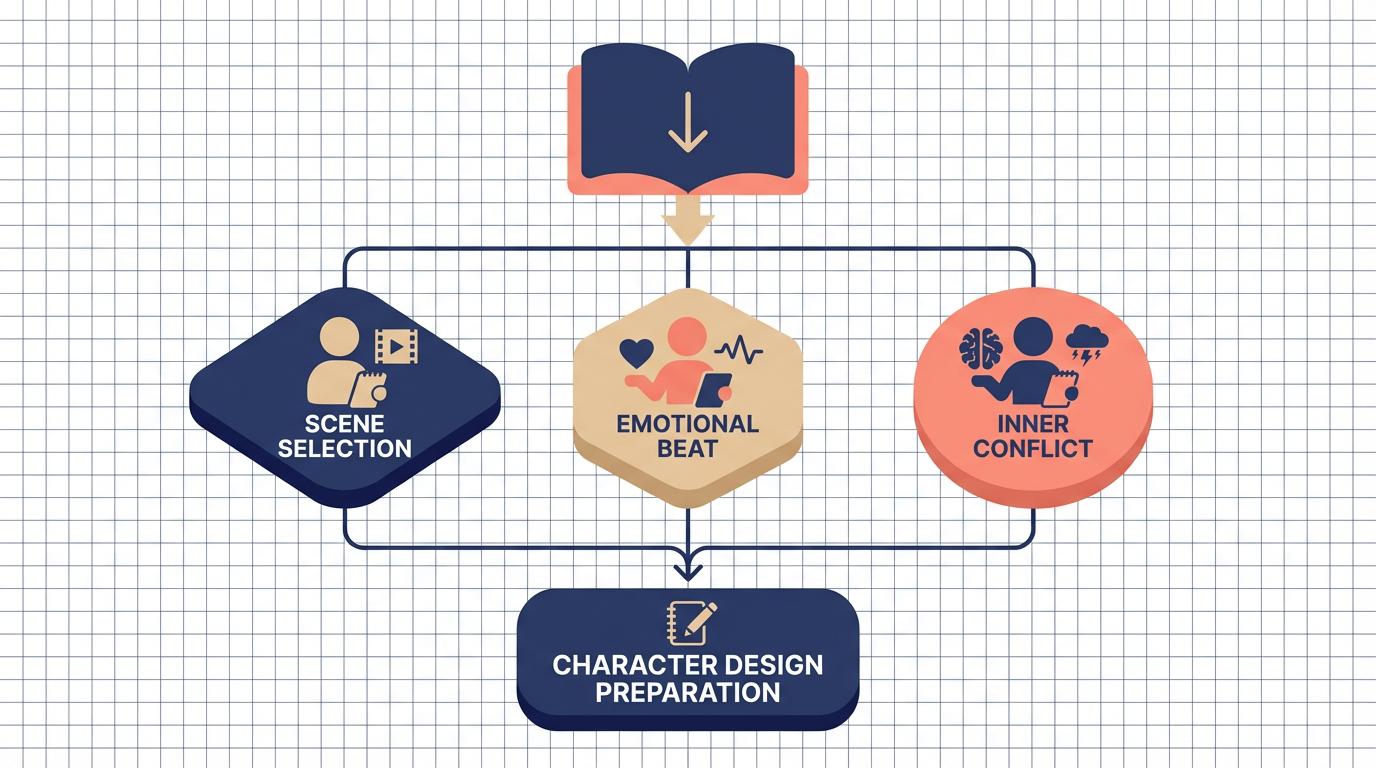
Treat that paragraph like concept art for the soul, and then move on to drawing.
Concept Art: Translating Words Into Shapes
Every serious character modeling guide, from Vsquad’s step-by-step breakdown to Whizzy Studios’ 2D‑to‑3D character guide, leans hard on one idea: concept art is the foundation of everything. Weak concepts produce weak models.
For a literary figurine, your concept work has a special twist. You are adapting text, not an existing character sheet. Educational Voice notes that animated adaptations of novels rely on visual development to set the era, culture, and mood while staying true to the book’s “soul.” You are doing the same, just in miniature.
Start by collecting references. That means historical clothing references if you are dealing with a period piece, architecture and props for the setting, and any existing illustrations or stage adaptations you like. Prusa’s sculpting primer strongly recommends reference photos even for simpler sculpts, because references speed up sculpting and improve accuracy. The same applies here: do not just rely on vague memory of “Victorian” or “medieval.”
Sketch thumbnails of poses the way concept artists do before they move to 3D. Creative Bloq’s toon shading walkthrough stresses the value of little sketchbook thumbnails to test composition and focal points before building a 3D scene. For figurines, those thumbnails help you decide things like whether your tragic heroine is upright and defiant or crumpled on a stone base, whether your Moby Dick–inspired captain is braced against the wind or leaning over a ship’s rail.
Treat your character as a writer would. Laura Sherman suggests skipping the “honeymoon phase” with characters and showing them as if you have known them for years, flaws and all. Put those flaws in the design: a slightly scuffed shoe, a frayed cuff, a nervous hand gesture, a posture that contradicts their words.
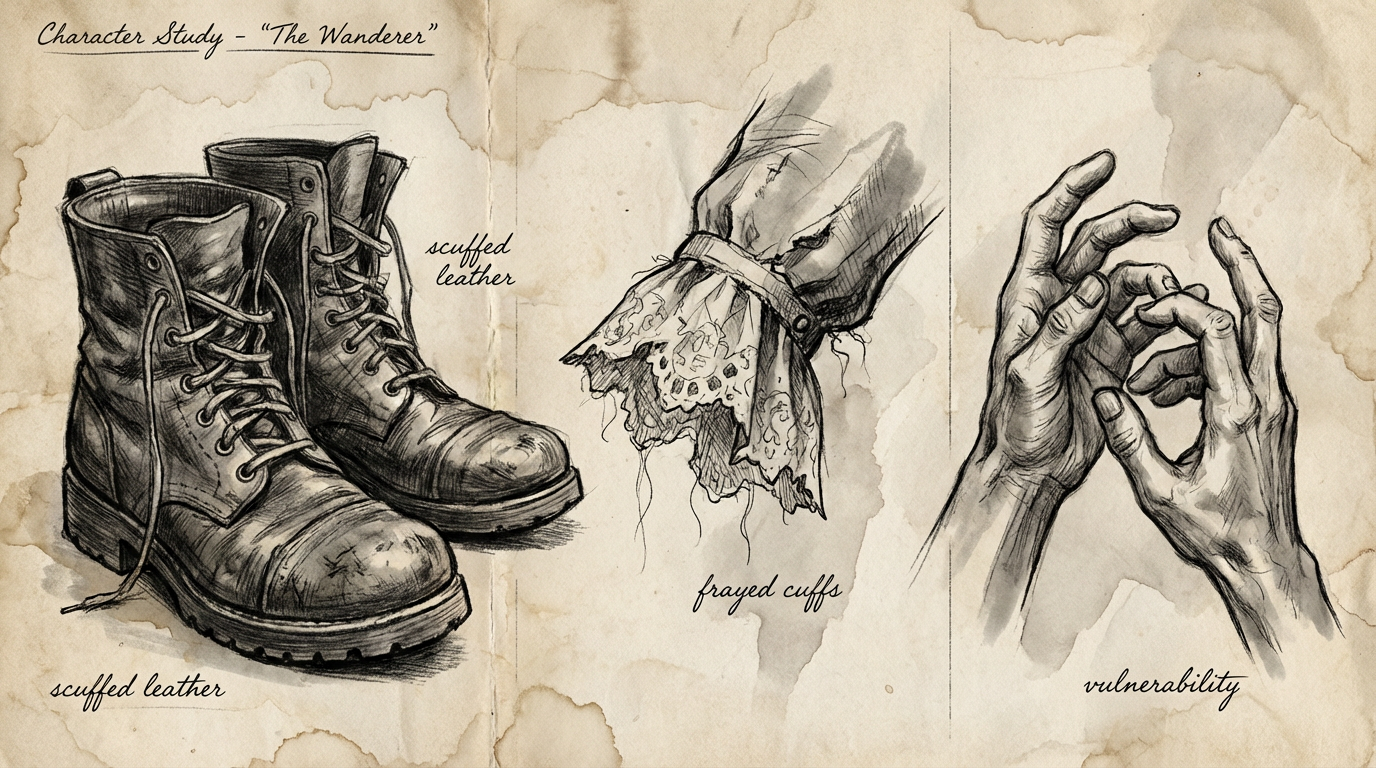
Those details become sculpted “verbal tics.”
Once you have a solid pose sketch and a clear emotional target, you are ready to pick your tools.
Choosing Your 3D Weapon: Sculpting, Modeling, And AI
Digital sculpting is the clay of the fandom age. As Prusa explains, sculpting applications let you push, pull, smooth, grab, and pinch a virtual lump of clay, which is perfect for organic shapes like bodies, faces, cloth, and hair. Ikarus3D’s overview of digital sculpting highlights its strengths: extremely high detail, intuitive brush-based workflows, and excellent support for organic forms. The tradeoffs are heavy polygon counts, large files, and the common need for retopology if you want to animate your model later.
Polygonal modeling, by contrast, is like building a character from clean origami panels. Ikarus3D points out that polygon tools excel at precise, efficient meshes with controlled topology and exact dimensions. That is great for props, bases, or stylized low-poly takes on a literary character.
On top of both sits AI-assisted 3D, as showcased in the Meshy AI article about Andy Tran’s Karamazov project. He used trained models and tools like Meshy to generate characters and objects, then brought them into Blender for scene assembly and lighting and finally repainted them in Photoshop. The AI step did not replace his artistry; it sped up the slowest, most technical parts, cutting a piece from roughly 16 hours to around 5 while keeping his style intact.
Here is how those approaches compare when you are planning a literary figurine.
Approach | Strengths | Limitations | Best use cases for literary figures |
|---|
Digital sculpting (ZBrush, Blender sculpt, Meshmixer, SculptGL) | Natural clay-like workflow, ideal for anatomy, cloth, expressive faces, and intricate bases; supports millions of polygons and fine detail | Heavy meshes, higher hardware demands, usually needs retopology for animation or games | Hero characters and expressive busts that need subtle emotion and detailed surface work |
Polygonal modeling (Blender, Maya, Fusion 360) | Clean, controllable topology, precise dimensions, efficient meshes, easier UVs | Less intuitive for organic forms, harder to improvise subtle muscle and cloth shapes | Bases, props, simplified or stylized reinterpretations of classic characters |
AI-assisted pipelines (Meshy combined with Blender and 2D paint) | Rapid base models, faster iteration on compositions and lighting, good for exploring darker or complex themes without getting stuck in technical hurdles | Quality depends heavily on art direction and input; still needs manual cleanup and finishing; does not replace sculpting fundamentals | Experimental, mood-heavy scenes from literature, exploratory versions of characters, or when you want to iterate on many variants of a single idea |
Industry-standard tools mentioned across these sources include ZBrush, Blender, Maya, 3ds Max, and more streamlined or free options like ZBrushCoreMini, Sculptris, and SculptGL. For a budget-conscious hobbyist, Blender is an especially attractive option because it handles modeling, sculpting, UVs, rigging, and rendering in one free package.
If you enjoy seeing AI riff on your interpretation—especially for complicated, emotionally heavy books, as in the Meshy Karamazov series—AI tools can become your brainstorming partners, not your replacements.
Building The Sculpt: From Base Mesh To Expressive Details
Most character pipelines follow a similar skeleton, whether they are destined for games, animation, or 3D printing. Vsquad’s character modeling guide lays out a path that adapts nicely to literary figurines.
Start with concept art and reference, then create a base mesh. This base mesh captures correct anatomy and proportions but not yet the full detail. Tools like Blender or Maya are excellent for this stage, where you block out a body and clothing in simple forms. Vsquad notes that artists usually keep characters symmetrical at this stage, mirroring one side to the other to save time.
Once the base is solid, move into sculpting. Prusa’s sculpting overview breaks down the core tools: clay brushes to add or remove volume, smooth to even out surfaces, grab or move to adjust proportions and pose, crease to cut in sharp folds and ridges. Sculpting software often provides masking so you can freeze parts of the surface, and dynamic topology (sometimes called dyntopo or dynamic tessellation) so the program automatically adds detail only where you need it. Ikarus3D describes dynamic tessellation as a way to focus polygons where fine detail is required without overloading the entire mesh.
For a figurine of a classic character, this is where you sculpt the story into the body. A proud revolutionary could have tense shoulders and clenched fists; a defeated character might show collapsed posture and softened knees. Whizzy Studios stresses that anatomy, proportion, and perspective are the foundations of believable 3D characters, so even in a stylized piece rooted in anime aesthetics, spend time getting weight and balance right.
Symmetry, Asymmetry, And The “Lady Of The North” Lesson
An 80.lv piece on environment statues describes a case study called “The Lady of the North” that contains a cautionary tale. The artist started from a free female base mesh and immediately posed the figure. The problem was that posing too early destroyed symmetry, which later made it hard to correct proportions like arm thickness. The fix involved inflating the arms using ZBrush’s deformation tools, and for the head, the artist literally detached it, sculpted it symmetrically, then reattached and merged it back into the body using Dynamesh to create a single contiguous mesh.
The takeaways translate directly to literary figures. Pose late rather than early if you rely on symmetry, especially for heads and limbs. Clothes, cloaks, and robes can hide minor asymmetries in the torso, but faces and hands are unforgiving. Keep a symmetrical version of critical parts as a backup so you can adjust without fighting a twisted mesh.
The same artist used instancing for intricate hair decorations, modeling one flower, duplicating it around the head, and then hand-tweaking each copy so they did not look copy‑pasted. That is a great trick for laurel wreaths, beaded braids, or repeated motifs on armor and dresses in literary designs.
Sculpting For Print Versus Animation
Prusa’s article emphasizes that sculpting can be loose and artistic, but your end use matters. If your figure is only for 3D printing, you can accept a high-polygon sculpt and then apply a decimation modifier to reduce the polygon count without worrying about perfect edge flow. The main concerns are structural: avoiding unsupported overhangs, making sure small parts are printable, and keeping everything watertight.
If you want to animate your literary character later, Ikarus3D recommends a hybrid workflow: model a clean base mesh with polygon tools, sculpt for form and details, then retopologize into an animation-friendly low‑poly version and bake the high‑poly detail into maps. Vsquad describes this clearly: sculpt, retopologize, unwrap UVs, texture, rig, animate. That is overkill for a simple desktop statue but worth planning if you dream of animating your book-inspired characters in a short film or VR diorama.
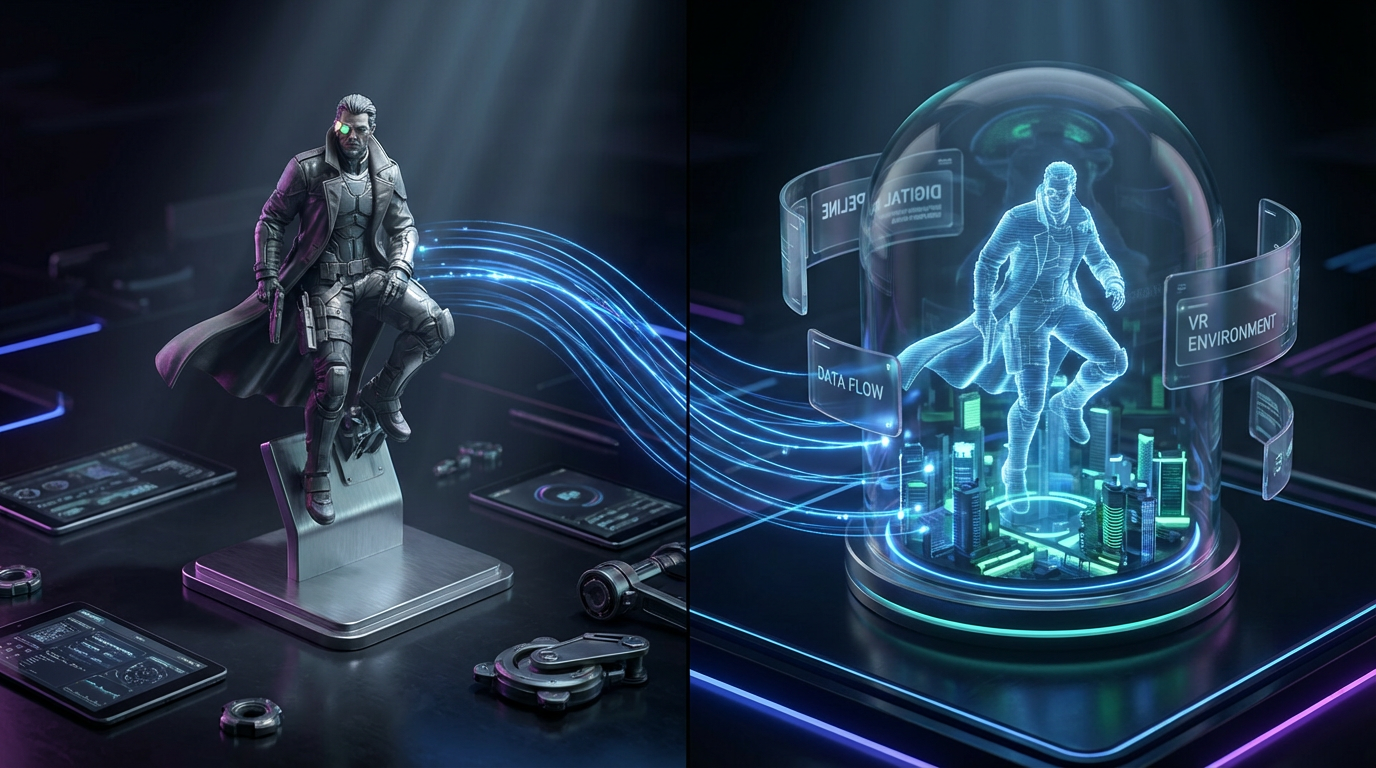
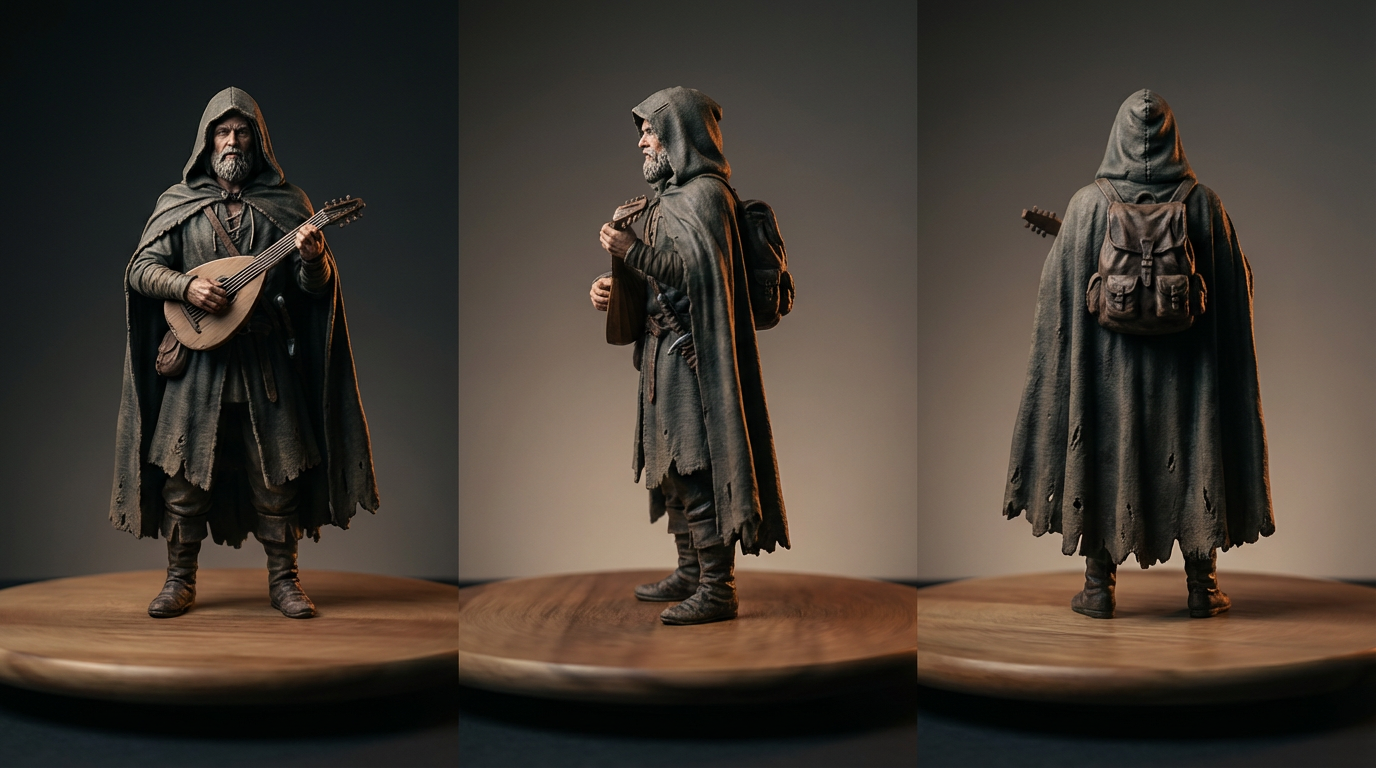
Whatever your goal, constantly check your sculpt from multiple angles. EMP Art’s essay on sculpture and the human experience reminds us that sculpture is meant to be walked around, with different views revealing new narrative details. Your figurine should feel alive from the back and sides too, not just straight on.
From File To Figurine: 3D Printing Literary Characters
Once you have a finished sculpt, you need to decide how it will exist in the physical world. Sketchat’s guide to 3D printed sculpture ideas and Phrozen’s showcase of detailed fantasy prints both highlight the range of options: from abstract forms and famous artwork replicas to detailed creatures and figurines.
For literary figures, there are two dominant home workflows: filament printing and resin printing. Sketchat explains that PLA filament is a go‑to for decorative indoor sculptures because it is easy to print and looks good without a lot of fuss. Tougher filaments such as PETG, ABS, or ASA are better for large or outdoor pieces that must handle impact and weather, while flexible TPU is useful when you want bendable elements.
On the resin side, Phrozen demonstrates how specialized resins change the feel of a print. Clear resins can create glass‑like transparency, perfect for ghostly or angelic characters, while tougher resins handle moving parts and intricate mechanical designs. Their examples include large, high‑detail figurines and automata, and they recommend large-format printers with build plates around 15 inches when you want to print complex sculpts in a single piece rather than slicing them.
Several printing best practices from Sketchat are especially relevant for small figurines and miniatures based on literary characters. They recommend careful printer calibration for reliable results, slower print speeds when chasing fine detail, and fine layer heights around 0.1 millimeter. Converted, that is roughly four thousandths of an inch per layer, which helps tiny facial features and cloth folds read clearly. They also emphasize orienting the model to reduce severe overhangs and using smart support structures, then investing time in sanding, priming, and painting to reach gallery-level finish.
If you are designing specifically for resin printing, keep wall thicknesses sensible and avoid very thin, unsupported elements like dangling ribbons or wispy feathers unless you are certain your resin and printer can handle them. Prusa’s article notes that for prints, you can often get away with less technical cleanup compared with game assets; the bigger challenge is making sure your sculpt respects the physical constraints of printing.
File Formats And Sharing
Once you are ready to print or share your literary figurine, file format matters. Vividworks offers a thorough guide to 3D formats and suggests that mesh-oriented formats such as STL and OBJ are the workhorses for printing and simple exchanges. STL, in particular, is focused on triangle meshes with no color, which is perfect for many 3D printers. OBJ can carry geometry plus basic material information.
For sharing digital versions of your figure online or embedding them in real‑time viewers, modern formats like glTF or its binary sibling GLB shine. According to the Vividworks guide, glTF is designed for web delivery, with compact encoding and support for textures, PBR materials, and even skeletal animation. That means you could present your sculpted Anna Karenina or Don Quixote in an interactive viewer with lighting and subtle movement, long before you print them.
The key is to decide early whether you need animation or only static prints.
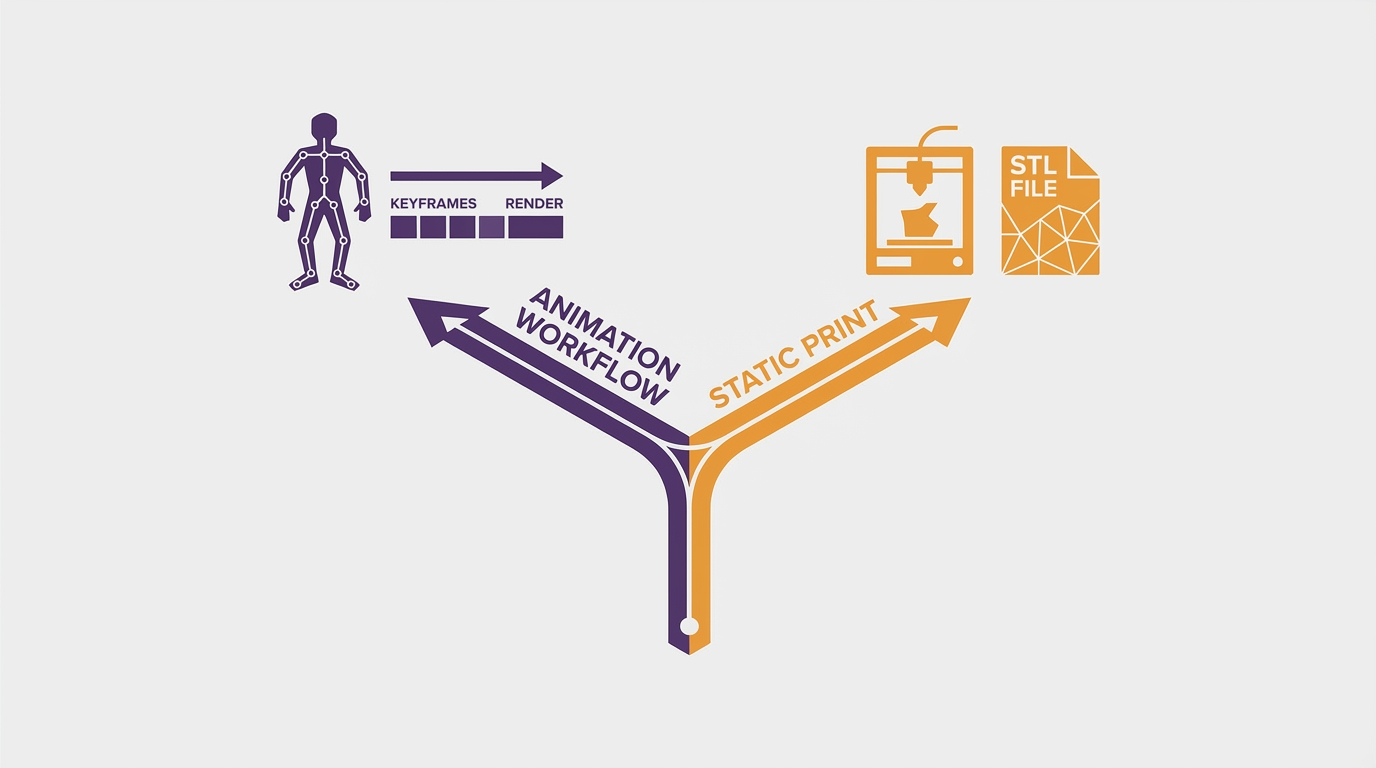
That decision will influence whether you focus on STL and OBJ or keep a glTF or FBX version in your pipeline for more advanced uses.
Sculpting Story: Pose, Base, And Space
If you look at the history of sculpture described by EMP Art, one theme keeps repeating: three‑dimensional works tell stories through pose, material, and space. Ancient Greek and Roman pieces depicted myths and political events with intricately composed groups, twisted bodies, and expressive hands. Laocoön and His Sons, for example, renders divine punishment through strained muscles and desperate gestures. Renaissance works such as Michelangelo’s David, standing over 17 feet tall, capture a single charged moment—the instant before David confronts Goliath—rather than the clash itself.
Modern sculptors add psychological and political layers. Auguste Rodin’s The Thinker embodies inner turmoil, and Ai Weiwei’s installations use repetition and scale to comment on power and culture. Environmental artists like Andy Goldsworthy build works that change with weather and time, turning nature itself into part of the narrative.
So how do you borrow that power for a six‑inch literary figure on your desk. Start with pose. Educational Voice warns that adapting literature always involves balancing fidelity and innovation. For a figurine, fidelity means you are honest about the character’s emotional arc, while innovation is how you condense that arc into a single body language snapshot.
Think in verbs rather than nouns. Instead of “Hamlet, prince,” think “Hamlet, hesitating.” Instead of “Jane Eyre, governess,” think “Jane, standing her ground.” That mental shift changes how you sculpt the spine, the angles of the shoulders, the tension in fingers. Sherman’s discussion of dialogue as a “signature” for characters can also guide your sculpt; the physical equivalent of a catchphrase might be a habitual tilt of the head or the way a character clutches a book or weapon.
Do not neglect the base. Sketchat’s article on sculpture ideas calls out functional and decorative bases as a way to combine practicality and narrative. A swirling sea base for a whaling captain, stacked law books for a courtroom drama hero, cracked cobblestones for a Dickensian street urchin: all of these extend the story into the environment.
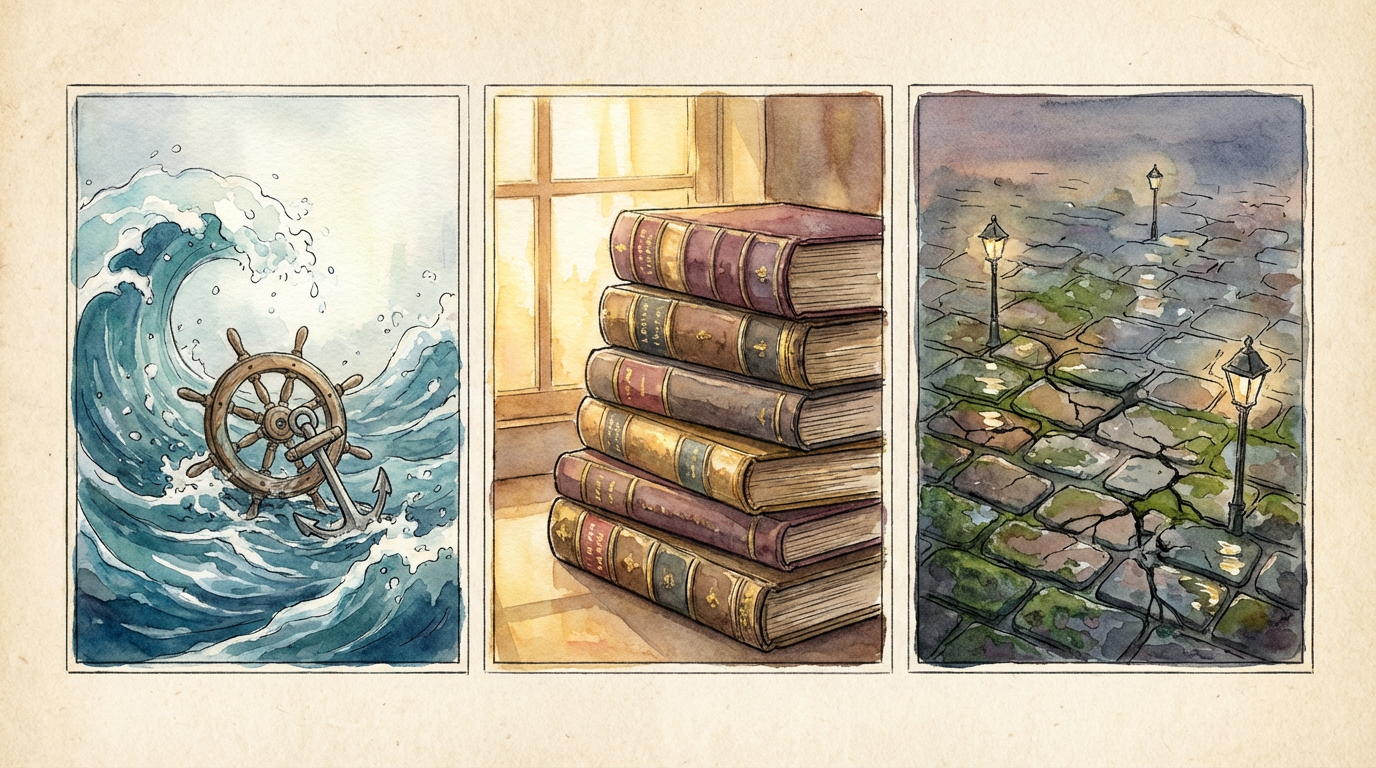
EMP Art reminds us that sculptors build meaning through positive and negative space. That means leave breathing room around your character, avoid filling every inch with detail, and design silhouettes that read clearly from multiple angles.
Photogrammetry And Remixing Existing Sculptures
Sometimes literature already has iconic sculptures attached to it: think of public monuments, busts of authors, or classical figures from myths retold in novels. If you want to bring those into your digital or printed collection, image-based 3D modeling can help.
A review by Remondino and El‑Hakim on image-based 3D modeling explains photogrammetry as the process of extracting 3D geometry from photographs. The workflow they outline includes planning image capture, calibrating cameras, orienting images, matching features, reconstructing surfaces, and then editing and texturing the resulting mesh. The appeal is clear: you can capture real‑world sculptures using off‑the‑shelf cameras and ordinary computers and reach accuracy on the order of a few hundredths to a few tenths of an inch when projects are well planned.
Sketchat’s article on 3D printed sculptures mentions replicas of famous artworks as one of the natural idea categories, and photogrammetry is often how such replicas begin. You photograph an existing statue, reconstruct it digitally, and then modify or recontextualize it.
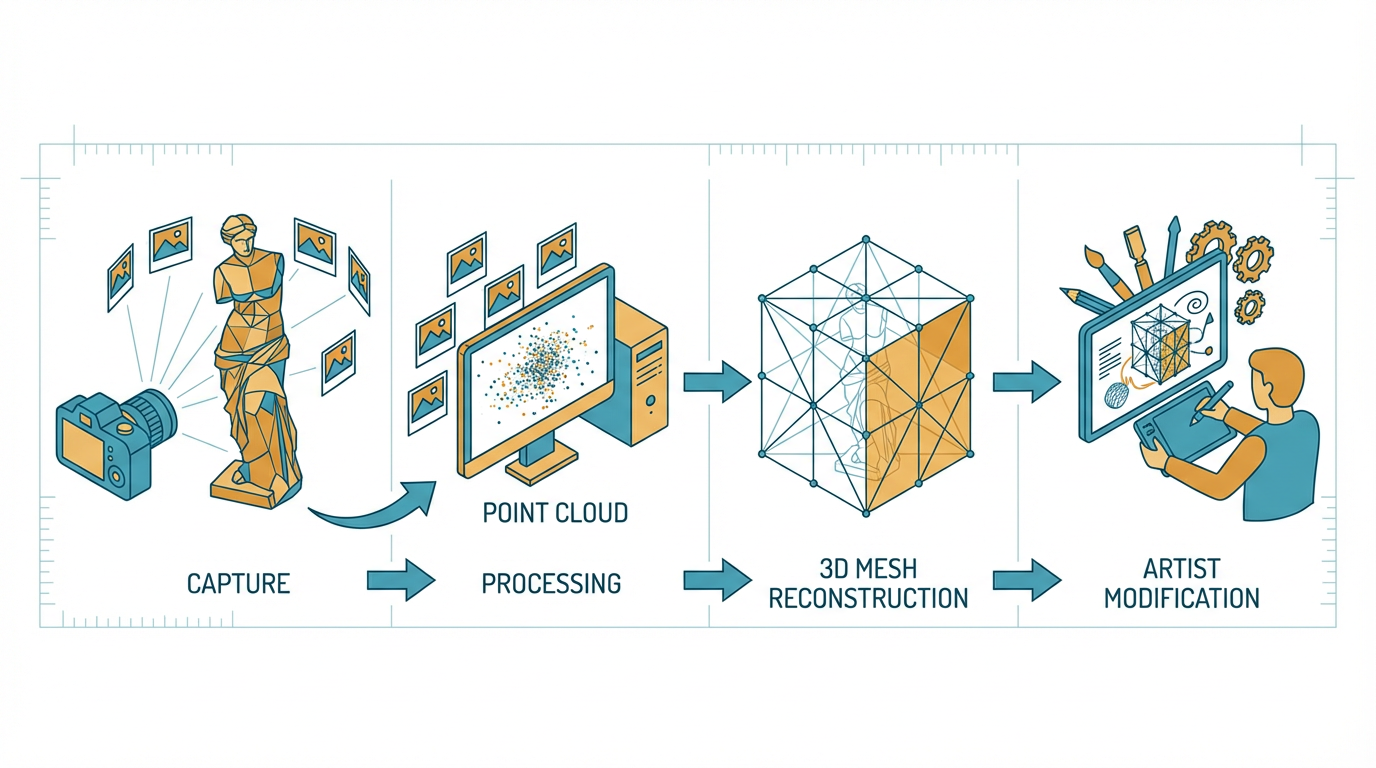
Maybe you scan a classical Greek hero and rework the pose or costume to align with a modern literary reinterpretation, or you combine a historic bust with fantastical elements inspired by a novel.
The Remondino and El‑Hakim review notes that image-based methods excel at capturing realistic textures and fine surface detail, especially when combined with careful project planning and quality control. The main challenges are feature-poor surfaces, occlusions, and the need for manual cleanup. For figurine makers, this means that while photogrammetry can jumpstart a project, you should still plan to sculpt and refine by hand afterward, especially if you are merging the scanned piece with new narrative elements.
As with any adaptation, be mindful of cultural and legal context. Educational Voice points out that many classic literary works are in the public domain, but creators still benefit from expert guidance on copyright. The same spirit applies here: treat historical sculptures and public monuments with respect and consider how your remix represents both the original creator and the new story you are telling.
Pros And Cons: Digital Sculpting, Printing, And AI For Literary Figures
Digital sculpting, 3D printing, and AI each bring their own advantages and complications when you are turning novels into figures.
Digital sculpting shines when you want emotional nuance. Prusa and Ikarus3D both frame sculpting as an almost purely artistic act once you grasp the tools. You can work intuitively, focus on form and expression, and postpone technical topology worries unless you plan to animate. The downside is that high-detail sculpts can be heavy on hardware and storage, and if you ever do need animation, you must invest time in retopology.
3D printing turns those sculpts into objects you can hold, gift, or display. Sketchat and Phrozen’s guides make it clear that printers and materials are now accessible to hobbyists, whether you are printing a tiny bookish figurine or a massive fantasy dragon. The advantages include creative control, personalization, and the thrill of physical ownership. Disadvantages include printer calibration, support removal, post‑processing time, and the learning curve of materials. Resin offers fantastic detail but demands ventilation and careful handling; filament is friendlier but softer in fine surface fidelity.
AI assistance introduces a new dimension. The Meshy case study shows how AI-generated assets slashed one artist’s working time while helping him tackle emotionally dark material without carrying the entire psychological weight alone. AI can rapidly propose poses, lighting setups, or even rough models, freeing you to refine instead of block out. However, the article also emphasizes that art direction remains decisive. Without taste, clear vision, and craft, even powerful models and hardware will not produce meaningful work.
In practice, the sweet spot for many figure artists lies in hybrid workflows. Use AI to experiment with compositions or generate base meshes, rely on sculpting to carve in personality, use polygon modeling for bases and props, and bring it all to life with thoughtful printing and paint.
FAQ: Common Questions About Literary Figurines In 3D
Do I need to be good at drawing to sculpt literary characters in 3D
Strong drawing skills definitely help, especially for anatomy, proportion, and perspective. Whizzy Studios stresses that traditional art fundamentals are the backbone of convincing 3D characters. However, Prusa and Ikarus3D also frame sculpting as very tactile and forgiving once you learn the tools. You can lean on reference photos, 3D scans, and even AI previews to compensate while you build those drawing muscles. Think of drawing as your long-term strength training and sculpting as the sport where you apply it.
Which software should I start with if I am on a tight budget
Multiple sources highlight Blender as a free, full-pipeline solution, covering modeling, sculpting, UVs, animation, and rendering. Prusa’s article points to Blender as a leading open-source sculpting option, and Vsquad mentions it alongside industry standards like Maya. Meshmixer and SculptGL are also free and lighter weight if you want to focus only on sculpting for print. When you are ready for more specialized tools, ZBrush remains the paid heavyweight for high-detail sculpting, and other commercial tools like Maya or 3ds Max come into play if you pursue professional studio pipelines.
Is using AI to help with my literary figurines “cheating”
The Meshy AI article about Andy Tran’s Karamazov series offers a grounded perspective. He uses AI to accelerate base modeling and exploration, but the emotional weight, story choices, and final look all come from his direction. He even offers a tongue‑in‑cheek formula where output quality depends on the product of input material and the AI model, divided by art direction, and concludes that taste and vision still matter more than automation.
In other words, AI is another tool, like a graphics tablet or a 3D scanner.
It can help you move faster, especially through technically tedious steps, but it does not decide which moment from a novel to capture, how to pose your character, or what emotional truth you prioritize. If you remain honest about those choices and keep learning your craft, AI can be your assistant, not your replacement.
Closing
Classic literature has always lived in readers’ imaginations; now it can live on your shelf too, as a row of carefully posed, emotionally charged 3D figures. With digital sculpting, thoughtful storytelling, smart use of AI, and a bit of 3D printing grit, you can turn favorite scenes and characters into tangible art that sits comfortably alongside your anime and game statues.
Somewhere between those resin heroes and your battered paperbacks, a new kind of fandom is waiting: one where the canon is carved, printed, and painted by your own hands.
References
- https://www.dgp.toronto.edu/~mccrae/mccrae_phd.pdf
- https://guides.library.yale.edu/dh/other
- http://www.cs.columbia.edu/~allen/PHOTOPAPERS/remondino_elhakim_phorec06.pdf
- https://80.lv/articles/tips-on-sculpting-3d-statues-for-environment-art
- https://www.bluentcad.com/blog/3d-modeling-textures-and-materials
- https://educationalvoice.co.uk/adapting-classic-literature-into-animated-features/
- https://www.coohom.com/article/3d-modeling-book-essentials
- https://www.creativebloq.com/how-to/toon-shading-how-to-create-stylised-3d-scenes
- https://www.emp-art.com/emp-blog/sculpting-stories-how-three-dimensional-art-captures-the-human-experience
- https://laurasherman.com/writing-tip-how-to-create-three-dimensional-characters/