From Wardrobe To Figure Shelf: Sustainable Fashion And Rethinking Plastic In Collectible Figures
When Your Closet And Your Detolf Have The Same Problem
If you are anything like me, your life is basically a mash‑up of fabric and plastic. There is the closet full of fandom tees, streetwear, maybe a favorite jacket you wear to cons. Then there is the wall of figures: 1/7 heroines, hulking mecha, Nendoroid armies, blind‑box mascots lined up like a tiny idol group.
On the surface, clothes and figures feel totally different. One is “practical,” the other pure joy. But when you zoom out and look at the environmental data, they share the same core issue: an industrial system that pumps out way more stuff than any of us can meaningfully use, mostly made from resource‑intensive materials that are hard to recycle and slow to break down.
Research compiled by ApparelMagic and Geneva Environment Network describes fashion as a giant, resource‑hungry machine. The world now produces around 100 billion garments every year. Geneva Environment Network notes that global clothing is roughly a $1.3 trillion industry employing over 300 million people, with fiber production nearly doubling since 2000. Different analyses put fashion’s climate impact at somewhere between the low single digits and nearly a tenth of global greenhouse gas emissions, and it is often cited as one of the most polluting industries after oil. Only a tiny fraction of clothing gets recycled back into new clothing; most ends up burned or buried.
The toy side is not innocent either. An analysis summarized by Wins Solutions estimates that about 90 percent of toys sold globally are plastic, with the industry using roughly 40 tons of plastic for every $1 million in revenue, and around 80 percent of toys being discarded after relatively short use. A report highlighted by New University puts the global blind‑box market for mystery mini figurines at about $13.5 billion, while the broader U.S. collecting industry is valued at roughly $8.2 billion. Those cute little Sonny Angel‑style figures are not just cluttering shelves; they are part of a massive plastic and packaging stream.
Packaging is especially painful. New University notes that plastic packaging is a leading source of plastic waste worldwide, accounting for nearly half of global plastic waste. Blind boxes embody that problem: layers of coated cardboard, plastic bags, and sometimes blister shells for a figure that weighs just a few ounces. And the figurines themselves are typically made from flexible PVC formulations that municipal systems usually do not recycle, so they ride the same one‑way trip to landfills as fast‑fashion T‑shirts.
Sustainable fashion has been wrestling with these questions for years, and it has built a vocabulary and set of tools that are surprisingly useful for us as figure collectors. The rest of this piece is about borrowing that playbook and asking: what does “sustainable fashion” look like when your runway is a glass display case?
What Sustainable Fashion Actually Means
Sustainable fashion is not just “organic cotton” on a hangtag or a green leaf icon on a storefront. ApparelMagic and Geneva Environment Network both frame it as a holistic approach to designing, producing, and consuming clothing that protects the environment and respects people. That means dealing with the whole chain: fiber production, dyeing, sewing, shipping, retail, use, and end of life.
At its simplest, sustainable fashion pushes three big shifts. It moves from “more clothes, faster, cheaper” to “fewer pieces, better quality, longer life.” It replaces hazardous materials and processes with safer, lower‑impact alternatives. And it tries to close the loop so products and fibers circle back into use instead of becoming permanent waste.
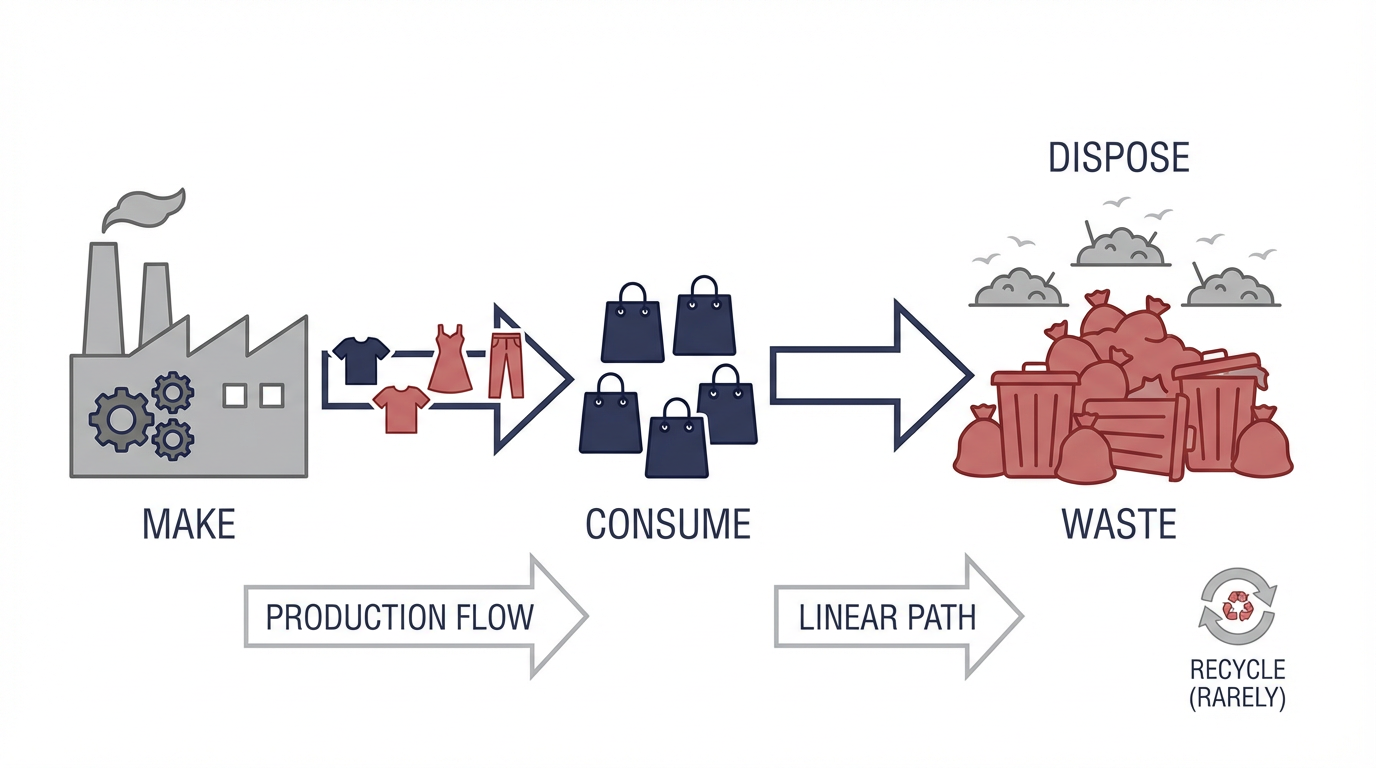
Fast fashion does the opposite. Geneva Environment Network describes a linear “take–make–waste” model where brands overproduce garments, consumers buy 60 percent more clothes than a couple of decades ago but keep them for only about half as long, and roughly 85 percent of textiles end up in landfills or incinerators each year. Less than 1 percent of clothing material is recycled into new clothing, which represents more than $100 billion in lost material value annually.

Meanwhile, synthetic fibers like polyester dominate the mix and shed microplastics into waterways every time we do laundry.
On top of that, there is a social cost. ApparelMagic and Geneva Environment Network both point to low wages, long hours, unsafe factories, and heavy chemical exposure for workers, particularly women in lower‑income countries. A paper in the journal Sustainability highlights how large volumes of discarded clothing are shipped to regions that effectively become “sacrifice zones” for the rich world’s textile waste, with open dumping and burning creating health and environmental damage that locals never consented to.
So sustainable fashion is not just “eco fabrics.” It is design for longevity, fair work, safer chemistry, and circular systems. That thinking is starting to spread into other sectors, from plastic toys to luxury collectibles and even our little corner of anime figures.
Circular Fashion, But For Figures
One of sustainable fashion’s most powerful ideas is the circular economy. Instead of the linear pipeline of take, make, and throw away, circular fashion aims for durability, repairability, and recyclability, plus business models that keep products in circulation longer. ApparelMagic highlights practices like renting, borrowing, repair services, upcycling old garments into new designs, and textile recycling, all aimed at extending garment life and reducing demand for virgin materials.
Policy tools matter here too. The Sustainability article notes that France is currently the only country with an extended producer responsibility system specifically for clothing, textiles, and footwear. Under that system, brands help fund the collection and processing of post‑consumer textiles. Collection and recycling rates have tripled since 2006 in France, and about half of collected items can be recycled.
If you map that logic onto collectibles, you begin to see parallels: resale platforms, brand‑run buyback or refurbishment, repair and restoration services, and proper material recycling where possible. The luxury world is already moving this way. An overview from Borro describes how luxury collectibles brands are investing in circular models such as buyback programs, refurbishment, and formal second‑hand markets to extend product life, while also experimenting with more sustainable materials and using tools like blockchain to make sourcing and production more transparent.
As collectors, we already do a tiny version of this every time we sell a grail figure on the secondary market or trade with a friend. The question is how to make that circular instinct central rather than incidental.
Fashion, Justice, And Fandom
The Sustainability article also warns about a “fashion paradox.” On one hand, fashion is a platform for self‑expression, cultural identity, and even social mobility. On the other, the current system is deeply entangled with environmental harm and economic inequality, and efforts to fix it sometimes slide into elitism: blaming individual low‑income shoppers while leaving structurally unsustainable business models intact.
Collecting has a similar tension. Fast, cheap merch democratizes fandom; you do not need a huge budget to own something from your favorite series. At the same time, the cheapest items often have the heaviest environmental cost and the shortest life, and the communities bearing the brunt of plastic waste are rarely the ones getting joy from the collection photos.
For me, the takeaway is not “stop buying figures.” It is “learn from sustainable fashion’s hard lessons and design a version of collecting that is more intentional, more circular, and more honest about trade‑offs.” To do that, it helps to understand what our figures are actually made of.
Inside A Figure: Materials, Pros, And Environmental Cons
Most anime figures are not mysterious magical objects from another dimension; they are very specific combinations of plastics, resin, rubber, and sometimes metal. An overview from One Man’s Hobby and a technical guide from Weijun Toy break down how those materials work.
PVC, or polyvinyl chloride, is the superstar of figure materials. It is flexible and tough, holds fine details in sculpted hair or flowing capes, and keeps costs relatively low. The same Weijun Toy guide explains that vinyl, essentially soft PVC, is used heavily in dolls and stylized figures for its flexibility and smooth surfaces. Yet PVC comes with baggage. One Man’s Hobby notes environmental concerns associated with toxic chemicals used in its production, and Wins Solutions points out that conventional toy plastics can contain additives like phthalates and BPA that raise health questions and complicate recycling. The European Chemicals Agency has flagged PVC for problematic additives, which the Si‑TPV article echoes in its case for alternatives.
ABS is the rigid backbone of many figures, used for torsos, limbs, and joints. It is strong, impact‑resistant, and has that glossy, “premium” finish you feel in higher‑end toys. The downside, according to One Man’s Hobby, is that ABS can become brittle under excessive stress and is more expensive than PVC.
Resin shows up in statues and garage kits. It supports extremely high detail and is a painter’s dream, which is why so many limited‑run anime statues use it. The catch is that resin is brittle and breaks easily if knocked, so most collectors treat resin pieces as display items rather than toys.

Vinyl‑heavy figures have a different feel. One Man’s Hobby notes that vinyl is soft and moldable with good color retention, making it ideal for stylized lines similar to chibi figures. It is heavier and generally shows less tiny detail than PVC but has strong shelf presence.
Die‑cast metal appears in premium lines: inner frames of mecha, accessory parts, or accent pieces that give a satisfying heft. It resists wear and gives that “this is serious” feel, though it raises costs and can limit articulation if overused.
Rubber is used sparingly for ultra‑flexible bits like soft capes, straps, or wires. It offers realistic movement but degrades over time, becoming sticky or brittle, which is why One Man’s Hobby recommends extra care with rubber parts.
The sustainability problem is that most of these materials are long‑lived, fossil‑fuel‑derived, and hard to recycle in mixed forms. Wins Solutions reports that plastic toys can persist in landfills for hundreds of years, and New University notes that the PVC blends used in many blind‑box figures are resistant to biodegradation and are rarely accepted in municipal recycling.
Here is a simplified snapshot of how common figure materials stack up from a collector and sustainability perspective, synthesizing these sources.
Material | Typical figure use | Collector pros | Sustainability notes |
|---|
PVC / vinyl | Most mass‑market anime figures, blind boxes, flexible parts | Great detail, flexible, affordable | Non‑biodegradable; production involves concerning chemicals; often contains additives that complicate recycling |
ABS | Rigid bodies, joints, accessories | Strong, impact‑resistant, smooth finish | Durable but still fossil‑fuel‑based; not commonly recycled in mixed toys |
Resin | High‑end statues, garage kits | Extreme detail, easy to paint | Brittle, long‑lived plastic; typically not recycled; best treated as long‑term display |
Die‑cast metal | Premium inner frames, select parts | Heavy, “premium” feel, wear‑resistant | Metal is recyclable but usually fused with plastics, making separation difficult |
Rubber / soft elastomers | Capes, straps, flexible elements | Realistic flexibility, tactile appeal | Prone to degradation; often ends up as non‑recyclable mixed waste |
The good news is that toy and collectible manufacturers are starting to explore more sustainable options without giving up on durability or sculpt quality.
Greener Materials And Eco‑Figurines
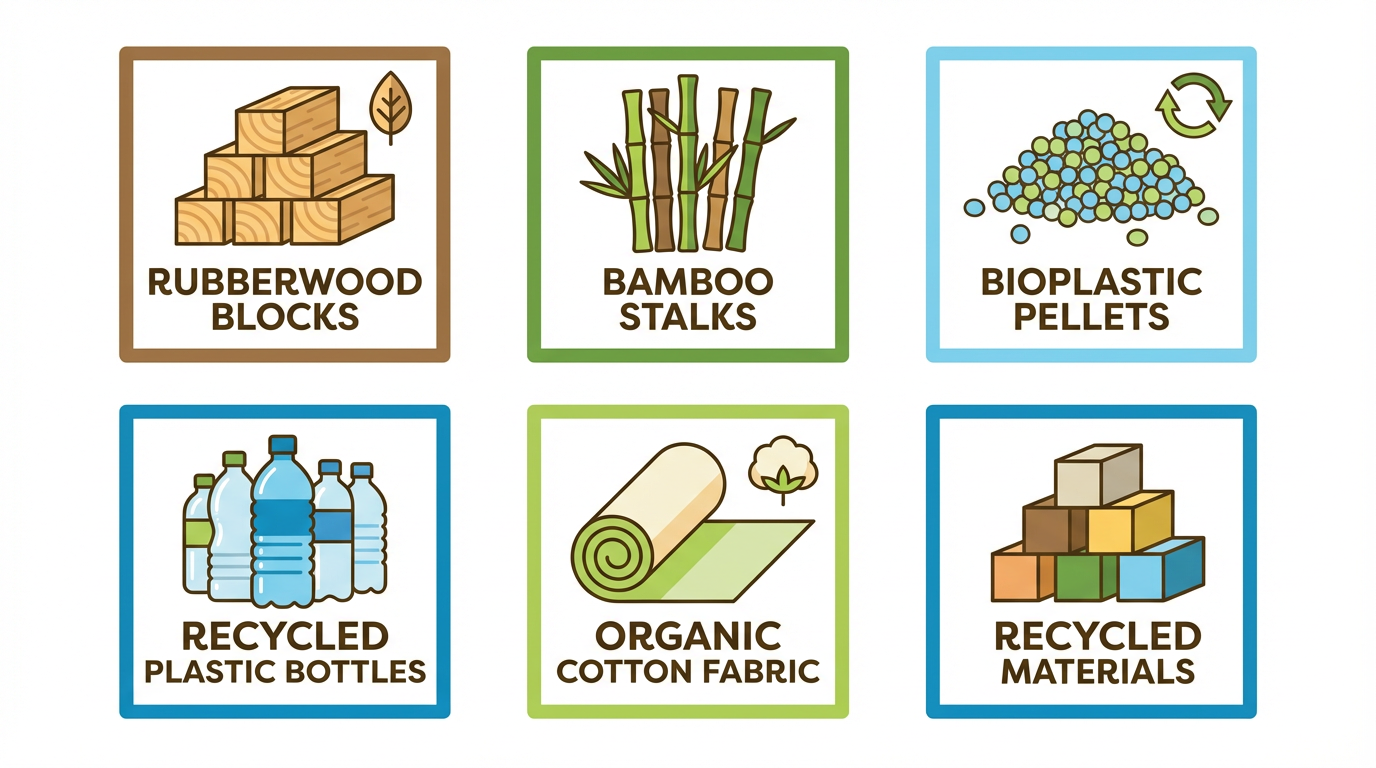
Several toy sectors are already testing materials that anime and figure brands could learn from. Mountain Kids Toys describes reclaimed rubberwood, FSC‑certified wood and paper, post‑consumer recycled plastic, and sustainably sourced cotton as core ingredients in eco‑friendly toys. PlanToys, for example, uses rubberwood from trees at the end of their latex‑producing life and even turns sawdust into a composite material called PlanWood to approach zero waste.
Wood is not just for toddler blocks. The Good Boutique’s overview of eco‑friendly figurines highlights sustainable wood, bamboo, recycled metals, and even stone as viable materials for decorative pieces. Brands like Holztiger and Green Tree Jewelry show that carved or laser‑cut wooden figurines can be both durable and artful. For textile‑based figures, organic cotton and recycled polyester stuffing offer softer, biodegradable options that avoid some of the pesticide and chemical load of conventional cotton.
Bioplastics are another path.

The Good Boutique notes bioplastics derived from corn starch, sugarcane, or soy as materials that mimic the feel of traditional plastics while being biodegradable or compostable under certain conditions. The Weijun Toy plastics guide also mentions PLA and PHA bioplastics as renewable, lower‑impact materials, although they can be more expensive and sometimes less durable than petroleum‑based plastics.
Within the mainstream toy industry, big players are moving as well. Wins Solutions reports that LEGO is working to phase out oil‑based plastics by 2030 and already uses sugarcane‑derived bio‑polyethylene for softer elements like plants. Mattel has launched lines such as Barbie made from recycled ocean‑bound plastic and has a goal that by 2030 all its products and packaging will use 100 percent recycled, recyclable, or bio‑based plastics. Playmobil’s toddler range has shifted to plastics that are about 90 percent plant‑based. Green Toys builds its entire model around using 100 percent recycled plastic, primarily from milk jugs, and designing toys to be recyclable again at end of life.
For blind‑box style toys and soft‑touch collectibles, the Si‑TPV article introduces a different kind of material: a silicone‑like thermoplastic vulcanizate marketed as Si‑TPV. It offers a silky feel and strong abrasion resistance while being reclaimable and reusable in the production process. The article notes that it contains no harmful plasticizers or BPA and can be recycled internally, making it an attractive alternative to traditional PVC for overmolded, skin‑contact parts. Citing research from Grand View Research and McKinsey, it also emphasizes that a majority of parents prioritize safe, comfortable toys and that over 70 percent of consumers say they are willing to pay more for sustainable products.
The Good Boutique’s companion article on the future of ethical figurines adds a social dimension. Ethical figurines are defined not just by low‑impact materials but also by fair wages, safe working conditions, and community benefits. Examples range from fair‑trade wooden animals carved from sustainably harvested wood to recycled‑plastic animal figures and handcrafted clay pieces that support artisans in disadvantaged communities.
None of this means every 1/7 scale character will suddenly be carved from bamboo or spun from organic cotton. It does mean that the technical and business case for moving away from default PVC and toward safer additives, recycled content, bioplastics, and renewable materials is getting stronger. And as collectors, we are not passive in that shift.
Lessons From Sustainable Fashion For Figure Collectors
Sustainable fashion brands like Object Apparel in Detroit and Stella McCartney at the luxury end show that it is possible to build entire labels around better materials, smaller collections, and slower, more thoughtful production. Object Apparel uses organic fabrics, plant‑based dyes, water‑based inks, made‑to‑order production, scrap reuse, and biodegradable packaging from a small in‑house studio. Importantly, founder Mollie Decker openly questions whether scaling up clothing production is even compatible with sustainability and intentionally keeps the brand small to avoid compromising its ethics.
At the luxury level, Stella McCartney has built a business that avoids leather, fur, and skins and leans into alternative materials like organic cotton, recycled polyester, innovative mycelium‑based “leather,” and regenerated nylon, while pursuing aggressive climate targets. Sustainability Magazine reports that the brand has significantly reduced its operational emissions, moved a majority of sites to renewable energy, and invests in climate‑solution startups developing new low‑impact materials.
We cannot copy these models one‑to‑one as individual collectors, but they translate into some very practical habits for our hobby.
Buying Fewer, Better Figures
The environmentally conscious “geek” essay on Medium describes an identity many of us feel viscerally: deeply in love with fandom, acutely aware that our shelves are made of fossil fuels. The author estimates that a small vinyl collectible similar in plastic content to a popular stylized figure embodies roughly 1 kilowatt‑hour of energy to make. Multiply that by millions of units sold each year, and suddenly a wall of chibis looks like a tiny energy museum.
The author’s core recommendation is deceptively simple: buy less overall and resist impulse purchases. Instead of snapping up every half‑price prize figure, save for pieces you know you will cherish for years, the way Kartik Research in Vogue’s coverage designs garments that still feel relevant decades later. New University’s piece on blind boxes echoes this, urging consumers to set boundaries on collecting, periodically review their collections, and ask which pieces truly matter rather than hoarding for the sake of completionism.
For figure collectors, that can mean choosing one definitive version of a character instead of four slightly different color variants, or committing to a smaller number of fandoms so your collection feels focused and emotionally durable rather than scattershot. It is exactly the “quality over quantity” mantra that sustainable fashion has been repeating for years, translated into PVC and resin.
Shopping Local, Second‑Hand, And Small
The environmentally friendly geek article encourages shopping local, walking or biking to neighborhood shops, and favoring second‑hand or consignment when possible. In figure terms, that might look like supporting your local anime store, browsing second‑hand sections at conventions, or checking community marketplaces before importing another new release.
New University points out that buying second‑hand blind‑box figures through resale platforms reduces demand for new manufacturing and helps slow the cycle of overproduction. The Good Boutique likewise champions choosing eco‑friendly figurines from brands that use recycled or renewable materials and transparent, ethical production.
Supporting independent artists and small makers is another win, even when the item is technically “just more stuff.” The Medium author argues that backing limited‑run T‑shirt designers, costume makers, or figure customizers, while not impact‑free, channels money into human creativity rather than pure volume. Many ethical figurine makers highlighted by The Good Boutique situate their work in fair‑trade contexts, providing stable income for artisans while using sustainably sourced materials.
Caring For What You Already Own
One of the most underrated sustainability moves in collecting is simply making your existing figures last longer. Every extra year a figure spends being loved instead of trashed spreads its embodied energy and material impact over more time.
Guides from Movie Figures and Dhgate’s overview of vintage figure care converge on a few core preservation practices. Keep figures in cool, shaded rooms with stable temperatures and moderate humidity; a simple thermometer and hygrometer goes a long way. Avoid direct sunlight and harsh UV, which can yellow plastics and fade paint. Closed display cases with UV‑protective glass, like the popular glass cabinets many collectors use, help control dust, light, and accidental impacts.
When handling figures, clean, dry hands or cotton gloves reduce skin oils that slowly break down paint and plastics. For cleaning, stick to gentle methods: soft brushes or microfiber cloths and mild soap solutions when absolutely necessary, with spot‑testing on hidden areas before going in. Harsh household cleaners and aggressive scrubbing can strip paint, crack plastics, or react with coatings. For resin and older PVC, most preservation guides advise minimal cleaning and maximum prevention.
Smart storage matters too. Keeping original packaging and foam inserts for high‑end statues, storing small accessories in labeled bags, and avoiding overcrowding on shelves all reduce the risk of breakage. None of this is glamorous, but it is the collecting equivalent of mending your favorite jacket instead of tossing it.
Letting Go Without Trashing
Sustainable fashion emphasizes repair, resale, and donation as alternatives to straight disposal. Geneva Environment Network notes that the overwhelming majority of textiles still end up burned or landfilled, but circular models can change that trajectory.
For figures, resale and gifting already exist as informal circular systems. The next step is to make those decisions more intentional. When a figure stops sparking joy, consider rotating it onto the secondary market instead of shoving it into a box that will eventually end up in the trash. Many toy‑recycling initiatives highlighted in the Medium essay focus on broader categories like mixed plastic toys, and the infrastructure for recycling complex figures is thin, but every unit that moves from “garbage” to “new owner’s grail” is a small win.
And when something is truly broken beyond repair, treat disposal as a last resort and a learning moment about what you buy next time. Wins Solutions points out that the most likely toys to be thrown away are cheap, single‑use party favors, seasonal tie‑ins, and low‑quality figurines. In our world, that often maps to impulse‑buy gacha and low‑effort blind boxes.
What Brands And Studios Can Do Differently
Collectors are not the only ones on the hook. Sustainable fashion shows that brand‑level decisions about materials, design, and business models do most of the damage or most of the good.
In fashion manufacturing, ApparelMagic highlights how enterprise resource planning systems and supply‑chain transparency tools let brands track eco‑friendly sourcing, monitor waste and emissions, and prove compliance with environmental and labor standards. Sustainability Magazine’s profile of Stella McCartney emphasizes deep investment in material innovation, regenerative practices, and circular product design, plus clear climate targets and collaboration with technology partners.
Toy and figure companies can take similar steps. Wins Solutions outlines a roadmap for the plastic toy industry that includes switching to recycled and bio‑based plastics, replacing harmful additives with safer stabilizers, investing in energy‑efficient machinery, and redesigning toys and packaging for durability and recyclability. It also notes that parents under 40 increasingly factor environmental impact into toy purchases, strengthening the business case for greener designs.
New University’s analysis of blind‑box toys suggests that marketing strategies based on uncertainty and rare chase items drive overconsumption and waste. Brands could experiment with more transparent series, better odds for rare figures, or non‑plastic perks to satisfy the thrill without encouraging endless buying. They can also shift packaging away from multilayered plastic toward recyclable cardboard and minimal plastic, as toy companies like Hasbro have attempted, even if collector expectations around window boxes need to be renegotiated carefully.
Material innovation is another lever. Articles from Weijun Toy and Si‑TPV show that eco‑friendlier PVC formulations, recycled PVC, bioplastics, and advanced elastomers are viable in many toy applications. Eco‑figurine makers curated by The Good Boutique already prove that wood, bamboo, recycled metals, bioplastics, and organic textiles can produce high‑quality, aesthetically pleasing collectibles.
Finally, traceability and ethics matter. Borro notes that in luxury collectibles, proof of ethical sourcing and sustainable production is becoming part of what collectors ask for alongside traditional provenance. If anime and figure brands begin to document where their plastics, paints, and packaging come from, and how workers along the chain are treated, that transparency can become a differentiator in the same way it has for sustainable fashion labels.
Is Truly Sustainable Collecting Possible?
The Sustainability article is blunt: as long as the fashion system is built on ever‑growing production and consumption, there is a limit to how “sustainable” it can be. Extended producer responsibility, better materials, and circular business models help, but they do not erase the basic reality that making fewer things is usually better than making more. Mollie Decker of Object Apparel voices a similar doubt when she questions whether producing more clothing can ever be fully sustainable.
Anime figure collecting lives inside that same contradiction. The industry thrives on new releases, variants, and hype cycles; our feeds are a constant drip of painted prototype reveals and preorder links. The emotional side is real and valid: New University connects blind‑box collecting to nostalgia, curiosity, and “inner child” healing, especially for young adults. The Medium essay reminds us that geek culture and a love of nature can coexist inside the same person.
So no, there is no perfect, impact‑free way to collect. But there is a big gap between a mindless pile of plastic and a curated, well‑cared‑for collection whose environmental footprint has been thought through. Sustainable fashion’s most useful lesson is not a specific fiber or certification; it is the idea of practices rather than products. You can be a more sustainable collector without only buying “eco” figures, the same way someone can practice sustainable fashion without having an all‑organic wardrobe.
FAQ
Do I Have To Stop Buying PVC Figures To Be “Sustainable”?
Based on the sources above, PVC definitely carries environmental and health concerns, especially when produced and disposed of at huge scale. At the same time, the sustainability literature emphasizes system‑level change and long‑term use. If you already own PVC figures and care for them carefully so they last for many years, their per‑year impact is lower than that of a constant churn of cheap replacements. When you do buy new pieces, you can favor higher‑quality figures, support brands experimenting with safer additives or recycled content, and reduce impulse purchases of low‑quality items that are most likely to end up as trash.
Are Eco‑Friendly Wooden Or Bioplastic Figurines Really As Good?
The Good Boutique’s profiles of eco‑figurine brands and Mountain Kids Toys’ overview of sustainable toy materials suggest that wooden, bamboo, and bioplastic pieces can be durable, detailed, and beautiful. They feel different in hand compared with PVC statues, but different does not mean worse. In many cases, these pieces are handmade or produced in small batches with strong ethical stories around them, which can add to their emotional value. The trade‑off is often higher upfront cost and sometimes less extreme sculpt complexity, but the payoff is a smaller environmental footprint and a more direct connection to the people who made them.
What Is The Single Most Effective Change I Can Make As A Collector?
The most powerful move, echoed across Geneva Environment Network, the Medium essay, and New University’s blind‑box analysis, is to slow down consumption. That means pausing before each purchase, asking if a figure will still matter to you in five or ten years, favoring second‑hand when it makes sense, and taking good care of what you already own. Everything else—better materials, nicer displays, careful cleaning—amplifies that basic shift from collecting by reflex to collecting by intention.
In the end, sustainable fashion and sustainable collecting share a heartbeat: fewer, better, longer‑lived pieces that actually mean something. When I look at my own shelves now, I want each character to feel like that favorite jacket you refuse to give up, not a fast‑fashion impulse buy you barely remember. If enough of us start curating our figure walls with that mindset, we turn our fandoms into quiet, everyday acts of care—for our characters, for the artists who sculpt them, and for the world that has to live with what we leave behind.
References
- https://sbn-detroit.org/sustainable-fashion-in-practice-insights-from-object-apparel/
- https://www.winssolutions.org/how-can-the-plastic-toy-industry-be-made-sustainable/
- https://www.genevaenvironmentnetwork.org/resources/updates/sustainable-fashion/
- https://newuniversity.org/2024/09/13/sonny-angels-and-smiskis-the-environmental-impact-of-your-small-friend/
- https://apparelmagic.com/the-4-most-common-sustainable-practices-in-fashion-manufacturing/
- https://borro.com/sustainability-in-luxury-how-its-shaping-the-future-of-collectibles/
- https://smart.dhgate.com/essential-tips-for-preserving-and-caring-for-vintage-action-figures/
- https://www.greenbusinessbenchmark.com/archive/sustainable-fashion-brand-trends-and-ideas
- https://sustainabilitymag.com/sustainability/top-10-sustainability-strategies-of-luxury-fashion-brands
- https://www.thegoodboutique.com/inspiration/eco-friendly-figurines-sustainable-and-high-quality-alternatives?srsltid=AfmBOopbSTFm2nnkOk8ahp3cmkCEHGHOWK_KcuAoe3JjAvtOENA3KcvT