How Museums Use Models to Teach History Effectively
If you love anime figures or Gunpla, you already know the power of a good model. One tiny plastic mech can suddenly carry a whole war arc, a character’s trauma, and a dozen what‑if scenarios in its pose alone. Museums do something very similar with their models. They shrink eras, empires, and extinct creatures down to a size you can walk around, rotate, or even hold, and in that process history stops being a wall of text and starts feeling like a world you can actually visit.
Over the last few years, museum researchers, educators, and technologists have been quietly leveling up how they use models to teach. From physical miniatures and 3D‑printed replicas to augmented reality overlays and full virtual reconstructions, models have become one of the most effective ways to help people understand the past. And unlike a static didactic panel, the best models work the way fandom does: they invite you to look closer, ask questions, and build your own headcanon about what life was really like back then.
In this article, I will walk through how museums use different kinds of models to teach history, why those models work so well for our brains, and what the research says about doing it right. Think of it as swapping the instruction sheet on a complicated kit for a step‑by‑step build log, backed by actual museum and learning studies rather than just vibes.
What “Models” Really Mean In A Museum
When museum folks talk about models, they are not just talking about one thing. A model can be a physical miniature of a ship, a digital reconstruction of an ancient palace, or even a scientific diagram that shows how a system works. A science‑education paper on museum exhibits describes models as representations that preserve the important causal and relational structure of something in the real world while simplifying away the details that would just get in the way. That definition works beautifully for history too. The point is not to copy reality one‑to‑one; the point is to highlight the relationships and patterns that matter.
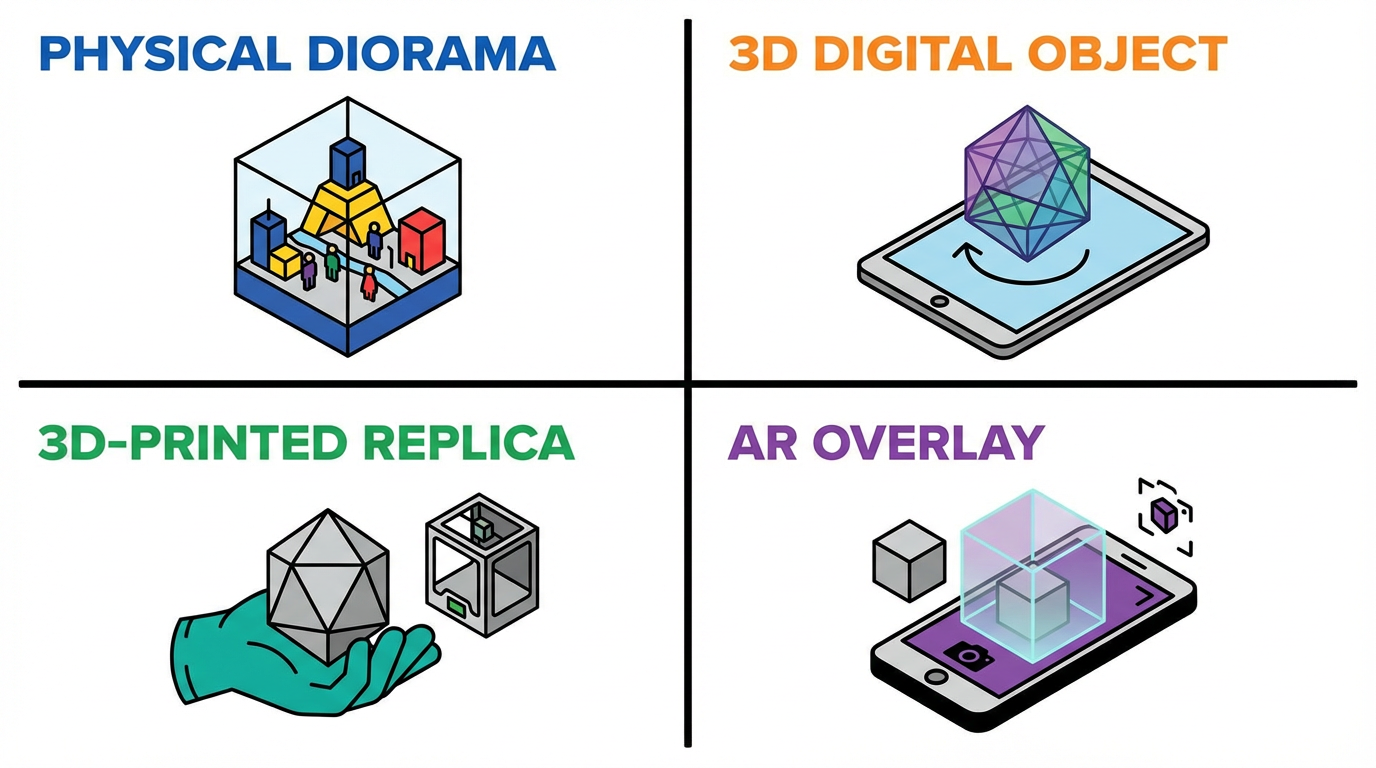
In practice, the research you have in front of you shows museums using at least four broad types of models to teach.
They use physical models and miniatures, like the Chinese aircraft carrier model and food models in a children’s museum in Beijing, which localize a mostly Western museum format with dumplings instead of hamburgers and displays of the traditional Twenty‑Four Solar Terms. They use digital 3D models, which visitors can spin, zoom, and re‑light on screens, sometimes using advanced techniques like Reflective Transformation Imaging to reveal textures and tool marks that are otherwise invisible. They print those digital models as physical replicas in plastic, allowing students to handle a goddess‑shaped bread mold from ancient Mari without risking the original artifact, and even to use a modified version for experimental archaeology in a baking exercise. They also place objects back into their original environments through virtual reconstructions, such as digital Assyrian palace rooms or tours of ancient Egyptian tombs, which reconnect isolated gallery pieces to their architectural and ritual contexts.
All of these are models. Some fit on a shelf. Some live on your phone. Some cover a whole gallery as an immersive environment. What they share is that they give visitors a concrete handle on something abstract, distant, or destroyed.
Physical Models: Shrinking History To Human Scale
As an anime figure fan, it is hard not to get a little emotional about a really good physical museum model. They have the same energy as a perfect diorama: a whole world in miniature.
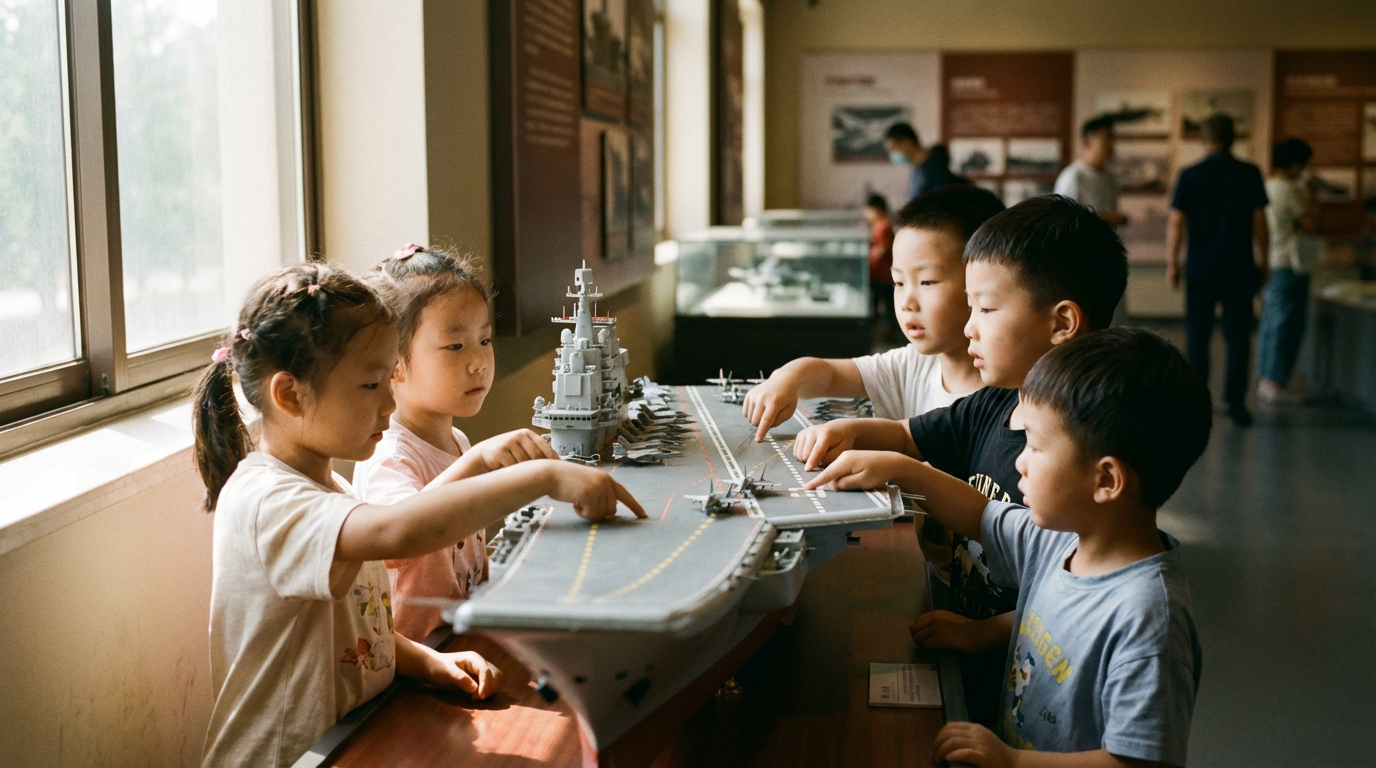
Research on children’s museums in China stresses how powerful this can be for young learners. The Lao Niu Children’s Museum in Beijing is a dedicated space for ages zero to seven, roughly twenty‑six thousand square feet with seven exhibition halls. It is deliberately designed as a child‑centered environment full of hands‑on experiences rather than rows of glass cases. Its exhibits include localized models such as a Chinese aircraft carrier, kitchen spaces stocked with dumpling models, and displays tied to the traditional agricultural calendar. These models turn “history” and “society” into something preschoolers can literally walk into and manipulate.
Theoretical work behind that study draws heavily on constructivist and sociocultural learning theories. Piaget’s view is that young children build their understanding by playing, symbolically representing the world with objects, stories, and actions. Vygotsky’s sociocultural perspective emphasizes that development happens through interactions with more knowledgeable others, who scaffold children’s thinking within what he called the zone of proximal development. A children’s museum is almost a lab for those theories: free play with models, guided play with exhibits, and constant dialogue with adults and peers.
Empirical evaluation studies, cited in the Beijing research, have shown that visits to children’s museums and participation in their programs can improve preschoolers’ understanding of science exhibits, strengthen reading and writing skills, and deepen comprehension of what they see. Other work on play in early childhood shows links between rich play and improvements in executive function, early math language, and social development. In other words, giving kids a space where they can “mess around” with models is not just cute; it is cognitively serious.
For history, physical models offer a few key advantages.
They provide scale and embodiment. A huge fossil mammoth femur placed next to a bench where a visitor can align the bone with their own leg turns a vague “mammoths were big” fact into a visceral, relational experience. One science‑museum study found that when visitors could compare their bodies to specimens like this, their conversations became more detailed and more scientific, including more specific anatomical terms and species names.
They showcase variation rather than just “the” example. The same relational‑learning research shows that putting two specimens side by side, such as two tigers or a male and female cardinal, helps visitors see within‑species variability and patterns like sexual dimorphism, which in turn supports understanding of concepts such as natural selection. For history, that suggests that models of two houses from the same period, or two versions of a ritual object, can teach more about a culture than a single, perfect showpiece.
They can be localized. The Beijing children’s museum’s decision to use dumpling models and Chinese naval vessels instead of imported food and ships shows how models can embed history in familiar cultural references. For visitors, especially kids, seeing their everyday world reflected in miniature makes it easier to connect to abstract narratives about national history, technology, or social change.
The catch is that physical models are never neutral. They are built choices. Which house is represented? Which ship? Whose experience is centered in the miniature city? This is where storytelling and interpretation need to keep pace with the craft of the model itself.
Digital 3D Models: Rotating Relics And Deep Zooms
When museums had to shut their doors in 2020, digital images and 3D models stopped being “nice extras” and became core teaching tools. A blog series from the Alexandria Archive Institute and Open Context describes how curators who were used to in‑gallery teaching learned to treat digital representations as a different mode of first‑person encounter rather than a lesser substitute.
For two‑dimensional images, the authors recommend choosing objects that genuinely “shine” online. That means high‑resolution photographs that show backs and sides, reveal conservation histories, and allow deep zooming on tool marks and textures. It also means adding accessible descriptions and scale cues, such as a small crocodile amulet photographed in a gloved hand or compared to a familiar household object, so learners can feel the object’s size and use, not just see a floating JPEG.
Three‑dimensional models go further. A 3D scan allows students to virtually “handle” an object, turning it with a cursor or fingertip and examining parts that are usually hidden in a case. Reflective Transformation Imaging, a computational photography method, lets learners change the light as they rotate the model, which makes fine incisions, weathering, or added repairs pop into view. This is like giving every visitor their own lightbox and macro lens for an artifact that would crumble if you actually tried to move it around.
Ethical questions ride along with these powers. The same Alexandria Archive piece warns that before making or sharing 3D models, museums need to ask whether digitizing a particular object might be disrespectful or harmful. Human remains, burial goods, or objects with contested provenance can easily cross that line. In those cases, consultation with descendant communities, stakeholders, or cultural authorities is not a nice‑to‑have; it is a prerequisite.
From a teaching perspective, though, good 3D models are an incredible way to let learners set their own pace. Rather than being dragged past a case by a group, a student can spend minutes focusing on a single detail, move back out to see the whole, and then jump to a comparison object in another collection across the world. The Alexandria Archive team suggests using online collections and search tools to give learners more agency, asking them to pick the objects they want to study from a pool of digital models. That in turn tends to surface less famous artifacts and make use of stored collections that rarely get floor time.
From 3D Files To 3D Prints: Experiencing History “In The Flesh”
If you have ever gone from admiring a prototype render of a figure to actually holding the production piece in your hand, you know how different digital and physical contact feel. Museums are harnessing that same jump by printing 3D models as actual objects that can be handled, passed around, and even used.
In one example from the Alexandria Archive article, students in a class on ancient palaces at Brown University worked with a printed copy of a goddess‑shaped bread or cake mold from the Middle Bronze Age palace at Mari, an object now in the Louvre. They were challenged to infer how the object and its room functioned from its form and their own experiments, thinking like archaeologists rather than being told the answer. In a more advanced step, a modified version of the print could be used to bake, letting learners experience, smell, and taste an approximation of the ancient practice.
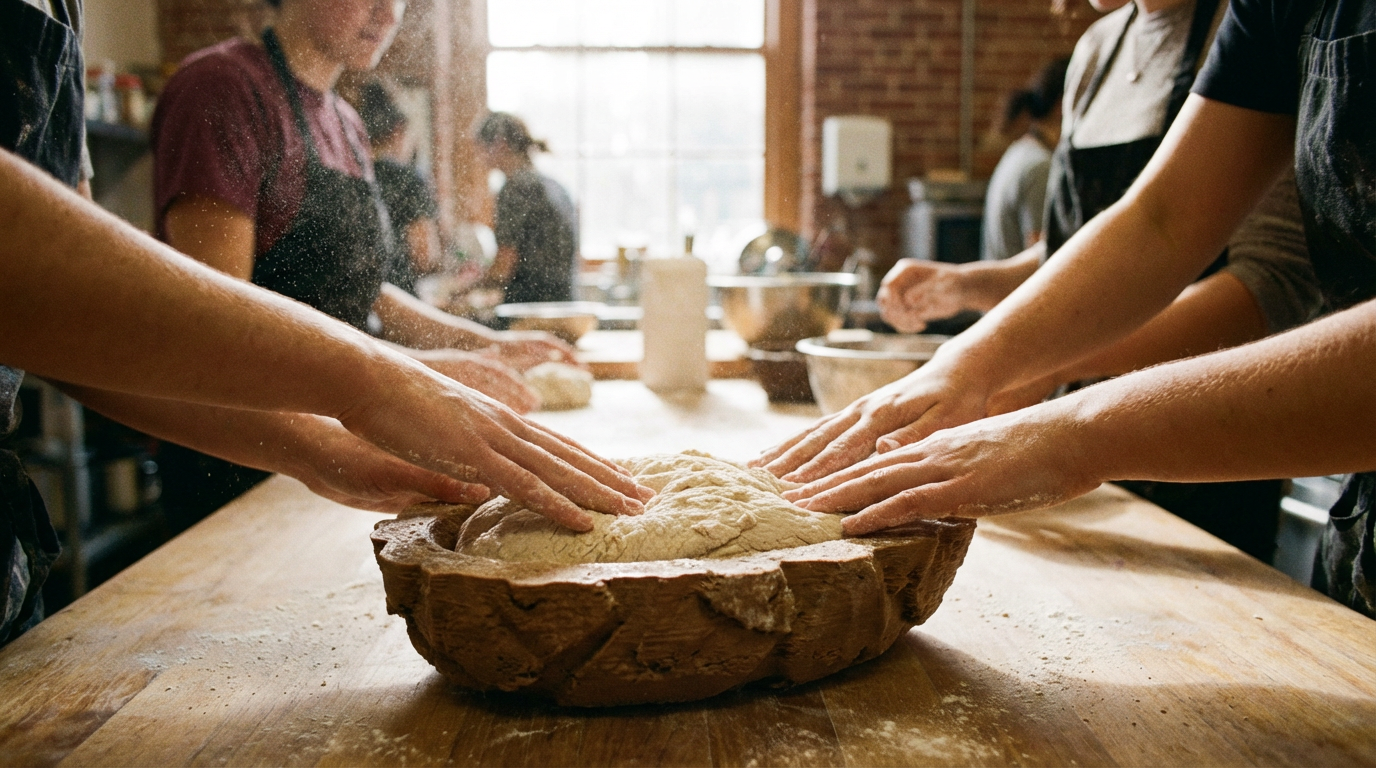
This is hands‑on learning in a very literal sense. Work on hands‑on and mindful learning in museums stresses that physical activity by itself is not enough. Visitors need prompts that encourage them to predict, observe, explain, and reflect. Otherwise, a 3D‑printed artifact risks becoming just another button to mash. But when prompts are embedded in labels or facilitation, 3D prints can be an ideal bridge between modern bodies and historical practices.
Again there are ethical red lines. While a printed animal mold or a piece of architectural ornament can safely be passed around, printing human remains for casual handling may be inappropriate even if the digital scan is used for research. The Alexandria Archive authors point to this explicitly and urge museums to draw a line between models that expand respectful access and models that re‑inscribe harm.
Virtual Reconstructions: Dropping Objects Back Into Their Worlds
If physical and digital models are like individual figures, virtual reconstructions are whole diorama rooms. They take objects that have been extracted from their original environments and drop them back into modeled spaces.
The Alexandria Archive blog describes how most museum galleries are essentially “white cubes”: neutral walls and cases that strip objects of architectural context. Digital platforms can become “black boxes,” where isolated 3D models float in empty space. Virtual reconstructions are a way out of both problems. A digital reconstruction of an Assyrian palace, complete with reliefs in their original positions, gives viewers a sense of scale, sight lines, and iconographic programs that a single wall panel in a Western museum never could. Virtual tours of ancient Egyptian tombs from similar periods can help students understand how burial goods, wall paintings, and architecture fit together to create an environment for the dead.
There is also an ethical dimension here. Many objects in North American and European museums come from the art market rather than documented excavations. Wealthy collectors historically favored shiny, complete, “beautiful” items from burials and temples, and many museum labels still gloss over this. Virtual reconstructions can be used to surface these colonial and market histories. They can also reveal absences. Not every tomb or temple has been scanned or made available as a virtual tour. Pointing out that absence teaches learners that some contexts have been irrevocably lost and invites them to question how and why.
In other words, virtual environment models are not just cool time‑travel set pieces. Used well, they make visitors ask “Where did this come from?” and “Should it be here?” as much as “Wow, that is pretty.”
Augmented Reality: History On Your Phone, Not Just On The Wall
Augmented reality is basically the crossover episode between physical and digital models. Instead of whisking you away into a fully virtual reality, AR layers digital content onto the real world using devices visitors already carry.
A survey of AR projects in museums highlights several ways this helps with historical storytelling. In natural history, Paris’s national natural history museum created an AR experience where visitors encounter life‑size digital models of extinct animals. The Smithsonian’s “Skin and Bone” app overlays muscles and movement onto historic skeletons, letting visitors see how an animal would have looked and walked. That is a model in motion, directly tied to the bones in front of you.
In art museums, the Art Gallery of Ontario collaborated with an artist to produce “ReBlink,” a project that reimagined historic paintings as contemporary AR scenes. Visitors pointed their devices at the works and saw overlays where figures stared at cell phones, navigated traffic, or otherwise lived in our era. The museum measured attention and found that before AR, people looked at each image for an average of just over two seconds. With the AR layer, eighty‑four percent of visitors reported feeling engaged, and thirty‑nine percent chose to look at the works again after the AR experience. That is a dramatic shift in dwell time and depth.
Other institutions have used AR to move models outside their buildings. London’s National Gallery placed digital versions of artworks on city streets, blending contemporary life with historical images. At the Kennedy Space Center, AR holograms recreate astronaut Gene Cernan’s difficult “spacewalk from hell” around the Gemini 9 capsule, putting narrative and motion back into what would otherwise be a static artifact.
A common worry is that AR will turn every visitor into a screen‑zombie and alienate older audiences. Evaluations at the Pérez Art Museum Miami for an AR‑native exhibition, however, found that visitors of many ages, including many people in their fifties and older, reported positive experiences. Groups often shared screens and commented together. When AR is designed to foster social interaction rather than isolate individuals, it can become a shared storytelling medium rather than a barrier.
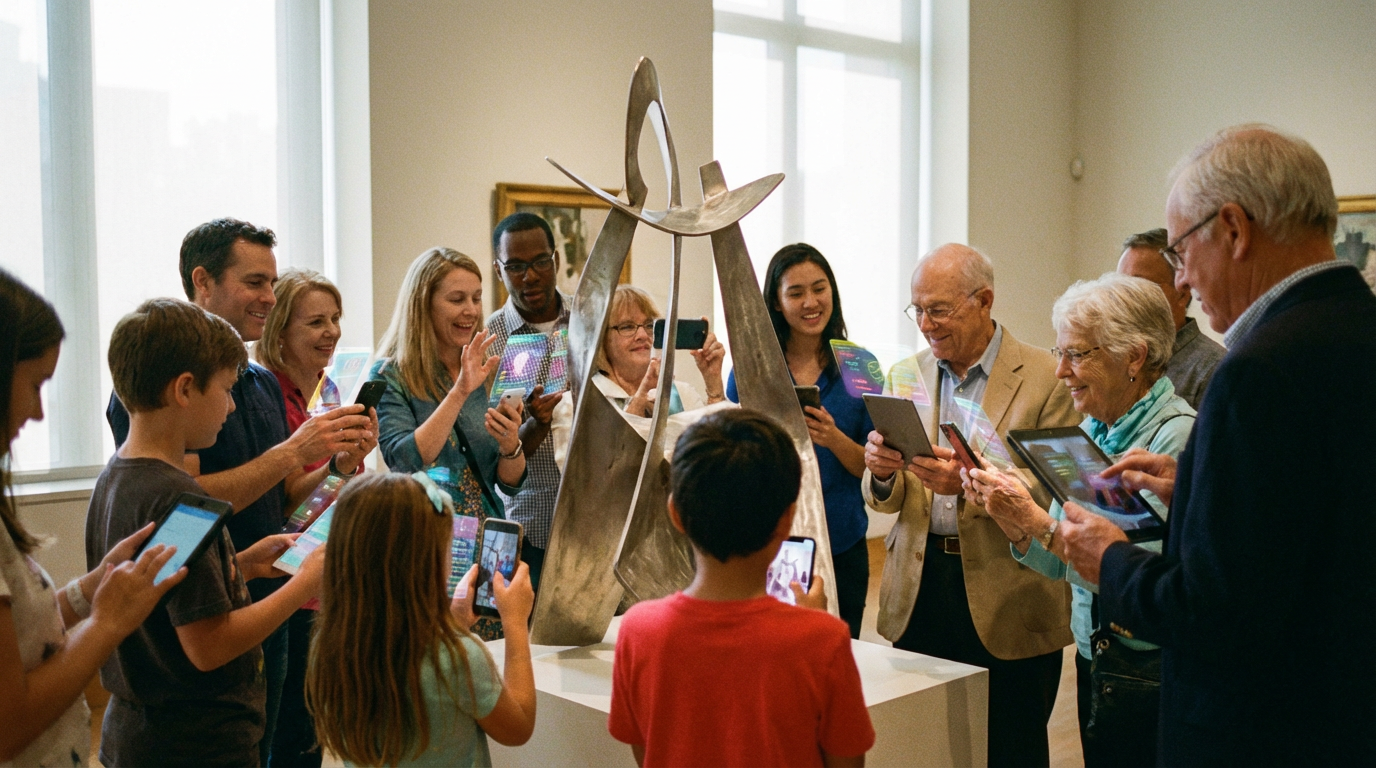
The practical takeaway is that AR is a relatively low‑cost way for museums to deploy digital models of historical people, animals, and spaces onto the existing physical environment in a way that feels like co‑play rather than a tech demo.
Scientific And Conceptual Models: Teaching Patterns, Not Just Plots
History teaching often gets stuck at the level of “what happened when.” Models shine when they help visitors grasp patterns and relationships underneath the surface facts.
In science museums, relational‑learning research shows how crucial comparison is. When two specimens from the same category are displayed together, visitors notice within‑category variation and start thinking in terms of natural kinds rather than isolated curiosities. When a genuine example is contrasted with a similar but different one, such as a butterfly and a moth, visitors learn to notice diagnostic features. When a dolphin flipper skeleton is placed next to a human hand, or a human and a giraffe neck are shown together, the shared number of vertebrae becomes a striking, memorable clue to evolutionary relationships.
Those are models of pattern, not of single events. They teach through “structural alignment,” inviting visitors to map relationships between cases.
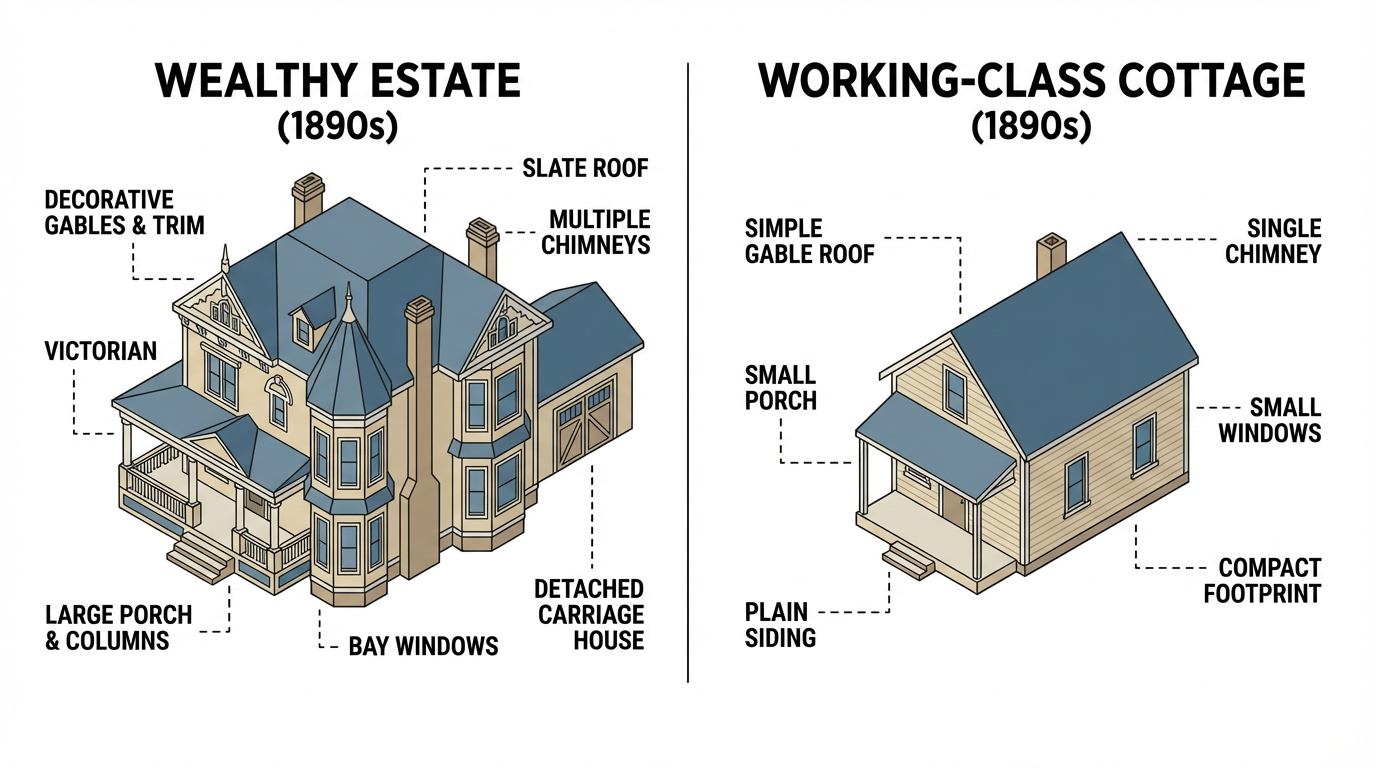
History exhibits can borrow that playbook. A pair of model houses from the same city but different classes can highlight social inequality more sharply than either alone. Models of two different burial assemblages can surface gender, status, or ritual differences among groups that might otherwise get flattened into “ancient people.” A timeline model of regimes that shows recurrent cycles of reform, crisis, and consolidation can teach visitors to see pattern in political history rather than memorize isolated dates. Even if the research you have on hand focuses on science, the core insight is broadly applicable: people learn relational structures best when exhibits are deliberately designed for comparison.
Scientific models also come into play when museums interpret complex systems behind historical events. A diagrammatic model of a feedback system, for instance, can help explain how arms races, economic bubbles, or climate dynamics work across time. A paper on museum exhibits emphasizes that such models function like analogies: when visitors can clearly see how elements in the model correspond to elements in the real system, they can transfer understanding more easily.
Why Models Work So Well For Human Brains (And Fan Brains)
Several strands of museum research converge on an idea that every fanfiction writer already knows: humans think, remember, and change through stories.
Narrative theory applied to contemporary art museums argues that visitors use narrative structures as “armatures” for memory. People are more likely to remember an exhibition if they can retell its story afterward and if that story connects to their own life narratives. Neuroscience and psychology work, cited in that article, suggest that our brains store events in story form, not as raw data. A later paper on art museums and health professions education draws on transformative learning theory to show how unfamiliar, even disorienting experiences in museum spaces, followed by guided reflection, can shift adult perspectives in lasting ways.
Models are especially good at feeding that narrative machinery.
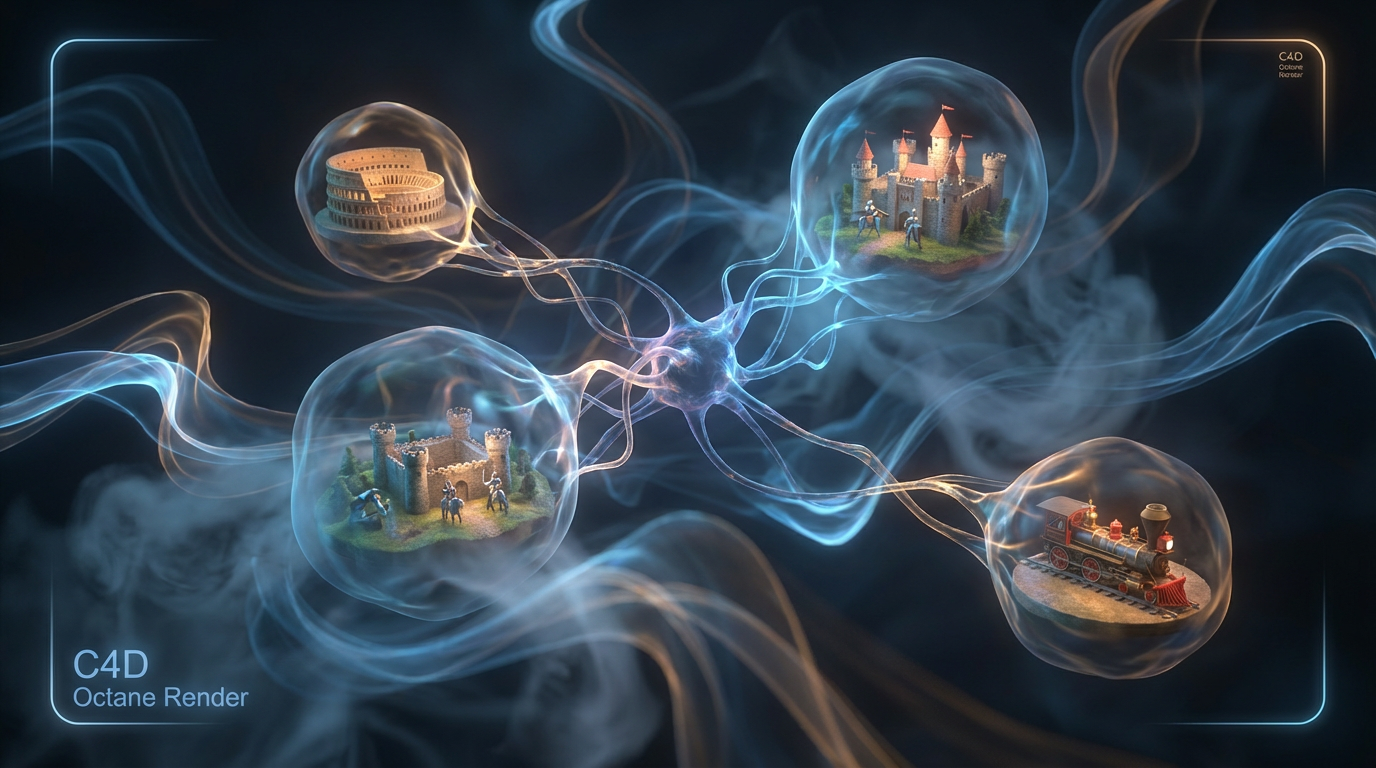
A miniature of a bombed factory, paired with a worker’s pass, can turn a dry chronology of war into a personal story about gender roles, risk, and daily life, as described in a discussion of storytelling in exhibitions. A model of a mammoth in its Pleistocene environment, combined with a short quote, can put visitors “where mammoths roamed” rather than just telling them “mammoths lived here ten thousand years ago.”
Pedagogical guidance for museum educators complements this by stressing constructivism and inclusive practice. Visual Thinking Strategies, a widely used method, revolves around open‑ended questions that prompt close observation, interpretation, and justification. Multimodal activities like movement, drawing, or sound give different learners multiple ways into the material. Frameworks such as Universal Design for Learning and differentiated instruction urge educators to anticipate diverse needs and build in options from the start, rather than bolting on “accommodations” later.
Models slot neatly into this landscape because they are inherently multimodal and open‑ended. Children can act out scenes with them, adults can sketch or photograph them, and everyone can use them as anchors for discussion. For neurodivergent learners who may struggle with dense text or noisy lecture spaces, a well‑designed model can be a more accessible entry point into historical content.
Finally, a 2024 article from the American Alliance of Museums positions museums as core infrastructure in a reimagined P‑12 education system. During the pandemic, museums turned galleries into classrooms and study halls, provided virtual field trips, and even launched museum‑based schools. Models and exhibitions were not just enrichment; they were core curriculum. That shift reinforces something many fans and educators instinctively feel: learning with objects and models is not extra, it is foundational.
Pros And Cons Of Teaching History With Models
Like any medium, models have strengths and weaknesses.
On the plus side, they boost engagement in measurable ways. The augmented‑reality paintings in Toronto clearly pulled visitors into deeper, longer encounters with works that previously got only a couple of seconds of attention. Children’s museum research suggests that hands‑on, model‑rich environments can support cognitive development, motivation, and school‑readiness skills. Game‑based history programs, described by education consultants working with museums, turn artifacts and models into clues in “history mysteries,” forcing students to practice critical thinking and primary‑source analysis rather than passively receiving narratives.
Models also support relational and conceptual understanding. Comparing specimens or structures helps visitors see patterns in evolution, design, or social organization rather than isolated facts. Virtual reconstructions reconnect objects to their original spaces and functions, which is essential for understanding ancient palaces, temples, or tombs as lived environments.
On the downside, models can easily oversimplify or mislead. A single perfect miniature city can accidentally erase variation and conflict within that city’s history. A glossy digital reconstruction can give a false sense of certainty about colors, furnishings, or social uses that are actually debated among scholars. Large biodiversity displays that showcase around fifteen hundred unique species without repeating any of them may impress visitors with sheer scale but fail to convey how much variation exists within each species, which is central to understanding evolution. The relational‑learning paper criticizes exactly that pattern.
Digital models and AR overlays introduce additional risks. Poorly designed AR can distract from the underlying objects or even visually overwrite other artists’ work, raising issues of respect and authorship. Social and generational divides in access to devices or comfort with technology can unintentionally exclude some visitors if digital models become the only path to certain content. And without careful ethical review, digitizing or printing sensitive materials can perpetuate colonial dynamics in new media.
The clear message from the research is that models work best when they are paired with thoughtful interpretation, opportunities for dialogue, and ongoing evaluation.
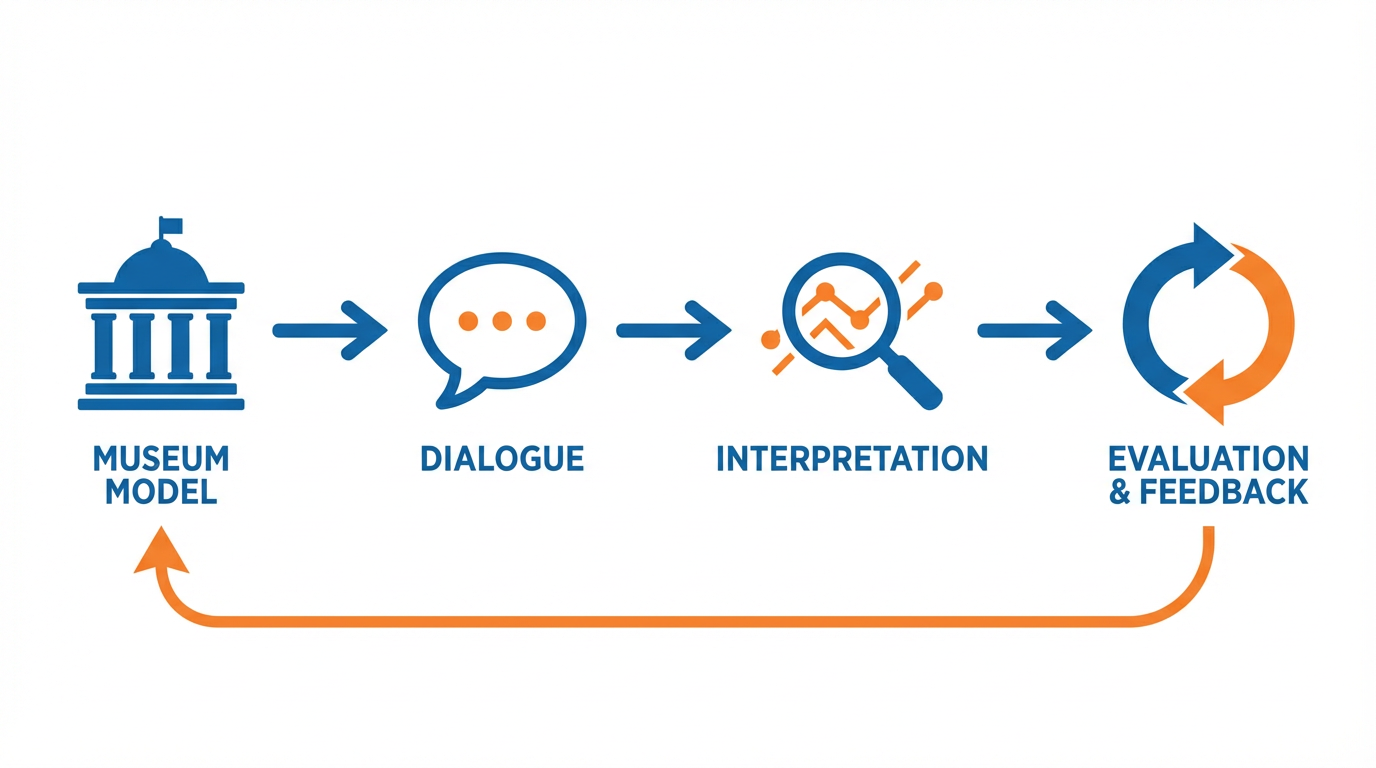
They should be seen as tools in a larger learning ecosystem, not as magic bullets.
Practical Ways To Use Models To Teach History Better
If you are a museum educator, curator, teacher, or even just a deeply invested history nerd who daydreams about designing your own exhibit the way you plan a custom figure shelf, the studies summarized here offer a lot of practical guidance.
One set of recommendations from the Alexandria Archive team is to choose objects for digital modeling that are truly suited to the medium. That means pieces where a 3D spin or deep zoom reveals features that cannot be appreciated in a case, such as reliefs high on a wall, inscriptions on the underside of a vessel, or evidence of repair and reuse. It also means writing alt‑text and captions that describe materiality, weight, and use in everyday terms, like comparing a water jar’s height to a soda bottle and explaining how it would be held.
An article on digital storytelling projects in European museums describes a plot‑based story authoring process used in the CHESS project. Story authors, including curators, educators, and designers, went through phases of scripting, staging, producing, and editing interactive stories tied to particular galleries and objects. They also developed detailed visitor personas and tagged story elements to match those profiles, enabling personalized storytelling through mobile guides. That kind of workflow can be adapted for model‑heavy history exhibits: decide on your narrative arc, choose key models, map them onto physical space, produce media around them, and then test and refine.
Guidance on museum storytelling stresses the importance of a “Big Idea” for each exhibition and even for each label. For a model, that might be as simple as “This house shows how working‑class families lived in this city in the nineteen‑thirties” or “This miniature temple is a portal into debates over who owns sacred objects today.” Brevity matters. Research on “museum fatigue” reminds us that visitors tune out long blocks of text; short, provocative labels paired with strong models are often more effective.
Pedagogical frameworks such as Visual Thinking Strategies and inquiry‑based discussion encourage educators to ask open questions around models. What do you notice? What makes you say that? How might this feel if you were living here? That keeps learners in an active meaning‑making mode and can be layered with factual information as needed. For students with autism or other learning differences, museum‑teaching toolkits highlight the value of focusing on strengths and interests and of providing multiple avenues for engagement, which models are well suited to support.
To pull these threads together, it can help to see the main model types side by side.
Type of model | What it does best | Key risk to manage |
|---|
Physical miniatures and dioramas | Convey scale, spatial relationships, and daily life in an immediate, tangible way; support open‑ended play and embodied comparison | Can freeze one perspective as “the” story and hide variation or conflict; may feel fragile or off‑limits without clear invitation to interact |
Digital 3D models and deep‑zoom images | Reveal hidden surfaces, tool marks, and conservation histories; allow learners to explore at their own pace and from anywhere | Can sever objects from physical context and materiality; risk of inequitable access for visitors without devices or connectivity |
3D‑printed replicas | Enable safe handling, experimentation, and experimental archaeology; support multisensory learning | Without good prompts, can become mindless fidgets; ethical concerns around printing sensitive objects such as human remains |
Virtual reconstructions and AR overlays | Restore architectural and landscape context; embed models back into lived environments; make complex systems and events more legible | Can imply certainty where there is scholarly debate; AR can distract from or visually overwrite existing works; requires careful curatorial control |
Underlying all of this is a simple but powerful principle: story first, tech second. A blog aimed at museum storytellers emphasizes defining the narrative, audience, learning goals, and emotional tone before choosing tools. Whether you are using models of starships or models of steamships, the same rule applies.
FAQ: Quick Answers For Curious Fans And Educators
Q: Are digital models going to replace real artifacts in history teaching?
A: The research summarized here points in the opposite direction. Digital models, 3D prints, and AR overlays are most effective when they extend or deepen access to physical objects and contexts, not when they stand alone. Scholars warn that digital “black boxes” can strip away physicality and context. Projects like virtual tomb tours and palace reconstructions are explicitly designed to push viewers back toward questions about real places, colonial collecting, and provenance.
Q: Do models actually improve learning, or do they just make exhibits look cooler?
A: Multiple strands of evidence suggest real learning benefits. Evaluation studies of children’s museums have documented gains in science knowledge and literacy skills. Research on relational learning shows that comparison‑friendly displays help visitors grasp categories and evolutionary relationships more accurately. AR projects like the one at the Art Gallery of Ontario have measured significant increases in engagement and revisiting of artworks. The caveat is that models need to be paired with good questions, prompts, and narratives; otherwise, their impact can be shallow.
Q: How can a classroom teacher without a museum budget use models to teach history?
A: The same principles scale down. Teachers can use inexpensive physical models, such as paper house nets, simple clay artifacts, or student‑made dioramas, and design activities that emphasize comparison, storytelling, and reflection. Many museums now offer free digital collections, 3D models, and virtual tours that can be woven into lessons. An American Alliance of Museums report describes how museums created virtual field trips and online materials during the pandemic, many of which remain available. The trick is to treat these models as prompts for inquiry rather than as static visuals.
Closing Thoughts: From Figure Shelf To Gallery Case
For those of us who have spent way too long posing a single figure on a shelf to evoke the exact moment in a show that broke us, models in museums feel familiar. They are about distilling a sprawling canon of events and contexts into something you can see, touch, and argue about with friends. The difference is that in museums, the canon is real people’s lives, ecosystems, and struggles.
The most exciting thing in the research is that museums are not just adding models as decoration. They are thoughtfully designing them, testing them, and using them to invite visitors into deeper, more critical, and more personal relationships with history. Whether you are building a display at home or an exhibition for thousands of visitors, that mix of love for detail, respect for context, and openness to new interpretations is the real endgame.
References
- https://creativematter.skidmore.edu/cgi/viewcontent.cgi?article=1102&context=mals_stu_schol
- https://pmc.ncbi.nlm.nih.gov/articles/PMC8033160/
- https://sichildrensmuseum.org/the-power-of-hands-on-learning-engaging-young-minds/
- https://www.teaglefoundation.org/How-We-Grant/Project-Profile/Profiles/Teaching-and-Learning-with-Museum-Exhibitions
- https://www.aam-us.org/2024/07/09/education-for-our-children/
- https://alexandriaarchive.org/2021/06/24/learning-with-digital-representations/
- https://www.guggenheim.org/accessibility/guggenheim-for-all/guggenheim-for-all-toolkit/teaching-strategies-for-museum-educators/pedagogical-approaches-to-museum-teaching
- https://www.museum-ed.org/wp-content/uploads/2012/12/HandsOnMindfulLearning.pdf
- https://www.ne-mo.org/fileadmin/Dateien/public/Publications/NEMO_Working_Group_LEM_Publication_Developing_Education_and_Public_Engagement_in_Museums_05.2023.pdf
- https://journals.stfm.org/familymedicine/2020/november-december/kelly-hedrick-2020-0242/