Nostalgic Moonlight: How Sailor Moon And 90s Anime Still Dress Our World
VHS Glow And Toonami Nights: Setting The 90s Scene
If you ever fell asleep in front of an old tube TV while the Sailor Moon theme played faintly in the background, you already know that 90s anime hits different. This was not just “cartoons” time; it was identity-forming time.
Research out of Oregon State University’s Wavearto blog traces how English-dubbed, heavily edited shows like Sailor Moon, Dragon Ball Z, Voltron, and Robotech slipped into U.S. pop culture in the late 1980s and 1990s. Cartoon Network’s Toonami block in the late 1990s and early 2000s turned after-school TV into a pipeline for long-running franchises, eventually growing an adult fanbase that refused to “age out” of anime.
Unlike many Western cartoons that focused almost entirely on kids, that same Oregon State analysis notes that anime in Japan was always built as a broad medium. It could lean silly or deadly serious, and it treated teens and adults as thinking, feeling audiences. You can see that in works like Akira or Neon Genesis Evangelion, which sit in the same mental closet as colorful magical girl shows. That seriousness is a huge reason anime slid so naturally into youth culture and later into streetwear and luxury fashion.
Fan writers on CBR and in nostalgic Facebook communities now openly call the 90s a golden age of anime aesthetics. They point to shows like Gundam Wing, Cowboy Bebop, Yu Yu Hakusho, and especially Sailor Moon as visual “time capsules” of the decade. The look meant bold silhouettes, vibrant but slightly grainy color palettes, and everyday tech like pagers, floppy disks, VCRs, and camcorders that instantly pin these shows to a very specific moment in media history.
For many of us, that golden age also became our first fashion education, our first fandom identity, and later, for some, the seed for careers in art, design, or fashion. And if you collect figures or vintage shirts now, you are basically curating that 90s moment on your shelves and in your closet.
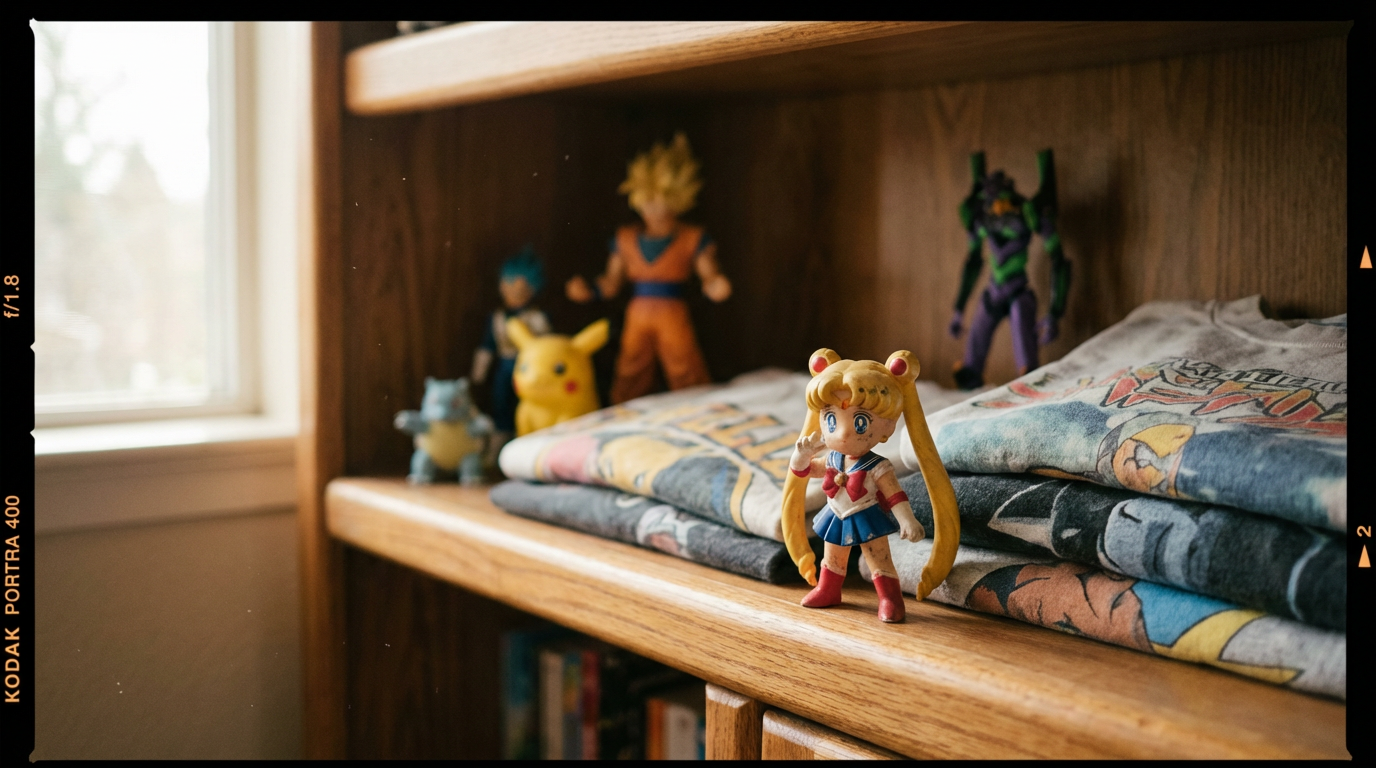
Sailor Moon: The Blueprint For 90s Anime Aesthetics
A Magical Girl Who Rewrote The Rules
According to a piece from Editions COVE Collective, Naoko Takeuchi created Bishoujo Senshi Sailor Moon in 1991. The manga follows fourteen-year-old Usagi Tsukino as she becomes a magical Sailor Scout to protect Earth, and the anime that premiered on March 7, 1992 turned her into a global pop-culture icon.
That same COVE analysis highlights what made Sailor Moon so revolutionary: it wove together first love, astrology, personified celestial bodies, and open celebrations of female friendship and empowerment. It also provided unusually early mainstream support for LGBTQA+ themes in anime, which quietly told a generation of viewers that queerness and magic could coexist in the same sparkling frame.
Visually, Sailor Moon’s world is wrapped in a dreamy watercolor palette: soft yet vibrant blues, purples, and oceans of pink. COVE’s description of the transformation sequences reads like a manifesto for the magical girl genre. Ribbons, glitter, stars, hearts, and pastel gradients swirl around the girls, turning the act of getting dressed into a mini-ritual of power. Later magical girl series like Cardcaptor Sakura and Tokyo Mew Mew follow this transformation template almost beat for beat.
Fashion As Storytelling, Not Decoration
What makes Sailor Moon feel so 90s is not only the magic, but the civilian outfits. The same COVE piece notes that the fashion in the show is rooted in real 1990s trends: high-waisted skirts and pants, tucked-in tees, denim jackets, and pastel layers that look like they could walk straight out of a thrifted yearbook.
An article from i-D magazine frames Sailor Moon as a gateway to fashion literacy for suburban teens who had never seen anyone in real life dress like runway models or Harajuku kids. Naoko Takeuchi did not just draw generic “cute” clothes. She pulled directly from couture houses like Thierry Mugler, Chanel, and Dior, blending those references with believable teen outfits like colored high-rise denim, cropped cardigans, varsity jackets, and turtlenecks.
A Tumblr essay on how fashion influences manga and anime goes even further. It breaks down how specific Sailor Moon looks track almost one-to-one with 1992 fashion week runways, figure-skating costumes, Japanese idol outfits, and everyday school uniforms. In other words, Sailor Moon quietly told viewers that “girly” did not mean unsophisticated. Its magical-girl design language was laced with the same design attention you would expect in a fashion editorial.
The Sailor Scouts also modeled a spectrum of gender expression. COVE’s analysis emphasizes that the show let girls be powerful while presenting as cute, stylish, boyish, glamorous, or somewhere in between. They could fight monsters in sailor collars and pleated skirts without sacrificing agency. That visual mix of femininity and power is the backbone of what fans now just shorthand as the “90s Anime Aesthetic.”
How The 90s Sailor Look Echoes Today
You can see the echoes of that look everywhere from social media outfits to official collaborations. COVE points to a Sailor Moon makeup line from ColourPop that reportedly sold out three times, each sell-out happening in under an hour. That is not a casual trend; it is proof of a franchise that still moves product decades later because fans want to literally wear its colors.
Here is a quick snapshot of how Sailor Moon’s key visual ideas keep resurfacing.
Motif | In 90s Sailor Moon | In Today’s Style And Fandom |
|---|
Transformation sequences | Glittering ribbons, pastel energy, full-body magical outfit changes | Modern magical girl series, fashion reels, and makeup transitions that mimic the same “spin and reveal” structure |
Watercolor palette | Soft blues, purples, and pinks saturating sky, hair, and magic | Pastel-heavy “90s anime aesthetic” edits, makeup collections, and clothing capsules |
Everyday fashion | High-waisted skirts, denim jackets, tucked tees, space buns | High-waisted “mom jeans,” tucked-in graphic tees, twin buns, thrifted blazers styled as Sailor-inspired outfits |
Empowered cuteness | Girls who are glamorous, goofy, brave, and flawed all at once | Cosplay, closet cosplay, and daily outfits that mix cute motifs with confident silhouettes |
For a figure collector, this is exactly why Sailor Moon statues keep getting reissued or reinterpreted. Each sculpt is not just “another pose.” It is a chance to bottle that watercolor palette, that high-waisted skirt, that sense of empowered cuteness in three dimensions.
90s Japanese Fashion And Anime: A Two-Way Mirror
Harajuku Streets And Cel Shading
While Sailor Moon was beaming out of TVs, real-world Japanese fashion was undergoing its own mini-revolution. A detailed overview on KamiCrew’s site describes how, as Japan shifted from 1980s economic boom to 1990s recession, youth in Shibuya and Harajuku turned fashion into a primary language of rebellion and self-discovery.
Different substyles exploded across those neighborhoods. Decora stacked cartoon character prints, plastic bead necklaces, layers of hair clips, and exaggerated accessories into a bright, festival-like look. Kogyaru, or Kogal, twisted the schoolgirl uniform into short pleated skirts, loose fluffy knee-high socks, Burberry-style scarves, and luxury handbags with cute cell phone charms. Visual Kei translated rock-band theatrics into streetwear with dramatic makeup and sculpted dyed hair, while Urahara Kei mixed American street and hip-hop influences into graphic tees, logo hoodies, and premium denim, birthing brands like A Bathing Ape.
These were not isolated from anime. Kogyaru, for instance, is essentially the real-world remix of seifuku, the school uniforms Sailor Moon helped glamorize. Visual Kei’s theatrical silhouettes paralleled the more dramatic, gothic characters that would pop up across 90s anime. Urahara Kei’s graphic-heavy, logo-driven look is the ancestor of the anime streetwear that dominates today’s fan closets.
A scholarly book on Japanese Fashion Cultures argues that Japanese fashion is not just copying Western styles. It uses Euro-American clothing as a “format” while filling it with specifically Japanese cultural “product.” You can see that logic in anime too.
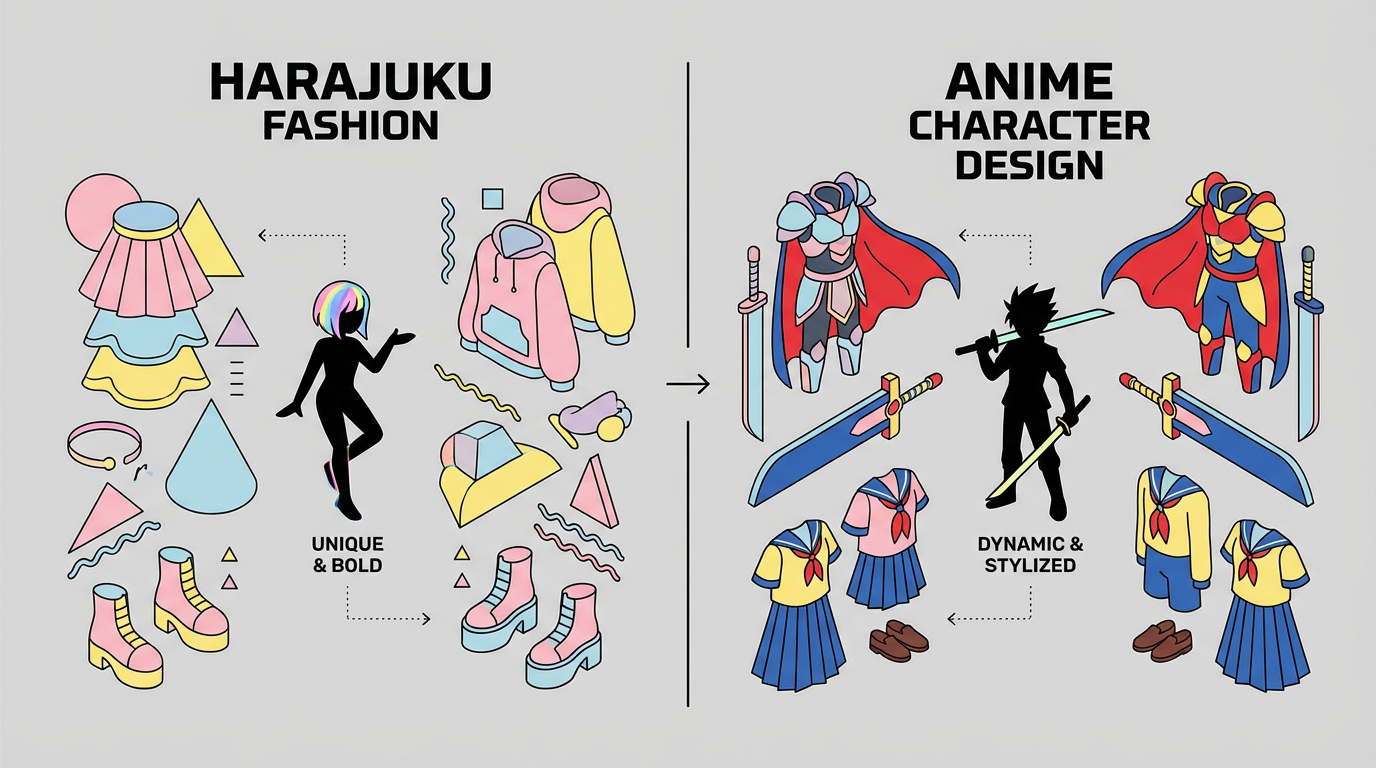
Magical girls may wear sailor uniforms, which came from Westernized school dress codes, but they are coded with Shinto, astrology, and kawaii sensibilities that are impossible to mistake for anything but Japanese pop culture.
When Fashion Inspires Anime As Much As Anime Inspires Fashion
The relationship between clothing and anime is not one-way. The Tumblr essay on fashion in manga and anime makes a strong case that creators like Takeuchi and Hirohiko Araki for JoJo’s Bizarre Adventure pull deliberately from high fashion. Araki, for example, has named Italian labels like Versace and Moschino as inspirations; his character poses closely resemble fashion photography and illustration from outlets like Vogue and artists such as Antonio Lopez.
This cross-pollination means that when you are admiring a Sailor Moon outfit or a JoJo pose on a figure, you are often looking at a distilled version of runway history plus local street style plus anime storytelling. The clothing is not just decoration, but a narrative device that tells you who a character is before they say a single line.
i-D’s article about “misfit fashion” emphasizes how anime like Nana and Paradise Kiss taught teens outside of major style cities how to dress differently. For viewers whose real-life peers all looked the same, anime built a mental archive of punk-goth looks, romantic florals, and tailored school uniforms. Blogs and practices like closet cosplay, where you pull character-coded outfits from your own wardrobe, show how viewers turn those ideas back into real outfits without needing a costume or convention.
In practice, that means a single 90s frame can sit at the intersection of Harajuku, couture runways, and a teenager’s thrift-store wardrobe. When you recreate that look today, you are participating in a decades-long, transnational style conversation that anime helped document and amplify.
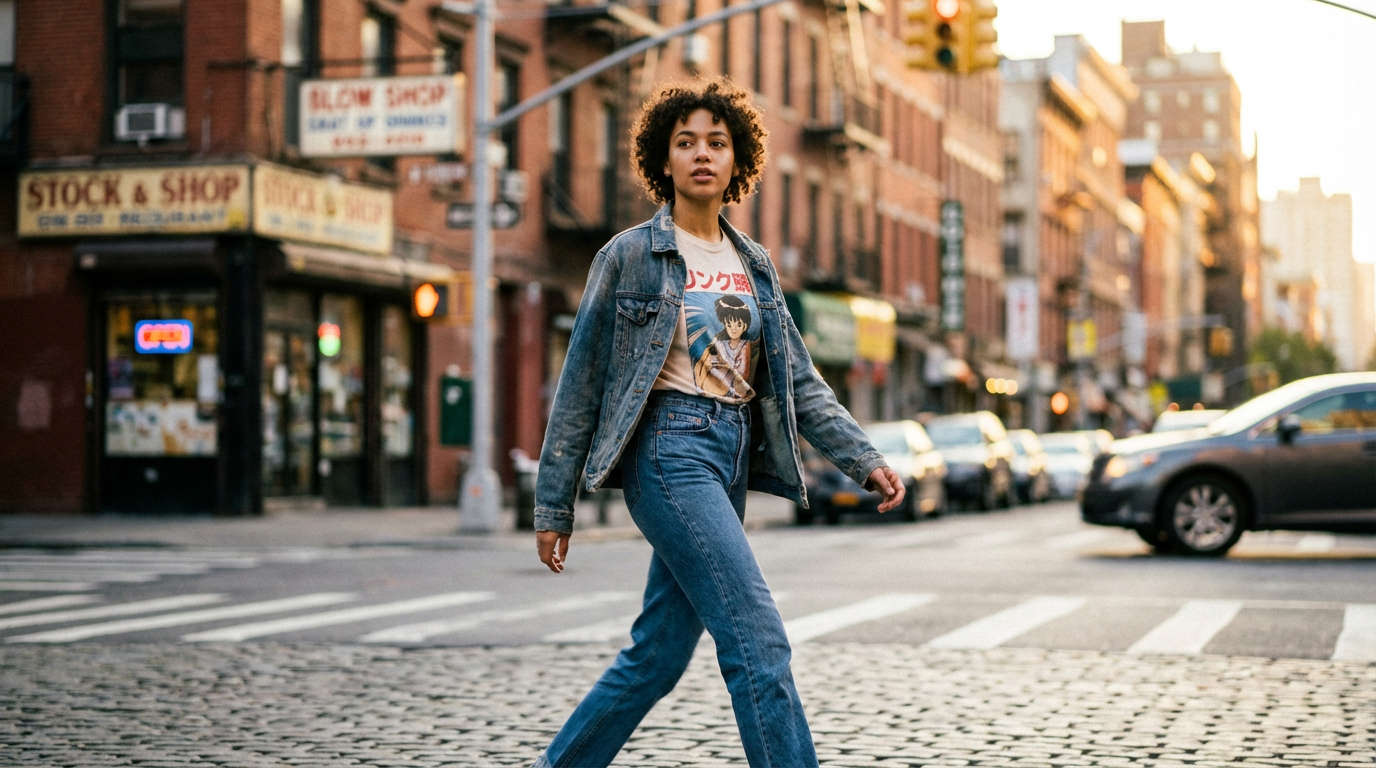
From TV Blocks To TikTok: 90s Anime Nostalgia In Modern Fashion
Vintage Anime Shirts As Wearable Time Machines
An in-depth article from Artreedesign describes how vintage anime shirts from the 1980s through the early 2000s have gone from niche convention merch to mainstream fashion staples. The key is authenticity. According to that piece, a true vintage anime shirt is usually produced during or shortly after an anime’s original run and uses classic art styles, bold colors, and scene- or character-specific graphics that reflect that era’s anime culture.
These shirts are more than cloth. They are time capsules. Many feature artwork and printing methods that are no longer used, making each piece a tiny museum of 90s design. Artreedesign notes that current demand is driven by nostalgia and personal expression. A Sailor Moon or Dragon Ball Z tee lets you wear your childhood on your chest while signaling resistance to fast-fashion sameness.
Sourcing them has become a subculture. The same Artreedesign piece recommends hunting on online marketplaces like eBay and Etsy, checking seller reviews carefully, and digging through local thrift and vintage shops. Anime conventions, with dedicated vendors, and private forums or social groups where collectors trade or sell are also highlighted as rich hunting grounds. Social media plays matchmaker: hashtags like “VintageAnime” and “AnimeFashion” on platforms such as Instagram, TikTok, and Twitter help fans discover outfits and rare pieces, and also frame these shirts as conversation starters rather than just fan merch.
If you are a figure collector, pairing a rare 90s tee hung behind your shelf with matching character figures can turn your display into a complete nostalgia corner. The shirt sets the era, the figures capture the characters, and together they recreate the feeling of flipping through TV channels and stumbling onto Toonami.
Streetwear Collabs: From Hook-Ups To Luxury Houses
Anime’s link with streetwear is not new. The Oregon State University blog on anime and streetwear traces how skate brand Hook-Ups began using anime-style graphics on decks and apparel in the 1990s. That visual “synergy,” as the author calls it, made sense because both anime and streetwear are highly graphic, icon-heavy subcultures.
Over time, collaboration moved from skate shops to luxury houses. The same article describes how Prada designed clothing for the anime film Appleseed Ex Machina in 2007, drawing on its themes of man versus machine, violence, and love. Louis Vuitton’s 2016 campaign featuring Final Fantasy XIII’s Lightning as a virtual brand ambassador showed a top-tier fashion house willing to treat an anime character as the face of a collection.
Streetwear hype brands pushed this further. Supreme’s 2017 Akira collection plastered iconic manga panels on polo shirts, jackets, and accessories, demonstrating that anime graphics could drive enormous demand. Uniqlo, a mass retailer, took a more accessible route, repeatedly releasing anime collections for Gundam, Sailor Moon, Naruto, Dragon Ball Z, and One Piece. Notably, they often used retro comic-strip-style prints instead of hyper-digital art, leaning deliberately into nostalgia.
Vogue Singapore’s coverage of anime and fashion points to even more recent collaborations such as Gucci with Doraemon, Loewe with Studio Ghibli titles like My Neighbor Totoro and Spirited Away, and Balmain with Pokémon. These partnerships lean heavily on familiar 80s–90s anime imagery, repackaging it on high-end hoodies, bags, and dresses for a new generation of fans.
Dedicated Anime Streetwear Brands And Fan-Made Lines
A feature from FAST at UCLA breaks down how anime streetwear has shifted from niche merch to a staple of malls and online retailers. Anime streetwear gets defined implicitly as a blend of anime imagery and characters with contemporary streetwear silhouettes, so fans can show off their fandom and still fit into broader fashion trends.
This ecosystem includes sportswear collaborations like Adidas with Dragon Ball Z, Air Jordan with Slam Dunk, and Primitive with Naruto. It also spotlights Hypland, a brand built around licensed collaborations with series such as Hunter x Hunter, Bleach, Hello Kitty, and Inuyasha. Mass retailers like Uniqlo serve as everyday entry points, while high-end street labels like Supreme and BAPE use properties like One Piece, Dragon Ball, and Pokémon to appeal to collectors.
FAST at UCLA also highlights a wave of small, Instagram-based brands that produce anime-inspired apparel in limited quantities, making drops feel like collectible releases. That structure mirrors the way figure collectors chase limited editions, preorders, and con exclusives. The nostalgia loop is complete: the anime that taught 90s kids how to dress differently now reappears as fashion subject matter for Gen Z wardrobes.
KamiCrew itself positions its clothing as a revival of 90s Japanese aesthetics, drawing from Ukiyo-e, kawaii, yokai, and horror themes. Its marketing leans directly into the idea that 90s Japan is an endless style reference pool, echoing what Facebook communities describe as the enduring “90s drip” that is “still in” right now.
Why This Nostalgia Hits So Hard: Media, Memory, And Meaning
The emotional punch of Sailor Moon and 90s anime is not just about color palettes and silhouettes. It is also about the way animation shapes how we think about beauty, identity, and belonging.
A content analysis published on PubMed Central, titled “Messages about Physical Attractiveness in Animated Cartoons,” examined cel-animated cartoons from around 1930 to the mid-1990s. Although the sample focused on Western studios, the results are revealing for anyone who grew up on animation of any kind. The study found that many variables differed systematically based on a character’s physical attractiveness: gender, age, intelligence, body weight, emotional states, prosocial and antisocial behavior, and overall moral valence. Attractive characters tended to be portrayed more positively, while unattractive ones more negatively.
The authors interpret these findings through social learning theory and cultivation theory. Social learning theory suggests that viewers, especially children, learn which appearances get rewarded or punished by watching media models. Cultivation theory argues that long-term, heavy exposure can slowly shape what audiences think is normal or desirable in real life. The paper also notes a broader media pattern where thinness and attractiveness are often conflated, and where attractive characters, especially women, are consistently presented as more worthy of love and attention.
What does this have to do with Sailor Moon and 90s anime nostalgia? It means that the shows we adore are not neutral. Even when they empower us with messages about friendship, courage, and queerness, they may also reinforce narrow standards of beauty or appearance. At the same time, essays like Japanese Fashion Cultures and the COVE piece on Sailor Moon remind us that Japanese fashion and anime often twist those norms in surprising ways. Magical girls fight in skirts instead of armor. Punk heroines like Nana Osaki from Ai Yazawa’s Nana embody messy, raw femininity that defies clean-cut beauty ideals.
So nostalgia here is double-edged. On one side, it is comfort: pastel skies, familiar transformation music, and outfits we can recreate with thrifted jackets and high-waisted jeans. On the other, it is an opportunity to re-examine the messages we internalized. When we collect figures, wear vintage shirts, or rewatch old episodes, we get the chance to ask which parts of that era’s aesthetic we want to keep and which parts we want to outgrow.
Practical Ways To Channel 90s Sailor Moon Energy Today
The best part of 90s anime nostalgia is that you do not have to cosplay on a convention floor to live it. You can incorporate it into your outfits, your room, your figure shelves, and even your relationship with your own body image in ways that feel sustainable and personal.
One approach, borrowing from Artreedesign’s styling suggestions for vintage anime shirts, is to treat character tees as anchors rather than costumes. Pair a Sailor Moon or Dragon Ball Z shirt with high-waisted jeans or shorts for a casual look that feels straight out of a 90s street scene. Tuck that same shirt into a skirt or tailored trousers for a smart-casual contrast, leaning into how Naoko Takeuchi mixed school uniforms with couture details. Layer the tee under an open shirt, cardigan, or light blazer, keep jewelry minimal, and finish with sneakers for ease or boots for extra edge. That is essentially closet cosplay in the spirit of i-D’s “misfit fashion” argument: recognizable enough for fellow fans, but subtle enough for daily life.
If you want to push closer to Harajuku energy, KamiCrew’s breakdown of Decora and Kogyaru offers a road map. Add cartoon-print accessories, playful hair clips, and layered necklaces to a pastel base outfit to nod to Decora without going full head-to-toe. For a Kogyaru-inspired look, play with a pleated skirt, loose socks, a slightly oversized cardigan, and a scarf or small handbag that hints at luxury without necessarily being designer. Fans of Nana or Paradise Kiss often borrow punk-goth cues by mixing tartan skirts, ripped stockings, and slightly worn blazers in ways that mirror how Ai Yazawa’s characters repurposed Vivienne Westwood-like pieces.
Collectors of vintage anime shirts can treat sourcing as part of the fun. Following Artreedesign’s advice, look for shirts that were printed during or shortly after a show’s original run, watch for classic 90s color separations and character art, and always read seller reviews before buying online. Local thrift stores and vintage shops can occasionally yield surprises, and anime conventions often have at least a vendor or two specializing in retro apparel. Online fan groups are another place where collectors trade pieces and share knowledge about print runs and fakes.
Anime streetwear collaborations offer a different path. FAST at UCLA highlights brands like Hypland or mass collections from Uniqlo as accessible entry points, while the Oregon State and Vogue Singapore pieces show how high-end collaborations with houses like Louis Vuitton or Gucci exist if you want to go aspirational. Even if you are not buying luxury pieces, paying attention to how these brands translate characters into silhouettes and color blocking can inspire your own outfits. You might not own a runway Sailor Moon coat, but you can echo its palette and proportions with thrifted or midrange pieces.
For figure collectors, think about your display like a micro-wardrobe. Place a Sailor Moon figure in front of a folded pastel jacket that echoes her scout fuku. Flank a Cowboy Bebop Spike figure with an old navy blazer or loosely knotted tie draped nearby. Stack a row of vintage or repro 90s tees behind a shelf of Dragon Ball or Evangelion figures so that the entire shelf reads like a coordinated inspiration board rather than a random lineup. You are basically styling your shelves the way a fashion editor styles a shoot, except your models are miniatures.
On the emotional side, it helps to keep the PubMed Central research in mind. Recognize that anime, like all media, tends to treat attractive characters more kindly and can blend thinness with beauty in unhealthy ways. Use that awareness as armor rather than as a reason to disengage. Enjoy the silhouettes and color palettes, but give yourself permission to adapt them to your own body, gender expression, and comfort. If a sailor collar or high-waisted jean makes you feel powerful, that is the part worth keeping. If a character’s impossible proportions do not resemble you at all, that is a reason to critique the art, not yourself.
Short FAQ
Why does 90s anime fashion feel so different from today’s anime style?
Several sources, including CBR, i-D, and Japanese Fashion Cultures, suggest that 90s anime sits at a sweet spot where analog production methods, detailed background art, and fashion-conscious character design overlapped. Artists pulled from real-world Japanese street styles like Decora and Kogyaru, from European couture, and from everyday teen wardrobes. Because the medium was less digital, colors and linework often feel moodier and more textured. Modern anime can still be stylish, but the 90s combination of analog warmth and fashion-forward references gives that era its particular nostalgic charge.
Is 90s anime fashion only for women or “girly” fans?
Not at all. Japanese Fashion Cultures documents how both men and women in Japan engage deeply with fashion, including styles like Ivy and Lolita that twist Western expectations about gendered dress. On-screen, characters like Spike Spiegel, Trunks, and various JoJo protagonists embody 90s menswear in ways that CBR and other outlets praise as iconic. Anime also normalizes gender fluidity in fashion, with Vogue Singapore and i-D both pointing out how cosplay and anime-inspired dressing encourage experimentation rather than rigid gender rules.
How can I tell if a Sailor Moon shirt is actually vintage?
Drawing from Artreedesign’s definition, an authentic vintage anime shirt is usually produced during or shortly after the original anime’s run. In practice, that means older tag designs, classic 90s-style art with bold but slightly muted printing, and graphics based on specific scenes or promotional illustrations rather than modern logo remixes. Provenance matters, so check seller reviews and look for signs that a shirt has genuinely aged rather than been artificially distressed. When in doubt, asking seasoned collectors in online communities can save you from paying vintage prices for a modern repro.
Moonlight Closing
Every time I pose a Sailor Moon figure on a shelf or pull on an old anime tee, it feels less like nostalgia for a single show and more like plugging back into a whole ecosystem of 90s creativity. Those cel-painted skies, Harajuku sidewalks, runway references, and Saturday-morning broadcasts all converged into a visual language that still shapes how we dress, collect, and dream. The magic is not just that we remember it; it is that we keep re-styling it, one outfit, one figure, and one pastel transformation at a time.
References
- https://www.academia.edu/7781620/Japanese_Fashion_Cultures_Dress_and_Gender_in_Contemporary_Japan
- https://opensiuc.lib.siu.edu/cgi/viewcontent.cgi?article=1002&context=esh_2023
- https://www.swarthmore.edu/film-media-studies/bridging-cultures-through-animation-exploring-tension-and-intersection-east-asian
- https://digitalcommons.unomaha.edu/cgi/viewcontent.cgi?article=1337&context=university_honors_program
- https://mars.gmu.edu/bitstreams/ffd8addd-2179-4f31-be08-e50f082ff371/download
- https://pmc.ncbi.nlm.nih.gov/articles/PMC6110260/
- https://diluo.digital.conncoll.edu/Asianart/exhibition/reshaping-beauty-through-japanese-fashion/
- https://blogs.oregonstate.edu/wavearto/author/nguyevie/
- https://libres.uncg.edu/ir/asu/f/Draper,%20Joshua%20Spring%202015.pdf
- https://rex.libraries.wsu.edu/view/delivery/01ALLIANCE_WSU/12351497540001842/13351452220001842