Proper Techniques for Cleaning Handcrafted Figurines with Air Dusters
Air dusters can keep handcrafted figurines pristine when you respect the materials, control the airflow, and follow up with gentle dust capture and smart display habits.
You know that moment when you notice a soft gray film on your favorite scale or garage kit and your heart sinks at the thought of snapping a tiny finger while dusting it? Collectors and conservation pros have found that the right kind of “air cleaning” dramatically cuts grime and paint wear while keeping value intact. The goal here is to show exactly when and how to use air dusters safely, when to put the can down, and how to build a quick routine that keeps your display looking like day-one unboxing instead of a thrift-store shelf.
Why Dust Is a Bigger Threat Than It Looks
Ceramics preservation labs point out that dust and dirt are hygroscopic, meaning they pull in moisture and pollutants that soak into porous figurines and encourage stains and corrosion in crevices and on attached metals Museum preservation guidance. Letting dust build up is not just a cosmetic issue but a preservation problem over time. On handcrafted pieces with textured bases, matte cloaks, or tiny sculpted flowers, this grime settles deep in the sculpt where it is hard to remove without risk.
Household dust itself is a messy mix: skin flakes, textile fibers, tracked-in soil, pet dander, pollen, and other fine particles that happily cling to resin, PVC, porcelain, and paint. If you just swipe at it with a dry rag, a lot of that debris goes airborne and then resettles on neighboring figures, which is why quick “feather duster” passes tend to make collections look clean for only a day or two.
From a collector’s point of view, dirt is also money. Cleaning guides for action figures note that well-preserved aesthetics and undamaged paintwork can boost resale value by as much as half compared with visibly neglected pieces, especially when you care about “mint” condition. Every safe dusting session is not only about pride of display but also about protecting what you paid for limited runs, customs, and older lines that are hard to replace.
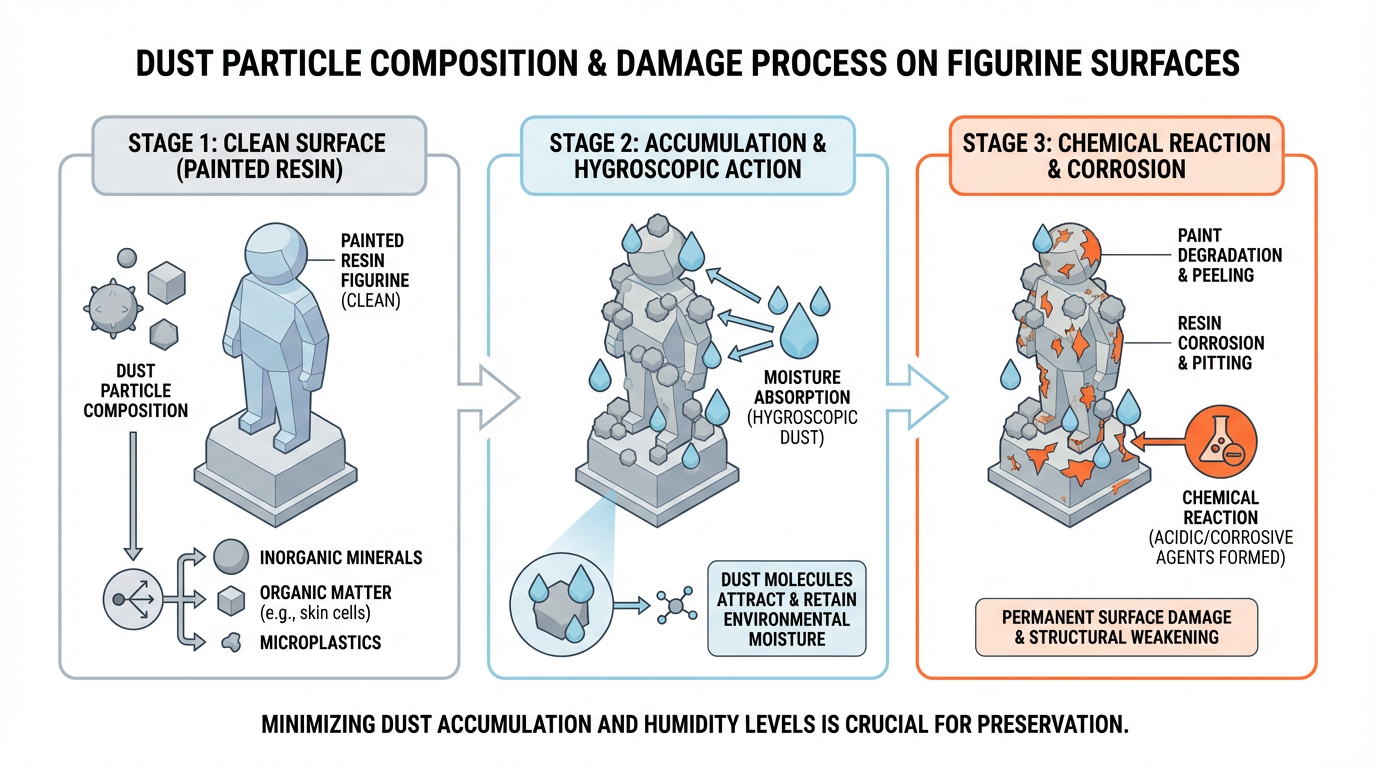
Finally, dusting itself is risky. Every time you handle a figurine, you increase the chance of dropping it, bending a thin part, or rubbing fragile paint. Preservation advice for ceramics repeatedly recommends storing fragile objects in closed cabinets or covered displays to cut down both dust accumulation and the need for hands-on cleaning in the first place. Air dusters, used thoughtfully, let you fight dust while minimizing direct contact.
Air Dusters 101: Canned, Electric, and Bulb Blowers
Many action-figure care guides treat air dusters as a go-to tool for blowing loose dust off PVC and ABS without touching the paint, especially on open shelves where pet hair and dander are part of daily life Action-figure care guides. It feels intuitive: a soft blast of “air” seems safer than dragging fabric across delicate faces, hair strands, or decals.
At the same time, collector discussions dig into whether the compressed gases inside canned “air” might interact with PVC, resin, or overglaze paints over years of repeated use, focusing more on subtle chemical reactions than instant disasters Collector discussion on compressed air. That concern gets louder when you move from mass-produced PVC to finely detailed porcelain, cold-cast resin, or mixed-media statues with tiny add-ons and special finishes.
Porcelain specialists go further and strongly discourage canned compressed air on fine figurines, warning that the blast is surprisingly powerful and that propellant chemicals and bitterants can settle on surfaces and in tiny textures instead of disappearing. Their preferred “air” tool is a slow rubber bulb duster paired with soft brushes reserved only for cleaning, trading speed for maximum control.
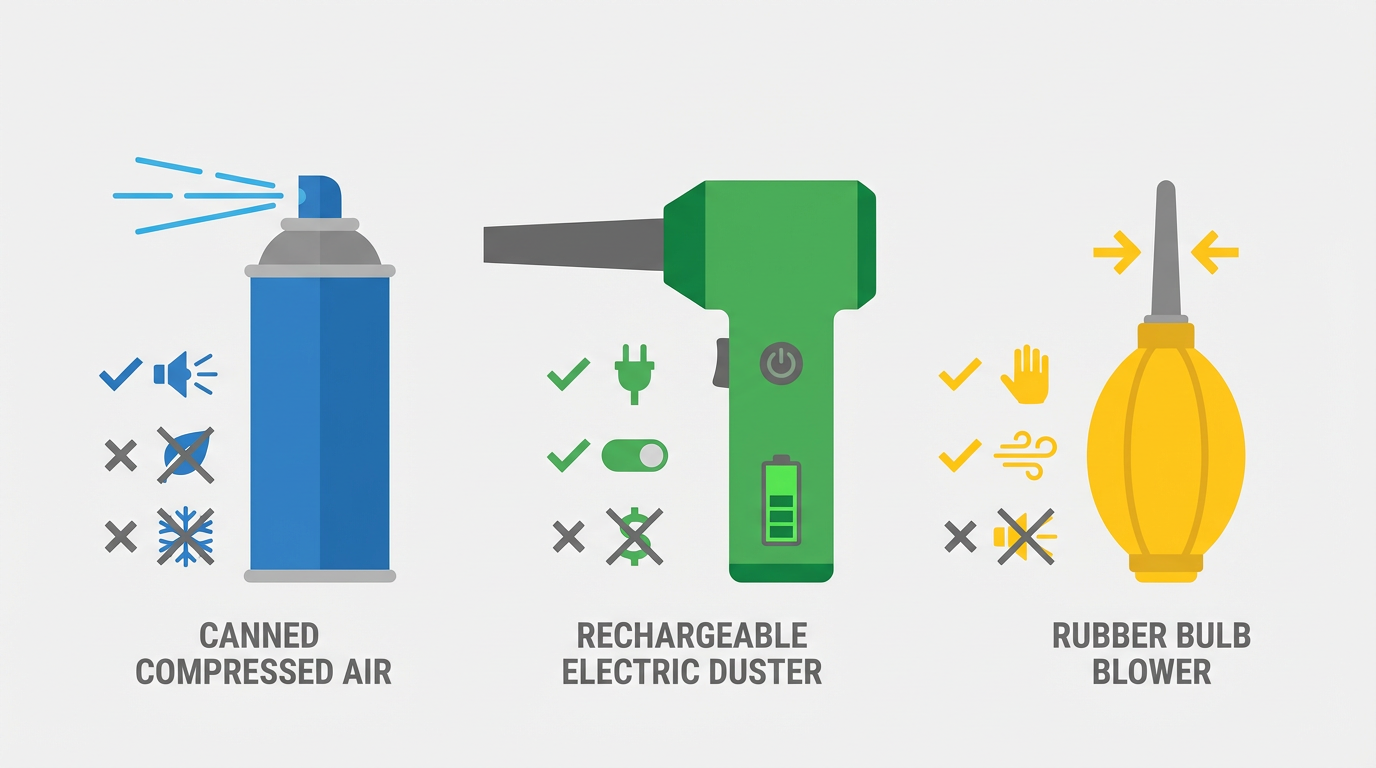
In practice, you will see three main “air duster” styles around collections:
Tool type | What it is | Pros | Cons | Best for |
|---|
Canned “compressed air” | Aerosol can with compressed gas and additives | Strong, affordable, easy to find | Unknown long-term propellant effects; blast can be harsh | Modern plastic figures and shelves, used with caution |
Rechargeable electric duster | Cordless device that blows room air | No propellant; adjustable power; reusable | Higher upfront cost; still strong at close range | Larger statue displays, regular shelf dusting |
Rubber bulb blower | Hand-squeezed rubber bulb (camera-style) | Very gentle; propellant-free; precise | Slow; weaker airflow | Porcelain, bisque, fragile lace and “spaghetti” details |
The safest mindset is to treat canned air as the most aggressive option and bulb blowers as the gentlest, with rechargeable dusters somewhere in the middle depending on their power setting and your distance from the figure.
When Air Dusters Are Safe—and When They Are Not
Modern PVC, ABS, and Resin Figures
For modern PVC, ABS, and resin statues and articulated figures with factory-cured paint, short, controlled bursts from an air duster are generally considered acceptable by collectors when you are targeting loose dust instead of caked grime. Cleaning guides for high-end figures explicitly recommend compressed air as part of routine dusting for shelves and cases, especially to get into hair spikes, armor vents, and folds in sculpted clothing.
The key is to remember that air only dislodges particles. If you blast a figure and walk away, the dust either resettles on the base, neighboring characters, or your electronics. That is why some guides pair canned air with a Swiffer-style duster or microfiber cloth to catch whatever comes off, and why some statue collectors combine a soft makeup brush in one hand with a vacuum nozzle held nearby to pull dust away as soon as it is loosened.
Handcrafted Porcelain, Ceramic, and Bisque Figurines
Handcrafted porcelain, ceramic, and bisque pieces sit in a higher-risk category. Ceramics experts note that low-fired and unglazed bodies are more porous and vulnerable to liquid penetration and staining. High-fired porcelain may be less porous, but it is often decorated with fragile overglaze paints and gilding that are more loosely adhered compared with underglaze decoration. Porcelain figurine specialists add that some colored bisque has unfired factory touch-up paint so delicate that even plain water or mild soap can sometimes lift color, and hand-applied numbers, signatures, and backstamps may smear or vanish if scrubbed.
If water and gentle soap can occasionally pull color, hammering those same surfaces with unknown propellants from a can becomes an unnecessary gamble. For these pieces, the safest “air duster” is a rubber bulb blower used in short squeezes, combined with extremely soft brushes for intricate flowers, lace, and “spaghetti” textures, and an overall bias toward patience. For dipped lace, ultra-thin petals, and anything obviously fragile or vintage, it is usually better to skip canned air entirely and stay with bulb blowers, brushes, and, when truly needed, very controlled spot cleaning.
Figures with Electronics or Mixed Materials
Figures with electronics—LED bases, sound modules, wires—introduce a different risk profile: moisture, not just mechanical stress. Figurine cleaning advice is clear that any wet cleaning around electrical components risks short circuits, damage, and even shock, so only dry methods such as air dusters and microfiber cloths should go near battery compartments, speaker grills, and wiring channels.
Mixed-material pieces, like resin figures with metal weapons or plastic armor plates, also benefit from moderated airflow. Strong blasts can flex glued joints or push grit deeper into seams. In these cases, a moderate air duster setting used from a bit farther away, followed by a soft brush around tight joints and edges, gives you cleaning power without forcing abrasive particles into hinge lines and gaps.
Step-by-Step: A Safe Air-Dusting Ritual
Before you even touch the trigger, give the figure a slow look. Check for hairline cracks in bases, loose accessories, or aging decals that are already lifting. Anything that seems unstable should either be removed and cleaned separately if possible or treated with the lightest possible touch from a bulb blower instead of a strong burst.
When you start using the air duster, think of creating a moving wall of air rather than poking at individual spots. Hold the nozzle a comfortable distance away so that the flow feels firm but not violent; if you see hair strands, thin cloth folds, or antennae flexing dramatically, you are too close or pressing too hard. Sweep from the top of the figure downward so that dust you dislodge from hair or shoulders falls onto areas you have not cleaned yet, rather than back onto already-cleaned parts.
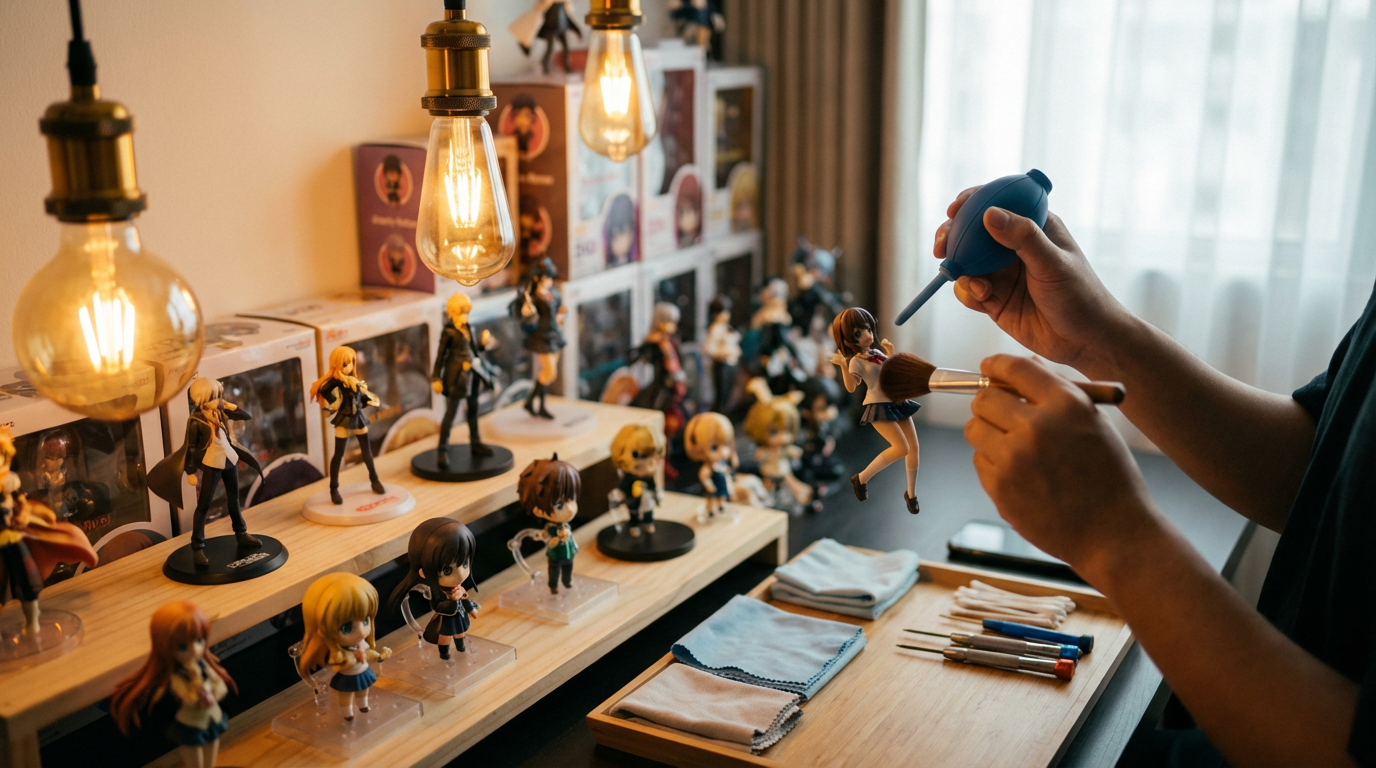
To actually get dust out of your room instead of just bouncing it around, pair the airflow with something that captures particles. Many collectors keep a soft makeup brush in one hand, lightly coaxing dust out of recesses while an air duster or a vacuum nozzle held at a respectful distance helps guide particles away. Others follow each air pass with a microfiber cloth or Swiffer on the shelf surface so whatever falls does not have a chance to resettle.
Frequency matters. On open shelves in a room with pets or frequent traffic, a quick air-dusting session about once a week keeps buildup low enough that you rarely face stubborn grime. In closed display cases, action-figure care blogs describe opening the doors roughly once a month for dusting both figures and glass surfaces. If you spend about five minutes on a shelf each week, that adds up to roughly four hours a year to keep your main display looking “just set up,” which is far less effort than trying to rescue yellowed dust and sticky buildup after years of neglect.
Over time, this ritual also lets you keep a close eye on slow changes—plastic starting to feel tacky, slight color shifts, or bases beginning to warp—so you can address issues before they become serious damage.
Safety, Health, and Long-Term Preservation
Ceramics studio safety rules warn that fine silica dust from clay and glazes can scar lung tissue and cause irreversible loss of breathing capacity, which is why studios emphasize proper ventilation, HEPA-filtered vacuums, and wet cleaning instead of sweeping that sends dust into the air Ceramics studio safety rules. You will not generate studio-level dust clouds while cleaning a shelf, but when you hit older unglazed bases, plaster-like dioramas, or thick dust layers with a strong air blast, you are still pushing fine particles into your breathing zone.
If you notice visible dust plumes or if you are prone to allergies, it makes sense to treat air-dusting sessions like other dusty chores. Open a window or run a fan that exhausts outward if you can, avoid pointing the airflow directly toward your face, and consider a well-fitted dust mask for long cleaning sprees. At the very least, give the room a few minutes to settle before you settle back in front of the shelves.
Some older ceramics and decorative glazes contain lead, and lead-bearing dust becomes dangerous when it is inhaled or transferred from dusty hands to mouths, especially for children Lead hazard overview. That is another reason to keep vigorous air-dusting away from kids and pets and to wash your hands thoroughly after working on vintage porcelain, unknown glazes, or thrifted pieces whose history you cannot verify.
Aerosol dusters themselves are chemical products, not just cans of harmless air. The US product safety agency even maintains an aerosol-duster database that tracks brands and formulations, underscoring that these are treated as regulated chemicals. Store them upright, away from heat sources, follow label directions, and never aim them at eyes, faces, or bare skin. If you prefer to avoid propellants entirely, battery-powered dusters and bulb blowers give similar cleaning power with fewer unknowns.
On the conservation side, research on archaeological ceramics shows how much care professionals put into removing deposits without changing the underlying glaze. In one study, conservators used a cation-exchange resin at carefully controlled temperature around 86°F and high humidity to strip off thick calcareous encrustations while leaving the glaze chemistry essentially unchanged. Compared with more aggressive mechanical scraping, the controlled chemical method removed more grime with less damage, which is a strong hint that “gentle but consistent” usually beats brute force for fragile surfaces.
Ceramics preservation programs also stress that stable environments matter as much as cleaning, recommending moderate temperatures around the mid-60s°F with relative humidity near the middle of the range and storage in closed cabinets or boxes to buffer objects against dust and handling. For figure collectors, that translates to avoiding attics, damp basements, and direct sun, using UV-safe cases when possible, and letting air dusters handle what dust still sneaks in.
FAQ: Quick Answers for Worried Collectors
Is canned air ever okay for handcrafted figurines?
Modern action-figure cleaning guides treat canned air as a practical tool for PVC and ABS figures when it is used in short bursts, kept at a reasonable distance, and followed by a cloth or Swiffer to actually remove the loosened dust. For those relatively robust plastics with factory-cured paint, that approach is widely used without obvious short-term issues. By contrast, porcelain-focused instructions and statue collectors who worry about long-term paint chemistry prefer rechargeable or bulb-style air dusters plus soft brushes, skipping canned products entirely on fragile, hand-painted, bisque, or lace-like areas and on pieces with visible signatures or limited-edition markings. A practical compromise is to reserve canned air for modern plastics and shelves, switch to bulb blowers for handmade or vintage ceramics, and always test on a low-visibility area before committing to a new routine.
What if the dust is stuck and the air duster barely moves it?
Air dusters shine at lifting loose, dry dust; once layers are sticky, greasy, or smoke-stained, you have crossed into wet-cleaning territory. For robust PVC and ABS figures, collectors use lukewarm water with a drop of mild dish soap and a soft cloth or toothbrush, working gently and rinsing before thoroughly air-drying to tackle grime that air alone cannot shift. For colored bisque and porcelain with delicate decoration, specialists favor a slow, top-down routine with damp cotton swabs or makeup wedges, watching closely and stopping the moment they see color lifting. On truly valuable or ancient ceramics with thick mineral deposits, conservators turn to controlled chemical treatments rather than force, reinforcing the idea that patience, small test areas, and minimal pressure are safer than scrubbing. Whatever the material, if a test swab picks up pigment, it is time to stop and reconsider the method—or consult a professional conservator.
Can kids help dust the collection with air dusters?
It is usually better to let kids join in with soft brushes and microfiber cloths while adults control any air dusters. Aerosol dusters are tracked in official chemical product databases, and some older glazes can shed lead-bearing dust, so keeping the trigger in grown-up hands is the safer choice. If younger fans do help, use the gentlest tools, avoid strong blasts around their faces, and make handwashing part of the ritual once the last shelf is sparkling again.
Handled with that mix of fandom love and conservation-level respect, air dusters become precision tools rather than blunt instruments. Treat the airflow like a controlled wind spell, let brushes and good storage do the quiet backup work, and your handcrafted figurines will keep looking like they just stepped out of the anime opening every time you walk past your shelves.