Psychological Reasons Collectors Talk to Their Figurines
This article explains why talking to collectible figurines feels natural, how it affects emotional health and identity, and when the habit may signal deeper problems.
Collectors talk to their figurines because the human brain is wired to bond with meaningful objects, and speaking to them often becomes a safe way to manage emotions, express identity, and tell stories. When it stays within healthy limits of time, money, and space at home, this habit is usually a comforting, creative extension of normal collecting rather than a problem.
Ever caught yourself whispering “Sorry, buddy” after bumping a prized scale figure, or giving a pep talk to a Nendoroid before a stressful meeting? That tiny moment of “talking to plastic” can be part of a powerful emotional ritual that makes rough days feel more bearable and fandoms feel more alive. Collecting research shows that for many people, figures and other collectibles act as containers for memories and mood boosts, not just decorations, which means how you interact with them can genuinely shift how you feel over time. This article offers a clear, research-informed breakdown of why that happens, how to tell when it is helping or hurting, and simple ways to turn chatting with your figurines into a healthy, intentional habit.
Why Talking to Figurines Feels So Natural
Collecting is not a weird niche. Estimates from research on the psychology of collecting suggest that roughly 40% of U.S. households and about 30% worldwide engage in some form of collecting, from coins to toys. Hobbyist studies and market data on figure and toy collecting echo this, with one analysis noting that about a third of people maintain some type of collection and that collectors tend to be slightly higher in openness to new experiences than non-collectors, not more anxious or unstable. Collecting benefits research argues that the main motive is not status or greed but storing emotional memories in objects, which is exactly what fandom figurines excel at.
Objects as Emotional Memory Containers
When someone talks to a figurine, they are rarely speaking to “PVC.” They are talking to what the character and the object together hold: the late-night binge of a favorite anime, the arc that got them through a bad semester, the friend who gifted that tiny chibi on a birthday. Consumer researchers describe collectibles as “emotional memory containers,” objects that help preserve moments and feelings that matter. Collecting benefits research finds that many collectors use objects to capture experiences they care about rather than as trophies or investments.
Specialized work on figure and toy collecting reaches similar conclusions, arguing that collections function as extensions of identity and self‑expression, where each chosen piece reflects tastes, values, and the fandoms a person wants to be visibly aligned with. An overview of figure collecting notes that many adults now buy toys from the same brands they loved as kids, and that engaging in hobbies like collecting is linked to lower stress and better overall functioning. Akimomo’s psychology of figure collecting emphasizes nostalgia, comfort, and identity as central emotional drivers. In that context, speaking to a figure can feel as natural as addressing an old friend or a diary that just happens to have cat ears and a sword.
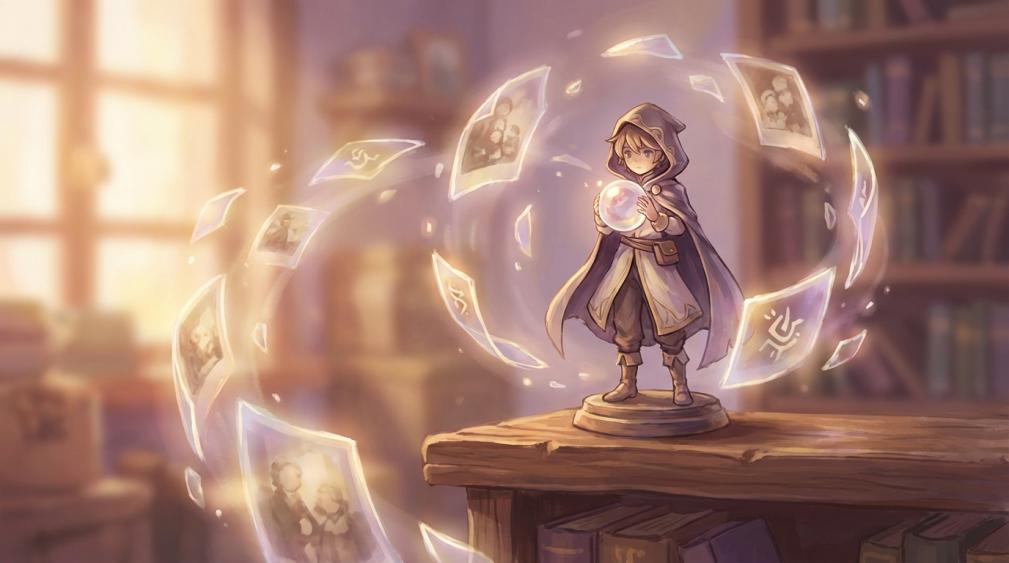
Anthropomorphism: Giving Your Figures a Mind of Their Own
Psychologists use the term anthropomorphism for attributing humanlike minds and feelings to non‑human things. A study on children’s role play and anthropomorphism found that kids who frequently engage in imagination-heavy role play, including with invisible or personified companions, are more likely to attribute thoughts and emotions to animals, gadgets, and even inanimate nature. The research on role play and anthropomorphism showed that children who intensely impersonated characters or interacted with imaginary companions scored higher on measures of anthropomorphizing non‑human targets, suggesting that actively imagining another “mind” strengthens the tendency to see inner lives in objects.
Pop‑culture analysis of the Toy Story films takes this further, arguing that our relationships with toys are not just one-way symbolism but mutual identity‑building. A marketing study of the trilogy interprets the films’ talking toys as stand‑ins for real consumer–toy bonds, where characters like Woody and Buzz carry agency and worth in the story, not just price tags in a store. Toy Story–based research on anthropomorphism and consumption worth suggests that people experience toys as relationship partners that shape who they are. When you look at your Rei or Tanjiro figure and instinctively say “You’ve got this, right?” before an exam, your brain is tapping into the same mental machinery: simulation of another mind, even when that mind is intentionally imagined.
What You’re Really Doing When You Talk to Your Figures
Emotion Regulation and Comfort Rituals
For many collectors, talking to figurines is basically self‑soothing with extra style. A psychologist writing about “trinket culture” notes that interacting with small, meaningful items like figurines and plush toys can deliver quick hits of pleasure, comfort, and satisfaction, especially during stress or uncertainty. That same commentary emphasizes that nostalgic objects help stabilize a sense of identity and act as anchors for emotion regulation when life feels unstable, a pattern that seems especially strong in younger adults who grew up online and under constant global anxiety.
Work on figure collecting echoes this: emotional drivers such as joy, nostalgia, and comfort are repeatedly highlighted as reasons people keep acquiring and interacting with figures. Akimomo’s overview of figure and toy collecting points out that hobby engagement, including collecting, is associated with lower depression and stress. Broader hobby research cited in collector culture insights similarly notes that hobbies reduce stress, enhance wellbeing, and build social connection. When you sit on the floor after a terrible day, re‑pose your favorite character into a victorious stance, and say out loud, “You made it through worse arcs than this,” you are performing a tiny, personalized coping ritual that harnesses the comfort and familiarity of your collection.
Identity, Fandom, and Self‑Storytelling
Talking to figurines is also a way of narrating who you are to yourself. Surveys and essays on collecting behavior argue that people use objects to connect with personal and cultural heritage and to appreciate aesthetics, not just to own things. An Art Basel interview with a psychologist describes collecting as a social and cognitive activity that helps people make sense of the world and develop expertise.
Figure‑focused analyses add that collections become visual biographies: shelves of mecha, magical girls, or villain lineups silently answer the question “What stories shaped you?” Akimomo’s work on figure collecting emphasizes that younger adults often see figures as avatars of imagination and tools of self‑expression. When you tell your scale figure, “You’re the reason I got into drawing armor designs,” you are not just being cute; you are reinforcing a narrative about yourself as a creative, dedicated fan whose life path intertwined with a fictional character. That narrative can boost self‑esteem and persistence, much like finishing a collection or completing a story arc does.
Creativity, Role Play, and Social Skills
Play does not vanish in adulthood; it just gets stealthier. Many figure collectors pose, re‑pose, photograph, or even script scenes with their figures, sometimes giving them voices or lines in casual conversation. Developmental research on role play shows that pretending, impersonating characters, and interacting with imaginary companions are strongly linked to anthropomorphism and practice in imagining other minds. The role play and anthropomorphism study found that frequent, imagination‑demanding role play predicted higher readiness to attribute internal states to non‑human entities, even after accounting for age.
Adult doll‑play research adds another layer, suggesting that people with secure self‑concepts tend to use doll collecting and world‑building mainly for creative expression, while those with more insecure identities sometimes use it to work through internal conflicts in a self‑therapeutic way. In both cases, talking to dolls or figures functions as a low‑stakes rehearsal space for emotions and dialogues that are harder to navigate with real people. Practically, giving your favorite character a line like “You’re allowed to rest” when you are burned out is a way of putting advice into someone else’s mouth so you can actually hear it. Over time, that practice can make it easier to voice needs and boundaries in real relationships.
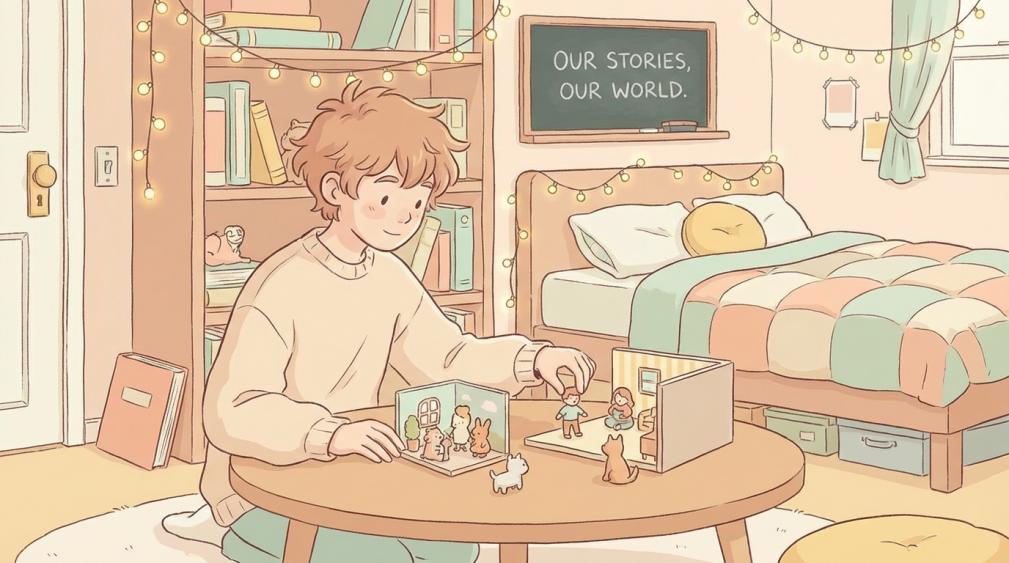
The Upside and Downside of Talking to Figurines
Psychologists generally see collecting as a continuum that ranges from healthy hobby to problematic hoarding. The psychology of collecting notes that collecting, hoarding, and compulsive hoarding share features but differ in impact on daily life, with hoarding disorder recognized in the DSM-5 when possessions overwhelm living spaces and cause significant distress or impairment. Figure‑focused analyses make the same point: healthy collecting fits within budgets and shelves and adds joy, while compulsive acquisition can become a maladaptive coping strategy tied to suppressed emotions. Akimomo’s discussion of collecting and hoarding highlights this spectrum for toy and figure collectors.
Talking to figurines sits on that same continuum. The act itself—speaking out loud to a figure—is usually harmless. What matters is the surrounding pattern: whether it brings relief and creativity, or whether it comes bundled with out‑of‑control spending, isolation, and shame.
How Talking To Figurines Helps | When It Can Become a Problem | Concrete Example |
|---|
Provides quick comfort and stress relief, reinforcing positive emotions tied to cherished objects, similar to how trinket cultures support wellbeing. | Becomes a main way of avoiding real-world issues, so problems at work, school, or in relationships never get addressed. | After a bad day, you vent to your figure for ten minutes and then feel calm enough to answer emails; healthy regulation. |
Strengthens a sense of identity and continuity by linking figures to personal stories and achievements. | Gets paired with excessive buying justified as “my figures understand me,” leading to debt or constant anxiety about missing new releases. | You talk to an older figure about how far you have come since you bought it; healthy identity work, unless every tough feeling triggers a new preorder. |
Encourages imagination, role play, and social skill rehearsal in a safe, low‑stakes environment. | Replaces almost all human interaction, so it feels easier to talk to figures than to friends, and social invitations get turned down. | Practicing a difficult conversation out loud with a figure can help; repeatedly canceling hangouts to stay home “with the collection” is a warning sign. |
Structures meaningful rituals, like giving pep talks before big events or debriefing after shows. | Is accompanied by cluttered, unsafe living spaces where figures cover most surfaces and cause distress if anyone suggests tidying. | Creating a small “conversation corner” is fine; panicking at the idea of reorganizing overflowing boxes is a red flag. |
These pros and cons mirror broader collecting psychology, where multiple reinforcers such as pride, social rewards, and anticipation activate the brain’s pleasure centers. Work on collecting and the nucleus accumbens shows that the anticipation of acquiring or engaging with a cherished object can produce stronger neural activation than simply owning it. An overview in Medical Economics and hobby‑focused analyses both emphasize that anticipation and “the chase” are powerful, repeatable highs. For figure fans, that anticipation can include not only unboxing a new grail but also the micro‑ritual of walking up to a shelf, picking up a character, and starting a familiar conversation.
How to Make This Habit Work for You
The goal is not to stop talking to your figurines; it is to let that habit support your life instead of quietly taking it over. One practical guideline is to tie talking rituals to existing routines: maybe you give a quick “good morning” and “good night” to a favorite character, or you debrief an episode in front of the shelf for a set amount of time. Keeping it bounded—say up to ten minutes at a time—helps it stay a grounding practice rather than a way to lose whole evenings. Even at just five minutes most days, you end up with roughly thirty hours a year of intentionally cozy fandom check‑ins, which is a substantial emotional investment without being all‑consuming.
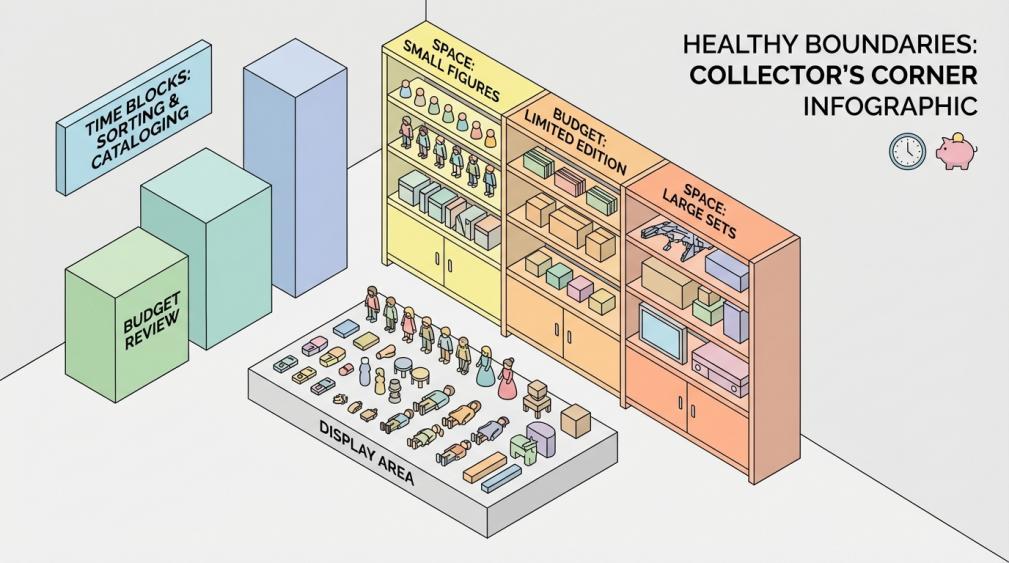
Budget and space are the next pillars. Analyses of figure markets estimate that the global toy market is approaching $200 billion, with collectibles and vintage toys around $35 billion and a notable share of U.S. toy sales now going to adults. Market‑oriented work on figure collecting also notes that about 35% of U.S. adults bought a toy or collectible for themselves or another adult in the past year. In a world where new releases and blind boxes never stop, it is easy to use “my figures and I need to keep talking” as a reason to keep buying. Setting a clear monthly figure budget and a physical display limit—like one shelf, one Detolf, or one wall—helps your conversations stay about the characters you love, not about guilt over the last bill or the boxes on the floor.
Embracing community can also keep talking‑to‑figure habits healthy. Collector research shows that hobbies reduce stress and increase social connection, especially when people share their passion. Insights on collector culture emphasize that collectors often cherish the inspiration, aesthetic enjoyment, and creative side of their objects, from repainting figures to building custom dioramas. Joining online or local communities where people swap stories, photos, and display ideas turns solitary shelf talks into part of a bigger conversation. You may still whisper encouragement to your favorite character at home, but you also swap memes about that same character’s latest arc with friends who get it.
Finally, keep an eye on the emotional “why.” Psychology of collecting work stresses that collecting, hoarding, and compulsive hoarding sit on a continuum shaped by impact on daily life, not by whether someone names their objects. The psychology of collecting and figure‑focused analyses both emphasize that healthy collecting feels joyful, fits within life’s practical demands, and supports relationships. If talking to your figurines leaves you calmer, more motivated, and more connected to fandom friends, it is likely functioning as creative self‑care. If it mostly happens at 3:00 AM while scrolling auctions you cannot afford, or if you feel ashamed but unable to stop, that is a sign to step back, share honestly with someone you trust, or, if needed, talk with a mental health professional who understands fandom and collecting.
FAQ: Common Worries About Talking to Figurines
Is it childish or weird to talk to my figures? Collecting research suggests that a large share of households collect something, and the toy and figure segment is increasingly adult‑driven, with a significant percentage of purchases made by people 18 and older. Analyses of figure collecting and broader work on collecting behavior both frame it as a normal, widespread way of organizing meaning in life. If your habit fits within your responsibilities and you are not using it to avoid everything else, it is closer to quirky self‑care than a sign of immaturity.
Can talking to figures actually help my mental health? It can contribute, especially as part of a broader mix of coping strategies. Commentaries on trinket culture and doll collecting describe adults using play, world‑building, and interaction with meaningful objects to process feelings and practice different self‑images, sometimes in ways that feel therapeutic. Studies on hobbies and collector culture show that engaging, meaningful hobbies correlate with lower stress and better wellbeing, and work on collecting emphasizes objects as emotional memory containers that preserve valued experiences. Collecting benefits research and collector culture insights both highlight these advantages. It is not a substitute for professional help when you need it, but it can be a soft, supportive layer in your coping toolkit.
When should I worry about this habit? Psychology of collecting and hoarding suggests watching for financial strain, unsafe clutter, significant distress, and damaged relationships. The psychology of collecting notes that hoarding disorder is diagnosed when possessions overwhelm living spaces and impair functioning. Figure‑specific commentary adds that compulsive acquiring tied to unresolved emotions can push a once‑joyful hobby into harmful territory. If you feel unable to cut back on purchases, hide spending or collections from people you care about, or experience intense anxiety at the idea of organizing or letting go of anything, the issue is not the talking itself but the overall pattern.
In the end, talking to your figurines is simply one more way of saying your stories out loud. When you let those small plastic heroes, villains, and side characters hold memories instead of debts, courage instead of clutter, and conversations that move you forward instead of hold you back, your collection stops being “just stuff” and becomes a living, breathing part of your own character arc.