The Mystical Aesthetics of Tarot-Themed Figurines in Collecting
If you already have shelves full of anime figures and a desk that’s half tarot altar, half streaming setup, you are exactly the kind of nerdy mystic this article is for. Tarot-themed figurines sit at this gorgeous crossroads where card lore, character design, and collectible culture collide. They are not just “extra merch.” Done well, they become tiny, three‑dimensional altars to your favorite archetypes.
To talk about tarot figurines seriously, though, we need to be rooted in how tarot itself has evolved as art and symbol. That means pulling in what tarot historians, deck creators, and working readers have actually said, then translating it into the language of sculpted PVC and resin.
Tarot As A 78‑Character Mythos
Before we pose any figurine on a shelf, it helps to understand the cast they come from.
Tarot did not begin as a mystical oracle. Historians like Michael Dummett, drawing on archival research, have shown that tarot started as a trick‑taking card game called “tarrochi” in Renaissance Italy. Players used 56 suited cards plus 22 trump cards numbered from 0 to 21, with trumps beating the suits. Only centuries later, in late eighteenth‑century France, did fortune tellers such as Jean‑Baptiste Alliette popularize tarot as a divinatory oracle using the full 78‑card deck.
A student blog from the University of Iowa’s Special Collections points out one mind‑melting detail. If you take a standard 78‑card deck and ask how many ways you can arrange it, you get 78 factorial. Written out, that permutation count takes 116 digits. Some scientific estimates for the number of atoms in the known universe run “only” seventy‑nine to eighty‑three digits long. In other words, there are more possible tarot shuffles than atoms in everything you can touch.

For a figurine collector, that is basically saying tarot is the ultimate franchise. You have seventy‑eight recurring archetypes, infinite possible “episodes” depending on how they fall together, and countless alternate “skins” as artists reinterpret them.
Modern practice usually divides the deck into two halves. The Major Arcana are the big archetypes, the myth‑scale story beats like The Fool, Death, and The World. The Minor Arcana are the everyday suits, often called cups, wands, swords, and pentacles, covering emotions, creativity, conflict, and material life. When readers draw cards, they form a narrative from the images and positions, with upright cards and reversed cards offering complementary angles on a situation.
New York magazine’s Strategist guide to tarot decks notes that most modern decks follow one of three main systems. Rider–Waite–Smith is the standard that shapes the imagery most of us expect. Tarot de Marseille preserves older European traditions. Thoth and related Golden Dawn systems lean harder into occult correspondences. That structure is what tarot‑themed figurines are ultimately referencing, whether overtly or not.
Tarot Decks As Aesthetic Universes
If you have ever compared different boxes on a figure shelf, you know each line has its own energy. The same is true of tarot decks.
The University of Iowa’s Pam Spitzmueller collection showcases how wildly tarot imagery can diverge. The classic Rider deck, often called Rider–Waite–Smith, condenses a whole century of Western esoteric symbolism. It is also freighted with Orientalist and ahistorical imagery, borrowing loosely from Jewish Kabbalah, Egyptian motifs, and Romani stereotypes. Later decks push back or play with that legacy.
Motherpeace Round and Daughters of the Moon reimagine tarot on circular cards centered on feminist and Indigenous imagery, intentionally countering the racist and Orientalist themes in many historic decks. The Motherpeace guidebook even adds a new interpretive layer by reading the exact angle of a card’s rotation.
Other decks lean into novelty or parody. I Gatti is a cat‑themed deck that functions more as a playful collectible than a serious oracle. Edward Gorey’s Fantod Pack uses stark black‑and‑white art and minimalist cards to parody tarot reading itself with a darkly humorous tone.
Elsewhere in the market, a tarot educator’s list of advanced decks highlights systems that fully remix the standard formula. Some decks restructure suits and court cards. Others add extra cards or create entire mythologies, from global dark goddess pantheons to geeky tech worlds. A different write‑up of underappreciated mass‑market decks showcases the Housewives Tarot, which uses retro 1950s advertising aesthetics, and The Cook’s Tarot, which tells tarot stories through kitchen scenes. Traditional Manga Tarot keeps Rider–Waite–Smith symbolism but wraps it in gentle manga art, while Bohemian Animal Tarot replaces humans with animals in a way that deepens, rather than flattens, the symbolism.
If that sounds familiar to you as a figure collector, it should. It is the same pattern we see when a character gets a beach version, a festival version, a battle‑damaged version, a Halloween version, and a hyper‑serious art statue. In fact, one indie studio offers a Halloween Waite Tarot that takes classic Waite imagery and filters it through a Halloween aesthetic, priced around $50.00 as a premium seasonal variant.
Tarot, in other words, is already living the “alt costume” life. Tarot‑themed figurines are the logical next step: taking those visual universes off the cardstock and into sculpted form.
What Exactly Is A Tarot-Themed Figurine?
Because we do not yet have a formal taxonomy for tarot figures the way we do for scales, nendos, and prize figures, it helps to define the term for this discussion.
A tarot‑themed figurine is any three‑dimensional collectible that is explicitly built around tarot imagery or structure. Some will literally be The High Priestess, The Magician, or The Lovers as a posed character. Others might be characters from existing decks translated into 3D. Still others are original characters who embody tarot archetypes or hold tarot cards, designed to sit on altars or desks alongside a real deck.
To keep things grounded, it is useful to look at the real decks and aesthetics collectors already know, then imagine how those styles translate into figurine form.
Tarot inspiration (from real decks or practice) | Core visual mood from sources | Figurine design direction this naturally suggests |
|---|
Rider–Waite–Smith baseline imagery | Classic Western esoteric symbolism, muted yet iconic colors, familiar tarot scenes | A line of archetype figures posed like the original card scenes, with upgraded sculpted details and cloth textures, ideal for collectors who want “canon” tarot in 3D |
Motherpeace Round and Daughters of the Moon | Circular format, feminist and Indigenous imagery, consciously anti‑racist and anti‑Orientalist | Carefully researched goddess or community figures, with respectful collaboration and context, emphasizing inclusive bodies and non‑exploitative symbolism |
I Gatti and Bohemian Animal Tarot | Cats or other animals replacing humans while keeping recognizable scenes | Tarot animal companions as figures, where each Major Arcana is represented by an expressive animal in a dynamic pose that matches the card’s meaning |
Housewives Tarot and The Cook’s Tarot | Retro domestic aesthetics, kitchen scenes, witty reinterpretations of classic meanings | Vintage‑style housewife and chef characters staged in humorous yet emotionally honest tableaus, perfect as display pieces near recipe books or kitchen altars |
Halloween Waite Tarot and darker shadow‑work decks like Deviant Moon and Dark Wood | Seasonal, spooky, unsettling, and eerie imagery for deeper shadow work | Gothic or Halloween‑styled archetype figures, maybe with removable accessories symbolizing tarot motifs, designed for those who use tarot for shadow work and love darker shelf vibes |
Inclusive modern decks highlighted in mainstream buying guides | Diverse races, ages, body types, and queer representation in card art | Figurines that bring that same inclusivity to the physical shelf, counterbalancing the long history of narrow representation in both tarot and figure collecting |
The decks and moods in that table come straight from commentators and reviewers.
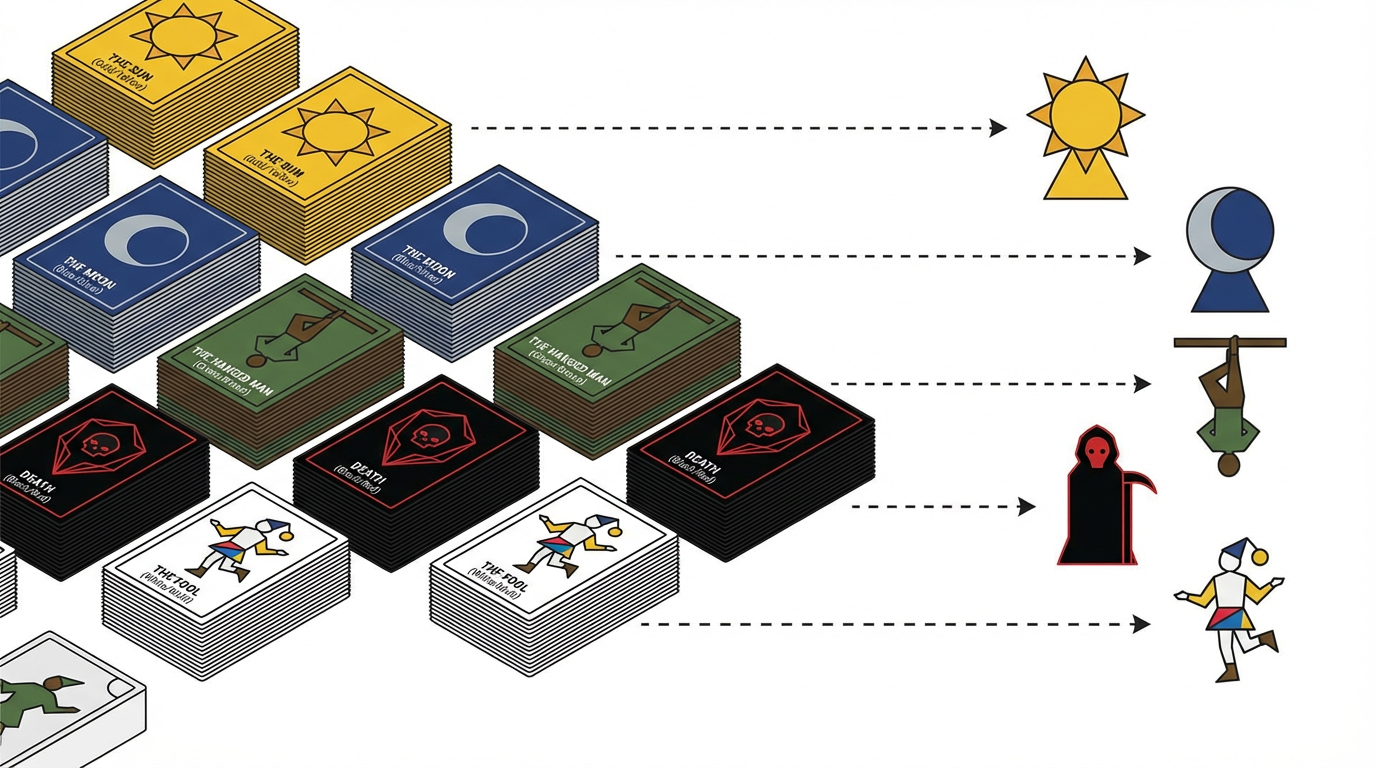
The figurine interpretations are where the fandom imagination kicks in. You can see how each tarot design language naturally offers a blueprint for a specific line of figures.
Deck Energy, Shelf Energy, And Matching Vibes
Readers on tarot forums talk constantly about “deck energy.” In one community thread on cool and unique decks, contributors describe ethereal watercolor decks as feeling ideal for intuitive, spiritual guidance, while bold geometric decks feel more grounded for pragmatic topics like career and finances. They also note that themed decks, such as mermaid tarot, might seem niche at first but actually sharpen a reader’s interpretive skill, for example by turning The Tower into an “emotional tsunami” rather than just a random lightning‑struck building.
Another discussion on most‑used decks makes a strong point: popularity is not the same as personal fit. A deck can be hyped everywhere, like Light Seers Tarot, and still not “speak” to an individual reader. What matters most is how clearly a deck communicates in practice, not how often it shows up on social media.
Figure collectors know that same feeling in their bones. Sometimes the limited edition everyone chased ends up feeling flat in person, while a random crane game prize becomes your comfort piece.
If you bring tarot figurines into the mix, you are effectively adding another layer of “deck energy” to your physical space. A watery, pastel‑heavy tarot deck will feel very different if it is flanked by sharp, angular mecha figures than if it is surrounded by soft magical‑girl‑type guardians. A darker deck used for shadow work, like Deviant Moon or Dark Wood, will resonate differently if your shelf companions are cutesy chibis versus eerie gothic statues.
Some readers keep three contrasting decks visible during sessions and let clients choose which one to use, because choice itself reveals something about the client’s needs. The same principle can apply to figurines.
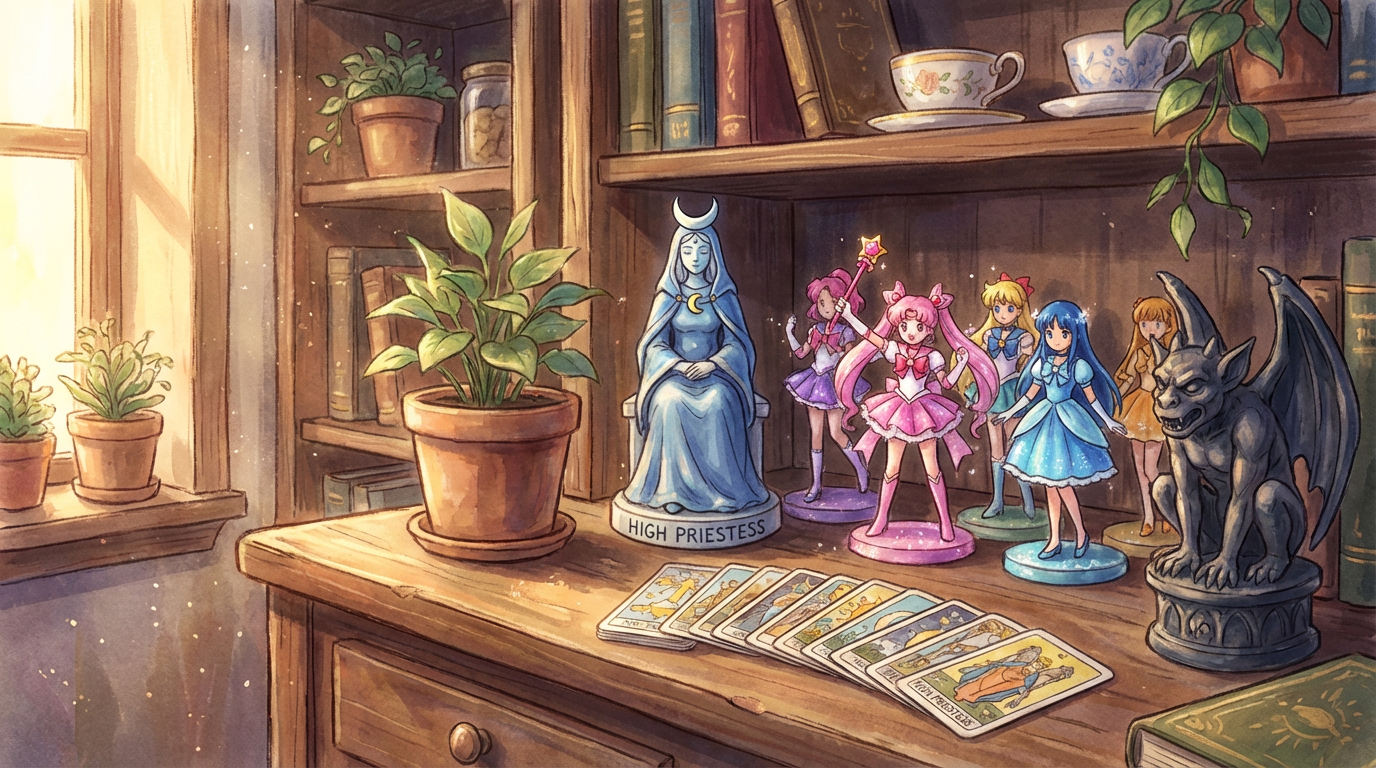
The figure someone is drawn to on your altar, whether it is a serene High Priestess or a chaotic trickster archetype, becomes part of the conversational field even before a single card hits the table.
Indie Magic, Mass-Market Reliability, And Figurine Parallels
Tarot is currently living through its own version of the indie vs mass‑market figure debate.
On the indie side, small studios like Tarot Collectibles emphasize hand‑drawn art and experimental production. They talk openly about using neon colors, starry lamination, and ultraviolet inks to make their decks feel unlike anything from big publishers. They also argue that their craft stands in contrast to “artificial art” generated by artificial intelligence, which they see as a threat to working artists. Their plea is straightforward: if you like unique decks, support human‑made art directly from the source rather than letting third‑party marketplaces siphon away most of the revenue through growing fees.
Another retailer that curates decks from independent artists highlights lavish details. Some decks in their collection boast gilded or matte card edges, heavy card stock that shuffles satisfyingly, and gold or silver foil on both the cards and their keepsake boxes. Guidebooks are designed as art objects themselves, sometimes with shiny page edges and full‑color card previews. The underlying message is clear.
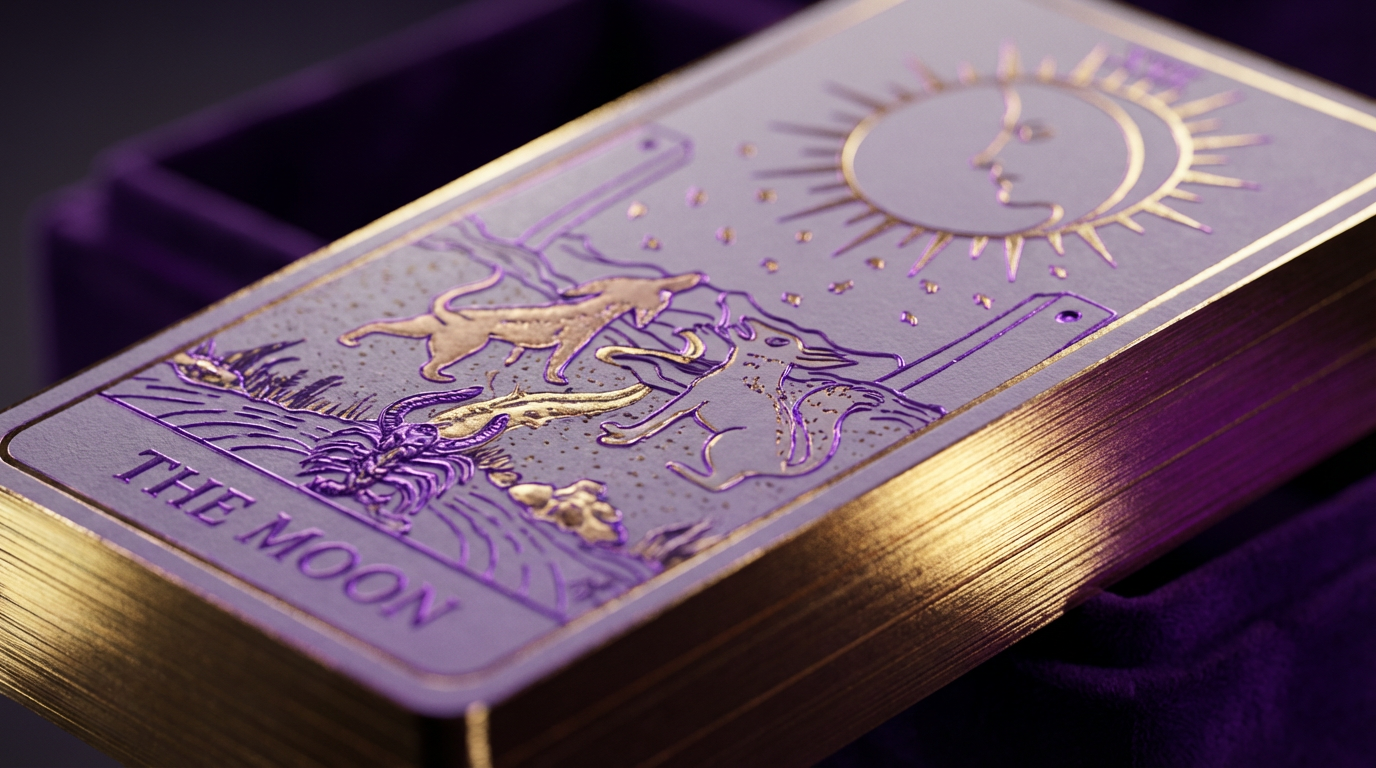
A tarot deck can be as much a luxury art object as a limited‑run resin statue.
A customer review of a handcrafted deck from another specialist shop describes rougher but intentional touches: slightly sharp corners, minor blemishes, and a matte textured finish that makes the deck feel like a genuinely old artifact. The reviewer, who self‑identifies as very picky, calls it the most beautiful deck they own and praises the sense of personal touch.
On the mass‑market side, reviewers of under‑the‑radar decks remind us that widely available decks can still be rich and satisfying. Gregory Scott Tarot updates traditional gender roles with emotive scenes. Traditional Manga Tarot offers a Rider–Waite–Smith clone in a gentle manga style that works with mainstream books. Bohemian Animal Tarot and The Cook’s Tarot are both mass‑market but deeply thoughtful, full of symbolic detail suited to readers who love animals or everyday life scenes.
If you think about figurines, this maps almost perfectly. Indie garage kits and small‑batch resin runs behave like indie decks: highly personal, risky to acquire, and often more art experiment than “standard merch.” Prize figures and widely distributed scales behave like mass‑market decks: accessible, sometimes safer in design, but still capable of emotional punch.
One useful data point from an online marketplace snapshot shows how collectors can evaluate risk. A seller specializing in “new age cards and collectibles” carried a positive feedback rate of about 97.3 percent based on roughly 1.1 thousand customer reviews. For niche items like unique tarot decks or tarot‑adjacent figures, that kind of combination—a high percentage plus a four‑figure review count—is a strong trust signal.
In other words, treat tarot‑themed figurines like you treat decks. Decide when you want the experimental indie piece that might arrive with quirks and when you want the reliable mass‑market sculpt. Then check seller reputation like your shelf depends on it.
Altars, Accessories, And Displaying Tarot Figurines
Tarot readers love accessories almost as much as figure fans love acrylic risers and LED strips. The key difference is that experienced readers repeatedly stress that accessories are optional. They should serve the practice, not the other way around.
One tarot teacher’s breakdown of favorite accessories frames them as tools for focus and energy work. Cleansing tools like sage and Palo Santo are used to pass decks through smoke, with non‑smoke aura sprays as an alternative when burning herbs is not possible. Sprays like “Smudge Off” for general clearing or “Speak Your Truth” for supporting communication are described as portable ways to shift the atmosphere before a reading.
Card pouches and bags, whether purpose‑made or repurposed pencil cases, protect decks and make them easier to grab than rigid boxes. Healing crystal jewelry is worn intentionally rather than as casual adornment, each piece chosen for a specific energetic purpose. A dedicated altar is set up on reading days, with stones, statues, and tools curated for the client work ahead. Sound tools like tingsha bells and singing bowls, often keyed to specific chakras, help clear space. Candles, especially a central “spirit candle,” are lit to invite guidance. A nearby tarot journal acts as a living grimoire of spreads, card notes, and personal readings. Even comfort items like tea or a touch of essential oil are brought in consciously, with a reminder to keep oils off the palms to protect cards.
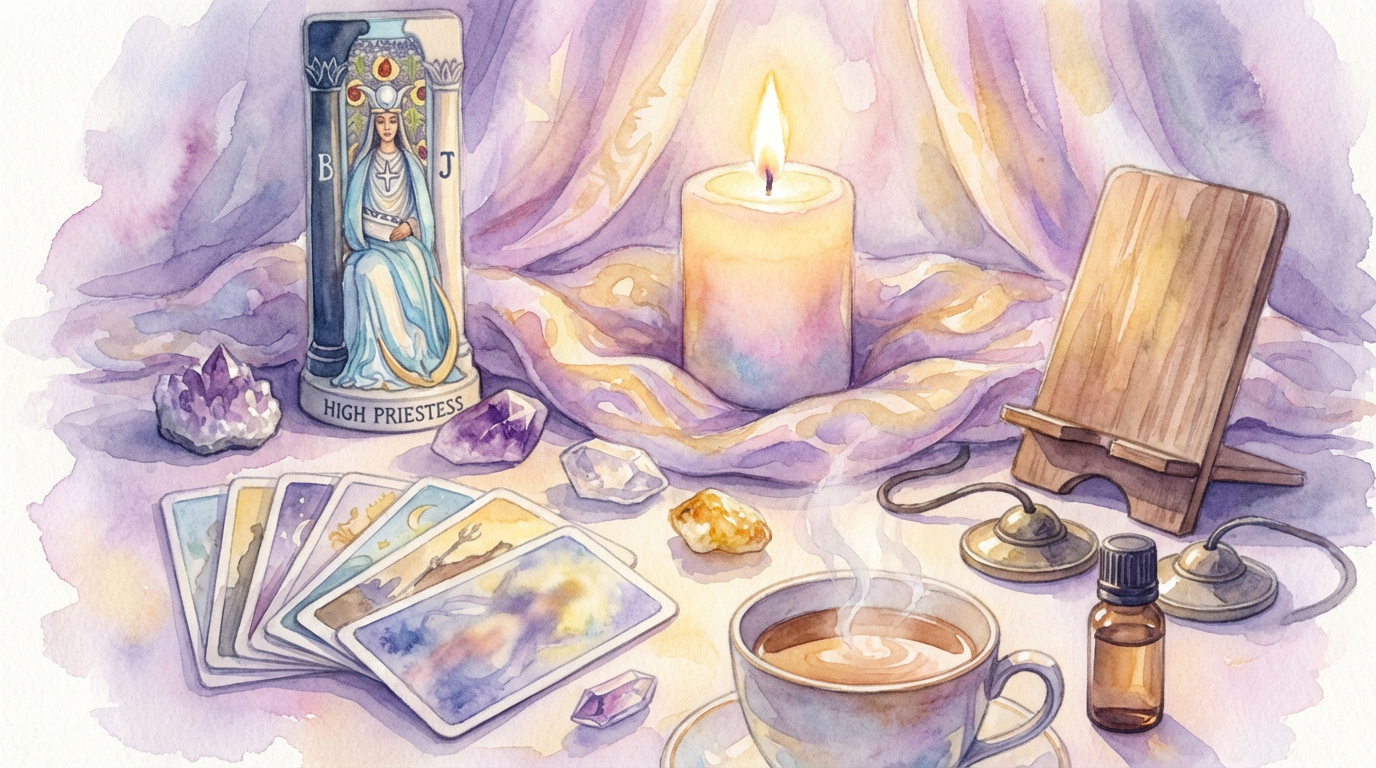
Another retail collection focused entirely on tarot accessories adds pouches, reading cloths, and tapestries to the mix. Pouches keep decks and guidebooks together. Cloths provide a clean, dedicated surface that protects cards and marks off sacred working space. Tapestries with esoteric imagery can hang behind a reading table or drape an altar, amplifying the symbolism in the room.
A separate lineup of tarot card stands shows how practical design morphs into ritual. Stands hold cards upright so both reader and querent can see the imagery clearly. Readers also use them to display a “card of the day” or a long‑term intention card, turning the stand into an anchor for ongoing reflection.
For tarot figurines, all of this is basically an invitation. If you already have reading cloths and stands, you can create little dioramas without adding anything new. A card stand can hold a Major Arcana card behind a corresponding figurine like a backdrop. A tapestry sets the whole scene. A candle in front and a singing bowl to the side complete the altar.
Crucially, the same accessory guides insist on financial responsibility. You do not need any of these tools to be accurate or professional as a reader. That same philosophy should apply to tarot figurines. They are exciting and aesthetically potent, but they are also optional. Let them support your practice and joy, not quietly drain your budget.
Pros And Cons Of Tarot-Themed Figurines In Your Practice
Because tarot figurines hit so many collector neurons at once, it is easy to rush into “I must have them all” mode. Slowing down to weigh pros and cons is surprisingly grounding.
On the plus side, turning tarot archetypes into 3D objects can make the symbolism more immediate. A figure of The Fool stepping forward with a dog at their heels, or an anime‑styled High Priestess with a crescent moon crown and scroll, lets you sit with that archetype even when you are not actively reading. For clients, figurines can be powerful conversation starters. Someone who is nervous about their first reading may find it easier to talk about a statue they like than to dive straight into their fears. Figurines also bridge fandoms. If your shelves already hold magical girls, demon slayers, and game protagonists, a tarot archetype posed in the same visual language can make spiritual work feel less abstract and more like the stories you already love.
On the downside, tarot‑themed figurines add another layer of expense to a hobby that can already be pricey. A single premium deck like the Halloween Waite Tarot can cost around $50.00, comparable to a midrange scale figure. Multiply that by several decks and several figures and you are easily at “new console” levels of spending. There is also the risk of aesthetic overload. Too many visual elements can distract rather than focus, especially during client work, where one reader forum notes that traditional, accessible imagery is often easier on newcomers than abstract or highly stylized art.
Another subtle con has to do with representation and cultural context. Decks like Motherpeace and Daughters of the Moon were created explicitly to challenge racist and Orientalist tropes in earlier tarot. Translating such imagery into figurines without the same care, consultation, or context could accidentally slide back into the problems those decks were trying to solve. The safest path is to support artists and designers who are themselves rooted in the cultures and communities being depicted, and to treat these pieces less like generic aesthetic and more like art that carries meaning.
Finally, there is a philosophical consideration. Both tarot teachers and mainstream guides remind us that you truly only need a single deck to read well. One author goes so far as to say that owning multiple decks is optional rather than necessary. A Strategist article on decks stresses that cards are tools to support your intuition and healing, not to control or frighten you. Applying that mindset to figurines, they should amplify your connection to tarot, not become another metric of “seriousness” or clout.
Practical Advice For Starting A Tarot Figurine Capsule Collection
If you are feeling the pull, you do not need a giant plan. You just need an intentional one.
Begin with your primary tarot system. Most experts recommend Rider–Waite–Smith as the easiest starting point because so many books and resources assume it. A beginner’s guide from a manifesting‑focused blog even builds its list of twenty “best” decks for beginners around approachability and clarity. If your main working deck is Rider–Waite–Smith or a close clone like Traditional Manga Tarot, consider making your first tarot figurine an archetype that appears in almost every system, such as The Fool, The Magician, or The High Priestess. That way, the figure will still resonate if you later experiment with different decks.
Next, match mood rather than hype. The forum story about buying a trendy deck that never “spoke” is painfully relatable. Apply what it taught. Choose figurines that actually click with you when you imagine them on your altar, not just the ones everyone else seems to be buying. If you tend to reach for gentle, introspective decks, an intense horror‑themed statue may feel cool in theory but jarring in practice. If you love shadow work and already use darker decks like Deviant Moon or Dark Wood, a pretty but overly polished statue might soften the edge you rely on.
Then, integrate figurines into display rather than bloating it. Use accessories you may already own. A tarot reading cloth doubles as a base for a small tableau. A card stand becomes a stage backdrop behind a figure. Crystals or sound tools you employ for cleansing can frame the scene. One tarot educator describes building an altar each client day with carefully chosen stones and statues. You can treat your figurines the same way, rotating which ones step into the “spotlight” based on the work you are doing.
Finally, shop with the same discernment you use for decks. When buying online, look at feedback numbers, not just percentages. A ninety‑seven percent rating based on around a thousand reviews means something very different from the same percentage based on ten. Independent studios that create unique tarot decks already explain how fees on large marketplaces cut into their earnings. If you find a figurine line designed by the same kind of small studio, buying directly when you can is a concrete way to support more of the art you love.
Remember that major retailers now assemble entire gift guides for “tarot lovers,” featuring dozens of ideas meant to support practice and spirituality. Those guides emphasize independent makers, ethical materials like avoiding leather, feathers, and fur, and generous policies such as lifetime returns and free shipping for members. Even if you never buy from them, they are proof that tarot‑themed art objects have entered the mainstream. You are not weird for wanting The Hermit and your favorite anime mage sharing a shelf. You are just very current.
FAQ
Do I need tarot-themed figurines to be a “real” reader?
Absolutely not. Experienced teachers are clear that you do not need any accessories at all, let alone figures, to read effectively. A deck, your attention, and maybe a notebook for your own insights are more than enough. Figurines are optional aesthetic and ritual anchors. They are allowed to be just for joy.
Is it okay to mix anime characters with traditional tarot cards on the same altar?
If it supports your focus and feels respectful, yes. Tarot decks already span everything from retro housewives to Halloween skeletons to feminist goddesses. Treat your anime figures as part of that continuum. The main thing is consistency of intention. If a figure pulls you into the same emotional or symbolic space as the deck beside it, the combination is working.
How many tarot figurines should I start with?
Think in terms of a capsule collection rather than a full pantheon. One to three figures that genuinely resonate with your main deck will teach you much more about how this hybrid practice feels than ten impulse buys. You can always expand later as you see what actually supports your readings and what just looks good in photos.
In the end, tarot-themed figurines are another way of telling the same seventy‑eight stories you shuffle through every day. When you give those archetypes shelf space next to your favorite anime heroines and heroes, you are not just decorating. You are admitting that the magic you seek in cards and the magic you see in characters have always been part of the same personal mythos—and now they finally get to stand side by side.
References
- https://blog.lib.uiowa.edu/speccoll/2025/05/14/form-and-symbolism-in-pam-spitzmuellers-tarot-decks/
- http://tarotarts.com/
- https://www.tarotcollectibles.com/
- https://13thpress.com/collections/tarot-accessories?srsltid=AfmBOooP-mbOHfnKGnPVXkXMsSBcehXcykJBlINFando-aLRL1bbdkNB
- https://www.amazon.com/tarot-card-reading-accessories/s?k=tarot+card+reading+accessories
- https://www.bloomandmanifest.com/best-tarot-cards-for-beginners/
- https://www.ebay.com/shop/unique-tarot-decks?_nkw=unique+tarot+decks
- https://ethony.com/15-tarot-decks-experiencedadvanced-tarot-reader-students/
- https://www.etsy.com/market/collectors_tarot_deck
- https://mjstarot.com/5-mass-market-tarot-decks-that-deserve-more-attention/