The Underappreciated Value of Hardcore Sci-Fi Collectibles
Hardcore sci-fi collectibles quietly act as memory anchors, creativity engines, and long-term cultural investments when you choose them intentionally.
You know that moment when someone walks past your carefully posed mech or 3.75-inch starfighter armada, glances over, and shrugs it off as “just toys”? Interviews with longtime collectors and working scientists keep circling back to the same pattern: the ships, figures, and posters on their walls helped nudge them toward real careers in science, technology, and creative work. This article shows how to reframe your hardcore sci-fi collection as a source of meaning, connection, and future value, plus practical ways to choose pieces that actually matter.
What Makes a Collectible “Hardcore” in Sci-Fi Fandom?
In every fandom, there is an invisible line between casual merch and the deep-cut stuff only lifers even notice—a difference that fan scholars describe in terms of participatory culture, where commitment, knowledge, and labor signal authenticity as much as money does, as described in fandom and participatory culture. Hardcore sci-fi pieces usually sit on the curatorial side of fandom: they are the items you research, hunt, grade, and catalog, not just impulse buys from the checkout rack. They are often tied to worldbuilding scales, obscure story arcs, or behind-the-scenes production history, and owning them says, “I did the homework.”
Action figure researchers have shown that, especially in franchises like Star Wars, hardcore collecting forms a subcommunity with its own hierarchies and specialized knowledge, and that the toys are surrounded by a whole ecosystem of catalogs, dioramas, prototypes, and guidebooks that treat them as media in their own right rather than just spin-offs of a movie, as documented in action figure media. When you obsess over card backs, paint apps, plastic yellowing, and the exact configuration of a hangar diorama, you are already doing this work. Hardcore here does not mean “expensive”; it means you care enough to learn the story of the object, not just the character on the box.
The same logic runs through anime figures and mecha lines, where global demand now runs from cheap keychains all the way up to premium limited-edition statues, and scarcity or exclusivity can push certain runs into intense, long-term chase pieces, as research on anime merchandise and collectibles notes. Hardcore anime–sci-fi crossover fans often gravitate to ship girls, giant robots, and space operas that mirror Western sci-fi’s love of fleets and future tech, turning entire shelves into three-dimensional timelines of their favorite universes.
A useful way to picture the difference is to think in terms of what the piece lets you do: does it just prove you watched the show, or does it let you build out the world, tell new stories, and signal your specific corner of the fandom?
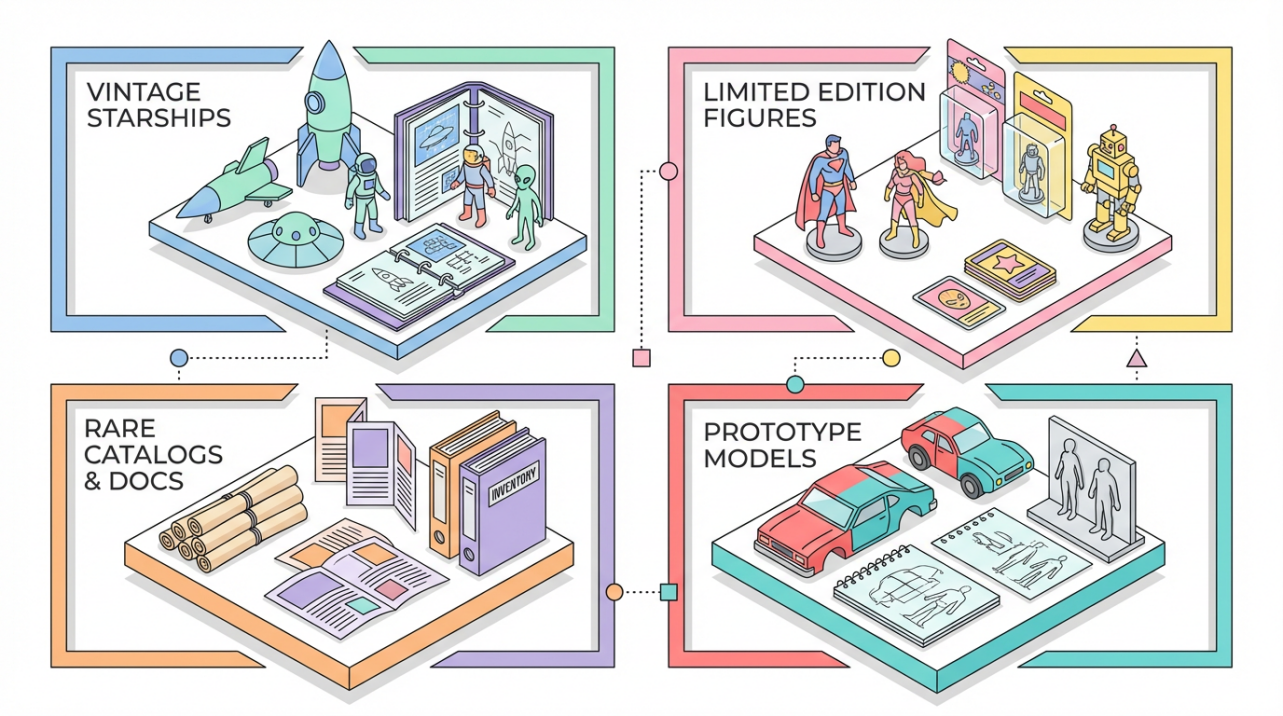
Collectible type | Hardcore signal | Hidden value |
|---|
3.75-inch starships and figures | Built for fleets, vehicles, and dioramas rather than single characters | Long-term “world scale” that stays relevant as new media and ships arrive |
Deep-cut character or variant | Represents niche arcs, background pilots, or minor droids rather than headliners | Marks you as a lore nerd, not a logo collector |
Screen-accurate statues and prop replicas | Emphasis on sculpt fidelity, weathering, and materials | Acts as a reference point for cosplay, art, and model-building |
Production ephemera (catalogs, proof cards, displays) | Never meant for retail shelves; often thrown away | Documents how the franchise itself was marketed and imagined in its era |
More Than Plastic: How Hardcore Sci-Fi Pieces Shape Real Lives
From Space Toys to Space Jobs
Research on science fiction and modern technology keeps showing that speculative worlds help people imagine future careers and even drive them toward engineering and science in the first place, as discussed in science fiction and modern technology. Engineers have credited sci-fi stories with nudging them into STEM, and famous examples like the communicator from Star Trek show up later as real-world devices that look suspiciously like early cell phones. A similar pattern appears in the “Scully Effect,” where a single competent fictional scientist helped many women picture themselves in STEM fields long before they ever saw a lab.
That pipeline from spaceship poster to spaceship job is not theoretical. Profiles of NASA professionals who collect sci-fi figures and starship models describe how childhood fascinations with Star Wars, Star Trek, and other space stories set their sights on mission control and orbital research, even as they now spot the scientific errors in their favorite shows, as described in NASA collectors and sci-fi inspiration. For some, a Kenner Darth Vader was the first purchase; for others, it was a Yoda or a Millennium Falcon replica so accurate they still marvel at it after long days in the control room. The important part is that those objects were not just souvenirs; they were physical reminders that a certain future might be possible, and they stayed in view during the hard years of school and training.
If you are staring at your own wall of starships or mechs, it is worth asking what future they are quietly rehearsing for you. Are they pushing you toward 3D modeling, concept art, robotics, or astrophysics? Even if you never change careers, treating your collection as a private “what if” lab gives it a deeper purpose than filling shelf space.
Collectibles as Story Workshops
Writers and collectors have talked about how years spent hunting down specific comics and sci-fi toys trained them to see nuance, spot flaws, and build narratives one piece at a time, just as they once completed a half-dressed action figure outfit over several conventions—an example of toy collecting and creative practice in action. The painstaking act of comparing card conditions or tracking down the missing briefcase for a retro figure becomes a crash course in observation and patience. That same mindset transfers surprisingly well to writing fanfic, planning a campaign, or storyboarding an animation.
Media scholars studying action figure cultures argue that toys and their surrounding “action figure media” form an ecosystem where fans create histories, photo-comics, dioramas, and documentaries centered on the figures themselves, not just the films they came from, a pattern explored in work on action figure media. When you pose your pilot in a cramped hangar bay or recreate a scene from an OVA with acrylic risers and LED strips, you are effectively directing a tiny set. The more hardcore your pieces, the richer the possibilities: extra articulation, alternate faces, modular ships, and obscure side characters expand how many stories you can tell before you ever type a word.
Objects That Hold Feelings and Identity
Studies of science-fiction and fantasy posters show that things like character art, color, and design matter more to fans than formal “collectability,” and that people often own only a handful of physical posters even when they hoard digital files by the hundreds, as research on SFF posters as material culture shows. Those few paper or canvas pieces are carefully chosen and usually live in private spaces like bedrooms and home offices, where they comfort, inspire, and even feel like companions, especially during isolating times. That emotional charge is part of why those objects become so cherished—and why hardcore collectors obsess over which exact scene or key visual they want on the wall.
Anime merchandising research echoes this, emphasizing that fans use figures, prints, and plushies as tools of self-expression and community, not just as investments, as studies of anime merchandise and collectibles emphasize. The shelf becomes a kind of emotional biography: the battered pilot you bought during a rough semester, the pristine con-exclusive that marks the first trip you took with fandom friends, the hulking space battleship that cost a month of ramen.
Hardcore sci-fi collectors lean into this by curating displays that tell their story as a fan, not just the story of the franchise.
Use Value vs Market Value: Why Hardcore Pieces Age Differently
Fan scholars have long noted a tension between what an object means personally (use value) and what it sells for on the market (exchange value), especially in geek cultures where authenticity is tied to both emotional investment and the ability to navigate consumer systems, as fan and participatory culture research points out. Hardcore sci-fi collectibles sit right in that crossfire. You might treasure a sun-faded pilot variant because it survived every apartment move with you, even while the mint-in-box version climbs auctions. Neither valuation is wrong; they are just operating on different scales.
Work on the Star Wars collectibles market suggests that long-term value depends less on how old an item is and more on whether the underlying intellectual property stays culturally alive, as discussed in IP-tied collectibles and aging markets. Vintage tin toys from forgotten brands sometimes stagnate because the stories around them faded, while original-era toys tied to franchises that continue to churn out new media keep attracting younger collectors. That is how a simple “farmboy” figure that once sold for the price of a fast-food meal can reach hundreds of dollars decades later, especially in high grade with fragile accessories intact.
At the same time, analysts of the future of collecting argue that physical and digital objects will coexist, and that narrative, uniqueness, and interactivity will matter more than sheer materiality, as explored in future trends in collecting. For hardcore sci-fi collectors, that means the sweet spot is often a physical piece with a rich story and some kind of digital trail, whether it is a designer’s blog post, a making-of video, or a fan-run catalog that documents every variant.
A simple way to keep your head straight is to treat price as a side effect, not the main plot. You can intentionally choose some pieces for likely market stability—worldbuilding scales in evergreen franchises, for example—while letting the rest earn their keep by how much comfort, inspiration, or identity they provide.
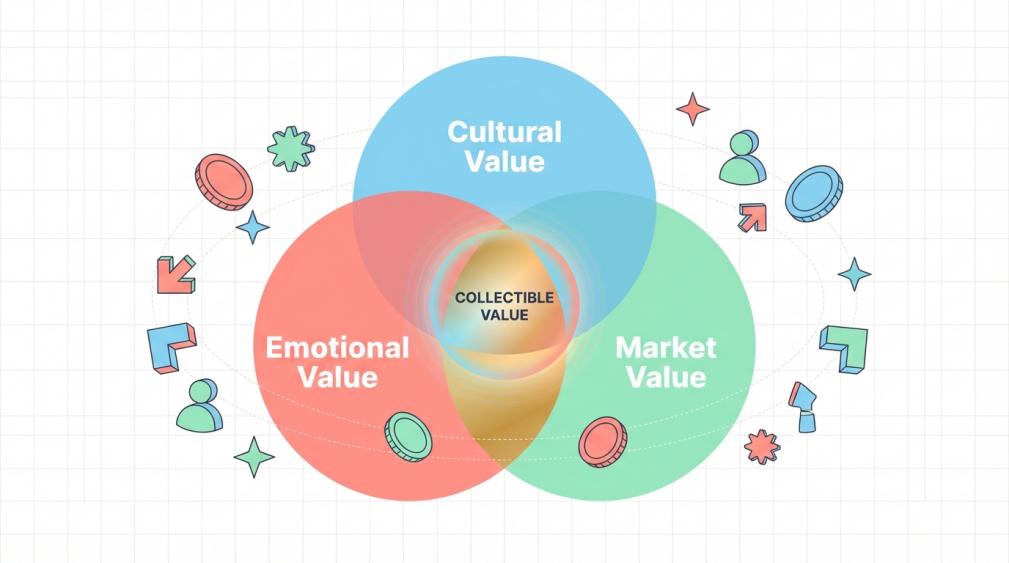
Value lens | What it means for hardcore sci-fi pieces | Question to ask yourself |
|---|
Emotional/use value | How much the item shapes your daily mood, creativity, or sense of self | “Would I miss this if it vanished, even if it were worth nothing?” |
Cultural value | How the piece documents a moment in fan or franchise history | “Does this capture a phase of the fandom that might otherwise be forgotten?” |
Market value | What collectors currently pay, anchored in IP relevance and condition | “If this franchise stayed big for 20 more years, would this still be desirable?” |
How to Choose Hardcore Sci-Fi Collectibles That Actually Matter
Signals of Underappreciated Value
Hardcore value often hides in the things other people overlook. Action figure historians point out that many collectors adore not just the toys but also catalogs, proof cards, and store displays that were originally treated as disposable, because those materials reveal how companies framed play and story at the time, a pattern documented in work on action figure media. A humble fold-out catalog that shows which ships were planned, canceled, or renamed can quietly become a key reference for the entire line.
Within anime and sci-fi crossovers, there is a similar pattern where early, low-run merchandise from a show’s first overseas push becomes a coveted artifact once the series blows up globally, as studies of anime merchandise and collectibles have shown. These items embody the moment when the fandom was still small and scrappy, before every store carried branded mugs and hoodies. Hardcore collectors often chase that “before it was cool” energy, and it does not always track neatly with official rarity labels.
Research on fan heritage institutions suggests another signal: pieces that might eventually anchor museums or exhibitions of fan culture, whether official or fan-run, as discussed in fan heritage and curating. Items with strong provenance—signed photos from early cons, props from fan films, custom dioramas with documented build stories—might not be mass-produced at all, yet they carry enormous narrative weight. When you keep production notes, progress photos, or con stories attached to your items, you are increasing their future curatorial value, even if they never leave your living room.
Risks, Trade-offs, and the Mental Load of Hardcore Collecting
There is a flip side. Poster collectors openly admit that their walls can either lift their mood or drag it down, depending on what they choose to display and how dense the collage becomes, as research on SFF posters as material culture notes. Too many pieces crammed into one corner can turn a sanctuary into visual noise, and some fans deliberately avoid art that sparks painful memories even when it is stunning. Hardcore sci-fi collecting can become a mental weight if you feel obligated to keep everything out or to keep chasing every new release in a line.
Market-wise, IP dependence cuts both ways. The same research that predicts strong futures for toys tied to enduring franchises also warns that objects from “dead” or dormant properties can lose momentum once the last nostalgic generation ages out, as work on IP-tied collectibles and aging markets argues. Hardcore collectors sometimes find themselves caring for beautiful relics no one else wants to buy, which is fine if you are collecting for love but painful if you assumed the market would always back you up.
Forward-looking discussions of collecting also flag sustainability and space as real constraints, as future trends in collecting research suggests. As digital, AR, and VR collectibles grow, and as living space gets more expensive, future fans may lean toward fewer, higher-impact physical pieces plus expansive digital archives. That is good news for hardcore collectors who already prefer a curated display over mountains of boxes, but it also suggests being ruthless about what you bring home now.
A practical mental rule is to ask whether each potential purchase moves at least two needles: emotional, cultural, or future market value.
If it does not, it may be better left as a screenshot than as another box in your closet.
FAQ: Hardcore Sci-Fi Collecting
Is It “Worth It” to Go Hardcore if I Am Not Planning to Resell?
Yes, as long as you define “worth” beyond price. Studies of posters and anime merch show that a small number of physical pieces can significantly affect mood, self-expression, and feelings of belonging, even when owners rarely think about resale value, as research on SFF posters as material culture and on anime merchandise and collectibles shows. Hardcore collecting pays off when your shelves genuinely make daily life better, whether or not those items ever hit an auction block.
How Do I Balance Anime Figures With Western Sci-Fi Pieces Without My Room Feeling Chaotic?
Think in terms of story zones and color palettes instead of franchise silos. Research on poster display shows that people often cluster items by mood or room function—calmer art near beds, more intense pieces near desks—so that each space feels coherent even when genres mix, as research on SFF posters as material culture notes. You can mirror that logic by grouping, for example, all your realistic starships and grounded mecha in one “hangar,” and your more stylized, magical-tech figures in another area, letting both breathe while still talking to each other.
Will Digital Sci-Fi Collectibles Kill Physical Figures and Statues?
Evidence so far points to coexistence rather than replacement. Analysts of future collecting predict that digital objects will gain importance, especially with blockchain-backed uniqueness and virtual experiences, but they also stress that material items will keep carrying unique tactile and heritage value, as work on future trends in collecting emphasizes. Hardcore sci-fi collectors are likely to treat digital pieces as extensions of their worlds—concept art, virtual ship tours, AR dioramas—while reserving their shelves for a smaller number of physically and emotionally irreplaceable objects.
Closing Orbit
Hardcore sci-fi collectibles are not an indulgent side quest; they are one of the ways fans prototype futures, build identities, and leave a trace of their corner of the galaxy for whoever browses the archive next. When you choose pieces that tell stories, spark action in your real life, and hold up in a changing market, your collection stops being “just plastic” and becomes a living, evolving part of your fandom journey.