The Unique Allure of Retro-Futuristic Space Western Figurines
Retro-futuristic space Western figurines blend the dust and danger of the Old West with the glow of rocket thrusters and neon galaxies. Chosen with care for theme, condition, and provenance, they can be both daily joy on your shelf and a thoughtful part of a wider collection.
Ever look at your shelves and feel like your favorite space outlaw or gunslinging bounty hunter deserves a whole frontier of their own instead of being buried between random robots and idol singers? Collectors who lean into a tight "space Western" lane often find it easier to build displays that tell a coherent story and collections that hold value, because every piece reinforces the same vibe. The goal here is to show how this mashup genre works, how it connects to real-world collectible markets, and how to curate figures that feel as good emotionally as they might perform financially over time.
What Makes Space Western Figurines So Addictive to Collect
Collectibles that truly stick with people usually mix craftsmanship and storytelling rather than just raw price, echoing the way many in-demand categories are prized for narrative and emotional pull as much as for dollars, as shown in a survey of in-demand collectibles. A broad look at serious collectors shows that the most loved items are the ones that tell a personal or historical story, not just the rarest stamp or coin in a binder, and that same logic applies when you pose a lone ranger in a space helmet at high noon under your LED strip lights.
Retro-futuristic space Western figures sit at the crossroads of two deep wells of myth. On one side, there is the iconography of the American West: spurs, saddles, dusters, and saloon signage linked to real history and enduring legends of outlaws, lawmen, and performers, all of which already form a large, established memorabilia category ranging from cowboy gear and mining tools to Wild West show posters in classic Western memorabilia guides. On the other side, there is the Space Age, where anything tied to rockets, exploration, or futuristic tech taps into another long-running collectible stream of space memorabilia, models, and sci-fi toys that fans chase for the sense of human reach beyond Earth described in space-focused collecting primers, even when those items started as mass-produced souvenirs. Bringing both aesthetics into a single sculpt, say a gunslinger with a jetpack and a long coat lined like a starfield, lets a small plastic figure feel like a whole saga.
What really hooks many collectors is that these figures often trigger "double nostalgia." Vintage and retro-styled toys already ride a powerful wave of childhood memory and pop-culture attachment, and modern markets show that adults pay serious money for dolls, action figures, and movie-related toys when they reflect beloved franchises, particularly when those items are in pristine condition and original packaging, as seen in analyses of toy values and a Boba Fett action figure with a rocket-firing backpack that brought $185,850.00 at auction in 2019 in research on investment-worthy toys. Space Western pieces pull on that same emotion while also feeling current, because they echo the broader collectible trend of remixing classic genres and aesthetics rather than just recreating them one-to-one.
At the same time, space Western figurines borrow a lesson from blue-chip collectibles: the best examples tend to feel like miniature "hero props" from a story that should exist, not just generic cowboys or astronauts. Major auction houses point out that across categories such as coins, comics, handbags, watches, and early Star Wars figures, the top values cluster around objects that define an era, have limited surviving populations, and survive in exceptional original condition, with some comic books or coins reaching six or seven figures in value in curated lists of great collectibles. When a sculptor captures that same sense of "this is the definitive version of this character archetype," the figure immediately reads as more important on your shelf, even if it is still affordable today.
Are These Figures Just Fun, Or Also Smart Collectibles?
When you zoom out from any one fandom, a collectible is essentially an item whose value has risen or is expected to rise over time, with rarity and popularity doing most of the heavy lifting. Serious collectors often treat them as a form of alternative investment where condition, provenance, and timing all matter in ways similar to financial assets, as discussed in guides to the best collectables to invest in. Instead of choosing random figures because they look cool in the moment, thinking in terms of a space Western "micro-portfolio" pushes you to ask questions like how limited a run was, how strong the fan base is, and whether this sculpt captures a first appearance, special collaboration, or milestone in a franchise's timeline.
The toy world offers clear evidence that character-driven plastic can escape the "cheap" category. Toy-focused investment guides highlight that collectible toys function as both hobby and alternative investment, and that the most promising pieces are those tied to powerful IP, kept in mint condition, and ideally still sealed, with rare action figures like that rocket-firing Boba Fett in pristine packaging selling for nearly $186,000.00 and sealed LEGO starships clearing well over $15,000.00 in the secondary market in analysis of investment-grade toys. If a single 3.75-inch bounty hunter can reach that level, it is not far-fetched to imagine that certain low-print, limited-edition space Western figurines, especially early runs from cult anime or designer collaborations, could see serious appreciation after a couple of decades of careful care.
Western Americana underscores the upside when objects fuse narrative and authenticity. Items directly linked to named figures of the Old West, like the only confirmed tintype photo of Billy the Kid selling for about $2,300,000.00, or firearms and personal effects tied to Wyatt Earp and Doc Holliday hitting the high five and six figures, show that collectors will pay heavily for a compelling story backed by documentation in auction roundups of Wild West relics. Space Western figurines obviously are not going to be genuine frontier artifacts, but they can echo that value pattern when they are linked to specific creators, numbered runs, signed bases, or clearly documented convention exclusives rather than anonymous factory lines.
At the very top of the pop-culture pyramid, screen-used sci-fi props and toys prove that "plastic from a galaxy far, far away" can behave like elite art. One Star Wars collectible roundup notes that just five pieces, including screen-used miniatures like an X-wing and Y-wing, a full-scale R2-D2 built from production parts, a rocket-launch Boba Fett prototype, and a Darth Vader helmet, together have brought more than $10,500,000.00 under the hammer, illustrating how scarcity and on-screen provenance focus demand even more intensely than brand alone in high-end prop market surveys preserved by Star Wars specialists. That level is out of reach for most fans, which is precisely why thoughtfully chosen space Western figures, sitting between mass-market toys and museum-grade props, are such an appealing middle ground.
Pros And Cons Of Treating Space Western Figurines As Investments
Collectors who want both joy and potential upside benefit from thinking about tradeoffs the same way other alternative-asset collectors do, weighing the emotional payoff against the realities of illiquidity, expertise requirements, and market swings discussed for toys and nostalgia-driven assets in overviews of collectible toy investing.
Aspect | Pros for Space Western Figurines | Cons and Risks |
|---|
Emotional return | Deep story appeal if you love both space and Western themes; figures are fun to pose, photograph, and display daily. | Emotional attachment can make it hard to sell or stay disciplined on budget. |
Financial potential | Niche sits at intersection of proven categories: toys, pop culture franchises, and Western or space memorabilia, all of which have produced high-value outliers. | Most pieces will never reach elite prices; outsized returns concentrate in very rare, high-grade, culturally iconic items. |
Accessibility | Entry prices start low; you can find pieces at conventions, online marketplaces, and vintage shops without needing six figures. | High-end prototypes, signed runs, or early garage kits can be expensive and attract forgery or misrepresentation. |
Skill building | Researching prints, makers, and variants builds knowledge that carries over into other collectible lanes, mirroring how Western and military collectors become experts in marks and insignia. | Time cost is real; without that research, it is easy to overpay or chase short-lived hype. |
Liquidity | Strong fandoms around sci-fi and Western aesthetics can make it easier to find buyers than for obscure art or niche antiques. | Collectibles markets are illiquid compared to stocks; selling can take weeks or months and pricing is volatile. |
How To Choose A Space Western Figurine That Holds Up
The first big decision is focus. Old West collectors are repeatedly advised to narrow their attention to specific themes, such as spurs, saddles, firearms, or Wild West show memorabilia, so they can research deeply, avoid fakes, and build cohesive displays that tell a clear story, as noted in foundational Western collecting guides. The same move works well for space Western figurines: instead of buying every figure with a revolver and a spaceship, zero in on a lane like "wandering bounty hunters," "mecha sheriffs and marshals," or "border-town saloon crews," and let that guide what makes it onto your shelf.
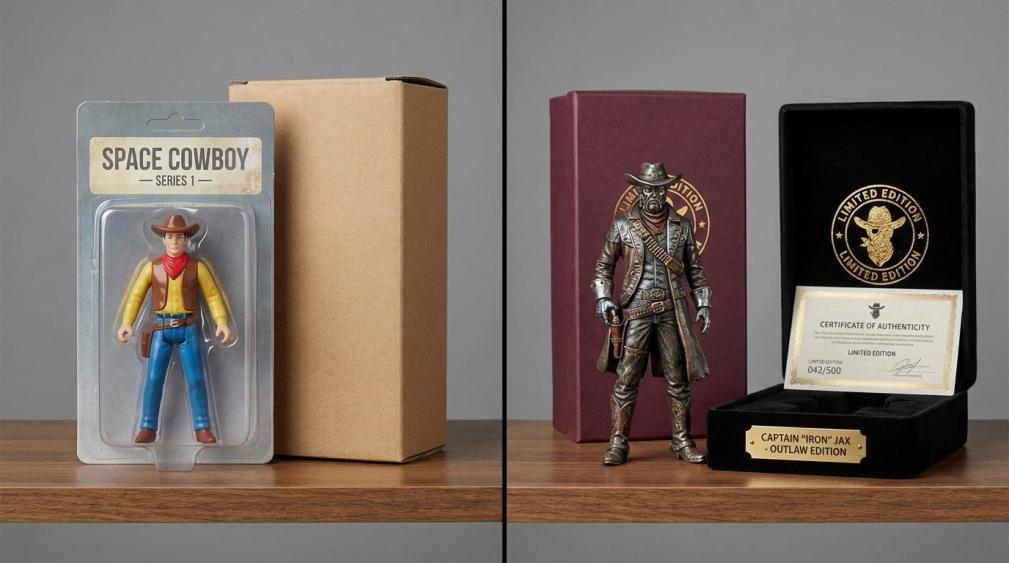
Next comes condition and packaging. Toy investment research is blunt: value is heavily driven by mint condition and original boxes, with sealed packaging and untouched accessories often multiplying prices compared to loose, played-with examples in studies of toys that appreciate over time. For space Western figures, that means checking for leaning or warping, sticky plasticizers, paint rubs on hats and holsters, sloppy metallic finishes on blasters, and yellowing or crushed corners on boxes. Even if you are an "open and pose" collector, keeping the box and internal blister in good shape gives you options later and signals to future buyers that you treated the piece well.
Provenance and documentation matter more than many newer collectors expect. In military memorabilia, appraisers look at labels, maker marks, and documented ownership history when evaluating uniforms, medals, and weapons, and they stress that authenticity and provenance drive value far more than appearance alone in comprehensive guides to military collectibles. Borrow that discipline for your figures: keep receipts, save convention brochures that list limited print runs, screenshot online product pages before they disappear, and store any certificates of authenticity in a safe place. When someone later asks, "Is this really the first-run 300-piece version from that small studio?" you can answer with more than a shrug.
Rarity and iconic status are the final filters. High-tier collectibles across coins, comics, watches, and handbags show a repeated pattern where the best examples combine small surviving populations, short production runs, and cultural significance into a kind of "canon" of trophy pieces in expert-curated lists of enduring collectibles. Within space Western figurines, this translates into things like early sculpts from a character's first major appearance, variants that were pulled or quickly revised, collaborations with well-known designers, or pieces tied to watershed moments in a show's history. When you face a choice between another generic space cowboy and a limited-run outlaw captain tied to a fan-favorite episode or arc, the second option almost always has more long-term upside.
Where To Hunt For Space Western Figurines In The Wild
One of the joys of this niche is that you can discover pieces in both hardcore fandom spaces and more traditional vintage and antique venues. Vintage decor hunters already treat weekly visits to thrift stores, antique malls, and flea markets as normal, checking every aisle with a mental wish list and an eye for quality and authenticity, knowing that most trips yield nothing and that practice sharpens their instincts over time in practical vintage shopping guides. Bringing that same rhythm to your toy hunts, stopping by local antique malls, checking oddball booths, and scanning mixed "pop culture" shelves, often turns up older garage kits, early resin runs, or obscure space Western figures that mainstream anime shops no longer stock.
Specialized reference material can give you an edge even when you are "only" buying modern figures. Western collectors use identification and price guides, such as out-of-print books cataloging saddles, holsters, and show memorabilia, to spot rare makers and mispriced items on the fly, and some of those guides are now collectibles themselves with affordable copies on secondary marketplaces in listings for Western memorabilia identification books. For space Western fans, building a small shelf of artbooks, sculptor interviews, and out-of-print visual guides to your favorite series serves the same purpose: you learn how early designs evolved, which characters vanished quickly, and which collaborations were limited, so you recognize important figures when you see them.
Online marketplaces reflect how broad the appetite for nostalgic, franchise-driven collectibles has become. Recent marketplace data shows that timeless toy brands, especially LEGO Star Wars, generate huge search volume, with LEGO alone clocking roughly 425 searches per minute and designer toys like POP MART's Labubu seeing roughly 2,600% year-over-year search growth, while trading card crossovers and viral novelty items like special dolls and themed bobbleheads also spike massively in interest according to eBay's collectibles trend reports. That kind of data signals something powerful for space Western collectors: fans actively chase mashups, nostalgia, and strong character designs, so a well-executed "cowboy in space" figure is tapping into the same forces that are already driving other categories.
Once your collection value starts creeping up, it is worth thinking like other memorabilia collectors who seek professional help for higher-end items. Military collectors, for example, increasingly rely on qualified appraisers for insurance, estate planning, and informed buying and selling as prices climb and authenticity questions get more complex, and those appraisers use formal standards and meticulous documentation to support their valuations in modern guides to military memorabilia and appraisal. If you end up with rare prototypes, signed runs from famous sculptors, or pieces that have become unexpectedly valuable, talking to a specialist appraiser or high-end auction house about documentation and insurance is a smart, protective step, even if you never intend to sell.
Displaying Your Space Western Shelf Like A Story
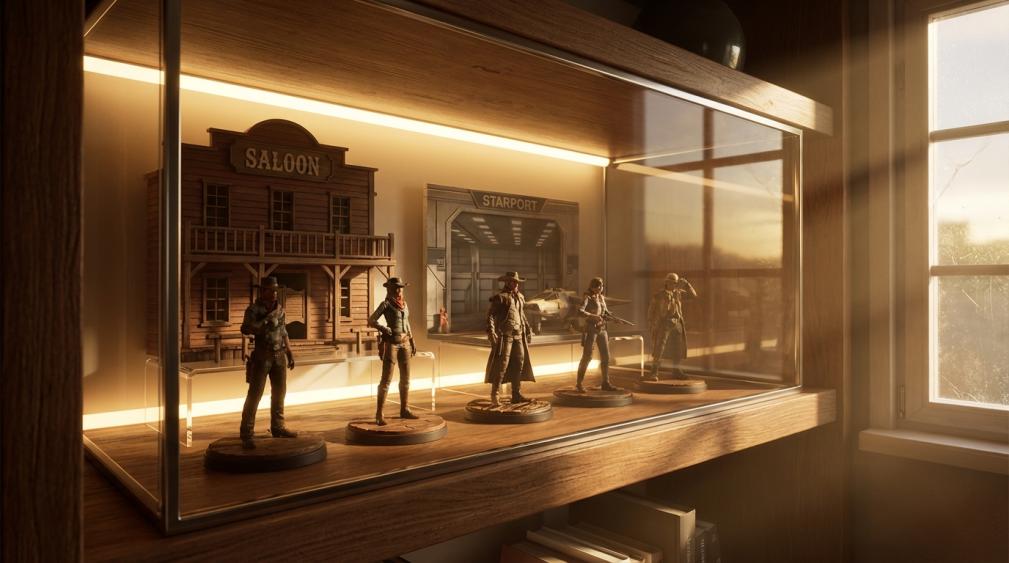
One of the underrated advantages of staying in a tight genre like retro-futuristic space Western is how easily your shelf turns into a narrative scene instead of a random crowd. Collectors who plan meaningful, investment-oriented collections are encouraged to define a clear theme and think ahead about storage and display space before buying, so that their pieces have room to breathe rather than ending up as clutter, as suggested in advice for building collectible collections. For your figures, that might mean deciding upfront that a single bookshelf will be your "frontier station," leaving space for a backdrop, a few props, and the lighting needed to make chrome pistols and metallic boots pop.
Borrow tricks from vintage decor lovers, who treat older items as functional art. Vintage shoppers are told to view utilitarian antiques, like kitchen tools, jars, or wooden boxes, as sculptural elements and to think in terms of vignettes rather than isolated objects, often grouping similar pieces for impact in guides to vintage decor shopping and styling. A space Western display gains the same power if you build mini-scenes: one shelf might be the dusty main street of a frontier colony with a saloon doorway made from scrap wood and model railroad signs; another could be a starport hangar, with clear acrylic risers turning ship-owning cowboys into a layered flight line.
From a preservation standpoint, it helps to remember that toy and memorabilia collectors stress careful storage as non-negotiable. Across categories, experts recommend stable temperature, controlled humidity, and protection from direct sunlight to prevent fading, warping, and brittle plastic, and they routinely advise keeping original boxes or investing in display cases to safeguard condition, especially for items with long-term investment potential in discussions of best practices for in-demand collectibles. For your figures, that means using UV-filtering sleeves on windows if the shelf sits near sunlight, dusting gently with soft brushes, and giving heavy or dynamic poses solid bases so ankles do not slowly bend over the years.
Your future self, and any future appraiser, will be grateful.
Closing Thoughts
Space Western figurines are more than a quirky subgenre; they are a way to tap into the same forces that make Western relics, space memorabilia, and vintage toys so compelling, while still keeping your collection anchored in anime and pop culture. When you focus your theme, respect condition and documentation, and hunt with both heart and data, every new gunslinger in a flight suit feels less like random merch and more like another chapter in an ongoing saga on your shelf. If that idea lights you up, it is probably time to clear a new "frontier" on your bookcase and start building the little space saloon of your dreams.