Understanding Emotional Attachment to Collectible Action Figures
This article explains why emotional attachment to collectible action figures forms, when it stays healthy versus when it becomes risky, and how to keep your collection balanced and joyful.
Emotional attachment to collectible action figures is less about plastic and price tags and more about the memories, identity, and comfort that gather around those tiny, painted faces. Many collectors describe that moment when a rough day eases the second they spot a favorite character on the shelf, or when a long‑hunted preorder finally lands on the doorstep and their heart jumps before their brain even thinks “tracking number.” Collectors consistently describe their hobby as a source of calm, meaning, and connection, and research on hobbies and nostalgia links this kind of focused, joyful collecting with lower stress and better emotional well‑being. This guide walks through what that attachment actually is, when it is healthy versus risky, and how to build a collection that supports your life instead of quietly taking it over.
What Emotional Attachment To Figures Really Is
Collecting figures and toys is not a niche quirk; it is a massive, mainstream behavior. Research on figure collecting estimates that about 40% of U.S. households and roughly 30% of households worldwide collect something, with the global toy market around $200 billion and collectibles and vintage toys near $35 billion in value, and more than 19% of U.S. toy sales now going to adults who buy for themselves or other adults. Research on figure collecting also notes that roughly 35% of U.S. adults bought a toy or collectible for an adult in the last year, up from 28% in 2022, so if your living room looks a bit like a convention booth, you are in very crowded company.
Collecting Versus Just Owning Toys
A key distinction in the psychology literature is that collecting is intentional: you are not just piling up random objects, you are building a set that feels coherent and meaningful. In work on figure and toy collecting, authors describe collections as extensions of self‑identity, where damage or loss can feel personally significant even if the monetary value is low, because the items are tied to a narrative you care about. Research on figure collecting emphasizes that choices like focusing on one mecha designer, building a villain‑only shelf, or keeping everything strictly in‑box are all ways of saying “this is who I am” without uttering a word. That is why a scuffed prize figure you grabbed on a trip with friends can mean more than a flawless limited statue bought on a random Tuesday.
Memory, Nostalgia, And Safety
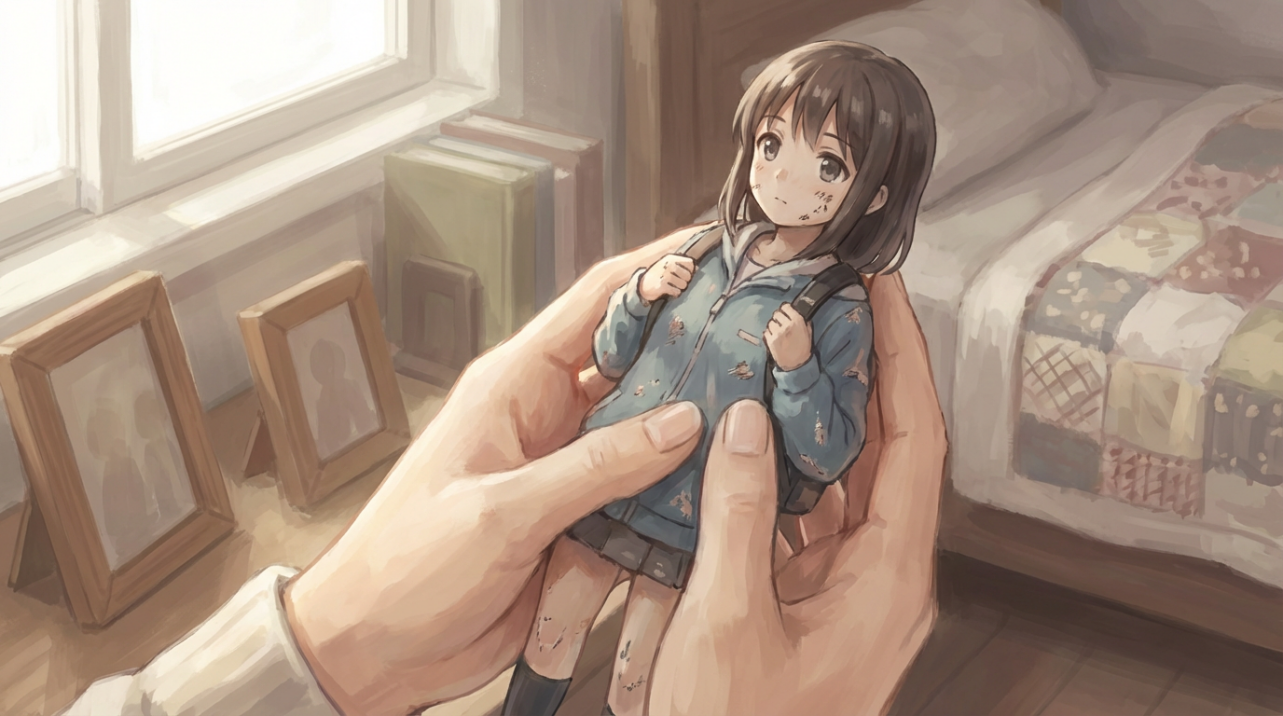
Emotionally, attachment to figures sits right in the middle of nostalgia and comfort. Summaries of figure‑collecting research highlight that people often reach for characters and franchises tied to childhood or formative years to reaccess feelings of safety, wonder, and connection, treating purchases less like cold investments and more like emotional anchors. Research on figure collecting mentions a 2009 leisure study where spending more time on enjoyable hobbies, including collecting, correlated with lower blood pressure, less depression and stress, and better overall psychological functioning, which lines up closely with collectors’ own stories of the hobby “calming the nervous system.”
Nostalgia is not just a vibe; it shows up across retail data. A trends report on emotional retail notes that U.S. adult “kidult” toy spending reached about $1.8 billion in the first quarter of 2025, growing 12% year over year and accounting for nearly one‑third of toy sales in that period, with demand clustering around nostalgic franchises and tactile, analog experiences like vinyl and physical media. Nostalgia‑driven emotional retail also finds sustained search interest in “classic toys” and “retro clothing,” especially around the holidays, which is exactly when many anime fans find themselves adding one more holiday figure to the cart “for the tree display.” Another study of nostalgic purchasing behavior reports that about 71% of consumers enjoy things that remind them of growing up, and that pandemic‑era shoppers increasingly turned to old shows, movies, and hobbies like retro gaming and puzzles for comfort, which ties directly to the surge in nostalgia‑driven toy and figure buying. Nostalgia‑shaped consumer behavior helps explain why a reissued classic figure or a “retro colors” variant can hit so hard emotionally.
Identity, Ardor, And The Story Your Shelf Tells
Attachment also reflects what one scholar called “ardor” in a study of collectors of inexpensive New Zealand ceramics. That work introduced ardor as an intense passion and enthusiasm for objects that symbolize cultural or personal identity, showing that even low‑priced items can carry deep psychological value because they embody heritage and a sense of self across time. Research on collectors’ ardor found that people curated those objects deliberately over years to maintain continuity with both their personal and national past.
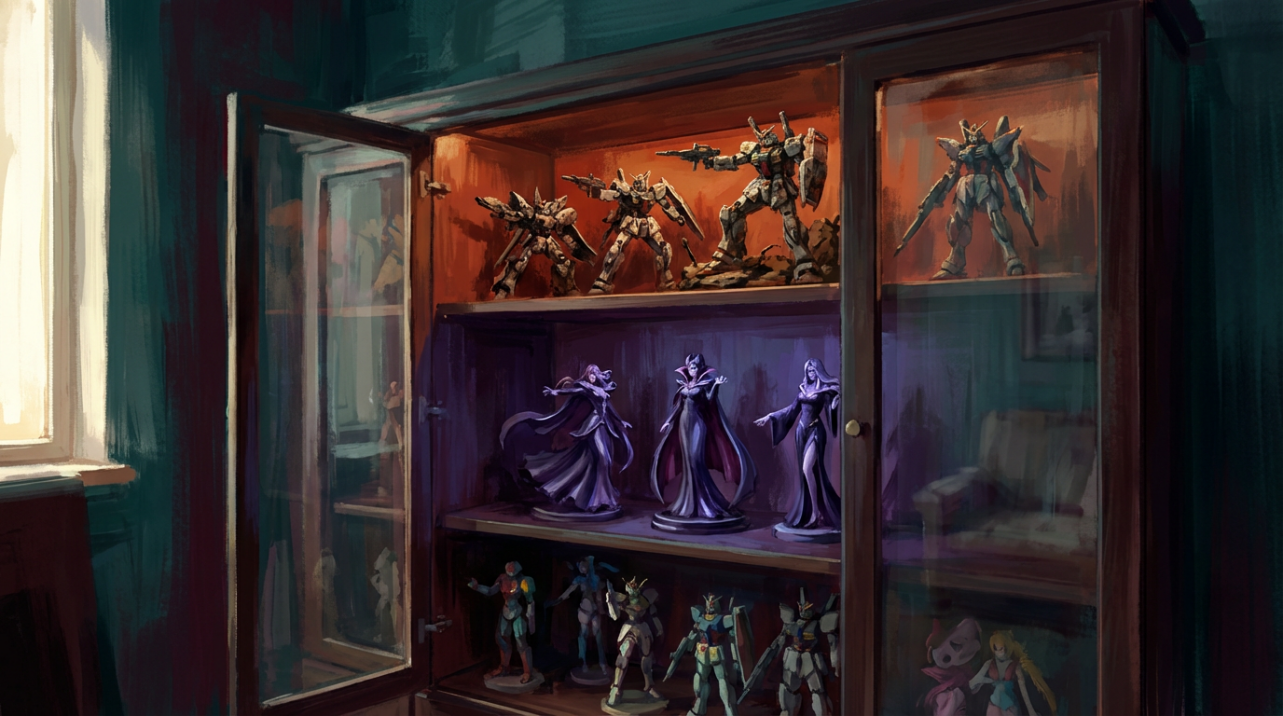
Swap ceramics for anime and you can see the parallel instantly. A shelf devoted to one series is not just merch; it is a visual biography of what you believe in and who you resonated with during certain seasons of life. Maybe the underdog hero figure reminds you of pushing through exams, or a soft, pastel magical‑girl statue holds the same emotional space as a childhood comfort blanket. Choices like displaying battle‑damaged versions, villain lines, or custom‑repainted garage kits all tell nuanced stories about what you value, what aesthetics you gravitate toward, and which parts of yourself you are still exploring.
Why Your Brain Bonds So Hard With Certain Figures
Dopamine, The Hunt, And Emotional Buying
One of the strongest reinforcers in collecting is “the thrill of the hunt.” Articles on hobby toys describe how searching for rare or valuable items activates the brain’s reward system, with anticipation and acquisition releasing dopamine in ways that make the process itself highly pleasurable, sometimes more than long‑term ownership. Psychology of hobby toys also highlights how expertise—learning to spot bootlegs, decode box codes, and time preorder windows—feeds a sense of mastery that many collectors find deeply satisfying.
On the retail side, a trends report on emotions in collectibles and retail environments estimates that emotional factors drive about 70% of consumer decisions, arguing that only a minority of buying behavior is truly rational comparison shopping. Emotions in retail and collectibles frames this as “emotional needs” such as joy, belonging, and excitement, which influence roughly 86% of purchase choices. Complementary research on marketing and purchasing behavior has suggested that as much as 95% of purchase decisions may be driven by subconscious or emotional connections rather than conscious analysis, which fits the experience of refreshing a preorder page at 3:00 PM and hitting “buy” the instant a grail pops back into stock, then only later doing the math on shipping and customs.
Nostalgia amplifies this effect. A review of nostalgia in emotional marketing reports that nostalgic ads can increase purchase intent by about 13% compared with non‑nostalgic ads, and that roughly 60% of consumers prefer brands that evoke positive nostalgic emotions. Power of nostalgia in marketing gives examples like personalized soda bottles and re‑released classic game consoles that sold out quickly because they tapped into shared memories. For anime figure collectors, this same mechanism is at work when a manufacturer announces a new line based on a series you binge‑watched in high school: the sculpt quality matters, but the emotional callback is doing much of the heavy lifting.
Community Energy And Shared Stories
Emotional attachment to figures is also social. Research on figure collecting notes that people join clubs, conventions, swap meets, museum events, online forums, and social media groups, with many Gen Z adults explicitly citing fan and collector communities as a motive for buying. Research on figure collecting points out that brands which design drops as fair, community‑oriented events rather than pure cash grabs can create stronger loyalty and more positive emotions around collecting.
Broader retail analysis suggests that digital shopping, while convenient, can feel emotionally thin; in one study of online shoppers, large majorities reported feeling lonely and overwhelmed by choice, which has pushed retailers to reimagine physical spaces as experiential hubs that prioritize play, discovery, and connection. Experience‑driven future of retail notes that toy and collectible stores are increasingly mixing curated displays, interactive elements, and limited‑edition drops to make visiting feel like an event. For anime fans, that might look like a themed pop‑up with life‑size standees and exclusive figures, or a local shop hosting watch parties and swap nights.
The nostalgia factor shows up again in where people choose to shop. Survey data on Toys “R” Us’s attempted comeback found that more than half of respondents said they were at least somewhat likely to shop somewhere specifically because of nostalgic feelings for its brand, with younger adults especially responsive. Nostalgia when shopping helps explain why many collectors are willing to go out of their way to attend anime conventions, visit specialty shops, or line up early for in‑store exclusives: the social ritual becomes part of the story attached to the figure itself.
When Attachment Helps You – And When It Starts To Hurt
Healthy attachment to figures can be genuinely good for you. The leisure study referenced in figure‑collecting research found that more time spent on enjoyable hobbies correlated with lower blood pressure, less depression and stress, and better psychological functioning, lending support to collectors’ reports that carefully arranging shelves, repainting a garage kit, or photographing a new Nendoroid feels soothing rather than shallow. Research on figure collecting also emphasizes identity benefits: as collections grow and knowledge deepens, collectors often feel a sense of achievement and competence, especially when they finally track down a rare or limited item.
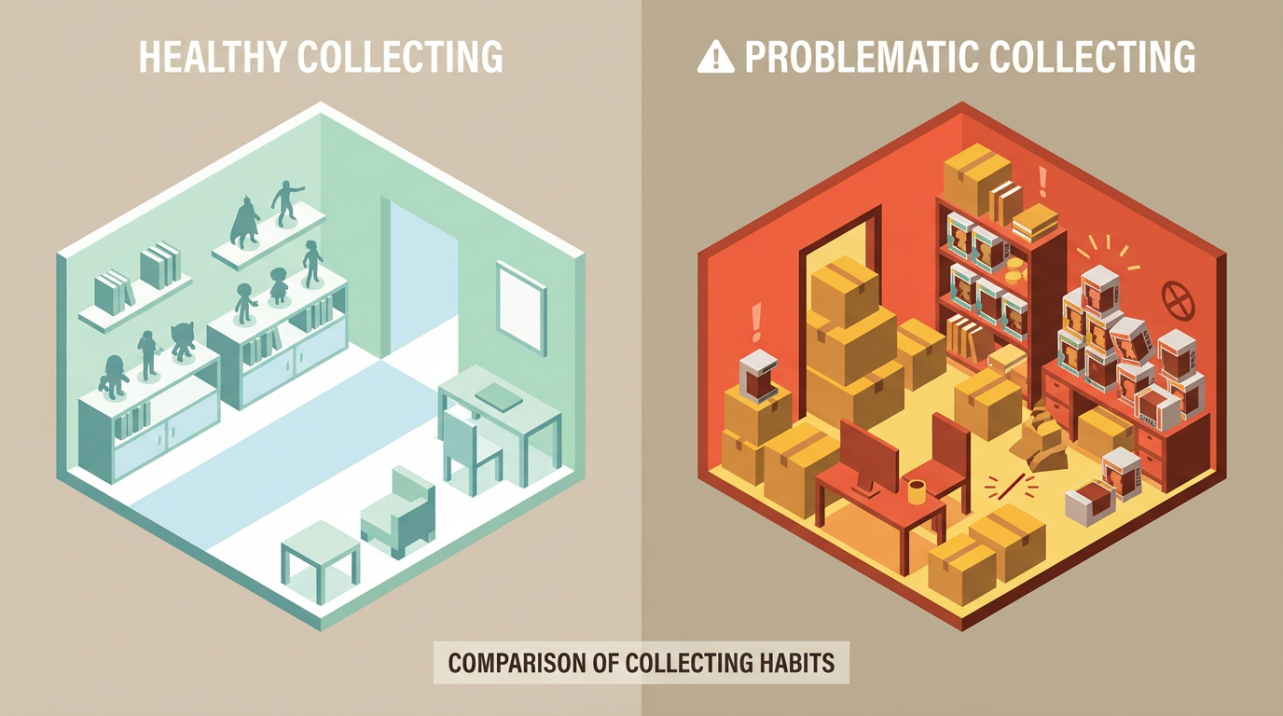
At the same time, psychologists describe a continuum from healthy collecting to hoarding, with compulsive hoarding formally recognized in diagnostic manuals when possessions overwhelm living space, cause distress or shame, and damage relationships. The same figure‑collecting research cautions that healthy collecting stays within reasonable limits of space and money, supports joy and relaxation, and enhances social life, while problematic patterns emerge when acquisitions are driven by fear of missing out or internal compulsion, and when basic home functions—like clear walkways or a usable kitchen and bedroom—start to lose ground to boxes and shelves. Research on figure collecting suggests that being honest about this continuum is one of the best safeguards for collectors.
A simple way to visualize the difference is to compare how the hobby impacts key areas of your life:
Aspect | Healthy collecting feels like | Problematic collecting feels like |
|---|
Money | Budgeted figures with room for savings and essentials | Debt, skipped bills, or anxiety every time a preorder charges |
Space | Displays you enjoy, with clear walkways and usable rooms | Boxes on the floor, blocked doors, or rooms you avoid entering |
Emotions | Joy, pride, relaxation, and community connection | Guilt, shame, arguing about purchases, or constant FOMO |
Time | A chosen way to unwind after obligations | Procrastinating work or sleep to scroll listings or reorganize |
If you buy one $60 figure every month and enjoy opening, displaying, and chatting about each piece, that $720 per year might be a fair “entertainment budget” alongside streaming subscriptions or concerts. If you are regularly impulse‑buying several figures a month, leaving them unopened in a corner because “I’ll get to them later,” and stressing about every charge, your attachment may be asking for a reset.
Practical Ways To Keep Your Collection Healthy And Joyful
Anchor Purchases In Joy, Not FOMO
The most sustainable collections are built around genuine delight, not fear of missing out. Research on figure collectors notes that the biggest emotional drivers are joy, nostalgia, and comfort, with many people explicitly using beloved characters to reconnect with feelings of safety and wonder from earlier in life. Research on figure collecting describes collectors who choose themes like “only mecha from one designer” or “only one character, all outfits” to keep their focus tight and meaningful.
In practice, that can mean choosing a clear theme—such as one franchise, one character, or one type of figure—and asking a simple question before buying: “Will I still be excited to dust and rearrange this six months from now?” If the honest answer is “probably not,” it may be FOMO talking more than attachment. Nostalgia research on consumer behavior also shows that comforting, familiar items often act as small, emotionally protective indulgences during stressful times, especially when budgets are tight, which is sometimes called the “lipstick effect” in other categories. Nostalgia‑driven emotional retail suggests leaning into that intentionally: treat a figure as an occasional, conscious mood‑boost purchase, not a constant reflex.
Protect Your Wallet And Space
Money and space are where emotional attachment can quietly collide with reality. A behavioral‑finance overview on the psychology of money notes that emotions like fear, greed, and guilt often lead to impulsive or self‑sabotaging decisions, and recommends tools such as a 24‑hour waiting rule for non‑essential purchases, clear, specific goals, and automation where possible. Psychology of money and emotion frames these as ways to reduce the grip of moment‑to‑moment feelings on your financial life.
Applied to figures, you might set a monthly hobby budget and a “24‑hour preorder rule”: whenever a new announcement drops, you wait at least a day before clicking buy. That pause makes room to check whether the sculpt fits your theme, whether you are duplicating poses you already own, and whether you are still excited after the initial adrenaline fades. On the space side, figure‑collecting research suggests setting display limits—like committing to a certain number of shelves or cases—and letting that physical boundary help you edit. Research on figure collecting advises watching for red flags like tripping hazards, inaccessible furniture, or partners and roommates complaining that shared spaces are being overrun; those are signals to slow acquisition and possibly sell or gift items that no longer spark the same joy.
Treat “Investment Value” As Extra, Not The Point
The collectibles world has undeniably become more financialized. A report on the business of nostalgia explains how items like vintage toys, trading cards, and memorabilia have shifted from purely hobbyist territory into structured alternative asset classes, with buyers treating nostalgic objects as part of their investment portfolios. Business of nostalgia collectibles market notes that digital marketplaces, grading, and authentication services now support a global market where some early toys resell for hundreds, thousands, or even more.
Figure‑collecting research, however, frames “investment” as a double‑edged sword: while the possibility that something becomes a “grail” can add excitement and a sense of justification, markets are volatile and most pieces will not turn into major financial assets. Research on figure collecting explicitly recommends treating potential resale value as a bonus rather than a primary reason to buy. A simple way to keep this balanced is to run a mental experiment: if the aftermarket for this line crashed to near zero tomorrow, would you still be happy owning and displaying the figure? If the answer is yes, your attachment is rooted in personal meaning; if not, you may be sliding into speculation disguised as fandom.
Quick Self‑Check For Your Collection
Every few months, it helps to step back and ask a few plain questions. Do you still feel a lift when you walk past your shelves, or mostly stress about boxes and bills? Are your key living spaces functional and comfortable for you and anyone you live with? Are you saying “no” to figures sometimes, based on a clear sense of your theme and budget, or does every preorder feel non‑negotiable? Figure‑collecting research suggests that when a hobby supports joy, relaxation, identity, and community without undermining safety, finances, or relationships, emotional attachment is doing its job well. Research on figure collecting also reminds readers that it is completely acceptable to adjust, downsize, or re‑curate collections as life changes; what mattered at 18 is not always what matters at 28 or 38.
FAQ: Common Questions About Loving Your Figures “Too Much”
Is it weird to feel closer to a figure than to some people? Not at all. Work on keepsakes and collectibles shows that physical objects often act as vessels for memories, emotions, and parts of identity, especially when they represent characters or stories that helped you through tough times. Large‑scale data on collecting indicates that tens of millions of adults participate in collecting hobbies worldwide, and that kidult toy buyers now represent a major driver of toy‑industry growth. Nostalgia‑driven emotional retail and research on figure collecting together suggest that bonding with objects is simply one way humans process memory and selfhood; it only becomes a concern when it isolates you or harms important areas of your life.
Can collecting figures actually help with stress or mental health? There is evidence that it can help, within limits. The 2009 leisure study cited in figure‑collecting research found that spending more time on enjoyable hobbies correlated with lower blood pressure, less depression and stress, and better overall functioning, supporting collectors’ testimonies that painting, posing, and photographing figures helps them decompress. Research on figure collecting also frames collecting as a coping mechanism that builds patience and problem‑solving skills through the search, research, and organization involved. That said, this is not a replacement for professional care when someone is struggling with serious anxiety, depression, or hoarding; rather, it can be one healthy tool among many.
How do you let go of a figure you’re emotionally attached to? Start by acknowledging what the figure actually represents: a certain era of your life, a friendship, a show that meant a lot, or a specific achievement like your first convention. Research on both nostalgia and money behavior suggests that people feel better about change when they can preserve the story and emotional meaning even if the object changes hands. Nostalgia‑shaped consumer behavior and psychology of money and emotion both imply that writing a short note about why you bought it, taking photos of your favorite display, or passing it to another fan who will appreciate it can make parting feel like continuing the story rather than erasing it.
Emotional attachment to figures is not a glitch in your personality; it is a very human way of stitching together memory, identity, and comfort using the characters and stories you love. When you give that attachment a bit of structure—clear budgets, thoughtful space, and a focus on joy over FOMO—your shelves stop being “just plastic” and become a living, evolving museum of your fandom life.