Understanding Humidity Effects on Figurine Preservation and Damage
Humidity quietly reshapes plastic, paint, and glue in your collection, but with simple humidity control you can keep your figures stable and crisp for many years.
Ever picked up a favorite scale figure on a summer night and felt the PVC a little softer, dust welded to the hair tips, or a once-flat base rocking on the shelf? Resin crafters, plastics labs, and museum conservators have tested how moisture ages plastics and found that warm, humid air can cloud clear resin, weaken plastic, and shorten its useful life far faster than dry conditions. This guide explains what humidity does to PVC, ABS, and resin, what numbers to aim for on a hygrometer, and how to set up shelves and cabinets so your collection stays sharp instead of slowly sagging.
How Humidity Actually Attacks Figurine Materials
Humidity is the amount of water vapor in the air compared with the maximum it could hold at that temperature. When relative humidity stays high or swings up and down, your figures sit in an invisible bath that seeps into plastics, adhesives, and any metal parts.
Conservation scientists note that when relative humidity sits above roughly 75% for long periods, damp conditions drive mold growth, metal corrosion, and mechanical damage in many materials, and that big swings in humidity cause fatigue in layered structures such as paints and coatings. Even humidity changes of about 20% can push vulnerable objects from “no damage” into “small to severe damage” territory over time through repeated expansion and contraction rather than one dramatic failure.
Polymer engineers who aged dozens of commercial plastics for months to years in warm, humid air found that some plastics survived quite well, but others lost properties much sooner than dry-heat tests predicted. The main culprit was hydrolysis: water slowly slipping into the polymer network, breaking chemical bonds, and dropping strength and stiffness long before the part visibly failed. For short spells in humid air at moderate temperatures, most plastics coped, but under long-term warm humidity their useful lifetime shrank dramatically compared with the same material in dry conditions.
Mechanical testing on 3D-printed plastics such as ABS, PLA, nylon, and PETG shows that moisture does not affect every plastic equally. In one study on printed metamaterials, nylon absorbed more than 10% of its weight in water after a few days, while ABS and similar plastics took up only around 4–5%, yet even that smaller absorption could tweak stiffness and strain behavior. The same work found that many plastics had a “mid-humidity sweet spot” around 45% relative humidity where tensile performance was slightly better than in very dry conditions, while very high humidity started to introduce defects again.
For collectibles, that translates to this: most PVC and ABS figures will not melt just because your room hits a humid summer afternoon, but if they live for months or years in a warm, damp space, water can slowly soften or embrittle parts, stress paint layers, and combine with temperature to encourage warping and clouding in more sensitive pieces such as resin bases and clear parts.
Resin Kits, Clear Bases, and Epoxy Details
Garage kits, transparent effect parts, and glossy diorama bases often rely on epoxy or similar resins, and these are far more sensitive to humidity while they cure than after they are fully hardened.
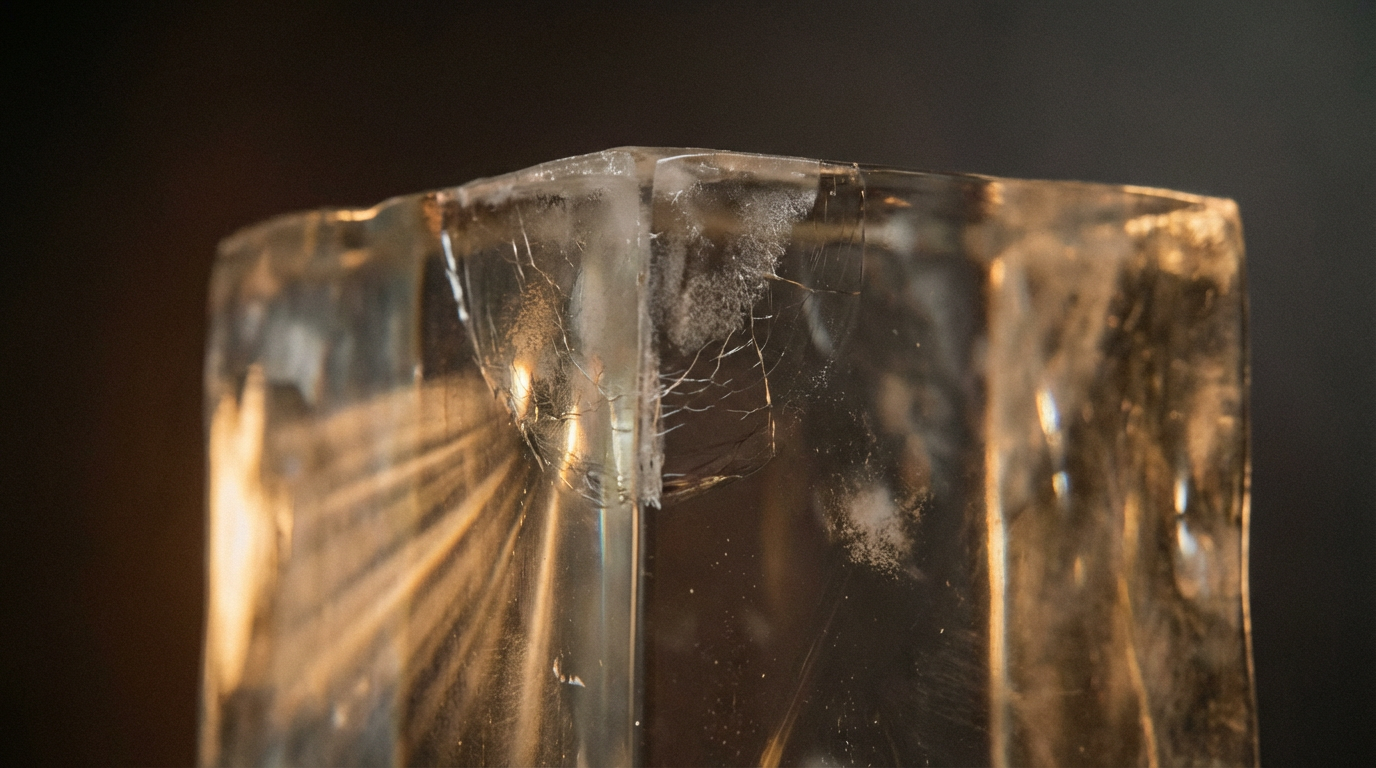
Resin art guides describe how moisture during post-curing can leave a greasy-feeling surface, cloudiness, or haziness, especially on clear pieces. They recommend curing resin in a space around 70–80°F with humidity below about 40% for the clearest, strongest finish and warn that condensation is a special threat when the resin surface is cooler than the surrounding air. When that happens, tiny droplets form on the surface and become locked in as permanent clouding.
Resin-crafting resources that work in very humid seasons point to a practical working band of roughly 40–50% relative humidity and advise keeping humidity under about 80% for most resin systems to avoid outright curing failures. To reach that range, they lean on dehumidifiers, air conditioning, sealed windows and doors, and simple tricks such as placing pieces in sealed containers with moisture absorbers while they cure.
Epoxy manufacturers echo this picture. Guides for bar-top and table epoxies state that most systems perform best when the room stays near 70–75°F with humidity roughly between 40% and 60%, and they warn against curing in spaces above about 60% relative humidity because surface condensation can make the cure cloudy or sticky. Once epoxy is fully cured under good conditions, it becomes nonporous, waterproof, and much more tolerant of normal room humidity, but getting through the curing stage cleanly depends heavily on humidity control.
Inside the material, research on moisture invasion in epoxy shows that as water content rises, the thermal and mechanical behavior of the resin shifts. At low moisture levels, properties change only slightly, but at higher water uptake the internal network swells and pathways for heat and stress shift, which can reduce thermal conductivity and weaken the material. Studies of structural epoxy adhesives under hot, humid aging likewise report that water uptake can cause swelling, decreased shear and tensile strength, and shifts in glass transition temperature, especially above about 75% relative humidity. For heavy resin bases, intricate diorama joints, or pinned connections glued with epoxy, long-term high humidity does not just threaten clarity; it can slowly undermine the strength of the joints themselves.
The Safe Humidity Zone for Anime Figures
Different studies approach humidity from different angles, but a consistent theme emerges: mid-range, fairly stable humidity is where plastics, coatings, and adhesives are most comfortable, while both damp extremes and big swings are what you want to avoid.
Materials tests on 3D-printed lattices show that many plastics have their best mechanical behavior around 45% relative humidity, not in bone-dry air. Epoxy makers recommend humidity bands roughly in the 40–60% range, with a strict warning to avoid curing projects above about 60%. Plastic production facilities often target indoor humidity around 40–60% to keep plastic strength consistent and drastically cut static electricity, which otherwise makes dust cling and pellets or sheets stick together. Standardized plastic testing commonly conditions samples at about 73°F and 50% relative humidity before measuring tensile strength, which is a quiet hint that this is a comfortable baseline for many plastics.
Museum conservators, dealing with mixed collections that include plastics, mostly agree on broader ranges but put heavy emphasis on avoiding prolonged time above about 75% relative humidity and on minimizing large or frequent swings. They show that mold risk rises sharply as humidity holds at 70–80% or higher for weeks, with some materials showing visible mold in roughly ten days at about 80% relative humidity and within a couple of days near saturation, especially if surfaces are dirty or rich in organic residues.
Putting these threads together gives a practical target for figure collectors:
Relative humidity at the shelf | Science snapshot | What it means for your figures |
|---|
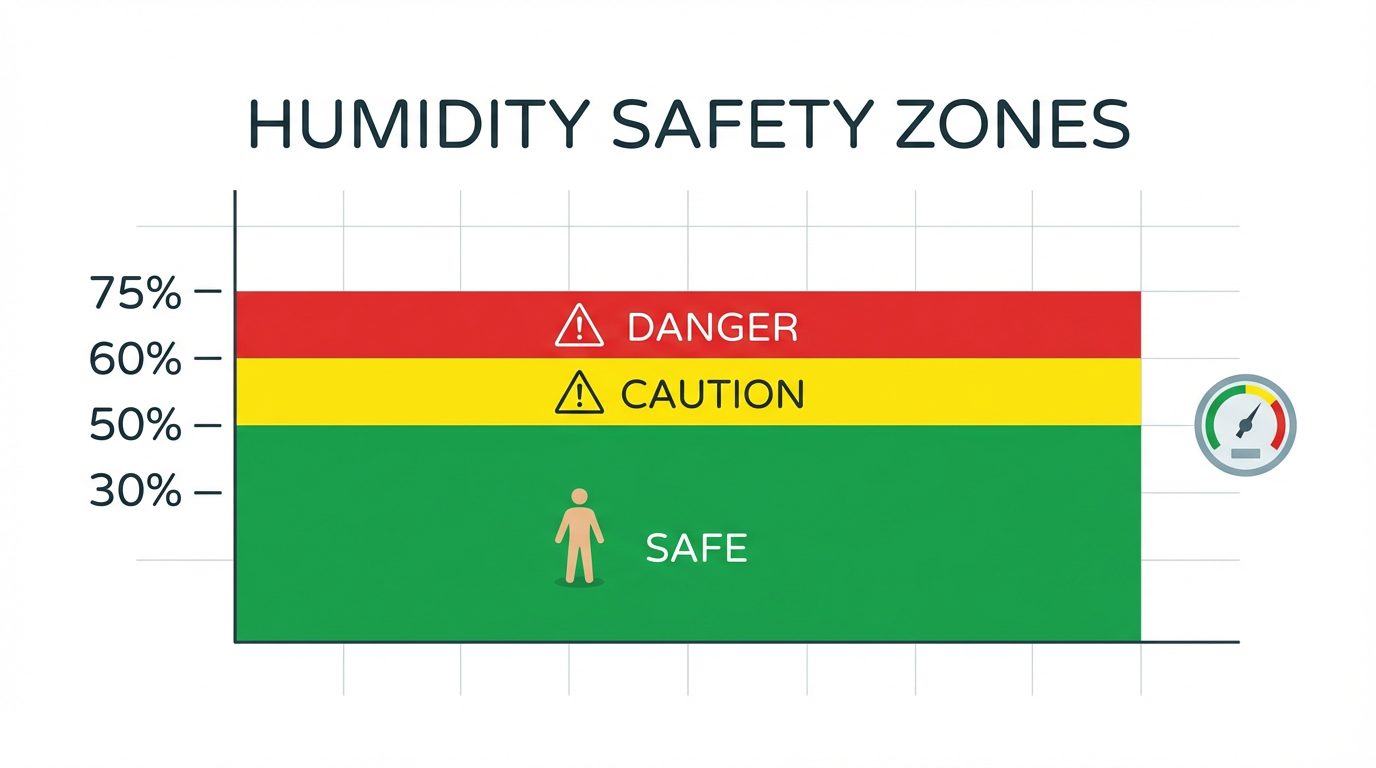
Below about 30% | Factories and labs note more static and very dry air; conservation work warns that big swings toward such low humidity can fatigue layered materials. | Static makes dust cling to plastic, and repeated jumps from very dry to more humid conditions can stress paints and decals, though short stays here are not usually catastrophic. |
About 30–50% | Mechanical tests on plastics show slightly better behavior around 45% relative humidity; resin and epoxy guides place their ideal working bands roughly here. | This is an excellent everyday zone for PVC, ABS, and resin figures, balancing low mold risk, low condensation risk, and solid stability for plastics and clear coats. |
About 50–60% | Many epoxy and plastics guides still consider this acceptable, but epoxy manufacturers often set 60% as an upper limit for clean curing. | Existing figures are generally fine if conditions are stable, but you should be cautious about curing new resin or epoxy projects and watch for slow creep upward in muggy seasons. |
About 60–75% | Studies on adhesives and plastics identify this as a region where moisture effects become more noticeable, and resin artists fight defects here using dehumidifiers. | Short spikes are tolerable, but months in this band raise the odds of cloudy clear pieces, softened joints, and warping in thinner parts or bases. Aim to bring this down when you can. |
Above about 75% | Conservation research shows mold, corrosion, and mechanical damage rising quickly at these levels, with many sensitive materials degrading within weeks. | This is danger territory for long-term storage. Boxes in damp closets, basements, or garages that stay this humid can harbor mold in packaging and accelerate damage to plastics and glue. |
If you like simple numbers, a good default is to keep your main display space near 40–50% relative humidity at roughly 70–75°F, with day-to-day swings of no more than about 10%.
Setting Up Humidity-Smart Shelves, Cabinets, and Storage
The most important tool you can buy for humidity control is not a dehumidifier; it is a small digital hygrometer. Resin instructors, epoxy makers, and people working through very humid seasons all stress the same thing: you cannot manage what you do not measure. Set a hygrometer right near your figures, not pressed against a cold window or resting on the floor, and check it a few times a day for a week. Once you know your high and low points, the strategy becomes obvious.
If your readings hover around 40–50% relative humidity with gentle fluctuations, you are already in a very safe zone. You can focus on the basics: keep figures away from direct sunlight and obvious moisture sources, give them stable support, and avoid placing them directly above heaters or next to air-conditioner blasts that cause temperature jumps. Museum guidance on plastics emphasizes handling support more than anything else, so use solid bases or stands for tall or top-heavy figures and avoid flexing protruding parts when you dust or rearrange.
In many homes, the problem is a room that sits at 60–70% relative humidity for most of the summer.
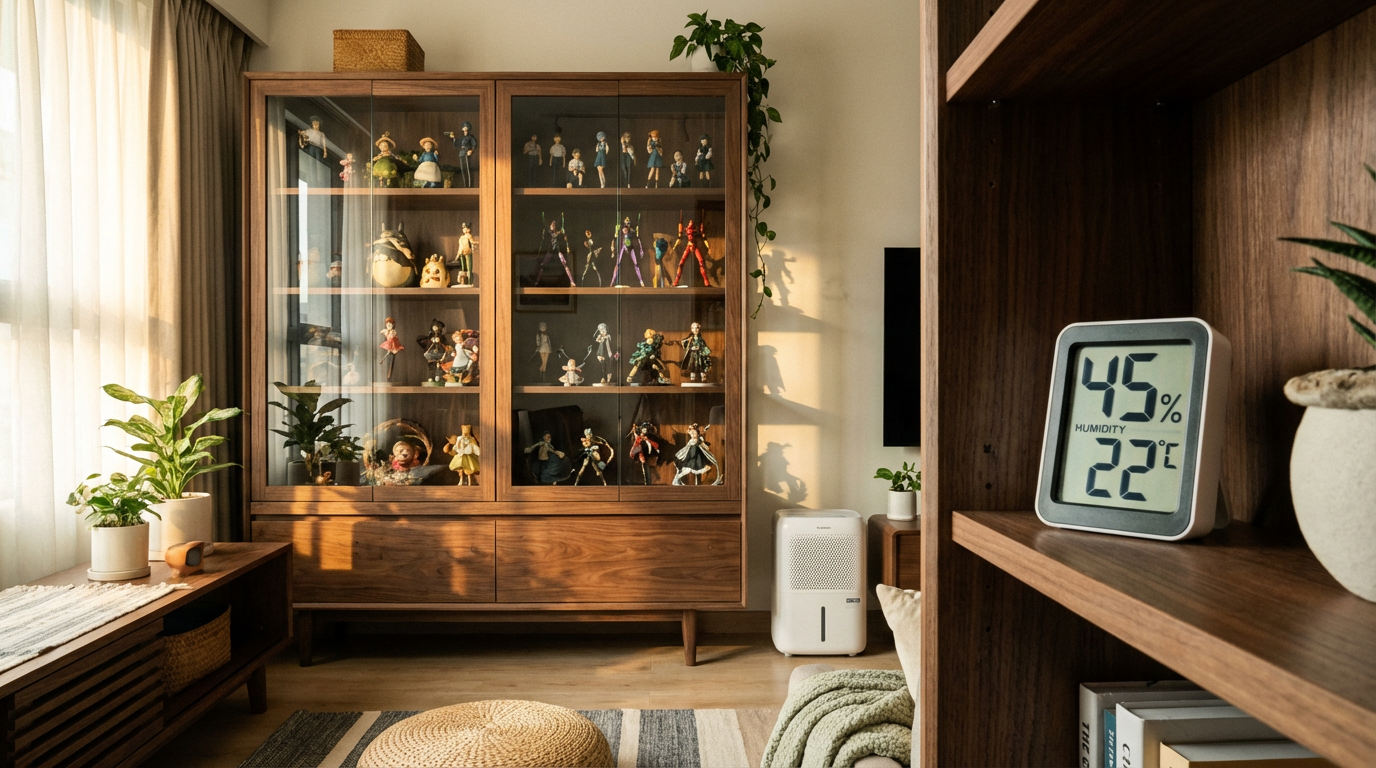
Experience from resin work in very humid seasons shows that closing windows and doors, running a dehumidifier, and letting the room stabilize can bring humidity down into the safe working range for resin curing. The same approach helps figures: choose one room to be the collection zone, reduce outside air leakage there, and run a dehumidifier long enough to pull the hygrometer into the 40–50% band during the muggiest hours. Because dehumidifiers trade off against natural ventilation, resin tutorials also recommend taking breaks in fresh air and using respirators while working; for regular figure display, you just need common-sense ventilation so the room stays comfortable for you as well.
Glass display cabinets and Detolf-style cases add a new twist: condensation. Resin post-curing guides explain that condensation appears when a surface is colder than the dew point of the surrounding air, and once those microdroplets form on resin they can cause cloudiness and greasy-feeling surfaces. A glass cabinet pushed up against a cold exterior wall in winter or directly under an air-conditioning stream in summer can become that cold surface. To avoid this, keep cabinets a little away from exterior walls, avoid directing cold airflow straight at the glass, and let room temperature change gradually. If you see fog on the inside of your cabinet glass, treat that as an alarm that your figures are in a mini rainstorm and improve the climate before it becomes routine.
For long-term storage of boxed figures or rarely handled statues, think like both a 3D-printing lab and a museum. Filament-storage guides emphasize airtight containers with desiccant packs and stable temperatures around room level, often targeting humidity below about 30% for long-term plastic storage. Conservation guidance for plastics recommends keeping objects off the floor, using polyethylene bags and polypropylene boxes, and assuming leaks and water events will happen at some point. For your collection, that means storing figures in sturdy plastic bins with latching lids, adding silica gel or similar desiccant pouches, and keeping the bins on shelves rather than directly on concrete or near pipes. In very humid regions, some resin artists even create small humidity-controlled containers with moisture absorbers such as rock salt; a similar concept can help especially rare figures by placing them in their own sealed box with a fresh desiccant pack that you swap regularly.
Finally, avoid spaces with wild temperature and humidity swings for anything you care about. Materials research on 3D-printed plastics exposed to repeated freeze-thaw and humidity cycles found impact strength drops on the order of 15–50% after only a few cycles in some materials, as water invaded pores, froze, and expanded, tearing at internal bonds. A garage that freezes in winter, bakes in summer, and sometimes gets damp is rougher than it looks, not just on cardboard boxes but on the plastic inside them.
Spotting and Dealing With Humidity Damage
The first signs of humidity trouble are often subtle. Resin and epoxy guides describe surface defects such as amine blush, where the cured surface takes on an uneven, watermark-like or crackled pattern. Cloudiness in what used to be clear water effects, a slightly greasy feel on resin, or a tacky patch that catches dust are all hints that moisture intruded during curing or that the surface has been sitting in damp air too long.
For PVC and ABS figures, humidity damage tends to show up more as slow deformation and surface changes than dramatic crumbling. Long-term humid aging studies on plastics show that hydrolysis quietly reduces strength and dimensional stability; in collector terms, that can mean thin parts that slowly lean, joints that feel looser than they should for the age, or bases that no longer sit perfectly flat. When relative humidity is high for weeks, conservation guidance shows that mold can also grow on dust and dirt that cling to figures, especially in crevices and on textured bases. Any metal supports or screws hidden in bases or stands are also at risk of corrosion in damp air, which can stain plastic around them and weaken the support.
If you notice early-stage issues and you know the piece used epoxy, repair ideas from resin work can help if you adapt them carefully. For mild surface hazing or blush on a resin base, gentle buffing and polishing can sometimes restore clarity if the defect is shallow. If the surface remains rough or cloudy, many resin artists sand lightly and apply a fresh thin clear coat of resin or sealer, but they stress doing this in a controlled environment around 70–75°F and in that 40–50% humidity sweet spot so the fix does not inherit the same problem. Always test on a hidden area first, since paints and plastics used on figures may react differently from art resin slabs.
When you see true structural problems such as severely warped parts, sagging heavy resin, or cracked joints, the safest response is often to stabilize the environment first and then consider gentle mechanical correction or professional restoration. Plastics and rubbers in museum collections are handled with extreme caution because aged plastics can be much more brittle than they look; conservators support objects from below with padded forms and avoid flexing protruding parts. That same mindset helps with figures: do not force-bend a warped sword or ponytail, especially if the room has just shifted from cool and dry to warm and humid. Improve the climate, let the piece equilibrate, and only then decide whether careful heat-and-bend techniques or re-pinning are worth the risk for that specific figure.
FAQ: Quick Answers for Collectors
Is a slightly humid bedroom okay for figures?
If your bedroom usually sits below about 60% relative humidity and does not have big, frequent swings, it is generally fine for display. Use a hygrometer to confirm, keep figures away from windows and damp corners, and consider a small dehumidifier or air conditioning during stretches when readings creep up toward the 70% range for days at a time.
Do I really need a hygrometer if my figures look fine?
Humidity damage is slow and often invisible until it is well underway. Resin artists and epoxy manufacturers treat a simple digital hygrometer as essential gear because it lets them catch problems before a pour goes wrong. For a collection that may be worth hundreds or thousands of dollars, a tiny meter that tells you whether you are sitting at 45% or 70% relative humidity is very cheap insurance.
Is a very dry, air-conditioned room bad for figures?
Constant, extremely dry air mainly raises two issues: more static and dust, and extra stress if humidity later bounces back up quickly. Plastic factories note that dry air can make static and dust problems much worse, and conservation work shows that big swings toward very low humidity and back can fatigue layered materials. If your room often drops well below about 30% relative humidity, you do not need to panic, but it is wise to avoid sudden humidification and to dust figures gently so static does not grind dirt into soft paints.
Closing Thoughts
Humidity is the quiet villain in a lot of “my figure suddenly warped” and “why did this clear base go cloudy?” stories, but it is also one of the easiest factors to tame once you pay attention to it. With a small hygrometer, a bit of environmental control, and the science-backed target of a stable mid-range humidity around 40–50%, you can give your favorite captains, idols, and demon hunters a display climate where they look and feel as crisp in a few summers as they did out of the box.
References
- https://pmc.ncbi.nlm.nih.gov/articles/PMC10780602/
- https://repository.si.edu/server/api/core/bitstreams/e187d8b3-cd24-4318-b0d7-46b2b82c305f/content
- https://www.frontiersin.org/journals/materials/articles/10.3389/fmats.2023.1197604/full
- https://www.researchgate.net/publication/264022090_Effect_of_Phenolic_Resin_According_to_Relative_Humidity_on_Submerged_Entry_Nozzle_with_ZrO2-C_System_in_Fabrication_Process
- https://www.ikeuchi.eu/how-does-humidity-affect-plastic/
- https://www.labscubed.com/post/how-temperature-and-humidity-affects-tensile-strength-in-plastics
- http://www.researchmanuscripts.com/March2015/4.pdf
- https://ronningenresearch.com/plastic-part-warping-solutions-michigan/
- https://ruuvi.com/managing-temperature-and-humidity-in-3d-printing-and-filament-storage/
- https://artsshala.com/blogs/resin-art/moisture-in-resin-post-curing-how-to-prevent-and-fix-it?srsltid=AfmBOooIRVXJV6y88R46mAB7GLPNwg-6McWf5fTdn0GWyugWaC7zM-o9