Understanding Rust Formation on Metal Parts of Figurines
Rust on figurine metal parts is a moisture-driven attack on iron and steel, but with the right display habits and gentle care you can keep it under control and preserve your collection for years.
That moment when you lift a favorite figure and see orange dust blooming around a tiny screw is pure collector horror. The good news is that with a few changes to where and how figures are displayed, you can usually stop those spots from spreading and keep new ones from appearing. This guide explains what rust actually is, why it shows up on figurine metal parts, and the practical steps to stop it and protect your figures for the long haul.
Rust, Patina, and What’s Really Happening on Those Metal Parts
At its core, rust is iron oxide that forms when iron or steel reacts with oxygen in a thin film of water. Conservation scientists describe this as an electrochemical process: metal, moisture, and oxygen create tiny cells on the surface that steadily turn solid iron into brittle oxide. Because iron and steel are common structural metals, any ferrous screws, rods, armatures, or metal bases in your figurines are the places this will show up first.
Rust is particularly destructive because it is not a protective skin. Studies on iron artifacts in museums note that the mix of iron oxides and hydroxides that we call rust is porous and often holds onto moisture and salts instead of sealing them out, which actually accelerates further corrosion. Collectors of vintage machinery and tools see the end game of this process: as rust grows and expands, it can exert internal pressure, crack thick cast parts, and flake away enough base metal to leave holes. On a figurine, that might look like a stand post that suddenly snaps, a weighty base that sheds metal crumbs, or a joint pin that no longer holds.
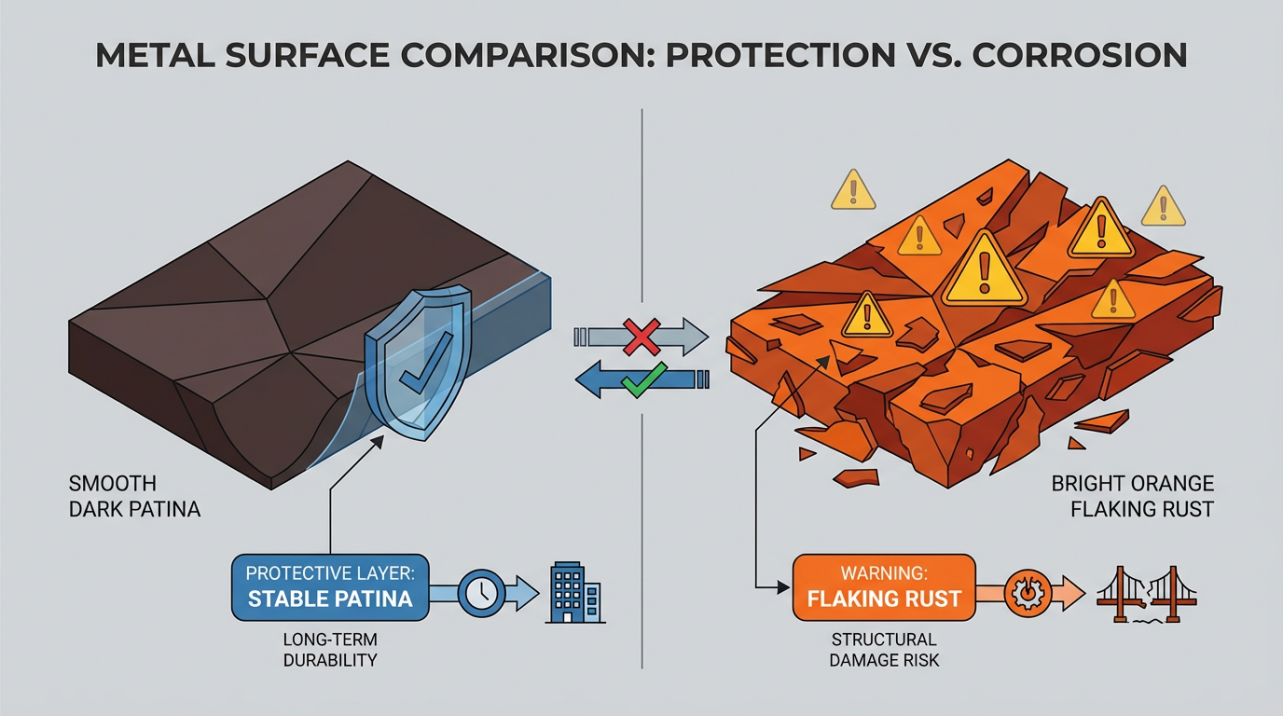
Not every color change on metal is bad news, though. Conservators at organizations such as the Canadian Conservation Institute and specialist studios like Fine Art Restoration make a key distinction between stable patina and active corrosion. Thin, even tarnish on some metals can actually act as a barrier. Silver can shift from iridescent gray to nearly black; brass and copper darken toward brown or black; bronze statues may develop a deep, even tone. These stable layers are often part of the intended look and can slow further change.
Active corrosion looks and behaves differently. For iron and steel, bright or relatively vivid orange areas and loose powder are warning signs, especially if the rest of the metal is a darker reddish-brown. For copper alloys like bronze or brass, continued attack often shows up as flaking or powdery blue-green patches, the classic “verdigris” color. Fine Art Restoration notes that this kind of powdering or flaking is unstable and keeps eating into the metal unless the conditions change and the corrosion is treated. On figurines, that might appear as orange dust around a steel screw in a base, or chalky green crust creeping along a small bronze nameplate.
Why Figurines Rust Indoors
Industrial corrosion research and museum studies agree on one uncomfortable truth: metal does not corrode just because it is old; it corrodes because the environment keeps feeding it what it needs. Large infrastructure studies put the global cost of corrosion at well over $2,500,000,000,000 every year, and the same chemistry nibbling on bridges and pipelines is quietly working on your figure stands and display hardware.
Humidity is one of the main villains. Environmental monitoring work shows that once relative humidity gets into roughly the 60–70% range, a continuous microscopic film of water forms on metal surfaces. That film acts like an electrolyte, letting ions move and letting corrosion reactions run. Conservation guidance for metal artworks points out that keeping humidity below about 65% and reasonably stable prevents much of the everyday atmospheric corrosion seen indoors. For very sensitive iron objects, specialized museum manuals recommend even drier conditions.
In a typical collection room, that can be the difference between a summer storm pushing your figure shelf to 70% humidity and a controlled room sitting closer to the 40–55% range. In the first case, bare steel screws and posts are bathed in a conductive moisture film for hours or days at a time; in the second, they spend most of their life too dry for aggressive rust to get going.
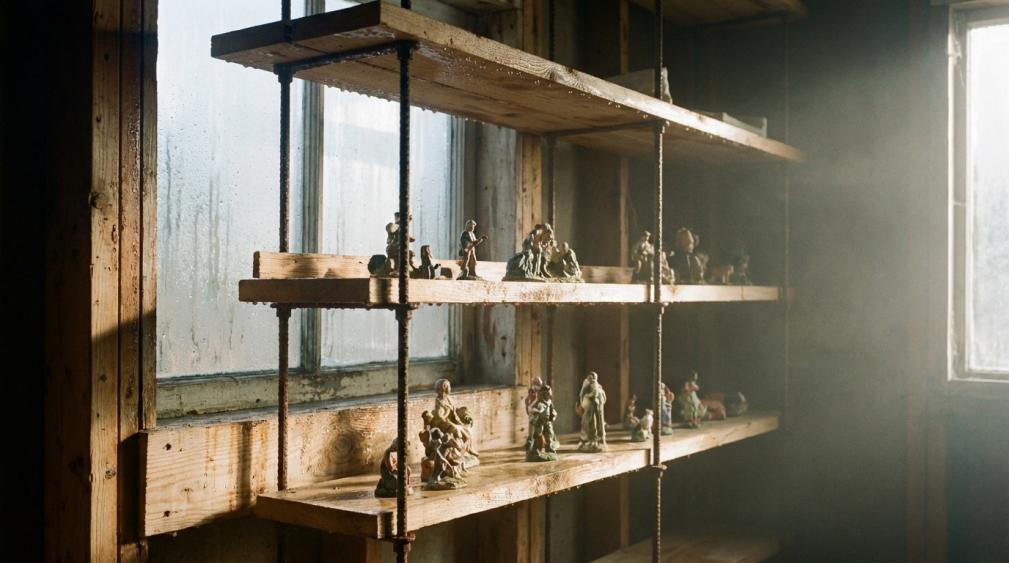
Salts and pollutants act like damage multipliers. The Canadian Conservation Institute emphasizes that chlorides—from fingerprints, coastal sea spray, or dust—greatly speed up corrosion and can make metals much harder to stabilize. Museum studies also highlight sulfur compounds from certain woods and paints, and organic acids off-gassed by construction materials and some plastics, as quiet but powerful contributors. That translates to very familiar collector scenarios: metal swords and bases handled with bare, slightly sweaty hands; figures displayed on unfinished wooden shelves; or a collection cabinet built from materials that slowly give off acidic vapors.
Temperature and air movement shape the battlefield. Research on environmental corrosion notes that higher temperatures speed up reaction rates, and that cycles of cooling and warming push surfaces repeatedly through the dew point where condensation forms. The National WWII Museum warns against storing historic metal objects in attics, sheds, or damp basements for exactly this reason, recommending instead climate-controlled living spaces with stable conditions. A glass cabinet pressed against a cold window or positioned right above a heating vent sees rapid swings that encourage condensation inside the case, even when the rest of the room feels fine.
Put together, you can imagine a classic high-risk setup: a figure with a steel support rod displayed on raw wood near a window in a humid region, touched often by bare hands. Humidity spikes to the upper ranges during storms, salts from skin and household dust sit on the metal, and fumes from the wood supply extra corrosive chemicals. Over time, that support rod has everything it needs to develop active rust.
How to Read the Clues: Is It Harmless Aging or Dangerous Rust?
Before reaching for any cleaner or polish, it helps to read what the metal is telling you. Conservation professionals separate surface changes into two broad camps: stable layers that can often be left alone, and active corrosion that needs intervention.
Stable patina tends to be thin, continuous, and visually calm. A small bronze nameplate on a limited edition base that has slowly darkened to a deep brown or almost black over years, without flaking or roughness, is likely wearing a normal patina. Silver-colored parts that have gone slightly gray or iridescent but still feel smooth fall into the same category. In these cases, the surface layer is often protective, and aggressive shining can actually strip away historically or artistically important finishes.
Active corrosion, by contrast, looks patchy, crusty, or powdery, and it often appears in spots where moisture lingers or the coating has been damaged. On iron and steel parts—screws in stands, pins in joints, rods in flying poses—watch for fresh, bright orange areas, especially at edges, seams, or scratches. That brighter orange is a sign of rust that is still “working,” distinct from older, darker reddish-brown areas that have stabilized somewhat. On copper and bronze accessories or plaques, keep an eye out for pale or bright green powdery growth that seems to build up over time.
The table below translates some of these cues into collector language.
What you see on the figurine’s metal part | What it likely means | What to do first |
|---|
Even dull darkening on a bronze- or brass-toned plate, no flaking or powder | Stable patina that often acts as a protective skin | Gently dust; avoid heavy polishing or harsh chemicals |
Bright orange, slightly fluffy spots on steel screws, rods, or the edge of a painted base | Active rust eating into iron or steel | Dry the area, remove loose rust carefully, then protect the metal |
Patches of pale or bright blue-green crust on copper or bronze accents | Active corrosion on copper alloys | Stop the moisture source, then seek conservation advice for valuable pieces |
Dark reddish-brown, fairly smooth iron surface that is not growing or flaking | Older, more stable rust layer | Monitor; only remove if you can clean and protect the metal afterward |
When in doubt—especially on expensive or rare figures that mix metals with painted resin or vinyl—treat any flaking, powdering, or rapid change as a high-risk signal and err on the side of caution.
Stopping Early Rust on Figurine Metal Safely
Once you recognize early rust, the goal is to stop the reaction without hurting the figure. Preservation teams emphasize “do no harm” as the first rule: avoid shortcuts that strip finishes, soften plastics, or drive moisture deeper into the piece.
For light surface rust on accessible iron or steel parts that can be safely separated from the figure—such as a stand arm or a screw you can remove—industrial guides and metal-art conservators recommend mechanical cleaning over harsh chemicals. That can be as simple as gently brushing away loose, bright orange corrosion with a soft brush, or using very fine abrasive pads or paper to take the metal back to a sound, solid surface. Conservators often hold a vacuum nozzle a few inches away while brushing to catch dust, and use dry cotton swabs for tight crevices rather than wet wiping.
After cleaning, bare metal should not be left exposed. Technical documents on corrosion prevention and heritage care converge on the same strategy: once you have sound metal, add a barrier coating. For figurine hardware, that might mean repainting a cleaned steel stand post with a good metal paint, or, on small hidden screws, applying a thin film of light oil, wax, or acid-free technical petroleum jelly to exclude moisture. Workshops and industrial users rely on technical petroleum jelly as a common corrosion-preventive grease, and guidance from technical suppliers suggests choosing acid-free varieties from reputable manufacturers when metal and delicate materials are nearby. At the same time, those sources warn that technical petroleum jelly can damage natural rubber and should never be used on skin, so keep it away from rubbery joints, soft parts, and painted surfaces.
There is also a clear list of things to avoid on collectibles. Heritage organizations and collector communities strongly warn against aggressive acid-based rust removers, such as heavy-duty gels meant for tools or structural steel, on valuable or delicate pieces. These products can etch metal surfaces, erase original finishes, and leave residues that continue to react. Dip-type tarnish removers and many household metal polishes can likewise strip protective patinas or lacquers in seconds. Even water-based cleaning sprays and furniture polishes are discouraged for uncoated indoor metals because they introduce moisture and chemicals that can kick off new corrosion.
For severe rust—where metal is flaking, pitted, or already losing shape—experienced collectors and museum conservators agree that you cannot simply “seal it in” and hope for the best. Reports from restoration work on heavily corroded metal note that corrosion can continue underneath coatings because oxygen and moisture still diffuse through pores and microcracks. In that stage, home methods risk breaking fragile parts or locking in active corrosion. Professional metal conservators have access to controlled chemical baths, electrolytic treatments, and specialized tools that can remove chlorides, stabilize the metal, reattach loose pieces, and apply protective coatings in a more precise way. If a rusting metal core is holding up a rare or expensive figure, this level of help is worth considering.
Building a Rust-Resistant Display for Your Figures
The most rewarding way to fight rust is to design your display so the problem barely starts. Museum guidelines for metal artifacts translate well to a figure room: choose safe spaces, control moisture, block harmful materials, and handle pieces thoughtfully.
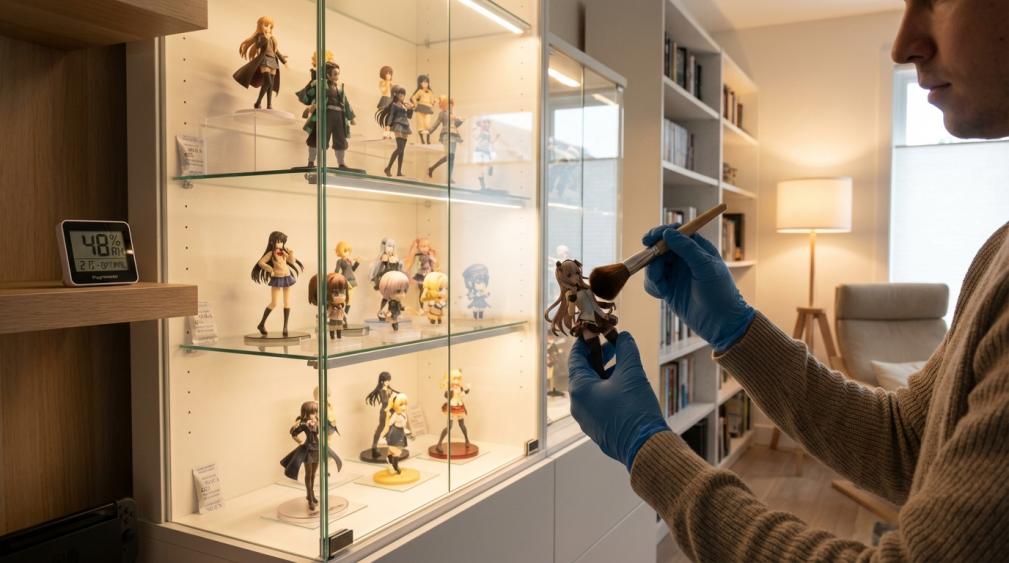
Start with the room itself. The National WWII Museum advises keeping historic metals in climate-controlled living spaces rather than attics, sheds, or damp basements, aiming for stable conditions and avoiding extremes. For most home collections, that translates to the same rooms you would comfortably live in yourself, not the garage. If you can check humidity with a small hygrometer, try to keep it under about 65% and avoid big swings; a portable dehumidifier or air conditioner can help in very humid climates.
Within that room, think in terms of microclimates. Fine Art Restoration suggests discreetly tucking silica gel sachets into display cabinets to absorb moisture and keep a drier pocket of air around metal objects. Even the little packets that arrive in new shoes or bags can help; they can be regenerated by careful heating according to their instructions when their indicator shows they are saturated. The same source warns that wood and painted shelves can emit acidic components that corrode metals. A simple workaround is to cut thin pieces of inert plastic film, like clean polyethylene, and place them under metal bases so they do not rest directly on wood or paint.
Handling habits make a big difference over years of posing and dusting. Conservation institutes and museums repeatedly stress that skin oils, sweat, and salts transferred by touch are a major cause of metal corrosion and etching. For figurine collectors, that means trying to grip plastic or resin when posing rather than the bare metal of a sword blade or stand post, washing hands before long posing sessions, or using thin nitrile or cotton gloves for pieces with a lot of exposed metal. If you do leave visible fingerprints on a robust all-metal part, Fine Art Restoration notes that they can often be lifted quickly with a soft cloth and a tiny amount of white spirit, used sparingly. Keep solvents away from painted areas and plastics, and always test in an inconspicuous spot first.
If your fandom spills outdoors into garden sculptures or large character statues with metal frames, treat them like proper outdoor metal art. Outdoor care guides for metal sculptures recommend cleaning a few times a year by rinsing off loose dirt with a garden hose, then using a soft sponge and a weak solution of clear, unscented dish soap, followed by a thorough rinse with clean water and complete drying. Powder-coated metal elements behave like they are wearing armor; as long as the coating is intact, they resist rust well. Chips, deep scratches, or bubbled paint, however, should be cleaned, any rust removed, and the area repainted or resealed before corrosion spreads under the coating.
You can think of your display like a mini museum. Instead of many different hazards, you are mostly watching three for your metal parts: moisture, corrosive materials, and handling. A simple tweak in each area often cuts rust risk dramatically without turning your collection room into a lab.
Display situation | Main rust risk for metal parts | Simple adjustment |
|---|
Figures on raw or painted wooden shelves | Acids and vapors from wood and paint attacking metal bases and screws | Place small polyethylene squares under metal bases to isolate them from the shelf |
Glass cabinet by a window or above a vent | Condensation and rapid temperature swings pushing moisture onto metal | Move the cabinet a bit away from windows and vents; use curtains and keep humidity stable |
Sealed cabinet in a very humid home | Trapped moist air keeps metal surfaces damp | Add silica gel sachets inside; open the case periodically during dry conditions |
Frequently handled figures with metal swords or stands | Fingerprints, sweat, and salts on metal surfaces | Handle by plastic parts, wash hands, or use light gloves; wipe accidental prints promptly |
Quick Answers to Common Collector Questions
If I just seal rusty metal under clear paint, is the problem solved?
Not reliably. Reports from restorers and experienced metalworkers note that, depending on the rust’s composition, simply coating over existing corrosion does not necessarily stop the reaction. Oxygen and moisture can still diffuse through tiny pores and cracks in coatings, letting rust keep eating the metal underneath. The most dependable way to stop rust is to remove it down to sound metal, dry the piece thoroughly, and then apply a proper protective coating. When the rust is already deep and flaking, even that can be difficult, which is why advanced treatments and professional help are sometimes used on important artifacts.
Are the little silica gel packets that come with figures or shoes actually useful in my display cases?
Yes. Conservation advice for metal artworks specifically mentions using silica gel sachets in display cabinets to soak up excess moisture and maintain a drier microclimate around metal objects. Those “do not eat” packets from figure boxes or shoe boxes work on the same principle. Spread them discreetly inside cases, and when their indicator dots change color, regenerate or replace them according to the packet’s instructions. They are not a replacement for good room control, but they are a surprisingly effective extra shield.
Should I polish away all the dark patina on metal nameplates or bases so they look shiny again?
Usually not, especially on higher-end or limited pieces. Institutions like the Canadian Conservation Institute and specialist studios emphasize that patina on metals such as bronze, brass, and silver is both a natural product of aging and often part of the intended finish. It can act as a protective layer, and heavy polishing can strip it, remove fine surface detail, and even lower the artistic or collectible value. In most cases, gentle dusting is enough; active, flaking corrosion is what needs attention, not every bit of mellow, even darkening.
Closing
Rust on figurine metal parts is not a random curse; it is a predictable reaction to moisture, salts, and pollutants that you can learn to spot and control. Treat your display like a small museum, give your figures a kinder environment, and use gentle, informed care instead of harsh quick fixes, and those tiny screws, stands, and metal accents will keep backing your favorite characters for many seasons of watching, posing, and sharing.
References
- https://www.nps.gov/subjects/museums/upload/MHI_AppO_MetalObjects.pdf
- https://www.nationalww2museum.org/preservation-artifacts
- https://dl.asminternational.org/books/chapter-pdf/538621/a0004140.pdf
- https://www.nashersculpturecenter.org/Portals/0/Documents/Learn/Resources/Materials-Process/2012-materials-process-guide.pdf
- https://www.researchgate.net/figure/Environmental-factors-that-affect-metal-corrosion-22_fig3_283800671
- https://www.haydencorp.com/the-dangers-of-corrosion-how-it-can-harm-both-human-safety-and-equipment
- https://www.sealxpert.com/factors-influencing-rate-of-corrosion
- https://www.jmsculpture.com/resources/5-common-materials-for-sculptures.html
- https://kunakair.com/environmental-corrosion-causes-factors-and-how-to-prevent-it/
- https://www.nature.com/articles/s41598-024-69490-5