Understanding the 237 Variants of Batman Action Figures in DC Comics
Why So Many Batmen?
Walk into any serious Batman collector’s room and you will see something that looks less like a toy shelf and more like a multiverse. Stealth suit Batman, neon Arctic Assault Batman, velvet-caped Adam West Batman, armor-plated Dark Knight Batman, manga-styled Batman, even grotesque monster Batman. At some point you stop counting and just joke, “Yeah, I probably own like 237 variants of this guy.”
That number is not an official DC checklist. It is fandom shorthand for a real phenomenon: across eight decades, multiple toy companies, and every era of Batman storytelling, we have been given hundreds of distinct Batman action figure designs. Vintage carnival prizes, cloth-costumed seventies figures, spring-punching eighties toys, hyper-posable collector lines, experimental art pieces, and towering premium statues all contribute to this swarm of Dark Knights.
As someone who obsesses over anime figures and Batman in equal measure, I see the 237 variants as a visual history of the character. Each sculpt, repaint, and wild redesign captures how a particular era understood Batman. To make sense of this, you need both fan passion and a little bit of media history.
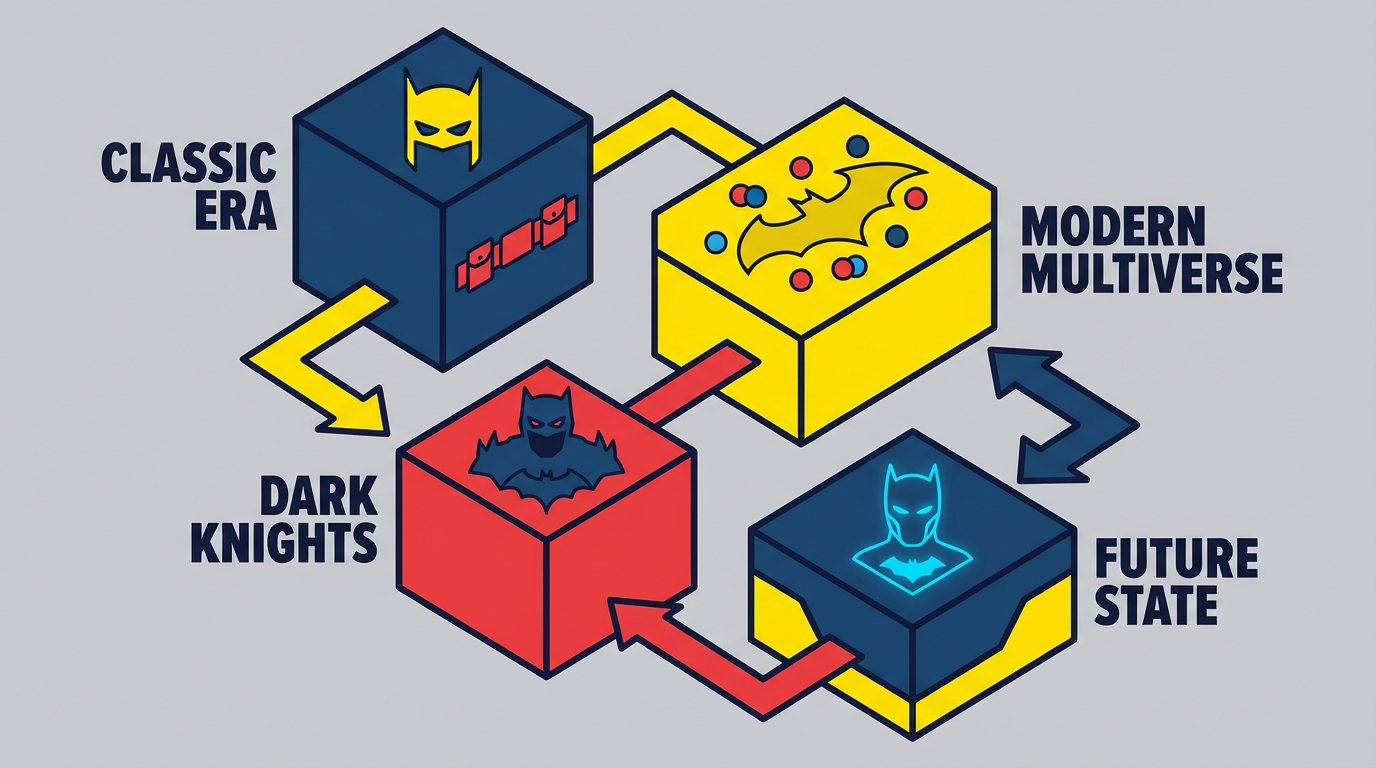
What Counts As A “Variant”?
Before diving into history, it helps to pin down what we mean when we talk about variants. In collector language, a variant is not just a different copy of the same toy. It is a distinct version of a character that changes something meaningful in the design.
Sometimes the sculpt changes, like swapping a cloth costume for a fully molded body. Sometimes it is just a new color scheme or accessory loadout: Arctic suit instead of standard gray and black, or a neon underwater armor that never appeared in comics. Toy companies also treat figures based on different source material as variants, such as a Batman: The Animated Series design versus a Dark Knight trilogy movie design.
That is how we get to a number like 237 so quickly. Every new movie, animated show, video game, and major comic storyline gives the toy makers an excuse to add more versions, while repaint strategies let them squeeze extra Batmen out of the same basic body.
From Lead Prizes To Pop Culture Icon
1940s–1960s: Early Experiments And The First Poseable Batman
Batman debuted in Detective Comics in 1939, during the tail end of the Great Depression. A study of Batman’s cultural history notes that comic books offered cheap escapism when unemployment in the United States hovered around 25 percent and a comic could cost about ten cents. At the peak of this golden age, around 70 million people in the country were devouring comics, roughly half the population.
The earliest Batman “figures” were not the posable heroes we know now. According to a historical overview of Batman action figures, the first pieces in the late 1940s were small lead Batman and Robin figurines given away as carnival prizes rather than sold at toy stores. They were static little totems, closer to miniature statues than action figures.
Through the 1940s and 1950s, manufacturers also tried wood, tin, and simple plastic toys around 6 to 8 inches tall. They reflected the Batman of the time: still dark at the core but moving toward a brighter, more family-friendly hero once Robin joined the comics and softened the tone.
The first real Batman action figure in the modern sense arrived in the mid‑1960s from the Marx Toy Company. It was about 4 inches tall and, crucially, poseable, with tiny accessories like cuffs and batarangs. Few original Marx Batman figures survived, which is why vintage collectors treat them as a “holy grail” piece.
Shortly after, Ideal Toy Company launched its 12‑inch Captain Action figure. Batman appeared not as a body but as a cloth costume and gear set you could put on the base figure. That costume-swap format, where you re-suit the same body in different superhero outfits, became an important early template for superhero toys.
1970s: Mego, Scale, And The First Big Bat-Family
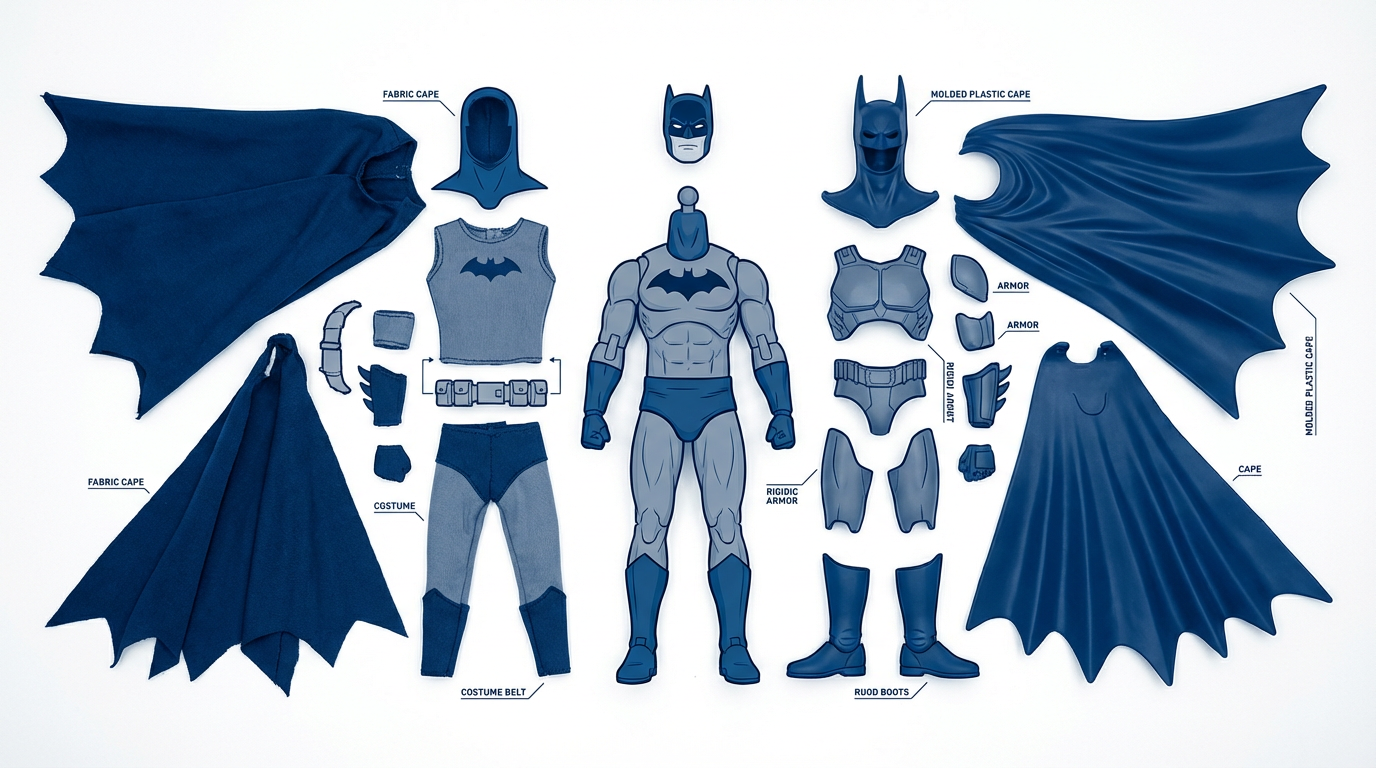
If you collect vintage figures the way anime fans chase early garage kits, you eventually crash into Mego. From 1972 to 1983, Mego’s World’s Greatest Super Heroes line became the superhero standard. Their Batman was an 8‑inch figure with a soft cloth costume, removable cowl, and accessories.
Mego did not stop at Batman. They built out a full ecosystem with a Batmobile, Batcycle, Batcopter, Batcave, and even the Wayne Foundation. For the first time, kids and collectors could build a mini Gotham on their shelves, and Batman variants started to make more sense. Different outfits and playsets meant different play scenarios.
To cut costs, Mego introduced fully molded plastic figures in the Comic Action Heroes line around the mid‑1970s and then Pocket Super Heroes by the end of the decade. Smaller size, less cloth, more plastic: it was the same cost-control logic that later made lines like Star Wars succeed. Each change in scale or material created new ways to reinterpret Batman, from detailed fabric capes to solid plastic sculpted ones.
1980s: Super Powers And The Spring-Punching Batman
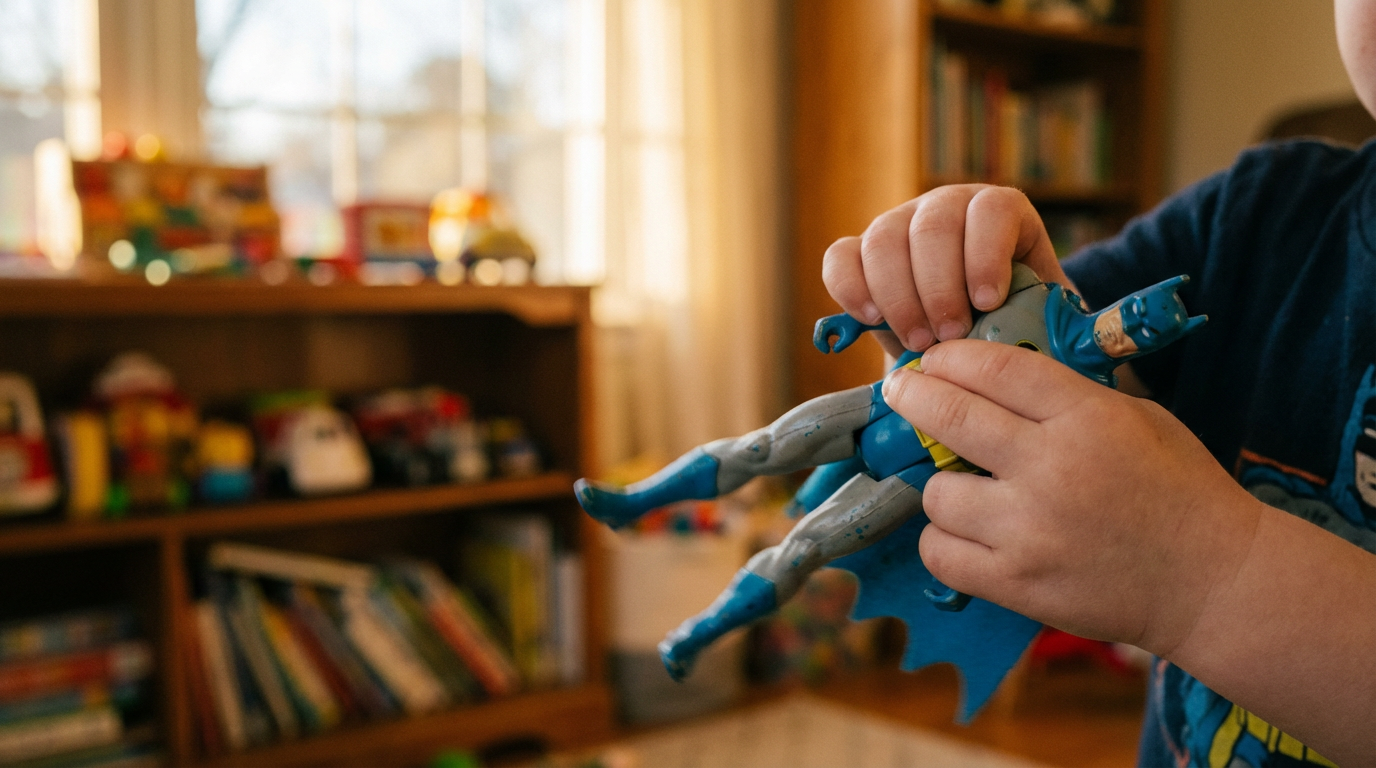
In the mid‑1980s, Kenner made a move that defined Batman toys for an entire generation: the Super Powers Collection. These figures were about 5 inches tall and each had a built‑in “super power” activated when you squeezed limbs. Batman, Robin, Joker, Penguin, and Mr. Freeze all appeared with these action features.
This line did something important for variants. The play gimmick became part of the character design. A Batman whose legs kicked when you squeezed his arms is not just a repaint; he is a variant oriented around a specific type of play.
Kenner even planned other characters like Catwoman and Man‑Bat, but they never made it into production, leaving gaps that collectors still talk about.
By this point, the idea that Batman figures would be produced in different scales, with different gimmicks and slightly different sculpts, was firmly established.
Late 1980s And 1990s: Toy Biz, Movie Tie-ins, And Variant Overload
In 1989, DC licensed Toy Biz to produce Batman movie figures and a DC Super Heroes line. Around the same time, a South American company reused old Super Powers molds for low‑quality figures under the name Super Amigos. Complaints about Toy Biz’s quality eventually pushed DC to take the license back to Kenner.
Kenner then hit a formula that would create entire armies of Batmen. Starting with The Dark Knight Collection in 1990 and continuing through Batman Returns, Batman Forever, and Batman & Robin in the 1990s, every movie line leaned heavily on Batman variants. The basic sculpt might be reused, but the company would repaint it and add new gear: arctic armor Batman, sonar suit Batman, deep dive Batman, and so on.
Villains mattered too. Catwoman, Penguin, Two‑Face, Riddler, and Mr. Freeze all appeared, but the ratio of Batman figures to villains often skewed heavily toward Batman. The logic was simple: Batman sells. If you have a new paint idea or a new missile launcher, you put it on another Batman and you have a fresh SKU.
The animated shows followed a similar pattern. Lines based on Batman: The Animated Series, The Adventures of Batman & Robin, The New Batman Adventures, and Batman Beyond constantly reused and repainted molds. Over time they added essential characters like Harley Quinn, Batgirl, Scarecrow, Poison Ivy, and Phantasm, but Bat-variants kept flooding the pegs. That imbalance of “many Batmen, few villains” is one reason collectors feel like they are standing in front of 237 Batmen and maybe four Jokers.
Experiments And Cancellations: Legends Of Batman And Legends Of The Dark Knight
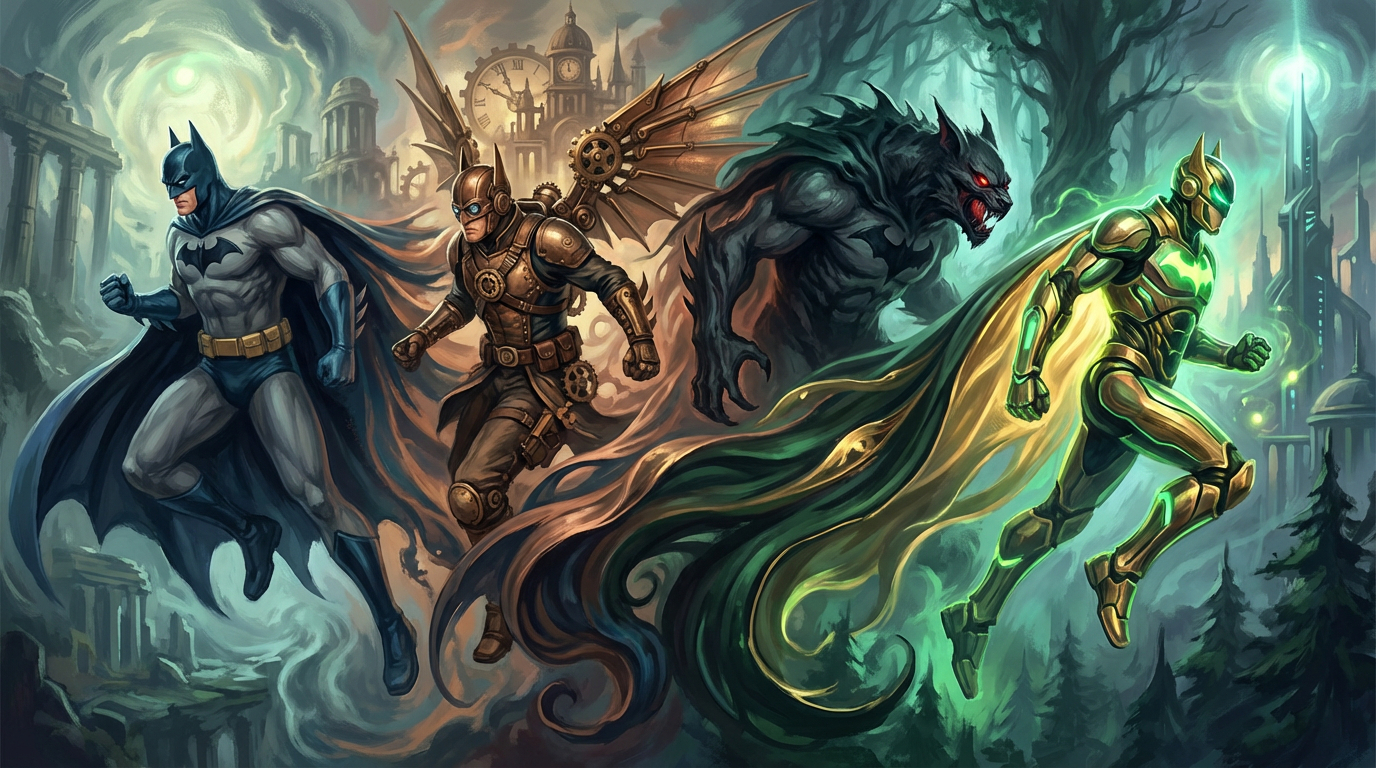
In the mid‑1990s, Kenner and later Hasbro tried to pivot into more comic-book-driven and Elseworlds-style lines. Legends of Batman and Legends of the Dark Knight embraced wild takes such as Knightquest and KnightsEnd armor or monstrous foes like Man‑Bat.
These lines are beloved by some fans now because they predicted the modern appetite for stylized reimaginings that you see in designer toys or high‑end imports. But in their day, they sold poorly and were cancelled fast. Some planned figures only resurfaced as store or online exclusives years later.
Even in failure, they added to the variant count. They proved that Batman could be stretched into almost any aesthetic without breaking his underlying iconography of cape, cowl, and bat emblem.
Mapping The 237: Variant Types That Actually Exist
The exact number of Batman action figure variants depends on how deep you go, but the patterns are clear. When you start organizing your shelves, you quickly see that most versions fall into a small set of categories.
Storyline And Media Variants
These are the figures rooted in specific stories, shows, or movies. An Adam West style Batman from the 1960s television series, with its campy Pop art tone, carries different energy than a brutal Dark Knight Returns Batman or a Nolan trilogy Batman.
Media scholars like Matt Yockey have argued that the sixties series used camp and Pop art not just for laughs but to reflect and poke at American values around consumerism, gender, and citizenship. When you pick up a figure based on that show, you are literally holding a piece of that cultural conversation.
Modern collector lists highlight figures from arcs such as Hush, Death in the Family, and New 52 redesigns, as well as game-inspired looks from the Arkham series or Injustice, plus riffs like Ninja Batman or steampunk interpretations. Each of those suit designs becomes a distinct variant, even if the base body is reused.
Play Gimmick Variants
From Super Powers squeeze‑action figures to Kenner’s missile-firing movie Batmen, the gimmick is part of what makes a variant feel different. Spring‑loaded fists, grappling-launch backpacks, snap‑on armor, and transforming vehicles all justify yet another Batman.
These figures often sacrifice realism for fun, which can be a turnoff for display collectors but a huge plus for kids or pose photographers looking for dynamic accessories.
Artistic And Designer Variants
Beyond mass market, Batman has become a canvas for designer toy artists. The James Groman series for DC Collectibles’ Artist Alley is a vivid example. Groman, known for monster designs like Madballs and his King Korpse figure, was asked to “Gromanize” Batman, Joker, Killer Croc, and Two‑Face.
His Batman is more creature than man, carrying trophies from the villains he has defeated. Two‑Face mutates into a giant‑headed crime boss, Killer Croc becomes a sewer-dwelling wrestler with extra monstrous details like a snapping turtle attached to his body, and Joker spirals into pure chaos. These are still Batman figures, but they sit at the far experimental edge of the 237.
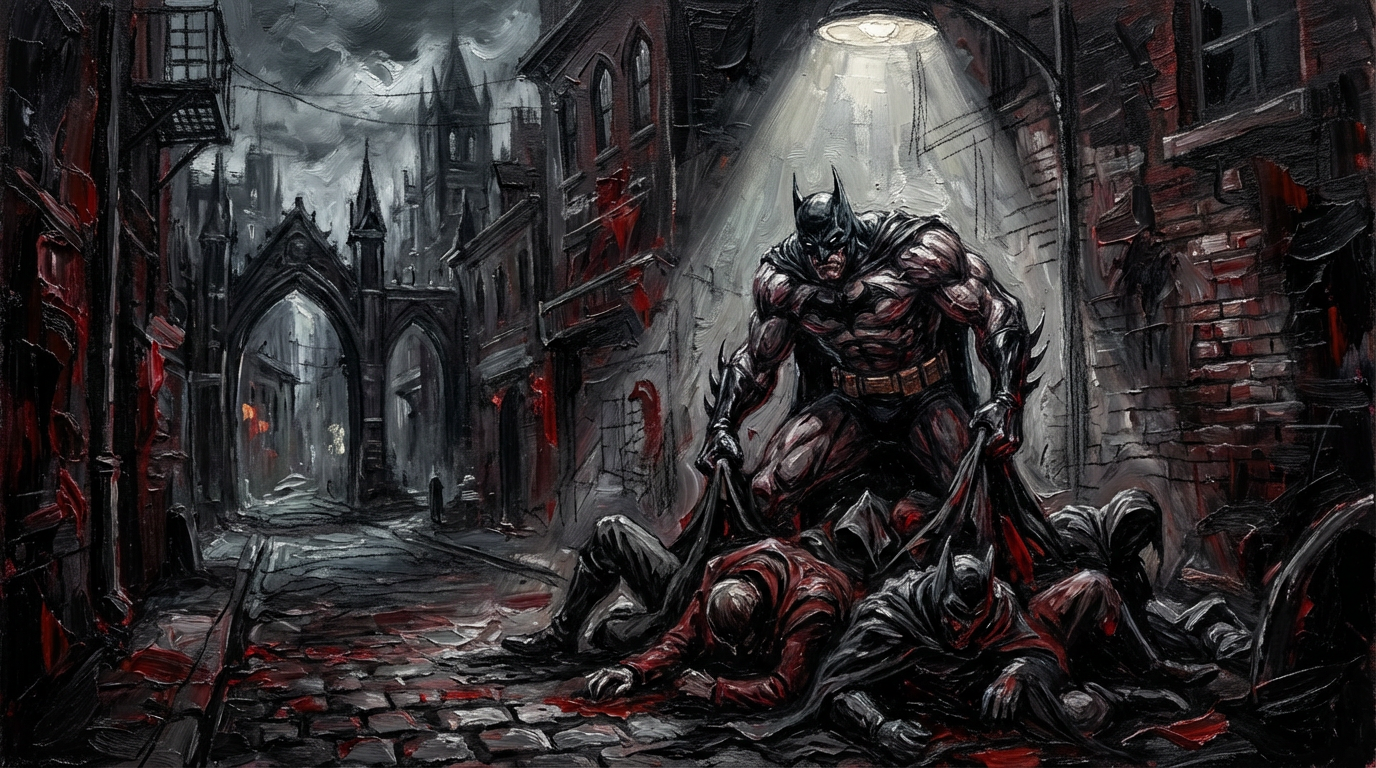
Premium lines called out by collector guides, such as Hot Toys, Play Arts Kai, MAFEX, S.H.Figuarts, DC Collectibles, and DC Multiverse, often offer their own stylized spins, with wired capes, swappable portraits, and ultra-detailed armor. They treat Batman closer to an art piece than a toy.
Scale And Format Variants
A 1/9 scale Batman around 7.6 inches tall feels very different from a 5‑inch Super Powers figure or a towering quarter-scale statue. Scale affects presence, pose options, and where you can display the figure.
Collector guides describe 1/9 figures that focus on rugged matte finishes and high articulation with accessories such as batarangs and hook launchers. One example sits near the $58.99 price point; a deluxe version in the same scale can be around $49.99, depending on configuration.
On the other extreme, a high-end figure from a specialty retailer can list at $525.00 and be on sale for around $472.50, with surprisingly low domestic shipping. These premium pieces often function as room centerpieces rather than lineup soldiers.
Budget, Mid‑Range, And Premium
A long-form collector article surveying Batman figures points out that you can find solid basic figures for around $9.99, while elaborate deluxe sets and vehicles can reach roughly $799.99. Many mid‑range collector figures live in the $30.00 to $150.00 bracket.
That spread matters for variants. A neon repaint in a kid-focused line might be cheap and easy to impulse-buy. A limited convention-exclusive Batman with a special base or a massive vehicle might feel like a once-a-year purchase. Over time, those decisions aggregate into your personal slice of the 237.
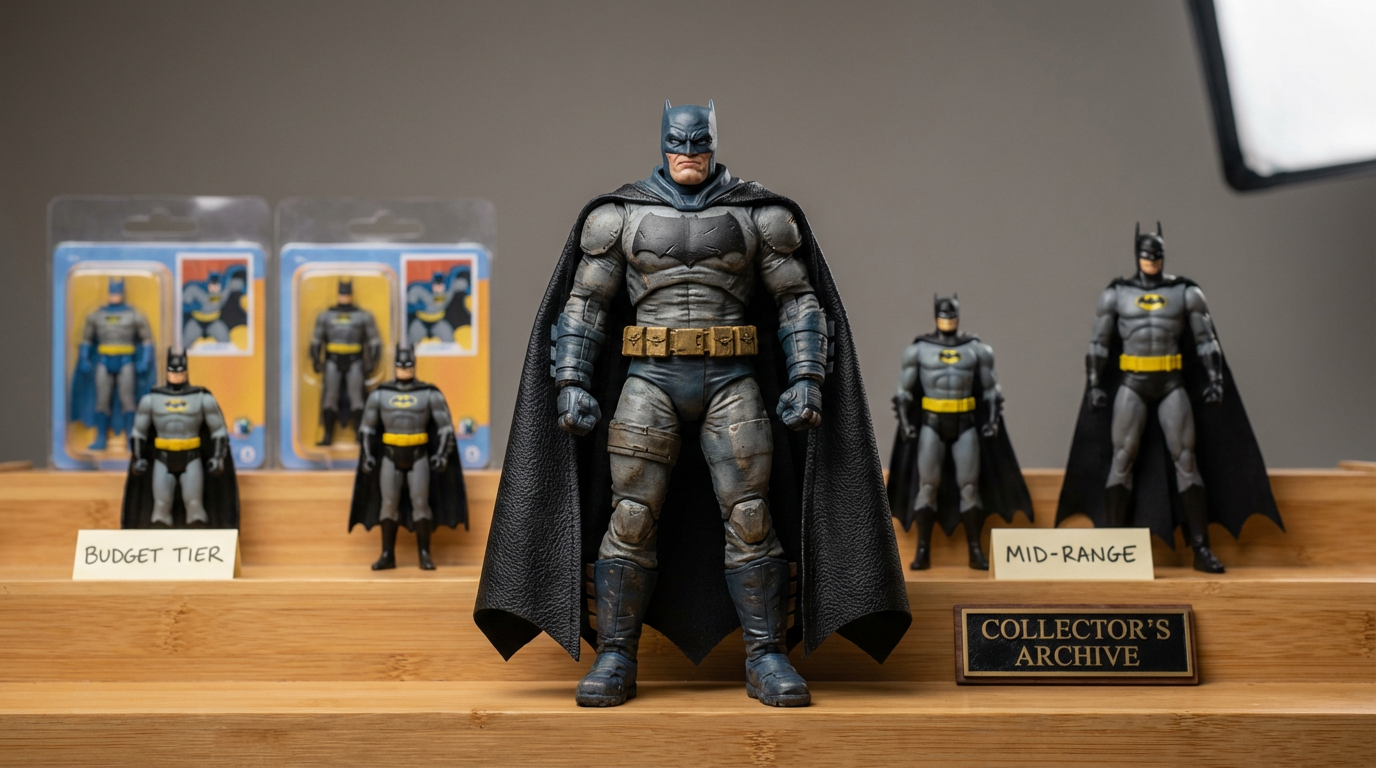
Here is a simplified way to think about those tiers.
Tier | Typical price range | Common traits | Collector pros and cons |
|---|
Budget | Around $9.99 and up | Durable plastic, fewer accessories, bright colors | Great for play and kitbashing, but less detail and accuracy |
Mid‑range | About 150.00 | Strong sculpt and paint, good articulation, story-specific suits or game looks | Sweet spot for most collectors; many variants and characters |
Premium | Roughly 800.00+ | Large scale, mixed materials, detailed bases, limited runs | Incredible presence and detail but expensive and space‑hungry |
Pros And Cons Of Chasing Every Variant
If you are even casually tempted to “get them all,” it helps to be honest about what that means.
On the upside, building a wide variant collection is like curating a physical museum of Batman. A cloth‑costumed Mego Batman next to a spring‑action Super Powers figure, a sleek animated series design, a hulking armored Dark Knight, and a Groman monster Batman tells a story of how the character shifted from pulp vigilante to camp icon to grim anti‑hero and experimental art object.
There is also emotional depth here. Media scholars and psychologists note that Batman’s story resonates because he is human, defined not by superpowers but by training, willpower, and a strict no‑killing code. Analyses of Batman as a moral figure argue that narratives about his oath, his trauma, and his refusal to kill help children and adults practice ethical reasoning. Every variant suit can become a miniature prop in those imaginary moral dramas.
On the downside, heavy mold reuse and repaint strategies mean many variants are only a little different. Collectors often joke that they own four nearly identical Batmen that differ only in belt color. Chasing everything can feel redundant and expensive, especially as more lines flood the market.
Space is another cost. A single premium Batman with a large base may demand almost as much room as ten smaller figures. Even mid‑range collections quickly eat up shelves, especially if you add vehicles like Batmobiles or a 1/12 scale flying vehicle with light‑up features.
The trick is accepting that “237” is a playful metaphor. No one needs every Batman that has ever hit a toy aisle. The real art is deciding which versions matter for your personal story.
How Collectors Organize Their Multiverse Of Batmen
By Era And Aesthetic
One effective approach is to treat your Batman figures like a survey of pop culture history. You might cluster an Adam West style figure with bright colors, a campy grin, and Pow/Bam nostalgia next to a handful of villains from that era. Right beside them, you could line up a darker 1980s or 1990s comic-inspired Batman who channels the brooding tone that grew as doubt in the American Dream and the excesses of neoliberalism set in.
Media essays on Batman’s polarization argue that he shifts from brooding loner to reluctant fascist and eventually to a socially engaged critic of corruption, especially in works that inspire films like Christopher Nolan’s trilogy. When you group figures from those different phases, you visually trace that ideological arc.
You can also separate animated designs from live‑action and comic designs. The smooth lines and simplified shapes of Batman: The Animated Series contrast beautifully with the more armored, plated movie looks. Each group tells a slightly different version of who Batman is and what problems he is built to confront.
By Family And Rogues’ Gallery
Collector guides such as those from Entertainment Earth recommend that a “complete” Batman collection includes not just Batman but also the Bat‑Family and villains. That means Robin, Nightwing, Batgirl, Batwoman, Red Hood, Alfred, plus Joker, Harley Quinn, Catwoman, Bane, Penguin, Riddler, Scarecrow, Poison Ivy, Mr. Freeze, Ra’s al Ghul, and more obscure threats like Clayface or Polka Dot Man.
Some collectors in fan groups specifically ask which Batman fits best in a Bat‑Family display. That question matters, because a heavily armored, movie-styled Batman might clash visually with sleeker comic-based Robins. Using one consistent scale and aesthetic helps the family feel unified.
The same logic applies to villain shelves. A cartoonish Joker next to a hyper-realistic, gritty Batman can work as contrast, but often it is more satisfying to keep figures from the same design language together.
Dioramas And Storytelling Poses
Toy display articles and blogs, including those about DC action figures and Batman specifically, emphasize the power of dioramas. Gotham rooftops, fire escapes, alleys, and Batcaves are common setups that instantly make variants feel like characters rather than duplicates.
Diorama-focused collectors often group figures by storyline or theme. You might build a small scene for a Hush-inspired Batman alongside relevant villains, then another for an Arkham game design with its beefier armor and sharper edges. Mixing materials like wood, metal, and plastic in the base, plus printed or painted backdrops, adds depth and makes your 237 variants feel like snapshots from different universes rather than a wall of duplicates.
Displaying With Style And Keeping Batman Safe
Anyone who collects anime PVCs or resin statues learns quickly that the enemy is not just gravity; it is sunlight, dust, and time. Batman figure display guides say the same things in very practical terms.
They warn that direct sunlight fades paint and can slowly break down plastic. Hot lights are almost as bad. The recommendation is to use cool-running LED lighting and keep figures away from windows. Cool white or slightly blue LEDs give a Gotham-night vibe, while warmer tones can make a cozy Batcave corner.
Dust is another silent killer. Tiny scratches, dull finishes, and clogged joints all come from repeated rough cleaning. Display experts strongly suggest enclosed or glass-front cases instead of open shelves. Acrylic is light and shatter-resistant but can scratch easily. Glass looks sharper and resists scratches but is heavier and more fragile. Wood frames with glass fronts blend into home decor but are heaviest and usually cost more.
For scale figures like 1/9 Batman releases, display guides suggest choosing a case a few inches taller and wider than the figure. That gives space for dynamic poses, accessories, and air circulation, and makes it easier to reposition or clean. Multi-level risers help you see multiple Batmen and villains at once without anyone being hidden.
Stability matters too. Clear stands, waist grips, and ankle supports can keep capes, heavy accessories, or awkward poses from pulling a figure down. Collectors are often told to gently move joints occasionally so they do not stiffen, but to avoid forcing extreme poses that could stress plastic or internal ratchets.
Budget-conscious fans do not need museum glass to protect their Batmen. Articles on collector sites and marketplace blogs point out that simple acrylic boxes, DIY shadow boxes lined with black felt, or even repurposed display cases can provide plenty of protection when paired with careful LED lighting and a soft brush for dusting every couple of months.
What The Variants Say About Batman Himself
Underneath all the plastic and paint, Batman action figures are mini essays about who Batman is in a given cultural moment.
Scholars analyzing Batman’s morality and cultural impact note that he began as a pulp-style vigilante who was willing to use guns and lethal force. Over time, especially after Robin was introduced to attract younger readers, his creators and editors removed the gun and codified a no‑killing rule. Letters from concerned parents pushed the shift, and editorial policies even banned depictions of whippings or hangings.
Cultural analyses describe Batman as “static, yet fluctuating.” His core remains the same: a boy traumatized by his parents’ murder, a rich man in a bat costume, fighting crime in Gotham backed by allies and opposed by a memorable rogues’ gallery. But the way he is framed can swing from campy satire to grim authoritarian figure to a critic of corruption and neoliberal power structures.
One academic essay traces this polarization across decades, arguing that Batman moves from brooding loner to an “opiate” who reassures the status quo, then to a reluctant fascist, and finally toward a socially engaged critic of global capitalism in more recent films and comics. Gotham’s perpetual corruption becomes an allegory for wider capitalist crises, while Batman’s methods and code are constantly tested by villains who either serve or defy that system.
Another line of research looks at Batman psychologically. Writers in counseling and play therapy contexts see Batman as a way to talk about trauma and Post Traumatic Stress Disorder. Bruce Wayne experiences survivor guilt and obsessive dedication, but he turns that into a mission. Some psychologists read his dual identity as a “divided superhero archetype,” where the mask lets him channel rage toward protection instead of random violence.
Student essays on Batman’s mask even connect him to child development theory. Using Erik Erikson’s framework, they argue that school-age children, who are learning industry versus inferiority, can see in Batman a model of achieving mastery through discipline rather than innate powers. Batman bleeds and fails, but he keeps training and trying, which makes him feel attainable compared to godlike heroes.
Every serious Batman action figure essentially chooses a stance in these debates. A neon scuba Batman variant from the 1990s obviously leans into playful fantasy. A heavily armored, older Batman based on a dark comic storyline says something different about aging, violence, and resilience. A monster Batman sculpt bearing trophies of fallen enemies provokes questions about what happens if he abandons his moral code entirely.
When you stand back from a shelf that holds dozens of these versions, you are not just seeing 237 marketing SKUs.
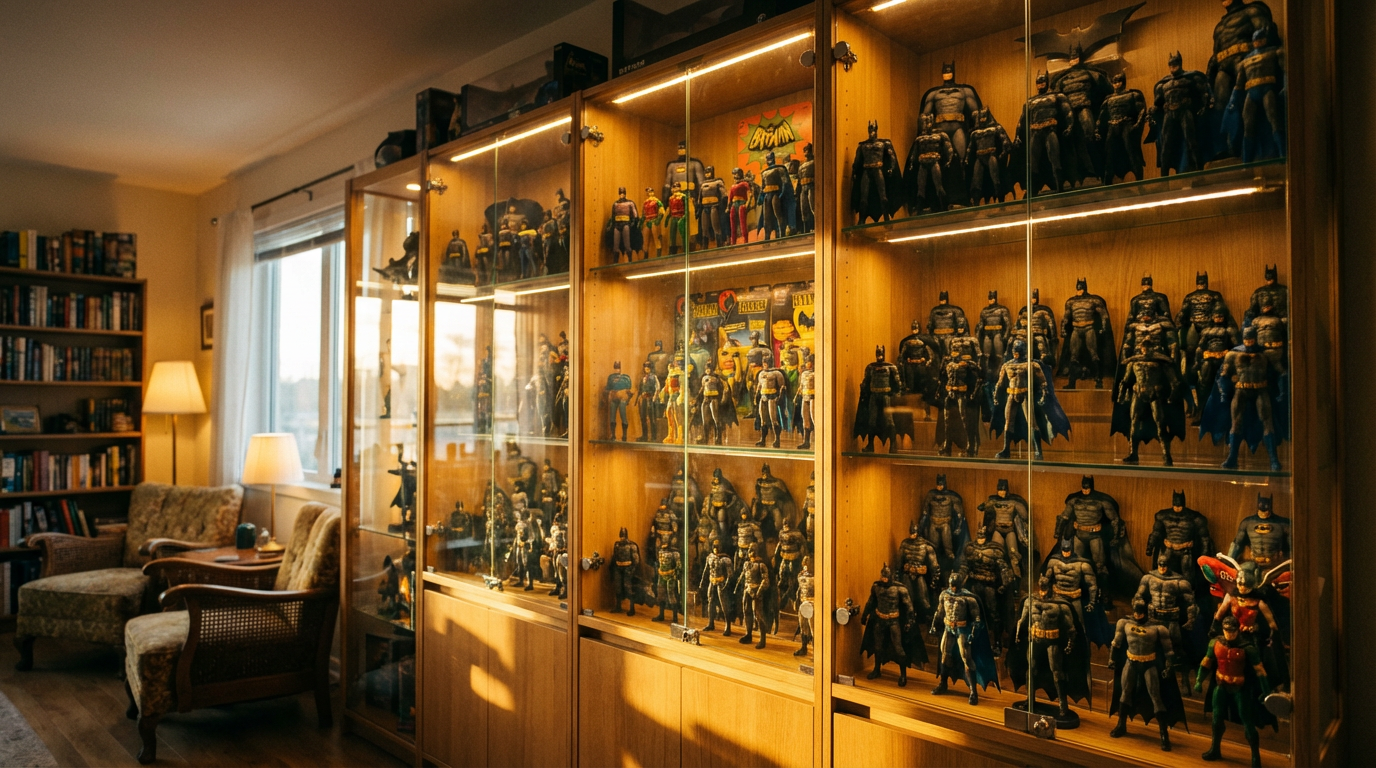
You are seeing a dense map of how generations have wrestled with fear, justice, power, and play.
Practical Advice For Building Your Own 237
If you are feeling both excited and overwhelmed, that is normal. The goal is not to become a completist unless that truly makes you happy. Instead, treat collecting Batman variants the way an anime figure fan might approach an overwhelming franchise like Gundam or Fate.
Start by deciding which Batman feels like “home base” for you. It might be an animated series design that you watched after school, a movie suit that blew your mind in a theater, or a specific comic run that taught you what Gotham is. Let that version anchor your display.
From there, expand in deliberate layers. One layer might be medium: a line of figures from your favorite animated era next to a small squad from your favorite films. Another layer might be theme, such as collecting only Batmen and villains from dark, mature storylines, or focusing entirely on camp and colorful Elseworlds.
Pay attention to scale so your Bat‑Family and rogues look coherent together. Fan group discussions about which Batman to put at the center of a Bat‑Family display often revolve around this issue. A 7‑inch realistic Batman can dwarf a 6‑inch cartoonish Robin in ways that feel wrong. Matching lines or at least matching visual styles helps a lot.
Finally, respect your real‑world constraints. Look at the price tiers, think about which figures you actually want to handle or photograph, and design your shelves as little narrative stages rather than storage for every possible version. A carefully lit acrylic case with a handful of well-chosen Batmen from different eras can tell a richer story than a crammed, dusty wall of plastic.
FAQ
Q: Is “237 Batman variants” a real official number? A: No. It is a playful way fans talk about the overwhelming variety of Batman figures. Historical overviews and collector lists show at least dozens of distinct lines and many, many unique designs, and one popular article alone curates fifty different Batman-related figures and sets. When you add decades of mass‑market toys, import lines, and designer pieces, it is easy to see why “237” feels emotionally accurate even if no master checklist exists.
Q: Are repaints and minor suit tweaks really worth collecting? A: It depends on your focus. From a historical and toy-industry perspective, repaints tell you how companies controlled costs and stretched molds, so they can be interesting if you care about that side of the hobby. From a display perspective, slight color changes might feel redundant unless they contribute to a theme or diorama. Many collectors keep only the most iconic or personally meaningful variants and skip the rest.
Q: How do I protect premium Batman figures without spending a fortune on furniture? A: The core principles from collector and marketplace guides are simple. Keep figures out of direct sunlight, use cool LED lighting, and avoid rooms with wild temperature or humidity swings. Use affordable acrylic cases or DIY shadow boxes to block dust, and keep a soft brush or microfiber cloth for gentle cleaning every couple of months. A stable, flat shelf in a low-traffic part of your apartment, plus a little attention to light and dust, will go a long way.
Batman action figures are more than just plastic heroes. They are tiny time capsules, moral debates you can pose, and invitations to build your own Gotham on a shelf. Whether your personal count stops at five or quietly creeps toward 237, the fun is in choosing the Batmen that tell your story.
References
- https://www.academia.edu/10320961/The_polarisation_of_Batman_and_its_significance_in_contemporary_culture
- https://scholarsarchive.byu.edu/cgi/viewcontent.cgi?article=2225&context=etd
- https://scholarworks.sjsu.edu/cgi/viewcontent.cgi?article=8556&context=etd_theses
- https://aquila.usm.edu/cgi/viewcontent.cgi?article=1832&context=honors_theses
- https://wsupress.wayne.edu/9780814338179/
- https://en.wikipedia.org/wiki/Batman_action_figures
- https://www.cia.edu/news/dc-collectibles-taps-groman-86-for-batman-series/
- https://hawksites.newpaltz.edu/damiancaineseportfolio/major-project/
- https://digitalgallery.bgsu.edu/student/items/show/12197
- https://www5.csudh.edu/bdeluca/StudentWriting/Maskpapers/d.LaRiviere.batman.htm