Understanding the Appeal of Sci-Fi Mecha Models in Collecting Culture
Sci-fi mecha models captivate collectors by combining hands-on building, visual storytelling, and long-term preservation into a display-focused hobby that feels both creative and archival.
Maybe your shelves are already packed with towering robot kits, yet friends still shrug and call them “robot toys,” not understanding why you spent an entire weekend on tiny armor plates and panel lines. You know the difference the moment you see how careful cleaning, smart display, and better storage keep a favorite mech looking crisp while neglected figures in the same room start to fade and sag. This guide unpacks what makes sci-fi mecha models so compelling and shows how to build, display, and protect them so they stay legendary instead of slowly falling apart.
Why Mecha Models Feel So Different From Other Collectibles
When museum conservators work on historic aviation models, they describe them as combinations of engineering and artistry that reveal how real aircraft evolved and how their builders thought about flight. They tackle their mixed wood, metal, and fabric parts as intricate conservation puzzles rather than simple “toys.” Historic aviation models are often carefully disassembled, cleaned, supported with reversible materials, and reassembled to regain their original geometry, all so future viewers can read the story hidden in struts, wires, and skins. Preservation staff who care for fragile books and design materials talk about physical artifacts as little monuments that keep cultural memory physically present, and they back that philosophy with slow, precise repair work and environmental monitoring in their preservation programs.
Sci-fi mecha models sit in that same sweet spot between art and engineering. A good kit asks you to act as pilot, mechanic, and conservator all at once: you decode the design while cutting gates and test-fitting armor, you make creative choices through paint, decals, and posing, and you quietly commit to keeping delicate joints, antennae, and weapons alive for years. That layered relationship is a huge part of the appeal; it is not just owning a character but understanding how it is built and how it survives on your shelf.
There is also the emotional charge of scale and power compressed into a figure you can hold in one hand. A towering mech that would be hundreds of feet tall in-universe is shrunk down to something that fits in a display cube, yet panel lines, thrusters, and cockpit details still invite close inspection. Unlike flat prints or digital art, these models invite you to walk around them, crouch to eye level, and notice how light rakes across armor plates. That sense of embodied presence is very hard to replicate in any other kind of fandom object.
From a practical standpoint, mecha models reward patience and care in ways that are easy to feel day to day. When collectors follow basic artifact-storage principles such as limiting light exposure, separating unstable plastics, and avoiding cramped, abrasive shelving, they dramatically reduce yellowing, warping, and chemical off-gassing that can damage both models and nearby items, just as recommended for mixed-material collectibles in tips for collectible artifact storage. Knowing that the time spent on careful assembly and topcoats will not be undone by a hot window or dusty shelf adds a quiet but powerful satisfaction to the hobby.
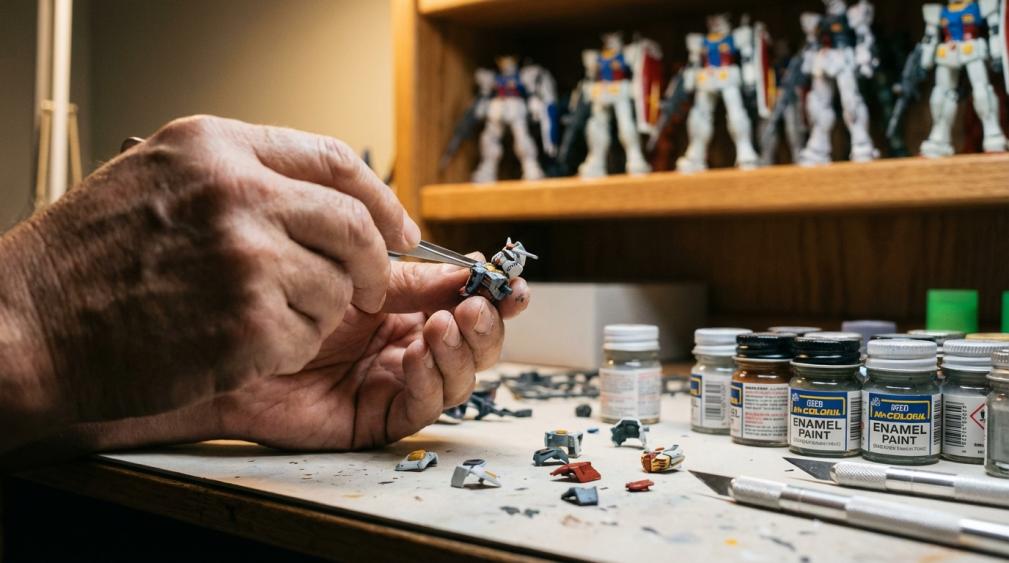
From Robot Army To Mini Museum: Displaying Mecha With Purpose
Treating a mecha shelf as a curated exhibit rather than a crowded parking lot of robots instantly changes how you approach space, themes, and gear, an idea echoed in guidance on anime figure displays. Planning starts with real-world constraints: maybe you only have one bookshelf, a single glass cabinet, or half of a home office wall. Matching the number and size of mechs to that footprint and resisting the urge to pack every inch brings breathing room so silhouettes and color blocking actually read from across the room.
Defining a theme for each shelf or case is one of the simplest ways to make the collection feel intentional. You might group by faction, by “ground vs space,” by era, or even by mood, turning one shelf into a grim battlefield and another into a bright hangar lineup. Display specialists recommend thinking like a gallery curator, where each piece supports the story of the whole rather than shouting over its neighbors, and that same logic is baked into advice on planning exhibits, lighting, and sightlines in figure exhibit guides.
Choosing Display Styles That Match Your Story
Different display structures do very different things for both vibe and protection. Collectors of anime figures often weigh glass curio cabinets, acrylic cases, bookshelves, and wall-mounted shelves, with cost and protection profiles that map neatly onto mecha models as well, including curio cabinets in the roughly $100 to $400 range and stackable acrylic boxes around $20 to $100 for standout pieces described in anime figure display advice. Glass cabinets feel premium and deliver 360-degree views but are heavy and breakable; acrylic cases are lighter, often offer better UV filtering, and seal out dust but scratch more easily; basic bookshelves are flexible and cheaper but leave your mechs exposed; wall shelves save floor space and create a floating-armory look but offer almost no protection from dust, bumps, or curious pets.
A simple way to think about it is that you are always trading budget and accessibility for protection and drama. A single glass cabinet might protect an entire “elite squad” of perfect grades and rare kits, while a row of modified bookshelves handles mass troops and accessory-heavy lines. If the total cost of a cabinet and a couple of acrylic risers is similar to a single high-end kit, many collectors decide they would rather sacrifice one more box on the backlog in exchange for years of safer display for the mechs they already own.
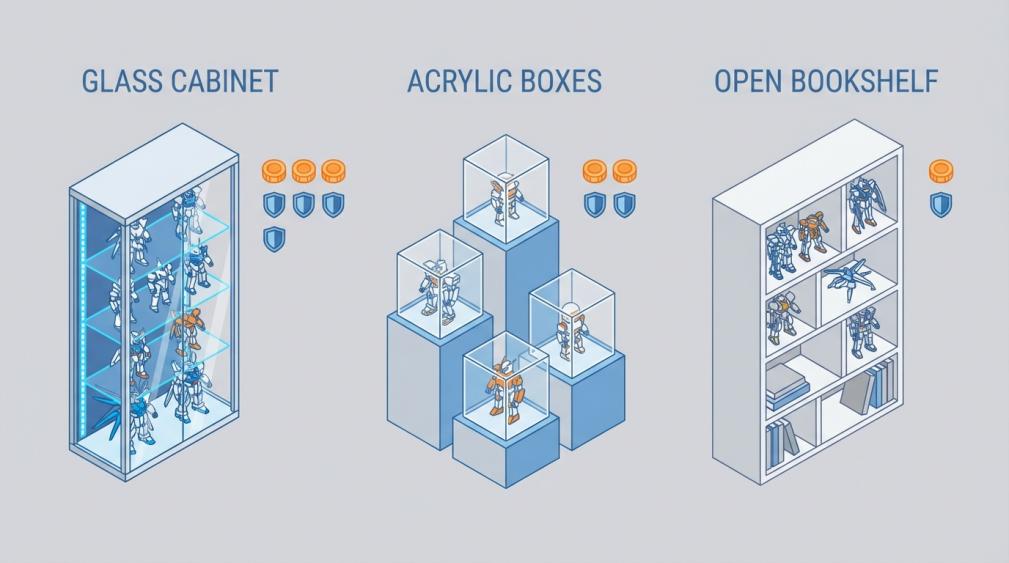
Display style | Experience vibe | Main strengths | Main trade-offs |
|---|
Glass curio cabinet | Premium gallery, full views | Strong protection, clean look, can add lighting | Higher cost, heavy, can shatter |
Acrylic display box | Spotlight on key mechs | Dust and UV reduction, stackable, focused attention | Scratches, limited interior space per model |
Bookshelf | Library of robots | Flexible, affordable, easy to rearrange | Dust, no impact protection, deep shelves hide figures |
Wall-mounted shelf | Floating squadron | Space-saving, striking silhouettes | No dust or impact protection, needs careful mounting |
Posing, Lighting, And Storytelling
Once the hardware is in place, the real fun is posing and staging. Display guides encourage breaking out of straight, stiff lineups by mimicking character dynamics, staging face-offs, or arranging support units protecting a centerpiece, and these storytelling tricks apply beautifully to mecha lines described in anime figure display concepts. One clever approach is to pose mechs so they appear to be reacting to each other across shelves, like a sniper unit aiming down toward a charging melee frame below.
Vertical layering is another secret weapon. Acrylic risers let you place taller mechs or flight-posed units behind shorter ground types without blocking them, turning a flat crowd into a tiered hangar bay, and this kind of stepped layout is explicitly recommended to keep back-row figures visible in display planning advice. As a concrete example, you might put an 11 in. flagship mech on a riser at the rear, flank it with 7 or 8 in. midweight suits on lower risers, and anchor the front row with 5 or 6 in. scout units at ground level; every layer stays visible and the eye naturally travels from vanguard to command unit.
Lighting finishes the mood.
Collectors are repeatedly urged to use low-heat LED strips or puck lights rather than older bulbs to avoid warping or heat damage, and to tune color temperature to the vibe they want, with warmer, softer white tones for nostalgic displays and cooler, neutral white tones to highlight sharp mechanical detailing in guidance on anime figure lighting. Storage-focused articles on anime figures echo the advice to favor LEDs because they emit minimal UV and less heat, reducing risk to plastics and paint while still showcasing the collection, as in recommendations on storing anime figures. Hiding cables along cabinet edges, using diffusers to soften harsh points of light, and favoring gentle front lighting keeps armor details crisp without bleaching colors in photos.
Protecting Plastic And Paint: The Enemies Of Mecha Models
Light And UV: Long-Term Damage
UV radiation is the big invisible villain for collectibles, and action-figure specialists explain how it breaks down pigments in plastics, inks, and cardbacks, causing fading, yellowing, and dull finishes over time, which directly reduces display quality and resale potential in their discussion of UV protection for collectible figures. Importantly, experienced collectors point out that even indirect light matters; if you can see your figure, then some portion of the light spectrum, including UV that has bounced off walls or slipped through blinds, is still reaching the plastic and slowly pushing it toward fading and brittleness, a concern emphasized in community discussions about indirect light and figure fading.
Conservation professionals stress that light damage is irreversible and recommend storing sensitive materials in opaque containers or dark locations when they are not on display, using UV-filtering films on windows, and limiting the time lights are on in exhibit spaces, as captured in tips for collectible artifact storage. Anime-figure storage guides echo the same logic for PVC and ABS figures, warning that even indirect daylight over months can visibly degrade paint and plastic, and recommending interior rooms, UV-filtering window films, or fully enclosed cases as best practice in anime figure storage recommendations. For mecha models, this means treating any spot where sunlight hits the floor as a danger zone, keeping displays several feet back from bright windows, and adding UV film or heavier curtains in rooms that stay naturally bright.
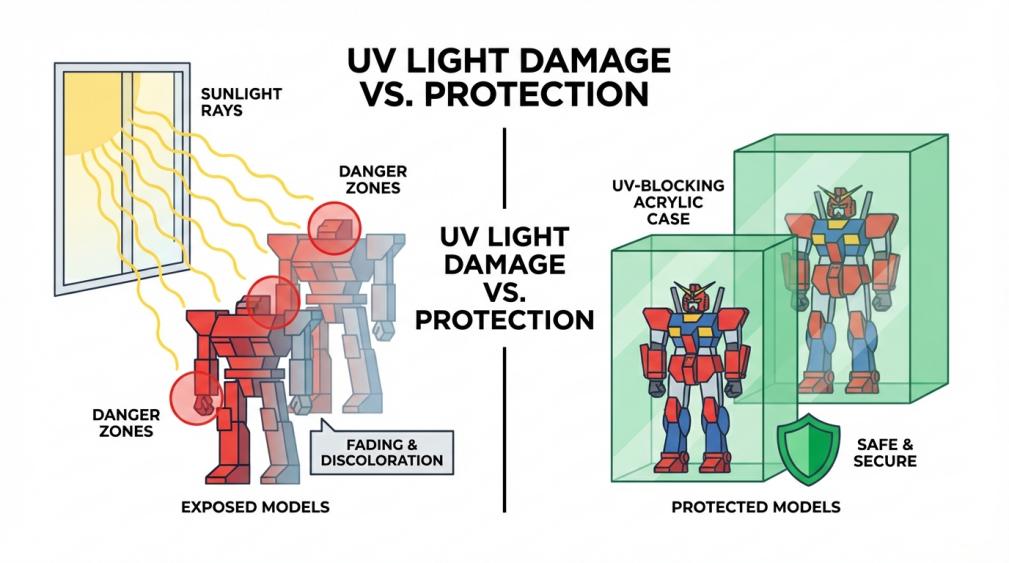
Investing in UV-blocking acrylic cases turns your shelves into micro-environments that filter out most harmful wavelengths while still showing off the collection, an approach praised for keeping colors deeper and plastics less warped over many years in guidance on UV acrylic cases. If you place three rare mechs into UV-safe cases while other figures sit loose on open shelves, you can expect those protected models to hold their color and clarity longer, which matters both for personal pride and for future trade or sale value.
Dust, Heat, And Humidity
Dust may look harmless, but storage articles describe it as a mix of skin cells, fibers, pollen, and pollutants that settles into crevices, dulls paint, traps moisture, and in humid environments can support mold growth and chemical breakdown in PVC and ABS, especially on detailed figures, as explained in anime figure storage guides. Basic figurine-care advice adds that dust is the most common but least dramatic enemy, building up slowly until it cakes into surfaces and joint gaps if ignored for years, so it is better to prevent than to rescue, a point repeated in figurine care overviews. Dust-proof cases and periodic cleaning keep mechanical details readable and make it much easier to photograph your mechs without fuzzy specks on every panel.
Heat and humidity are harder to see but just as dangerous. Anime-figure specialists repeatedly recommend keeping displays in climate-controlled rooms around 65°F to 75°F with relative humidity around 40% to 50%, avoiding attics and basements where temperature and moisture swing wildly, a target range echoed across anime figure storage advice and artifact storage tips. Collectors and retailers warn that heat can warp plastic, make PVC sticky or bubbly, and weaken glued joints, while prolonged dampness can strip paint, damage decals, and invite mold, as discussed in basic figurine care guides and anime figure care articles. For mecha models, that translates into keeping cabinets away from heaters, radiators, and vents, using small desiccant packs inside enclosed cases in humid climates, and avoiding storage in garages or storage units where you would not comfortably sit for an afternoon build session yourself.
Hands-On Maintenance And Value
The good news is that routine maintenance is simple and very effective. Cleaning guides for action figures describe a clear baseline: dust figures at least once a month, or every couple of weeks for pristine collections, using soft makeup brushes or microfiber cloths, then escalate to lukewarm water with a drop of mild soap and a soft toothbrush or cloth only when dirt and oils accumulate, taking care around decals and delicate accessories, as laid out in action-figure cleaning advice. Specialized cleaning articles recommend canned air for tight crevices, avoiding harsh chemicals, and always air-drying figures completely away from direct sun and heaters so plastics do not warp and paint does not fade, a pattern reinforced in collectible cleaning guides.
There is also a strong value case for regular care. One study on toy collectibles cited in a cleaning and value guide found that figures with well-preserved aesthetics can command up to roughly 50 percent higher resale prices than visibly neglected pieces, underscoring how surface condition directly affects grading and demand in action-figure value discussions. UV-protection specialists similarly point out that fading, yellowing, and warping from light exposure not only harm display appeal but also reduce desirability to serious collectors who prioritize condition in UV protection overviews. For mecha fans, that means that a basic kit of soft brushes, canned air, and occasional gentle washes does more than keep robots photo-ready; it directly protects both sentimental and monetary value.
Preserving Your Mecha Legacy Without Killing The Fun
Thinking Like A Conservator, Not A Worrier
Professionals who manage fragile analog and digital collections talk a lot about policies rather than perfection, arguing that “good enough” preservation habits you actually follow are better than waiting for flawless systems while materials quietly deteriorate, as described in a digital preservation policy framework. Similar thinking appears in advice on surveying analog collections and setting up practical workflows for long-term survival of recordings and tapes, where simple steps like documenting what you own and where it lives already improve outcomes, as noted in discussions of analog preservation through digitization. Applying that mindset to mecha models turns anxiety into a short checklist: stable climate, limited light, regular dusting, and basic documentation of what you have and what needs extra care.
A small spreadsheet or notebook of your mecha collection can double as both wish list and preservation log. You can mark which kits are more fragile, which ones already show early yellowing, and which display spots run hotter or brighter than others. That makes it easier to rotate sensitive models into safer locations, prioritize UV cases for the rarest pieces, and notice patterns like “every figure on this top shelf gathers dust twice as fast.” It is the same quiet, methodical attention that library preservation staff bring to weeding, repairs, and environmental checks for collections they want to keep usable decades into the future, reflecting the ethos of dedicated preservation technicians in library preservation programs.
Open Display, Enclosed Cases, Or Dark Storage?
Collectors and preservation specialists agree that there is no single “right” answer; there are only trade-offs that depend on how much you want to interact with the models, how much you care about maximum condition, and how risky your room environment is. For high-value or especially fragile mecha, strategies recommended for anime figures include keeping them in their original boxes in a cool, dry, dark closet, optionally cushioned with acid-free tissue to prevent sticking, as a way to minimize light and dust exposure over many years in storage best practices. On the other end of the spectrum, open bookshelves and wall displays maximize daily enjoyment and easy reposing but accept that dusting and environmental control must pick up the slack.
A balanced approach many collectors adopt is to build and display most mechs in enclosed glass or acrylic cabinets in the main living space, while storing only the rarest or most light-sensitive pieces in darker, archival-style storage. This mirrors the way artifact-storage guidance recommends using clear boxes or well-labeled containers to reduce handling and wear on sensitive items while still making them accessible when needed, as discussed in collectible artifact storage tips. The key is to be intentional: if a mech is especially meaningful or expensive, ask whether its current spot and housing really match its importance.
A Simple Routine That Actually Sticks
Storage articles for anime figures outline concrete maintenance cadences that adapt beautifully to mecha collections: monthly exterior wipe-downs of cases, quarterly figure cleanings with microfiber and soft brushes, six-month swaps of desiccant packs, and yearly photo documentation to monitor color and structural changes in anime figure maintenance routines. Action-figure cleaning guides add that deep-clean sessions should include careful disassembly of removable parts, gentle soaking or spot-cleaning, then full air-drying on towels away from sun and heaters, repeated as needed when figures look grimy or sticky in action-figure cleaning guidance.
For a busy collector, this can boil down to one short session each month. Pick a shelf, dust both the figures and the structure, check for loose joints or leaning poses, and quickly feel the back of the cabinet to be sure it is not warm from electronics or sunlight. Every few months, rotate one or two mechs out of bright spots into safer, darker positions and bring others forward to enjoy. Over a year, you will have given hands-on attention to every major piece without ever facing a full-weekend rescue mission.
FAQ For Mecha Collectors
Do mecha models really need UV protection if they are never in direct sun?
Yes, they still benefit from UV protection. Collectors and UV-case makers point out that indirect light, including light that has passed through window coverings and bounced around a room, still carries enough UV to slowly fade colors, yellow plastics, and weaken cardbacks and bubbles, a pattern emphasized in UV protection for collectible figures. Storage recommendations for anime figures therefore suggest interior rooms, UV window films, curtains, and UV-blocking acrylic cases even for displays that never sit in sharp sunlight, because cumulative exposure over years still adds up in anime figure storage guidance. For mecha, that means UV-conscious display is a long-game move, not an overreaction.
What temperature and humidity are safe for mecha models?
Guides for storing anime figures and other collectibles consistently recommend a stable, climate-controlled room around 65°F to 75°F with relative humidity around 40% to 50% to avoid warping, stickiness, mold, and chemical off-gassing in plastics and paints, as described in anime figure storage advice and collectible artifact storage tips. Basements and attics are discouraged because they swing too widely in both temperature and humidity, and instead, collectors are urged to use interior rooms and to keep figures away from heaters, windows, and vents, a pattern echoed in anime figure care guidance. Mecha models thrive in the same conditions that you would choose for a comfortable, book-filled home office.
Is it better for value to keep mecha kits unbuilt or to build and display them carefully?
Most preservation and collecting advice focuses on condition rather than whether an item is sealed or open. UV-protection and storage guides emphasize that fading, yellowing, warping, dust buildup, and handling wear are the main threats to value, and that items kept in stable, UV-limited, dust-free environments retain desirability much better, as outlined in UV-focused collectible guidance and collectible artifact storage tips. Cleaning and grading discussions also show that well-maintained, clean figures can achieve significantly higher resale prices than dirty, neglected ones, even when both are out of box, as noted in value-focused cleaning guides. That suggests that building and lovingly caring for a kit can be compatible with long-term value, while neglect, not assembly, is the real threat.
A sci-fi mecha collection is more than plastic robots in rows; it is a living archive of battles, builds, and late-night tweaks that will outlast trends if you give it a little structure and care. Combine a storyteller’s eye for posing with a conservator’s respect for light, climate, and cleaning, and those giant machines on your shelves will keep looking battle-ready for years, inviting every visitor to stop, lean in, and ask about the story behind each scar and decal.