Understanding the Causes of Loose Ball Joints in Anime and Action Figures
This guide explains why ball joints in anime and action figures loosen over time and how to diagnose, prevent, and repair different kinds of joint problems.
Loose ball joints usually come from wear, weight, and fit issues working together over time, not just "cheap plastic." Understanding those causes helps you choose fixes that last instead of fighting the same floppy limb every few weeks.
The moment a favorite character's leg slowly sinks while you are lining up a perfect shelf pose is maddening, especially when you paid premium prices for a "collector-grade" release. Collectors who study how real-world joints fail and compare notes in hobby communities can often turn floppy limbs into stable, repeatable poses instead of quick photo-only setups. By the end of this guide, you will be able to look at a loose ball joint, identify why it is failing, and choose the pose, support, or repair that actually fits the problem.
Ball Joints in Figures: Tiny Shoulders and Suspensions
At its core, a ball joint is a ball sitting in a cup so something can swing around in many directions. The shoulder's main ball-and-socket joint is the most mobile but also the most unstable joint in the body, which is why shoulder dislocations and instability are common in athletes and younger people who move that joint aggressively through large arcs of motion. Stability depends on the shape of the socket, the cartilage rim, ligaments, and muscle control working together to keep the ball centered as it moves in all directions. The shoulder's main ball-and-socket joint is a real-world version of what your figure's shoulder or hip is trying to imitate.
In cars, automotive ball joints are spherical bearings that connect the control arm to the steering knuckle so the wheel can turn while the suspension travels up and down, all while carrying braking and road loads. Engineers harden the steel ball, polish the surfaces, pack them in grease, and seal them with a boot, because a tiny change in surface condition can mean the difference between smooth steering and catastrophic failure.
Your figure's hip, shoulder, or ankle ball joint is that same idea in miniature.
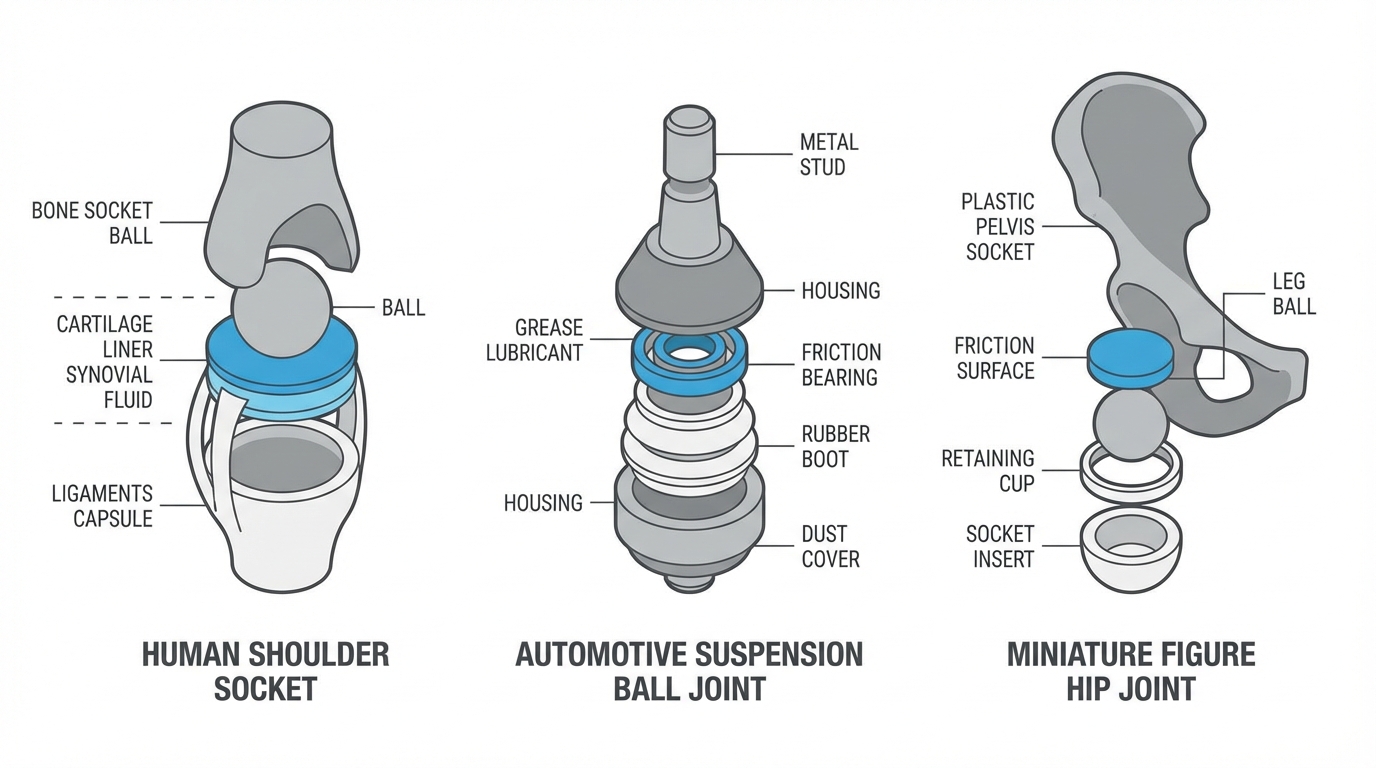
A rounded peg sits in a cavity, often with a slight taper or built-in tension, and it relies on friction between plastic surfaces to hold a pose. When that friction drops below what gravity and accessories are asking from it, the limb droops and the joint suddenly feels "loose."
Cause 1: Friction Wear and Aging
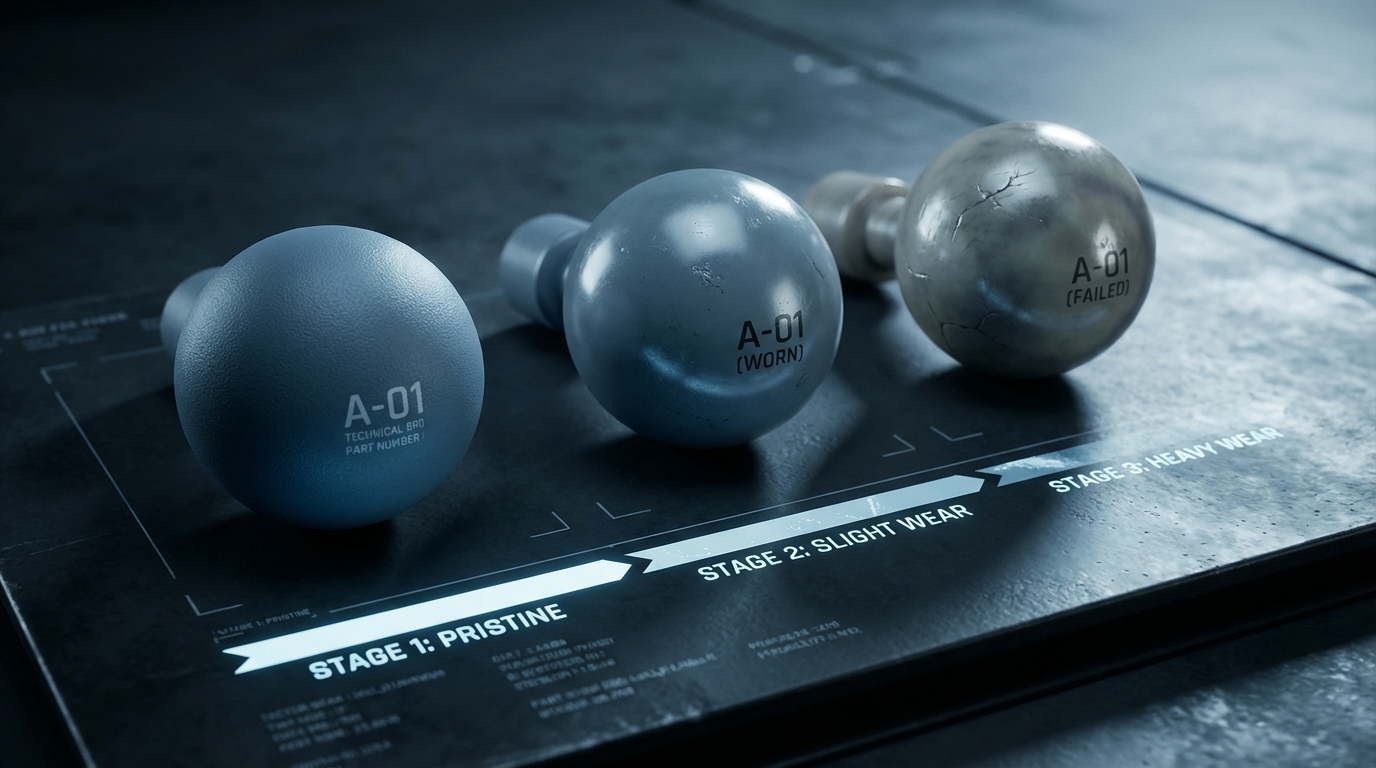
The most common cause of loose ball joints in figures is friction wear. Every time a limb is posed, the ball rubs on the inside of the socket. On day one the surfaces are slightly textured or squeezed together tightly, so they bite and stay put. As months and years go by, that rubbing can smooth the plastic, scrape tiny shavings away, or polish stress marks into the cup. Skin oils, dust, and factory mold release on the surfaces act like a microscopic lubricant, which further lowers friction.
Mechanical studies of automotive ball joint failures show that even hardened steel parts eventually crack and fail under low-stress, repeated bending fatigue, starting from tiny surface flaws where stresses are highest at the neck of the ball. If steel does that after enough cycles, it is not surprising that softer figure plastics slowly lose bite or even develop hairline cracks in the thinnest parts of the cup when they are posed over and over.
On the shelf, friction wear usually shows up as joints that used to be fine but now slowly drift down no matter how you pose them. If a figure's thigh or arm sinks gradually from a dynamic pose, even without any heavy accessories, it is almost always a sign that the socket has been polished or slightly enlarged by use. If that figure gets reposed five times a day, that is more than 1,800 full cycles in a year on a tiny ring of plastic carrying all the load.
Collectors who tighten joints with thin coatings of clear acrylic floor polish or clear nail polish are deliberately rebuilding that friction layer. Acrylic products dry into a clear plastic shell inside the socket, adding a hair of thickness and texture, while nail polish does something similar on a smaller scale; both are essentially putting back a controlled version of the material the joint has worn away. When used sparingly, these methods mainly fight friction wear rather than trying to cover up deeper structural damage.
Cause 2: Weight, Leverage, and Top-Heavy Designs
Weight distribution is the second big culprit. Some figures are simply engineered with more mass hanging off their joints than those joints were ever meant to carry. A 12-inch armored character weighing around 2 lb with an enormous cape, horns, or weapon ends up channeling a lot of torque through small elbow and ankle balls, especially if the design is top-heavy. One Berserk-themed 12-inch figure, for example, was reported with broken ball joints at both the elbow and ankle, and the owner traced the problem back to how top-heavy the figure was rather than a single bad pose.
Human joints run into the same physics. Younger patients with shoulder arthritis who need to keep using their shoulders heavily for work or sport force surgeons to think hard about how long an implant will survive in a joint that sees high loads and frequent motion, because they need both durability and function for decades. That tension between load and long-term wear is explicitly part of treatment planning when heavy joint use and long-lasting results are expected in active patients with glenohumeral arthritis. Those decisions underline a simple lesson for figures: more weight and more movement equals more wear.
On your shelf, this plays out when flying poses, massive effect parts, or one-footed stances ask a tiny ankle ball to carry the apparent weight of the entire figure at a long distance from the joint. The farther that mass is from the ball, the harsher the leverage on that plastic stem. Over time, even a joint that left the factory nice and tight can stretch, oval out its socket, or deform its stem under those loads. Top-heavy designs are not doomed, but they are much more vulnerable to looseness if left without stands or smart weight distribution.
Cause 3: Fit, Tolerances, and Misalignment
Sometimes a ball joint feels loose right out of the box, and no amount of "working it in" ever quite fixes it. That kind of day-one flop usually comes from fit and tolerance problems rather than wear.
Suspension specialists emphasize that a ball joint stud must sit solidly in the tapered hole of the steering knuckle. If the stud rocks or can move in the bore, the knuckle is considered damaged, and reusing it with a new ball joint is likely to cause premature failure and a real risk to steering control. A stud that rocks in a worn steering knuckle taper means the mating surface has lost its precise shape, and the only real fix is to replace the knuckle so the taper grips the stud properly again.
Custom exhaust builders see a similar problem with ball-socket collectors: when the pipes are misaligned or the ball and socket are forced together at an angle, the joint never seals cleanly and the thin flanges supplied by some manufacturers can bend under load. As the system heats, cools, and vibrates, those joints loosen, rattle, and leak unless the geometry is fixed and the hardware upgraded.
Figures mirror those issues in plastic. A socket that was molded just a bit too large, or a ball that came out slightly undersized or out-of-round, will never grip as designed. If the joint is installed off-angle, one part of the range may feel tight and squeaky while another flops freely, because the ball is only truly seated in one direction. Over time, the misfit encourages the cup to stretch or crack where it is thinnest. No amount of floor polish or tissue stuffing can truly restore factory behavior once the base geometry is wrong, because the root cause is the shape and orientation of the parts, not just the surface finish.
Reading What Your Figure Is Telling You
Different types of looseness point back to different causes. A joint that slowly drifts no matter which way you pose it, without any crunchy feeling or visible damage, is usually friction wear alone. A joint that holds most neutral poses but gives up when you attach a huge backpack or swing a sword straight out probably suffers from weight and leverage working a bit beyond what the part was designed for. A limb that was floppy right out of the package, or that feels tighter in one axis than another, almost always hints at tolerance or alignment issues.
Human shoulders again offer a useful analogy. In shoulder instability, the ball does not just feel "loose"; it translates too far on the socket and, over time, can chip away bone at the rim, making redislocation more likely until that bone loss is structurally addressed. Instability specialists talk about thresholds of bone loss where soft-tissue tightening alone tends to fail because the underlying geometry is no longer correct. In the same way, a figure joint that has cracked its cup or sheared its stem has crossed from "loose" into "structurally damaged," and surface fixes alone will not hold up for long.
A sudden change in feel is a red flag. If a hip that has been fine for years suddenly develops a sharp click, visible white stress marks, or a new, lopsided wobble after a fall, that is closer to a structural injury than simple wear. The repair strategy for that joint should be more like rebuilding than just tightening.
Preventing Loose Ball Joints Before They Start
The most powerful fixes are often the habits that keep joints from getting loose in the first place. Keeping joints clean is a simple one: gently moving a limb while a cotton swab with a drop of isopropyl alcohol wipes the exposed ball or socket lip can remove dust, old floor polish, and skin oils that sit between the surfaces and reduce their ability to grip. That cleaning step is exactly how many hobby repair guides start joint-tightening sessions, because any coating sticks better to clean plastic and a surprising amount of "looseness" can disappear once grime is gone.
Joint preservation research in orthopedics focuses on protecting cartilage, bone, and surrounding tissues to delay or avoid full replacement, using both biologic treatments and careful load management so joints last longer before needing implants. This kind of joint preservation work is a reminder that how a joint is used day to day matters just as much as what it is made from. For figures, that translates into avoiding poses where a single ankle or tiny waist joint is carrying the whole model while a heavy cape or weapon drags it forward.
Distributing weight makes an enormous difference. Exhaust builders add or reposition hangers so that long pipes "float" on rubber mounts instead of hanging from a single ball-socket joint, which otherwise loosens despite repeated re-tightening. That same logic applies on the shelf: clear stands under huge effect parts, subtle waist clips behind top-heavy mecha, and extra support points for flight poses all reduce how hard any one ball joint has to work.
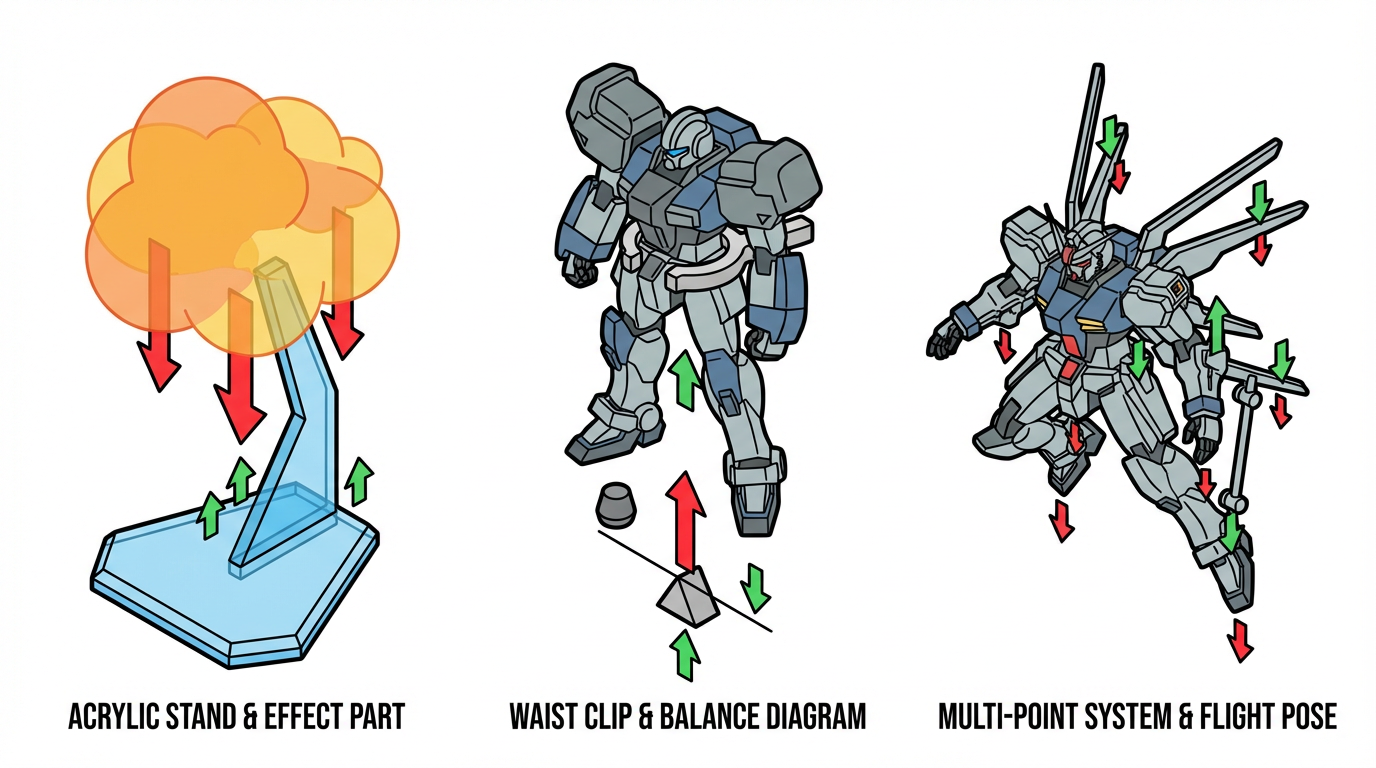
A figure that looks gravity-defying but quietly rests on a stand will almost always stay tighter than the same figure forced to balance that pose on bare plastic alone.
It also helps to respect the natural range of the sculpt. Forcing limbs past sculpted armor edges or twisting joints until soft plastics visibly deform creates stress in thin rings of material around the ball. Even if they do not snap immediately, those areas can be the ones that later whiten, crack, or go from tight to mushy after a few intense posing sessions.
Matching Repairs to the Underlying Cause
Once you know why a ball joint is loose, you can choose repairs with fewer regrets.
When the problem is mainly friction wear and the plastic around the joint is intact, "friction booster" methods are your friend. Collectors have had strong success with tiny bits of tissue or paper stuffed into the socket, thin films of white school glue allowed to dry and then flexed, or a drop of clear acrylic floor polish wicked into the joint and left to cure. The paper method adds a soft, grippy layer that can be tuned by adding or removing fibers and is fully reversible; the dried glue or acrylic acts like a thin extra skin of plastic, adding both thickness and texture. Discussions among toy hobbyists highlight that acrylic floor polishes such as Pledge work well because they cure into a clear plastic layer, whereas non-acrylic polishes mostly fail to tighten joints since they stay rubbery or oily rather than building structure.
For sockets that were loose from day one because of slightly off tolerances, those same friction methods may take a joint from "floppy" to "acceptable," but they cannot fix a truly oversized cup. In those cases, soft packing like tissue has an advantage over brittle glues: it fills more of the gap without fusing permanently to a misshapen surface, and it can be adjusted or removed later if the joint needs a different treatment or if you decide to sell the figure.
Broken joints and severely stressed parts call for a different level of repair. For small figures, hobby guides recommend drilling into the broken pieces with a pin vise, inserting a short length of brass wire, and gluing the pieces back together around that metal core. That turns the break into more of a dowel joint and can be strong enough to survive regular handling even when the original plastic failed. On smaller accessories or necks, the same pin-and-glue technique can pull stuck pieces out of the body cavity before a replacement joint is installed. The catch is that these repairs often lock the joint into a fixed pose or reduce its range, trading articulation for durability.
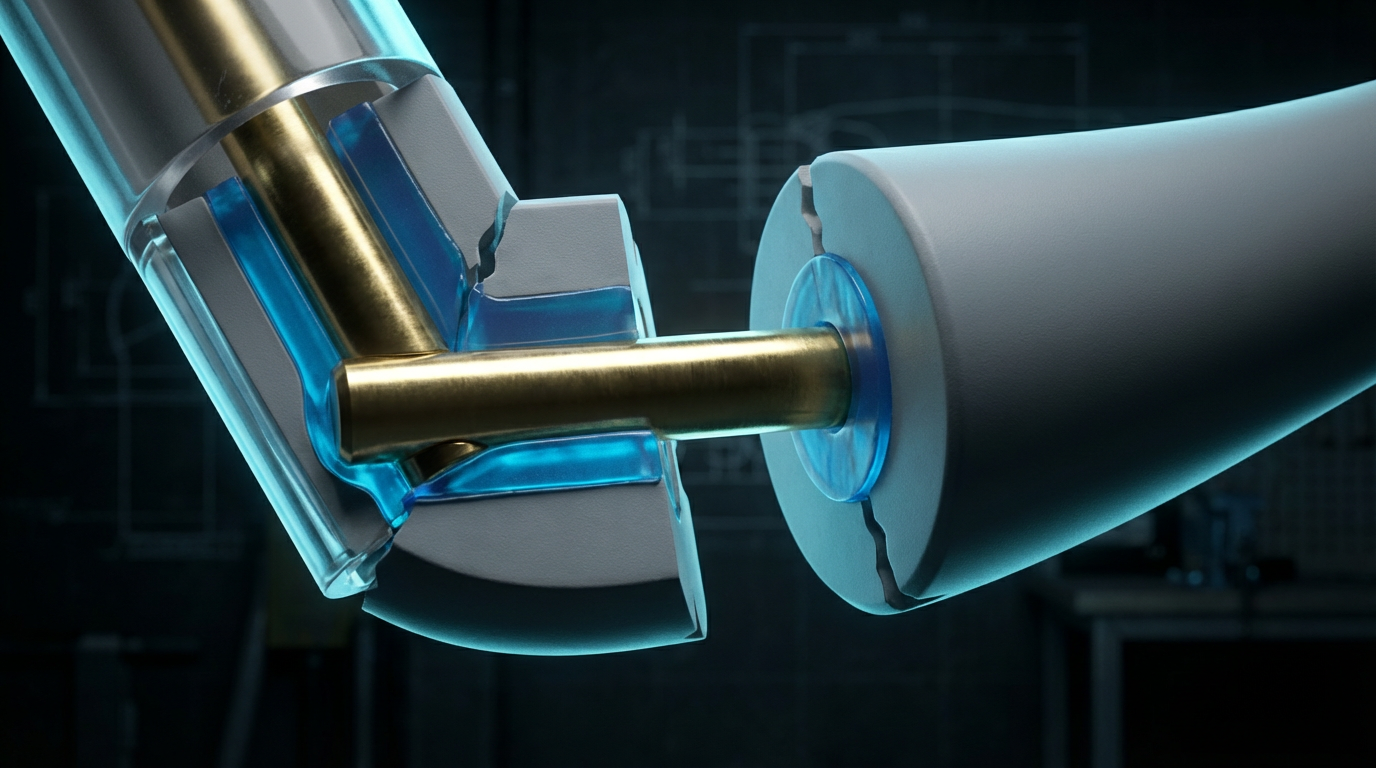
Heavy, top-heavy figures with failed elbow or ankle balls sometimes need that kind of structural reinforcement more than any friction tweak. Collectors wrestling with 12-inch, 2 lb figures whose ball joints snapped under the load have considered using one or even two brass rods through the joint; the challenge is aligning pins so that the limb sits straight and the new structure can actually carry the weight long term. In those cases, stands and load distribution become just as important as the repair itself, because even a reinforced joint can fail again if it has to fight the same overloading as before.
Adhesives deserve special caution. Superglue can warp or craze some toy plastics and is notorious for creating a strong but brittle bond that may simply snap again right next to the repair point if the joint is still under too much stress. On flimsy pegs, attempts to rebuild broken parts with superglue alone have often ended in deformed plastic that still does not hold. When glue is used, it works best in small amounts, paired with mechanical reinforcement like brass pinning, or reserved for joints that you are willing to sacrifice articulation on in exchange for a fixed, display-safe pose.
Here is a quick comparison of common strategies and how they relate to the causes described above:
Approach | Best suited for | Main upside | Main trade-off |
|---|
Tissue, school glue film, acrylic coat | Mild to moderate friction wear with intact plastic | Reversible, gentle on most plastics | May need periodic touch-ups after heavy posing |
Pin vise + brass rod reinforcement | Broken or cracked joints under high load | Strong structural repair, survives handling | Often reduces articulation, requires tools and skill |
Replacement joint or visible stand | Design flaws, top-heavy figures, oversized sockets | Preserves figure overall, offloads bad joint | Replacement parts may not match; stands change look |
Deciding between these comes down to whether the joint is merely worn, poorly fitted from the start, or actually broken, and whether you value full articulation, pristine appearance, resale value, or simple stability most.
A Note on Design Trade-Offs and Expectations
Sometimes a "loose" feeling is really a design choice with trade-offs built in. Some modern figures use ab crunches, butterfly shoulders, or very small ball pegs to achieve dramatic ranges of motion. In a few Marvel-style 4-inch bodies, collectors have noticed that the torsos with ab articulation tend to feel more wobbly and prone to floppiness than alternate versions of the same characters that skip that joint entirely in favor of a solid torso. The sculpt and engineering favor range over rock-solid feel, which means those bodies may never stand as confidently on one foot as their simpler counterparts.
The same principle applies to anime figures with extreme hair, capes, or effect parts anchored to a single ball joint. That hyper-dynamic look has a cost in leverage and long-term stress. When choosing which version or line to collect, it can be worth factoring in not just how spectacular the pose can be on day one, but how much constant support the figure will need to keep that energy without turning into a floppy mess later.
FAQ
Can loose ball joints be completely prevented?
Not completely. Any friction-based joint will wear if it is moved, just as human shoulders and engineered ball joints gradually show the effects of age and use. What you can do is slow that process down: keep joints clean, avoid using one tiny ball to carry huge accessories or extreme leaning poses without a stand, and be gentle about how far you push against sculpted armor or hair. Those habits keep more material in the places that matter, so when wear does eventually show up, it happens later and is easier to manage with light tightening methods.
Is it safe to use superglue inside a ball joint?
Superglue is a powerful tool but a risky first choice. On unbroken but loose joints, thin acrylic floor polish, paper stuffing, or a removable film of school glue are less likely to warp plastic or permanently seize articulation, and they have a track record among collectors as reversible fixes. Superglue is better reserved for structural breaks or for repairs combined with a brass pin where you are comfortable losing some movement in exchange for strength. If resale value and original feel are important, it is usually smarter to start with reversible friction fixes and stands, and keep heavy glue work as a last resort.
Bringing It Back to the Display Shelf
Every loose ball joint on a figure is a small story about how that piece of plastic has been shaped, loaded, and lived with over time. When the causes behind the flop become as familiar as the characters on the shelf, it is much easier to choose poses, stands, and repairs that respect the limits of the engineering instead of fighting against it. With a bit of mechanical curiosity and a few careful habits, those dynamic anime stances can stay crisp and confident for many seasons of collecting.