Understanding the Hardening of Soft PVC Parts in Figurines
Soft PVC parts on figurines harden because the additives that keep them flexible slowly escape under heat, light, and time, but careful display, cleaning, and storage can slow that process and preserve their original feel for years.
One day, a hair strand or cloak edge that used to flex on a favorite figure suddenly feels stiff, rough, or even a little sticky, and it hits you that your collection is aging. Long-time collectors have watched soft plastic parts change like this for years, but careful testing of toy plastics and real-world collection experience shows that this is not random bad luck, and there are clear ways to delay it. You will see what is actually happening inside that “soft” plastic, how to judge normal aging versus problem pieces, and how to set up your shelves and routines so your figures stay beautiful as long as possible.
Soft PVC in Figurines: What You’re Really Displaying
PVC figures sit at the center of the modern collectibles market because the material can capture tiny sculpt details, hold paint well, and still survive everyday handling at a price most fans can afford. PVC figure specialists describe it as the backbone. That same flexibility is what you feel in rubbery hair strands, flowing skirts, tails, and soft accessories on your shelf.
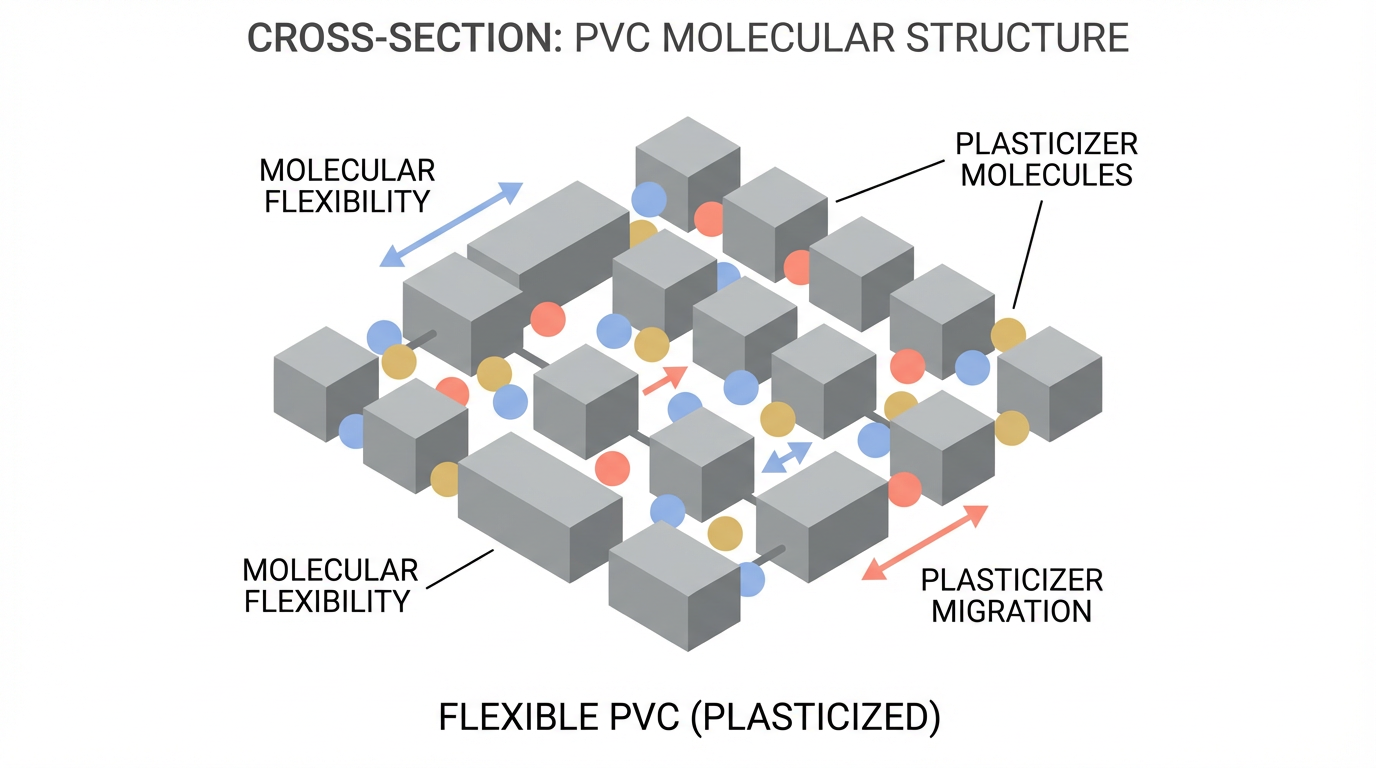
On its own, raw PVC is actually quite rigid; the “soft” feel comes from mixing in plasticizers and other additives that let the chains of PVC slide past each other more easily. A large survey of plastic toys sold in Japan found around one hundred different additives across common toy materials, with plasticizers, stabilizers, and flame retardants present in almost every product they tested, underscoring how much the feel of a toy depends on these hidden ingredients rather than the base polymer alone. The researchers emphasized that PVC items in particular, reinforcing how strongly their properties depend on additive packages rather than PVC alone.
Manufacturers also add stabilizers to keep PVC from falling apart during high-temperature molding and over its life on your shelf. Modern stabilizer packages for toys have been deliberately reformulated to be lead‑free and low toxicity while still giving PVC better heat resistance and color stability, reflecting how safety standards have tightened over the decades even as collectors demand ever softer, more skin‑like parts and finishes.
Why Soft PVC Hardens, Yellows, or Gets Sticky
How Time, Heat, and Light Affect Your Figures
Soft PVC figurine parts are extremely sensitive to temperature and light. Guidance for collectible toys stresses that PVC deforms easily at high temperatures, can release hydrogen chloride gas when overheated, and tends to yellow and become more fragile as it bakes in warm, bright rooms over time, especially in white or pale areas of a figure. Manufacturers warn that ultraviolet light plus heat can, driving faster discoloration and brittleness in exposed PVC.
Think about a figure on a shelf that catches a couple of hours of direct sun across its face and hair every afternoon. Even though the room might feel “normal” to you, the localized temperature at that plastic surface can spike, and the UV in that beam steadily attacks both paint and PVC. Collectible statue care guides therefore push a simple rule: keep PVC away from windows, radiators, fireplaces, and damp corners, and aim for a relatively stable room climate around 59–77°F with moderate humidity, which dramatically cuts down on warping, yellowing, and surface cracking over the long term.
Plasticizers on the Move: From Flexible to Rigid (and Sometimes Gooey)
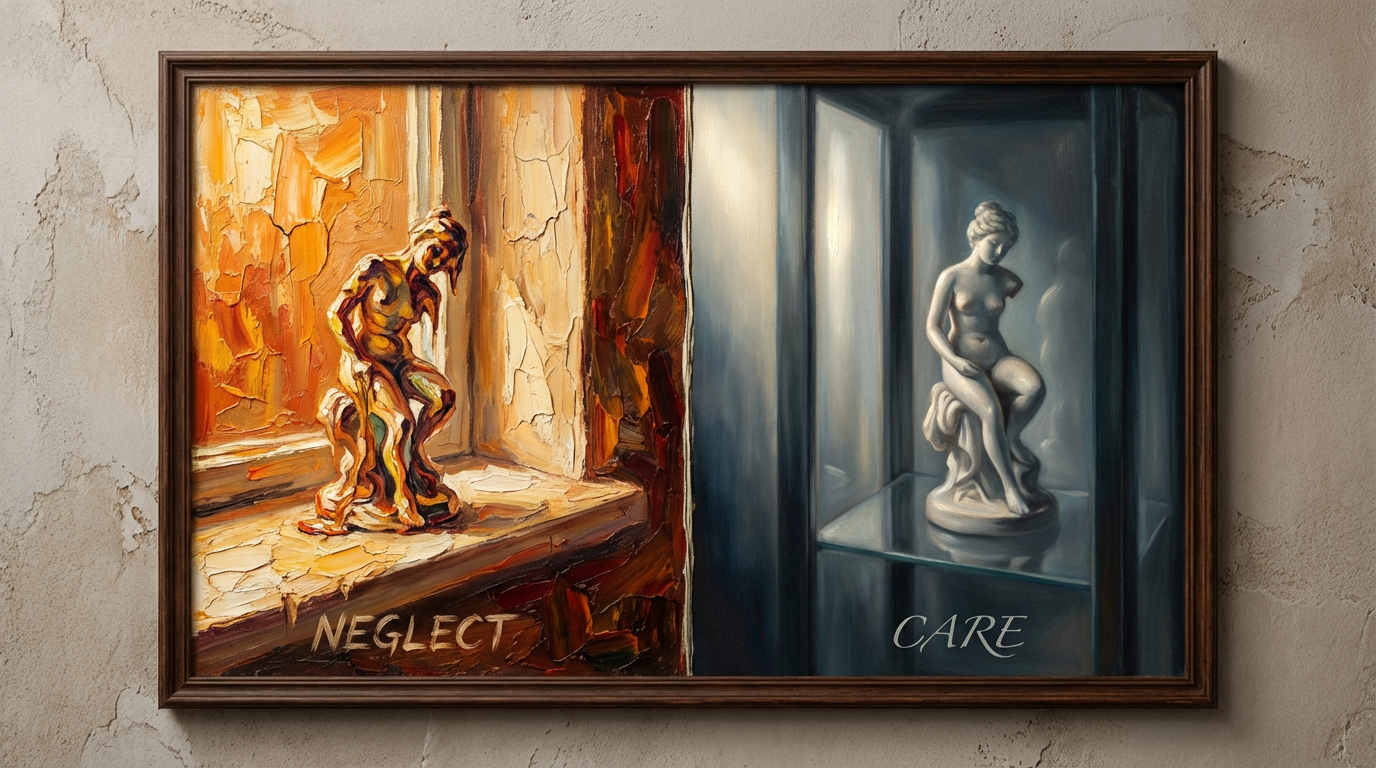
The soft parts on your figures are loaded with plasticizers, oily molecules that sit between PVC chains and give that squishy, bendable feel. Over time those plasticizers are not locked in place; they slowly migrate toward the surface and into surrounding air and dust, and this migration speeds up when the figure sits in a warm or sunny spot. Aging studies on PVC dolls have shown that after roughly fifteen years, enough plasticizer can move to the surface to create a visibly tacky film, a change conservators now consider a hallmark of deteriorating soft vinyl rather than simple dirt.
Collectible toy makers describe greasiness as the first visible stage of this aging: the figure’s soft parts develop a slight sheen or oily feel as plasticizer separates out, and the surface loses some of its original springiness. If nothing is done, that can progress to obvious stickiness, staining, and embrittlement. Inside the PVC, the opposite is happening: with fewer plasticizer molecules left between the chains, the material becomes stiffer and more glass‑like, so a tail that used to flex safely might start to feel rigid and snap rather than bend.
The oily film that sometimes shows up on PVC figures is not just “sweat” from your room; care guides explicitly link it to plasticizers migrating out of the material. Detailed maintenance advice for PVC figures notes that this greasy surface can usually be removed with gentle washing in cool water and neutral dish detergent, and that a thin, compatible clear spray coat can temporarily isolate the surface from air, slowing the return of that film, though it cannot undo the loss of plasticizer from deeper inside the part. That is why some collectors treat early greasiness before the material becomes brittle.
Humidity and Lack of Ventilation: Hidden Enemies
Humidity is another subtle enemy of soft PVC. Repeated cycles of moisture condensing and drying on a figure’s surface can cause tiny mechanical chips in the plastic and contribute to surface roughness, especially on edges and raised details. Toy preservation specialists point out that prolonged exposure to high humidity or damp storage makes plastics and paints more vulnerable to cracking, warping, and mold.
At the same time, completely sealing figures in an airtight box is not ideal either. Collectors who monitor their display cases have learned that trapping figures in non‑ventilated enclosures can hasten paint deterioration and discoloration, likely because off‑gassed plasticizers and other volatiles build up around the figure instead of diffusing away. Good figure‑care guides therefore recommend a balanced setup: use cases or cabinets that keep out dust and direct drafts, but add small ventilation gaps and moisture‑absorbing packets so humidity and off‑gassed chemicals do not accumulate around your PVC.
Practical Ways to Slow Hardening in Your PVC Figures
Choose Display Spots That Favor Your Figures, Not Your Window
The easiest win is simply placing your figures somewhere they are less likely to be cooked or blasted by sun. Maintenance resources for plastic figures consistently advise keeping them away from direct sunlight and strong UV, and favoring enclosed display cases that block or diffuse light while limiting dust. Acrylic or glass cabinets are highlighted because they reduce dust, soften lighting, and make it easier to control temperature and humidity around your collection when they are placed away from windows.
Imagine two identical PVC figures: one perched on top of a bookcase beside a bright window, the other inside an acrylic case on an interior wall. Over several years the window figure is much more likely to show uneven yellowing, stiffening of soft parts, and maybe even warping at thin pieces, while the cased figure often still looks close to new. You do not need a museum setup; simply moving figures a few feet away from glass and heat sources, and letting curtains or blinds take the sun instead, can meaningfully slow both plasticizer loss and overall material fatigue.
For humidity, try to keep figures in rooms that do not swing between very damp and very dry, avoiding basements that periodically feel wet or attics that bake in summer. Many collectors quietly tuck a small thermometer and humidity gauge into their figure room so they can confirm the environment is roughly in that comfortable middle band rather than guessing.
Clean Soft PVC Like Delicate Skin, Not Kitchen Tile
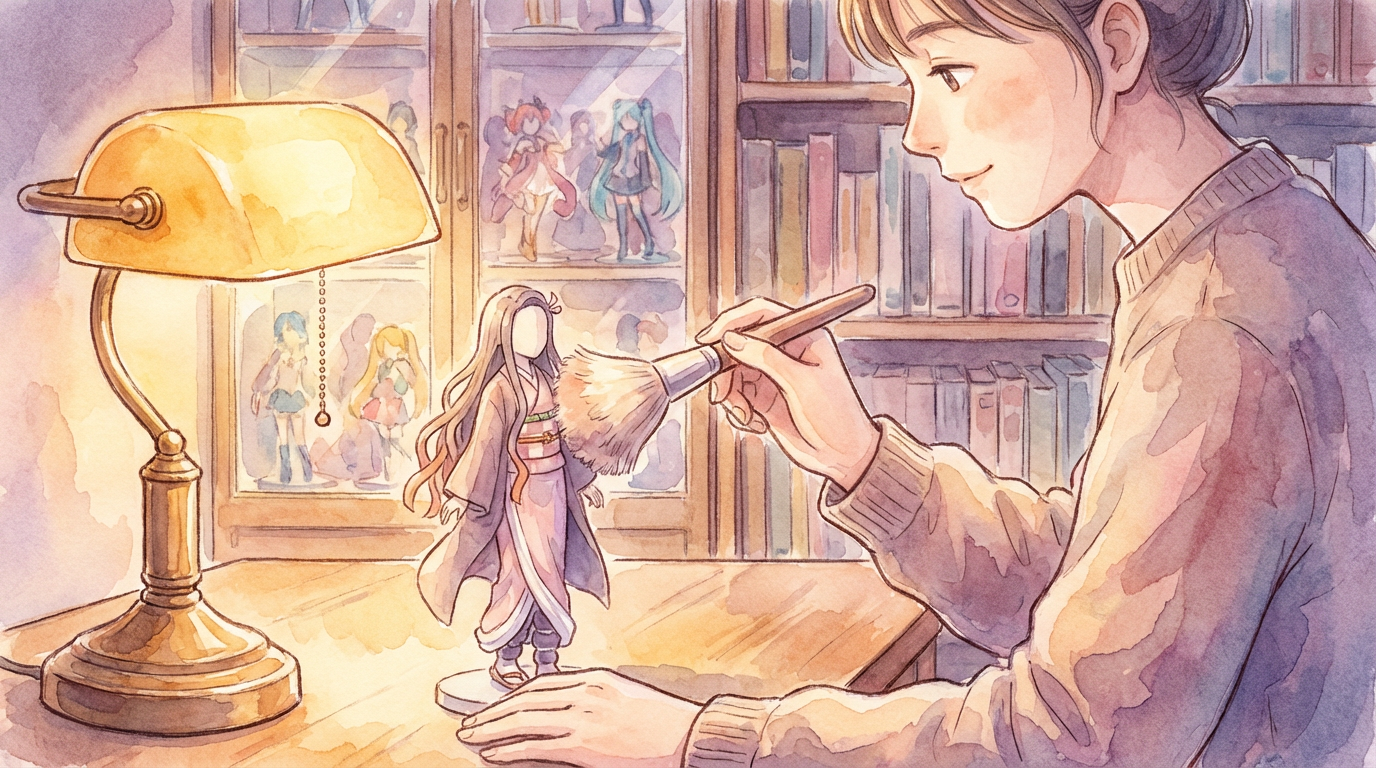
Dust and grime make hardening problems worse because every cleaning rub becomes more aggressive if you let dirt build up for too long. Figure‑care guides recommend starting with the gentlest possible dusting: a soft makeup brush, a clean microfiber cloth, or a small rubber blower like the ones used for camera lenses can remove loose particles without scraping the surface. For more stubborn dust in crevices, a careful pass with a soft, dry brush or a gentle air blower usually works, as long as you support fragile parts while you work.
When you need deeper cleaning, keep water cool or just slightly lukewarm, and avoid soaking the whole figure. A bowl of cool water with a drop of mild, neutral dish detergent and a soft cloth or cotton swabs is usually enough to lift surface oils, including early plasticizer film, without stressing the PVC. Collectors are specifically cautioned not to wash figures in hot or very warm water for routine cleaning, because heat softens PVC and can lead to deformation or accelerate chemical aging even if the figure springs back in the moment. Dry with gentle blotting rather than hard rubbing so you are not sanding the surface with any remaining dust.
Never reach for household cleaners, alcohol-heavy wipes, or solvents unless you know the exact paint and plastic formulation. Preservation advice for resin and PVC statues warns that many finishes can be damaged by common cleaners that seem harmless on other surfaces, and that even diluted alcohol should be tested in a hidden spot first. It is better to accept a tiny mark than to strip paint or gloss from an entire face or hairpiece.
Deal With Greasy or Sticky Soft Parts Before They Ruin the Figure
If a figure’s soft parts feel noticeably greasy, that is plasticizer on the surface, and you are at a crossroads. PVC preservation specialists note that this greasiness is an early warning sign that plasticizers are actively migrating out of the material. The good news is that at the greasy stage, many collectors have success with gentle degreasing.
Start with the mild cool‑water and detergent approach, working patiently with soft cloths or swabs rather than scrubbing. Dry thoroughly, then leave the figure in a cool, shaded, well‑ventilated place for a few days and check whether the surface sheen returns quickly. Some figure‑care articles suggest that after cleaning, a thin coat of an appropriate clear matte or gloss spray formulated for soft plastics can provide a temporary barrier to air, slowing new plasticizer migration to the surface. Because every paint system is different, always test on a hidden area first, and accept that any coating carries some risk.
Once a piece feels truly sticky—dust immediately clings, and the surface drags under a fingertip—there is usually no way to fully restore the original texture at home. You might be able to improve feel and appearance with careful cleaning and recoating, but the core material has already lost enough plasticizer that it will never behave exactly like it did out of the box. At that stage, your goal shifts from “reversing” damage to stabilizing a favorite character so it can still display decently without further self‑destructing.
When Warm Water Reshaping Is Worth It (and When It Isn’t)
Many collectors learn a simple trick: dip a bent sword, drooping hair strand, or warped base peg in warm water, gently bend it back, and then cool it in position. Controlled warm‑water softening does work because heat temporarily increases chain mobility in PVC, letting you reshape thin sections. Figure‑care guides acknowledge this method but stress that it carries real risk if you treat it as an everyday fix rather than a last‑resort adjustment. Because PVC has poor heat resistance, each exposure to high temperatures adds cumulative stress and accelerates long‑term aging.
If you decide reshaping is worth it for a favorite piece, keep the water only pleasantly warm to the touch, not hot, limit the time the part spends in the water, and focus the heat only where needed rather than immersing the whole figure. Never use boiling water or a hair dryer on high; both are notorious for tipping PVC from “pliable” to “ruined” in seconds. And remember that reshaping does not put plasticizer back; it simply rearranges the hardened material into a more pleasing pose.
Is Hardening Dangerous, or Just Ugly?
From a display perspective, hardening and yellowing are mostly aesthetic and structural problems: brittle PVC is more likely to crack, and sticky surfaces look bad. But there is also a health and safety angle, especially for figures that children handle or mouth. A broad analysis of chemicals in plastic toys identified dozens of additives of concern, with plasticizers in soft plastics among the riskiest because they can migrate into saliva and indoor dust that children ingest during play. At the same time, a survey of toys sold in Japan showed how regulations have pushed down the levels of classic phthalate plasticizers in newer products, while alternative plasticizers have become more common, changing the exposure profile without eliminating additives altogether. The authors concluded that toy plastics remain complex materials that need ongoing monitoring and risk assessment.
Regulators in many regions have responded by restricting certain phthalates in toys and childcare articles, and safety reviews in Australia, for example, have found that some widely used high‑molecular‑weight plasticizers like DINP do not present a health concern for children at typical exposure levels from compliant PVC toys. Industry summaries there explain that PVC toys are. That said, older toys, unregulated knockoffs, and vintage collectibles made before modern rules were in place can still contain legacy plasticizers and stabilizers of greater concern, and those are the pieces most likely to show strong greasiness and stickiness as they age.
For adult anime figure collectors who mostly display pieces behind glass and handle them briefly, occasional contact with slightly greasy PVC is probably a much smaller exposure pathway than daily life sources like some food packaging and household dust. Still, it is sensible to wash hands after handling sticky parts, keep deteriorating figures away from children and pets, and consider retiring or discarding items that are visibly breaking down rather than letting them shed plasticizer and microfragments onto everything around them.
There is also an environmental story under all of this. Toy‑industry analyses highlight that around 90% of children’s toys are made of plastic, and that global plastic production already exceeds hundreds of millions of tons a year, with significant leakage into the environment. Major toy brands are experimenting with bio‑based plastics, looking for ways to shrink the footprint of new toys. Material innovators are rolling out compostable elastomers and other experimental soft materials aimed at reducing long‑term plastic waste. For your current PVC collection, the most sustainable move is to preserve what you already own well, avoid unnecessary replacements, and be thoughtful about what happens to pieces that reach the end of their life.
Quick FAQ for Collectors
Can a hardened soft PVC part ever be made truly soft again?
Once plasticizers have left the inside of a PVC part, there is no practical, collector‑friendly way to put them back in. You can remove greasy surface film, reshape slightly with careful warm‑water treatment, and sometimes improve the feel a little with protective coatings, but you cannot permanently restore the factory softness at home. Industrial reformulation and remolding would be required, which is far beyond hobby scale, so the best strategy is slowing plasticizer loss rather than trying to reverse it later.
Should you worry about touching greasy or sticky PVC?
Greasy or sticky PVC is a sign that plasticizers and other additives are reaching the surface and into surrounding dust. Research on toy additives and regulatory reviews agree that some of these chemicals, particularly older phthalates, can act as endocrine disruptors and are not ideal for repeated ingestion or heavy exposure, which is why many have been restricted in children’s toys and safer alternatives promoted. At the same time, safety assessments of modern plasticizers used in compliant toys generally find low risk at typical exposure levels, especially compared with historical formulations. For a typical display‑focused collector, simple habits like washing hands after handling sticky pieces, not letting kids chew on collectibles, and favoring newer, regulation‑compliant products go a long way.
Is switching away from PVC the only real solution?
PVC figures are popular because they offer an impressive mix of sculpt detail, color, and durability at a reasonable price, and they are not disappearing from the hobby overnight. However, the broader toy world is already experimenting with more sustainable and less chemically complex materials, from recycled and bio‑based plastics to wood‑plastic composites and compostable soft elastomers. Toy companies and material suppliers now publicly emphasize sustainability goals and gradual shifts away from some legacy additives, even if PVC itself remains common. For collectors, it is realistic to keep enjoying PVC figures while also rewarding brands that invest in safer materials and being choosy about which pieces earn long‑term space on your shelves.
In the end, soft PVC will always age, but it does not have to age quickly or badly. Treat your figures more like tiny museum pieces than disposable toys—cool, shaded display, gentle cleaning, and quick action when you spot greasiness—and you will keep your favorite characters looking and feeling right long enough to outlast sequels, spin‑offs, and maybe even that next big hype wave.