Understanding the Mechanics of Music Boxes in Collectible Figurines
Why a Singing Figurine Hits Different
If you are the kind of fan who knows exactly which bar of an opening theme gives you goosebumps, a music‑box figurine is basically endgame merch. It is not just a static sculpt; it is a tiny mechanical stage where your favorite character and melody perform together.
Music box makers like Muro Box and Only One Music Box describe their pieces as “doors to memories” and “physical manifestations of feelings,” and that absolutely tracks with how figure collectors use them. You press a button or wind a key, the tune from a show or a classic waltz starts looping, and suddenly that figure on your shelf is not just plastic or resin. It is a small, analog storytelling machine.
To really appreciate these pieces – and to avoid accidentally destroying a limited‑edition Demon Slayer or Ghibli music‑box figure – it helps to understand what is happening inside the base. The mechanics are surprisingly deep, but they are also learnable.
This guide walks through how the mechanisms work, how they shape what you hear, what makes a figurine music box collectible, and how to keep yours playing for decades. Everything here is grounded in real music‑box guides and maker notes from brands and experts such as Muro Box, Donuma, Only One Music Box, Music Box Attic, Enchantmints, Sonusgear, and professional restorers like Porter Music Box.
Inside the Base: What Actually Makes Your Figurine Sing
At the heart of almost every figurine music box is what music‑box makers call the “movement.” Muro Box’s buying guide defines this as the mechanical core that actually creates sound. In a traditional design, the exterior character or diorama is basically a decorative shell wrapped around this small mechanical instrument.
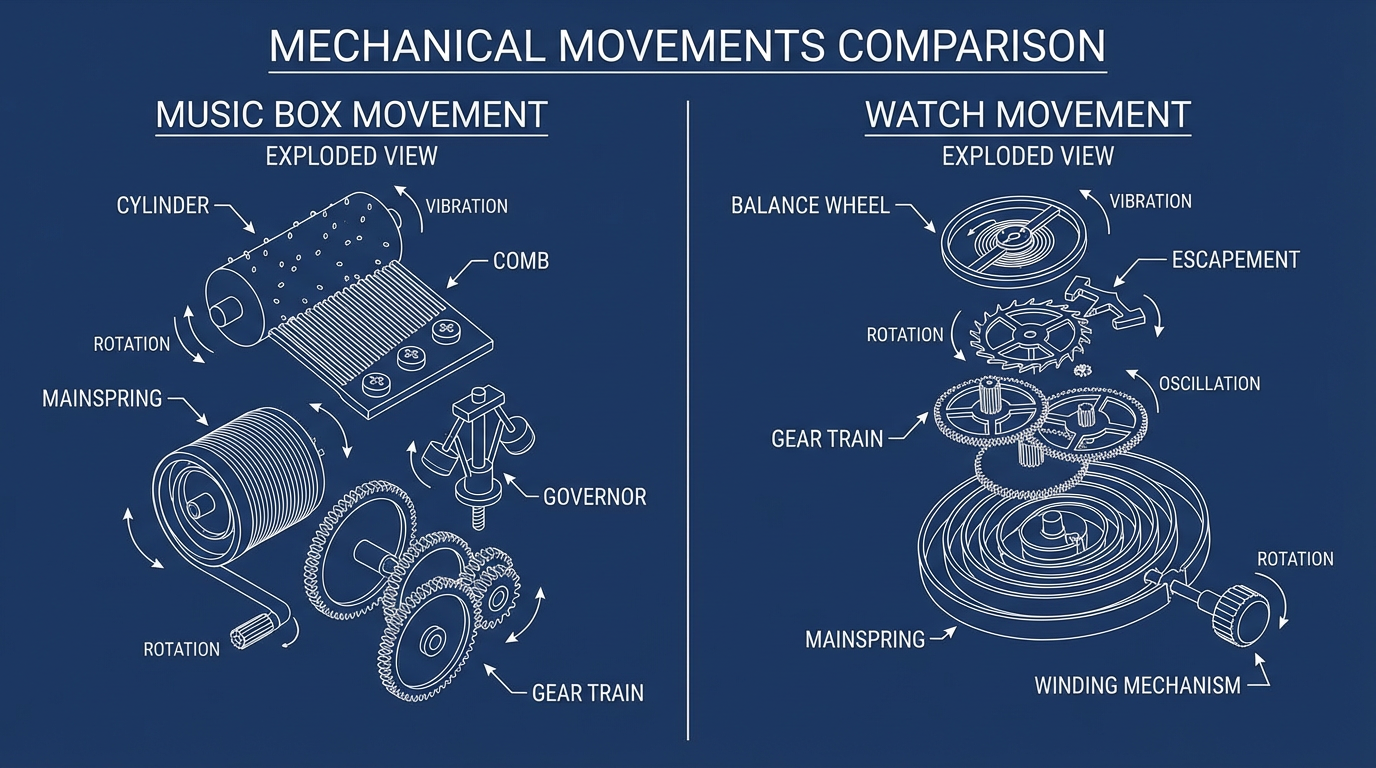
According to Sonusgear’s research brief and Donuma’s overview, a classic mechanical movement works like this. A mainspring stores energy when you wind a key or turn a crank. That spring slowly unwinds through a gear train, and a governor (a speed‑regulating mechanism) keeps everything from spinning out too fast. Attached to this drive system is either a pinned cylinder or a flat metal disc with raised bumps. As the cylinder or disc rotates, those pins pluck the tuned teeth of a steel comb, and each tooth rings as a note.
The figurine part is usually driven by the same gear train. The rotating base that makes a sailor moon‑style character spin, the carousel horses that go up and down, or a small head that gently nods are all riding piggyback on the energy that is moving the cylinder. So when you feel your figure vibrate slightly as it plays, that is not “cheap build”; it is literally the music moving through the whole sculpture.
Modern figurine music boxes sometimes swap the mechanical movement for a digital module. Sonusgear notes that these store audio electronically and use a small speaker instead of a comb. The figure may still rotate or move using a basic motor, but the music itself is not being generated mechanically. That difference is at the core of the “mechanical versus digital” debate among collectors.
Cylinder, Disc, Digital, Programmable: Mechanisms You Actually Meet
Multiple sources, including Sonusgear and an industry analysis on music‑box styles, agree that four mechanism styles dominate the market. Figurine music boxes mostly use the first and last of these, but all four matter for collectors.
Mechanism type | How it works | What you get | Typical limitations | Great for |
|---|
Traditional cylinder | Spring turns a pinned metal cylinder that plucks a tuned steel comb | Warm, nostalgic acoustic tone; often around 18‑second loops for standard movements | Usually fixed tune; limited repertoire; changing songs requires new cylinder | Romantic pieces, ballerina and character figures, heirloom‑style gifts |
Interchangeable disc | Flat metal discs with punched patterns drive the comb; discs can be swapped | Mechanical charm with a library of songs you can physically collect and swap | Mechanically more complex; discs can wear; less common in small figurines | Serious collectors, display pieces with visible mechanics |
Digital sound module | Electronic chip stores audio; small speaker plays when you wind or press a button | Huge choice of songs, including full modern tracks; adjustable volume and stable playback | Sound can feel artificial; usually no visible moving mechanism | Budget gifts, when song variety matters more than mechanical authenticity |
Programmable mechanical | Networked or MIDI‑capable system drives a real comb with digitally controlled note patterns | Real mechanical sound with virtually unlimited programmable repertoire (via app or MIDI input) | Higher price and complexity; relies on electronics as well as mechanics | Advanced enthusiasts, full‑length anime themes, custom compositions |
Sonusgear’s guide recommends cylinder movements when you want authentic tone and craftsmanship, disc systems when you crave mechanical variety, and digital modules only when budget and song variety are more important than that acoustic “ting.” Muro Box extends this spectrum with programmable mechanical designs like their N20 and N40 models, which they describe as networked or MIDI‑capable music boxes that can store and perform unlimited songs while still physically plucking a comb.
For anime and pop‑culture figurines, makers often use compact 18‑note or 23‑note cylinder movements because they fit inside a base and have that classic “music box” sound. Muro Box specifically highlights officially licensed Demon Slayer theme‑song boxes using 23‑note Japanese movements, and notes that traditional 18‑note boxes usually loop around 18 seconds of music. That short loop is a design constraint you will feel whenever your favorite opening gets chopped to its most recognizable line.

Why So Many Figurine Boxes Use 18‑Note Movements
Music Stack Exchange hosts a detailed analysis of 354 songs arranged for standard 18‑note movements. That analysis found that about 87 percent of those tunes were in major keys, with a small minority using minor or more exotic modes. The reason is not just taste; it is mechanics.
Those 18 steel “teeth” are not always 18 different pitches. The same analysis notes that many 18‑tine combs include duplicated notes so a pitch can be re‑plucked in less than a second, which music‑box cylinders need because you cannot “hold down” a note the way you would on a piano. Once you account for duplicates, many combs have only around 14 distinct pitches, usually within about two octaves. Designers often tailor the exact set of notes to a specific song. Two classics like “London Bridge” and “This Old Man” may require different comb layouts because they emphasize different notes and rhythms.
Because the note palette is so limited, composers who write for these boxes prioritize a strong, singable melody. Music Stack Exchange contributors advise focusing on the tune first, then thinning out harmony. Full triads may not always fit within the available range, so it is normal to see harmonies reduced to two notes (root and fifth, or root and third) or even to single bass notes. Slight arpeggiation – playing chord tones a hair out of sync – is another mechanical quirk that becomes a signature shimmer in the sound.
For figurine tie‑ins, this matters. When you hear a Studio Ghibli lullaby or an anime opening reduced to a tiny loop, what you are really hearing is a heavily edited highlight reel tuned to that limited comb. That is also why minor‑key themes can feel especially magical or eerie on a music‑box figurine: the timbre is familiar, but the mode is not. The same Stack Exchange analysis points out that minor keys are rare on music boxes, so when you do get one – say for a Halloween‑themed figure or a darker shonen moment – it stands out.
Muro Box’s team notes that their programmable models sidestep some of these constraints by using more notes and allowing longer, custom arrangements that can cover full anime tracks rather than just the most iconic phrase. For collectors who want the chorus and the bridge, not just the hook, that is a big deal.
Mechanics That Matter to Figurine Collectors
Once you look past the sculpt, several mechanical details strongly affect both how your figurine sounds and how collectible it is. Donuma’s buying guide, Sonusgear’s research brief, Muro Box’s enthusiast notes, and Enchantmints’ history of jewelry music boxes all emphasize similar factors.
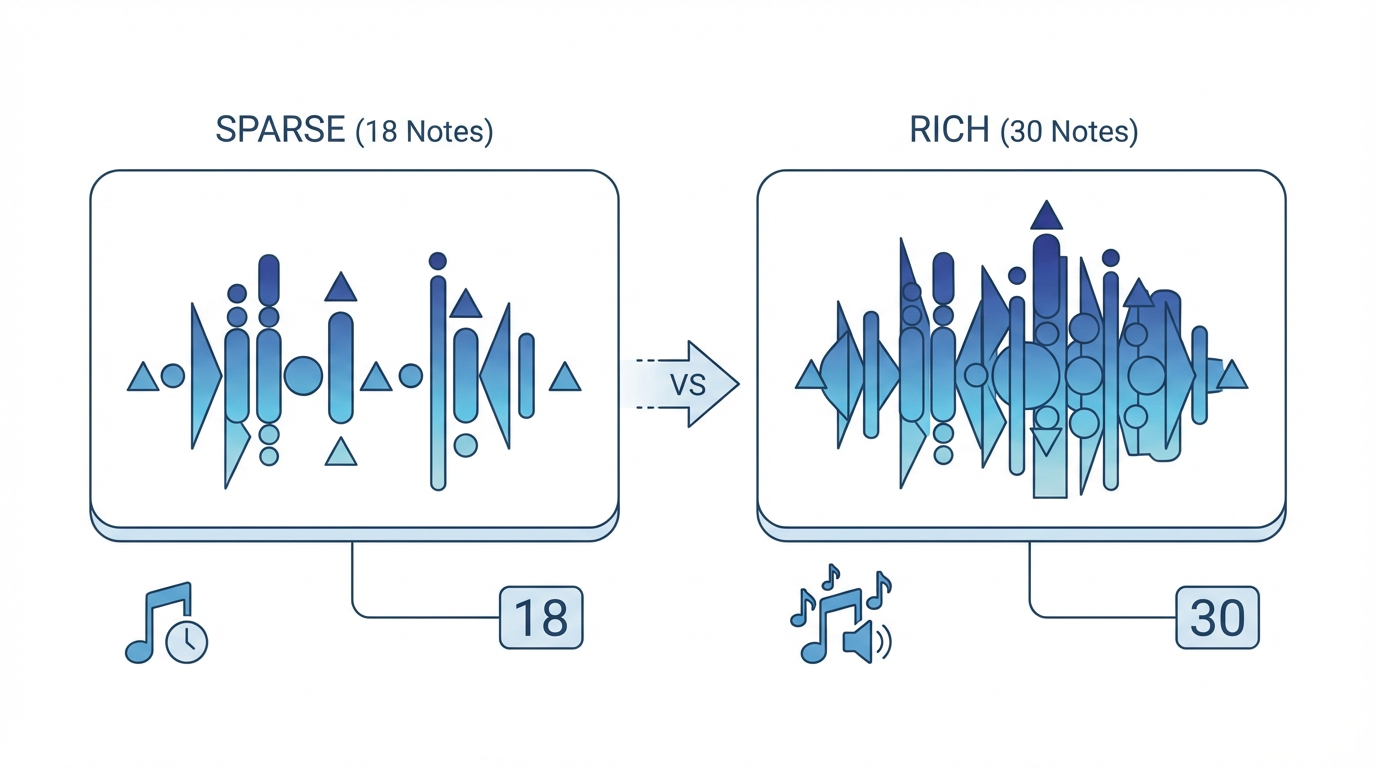
Note count is one of the most important. Sonusgear notes that mechanical music‑box movements typically range from 18 to around 72 notes, and Muro Box points out that traditional consumer boxes cluster in the 8 to 18‑note range, while premium Sankyo and Reuge movements reach 30, 50, 78, or even 100 notes. More notes allow richer harmonies and longer phrases. In practice, a 30‑note Ghibli or demon‑slaying theme will sound fuller and less repetitive than an 18‑note version, assuming the arrangement is well done.
Movement quality and brand also matter. Sonusgear flags descriptors such as “Swiss movement” and “hand‑tuned comb” as signals of higher‑end pieces, and Muro Box specifically calls out Swiss maker Reuge and Japanese brand Sankyo as benchmarks for premium mechanical movements. If a figurine’s product description highlights a Reuge or Sankyo movement or a 23‑note Japanese mechanism for an anime theme, that is a strong sign the sound has been treated as seriously as the sculpt.
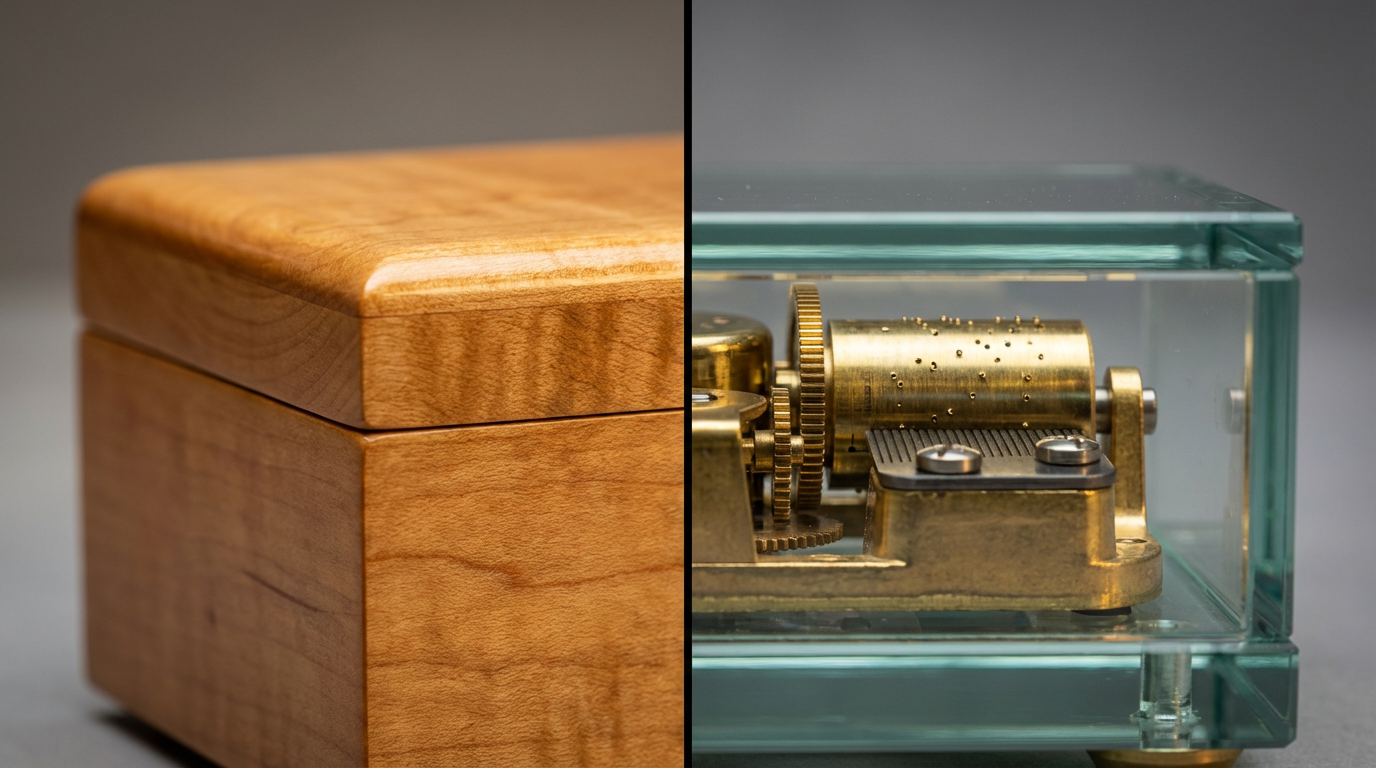
The case and base materials influence both durability and tone. Donuma and Sonusgear both recommend solid woods like maple, walnut, oak, or mahogany, as well as quality metals and resins, over thin plastic. Only One Music Box notes that well‑made hardwood cases with good brass fittings can last for decades or even over a century, and some 18th‑ and 19th‑century examples still play today. Subjectively, wood often adds warmth and resonance to the sound, while glass or acrylic cases – such as the beveled glass models highlighted by Music Box Attic – show off the movement visually and emphasize clarity.
Size and design are another axis, especially for figure collectors. Donuma’s guide points out that smaller boxes suit desks and shelves, while larger ones become focal display pieces, sometimes doubling as jewelry or keepsake storage. For anime figures, that translates to choices like compact chibi bases with minimal footprint versus big diorama‑style carousels that practically demand the center of a shelf.
Licensing and edition status are crucial for fandom‑heavy pieces. Muro Box specifically advises anime fans to seek officially licensed IP music boxes – such as Demon Slayer, Studio Ghibli, and Sanrio editions – through official channels, both for legal reasons and to ensure tune accuracy and build quality. The same guide suggests that limited runs, artist collaborations, and exclusive theme‑song boxes carry higher collector value. Bradford Exchange makes a similar case with its pop‑culture and artist‑licensed music boxes, from major film franchises to artist‑branded designs, positioning them as both memorabilia and functional art.
Mechanical versus Digital in Figurine Music Boxes
For many franchises, you can find both fully mechanical and digital figurine music boxes. The choice changes how the piece feels every time you trigger it. Sonusgear, Muro Box, and Donuma all sketch out the trade‑offs, which boil down to authenticity versus flexibility.
Aspect | Mechanical movement (cylinder or disc) | Digital sound module |
|---|
Sound character | Purely acoustic, created by steel comb teeth being plucked; warm, bell‑like, slightly imperfect | Recorded audio through a tiny speaker; can be very clear but sometimes thin or “toy‑like” |
Repertoire | Fixed tune, unless it is a disc system or a programmable mechanical movement | Potentially huge library; full modern tracks and multiple songs in one figurine |
Visual appeal | Often includes visible gears, cylinders, or rotating parts; feels like a little clockwork performance | Usually hides the electronics; some figures still move, but you rarely see the sound‑making mechanism |
Durability | No batteries; can last decades with proper storage, cleaning, winding, and occasional lubrication | Electronics and speakers can age or fail; battery compartments add another failure point |
Customization options | Some models allow custom cylinders, discs, or programmable mechanical arrangements; others are fixed forever | Many can be preloaded with chosen tracks at the factory, but most mass‑market units are not user‑editable |
Price expectations | Budget 18‑note boxes overlap with digital prices; high‑note‑count and programmable units cost more | Often cheapest option at the low end; high‑end digital with great speakers still tends to undercut Reuge‑level mechanicals |
Sonusgear’s research suggests that for many buyers the sweet spot in value lies in the mid‑range, roughly in the fifty to one hundred fifty dollar bracket, where you can often get solid materials and 30‑note movements without entering elite collector pricing. Their brief also warns against ultra‑cheap mechanical boxes under about fifteen dollars when construction quality looks flimsy or manufacturer information is vague.
If the figurine’s character and sculpt are your main focus and you mainly want the theme song as background, a well‑implemented digital module can be perfectly satisfying. But if the whole appeal for you is watching a tiny mechanical universe spin in sync with the music, then it is hard to beat a cylinder or programmable mechanical movement, even if that means living with a single 18‑second loop.
How Mechanics Shape Collectible Value
Donuma, Enchantmints, Only One Music Box, Sonusgear, and Muro Box all point to similar pillars of collectible value: age, rarity, craftsmanship, movement quality, and emotional story.
Vintage and antique pieces have obvious appeal. Donuma notes that vintage and historic music boxes are especially prized when they combine unique designs with tunings you cannot easily replicate today. Professional restorers such as Porter Music Box document how far serious restoration can go, from disassembling and cleaning every part of a Swiss cylinder box to repairing broken comb teeth, re‑cementing cylinders, re‑bushing governors, and re‑tuning entire combs so that the scale is accurate again. The before‑and‑after sound difference is often dramatic, reinforcing Only One Music Box’s point that well‑crafted boxes can remain playable for a century or more with proper care.
Limited editions and artist collaborations matter as much as movement specs for fandom‑driven collecting. Donuma and Muro Box both emphasize small‑run and limited‑edition boxes – whether they commemorate a milestone, feature exclusive engraving, or tie into a specific event – as particularly desirable. Bradford Exchange makes that logic explicit by building entire collectible lines around particular artists or franchises, backed by personalized inscriptions or names.
From a mechanic’s point of view, the movement is still central. Muro Box’s guide defines a “premium movement” as a finely crafted mechanism, often from makers like Sankyo or Reuge with 23 to 100 notes, that delivers richer sound and longer melodies than standard 18‑note units. Sonusgear recommends checking note count, play time (aiming for at least about thirty seconds of unique material), and winding feel – it should be smooth, without grinding or slippage – when assessing quality.
For anime and game figurines, licensing and tune accuracy combine with these mechanical markers. A character‑themed box with an off‑key or incomplete theme feels wrong no matter how nice the sculpt is. That is why Muro Box stresses using official licensed channels for Demon Slayer, Studio Ghibli, and Sanrio boxes, and why collectors often gravitate toward limited runs that feature original melodies or faithful theme‑song arrangements.
Caring for Music‑Box Figurines So They Survive Your Shelf
Collectors sometimes talk about their music‑box figures as if they are fragile, cursed artifacts, but the main enemies are very mundane: dust, moisture, temperature swings, rough handling, and overwinding. Multiple care guides, including Only One Music Box’s maintenance tips, Music Box Attic’s repair overview, a Steinbach Nutcrackers community PSA, and Enchantmints’ advice, all agree on the essentials.
Dust is a serious threat. A longtime seller posting to a Steinbach Nutcrackers group describes dust as the number one killer of music movements, with toddlers coming in second. Their PSA recommends fully winding and playing a Christmas music box at least every three months, allowing the mainspring to unwind completely. This periodic motion helps shake off dust and moisture from moving parts and keeps the spring from sitting under tension for months on end, which can weaken or even break it.
Storage and environment come next. Only One Music Box suggests keeping your music box in a cool, dry place around 70°F with roughly 50 percent relative humidity, away from direct sunlight and humidity. Enchantmints echoes this: avoid extremes of temperature, humidity, and harsh light, and store pieces in dust‑free environments whenever possible. For figurines with glass panels or lids, both sources recommend keeping those closed when not in use to cut down on dust.
Cleaning strategy is where maker philosophies diverge slightly, and this is a good example of why it is wise to follow the manufacturer’s instructions for your specific piece. Only One Music Box advises using a completely dry, soft cloth on wooden exteriors and avoiding water or chemical cleaners entirely, warning that moisture can warp wood and damage the mechanism. Music Box Attic, by contrast, suggests a very light touch with a damp soft towel and mild dish soap for exteriors, avoiding hot water and never submerging the box. For interior fabrics and felt, they recommend a soft cloth and warm water only, plus air‑drying with the lid open or using compressed air for speed. Both agree that dishwashers and soaking are absolutely off‑limits.
Mechanical upkeep is more advanced and should be approached cautiously. Only One Music Box recommends applying just a drop or two of quality lubricating oil to external moving parts every few years, cautioning that over‑oiling attracts grime. Music Box Attic describes a more thorough process for those who feel confident: remove the movement, use an aerosol cleaner to blow off dust, and apply a light lubricant only to the gears and governor flywheel. They explicitly advise against lubricating the cylinder or the comb, since that can cause more harm than good. Both sources also suggest contacting professional repairers or even mechanical watch specialists if you feel unsure; the mechanisms are close cousins to watch movements.
Winding technique is the last big pillar. Only One Music Box notes that overwinding is a common cause of damage. They recommend avoiding force when you feel resistance, limiting winding to roughly eight to twelve turns for most boxes, letting the tune play all the way down, and not leaving a box fully wound for long periods. Music Box Attic adds that if a winding key does not turn smoothly, you should stop immediately and consider that a sign the movement may need servicing. The Steinbach PSA reinforces the idea of regular, gentle full playthroughs as both a cleaning aid and a way to keep mainsprings healthy.
Child safety weaves through all of this as well. Donuma’s guide reminds buyers that music boxes often include small parts that can pose choking hazards for infants and toddlers. Muro Box’s buying guide for children’s music boxes advises checking for safety certifications, avoiding sharp edges and small detachable parts, and favoring simple wind‑up or button controls over complex electronics for young users. When your figurine music box is meant more for display than play, it is usually best to treat it like any other collectible: above toddler reach, and “look, do not twist” for small kids.
How I Evaluate a New Music‑Box Figurine as an Anime Fan
When I am eyeing a new music‑box figure – whether it is a crystal‑ball carousel with a pink‑gold finish or a chibi character perched on a rotating base – I find myself mentally running through a checklist that lines up almost perfectly with what Muro Box, Music Box Attic, Only One Music Box, and By Music Box describe. It boils down to occasion, character and theme, movement, melody, and long‑term care.
Occasion comes first. Guides from By Music Box and Muro Box both suggest matching the box to a specific life moment: birthdays, graduations, anniversaries, weddings, or holidays. For a graduation, I might gravitate toward a jewelry‑box style figure that hides a storage compartment under the character, echoing the “elegant organizer” personality type that Only One Music Box talks about. For Valentine’s Day, Muro Box’s examples of crystal ball and carousel designs with lighting effects and romantic songs like “Canon in D” feel right on target.
Then I look at character and visual theme. Yunsheng’s design ideas make a strong case for alignment between motif and event: nature themes for Mother’s Day, travel motifs for farewell gifts, and game or anime characters for fandom‑heavy occasions. Muro Box notes that anime fans respond strongly to officially licensed Demon Slayer, Studio Ghibli, and Sanrio designs; Bradford Exchange extends that logic to broader pop‑culture universes such as major fantasy franchises and artist‑licensed imagery. As a collector, that means I pay attention to whether the sculpt and base design feel true to the source and whether there is any indication that the imagery and music are properly licensed.
Movement and melody are inseparable for me. Following Sonusgear’s and Muro Box’s advice, I check whether the listing specifies an 18‑note, 23‑note, or higher note‑count movement, and whether any movement brand like Sankyo or Reuge is mentioned. If I can preview the tune – something Muro Box strongly recommends – I listen for clarity, a lack of buzzing in the comb, and whether the arrangement captures the emotional heart of the piece, even in a short loop.
For long anime themes, I have a bias shaped by Muro Box’s programmable units: if I want the full emotional arc of an opening or ending, I will save for a programmable mechanical box or a design that can handle custom tracks, because traditional 18‑second loops simply do not have enough room. For classic lullabies or waltzes, the limitations of an 18‑note cylinder often become part of the charm.
Finally, I ask whether I am willing to care for it. Only One Music Box and Music Box Attic both stress that quality boxes can last decades if you store them around room temperature, keep them dry, dust them lightly, wind them correctly, and occasionally have them serviced by professionals. If a figure feels too delicate to clean or I know it will sit in direct sun next to a hot window, I factor that into the decision. A music‑box figurine is not just a pretty statue; it is a little machine that needs a reasonably kind environment.
FAQ: Common Questions About Figurine Music‑Box Mechanics
Can I swap the melody in a figurine music box?
Donuma’s overview notes that most traditional mechanical boxes have fixed tunes. The cylinder or comb is literally built around that specific song, and swapping it is not like changing a record. Some disc‑type boxes use interchangeable metal discs, and a few products allow custom‑made cylinders or programmable mechanical systems like Muro Box’s designs. But for the majority of mass‑market character figurines, the melody is set at the factory and not meant to be changed.
How long can a music‑box figurine last?
Only One Music Box points out that well‑made music boxes built with quality hardwoods and good brass fittings can last for decades or even more than a century, and that some 18th‑ and 19th‑century boxes still play today. Professional restorers like Porter Music Box show that even heavily worn antique cylinders can be disassembled, cleaned, repaired, and re‑tuned to regain clear, rich sound. For a modern figurine with a decent movement, sensible storage and gentle use can easily stretch its lifetime across multiple generations.
Are music‑box figurines safe for children?
Donuma states that most music boxes are generally suitable for children but may contain small parts that present choking hazards for infants and toddlers. Muro Box’s buying advice for children’s boxes recommends checking age ratings and safety certifications, avoiding sharp edges and small detachable components, and using simple controls such as basic wind‑up keys or push buttons. For highly detailed anime or pop‑culture figurines, it is usually better to treat them as collectibles rather than toys for unsupervised play.
Closing
At the end of the day, an anime figurine with a music box inside is fan art powered by clockwork. Understanding how that little movement stores energy, plucks its comb, and drives the character’s motion turns every wind of the key into something more intentional. Take a bit of care with dust, tension, and tune choice, and your favorite opening or waltz will not just live in playlists; it will echo from a tiny stage on your shelf for years to come.
References
- https://insights.made-in-china.com/Music-Box-Styles-Vs-Features-What-Are-Their-Differences-in-Catering-to-Listener-Preferences_QTptugyKunHi.html
- https://sonusgear.alibaba.com/buyingguides/music-box
- https://www.gigwise.com/curating-the-ideal-music-box-a-guide-for-thoughtful-gifting/
- https://www.instructables.com/Build-a-Programmable-Mechanical-Music-Box/
- https://www.lemon8-app.com/@music.box248/7485772907243749934?region=us
- https://www.musicboxattic.com/how-to-select-the-perfect-music-box-our-ultimate-guide/?srsltid=AfmBOooXlN8JzrHt10OMgzjr11HMwVxpwhjtNPot2wqA6l9Eva8ckDOZ
- https://onlyonemusicbox.com/caring-for-your-music-box-maintenance-tips-and-tricks/?srsltid=AfmBOoqevK3l-9rCBusRmawh0Flglqe7nAXoUkbMmjl8M07Bl2w-QwQc
- https://m.yunshengonline.com/news/10-creative-custom-music-box-design-ideas-for-any-event
- https://www.bradfordexchange.com/c/collectibles/15077_music-boxes.html
- https://bymusicbox.com/blogs/guide-inspiration/how-to-choose-the-perfect-music-box-gift