Understanding the Psychology Behind Figurine Cabinet Display Order
This article explores how the way you arrange figures in your display cabinet shapes your emotions, and offers practical ways to reorder shelves so your collection feels intentional and alive.
The way you order figures in a cabinet quietly rewires how you feel about your collection every day, from what your eyes land on first to which pieces fade into the background.
You know that moment when you step back from your glass cabinet and something just feels off, even though every figure is technically “in there”? Maybe a grail looks weirdly unimportant, or a whole shelf reads as visual noise. Many collectors find that a simple reorder—without buying a new shelf or light—makes their setup feel more expensive, more personal, and far more fun to look at. This article explains why that happens and walks through concrete ways to use display order to tell better stories, protect your favorites, and make every shelf feel intentional.
Why Display Order Feels So Personal
When you treat your cabinet as a story instead of storage, your brain stops seeing “a bunch of plastic” and starts reading the shelves like panels in a manga. Guides that frame figure setups as both preservation and storytelling show how display choices can reflect personality just as much as what you buy in the first place. Displaying anime figures as both preservation and storytelling turns the cabinet into a kind of daily mood-board rather than a warehouse.
Planning the order is what lets that story read cleanly. Collectors who define a theme, avoid overcrowding, and decide whether a cabinet is mainly for display or storage often report that their collections feel calmer and more “grown up,” even when the figures themselves are bright and chaotic. Advice to group figures logically by theme or franchise and to use risers and varied shelf heights is not just about aesthetics; it gives your brain obvious “chapters” to follow instead of a jumble you have to decode every time you walk by. Grouping figures logically by theme or franchise creates visual order that matches how you think about the shows you love.
Eye Level, Hot Zones, and the Grail Shelf
Most people instinctively look first at whatever sits roughly at eye level as they enter a room, which is why viewing height becomes prime psychological real estate in a cabinet. Collectors who convert tall wardrobes or cabinets into displays often swap in clear glass only at this band and use frosted or closed storage above and below, explicitly separating the “hero zone” from the stash of boxes and overflow. That design choice quietly acknowledges that one horizontal slice of the cabinet carries most of the emotional load.
In many anime setups, that middle band becomes the grail shelf. When figures that mean the most—a first scale, an expensive resin, or the character that pulled you into the hobby—live here, you get a hit of recognition every time you glance over. Protective guides recommend keeping valuable or fragile pieces in enclosed cases, out of high-traffic zones and away from the chaos of kids, pets, and clumsy friends, so placing them at eye level behind glass satisfies both heart and risk management. Advice like Choosing enclosed display cases and keeping high‑value figures is as much about peace of mind as it is about resale value.
Top Shelves: Mythic but Distant
The very top of a cabinet reads differently. It is still visible, but it feels more like a shrine than a stage. Many collectors park tall, dramatic pieces or completed sets here: winged characters, towering mecha, or full team lineups that look best when you see the overall silhouette. Since enclosed cabinets are widely recommended as the safest, most protective option for figures, using the top shelf inside a glass case for impact pieces takes advantage of height while still controlling dust and accidental bumps. Dedicated display cabinets or cases that prioritize visibility and stability make these “altar shelves” feel intentional, not precarious.
The trade-off is intimacy. Top-shelf pieces look epic from across the room, but you rarely get nose-to-glass time with their tiny details. If a sculpt’s magic lives in close-up face paint or intricate textures, placing it this high can blunt your daily connection to it. The psychological rule of thumb: the farther from your eyes, the more a figure needs a big, readable silhouette to still feel important.
Middle Shelves: Emotional Center Stage
Middle shelves, especially the one that hits your sightline as you sit at your desk or couch, are your cabinet’s emotional core. This is the perfect zone for narrative scenes: hero-versus-villain standoffs, full squads facing a shared direction, or slice-of-life moments that echo how you actually watch or read the series. Display guides that recommend building narrative scenes—hero and rival facing off, teams grouped as lineups, or everyday interactions—are really showing you how to give that middle band a clear plot instead of a collage. Staging hero-versus-villain confrontations and team lineups encourages your eyes to move through the shelf like a scene rather than stop at random.
Because this area gets the most viewing time, it is also where clutter hurts the most. Home styling advice stresses leaving breathing room between objects, warning that there is a fine line between a collected look and outright clutter. Leaving intentional breathing room between items keeps the middle zone from feeling like a crowded con table and lets each character register as a character, not a statistic.
Lower Shelves: Comfort, Overflow, and Experimentation
Lower shelves sit closer to hand than to eye, which quietly changes how you use them. This is where many people place durable prize figures, less fragile pieces, and experiments in posing or custom backdrops. Guides that recommend rotating displays, especially for large collections, often frame this as a way to manage clutter and light exposure: you can treat the lower shelves as a “now playing” rotation while the prime zones hold evergreen favorites. Rotating displays every few months to refresh the room matches how your attachment to certain shows spikes and cools over time.
The downside is psychological demotion. Anything that falls below a natural glance line risks becoming background noise. If a figure matters to you more than you admit, but you keep shoving it down there “for now,” that shelf might be telling you it is time for a cabinet reshuffle.
Three Ordering Styles and How They Shape Mood
Collectors tend to fall into a few dominant ordering approaches, and each one tunes the emotional “temperature” of a cabinet differently.
When you order by series or chronology, the cabinet feels like a visual encyclopedia. Display guides that recommend arranging by series, franchise, or manufacturer lean into this clarity, especially when combined with tiered risers so smaller figures stay visible. Grouping figures by theme, franchise, or manufacturer and using tiered risers lets guests read your shelves like a table of contents. The upside is instant comprehension and easy recall: if someone asks “Where are your Fate figures?” you both know exactly where to look. The downside is that emotional weight does not always match shelf space; a side character you adore can get lost in a huge cast if you stick to strict series blocks.
Ordering by relationships and conflict shifts the cabinet from encyclopedia to drama. Some figure display guides explicitly suggest grouping rivals, teams, couples, or heroes versus villains to build immersive scenes, and that is where psychological fireworks really start. Arranging figures by character relationships such as rivals, teams, or heroes versus villains mirrors how you emotionally experience those stories.
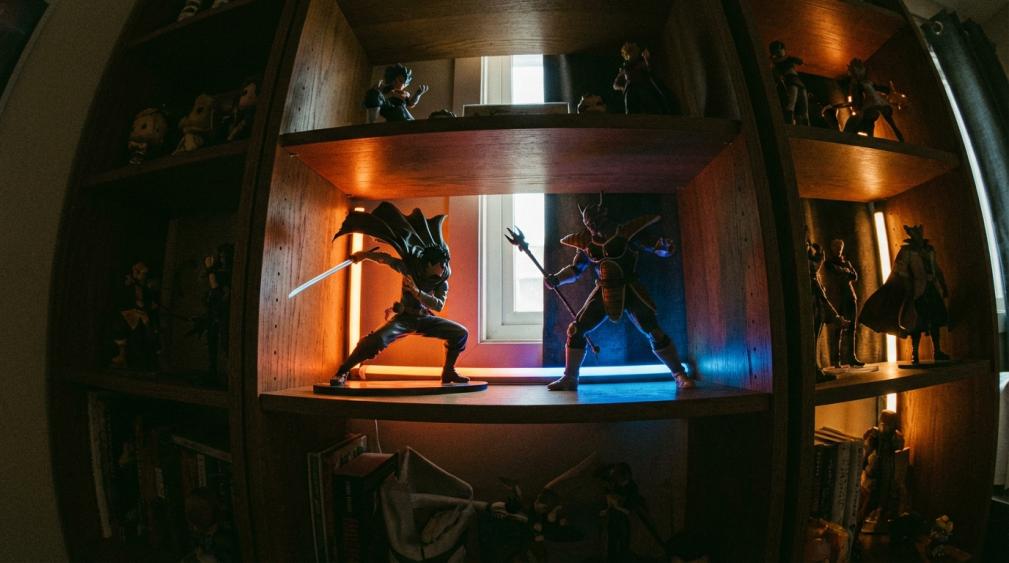
When Bakugo glares toward Deku across a shelf, or your Akatsuki cluster looms over a lone Naruto on the tier below, your brain instantly plugs into narrative tension. The trade-off is that cross-series mashups can confuse guests who do not know every franchise, but if the cabinet is primarily for you, this style often feels the most alive.
Ordering by color and mood uses the psychology of atmosphere more than plot. Minimalist cabinet advice frequently recommends arranging figures by color palette to create a calm flow instead of a visually noisy assortment, and the result can be stunning. Arranging figures by color to create a cohesive, calming flow turns your cabinet into a giant gradient or a set of mood blocks: soft pastels for slice-of-life, neon brights around mecha and cyberpunk, shadowy reds and blacks around villains. Paired with lighting temperatures—warm LEDs for cozy nostalgia or cooler tones for a crisp, modern vibe—this ordering makes the cabinet feel like a single art piece. The cost is that story clarity sometimes suffers; someone unfamiliar with your collection may not know why characters are grouped the way they are, even if the color logic feels great to you.
Here is a quick comparison of how these styles play out.
Ordering style | What it feels like in your brain | Best for | Main trade-off |
|---|
Series/chronology | Easy “reference book” scanning | Large casts and many franchises | Emotional favorites can get buried |
Relationships/conflict | High-energy, scene-driven storytelling | Character-driven collectors | Can look chaotic across many series |
Color/mood | Cohesive, gallery-like atmosphere | Design-focused, minimalist setups | Story logic can be less obvious |
Protection Logic: Value, Fragility, and Climate
Display order is rarely just about looks; it also encodes how worried you are about damage. Guides for both action figures and anime scales recommend choosing sturdy shelves, keeping figures out of direct sunlight, and maintaining a stable climate around the cabinet with moderate temperature and humidity. Maintaining a stable climate and choosing sturdy, adjustable shelving quietly influences which figures feel safe on open lower shelves versus behind doors at eye level.
Collectors are often advised to use sealed, UV-aware cases for delicate resin statues and rare limited editions, while more durable prize figures can live on open shelves. Using protective, sealed cases for delicate statues and keeping more durable prize figures on open shelves naturally leads to a protective hierarchy inside the same cabinet. High-risk, high-value pieces migrate to enclosed middle or upper shelves; hardy PVCs and prize figures end up closer to hand. Even if you never say “I like this more,” your ordering often maps directly to how heartbreaking it would be if something fell or yellowed.
Environmental advice, such as keeping humidity around 40%–50% and using UV-filter window film that can block up to 99% of harmful UV rays, explains why some collectors push their most sensitive pieces farther from glass doors or windows even when they are in protective cabinets. The physical layout of your room—where the sun hits, where vents blow air, where people walk—invisibly shapes which shelf feels safe for which figure.
Avoiding Visual Overload: Negative Space, Rhythm, and Rotation
Even the best order falls flat if every inch is packed. Styling guides for glass cabinets emphasize varying object heights and shapes and, crucially, leaving intentional breathing room so the cabinet reads as curated instead of crammed. Varying the height and shape of objects mirrors classic composition rules from art and photography: your eye needs pauses to appreciate focal points.
Figure-specific advice reinforces this by recommending acrylic risers to stagger heights and by warning against overcrowding shelves. Using tiered risers and varied shelf heights keeps background characters visible without turning the shelf into a wall of faces. When you respect negative space, your brain starts perceiving small groups of figures as scenes and beats rather than as a single, overwhelming data dump.
Rotation is the final piece of this psychological puzzle. Collectors with large collections are often encouraged to rotate figures every few months, sometimes tied to anime release seasons, holidays, or character birthdays. Rotating displays every few months for large collections keeps the cabinet from becoming visually stale and reduces the feeling that you never see some figures anymore. On a psychological level, rotation gives you permission to let certain characters rest without guilt, knowing they will get their arc on the prime shelves later.
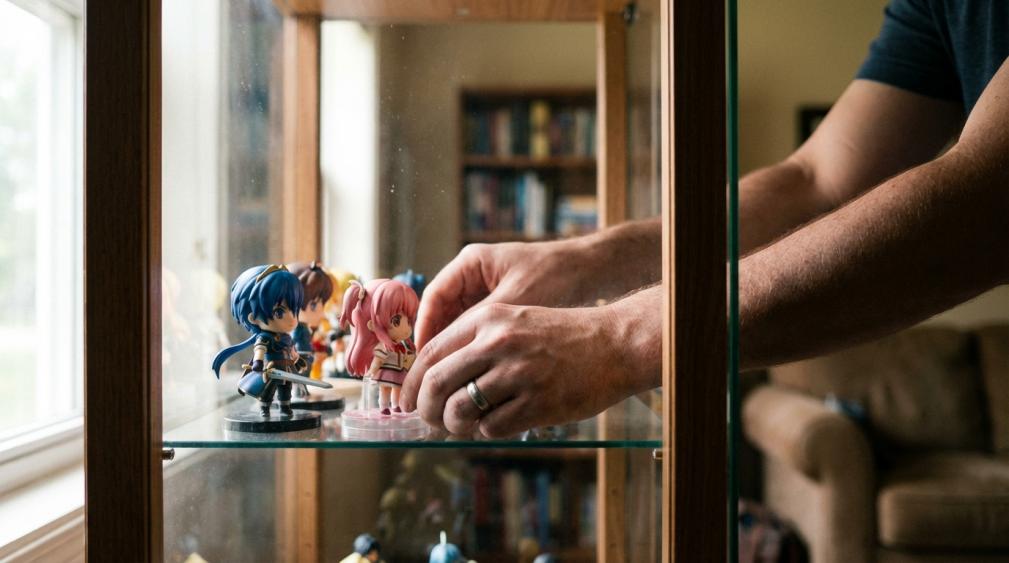
Turning Insight into Action: Reordering Your Cabinet Tonight
Putting the psychology to work starts with stepping back, not grabbing figures. Stand or sit where you usually see the cabinet—your desk chair, your couch, your bed—and notice where your eyes land first. If the first thing you see does not match your emotional priority list, that is your biggest lever.
Next, take a quick photo of each shelf. Looking at the cabinet on your cell phone shrinks it down and makes clutter and dead zones painfully obvious. Ask yourself three questions: which figures feel underappreciated, which shelves look loud or confusing, and what story you want the cabinet to tell at a glance. That story can be “villains looming over heroes,” “idol energy from left to right,” or “a calm gradient from soft to intense shows.” There is no wrong answer; the key is having one.
Then, assign roles by shelf. Designate a middle band as your emotional center, where your absolute favorites, key rivalries, or most meaningful scenes live. Reserve the safest enclosed areas for fragile or high-value pieces that would devastate you to lose, following the common advice to keep such items in protected, stable conditions with gentle lighting. Using enclosed cases with low-heat LED lighting gives you a clear rule for deciding what belongs there. Use top shelves for dramatic silhouettes and completed sets, and treat lower shelves as rotation and experiment zones where you can try new backdrops, props, or posing ideas without disrupting the main story.
Finally, refine the rhythm with depth and space. Bring in risers for crowded casts, separate similar colors or shapes so they do not form awkward blobs, and leave at least a little empty space beside your strongest focal figures. Clean as you go; several guides suggest light dusting every few weeks, a cadence that pairs perfectly with tiny micro-reorders. Over time, you train your own eye, and the cabinet slowly evolves from “where the collection lives” into a visual autobiography of your fandom.
FAQ
Is there a “correct” way to order shelves?
There is no single correct order, but there are orders that better match your goals. If you care about clarity and easy navigation, grouping by series and scale with clear themes and risers will feel best. If you care most about emotional impact, arranging by character relationships or conflict and giving key scenes eye-level real estate will matter more.
Should I mix scales on one shelf?
Mixing scales can work when you think in terms of depth rather than lines. Smaller figures can move forward on risers while larger ones anchor the back, creating a layered scene instead of an uneven row. The important part is that the shelf has a clear focal point and that no figure you care about is hidden behind another figure’s base or hair.
How often should I redo the order?
A full reshuffle a couple of times a year plus small tweaks during regular dusting is plenty for most collectors. Rotating figures with the seasons, big fandom moments, or your own shifting interests keeps the setup fresh without turning maintenance into a chore. If you notice a figure you love but rarely see, that is your signal to pull it up into a more prominent role in the next reorder.
Reordering a cabinet is basically rewriting the opening chapter of your own fandom story. The more intentionally you place each character in that story, the more your collection will feel like a living, evolving world instead of rows of silent plastic.