Understanding Why Your Anime Figurines Become Sticky Over Time
This guide explains why anime and PVC figures become sticky, how to clean them safely, and how to slow the problem from coming back.
Your figures can feel like they are melting because slow changes inside the plastic and your display environment push chemicals and residues to the surface. The process is frustrating, but you can slow it dramatically and safely clean what is already there.
You pick up a favorite figure for a quick dusting and, instead of smooth paint, your fingers stick like you touched syrup, with every speck of dust welded to the surface. Collectors across vintage Star Wars, Transformers, and anime PVC lines keep reporting the same thing: figures that were fine a few years ago suddenly turn tacky or “melty,” sometimes even after multiple careful washes. The good news is that this is usually a manageable materials issue, not an instant death sentence for your collection, and you can learn what causes it, how to clean it, and how to keep it from coming back so fast.
What “sticky” really means for anime figures
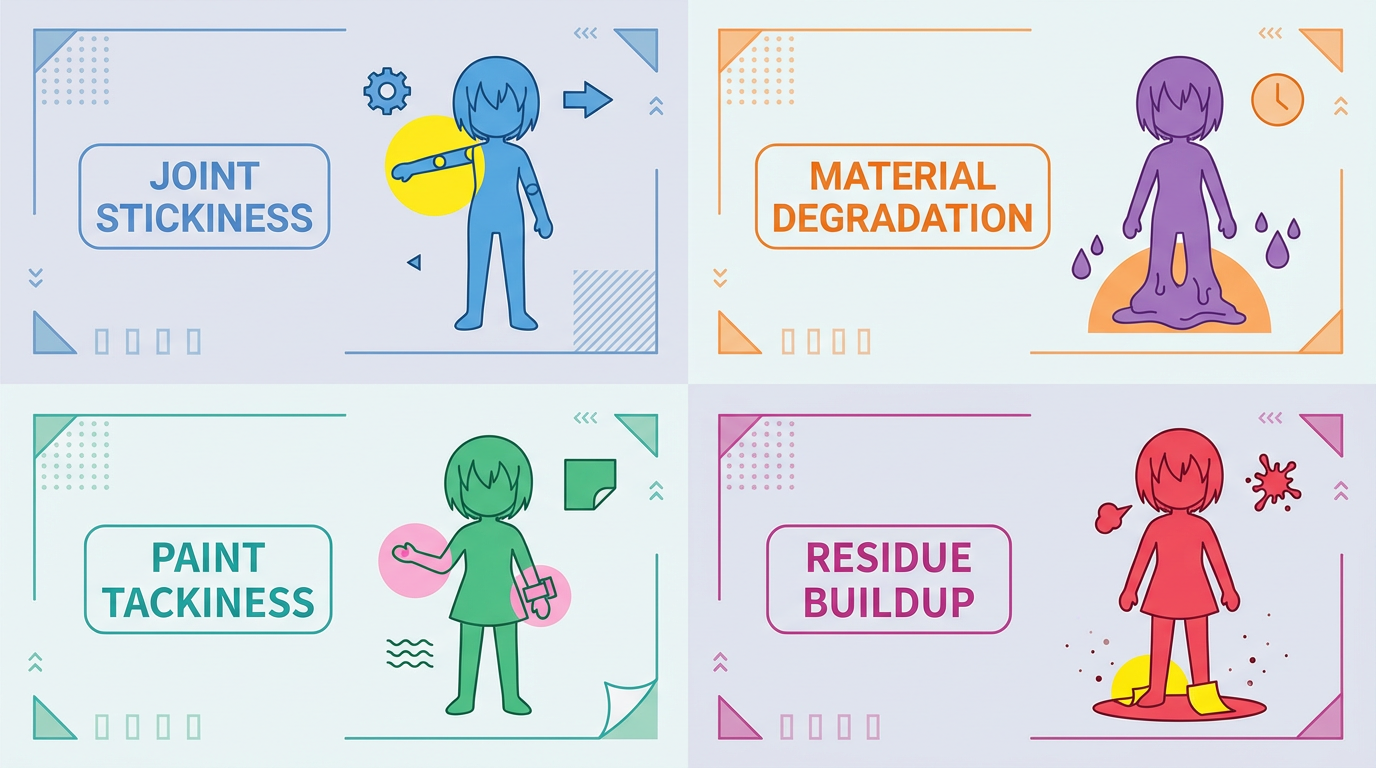
That gross tacky feel does not always come from the same problem. Sometimes it is a thin, invisible film on your PVC figure’s skin, sometimes it is leftover glue where a price sticker used to be, and sometimes it is an old soft-touch coating breaking down on a base or controller. Collectors in multiple toy communities describe sticky surfaces that feel slightly “melting” on limbs and torsos, especially on softer parts, while other pieces only feel sticky in rectangular patches where labels were stuck.
Most stickiness on figures falls into four main buckets: plasticizer film from inside the PVC itself, skin oils and dust smeared over time, sticker or tape adhesive, and decaying surface coatings. They can look similar at first, but the fix and the long-term risk are different, so it helps to compare them side by side.
Type of stickiness | Clues on your figure | Typical cause | Best first move |
|---|
Plasticizer film | Whole surface feels slightly oily or “melting,” often on softer PVC parts even after a basic wash | Flexible chemicals in PVC slowly migrating to the surface in warm or poorly ventilated storage | Gentle hand wash with mild dish soap; long soak in diluted soap if needed |
Sticker or tape residue | Clear, glossy patches or outlines where labels were; sometimes gray fluff stuck in a perfect rectangle | Leftover adhesive from labels, price tags, or tape on bases, shelves, or cases | Targeted removal of sticker residue with safe solvents on hard surfaces only |
Skin oils and grime | Stickiness concentrated where you usually grab the figure, along with visible dirt in creases | Natural skin oils and dust gradually forming a greasy film | Regular dusting and periodic lukewarm water plus a drop of mild soap |
Coating breakdown | Very tacky, sometimes patchy feel on remotes, soft-touch stands, or older accessories; finish may look dull or smeared | Old rubbery coatings or finishes chemically breaking down on the surface | Gentle baking-soda paste on hard plastic, avoiding fragile painted areas |
Once you know which problem you are dealing with, you can choose methods that are strong enough to help but gentle enough to protect the sculpt and paint.
Why plasticizers make your PVC feel like it is melting
PVC figures use small amounts of plasticizer, flexible chemicals mixed into the plastic so soft hair, skirts, and faces can be molded cleanly and pop out of molds without cracking. Over years, especially in warm rooms, that plasticizer does not stay locked in; it slowly migrates outward and can even vaporize, then settle back down as a slightly oily film on the surface. That is the classic “why does my brand-new-in-box figure feel greasy?” moment.
When figures stay sealed in blister packs or boxes for years, the vapor from those plasticizers has nowhere to go. It bounces around inside that tiny microclimate and eventually condenses on the figure’s surface, giving you a sticky or even gooey feel the first time you open the package. A major PVC figure maker has shown that long-stored chibi figures and Nendoroid-style pieces can come out of their boxes with this exact sticky film, even though nobody ever touched them.
Heat and light accelerate the process. Direct sunlight and hot rooms do more than fade paint; they also speed up plasticizer movement, which can mean your most dramatic shelf spot is quietly cooking your figures. Toy preservation guides add that basements, attics, and garages with big temperature and humidity swings are prime zones for yellowing, warping, and sticky surfaces, while more stable, climate-controlled spaces keep plastics closer to their comfort zone.
There is no single “expiration date” for PVC. Collectors comparing dozens of Star Wars releases found some white armor pieces yellowing and going tacky while others on the same shelf stayed bright, and some deluxe or translucent figures became sticky faster than basic ones from similar years. The best explanation is a mix of different plastic recipes plus environment and ventilation, not a neat lifespan number.
Another piece of the puzzle is off-gassing. Vinyl and PVC slowly release chemicals into the air around them, and if that air is trapped, those gases can start to attack other plastics and even packaging. Long-time sofubi and vinyl collectors discuss vinyl off-gassing and deliberately leave storage bags slightly open or cut with tiny holes so gases can escape instead of condensing as grease on the toy.
How to clean sticky anime figures without destroying them
Start with gentle soap and water
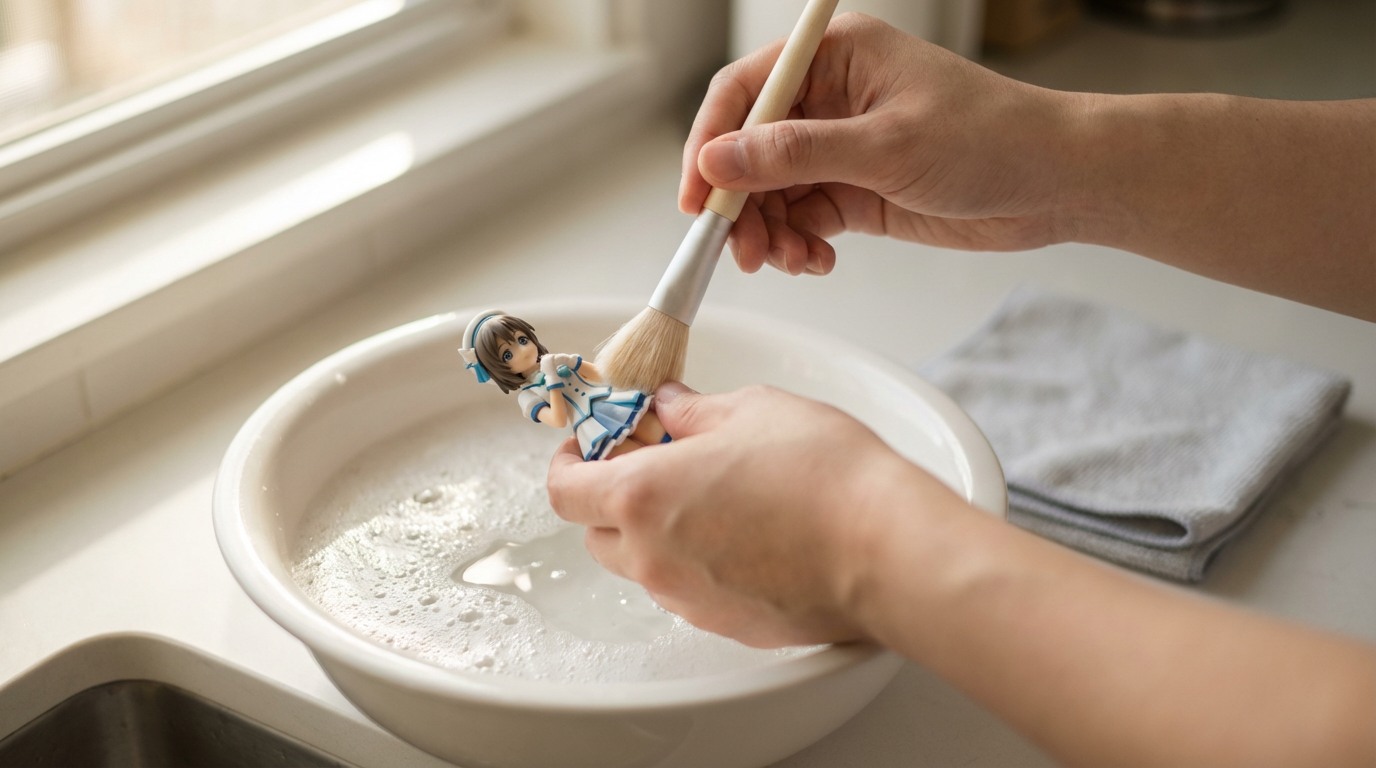
The safest starting point for almost any sticky figure is simple but effective: lukewarm water plus a drop or two of mild dish soap. Several action figure care guides recommend filling a small basin, dipping a soft cloth or a very soft toothbrush, and gently working over the figure in small circles without scrubbing painted eyes or tiny decals. Rinse carefully with clean lukewarm water and pat dry with a soft, lint-free cloth rather than rough towels or tissues that can catch on sharp details.
Collectors dealing with vintage sticky figures have had good results with repeated baths instead of one aggressive session. One well-documented case involved a Chief Chirpa figure that stayed slightly tacky after the first wash and only felt normal after several rounds of warm, soapy soaking and gentle brushing in the crevices. The key is patience: light pressure, plenty of rinsing, and time between washes so you can judge whether the stickiness is improving or coming from deeper plastic degradation.
For stubborn plasticizer film, a major PVC manufacturer tested a long soak in a solution of about ten parts water to one part dishwashing liquid, leaving figure parts submerged for around twelve hours before giving them a gentle hand wash. In that test, almost all of the sticky feel disappeared, although the author emphasized that any cleaning is at the owner’s risk and results can vary by figure and paint. Avoid soaking figures with paper stickers, fabric elements, or built-in electronics, since prolonged immersion can damage those details even if the PVC itself survives.
Removing sticker goo on stands and shelves
Sticker residue is a different issue. When the only sticky spot is where a price label sat on an acrylic base, glass display door, or plastic riser, you are fighting glue, not plasticizer, and that means targeted solvent is your friend. Cleaning guides on sticker residue recommend rubbing alcohol on a cotton ball or microfiber cloth for hard, non-porous surfaces; it softens many adhesives in seconds so the glue wipes away rather than smearing.
On more delicate materials, especially wooden shelves or faux-leather display pads under your figures, alcohol can be too harsh. Gentle options include warm vinegar, a baking-soda-and-coconut-oil paste, or a thin layer of olive oil followed by dish soap, all of which help break down glue without strong solvents. Whatever you try, follow the same rule cleaning pros repeat: test in a hidden spot first, use soft cloths or plastic scrapers instead of metal blades, and stop if the finish starts to matte, cloud, or discolor.
For direct figure surfaces, treat powerful commercial adhesive removers as last-resort tools, not everyday cleaners. Products like Goo Gone and WD-40 are effective at dissolving tough glue but carry real risk for painted PVC and clear plastic, so keep them for glass cases, metal shelving, or stickered shipping boxes rather than anime skin and hair. Collectors and figure-care blogs alike urge avoiding strong solvents and abrasives on figures because they can strip paint, cloud clear parts, and permanently alter finishes.
When a baking-soda scrub helps
Sometimes the sticky problem is not PVC itself but an old soft-touch or rubbery coating that has gone bad, especially on remotes, game controllers, or certain figure bases and accessories. In a detailed test on sticky electronics, a writer found that rubbing alcohol barely helped and orange essential oil was too expensive for full coverage, while a simple paste of baking soda and water, rubbed by hand for about ten minutes, removed the sticky feel from a remote’s back plate. Afterward, a damp, not soaking wet, cloth wiped away residue and left the plastic usable again.
You can borrow that approach for hard plastic parts connected to your collection, such as extremely sticky matte stands or light-up base shells, with a few caveats. Keep the paste away from fine painted details and decals, since any abrasive action, even gentle, carries risk there. If you are cleaning battery-powered parts, keep moisture away from the battery compartment and dry it thoroughly afterward, because even a little leftover dampness can invite corrosion later.
What not to do
The temptation when a grail feels gross is to reach for the strongest thing under the sink, but the harshest cleaners are exactly the ones figure specialists warn against. A PVC manufacturer’s test showed that abrasive scouring creams remove stickiness very effectively but often take gloss and surface detail with them, leaving a dulled, uneven finish; scouring powders are considered even more dangerous. Collectors also report that strong solvents and harsh household cleaners can leach color, erase tampo prints, and cloud clear effect parts almost instantly.
Yellowed plastic is a separate, painful topic, and some hobbyists experiment with hydrogen-peroxide “retr0bright” treatments to make white parts look new again. In discussions about figure life expectancy, a chemistry-savvy poster pointed out that while peroxide can reverse yellowing, it also continues to degrade plastic over time, so any such treatments are best kept for inexpensive, non-grail items and used sparingly. For sticky surfaces, soap, water, patience, and, in a few controlled cases, baking soda or gentle adhesive removers are safer tools than aggressive bleaching or scrubbing.
How to keep stickiness from returning
Light, temperature, and humidity
Anime figures are both collectibles and small art pieces, and the same environmental rules museums use for delicate objects apply surprisingly well at home. Figure shops and preservation guides agree that direct sunlight slowly fades paint and degrades PVC and vinyl, while high heat and wild temperature swings can warp parts, encourage yellowing, and push more plasticizer to the surface. Basements, garages, and attics tend to combine moisture, dust, and temperature extremes, which is a recipe for sticky surfaces, brittle joints, or moldy boxes.
A climate-controlled room with stable, comfortable conditions is ideal. Display cases with UV-filtering acrylic or glass, placed out of the direct path of sunbeams and heating vents, cut down dust and UV damage at the same time. Cool LED lighting avoids dumping extra heat onto figures, and rotating your lineup occasionally helps prevent one side of a figure from taking all the light and aging faster.
Let your figures breathe without getting dusty
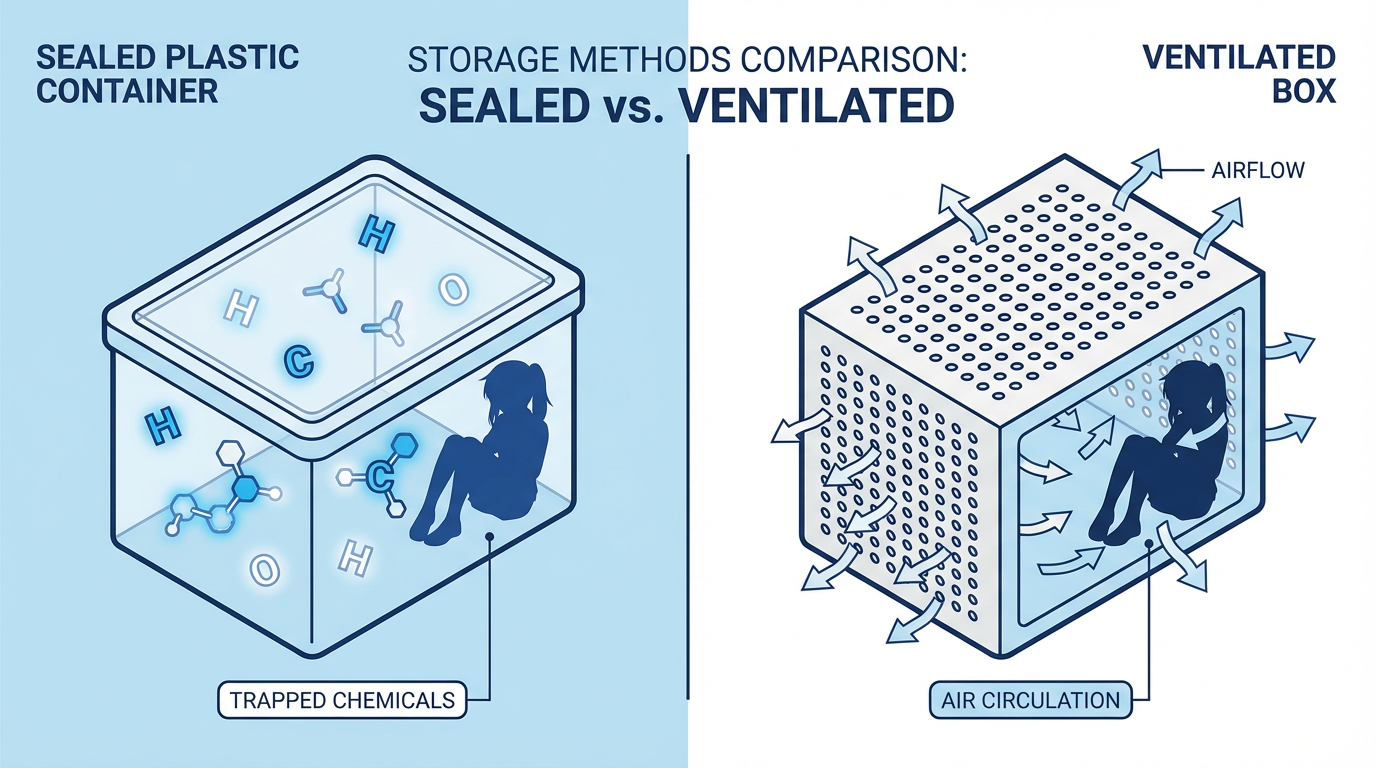
One of the sneakiest accelerators of sticky plastic is trapped air. When you seal a figure in a plastic bag or airtight bin, all the chemicals it releases get stuck in a tiny volume of space and can end up redepositing on the figure or the inside of the bag. Long-time sofubi collectors who deal with vinyl every day talk about vinyl off-gassing and recommend using only one toy per bag, leaving those bags slightly open, and occasionally venting storage bins so gases can escape instead of condensing into grease.
Cheap, thin storage bags and direct contact with bubble wrap are both flagged as risky for vinyl, since different plastics can interact and damage one another over time. A safer pattern is to use thicker, vinyl-safe bags or archival sleeves and add a layer of acid-free tissue paper between the toy and any bubble wrap or outer packaging. Cardboard boxes, which are not fully airtight, sometimes perform better than completely sealed plastic tubs for long-term vinyl storage because they naturally allow a bit of airflow.
Boxes and blisters add their own twist. While sealed “mint in box” pieces can hold more value, the same sealed environment can concentrate off-gassed chemicals from degrading plastic. Collectors who did a full audit of their shelves noticed that figures kept in tightly closed boxes or poorly ventilated displays yellowed or turned sticky faster than figures of similar age displayed in open but shaded conditions. If you want to keep packaging value but reduce the risk, consider periodically opening boxes to let them breathe or slicing unobtrusive vents in outer plastic totes rather than vacuum-sealing every container.
Handling and regular checkups
Even in good storage, figures slowly collect dust, and dust mixed with skin oil becomes its own sticky film. Action figure cleaning guides suggest a regular ritual of light dusting with a soft makeup brush or microfiber cloth and handling figures only with freshly washed hands or cotton gloves when you are doing major rearrangements. This simple habit limits how much oil ever hits the paint and reduces the need for deep cleanings that carry more risk.
Routine inspections also pay off. In the “life expectancy” discussions, the collectors who fared best were not the ones with secret chemicals but the ones who periodically checked their displays, adjusted lighting, and moved figures out of bad spots early. Catching the first sign of tackiness or yellowing gives you time to tweak the environment and do a gentle wash long before the surface turns into a full-on glue trap.
FAQ
Is sticky plastic dangerous to touch?
Sticky figures are unpleasant, but that does not automatically mean they are hazardous. A chemistry-aware contributor in the life-expectancy discussion explained that toy plastics can contain unstable compounds that change over decades, yet they are still designed and regulated as children’s products, so the issue is largely long-term cosmetic and material aging rather than acute toxicity. If you are sensitive or worried, wash your hands after handling older sticky figures and keep them away from food prep areas, but you generally do not need to panic.
Should you throw away a sticky figure?
In most cases, no. Many sticky figures respond well to careful cleaning with mild soap, patience, and better storage, even if you occasionally need to repeat the wash as plastic continues to age. There are edge cases where coatings keep breaking down or surfaces stay unpleasant despite every trick, and then it becomes a personal call about whether the emotional and display value outweighs the feel, but stickiness alone is not an automatic death sentence.
Can one sticky figure “infect” the rest of the shelf?
It is less about contagion and more about shared air. Plastics that are heavily off-gassing in tightly sealed boxes or bins can fill that small space with chemicals that contribute to yellowing or stickiness on nearby items, which is why vinyl preservation advice stresses one toy per bag, slightly open bags, and vented bins. On an open, well-ventilated shelf, the effect is much weaker, so focus on fixing the environment rather than exiling every sticky figure on sight.
A sticky figure never feels good in the hand, but it does not have to be the beginning of the end for your collection. With some understanding of what is happening inside the plastic, a few gentle cleaning habits, and smarter choices about light, heat, and air, you can keep your favorite characters looking and feeling great long after their first unboxing.